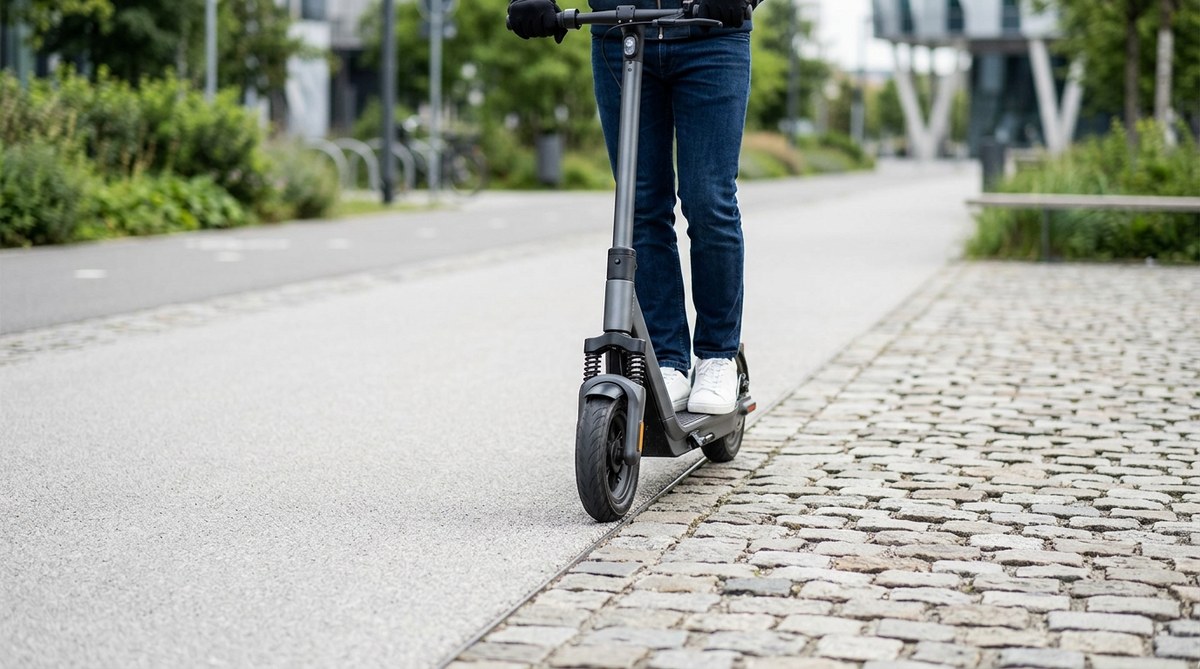
How to Decide If Your E-Scooter Needs Suspension
You are standing in front of a row of shiny electric scooters. One model has a sleek, clean deck with no visible hardware. Another has chunky springs near the wheels. The price difference is noticeable. Your brain asks the same question almost every new rider faces: do I need e-scooter suspension?
It is a fair question. Suspension adds weight, complexity, and cost to an electric scooter. But it also changes the way the ride feels from the first crack in the pavement to the last block of your commute. The answer depends on where you ride, how far you go, and what comfort means to you. Let’s break it down so you can make a confident call.
Suspension matters most when you ride on rough pavement, cobblestones, gravel, or cracked bike lanes every day. If your route is all smooth asphalt and protected paths, a good set of pneumatic tires may be enough. For mixed terrain, long distances, or any riding at speeds above 15 mph, suspension is worth the investment for safety and comfort alone.
What Suspension Actually Does for Your Ride
Suspension on an e-scooter works the same way it does on a car or a mountain bike. It absorbs the energy from bumps, potholes, and uneven surfaces before that energy reaches your body. Without suspension, every crack in the road travels straight through the deck, up the stem, and into your hands, knees, and spine.
That might not sound so bad after a two minute ride to the corner store. But after a 30 minute commute across town, the difference between a suspended and non-suspended scooter becomes very clear. Your arms start to tingle. Your lower back feels tight. You find yourself standing up over every bump to soften the blow.
Suspension does more than comfort though. It keeps the tires in contact with the ground more consistently. That means better traction when you brake or turn. It also reduces the stress on the frame, battery, and other components. Over time, a scooter that takes fewer hard impacts will hold up better.
The Three Questions That Answer Everything
Instead of listing generic pros and cons, we can settle the question with three honest questions about your life and habits.
-
What surfaces do you ride on most? Look at your typical route. Is it smooth bike path, sidewalk, or street? Or do you deal with cracked pavement, brick streets, gravel patches, and utility covers?
-
How far do you ride each trip? A mile or two on smooth ground is one thing. A 45 minute round trip commute is another. The longer you ride, the more every vibration accumulates.
-
What speed do you normally maintain? At 10 mph, bumps feel like nudges. At 18 mph, those same bumps feel like jolts. Higher speed amplifies every imperfection on the road.
Let’s walk through each one and see what it means for your decision.
Surface Types and What They Demand
The surface you ride on is the biggest factor in the suspension equation. Here is a simple breakdown of common riding surfaces and how they affect your body and your scooter.
| Surface Type | Ride Feel Without Suspension | Ride Feel With Suspension | Recommendation |
|---|---|---|---|
| Smooth new asphalt | Smooth, minor vibration | Nearly identical | Suspension optional |
| Cracked city streets | Noticeable jolts at every crack | Dampened, much less fatigue | Suspension recommended |
| Cobblestone or brick | Harsh, rattling, uncomfortable | Manageable, tolerable | Suspension strongly recommended |
| Gravel or dirt paths | Loss of traction, unstable | Controlled, stable | Suspension recommended |
| Bike lanes with roots | Sharp bumps, jarring | Softened, safer | Suspension recommended |
| Sidewalk with expansion joints | Repeated impacts | Smoother glide | Suspension helpful |
If your route falls into the bottom four rows for more than half of your trip, you should lean toward a scooter with suspension. Your body will thank you after the first week.
Rider Profiles: Who Needs It and Who Can Skip It
Not every rider has the same needs. Here are the most common profiles and what works best for each.
The Downtown Commuter
You ride three to five miles each way on city streets. You deal with potholes, manhole covers, and the occasional patch of loose gravel near a construction site. You wear a backpack and you do not want to arrive at work feeling rattled.
You need suspension. Even a basic spring setup on both wheels will turn a punishing ride into a manageable one. Look for models with at least front suspension, but dual suspension is better for city commuting.
The Campus Cruiser
You ride mostly on smooth sidewalks and paved paths between buildings. Your trips are short, usually under a mile. You rarely exceed 12 mph.
You can skip suspension if the scooter has good pneumatic tires. Air filled tires absorb a surprising amount of small bumps. A model with solid tires and no suspension will feel harsh, so choose pneumatic tires if you go this route.
The Weekend Explorer
You ride for fun on weekends. Your routes vary. Sometimes you stick to pavement, other times you cut across a park or ride a rail trail. You value comfort and you are not in a hurry.
Get suspension. The versatility matters more than the weight penalty. A scooter with decent suspension lets you take almost any path without second guessing yourself.
The Speed Loving Rider
You like to go fast. You frequently ride above 18 mph. You carve corners and brake hard.
Suspension is non-negotiable. At higher speeds, a bump that would be annoying at 12 mph can become dangerous. Suspension keeps the wheels planted and helps you maintain control during hard braking. Safety is the primary reason here, comfort is a bonus.
The Budget Conscious Shopper
You want the most scooter for your money. You stick to smooth roads and you are willing to bend your knees over bumps.
You can save money by choosing a solid scooter without suspension. Focus on getting good tires, a reliable motor, and a strong brake system. You can always add suspension later if you change your mind, but are suspension upgrades worth it for your e-scooter? In some cases yes, but it is usually cheaper to buy it built in from the start.
When No Suspension Is Actually Better
There are honest situations where skipping suspension makes sense.
Weight is the biggest reason. Suspension systems add pounds to the scooter. If you need to carry your scooter up three flights of stairs every day or fold it to slide under a bus seat, the extra weight is a real downside. Some light commuter models stay under 30 pounds by omitting suspension.
Simplicity is another factor. Suspension components need maintenance. Bushings wear out. Springs lose tension. Hinges develop play over time. A rigid frame with air tires has fewer parts that can fail.
Cost is the third reason. A good suspension system adds between $100 and $300 to the price of a scooter. If your roads are smooth and your rides are short, that money is better spent on a better battery or a faster motor.
The Trap of Bad Suspension
Here is something most articles do not tell you. Bad suspension is worse than no suspension at all.
Some cheap scooters include springs that are too stiff to compress under your weight. They might as well be solid metal rods. Others are too soft and bottom out on every dip, slamming the deck into the frame. A poorly designed suspension can make the ride feel unstable and unpredictable.
How do you tell good suspension from bad?
Look for adjustable preload, name brand components, and honest reviews that mention real world road feel. If a scooter claims suspension but nobody talks about how it rides, be cautious. Test ride if possible. A good suspension system disappears beneath you. A bad one announces itself at every bump.
When you are shopping, look for hydraulic or oil damped systems rather than bare metal springs. Hydraulic suspension offers more consistent damping and better control across different bump sizes. Basic spring suspension is better than nothing, but it can feel bouncy if not tuned well.
What About Tires? They Matter More Than You Think
Suspension and tires work together. You cannot talk about one without the other.
Pneumatic tires with thick tread play a huge role in absorbing small vibrations. A scooter with large pneumatic tires and no suspension can feel smoother than a scooter with small solid tires and cheap suspension.
Here is a useful guideline:
- Solid tires + no suspension = harsh ride, avoid for anything except very smooth surfaces
- Solid tires + good suspension = acceptable ride
- Pneumatic tires + no suspension = decent ride for smooth to medium surfaces
- Pneumatic tires + good suspension = premium ride quality
If you are on a tight budget, prioritize pneumatic tires over suspension. They cost less and deliver noticeable improvement. If you can afford both, that is the sweet spot.
How to Test Your Own Suspension Needs
You do not have to guess. Here is a simple process to figure out what you need before you buy.
- Map your route. Use Google Maps or ride it on a bicycle. Note the surface types and where the rough patches are.
- Estimate your total ride time. Multiply one way by two. Add a buffer for traffic and detours.
- Check the weather. Wet pavement hides bumps. Rough roads feel worse in the rain.
- Rent or borrow first. If possible, spend a day on a scooter without suspension and a day on one with suspension on your actual route.
- Decide based on feel, not hype. If the non-suspended scooter felt fine after 20 minutes, you can save the money. If you were counting down the blocks, get suspension.
Matching Suspension Types to Your Riding Style
Not all suspension is the same. The type matters for how it performs and how it feels.
- Spring suspension. Most common and most affordable. Works well for moderate bumps. Can feel bouncy on larger hits. Good for city commuting.
- Hydraulic suspension. Uses oil to dampen movement. Smoother and more controlled. Better for higher speeds and bigger bumps. Worth the upgrade.
- Rubber suspension. Rare and mostly found on very light scooters. Provides minimal damping. Better than nothing but not by much.
- Air suspension. Premium and adjustable. You can tune it to your weight. Excellent comfort but expensive.
For most riders, a quality spring or hydraulic system on both wheels is the sweet spot. If you ride mostly on rough terrain, hydraulic is worth the extra cost.
The Cost of Skipping Suspension
Let’s be honest about what happens if you skip suspension when you actually need it.
You will probably still ride. But you will ride less. The fatigue adds up. You might start avoiding certain routes or taking the bus on days when you are already tired. Some riders develop wrist pain or lower back discomfort over time.
There is also the safety angle. When your wheels bounce off the ground over a bump, you lose braking traction and steering control for a split second. On a smooth road that is rarely a problem. On a rough road at speed, it can be the difference between a normal stop and a skid.
Your scooter also takes more abuse. Hard impacts transfer directly to the stem, the deck welds, and the battery housing. Cracks and loose connections happen more often on rigid scooters that see rough use.
Real World Example: Two Commuters
Let’s make this concrete with two riders in the same city.
Maria lives in downtown Austin. Her 3 mile commute goes down Congress Avenue, which has smooth bike lanes and well maintained pavement. She rides a 28 pound scooter with pneumatic tires and no suspension. After six months, she is happy. No complaints.
James lives in the same city but rides from East Austin to downtown. His route involves brick streets, railroad crossings, and a stretch of road that has not been repaved since 2019. He bought a scooter without suspension to save money. After two weeks, his hands went numb on every ride. He upgraded to a suspended model and now wishes he had spent the extra money up front.
Same city. Same distance. Completely different needs.
A Balanced View: What You Gain and What You Give Up
Suspension is not a magic upgrade. It has trade offs.
- You gain: comfort, stability at speed, better traction, less fatigue, longer component life
- You give up: lower weight, simpler design, lower cost, slightly less portability
For most urban commuters in 2026, the benefits outweigh the drawbacks. The average commute distance keeps growing as cities expand, and road maintenance has not kept pace. More riders are dealing with rough surfaces than ever before.
If you are still unsure, look at the scooter models that fit your budget and compare the suspended versions against the non-suspended versions. Often the price gap is smaller than you expect, especially on mid range scooters.
Making Your Final Decision
Here is a summary checklist to run through before you buy.
- Do I ride on cracked pavement or brick streets? Get suspension.
- Do I ride more than 3 miles each way? Get suspension.
- Do I ride above 15 mph? Get suspension.
- Do I weigh more than 200 pounds? Get suspension (and check weight limits carefully).
- Do I prioritize light weight and easy carrying? Suspension is optional.
- Do I ride only on smooth bike paths and sidewalks? Pneumatic tires may be enough.
- Do I plan to keep this scooter for more than two years? Get suspension for long term comfort.
Your Ride, Your Call
There is no single right answer to the question do I need e-scooter suspension. The right answer depends on the roads you ride and the way you ride them.
But here is the honest truth. Most riders who ask this question are already leaning toward getting suspension. They have felt a rough ride before and they know they do not want to repeat it. If that sounds like you, trust your instincts. Spend the extra money. Get the scooter that makes you want to ride more, not less.
A scooter with good suspension feels like an extension of your body. You stop thinking about the road and start enjoying the trip. That is the whole point of micro mobility in the first place.
If you are still comparing models, check out our guide on how to choose your first electric scooter for more help matching features to your lifestyle. And if you ride in wet weather, do not miss our tips on how to ride an e-scooter in the rain without losing control.
The best scooter is the one you actually ride. Make sure it is comfortable enough to keep you coming back.
