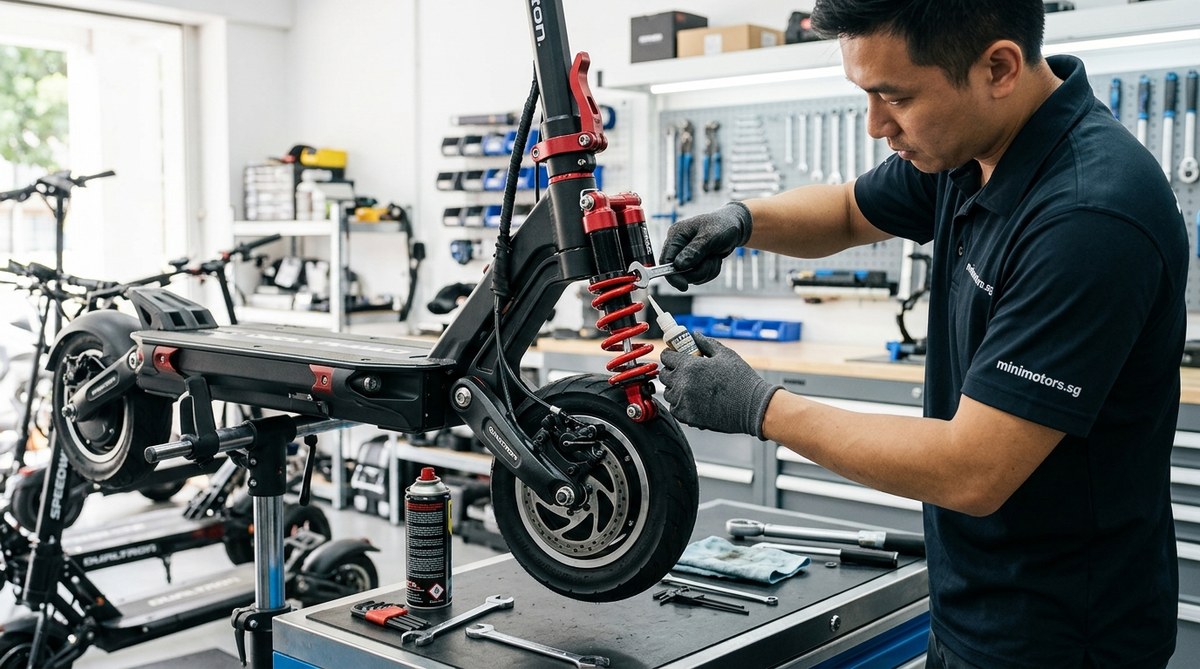
How to Maintain Your E-Scooter Suspension for a Smoother Ride
Your e-scooter’s suspension is the unsung hero of every ride. It soaks up potholes, levels out bumpy sidewalks, and keeps you from feeling every crack in the pavement. But like any hard-working component, it needs regular attention. If your once silky-smooth commute now feels like a washboard, it is time to learn how to maintain e-scooter suspension. The good news? You do not need a mechanic’s shop or a toolbox full of specialty gear. With a few basic steps, you can bring back that plush glide and extend the life of your scooter.
Regular e-scooter suspension maintenance prevents frame damage, improves ride comfort, and saves you money on replacements. Focus on cleaning, lubing moving parts, checking for leaks in hydraulic systems, and adjusting preload. A monthly check keeps your scooter safe and smooth, especially if you ride in wet or dusty conditions.
Why Your E-Scooter’s Suspension Deserves a Little Love
Think of your suspension as a shock absorber for your body and the scooter’s frame. When it works well, small bumps disappear and big hits feel manageable. When it struggles, every ride rattles your wrists, loosens bolts, and puts stress on the deck and stem. Over time, neglected suspension can even crack the frame or cause the steering to feel loose.
A well-maintained suspension also helps your tires wear evenly. Uneven tire pressure or alignment often starts with sagging or seized suspension components. So caring for your suspension is really caring for your whole scooter.
The Three Common Suspension Types (and How They Differ)
Different scooters use different suspension designs. Knowing which one you have is the first step in learning how to maintain e-scooter suspension correctly.
| Suspension Type | How It Works | Common Maintenance Tasks | Typical Lifespan |
|---|---|---|---|
| Spring (coil) | A metal spring compresses and rebounds | Lubricate pivot points, check for rust, replace if sagging | 1–2 years / 1,500 miles |
| Hydraulic (oil-based) | Oil flows through a piston to dampen motion | Check for oil leaks, replace seals, bleed air | 2–3 years / 3,000 miles |
| Rubber / elastomer | A rubber bushing absorbs impact | Inspect for cracks or hardening, replace if worn | 6–12 months / 1,000 miles |
Most commuter scooters in 2026 use either spring or hydraulic systems. Rubber suspensions are lighter but wear out faster, especially in hot climates.
Signs That Your Suspension Is Begging for Help
Your scooter will tell you when its suspension is struggling. Watch for these clues:
- The front or rear feels too soft (bottoming out on bumps)
- The ride feels harsh, even on flat ground
- You notice fluid on the shock body (hydraulic leak)
- The scooter pulls to one side when you ride
- You hear creaking, clicking, or scraping sounds during compression
- The suspension feels stiff or locked in place
If you spot any of these, it is time to open up the maintenance kit.
How to Maintain E-Scooter Suspension: A Step-by-Step Guide
Follow these steps every 4 to 6 weeks if you ride daily. If you live in a rainy or dusty area, check more often.
-
Clean the suspension area. Use a soft brush and mild soap to remove dirt, grit, and road salt from the shock body and linkages. A clean surface lets you spot issues. Do not use a pressure washer — it can force water into seals.
-
Inspect for damage. Look for bent rods, cracked springs, leaking oil, or loose mounting bolts. Pay special attention to the points where the suspension attaches to the frame. Wobbly bolts mean immediate tightening.
-
Lubricate moving parts. Apply a dry Teflon or silicone spray to pivot points and sliding surfaces. Avoid heavy grease — it attracts dirt. Wipe off any excess. For spring systems, a few drops of light machine oil on the spring ends reduces squeaks.
-
Check and adjust preload. Most scooters have a collar or ring that adjusts how much the spring is compressed before a bump hits. If the ride bottoms out, tighten the preload. If it feels too stiff, loosen it a quarter turn at a time. Test ride after each adjustment.
-
Bleed hydraulic shocks (if applicable). If you have hydraulic suspension and the ride feels spongy, you may need to bleed air out of the system. Follow the manufacturer’s instructions. Generally, you compress the shock slowly with the bleeder screw open until oil (not air) comes out, then close the screw.
-
Test the rebound. After adjusting or bleeding, push down on the handlebars and release. The front end should rise back up smoothly without bouncing more than once. If it keeps bouncing, the damper is worn.
Expert tip: “A common mistake riders make is over-lubricating rubber bushings. Stick to silicone-based lubricants on rubber components — petroleum-based products break down rubber over time.” — from a suspension engineer we interviewed.
Common Suspension Maintenance Mistakes (and How to Avoid Them)
| Mistake | Why It Hurts | What to Do Instead |
|---|---|---|
| Over-tightening preload | The ride becomes harsh; frame stresses increase | Adjust only a quarter turn and test |
| Using WD-40 on seals | WD-40 dissolves rubber seals and washes away internal grease | Use only silicone or PTFE-based lubricants |
| Ignoring small oil leaks | A tiny leak quickly turns into a full seal failure | Replace seals as soon as you see a drop of oil |
| Riding with loose bolts | Creates play that damages bushings and mounting points | Torque bolts to spec (usually 8–12 Nm) |
| Skipping seasonal checks | Dirt and moisture cause corrosion that eats through springs | Clean and inspect after every wet ride |
When to Replace vs. When to Upgrade
Sometimes cleaning and lubing are not enough. If your suspension is more than two years old or has visible damage, replacement is safer than repair.
Before you buy a new set, ask yourself: do you want the same ride quality, or are you hoping for something plusher? Upgrading from a basic spring system to a hydraulic or air shock can transform your commute. For a deeper look, check out our guide on are suspension upgrades worth it. And if you are doing a full overhaul, our ultimate e-scooter maintenance checklist covers everything from brakes to bearings.
Seasonal Care: Winter, Rain, and Summer Dust
Your suspension works differently depending on the season.
- Winter / Rain: Water and road salt are enemies of metal springs and seals. After every ride, wipe down the suspension with a damp cloth and apply a thin layer of silicone spray. Store the scooter indoors so the shocks do not freeze with moisture inside.
- Summer / Dust: Fine dust can gum up sliding surfaces. Clean more frequently (every two weeks) and use a dry lubricant that does not attract grit.
- Fall / Leaves: Wet leaves can get caught in linkages. Make a habit of checking for debris after riding through loose foliage.
If you live in a region with extreme temperature swings, consider using a waterproof cover and rain gear to protect the whole scooter overnight.
How Suspension Maintenance Fits into a Bigger Care Routine
Suspension is just one piece of the puzzle. A smooth ride also depends on tire pressure, brake health, and battery placement. For instance, if your tires are underinflated, even perfect suspension will feel harsh. Pair your suspension checks with a pre-ride inspection checklist to catch small problems before they grow.
And if you are noticing unusual vibrations or noises that do not come from the shocks, check out our troubleshooting guide on why your electric scooter is making noise. Sometimes a loose fender or a worn bearing sounds exactly like a suspension issue.
Your Smoother Ride Starts This Weekend
You now know exactly how to maintain e-scooter suspension. Set aside 20 minutes this weekend. Grab a clean rag, your lubricant of choice, and an Allen key set. Start with a visual inspection, clean everything, lube the pivots, and adjust the preload. Then take a test ride around the block. You will notice the difference immediately.
Regular suspension care is the cheapest upgrade you can give your scooter. It costs nothing more than a little time, and it pays back in comfort, safety, and longevity. So go ahead — give your suspension the attention it deserves. Your wrists and your back will thank you on tomorrow morning’s commute.
