How Does an Electric Scooter Actually Work? A Beginner’s Breakdown
<How an Electric Scooter Moves: The Simple Science Behind the Ride
You press a thumb lever, the wheels spin, and you glide forward. It feels almost like magic. But behind that smooth ride is a simple, elegant system of parts that work together to turn electricity into motion. If you have ever wondered how an electric scooter actually works, you are in the right place. By the end of this guide, you will understand the key components and the basic process that makes your scooter go, stop, and recharge.
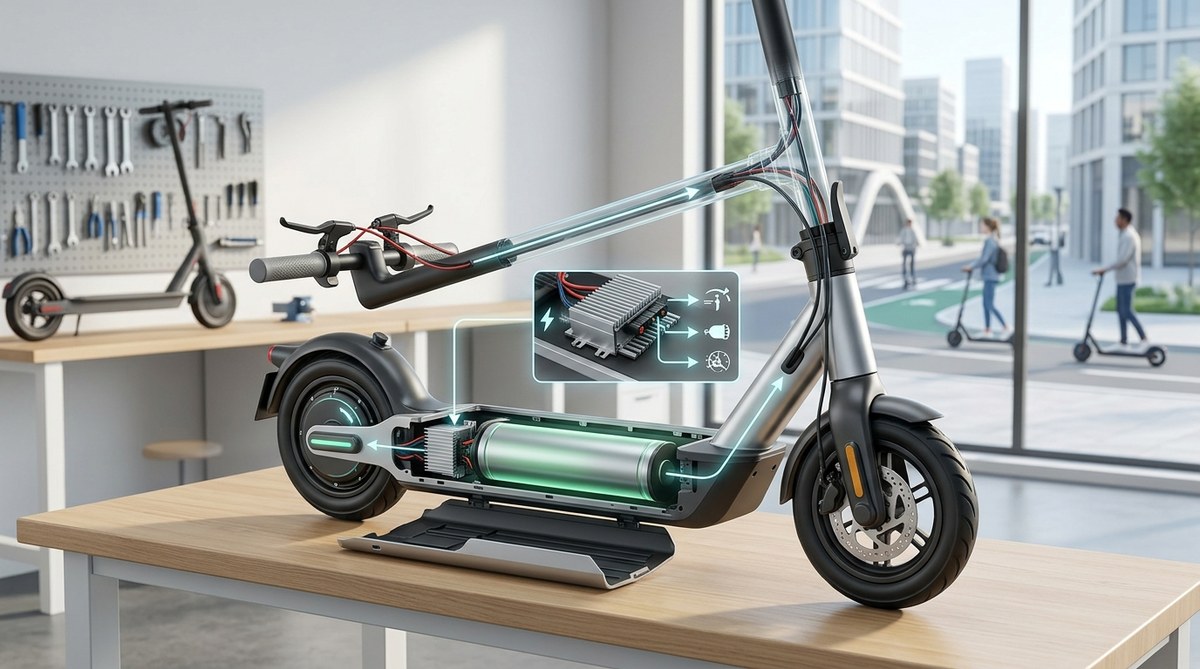
Every electric scooter works the same way: a battery stores electrical energy, a controller sends that energy to a motor based on throttle input, and the motor spins the wheel. Brakes reverse part of that energy or use friction to slow you down. Understanding this flow helps you ride smarter, maintain your scooter, and choose the right model.
No complicated engineering degree needed. Think of it like a remote control car you had as a kid, but bigger, faster, and built for you to stand on. Let us break it down piece by piece.
The Big Three: Battery, Motor, and Controller
Every electric scooter has three main parts that do all the heavy lifting. The battery stores the power. The controller decides how much power to send. The motor turns that power into spinning motion.
Battery: The Fuel Tank
Inside the deck lies the battery pack, usually made of lithium ion cells (the same chemistry used in laptops and electric cars). These cells are grouped together to create a specific voltage and capacity. Voltage (measured in volts) affects speed and torque. Capacity (measured in watt hours or amp hours) determines range.
When you plug the charger into a wall outlet, electricity flows into the battery and gets stored as chemical energy. Later, when you ride, the battery releases that energy as direct current (DC) power. Most modern scooters use 36V, 48V, or 52V batteries. A higher voltage generally means more power to the motor, which translates to faster acceleration and higher top speed.
For a deeper look at how voltage affects real world performance, check out our guide on understanding e scooter battery voltage.
Motor: The Muscle
The motor converts electrical energy into mechanical energy. Nearly all electric scooters built today use a brushless DC (BLDC) motor mounted inside the wheel hub. That means there are no brushes to wear out, and the motor is directly coupled to the wheel. No chains, no belts, just pure torque.
When power flows from the controller to the motor, it creates a magnetic field that spins a rotor. The rotor is attached to the wheel, so the wheel turns. The more power the controller sends, the faster the rotor spins, and the faster you go.
Motor power is rated in watts. A typical commuter scooter has a 250W to 500W motor, while performance models can have 1000W or more. If you want help picking the right strength, read our article on how to choose the right motor power for your e scooter needs.
Controller: The Brain
This small electronic board sits between the battery and the motor. It receives signals from the throttle and the brake levers, then adjusts the flow of electricity accordingly. When you press the throttle gently, the controller sends a small amount of power. When you crank it, it sends more.
The controller also handles regenerative braking on some models. Instead of just disconnecting power, it reverses the motor direction slightly and uses the motor as a generator, sending a little energy back to the battery. This is how some scooters extend their range.
The Energy Flow: From Thumb to Wheel
Here is the step by step process that happens every time you ride:
- You press the throttle (thumb lever or twist grip). This closes a circuit and sends a small electrical signal to the controller.
- The controller reads that signal and calculates how much power to draw from the battery.
- It sends that power as three phase alternating current (AC) to the motor. (The controller inverts DC from the battery to AC because BLDC motors run on AC.)
- The motor’s internal magnets and windings interact, creating torque that spins the rotor.
- The rotor is fixed to the wheel hub, so the wheel turns.
- You move forward. The speed depends on how much throttle you give and the load (your weight, incline, wind).
When you want to stop, you squeeze a brake lever. That sends a signal to the controller to cut power to the motor. On many scooters, it also activates a brake switch that turns on an electronic brake (e brake) before the mechanical brake (disc or drum) engages.
For a thorough explanation of stopping power, see our guide on understanding e scooter braking systems.
Braking Systems: How You Stop Safely
Scooters use two main types of brakes, often combined.
- Disc brakes: A caliper clamps a metal rotor attached to the wheel. They offer strong, consistent stopping power, even in wet conditions.
- Drum brakes: Brake shoes press outward against the inside of a drum that spins with the wheel. They require less maintenance but can fade under heavy use.
- Electronic brakes (regenerative): The controller reverses the motor magnetic field to slow the wheel and generates a small amount of electricity. This is gentle and best combined with a mechanical brake.
Most quality scooters have a front disc brake and a rear drum or electronic brake. Some premium models use two disc brakes.
Tires and Suspension: The Contact Patch
Tires are the only part of the scooter that touches the ground, so they matter a lot. Two main types exist:
- Pneumatic (air filled) tires: Provide a cushioned ride and better grip. They can go flat, but you can patch or replace them.
- Solid (airless) tires: Never go flat, but they transfer more road vibration to your feet and offer less traction on turns.
Suspension systems use springs or rubber cartridges to absorb bumps. A scooter with front and rear suspension will feel much smoother on uneven pavement. Models with no suspension rely entirely on tire air pressure and your leg muscles.
If you ride in rain or on loose surfaces, check out our advice on how to ride an e scooter in the rain without losing control.
The Display and Controls: Your Command Center
The handlebar display shows your current speed, battery level, and sometimes trip distance and riding mode. Many scooters have three speed modes: Eco (slow but efficient), Drive (balanced), and Sport (full power).
The throttle is usually a thumb lever on the right handlebar. Some scooters use a twist grip like a motorcycle. Brake levers are on the left and right. On most models, the left brake controls the rear wheel and the right brake controls the front.
Some modern scooters come with a smartphone app that lets you change settings like acceleration curve, regenerative braking strength, and even lock the scooter remotely. For more on these smart features, read our article on how AI powered smart features are transforming modern e scooters.
Common Questions Beginners Ask
Let me answer a few that come up often.
Why is there a kick start before using the throttle?
Many scooters require you to push off the ground to start moving. This protects the motor and battery from a sudden surge of current. It also helps you balance before the motor engages. Think of it like pedaling a bike before you hit the throttle on an electric bicycle.Can I ride up hills on an electric scooter?
Yes, but the hill climbing ability depends on motor power, battery voltage, and your weight. A 500W motor on a 48V battery can handle moderate hills. For steep inclines, look for at least 800W and a higher voltage battery.How long does the battery last?
Battery lifespan is measured in charge cycles. A typical lithium ion pack lasts 300 to 500 full cycles before capacity drops noticeably. That translates to one to three years of daily commuting depending on usage and care. For more specific tips, read our guide on how long do e scooter batteries actually last.Is it safe to ride in the rain?
| Condition | Allowed? | Notes |
|———–|———-|——-|
| Light drizzle | Yes (with IPX5 rating) | Dry brakes after. |
| Heavy rain | No | Water can damage electronics. |
| Puddles | Avoid deep >1 inch | Water ingress risk. |
| After rain on wet roads | Yes, carefully | Reduce speed, avoid sudden braking. |
Maintenance That Keeps Things Working
An electric scooter has few moving parts, so maintenance is minimal. But you should still follow a routine. Here is a bulleted checklist of key tasks:
- Check tire pressure weekly (pneumatic tires lose air over time).
- Inspect brake pads for wear every month.
- Clean the deck and handlebar stem with a damp cloth.
- Lubricate the folding mechanism and brake pivot points with silicone spray.
- Store the battery at room temperature and avoid full discharges.
A deeper routine is covered in our ultimate e scooter maintenance checklist.
Putting It All Together
Now you know the science behind the ride. The battery feeds the controller, the controller listens to your throttle, the motor spins the wheel, and the brakes bring you back to a stop. Every component has a job, and they all rely on each other.
The best part? You do not need to be a mechanic to appreciate it. Just knowing the basics helps you ride more efficiently, spot problems early, and choose a scooter that fits your life. If you want to compare models based on this knowledge, start with our guide on what do all those numbers mean decoding e scooter specifications for beginners.
Your First Ride Starts With Understanding
You do not need to memorize every spec. Just remember the flow: battery, controller, motor. Everything else supports that chain. Next time you step onto a scooter, pay attention to how the throttle feels and how the brakes respond. That connection between your hand and the wheels is the whole magic. Enjoy the ride.
