
Age Restrictions for E-Scooter Riders: Minimum Age Requirements by Region
Most parents don’t realize that buying an electric scooter for their teenager could actually be illegal in their city. Age restrictions vary wildly from state to state, and even between neighboring towns. Some places allow 12-year-olds to ride freely, while others require riders to be 18 with a valid license.
Electric scooter age limits range from 12 to 18 years depending on location. Most U.S. states set the minimum at 16, while European countries often allow younger riders with parental supervision. Always verify local laws before purchasing, as violations can result in fines, confiscation, or liability issues. Safety gear requirements and speed restrictions often accompany age rules.
Understanding the electric scooter age limit basics
The electric scooter age limit isn’t universal. It depends on where you live, where you plan to ride, and what type of scooter you own.
Most regions base their rules on motor power and maximum speed. A scooter that tops out at 15 mph faces different regulations than one hitting 30 mph.
Private property rules differ from public roads. Your teenager might legally ride in your driveway but break the law the moment they hit the sidewalk.
Why age restrictions exist for e-scooters
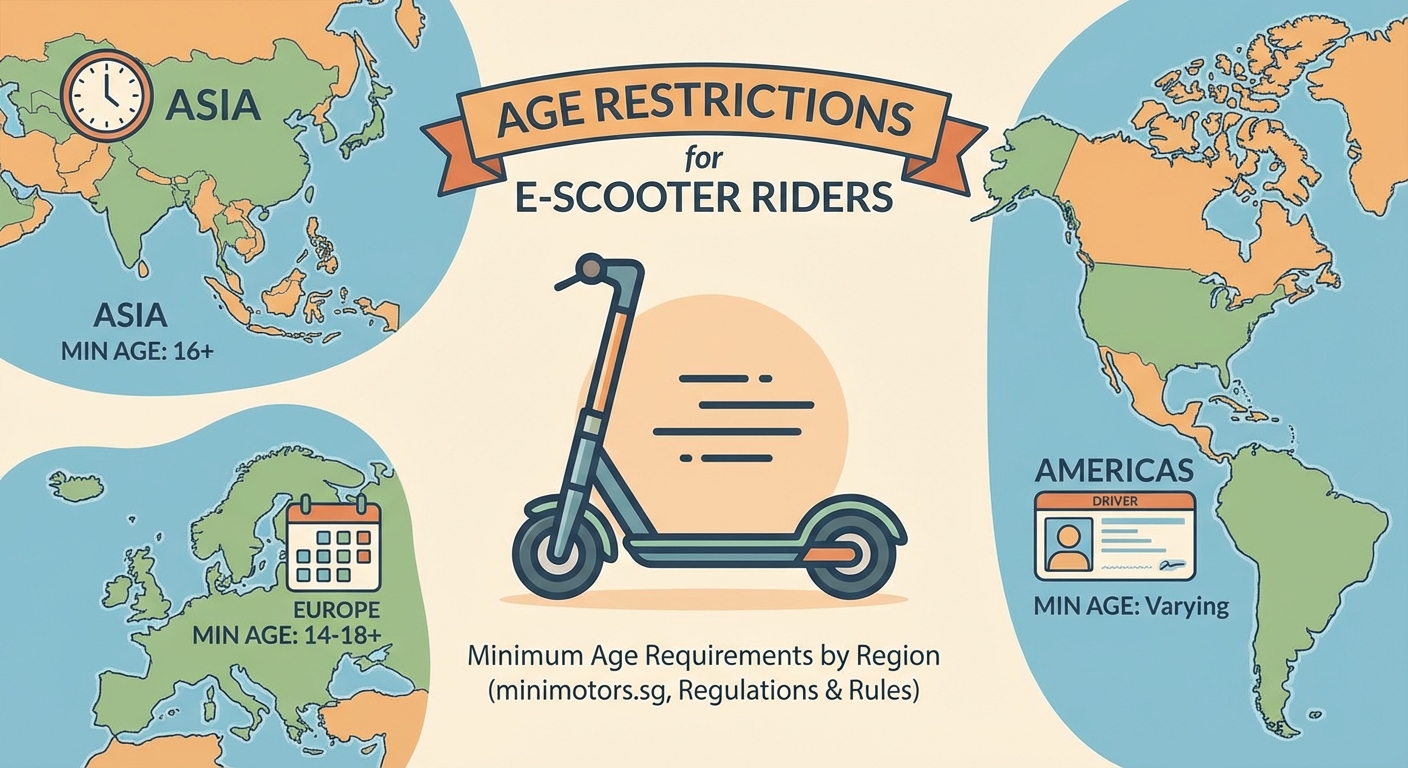
Cities didn’t create these rules to frustrate families. They emerged from real safety data.
Younger riders often lack the reflexes and judgment needed for traffic situations. A 2023 study found that riders under 16 were three times more likely to be involved in accidents than adults.
Brain development matters here. The prefrontal cortex, responsible for risk assessment, doesn’t fully mature until the mid-20s. Teenagers naturally underestimate danger.
Insurance companies also influence these laws. Higher accident rates among young riders drive up costs for everyone.
Age requirements across the United States
Here’s what you need to know about U.S. regulations:
States with 16+ requirements:
– California requires riders to be at least 16 years old
– New York sets the minimum at 16 for any motorized device
– Texas mandates 16 for public road use
– Florida enforces 16+ for e-scooters on bike lanes
States allowing younger riders:
– Arizona permits 12-year-olds with adult supervision
– Nevada allows 14+ with helmet requirements
– Oregon sets the bar at 14 years old
– Washington permits 13+ on designated paths
States with 18+ requirements:
– Massachusetts requires full adult status
– Connecticut mandates 18 for any electric mobility device
– Rhode Island sets strict 18+ rules
Some states leave decisions to individual cities. This creates patchwork regulations that confuse even local residents.
International age restrictions worth knowing
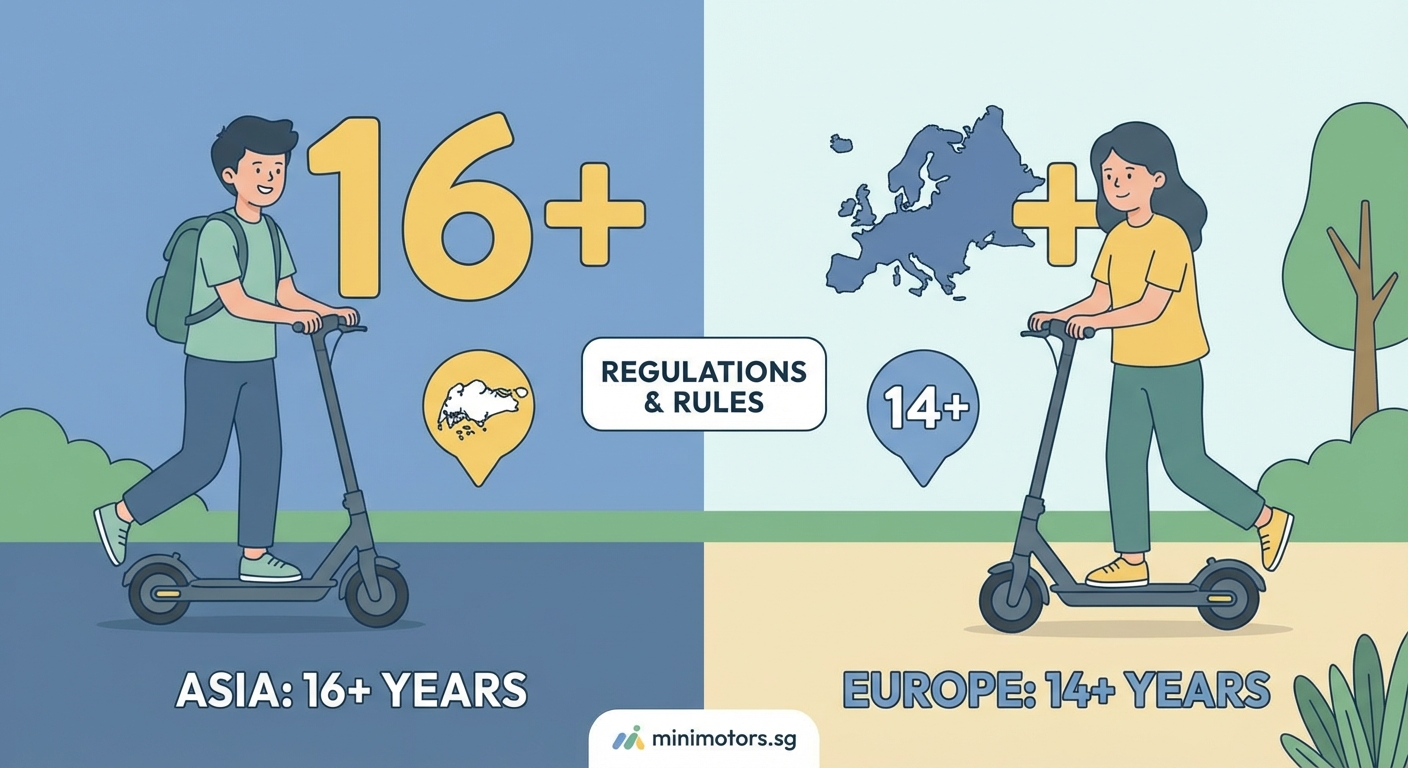
European countries generally take a more relaxed approach than the U.S.
The UK allows 14-year-olds to ride private e-scooters on private land. Public roads remain off-limits for all ages with rental scooters only.
Germany permits 14+ riders who hold a moped license. No license? You must wait until 15.
France sets the minimum at 12 years old. Riders under 18 must wear helmets outside urban areas.
Singapore enforces strict 16+ rules with mandatory registration and insurance.
Australia varies by state, with most requiring 16+ and full helmet compliance.
How to verify your local electric scooter age limit
Don’t rely on outdated forum posts or neighbor advice. Here’s the right way to check:
- Visit your city’s official transportation or mobility website
- Call the local police department’s non-emergency line for clarification
- Check your state’s Department of Motor Vehicles regulations
- Review any recent ordinance changes from the past 12 months
- Confirm whether rules differ for private property versus public roads
Laws change frequently. A regulation from 2022 might not apply today. Cities often update rules after incidents or pilot programs.
Document what you find. Screenshot official pages. Save PDF copies of regulations. This protects you if questions arise later.
What happens when age requirements aren’t met

Breaking age restriction laws carries real consequences. These aren’t just warnings.
Financial penalties:
– Fines ranging from $50 to $500 depending on location
– Parental liability for damages caused by underage riders
– Potential civil lawsuits if accidents occur
Equipment consequences:
– Police can confiscate the scooter immediately
– Some jurisdictions require court appearances to retrieve property
– Repeat violations may result in permanent confiscation
Legal implications:
– Citations appear on driving records in some states
– Insurance complications for families
– Potential impact on future license applications
Parents bear legal responsibility in most jurisdictions. Your teenager’s violation becomes your problem.
Safety considerations beyond legal age
Meeting the minimum age doesn’t guarantee readiness. Consider these factors:
Physical requirements:
– Ability to reach and operate all controls comfortably
– Strength to maneuver and brake the scooter’s weight
– Height appropriate for the deck and handlebar setup
– Coordination for balance at various speeds
Mental readiness:
– Understanding of traffic rules and right-of-way
– Ability to anticipate driver behavior
– Judgment to assess road conditions
– Capacity to stay focused without distractions
Experience level:
– Prior experience with bicycles or skateboards
– Comfort with speed and quick stops
– Practice in controlled environments first
– Gradual progression to busier areas
A 16-year-old who’s never ridden anything might be less prepared than a 14-year-old with years of bike commuting experience. Age alone doesn’t tell the whole story.
Common mistakes parents make about age limits
These errors happen more often than you’d think:
| Mistake | Why It’s Wrong | Better Approach |
|---|---|---|
| Assuming rules match bicycle laws | E-scooters face stricter regulations | Check specific e-scooter ordinances |
| Letting kids ride “just in the neighborhood” | Private streets often count as public roads | Verify exact boundaries of legal riding areas |
| Buying before checking local laws | Non-refundable purchases become useless | Research regulations before shopping |
| Trusting retailer age suggestions | Stores focus on safety, not legality | Confirm legal minimums independently |
| Thinking helmets override age rules | Safety gear doesn’t change age requirements | Meet both age and safety standards |
The “everyone else is doing it” defense doesn’t work with police or insurance adjusters. Other families breaking rules doesn’t make it legal for yours.
Preparing your teenager for legal e-scooter riding
Once your teen meets the age requirement, proper preparation matters.
Start with essential things every first-time e-scooter rider should know before hitting the road. Understanding basic operation prevents most beginner mistakes.
Practice sessions should happen in empty parking lots. Focus on:
- Smooth acceleration and braking
- Tight turns at various speeds
- Emergency stops from different speeds
- Obstacle avoidance maneuvers
- Hand signals for turns
Gradually introduce traffic. Start with quiet residential streets during off-peak hours. Build up to busier roads only after mastering basics.
Set clear rules about where and when riding is allowed. Daylight only for beginners. No earbuds or phone use while riding. Specific routes approved in advance.
Choosing the right first scooter for young riders
Not all e-scooters suit teenage riders. Power and features matter.
Look for models with:
- Top speeds between 12-18 mph for beginners
- Reliable dual braking systems
- Adequate lighting for visibility
- Sturdy construction without excessive weight
- Simple controls without complex settings
Avoid high-performance models initially. A scooter capable of 40 mph creates unnecessary temptation and risk.
Weight capacity should exceed your teen’s weight by at least 30 pounds. This ensures stable handling and longer component life.
When choosing your first electric scooter, prioritize safety features over speed and range. Flashy specs impress friends but don’t prevent accidents.
Required safety gear and supervision
Meeting the age limit is just the starting point. Proper protection matters at any age.
Mandatory equipment in most regions:
– Certified helmet meeting safety standards
– Front white light for night riding
– Rear red reflector or light
– Bell or horn for warnings
Highly recommended additions:
– Elbow and knee pads for beginners
– Gloves for better grip and protection
– High-visibility clothing or vest
– Closed-toe shoes with good traction
Some parents use GPS trackers to monitor riding locations and speeds. Apps can alert you when teens exceed speed limits or leave approved areas.
Understanding what you should wear when riding an e-scooter daily helps establish good habits from day one. Proper gear becomes automatic rather than an argument.
Teaching responsible riding habits
Legal age and proper equipment only go so far. Behavior determines safety.
Teach your teenager that every car driver is distracted and hasn’t seen them. This defensive mindset prevents most accidents. Assume invisibility until you make eye contact with drivers.
Establish these non-negotiable rules:
- Always ride with traffic, never against it
- Stop completely at stop signs and red lights
- Yield to pedestrians in all situations
- Use bike lanes when available
- Avoid riding in rain or after dark until experienced
- Never carry passengers or extra cargo
Regular pre-ride inspection checklists should become routine. Checking brakes, tires, and lights takes 60 seconds but prevents disasters.
Insurance and liability considerations
Age restrictions connect directly to insurance coverage. Most homeowner policies don’t automatically cover e-scooter accidents.
Parents should verify coverage before allowing teen riders. Questions to ask your insurance agent:
- Does our policy cover e-scooter accidents?
- Are medical expenses covered if our teen is injured?
- What liability protection exists if our teen causes property damage?
- Do we need additional riders or separate policies?
Some insurers offer specific e-scooter insurance coverage designed for personal mobility devices. Costs typically run $100-300 annually.
Liability matters more than you might think. If your teenager causes a car accident while riding illegally, you could face six-figure lawsuits. Age violations often void any coverage you thought you had.
Regional differences that catch families off guard
Moving to a new city means researching rules all over again. Don’t assume your old location’s laws apply.
College-bound teenagers face particular challenges. Campus rules often differ from city regulations. Some universities ban e-scooters entirely. Others allow them but restrict where students can ride or park.
Vacation destinations create confusion too. Rental scooters in tourist areas might have different age requirements than privately owned ones. Always check before letting teens hop on rentals.
Border towns present unique problems. Living in one state while attending school in another means following two sets of rules. The stricter requirements always apply.
How age limits affect purchasing decisions
Smart parents research laws before shopping. Here’s why timing matters:
Buying a scooter six months before your teen turns 16 seems forward-thinking. But models evolve rapidly. By the time your teen can legally ride, better options exist at similar prices.
Return policies rarely cover “I didn’t check the age requirement” situations. That $800 scooter becomes an expensive lawn ornament if local laws prevent its use.
Consider budget e-scooters under $500 for first-time teenage riders. Lower investment reduces financial stress if interests change or rules shift.
Some families buy scooters as graduation gifts timed to 16th or 18th birthdays. This ensures legal compliance from day one.
Staying updated on changing regulations
E-scooter laws evolve constantly. Cities experiment with rules, adjusting based on accident data and public feedback.
Set calendar reminders to check regulations twice yearly. January and July work well as most ordinance changes take effect at year or mid-year marks.
Subscribe to your city’s transportation department newsletter. Many municipalities announce rule changes through these channels before they take effect.
Join local e-scooter community groups. Other riders often spot and share regulatory updates faster than official channels.
Teach your teenager to stay informed too. Part of responsible riding means knowing and following current laws, not rules from when they first started.
Making age restrictions work for your family
Age limits exist for good reasons, even when they feel inconvenient. They reflect real safety data and community standards.
Rather than fighting these rules, use them as teaching moments. Waiting until the legal age builds anticipation and emphasizes that privileges come with responsibility.
During the waiting period, teenagers can prepare. Study traffic laws. Practice on non-motorized scooters. Build relevant skills through biking or skateboarding.
When the legal age arrives, celebrate it properly. Make the first legal ride special. Document it. Create positive associations with following rules rather than resentment about restrictions.
Your approach to age limits shapes how your teenager views all regulations. Respecting these rules teaches broader lessons about citizenship and personal responsibility.
The electric scooter age limit in your area might seem arbitrary, but it represents careful consideration of safety, development, and community needs. Meeting that minimum age is just the beginning of responsible riding, not the end of your involvement as a parent.
