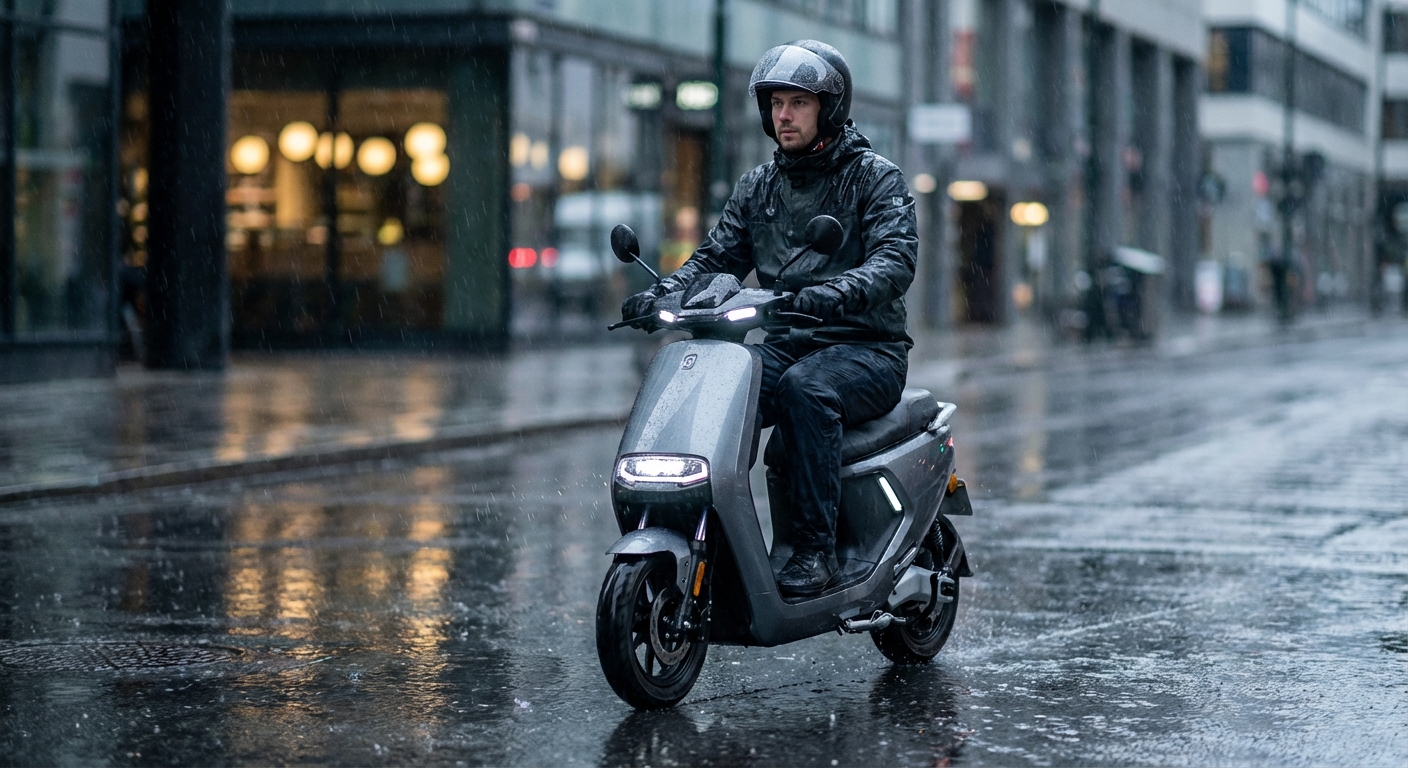
Can You Ride an Electric Scooter in the Rain? What Beginners Need to Know
You’re standing at your door, helmet in hand, staring at the rain. Your e-scooter is ready, but the wet pavement makes you hesitate. Can you actually ride in this weather, or will you damage your scooter and risk a fall?
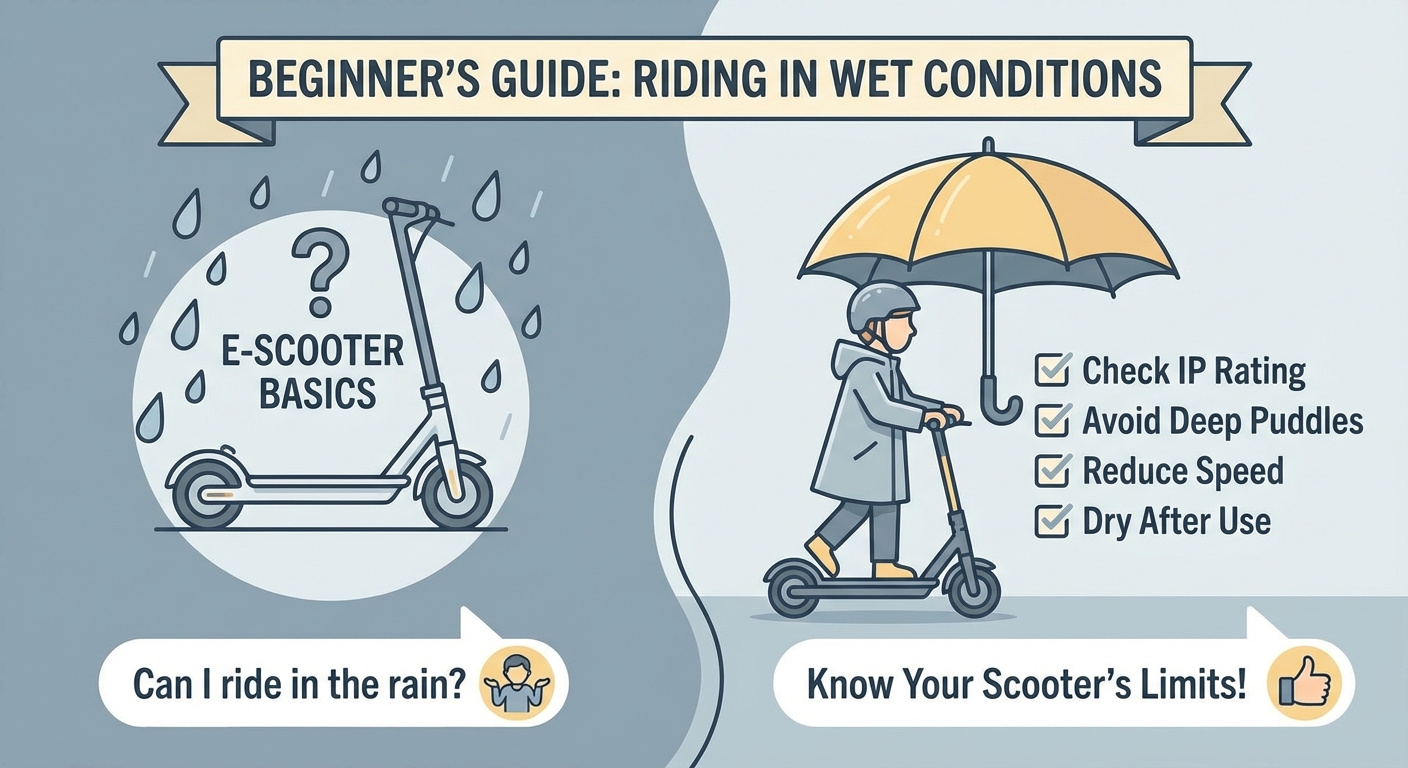
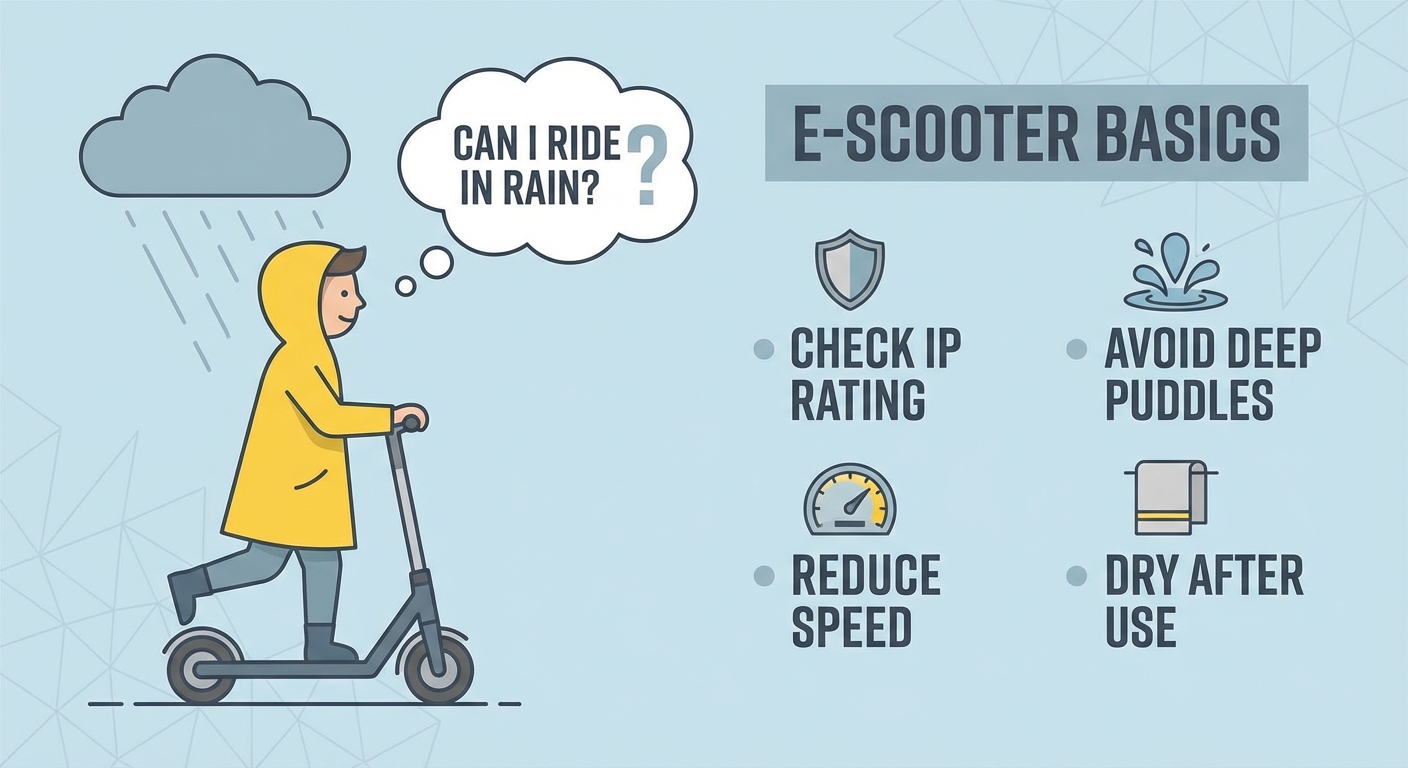
Yes, you can ride an electric scooter in the rain if it has adequate water resistance (IP54 or higher). However, riding requires slower speeds, gentler braking, and protective gear. Light rain is manageable with proper technique, but heavy downpours increase risk significantly. Always check your scooter’s IP rating, avoid deep puddles, and perform post-ride maintenance to prevent long-term water damage to electrical components and battery systems.
Understanding water resistance ratings for electric scooters
Not all e-scooters handle water the same way.
The IP rating tells you exactly how much moisture your scooter can tolerate. IP stands for Ingress Protection, and the two digits that follow matter more than most riders realize.
The first digit measures dust protection. The second digit measures water resistance. For rain riding, you care about that second number.
IP54 means your scooter can handle water splashes from any direction. This works for light rain and occasional puddles.
IP55 offers protection against low-pressure water jets. You can ride through moderate rain without immediate worry.
IP67 provides full waterproofing for temporary submersion. These scooters handle heavy rain and deeper water crossings.
Most budget models sit at IP54 or lower. Premium models often reach IP65 or higher. Check your manual before assuming your scooter is rain-ready.
Even with a high IP rating, water can still seep into vulnerable areas over time. Charging ports, display screens, and folding mechanisms create entry points for moisture.
“An IP rating describes factory-fresh conditions. After months of use, seals degrade, screws loosen, and water resistance drops. Treat every ride in wet conditions as a calculated risk, not a guarantee.”
How rain affects your riding safety and control
Wet surfaces change everything about how your scooter handles.
Braking distance increases by 30 to 50 percent on wet pavement. Your tires lose grip, and sudden stops become slides.
Metal surfaces like manhole covers and painted road markings turn into ice rinks when wet. Even experienced riders struggle with these hazards.
Your visibility drops in two directions. You see less through rain-streaked glasses or helmet visors. Other road users also see you less clearly.
Water spray from your front wheel can hit your face, obscure your view, and make navigation harder. A simple fender reduces this problem significantly.
Puddles hide dangers. That innocent-looking pool might conceal a pothole, broken glass, or a curb you cannot see until impact.
Here’s what changes when you ride in rain:
| Riding element | Dry conditions | Wet conditions | Safety adjustment needed |
|---|---|---|---|
| Braking distance | Normal | 30-50% longer | Start braking earlier, use both brakes gently |
| Tire grip | Full traction | Reduced 20-40% | Lower speed by 25%, avoid sharp turns |
| Visibility | Clear | Significantly reduced | Use lights, wear reflective gear, ride defensively |
| Road hazards | Visible | Often hidden | Avoid all puddles, assume danger in standing water |
Step-by-step guide to riding safely in wet weather
Preparation matters more than skill when rain arrives.
Follow these steps every time you ride in wet conditions:
-
Inspect your scooter before leaving. Check tire pressure, brake function, and all lights. Wet conditions amplify any existing mechanical issues.
-
Reduce your speed by at least 25 percent. If you normally cruise at 20 mph, keep it under 15 mph in rain. Slower speeds give you more reaction time.
-
Increase your following distance. Double the space between you and vehicles ahead. Your longer braking distance demands this buffer.
-
Brake earlier and more gently. Apply both brakes smoothly rather than grabbing them suddenly. Harsh braking causes skids on wet surfaces.
-
Avoid painted lines, metal covers, and smooth surfaces. Steer around these slippery spots whenever possible. They offer almost zero traction when wet.
-
Stay in tire tracks when following cars. These paths have less standing water because vehicle tires push it aside.
-
Never ride through puddles deeper than your wheel hub. Water that reaches your motor or battery compartment can cause immediate damage.
Understanding your braking system becomes especially important in wet conditions, as different brake types respond differently to moisture.
Protecting your scooter from water damage
Rain exposure creates long-term problems even if your ride goes smoothly.
Water finds its way into places you would not expect. Battery compartments, motor housings, and electrical connections all face moisture threats.
After every wet ride, take these protective steps:
- Wipe down all exposed metal parts to prevent rust formation
- Open the battery compartment slightly to let trapped moisture evaporate
- Store your scooter indoors in a dry location, never outside
- Check charging ports for water before plugging in
- Inspect seals and gaskets for deterioration
Never charge a wet scooter immediately after riding. Water inside the charging port can cause short circuits or permanent battery damage. Wait at least two hours, and check that the port is completely dry.
Waterproof covers provide an extra layer of protection during storage and can prevent moisture buildup between rides.
Consider applying dielectric grease to electrical connections. This waterproof compound creates a moisture barrier that protects sensitive components.
Essential gear for rain riding
Your safety depends on what you wear as much as how you ride.
Start with a waterproof jacket that includes reflective strips. Visibility matters more in rain than comfort.
Waterproof gloves keep your hands dry and maintain grip strength. Cold, wet hands lose dexterity and reaction speed.
Full-face helmets with anti-fog visors protect your eyes and face from water spray. Half helmets leave you squinting through rain.
Waterproof pants prevent the misery of arriving somewhere with soaked legs. Water-resistant is not enough for anything beyond light drizzle.
Shoes with deep treads provide better grip when you need to put your feet down suddenly. Smooth-soled shoes slip on wet deck surfaces.
If you ride regularly in wet conditions, these must-have accessories will make your commute safer and more comfortable.
A quality phone mount that seals against water lets you navigate without exposing your device. Learn more about waterproof navigation options that actually work in rain.
When you should absolutely avoid riding
Some conditions make riding irresponsible regardless of your skill level.
Skip your ride when:
- Heavy rain reduces visibility below 100 feet
- Standing water covers significant portions of your route
- Lightning appears anywhere in the sky
- Temperatures drop near freezing, creating ice risk
- Your scooter shows any electrical problems or water damage
Thunderstorms present special danger. You become a lightning target on an elevated metal frame. No commute is worth that risk.
Freezing rain creates invisible ice patches that cause instant falls. Even experienced riders cannot predict these hazards.
If you already started riding and conditions worsen, find shelter immediately. A coffee shop or covered bus stop beats arriving injured.
For new riders still learning the basics, check out these essential tips before attempting wet weather riding.
Common mistakes that lead to accidents in rain
Most rain-related crashes follow predictable patterns.
Riders maintain dry-weather speeds, assuming their skills compensate for conditions. They cannot. Physics wins every time.
Aggressive braking causes the majority of wet-weather falls. Panic stopping on slick surfaces guarantees a slide.
Ignoring puddles leads to water damage and sudden loss of power. That moment when your motor cuts out mid-intersection creates serious danger.
Wearing dark clothing in low visibility makes you invisible to drivers. You might see them, but they will not see you until too late.
Riding with worn tires multiplies every other risk. Shallow treads cannot channel water away from the contact patch.
Learn about common accidents and prevention strategies to avoid these dangerous situations.
Skipping pre-ride safety inspections becomes especially risky in wet conditions when mechanical problems escalate faster.
Maintenance tips for scooters exposed to rain
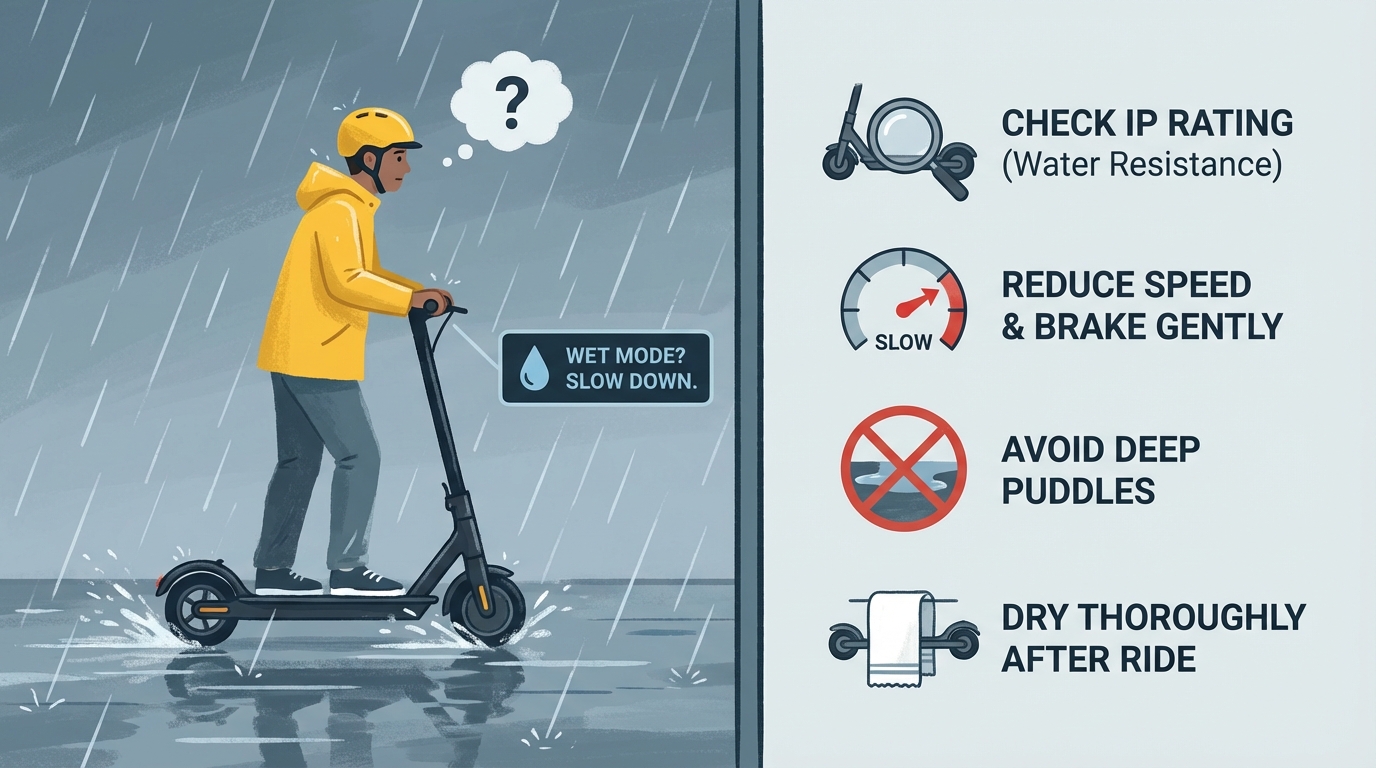
Regular wet riding demands extra maintenance attention.
Water accelerates wear on every moving part. Bearings, brake cables, and folding mechanisms all deteriorate faster with moisture exposure.
Apply lubricant to your folding mechanism monthly if you ride in rain regularly. Water washes away factory grease, causing stiff joints and potential failure.
Check your brake pads more frequently. Wet braking creates faster wear, and you need maximum stopping power in rain.
Inspect your tires for adequate tread depth. Bald tires hydroplane easily, even in shallow water.
Battery health suffers from moisture exposure. Monitor your battery performance and watch for signs of water damage like reduced range or charging problems.
Deep cleaning after wet rides prevents long-term corrosion. Follow proper cleaning procedures that protect electrical components while removing grime.
Strange sounds after rain often indicate water intrusion. Learn to identify concerning noises before they become expensive repairs.
Making the right decision for your situation
Rain riding comes down to risk assessment.
Light drizzle with good visibility? Probably fine if your scooter has decent water resistance and you adjust your riding style.
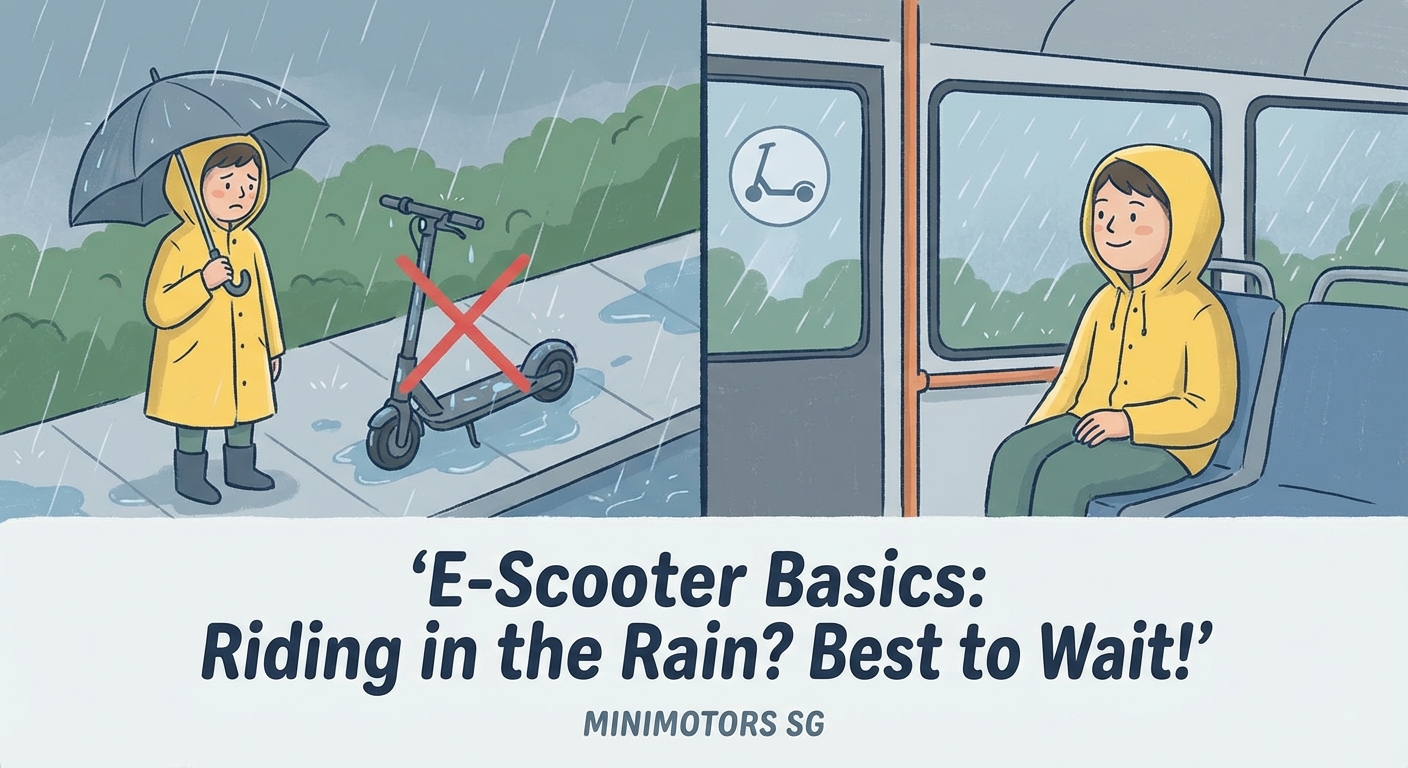
Heavy downpour with poor visibility? Take the bus or call a ride. Your scooter will survive skipping one trip.
Consider your route specifics. A flat, well-maintained bike path poses less risk than busy streets with aggressive traffic.
Your experience level matters. New riders should avoid rain entirely until they master dry-weather handling.
The consequences of a fall change the equation too. Missing work for an injury costs more than an occasional taxi fare.
If you’re still deciding whether an e-scooter fits your needs, this guide on choosing your first scooter includes weather considerations for different models.
Weather riding becomes easier with practice
Your first few rain rides will feel uncomfortable and scary.
That’s normal.
Each wet ride teaches you how your specific scooter handles moisture, where your local roads get slickest, and what gear actually keeps you dry.
Start with short trips in light rain. Build your confidence gradually rather than jumping into challenging conditions.
Pay attention to how different surfaces feel under your wheels. That knowledge becomes automatic over time.
The riders who handle rain best are not the most skilled. They’re the most cautious, the best prepared, and the most willing to skip a ride when conditions turn dangerous.
Your scooter can handle more than you think, but only if you respect its limits and ride within them. Rain does not have to end your commute, but it should always change how you ride.
