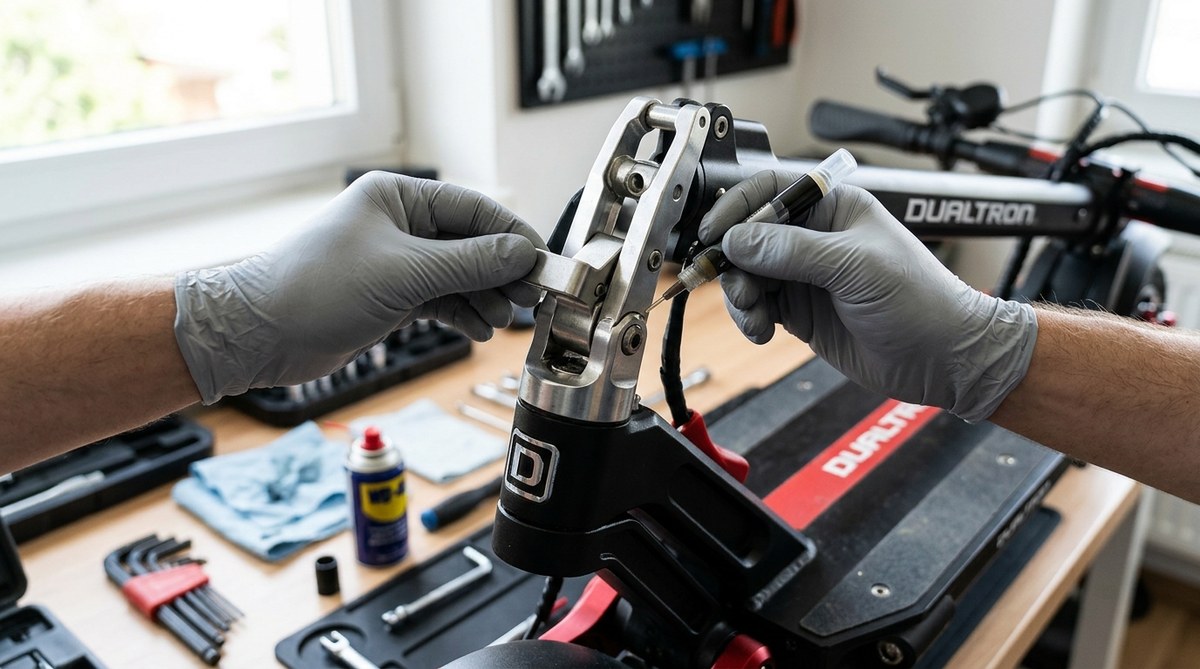
How to Inspect and Lubricate Your E-Scooter’s Folding Mechanism
Your e-scooter’s folding mechanism is the most stressed part of the frame. Every time you fold, unfold, or carry your ride, that hinge takes a beating. Dirt gets in. The factory grease dries out. Then come the squeaks, the stiffness, and eventually the worry that the latch might not hold. You do not need to be a mechanic to fix it. With a few basic tools and the right lubricant, you can keep that hinge operating like new and extend the life of your scooter.
A dry or gritty folding mechanism is dangerous and annoying. The fix is simple: inspect for cracks, clean away old grease and grime, apply a thin layer of silicone or PTFE lubricant, and then wipe off the excess. Do this every 150 miles or once a month if you ride in wet or dusty conditions. Never use thick greases that attract dirt.
Why Your Folding Mechanism Deserves Attention
The folding joint is the only moving part on an e-scooter that bears your full weight while riding and also handles the stress of being carried. If it seizes up or loosens over time, the whole scooter becomes unsafe. Common signs that your mechanism needs maintenance:
- A squeak or creak when you ride over bumps
- Extra effort required to unlock or fold the latch
- Visible rust or white corrosion around the pivot pin
- The latch feels loose or the two halves of the clamp do not close evenly
Ignoring these signs can lead to broken latches, unexpected folding while riding, or stripped threads. A ten minute lubrication session can prevent a costly repair.
What You Will Need
Before you start, gather the right supplies. Using the wrong lubricant is worse than using none at all.
| Lubricant type | Best for | Avoid if |
|---|---|---|
| Silicone spray or grease | Most folding mechanisms; repels water and dust | You need a dry, non-sticky surface |
| PTFE (Teflon) dry lube | Dry environments; leaves no residue | You ride in heavy rain (washes off quickly) |
| White lithium grease | High pressure pivot points; lasts long | You dislike sticky messes near your hands |
| WD-40 (standard) | Not recommended for lubrication; use only for loosening rust | You want long term protection |
Expert tip: Stick with a silicone based spray or a PTFE dry lube. They stay thin enough to creep into tight clearances but do not turn into a dirt magnet. Standard WD-40 is a solvent, not a lubricant. It will clean the joint but then evaporate, leaving the metal bare and squeaky.
You will also need:
– A clean rag or microfiber cloth
– A small brush (old toothbrush works great)
– Disposable gloves (optional but saves your hands)
– Isopropyl alcohol or a mild degreaser for cleaning
Step by Step: Inspect and Lubricate Your Folding Mechanism
Follow these six steps in order. Take your time. Rushing leads to missed cracks or over lubrication.
-
Unfold the scooter and lock the latch. Work on a stable surface. Engage the folding lock so the scooter is in riding position. This gives you full access to the pivot point and the latch assembly.
-
Inspect for damage. Look closely at the hinge pin, the collar, and the locking lever. Check for hairline cracks, bent metal, or worn out screws. If you see any cracks or if the latch does not click firmly, do not lubricate. Replace the damaged part first. For safety, refer to our pre-ride inspection checklist for more details.
-
Clean the area. Spray a small amount of isopropyl alcohol onto your rag and wipe away all old grease, dirt, and grime from the hinge and the latch contact surfaces. Use the brush to reach into crevices. Let it dry for two minutes.
-
Apply lubricant sparingly. Hold the spray nozzle two inches from the hinge and give one short burst. Rotate the mechanism a few times to work the lubricant in. If you are using grease, apply a pea sized drop to the pivot pin and work it in. Less is more. Excess lubricant will attract dirt.
-
Wipe away all excess. Use a clean part of the rag to remove any lubricant that oozes out or sits on the surface. The goal is a thin film inside the joint, not a puddle.
-
Cycle the mechanism ten times. Fold and unfold the scooter fully. Listen for smooth operation. The latch should snap into place without hesitation. If you still hear grinding, repeat the cleaning step and apply a fresh light coat.
How Often Should You Do This?
Frequency depends on your riding conditions. Use this guide to set your own schedule.
| Riding environment | Recommended interval |
|---|---|
| Dry, paved streets, light dust | Every 300 miles or 3 months |
| Wet weather, rain, or near ocean | Every 150 miles or monthly |
| Gravel, dirt trails, or sand | Every 100 miles or 2 weeks |
| Winter storage (no riding) | Once before storage and once before first ride |
If you ride through puddles or wash your scooter with a hose, check the mechanism the next day. Water can displace the lubricant and cause rust.
Common Mistakes to Avoid
- Over greasing: A glob of grease attracts sand and grit. That grit acts like sandpaper on the hinge pin. You end up wearing out the joint faster.
- Using oil: Light machine oils drip down and stain your deck. They also evaporate quickly. Stick to silicone or PTFE.
- Forgetting the latch mechanism: The push button, the spring, and the locking hook also need a light spray. A sticky latch can cause accidental folding.
- Skipping the inspection: Lubrication does not fix a broken latch. Always check for cracks before you apply anything.
For a broader view of everything your scooter needs, see our ultimate e-scooter maintenance checklist. It covers tires, brakes, battery contacts, and more.
Keep That Hinge Happy Year Round
A well lubricated folding mechanism is one of the easiest wins in e-scooter maintenance. It takes less than fifteen minutes, costs almost nothing, and makes your ride quieter and safer. Pair this habit with routine checks on your brake system and tire condition, and you will get many more miles out of your scooter. The next time you fold your scooter to hop on a train or stow it under your desk, you will feel the difference. No squeaks. No stiffness. Just a solid click that tells you everything is right.
