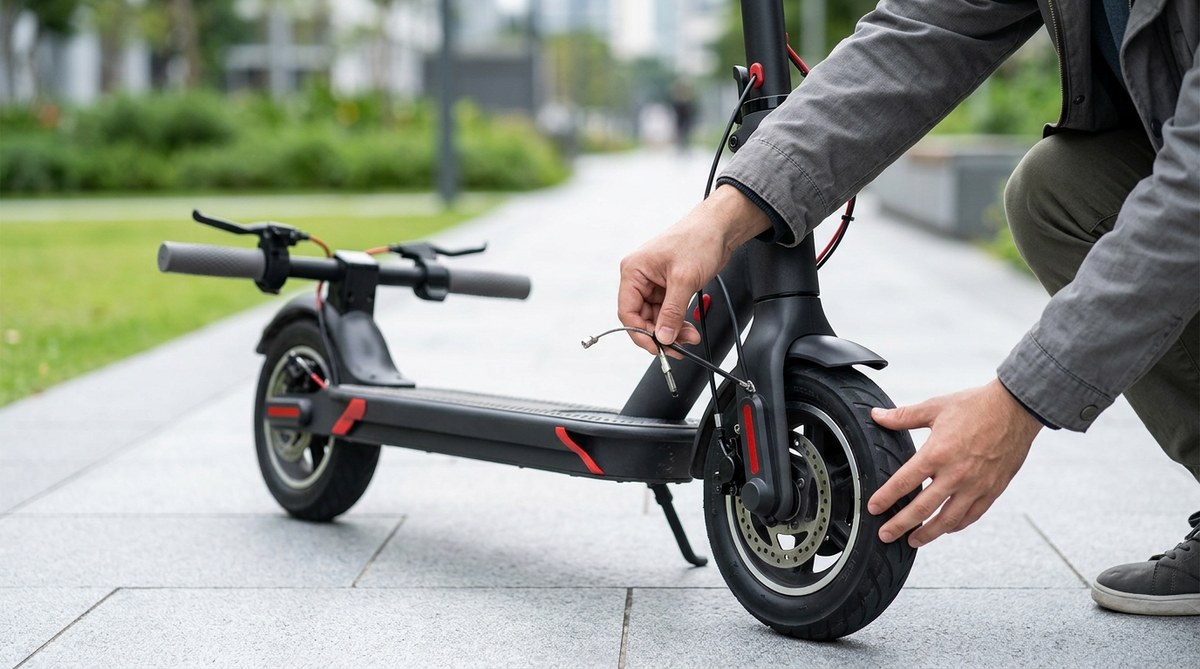
How to Check If an E-Scooter Is Safe to Ride Before Every Trip
Your e-scooter is your ticket to a faster, more fun commute. But that freedom depends on one simple thing: knowing your ride is safe before you push the throttle. A two-minute inspection before you roll out can mean the difference between a smooth trip and a sudden stop you didn’t plan for. This guide walks you through exactly what to check, in what order, so you can ride with confidence every single day.
A thorough e-scooter safety check before ride takes under three minutes and covers four critical areas: tires, brakes, battery, and folding mechanism. Skipping these checks increases your risk of flats, brake failure, electrical shorts, or a collapsed stem. Build this routine into your daily habit and you will catch problems before they become accidents.
What You Should Check Before Every Ride
Your pre-ride inspection does not need to be complicated. Think of it like a pilot doing a walk-around before takeoff. You are looking for obvious problems that could turn a normal commute into a dangerous situation. Here is the complete list of items to scan before you hop on.
- Tire pressure and visible damage (cuts, bulges, or embedded debris)
- Brake lever feel and brake pad contact
- Battery charge level and charging port condition
- Folding mechanism latch and locking collar
- Handlebar stem tightness and straightness
- Deck grip tape condition and any loose screws
- Lights and reflectors (front, rear, and side)
- Bell or horn function
Each item takes only a few seconds. The total time is less than you spend waiting for a traffic light to change.
A Step-by-Step Pre-Ride Safety Routine
Follow these steps in order. They are arranged so you move from the ground up, which helps you avoid missing anything.
-
Start with the tires. Squeeze each tire with your thumb. Pneumatic (air-filled) tires should feel firm, like a basketball. Solid tires should show no chunks missing or flat spots. Spin each wheel and look for wobbles. Check for glass, nails, or sharp rocks lodged in the tread. If you find a slow leak, refer to our guide on how to fix a flat tire on your electric scooter in under 15 minutes before you ride.
-
Test the brakes. Squeeze both brake levers. The levers should stop moving before they touch the handlebar grip. If they pull all the way to the bar, your brake cables are too loose or your pads are worn out. Spin the wheels and apply each brake. The wheel should stop instantly without any grinding noise. For a deeper look at brake types, read our comparison of understanding e-scooter braking systems: disc, drum, and electronic explained.
-
Check the battery and electrical system. Turn on the scooter and look at the display. The battery icon should show at least one bar above empty. A fully depleted battery can cause sudden power loss mid-ride, which is dangerous in traffic. Make sure the charging port cover is closed and dry. If the display flickers or shows error codes, do not ride until you diagnose the issue. Our article on what to do when your e-scooter battery won’t hold a charge can help you troubleshoot.
-
Inspect the folding mechanism. This is the most common failure point on folding scooters. Unfold the scooter and lock the latch. Try to twist the handlebars while holding the deck. There should be zero play. If the stem wobbles at the hinge, tighten the locking collar or replace the latch before riding. Learn more in our guide on how to inspect and lubricate your e-scooter’s folding mechanism.
-
Verify the stem and handlebars. Stand in front of the scooter and look down the stem. It should be perfectly straight, not bent. Grip the handlebars and try to shake them side to side. Any looseness means the clamp bolts need tightening.
-
Test the lights and horn. Turn on the front light and check it shines bright. Ask a friend or use a mirror to confirm the rear light works. Press the horn or bell. If you ride at night often, see our night riding safety: essential visibility tips for e-scooter commuters for extra precautions.
Common Mistakes to Avoid During Your Check
Even experienced riders make errors during their pre-ride inspection. The table below shows the most frequent mistakes and how to fix them.
| Mistake | Why It Is Dangerous | The Right Way |
|---|---|---|
| Only checking tire pressure by eye | A tire can look full but be dangerously low. Low pressure causes pinch flats and poor handling. | Use your thumb to press firmly. If it feels soft, use a pressure gauge. |
| Squeezing the brake lever once and moving on | The lever might feel fine at rest but stick under hard braking. | Squeeze and release several times. Listen for squeaks and feel for sticking. |
| Ignoring the charging port | Moisture or debris in the port can cause a short circuit or fire. | Visually inspect the port. If you see corrosion, do not charge or ride. |
| Assuming the folding latch is locked | Many scooters have a secondary lock that riders forget to engage. | After latching, try to fold the scooter. If it moves, the lock is not engaged. |
| Forgetting to check deck grip | Worn grip tape makes your foot slip off during bumps or turns. | Run your hand over the tape. If it feels smooth or has bald spots, replace it. |
Battery Safety: What to Look For Beyond the Charge Level
The battery is the heart of your e-scooter, and it deserves special attention. A damaged battery can catch fire or fail mid-ride. Here is what to check beyond the percentage on the display.
- Look at the battery casing. Is it swollen, cracked, or bulging? If yes, stop using the scooter immediately.
- Smell for anything unusual. A sweet or chemical smell indicates a leaking cell.
- Check the charging port for heat. After unplugging, touch the port. If it is hot, the connection may be failing.
- Monitor the voltage. If your scooter shows a voltage reading, compare it to the full charge voltage listed in your manual. A significant drop means the battery is aging.
For a full breakdown of battery lifespan, read how long do e-scooter batteries actually last. And if you are worried about overnight charging, check out can you overcharge your e-scooter battery: the truth about charging overnight.
“The most expensive repair is the one you could have prevented with a 30-second check. I have seen riders crash because a loose brake cable snapped mid-turn. That is a five-minute fix if you catch it before you leave.” — Veteran e-scooter technician, 2026
When to Skip the Ride
Sometimes the safest decision is to leave the scooter at home. If you find any of the following issues during your e-scooter safety check before ride, do not ride until the problem is fixed.
- A flat tire that will not hold air
- Brake lever that touches the handlebar
- Cracked or bent stem
- Swollen battery pack
- Folding latch that will not lock securely
- Display showing error codes you cannot clear
- Front or rear light that is completely dead
Riding with these issues is not worth the risk. A quick trip to your repair shop or a DIY fix will save you from a potential hospital visit. Our when should you service your e-scooter: essential maintenance intervals explained guide can help you plan ahead.
Building Your Check Into a Daily Habit
The hardest part of any routine is remembering to do it. Here are three ways to make your pre-ride check automatic.
- Keep a checklist on your phone. Take a photo of the list above and save it as your lock screen. Check each item before you unlock the scooter.
- Pair it with your gear. Put on your helmet, then do the check. The helmet becomes your trigger.
- Use the scooter’s own startup. While the display boots up, walk around the scooter. By the time the screen is ready, your check is done.
If you are new to e-scooters, start with our 7 essential things every first-time e-scooter rider should know before you go further. And for a complete maintenance schedule that goes beyond daily checks, see the ultimate e-scooter maintenance checklist: daily, weekly, and monthly tasks.
Make Pre-Ride Checks Your Normal
You would not drive a car without checking your mirrors and seatbelt. Your e-scooter deserves the same respect. A two-minute inspection every morning keeps you safe and your scooter running longer. It is not about being paranoid. It is about being prepared. The moment you find a loose bolt or a soft tire in your driveway instead of at a busy intersection, you will understand why this habit matters.
Start tomorrow. Run through the list. Your future self will thank you.
