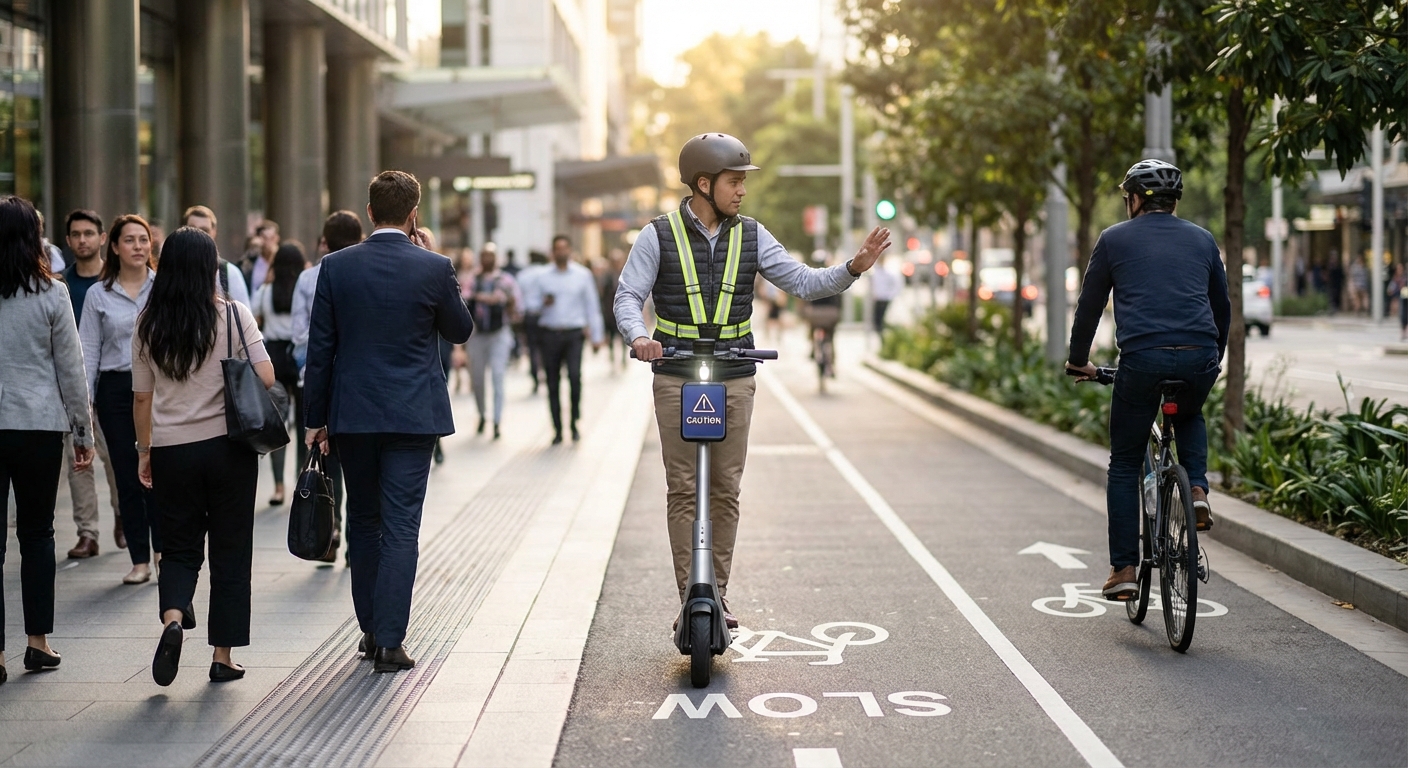
How to Safely Navigate Crowded Sidewalks and Bike Lanes on Your E-Scooter
Sharing space with pedestrians and cyclists can feel nerve-wracking when you’re new to riding an e-scooter. One wrong move, and you could startle a jogger, clip a stroller, or find yourself tangled up with a cyclist. The good news? Safe sidewalk and bike lane navigation isn’t complicated once you understand the fundamentals and develop the right habits.
Riding safely on sidewalks and bike lanes requires controlling your speed, signaling intentions clearly, maintaining predictable movement patterns, and prioritizing pedestrian safety above all else. Master these core principles alongside local regulations, and you’ll navigate shared spaces confidently while earning respect from other path users. Practice defensive riding, stay alert to your surroundings, and always assume others haven’t seen you approaching.
Understanding where you can legally ride
Before you roll anywhere, check your local regulations. Some cities ban e-scooters from sidewalks entirely, while others restrict them to bike lanes or designated paths only.
Singapore, for example, prohibits e-scooters on footpaths in most areas. Other jurisdictions allow sidewalk riding but cap speeds at walking pace. Breaking these rules doesn’t just risk fines. It puts you and others in danger.
Most urban areas follow these general patterns:
- Bike lanes are usually the preferred space for e-scooters
- Sidewalks may be allowed at reduced speeds in low-traffic zones
- Roads might be required when sidewalks and bike lanes aren’t available
- Parks and recreational paths often have specific posted rules
If you’re unsure, learning about registration requirements often clarifies where your scooter belongs legally.
Speed control makes all the difference
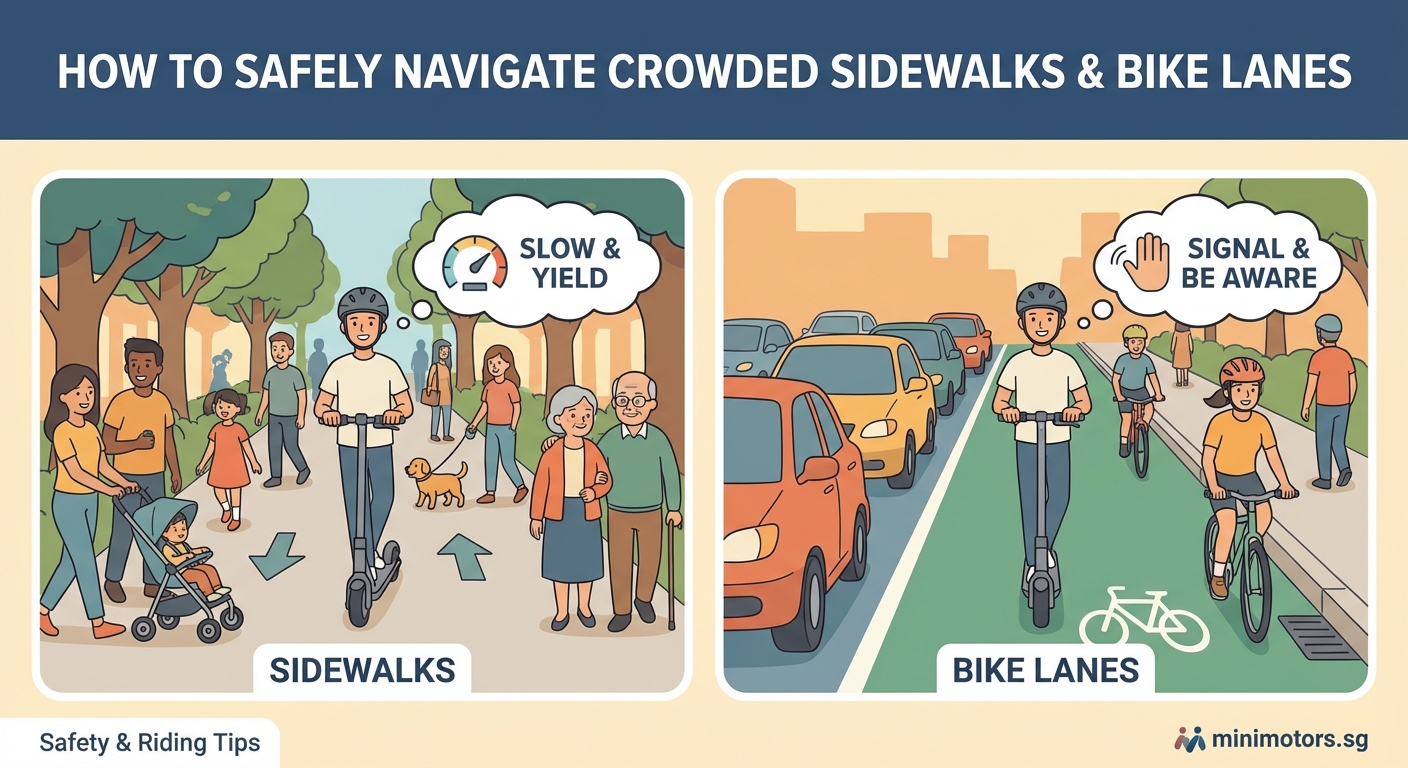
Your speed determines how much time you have to react. On crowded sidewalks, even 10 mph feels dangerously fast when weaving between baby strollers and dog walkers.
Here’s a practical speed framework:
- Match walking pace (3-4 mph) when passing pedestrians on narrow paths
- Increase to jogging speed (6-8 mph) on wider sidewalks with light foot traffic
- Ride at moderate pace (10-12 mph) in dedicated bike lanes with good visibility
- Save higher speeds for empty paths or roads where legally permitted
Your scooter’s throttle response matters too. Smooth, gradual acceleration prevents sudden lurches that startle nearby pedestrians. Jerky movements signal inexperience and make you unpredictable to others sharing the space.
Many riders forget that braking systems vary significantly between models. Know your stopping distance at different speeds before you need it in an emergency.
Signaling and communication techniques
Hand signals aren’t just for cyclists. They’re essential for e-scooter riders too.
Use these standard signals every time:
- Left turn: extend left arm straight out
- Right turn: extend right arm straight out (or left arm bent upward at elbow)
- Stopping: extend left arm downward at 45-degree angle
Beyond hand signals, verbal communication works wonders on crowded paths. A friendly “on your left” or “passing” gives pedestrians time to stay their course instead of accidentally stepping into your path.
Eye contact creates understanding. When approaching intersections or crossing paths with others, make brief eye contact to confirm they’ve seen you. Never assume someone knows you’re there.
Your bell or horn serves as your voice when hands need to stay on the handlebars. A gentle ring alerts distracted phone users or headphone wearers without startling them.
Positioning yourself properly in bike lanes
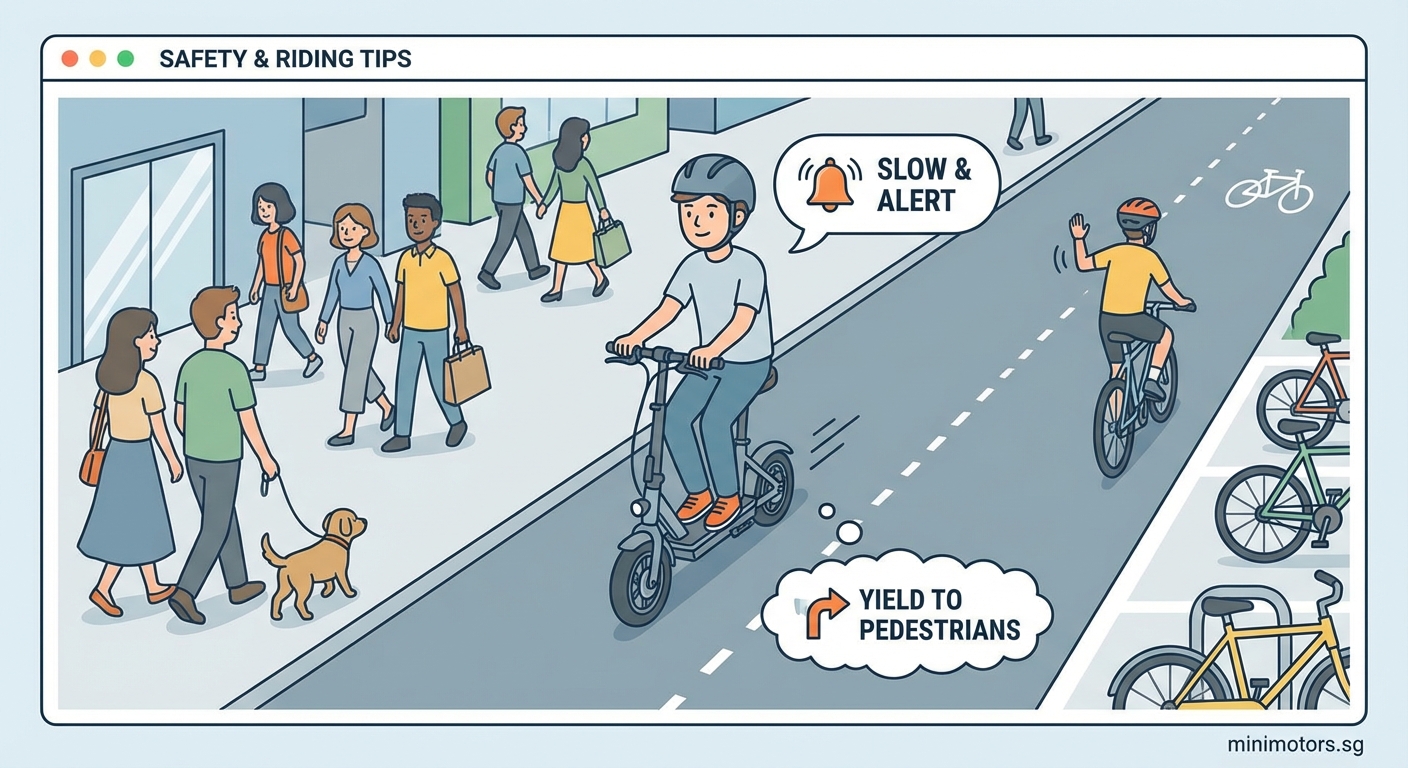
Bike lanes have unwritten rules that keep traffic flowing smoothly.
Stay to the right side of the lane, leaving room for faster cyclists to pass on your left. This mirrors road traffic patterns and feels natural to experienced bike lane users.
Avoid hugging the curb too closely. Debris, drain grates, and potholes cluster along lane edges. Position yourself about one foot from the right edge, giving yourself escape room if needed.
When bike lanes disappear at intersections, merge confidently into traffic flow rather than suddenly cutting across. Signal your intentions early and check over your shoulder before moving laterally.
Reading pedestrian behavior and anticipating movement
Pedestrians move unpredictably. Kids dart sideways chasing butterflies. Adults stop abruptly to check phones. Dogs lunge at squirrels.
Watch for these telltale signs:
- Heads turned toward storefronts often precede sudden stops
- Children holding hands with adults might break free without warning
- Groups walking side-by-side rarely notice vehicles approaching from behind
- People wearing headphones won’t hear your bell or verbal warnings
Create a mental bubble around every pedestrian. Assume they might step into your path at any moment. This defensive mindset keeps your speed appropriate and your attention sharp.
Doorways and building entrances deserve extra caution. People emerge without looking, especially from coffee shops and busy retail stores.
Handling crowded situations safely
Sometimes you’ll encounter sidewalks packed shoulder-to-shoulder with pedestrians. Your only safe option? Dismount and walk your scooter.
Trying to thread through dense crowds creates unnecessary risk. You might clip someone’s ankle, knock a bag, or cause someone to stumble. The few seconds you save aren’t worth the potential consequences.
During rush hour near transit stations or popular lunch spots, anticipate congestion and plan alternative routes. Choosing the right scooter for your commute includes considering whether you’ll frequently need to carry it through crowded areas.
When you must ride through moderately busy areas, reduce speed to barely faster than walking and be prepared to stop completely. Your thumb should hover over the brake, ready to react instantly.
Passing etiquette that keeps everyone safe
Passing requires timing, communication, and patience.
Never pass on the right unless you’re in a designated passing zone. Pedestrians naturally drift right when they hear something approaching from behind, so passing on their right creates collision risk.
Give at least three feet of clearance when possible. This buffer zone accounts for sudden movements and gives both parties breathing room.
Wait for the right moment rather than forcing tight squeezes. If the path ahead narrows or curves, hold back until visibility and space improve. Patience prevents accidents.
After passing, don’t immediately cut back in front of the person you just overtook. Maintain your line for at least several seconds to avoid startling them.
Common mistakes and how to avoid them
| Mistake | Why It’s Dangerous | Better Approach |
|---|---|---|
| Riding too close to parked cars | Doors open suddenly into your path | Maintain 4-foot distance from parked vehicles |
| Looking down at phone or display | Miss obstacles and pedestrian movements | Check your screen only when completely stopped |
| Wearing headphones in both ears | Can’t hear warnings, traffic, or approaching vehicles | Use one earbud maximum, or skip audio entirely |
| Assuming right-of-way | Pedestrians always have priority, legally and practically | Yield to foot traffic even when you’re technically allowed |
| Riding after dark without lights | Nearly invisible to drivers and other path users | Install front and rear lights, wear reflective gear |
These mistakes account for most preventable accidents. Common accident scenarios often trace back to one of these fundamental errors.
Weather and surface conditions that demand extra care
Wet pavement cuts your braking distance significantly. What stops you in 10 feet on dry concrete might need 20 feet when wet.
Reduce speed by at least 30% in light rain and 50% in heavy rain. Better yet, wait out severe weather entirely. Your scooter’s electronics don’t appreciate water exposure, and neither do your chances of staying upright.
Leaves create slippery patches in fall. They hide potholes and mask uneven pavement. Treat leaf-covered paths like ice.
Painted crosswalk lines and metal utility covers become skating rinks when wet. Cross them at reduced speed with your weight centered over the deck.
Cold weather affects battery performance too, reducing your available range and potentially leaving you stranded farther from home than planned.
Intersection navigation strategies
Intersections concentrate risk. Vehicles turn across your path. Pedestrians cross from multiple directions. Traffic signals create complex right-of-way scenarios.
Approach every intersection assuming drivers haven’t seen you. Make eye contact with turning vehicles before proceeding, even when you have the green light.
Position yourself visibly in the bike lane or road rather than hugging the curb where you disappear into blind spots.
At stop signs, come to a complete stop with at least one foot on the ground. Track-standing or rolling through signals inexperience and unpredictability to other road users.
When crossing multi-lane roads, check each lane independently. A car stopping in the near lane might block your view of vehicles in the far lane.
“The best e-scooter riders are the ones other road users never worry about. They’re predictable, visible, and respectful of shared spaces. That reputation keeps everyone safer and protects access for all riders.”
Night riding requires extra preparation
Darkness multiplies every risk factor. Pedestrians become shadows. Potholes vanish until you hit them. Drivers struggle to judge your speed and distance.
Your scooter needs a bright white front light visible from at least 500 feet. The rear light should be red and equally visible. Don’t rely on small built-in LEDs. Add supplemental lights if needed.
Reflective clothing transforms you from invisible to unmissable. A reflective vest costs less than a coffee but might save your life.
Stick to well-lit routes at night. That shortcut through the dark park isn’t worth the risk. Night riding safety deserves serious attention from anyone who commutes after sunset.
Reduce your speed at night even on familiar routes. What you could see and avoid in daylight might catch you off guard in darkness.
Building defensive riding habits
Defensive riding means expecting the unexpected and planning your escape routes.
Scan 10-15 seconds ahead, not just the pavement directly in front of your wheel. This early warning system gives you time to adjust speed or position before situations become critical.
Keep both hands on the handlebars except when signaling. One-handed riding reduces control and slows your reaction time.
Maintain space cushions on all sides when possible. Don’t box yourself in between pedestrians, parked cars, and moving traffic with no escape route.
Assume every car door might open, every pedestrian might step sideways, and every cyclist might swerve. This paranoid mindset feels excessive until it prevents your first serious accident.
First-time riders especially benefit from practicing these habits in low-traffic areas before tackling busy urban routes.
Parking and dismounting considerations
Where and how you park affects other path users and shapes public perception of all e-scooter riders.
Never block:
- Wheelchair ramps or curb cuts
- Building entrances or exits
- Bus stops or transit boarding areas
- Fire hydrants or emergency access points
- The natural flow of pedestrian traffic
Find designated parking areas when available. Many cities now provide marked e-scooter parking zones near popular destinations.
When no designated parking exists, position your scooter against a wall or bike rack, out of the pedestrian flow. Stand it upright rather than laying it down, which creates a tripping hazard.
Lock your scooter if leaving it unattended. Even a basic cable lock deters opportunistic theft and prevents someone from joyriding on your ride.
Adapting your riding to different environments
Downtown business districts demand different tactics than residential neighborhoods or waterfront paths.
In business districts, expect constant pedestrian crossing, delivery trucks double-parked, and taxi doors opening. Reduce speed and heighten alertness during business hours.
Residential areas bring children playing, pets on leashes, and cars backing out of driveways. Weekday afternoons when school lets out require extra caution.
Waterfront and park paths attract joggers, cyclists, families with strollers, and tourists stopping suddenly for photos. Weekend mornings see the heaviest recreational traffic.
College campuses create unique challenges with distracted students, bike traffic, and pedestrians wearing headphones. Between-class rush periods rival rush hour traffic density.
Maintaining your scooter for safe handling
Mechanical failures cause accidents. Regular maintenance prevents most problems.
Check these components before every ride:
- Tire pressure and tread condition
- Brake responsiveness and pad wear
- Handlebar tightness and steering smoothness
- Battery charge level
- Light functionality
Loose handlebars can twist unexpectedly during turns. Worn brake pads double your stopping distance. Low tire pressure reduces traction and control.
Regular maintenance schedules prevent small issues from becoming dangerous failures during your commute.
Strange noises deserve immediate attention. Troubleshooting unusual sounds often reveals problems before they cause accidents.
Group riding dynamics
Riding with friends changes the safety equation. Groups attract more attention but also create larger obstacles for other path users.
Ride single file in bike lanes and on narrow paths. Side-by-side formation blocks faster traffic and frustrates other users.
Designate a leader familiar with the route. The leader sets pace and signals upcoming turns or hazards. Following riders echo signals to those behind them.
Maintain consistent spacing between riders. Bunching up eliminates reaction time if the lead rider stops suddenly. Too much spacing fragments the group at intersections.
Agree on hand signals and communication before starting. Different riding backgrounds mean different signal interpretations without prior discussion.
Respecting the shared space philosophy
Sidewalks and bike lanes belong to everyone. Your right to use them comes with responsibility to share courteously.
Pedestrians always have priority on sidewalks, even where e-scooters are legally permitted. Slow down, give space, and pass only when safe.
Cyclists generally travel faster than e-scooters. Let them pass freely and don’t try to race or keep pace beyond your comfort level.
Children and elderly pedestrians deserve extra caution and patience. They move less predictably and react more slowly to approaching vehicles.
Your behavior shapes how the public views all e-scooter riders. Courteous, safe riding builds goodwill. Reckless behavior triggers restrictions that affect everyone.
Building confidence through practice
New riders should start in low-traffic areas before tackling busy sidewalks and bike lanes.
Empty parking lots provide space to practice:
- Starting and stopping smoothly
- Turning at various speeds
- Emergency braking from different speeds
- One-handed riding for signaling
- Scanning ahead while maintaining course
Gradually progress to quiet residential streets, then busier bike paths, and finally complex urban environments. This staged approach builds skills without overwhelming you.
Consider riding the same route multiple times at different times of day. Morning, midday, and evening commutes present different challenges and traffic patterns.
Choosing your first scooter includes considering whether it has features that support safe learning, like responsive brakes and intuitive controls.
Making safety second nature
The techniques covered here might feel overwhelming at first. That’s normal.
Start by focusing on three fundamentals: control your speed, signal your intentions, and watch for pedestrians. Master these basics before worrying about advanced tactics.
After a few weeks of consistent practice, defensive riding becomes automatic. You’ll scan ahead without thinking about it. Your hand will signal turns before your conscious mind decides to. Your speed will adjust naturally to conditions.
That’s when e-scooter riding transforms from stressful navigation exercise into enjoyable, efficient transportation. You’ll glide through shared spaces confidently, earning nods from cyclists and appreciative waves from pedestrians who notice your courteous riding.
Safe sidewalk and bike lane riding isn’t about memorizing rules. It’s about developing awareness, respect for others, and the judgment to adapt your riding to constantly changing conditions. Practice these principles consistently, and you’ll join the community of riders who make urban micro-mobility work for everyone.
