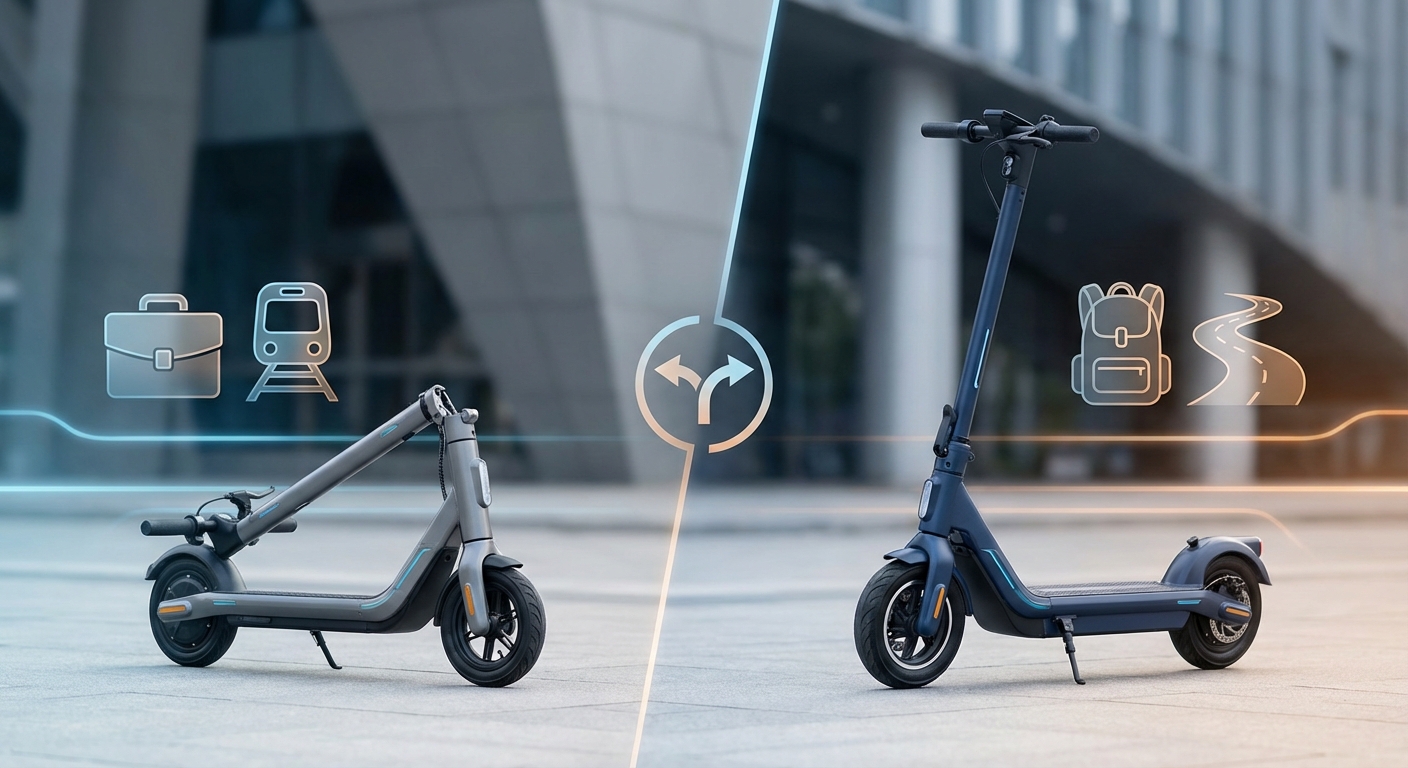
Should You Buy a Folding or Non-Folding Electric Scooter?
Choosing between a folding and non folding electric scooter feels like a small detail until you’re wrestling with a bulky frame in a crowded elevator or noticing a wobbly stem after six months of daily use. The decision affects how you store your ride, how long it lasts, and whether you’ll actually use it every day or let it gather dust in a corner.
Folding scooters excel at portability and tight storage but introduce mechanical weak points. Non folding models offer superior durability and structural integrity at the cost of convenience. Your choice depends on whether you prioritize carrying your scooter indoors daily or leaving it parked in a secure location. Most urban commuters mixing transit modes benefit from folding designs, while garage owners gain reliability from fixed frames.
What makes folding scooters different from fixed frame models
Folding scooters use hinges, latches, and collapsible stems to reduce their footprint. Most fold at the stem, allowing the handlebar to drop toward the deck. Some also feature folding handlebars for even tighter packing.
Non folding scooters skip these mechanisms entirely. The frame runs from deck to handlebar in one continuous piece, welded or bolted without any pivot points.
The folding mechanism adds moving parts. Every hinge becomes a potential failure point over time, especially under heavy use or rough terrain. Non folding frames distribute stress more evenly because there are no weak joints to fatigue.
Weight differs between the two types. Folding scooters often use lighter materials to offset the added hardware. Non folding models can afford heavier, more robust components since portability isn’t the primary goal.
When folding scooters make the most sense
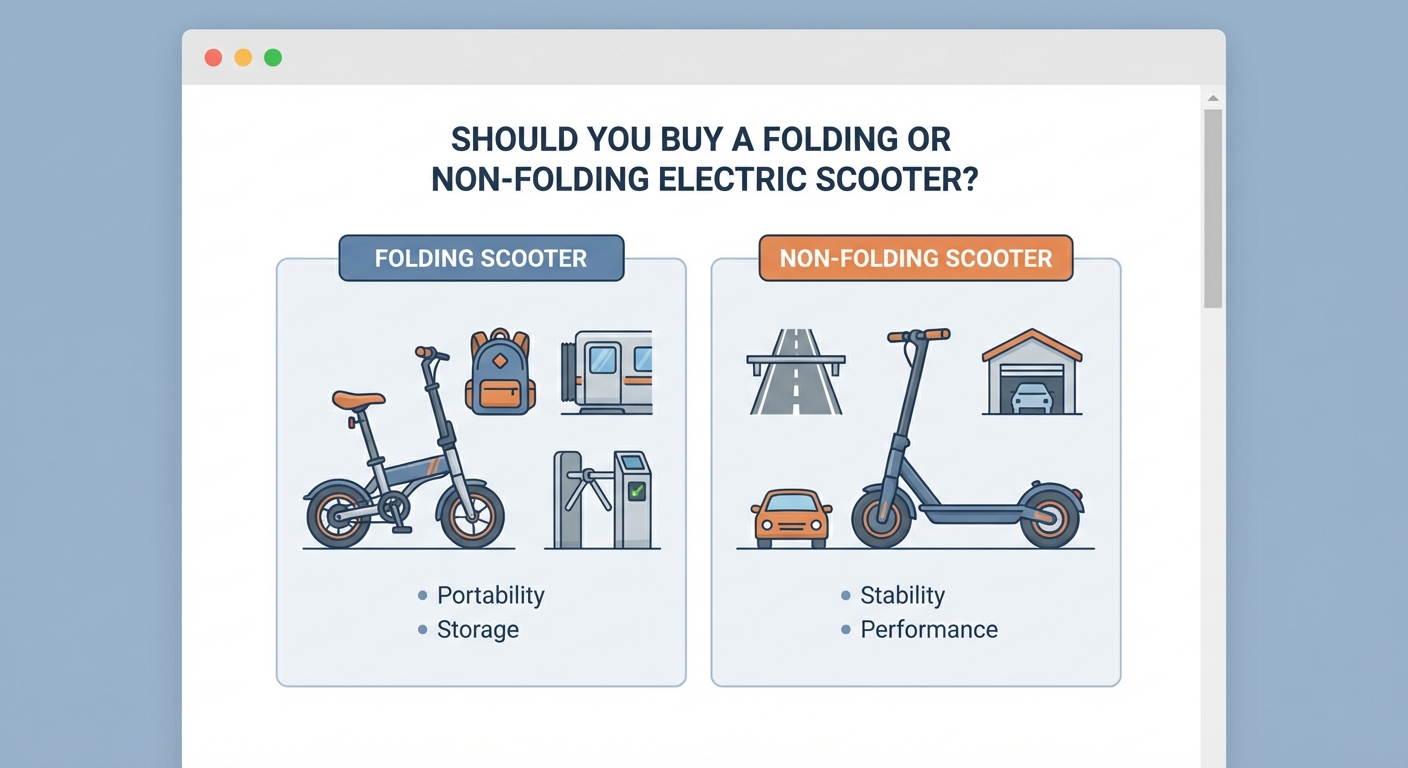
Folding designs shine in multi modal commutes. If you ride to a train station, fold your scooter, carry it on board, then unfold it at your destination, a folding model saves you parking fees and theft risk.
Apartment dwellers with limited space benefit from compact storage. A folded scooter fits under a desk, in a closet, or beside a coat rack. Non folding models demand floor space or wall mounts.
Office workers who bring their scooter inside appreciate the portability. A folding scooter rides an elevator without blocking other passengers and tucks under your desk without inconveniencing coworkers.
Public transit rules often require foldable vehicles. Many bus and subway systems allow folding scooters as carry on items but ban full size models during peak hours.
Here are the scenarios where folding scooters perform best:
- You live in a small apartment without dedicated parking
- Your commute involves buses, trains, or ferries
- You work in a high rise office building
- You need to carry your scooter up stairs regularly
- Theft is a concern in your neighborhood
Where non folding scooters outperform folding models
Non folding scooters deliver superior ride quality. The rigid frame absorbs less vibration and flexes less under load, translating to a smoother, more stable experience.
Durability improves without folding joints. Riders who cover long distances or tackle rough pavement see fewer mechanical issues over the scooter’s lifespan.
Heavier riders benefit from the stronger construction. Non folding frames handle higher weight capacities without the stress concentration that occurs at hinge points.
Garage owners or those with dedicated parking don’t need portability. If you can leave your scooter in a locked space, the fixed frame’s reliability outweighs the folding model’s convenience.
Performance oriented riders prefer non folding designs. Racing, off road use, and high speed commuting all demand structural rigidity that folding mechanisms compromise.
Consider a non folding scooter if:
- You have secure parking at home and work
- You weigh over 220 pounds
- Your route includes cracked pavement or gravel
- You prioritize top speed and acceleration
- You want the lowest maintenance burden
Understanding the engineering trade offs

Folding mechanisms introduce complexity. The latch that secures the stem must withstand constant vibration while remaining easy to operate. Cheap latches wear out, causing wobble or unexpected collapse.
Most folding scooters use a lever clamp or collar system. The lever applies pressure to lock the stem in place. Over time, the clamp loosens, requiring periodic tightening or replacement.
Non folding scooters avoid this entirely. The stem either bolts directly to the deck or forms a single welded piece. No adjustment needed, no gradual loosening.
Weight distribution changes when you fold a scooter. The handlebar and stem add weight to one end, making the folded package awkward to carry. Non folding scooters don’t transform, so their weight stays balanced for rolling or pushing.
Battery placement affects both types. Folding scooters often mount batteries in the deck to keep the center of gravity low when folded. Non folding models have more flexibility in battery positioning since they don’t need to balance in folded form.
| Feature | Folding Scooter | Non Folding Scooter |
|---|---|---|
| Portability | Excellent | Poor |
| Structural rigidity | Moderate | Excellent |
| Maintenance frequency | Higher | Lower |
| Typical weight | 25-35 lbs | 35-55 lbs |
| Storage footprint | 12-18 inches wide | 18-24 inches wide |
| Price for similar specs | $50-150 more | Baseline |
Daily inspection points for folding mechanisms
Folding scooters demand regular checks. The hinge and latch take the most stress during your ride, so they wear faster than other components.
Inspect the folding latch before each ride. Look for cracks, bent metal, or loose fasteners. Wiggle the stem to detect play. Any movement indicates the latch needs tightening or replacement.
Check the hinge pin weekly. This pin holds the stem to the deck and bears your full weight plus road shock. If it loosens, the scooter becomes dangerous. Remove the pin, clean it, apply threadlocker, and reinstall according to manufacturer specs.
Lubricate moving parts monthly. A drop of silicone lubricant on the hinge and latch keeps them operating smoothly and prevents corrosion.
Non folding scooters skip most of these steps. You still check bolts and fasteners, but there’s no latch to monitor or hinge to lubricate. This saves time and reduces the risk of overlooking a critical issue.
How storage space shapes your decision
Measure your available space before buying. A folded scooter typically measures 12 to 18 inches wide, 40 to 50 inches long, and 15 to 20 inches tall. Non folding models stay 40 to 50 inches tall even when standing upright.
Closets, under desk areas, and car trunks favor folding designs. If you plan to store your scooter in any of these locations, measure the space and compare it to the scooter’s folded dimensions.
Wall mounts work for both types but require drilling. Non folding scooters hang vertically, taking up ceiling height. Folding scooters can hang horizontally or vertically depending on the mount design.
Shared living spaces complicate storage. Roommates and family members may object to a scooter blocking hallways or common areas. A folding model that tucks away reduces friction.
Choose your scooter based on where it will spend 90% of its time, not the 10% when you’re riding it. If storage is tight, folding makes sense. If you have room, fixed frames last longer.
Comparing weight and carrying comfort
Folding scooters range from 25 to 35 pounds for commuter models. Performance folding scooters can hit 40 pounds or more once you add larger batteries and motors.
Carrying a 30 pound scooter up two flights of stairs gets old fast. The weight concentrates in the deck and battery, making the folded package front heavy. Use both hands and take breaks.
Non folding scooters weigh 35 to 55 pounds for similar performance specs. You’re not meant to carry them, so manufacturers prioritize durability over lightness.
Some folding scooters include trolley wheels on the deck. When folded, you can roll the scooter like luggage instead of carrying it. This feature adds weight but saves your back.
If you need to carry your scooter more than 50 feet per trip, test the weight before buying. Lift it, hold it, walk with it. What feels manageable in a showroom may exhaust you after a week of daily commutes.
Price differences and value considerations
Folding mechanisms add cost. The hinge, latch, and additional engineering required to make a scooter fold safely increase the base price by $50 to $150 compared to a non folding model with identical specs.
Budget folding scooters cut corners on the latch and hinge to hit lower price points. These components fail first, sometimes catastrophically. Avoid folding scooters under $300 unless you’re buying from a reputable brand with proven reliability.
Non folding scooters in the same price range allocate more budget to the motor, battery, and suspension. You get better performance and range for the same money.
Resale value favors non folding models. Buyers shopping used scooters worry about worn out latches and wobbly stems. A fixed frame scooter with the same mileage commands a higher price because there are fewer wear items to inspect.
If you’re on a tight budget and don’t absolutely need portability, a non folding scooter delivers more value. If portability is non negotiable, save up for a mid range folding model with quality hardware rather than settling for a cheap one.
Safety concerns with folding joints
Folding mechanisms fail in predictable ways. The latch wears out, the hinge pin loosens, or the stem cracks near the pivot point. Any of these failures can cause a sudden collapse while riding.
Manufacturers test folding mechanisms for thousands of cycles, but real world conditions vary. Potholes, curbs, and aggressive riding accelerate wear beyond lab predictions.
Non folding frames fail too, but the failure modes differ. Welds crack, bolts shear, or the deck fractures. These failures usually give warning signs like creaking or visible cracks. Folding latches can fail without warning if you don’t inspect them regularly.
Rider weight affects safety margins. A 180 pound rider stresses a folding mechanism less than a 220 pound rider. If you’re near the scooter’s weight limit, the fixed frame provides more safety buffer.
Children and inexperienced riders sometimes forget to secure the latch properly. A partially latched scooter can collapse mid ride. Non folding scooters eliminate this user error.
Maintenance costs over the scooter’s lifetime
Folding scooters require more frequent maintenance. The latch and hinge need inspection, cleaning, and lubrication. Replacement latches cost $20 to $60 depending on the model.
Hinge pins wear out after 1,000 to 2,000 miles of hard use. Replacement pins run $10 to $30, but labor adds cost if you’re not comfortable doing the work yourself.
Non folding scooters focus maintenance on tires, brakes, and bearings. These components wear on both types, but the non folding model doesn’t add latch and hinge upkeep to the list.
Over five years, a folding scooter may cost $100 to $200 more in maintenance compared to a non folding model. This gap widens if you ride daily in rough conditions.
Factor these costs into your total cost of ownership. A cheaper folding scooter that needs frequent repairs may end up costing more than a pricier non folding model that runs trouble free.
How your commute type influences the choice
Short urban commutes under three miles favor folding scooters. You fold it, carry it into a coffee shop or office, and unfold it for the return trip. Total riding time is low, so latch wear accumulates slowly.
Long suburban commutes over five miles favor non folding scooters. You’re riding for 20 to 30 minutes each way, covering rough pavement and higher speeds. The rigid frame handles the stress better.
Mixed commutes combining riding and public transit demand folding capability. If you board a bus or train mid commute, the scooter must fold to comply with transit rules.
Hilly terrain stresses folding joints. Climbing puts extra force on the latch and hinge. If your route includes steep grades, inspect the folding mechanism weekly.
Flat, smooth routes are ideal for folding scooters. The mechanism lasts longer when it’s not absorbing constant shock from potholes and cracks.
Real world examples from daily riders
A graphic designer in a downtown high rise folds her scooter every morning, rides the elevator to the 12th floor, and stows it under her desk. The folding mechanism has held up for 18 months with monthly tightening.
A warehouse worker with a ground level garage bought a non folding scooter. He rides six miles each way on cracked industrial roads. After two years, the frame shows no wear beyond cosmetic scratches.
A college student mixes biking, busing, and scootering. His folding scooter fits in a backpack when fully collapsed. The latch failed after eight months of heavy use, but the warranty covered replacement.
A suburban commuter parks her non folding scooter in a locked shed. She’s never needed to carry it, so the extra weight doesn’t matter. Three years in, the scooter runs like new.
These stories highlight the pattern. Folding scooters suit varied, urban lifestyles with storage constraints. Non folding scooters reward riders with secure parking and consistent routes.
Accessories that bridge the gap
Folding scooters pair well with carrying straps. A shoulder strap distributes weight better than hand carrying, reducing fatigue on longer walks.
Non folding scooters benefit from wall mounts or floor stands. These keep the scooter upright and out of the way without requiring floor space.
Trolley wheels on folding scooters turn them into rolling luggage. You pull the scooter behind you instead of lifting it, saving energy.
Locking mechanisms matter for both types. Folding scooters are easier to steal because they’re easier to carry. Invest in a quality U lock or chain lock.
Protective cases exist for folding scooters. If you travel frequently, a padded case protects the scooter during transport and makes airport security smoother.
Making the final call based on your situation
List your non negotiables. If you must carry your scooter up stairs daily, folding is mandatory. If you have a garage and never need to transport the scooter, non folding makes sense.
Test ride both types if possible. The difference in ride quality becomes obvious after 10 minutes. A wobbly stem or flexing deck feels unstable compared to a rigid frame.
Consider your physical strength. A 30 pound scooter feels light for the first 20 feet, then heavy after 100 feet. Be honest about your carrying capacity.
Think five years ahead. Will your living situation change? Will you move to a building with an elevator? Will you start driving instead of taking transit? Choose the scooter that fits your likely future, not just your current routine.
Budget for the total cost. A $400 folding scooter plus $150 in maintenance over five years costs more than a $500 non folding scooter with $50 in maintenance.
If you’re still undecided after weighing these factors, the how to choose your first electric scooter guide covers additional selection criteria that may clarify your priorities.
Which design fits your daily reality
The folding versus non folding debate boils down to lifestyle fit. Folding scooters trade durability for convenience. Non folding scooters trade portability for longevity.
Urban riders mixing multiple transit modes almost always choose folding. The ability to board a bus or train without hassle outweighs the maintenance burden.
Suburban riders with dedicated parking almost always choose non folding. The superior ride quality and lower upkeep match their longer, more demanding commutes.
Edge cases exist. Some riders keep both types, using the folding model for errands and the non folding model for fitness rides. Others modify their folding scooter with aftermarket latches to improve reliability.
Your choice should reflect where you’ll ride, how you’ll store it, and whether you value convenience or durability more. Neither type is universally better. The right scooter is the one you’ll actually use every day without frustration.
Start by measuring your storage space and mapping your typical commute. Those two data points eliminate half your options immediately. Then test ride the remaining candidates and pick the one that feels most natural for your routine.
