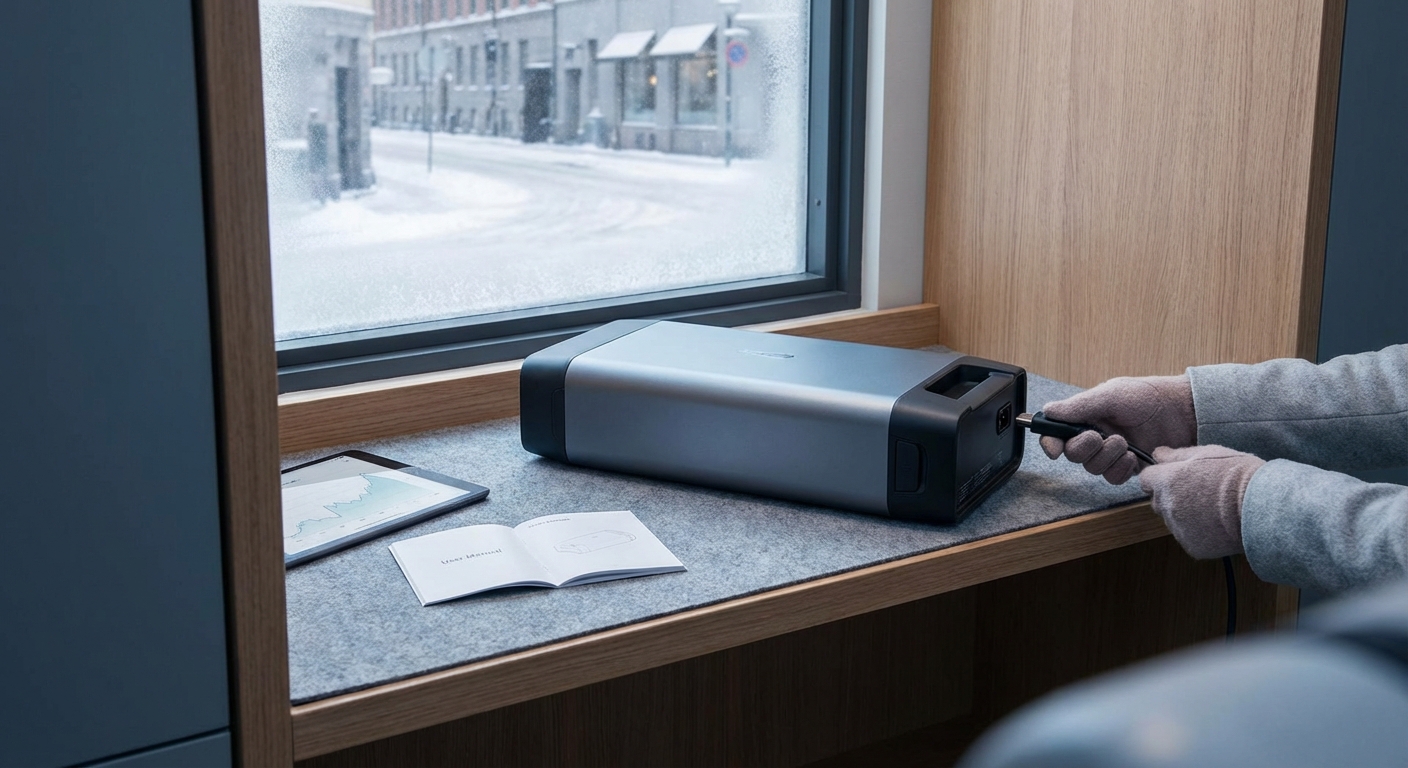
How to Store Your E-Scooter Battery During Winter or Long Breaks
Winter is coming, and your electric scooter battery needs special care. Cold temperatures can permanently damage lithium-ion cells, reducing capacity and shortening overall lifespan. Most riders don’t realize that storing a battery incorrectly for just one winter season can cost them 20 to 30 percent of their total range. The good news? Proper storage is straightforward once you understand the science behind battery chemistry and temperature effects.
Store your e-scooter battery at 40 to 60 percent charge in a temperature-controlled environment between 50°F and 77°F. Remove the battery from your scooter, clean all contacts, and check voltage monthly. Avoid freezing temperatures and full charges during storage. Following these steps preserves battery chemistry and extends lifespan by preventing irreversible capacity loss during winter months or extended periods of non-use.
Why cold weather destroys e-scooter batteries
Lithium-ion batteries rely on chemical reactions to store and release energy. When temperatures drop below freezing, these reactions slow dramatically. The electrolyte inside each cell becomes more viscous, like honey in a cold refrigerator.
This thickness prevents lithium ions from moving efficiently between electrodes.
Storing a battery in freezing conditions causes permanent structural changes. The electrodes can develop microscopic cracks. The separator between positive and negative terminals may degrade. These changes are irreversible.
Even if you warm the battery later, the damage remains.
Temperature extremes also accelerate self-discharge. A battery stored at 32°F loses charge twice as fast as one kept at 68°F. If the charge drops too low, the battery management system may lock out the cells permanently to prevent safety hazards.
Cold storage at full charge is particularly harmful. High voltage combined with low temperature creates stress on the cathode material. This stress causes lithium plating, which reduces capacity and increases internal resistance.
Preparing your battery for winter storage
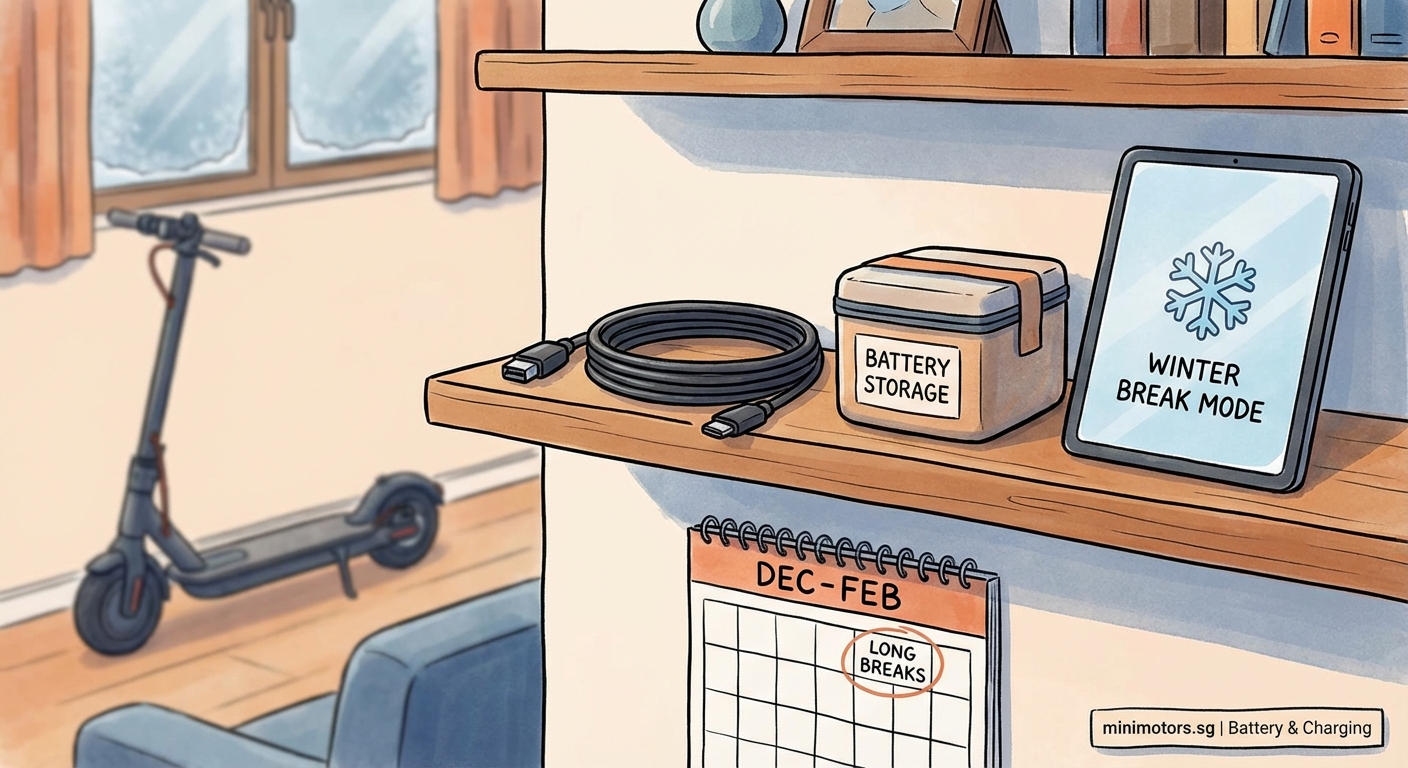
Before you put your scooter away, take these steps to ensure your battery survives until spring.
Step 1: Charge to the optimal storage level
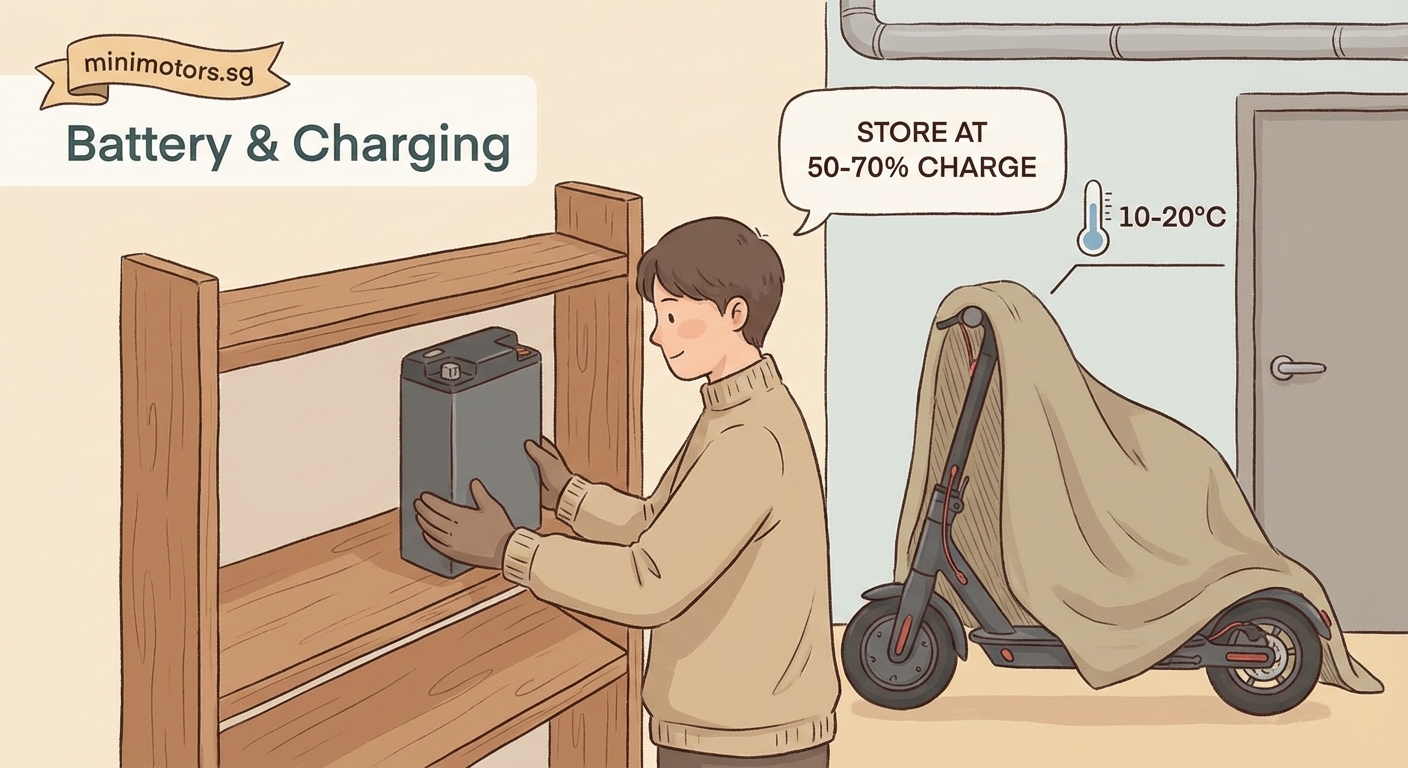
Most manufacturers recommend storing lithium-ion batteries between 40 and 60 percent charge. This range minimizes stress on the cells while preventing deep discharge.
Check your scooter’s display or app to see current battery level. If it’s above 60 percent, take a short ride to bring it down. If it’s below 40 percent, plug in the charger until you reach the target range.
Never store a battery at zero percent. Deep discharge can trigger protection circuits that permanently disable the pack.
Step 2: Remove the battery from your scooter
If your model has a removable battery, take it out. This prevents parasitic drain from the scooter’s electronics.
Even when powered off, controllers and displays draw tiny amounts of current. Over months, this drain can deplete the battery below safe levels.
Removing the battery also makes it easier to store in a climate-controlled location. Garages and sheds often experience temperature swings that damage cells.
Step 3: Clean all electrical contacts
Use a dry microfiber cloth to wipe the battery terminals and charging port. Remove any dirt, moisture, or corrosion.
Dirty contacts can cause resistance, which leads to heat during charging. Clean connections ensure efficient power transfer when you’re ready to ride again.
For stubborn corrosion, use a cotton swab dipped in isopropyl alcohol. Let everything dry completely before reassembly.
Step 4: Find the right storage location
Your battery needs a stable environment. Basements, interior closets, and climate-controlled storage units work well.
Avoid these locations:
- Unheated garages
- Outdoor sheds
- Attics with poor insulation
- Near heating vents or radiators
- Direct sunlight
Temperature fluctuations are just as harmful as extreme cold. Aim for a consistent 50°F to 77°F throughout the storage period.
Monthly maintenance during storage
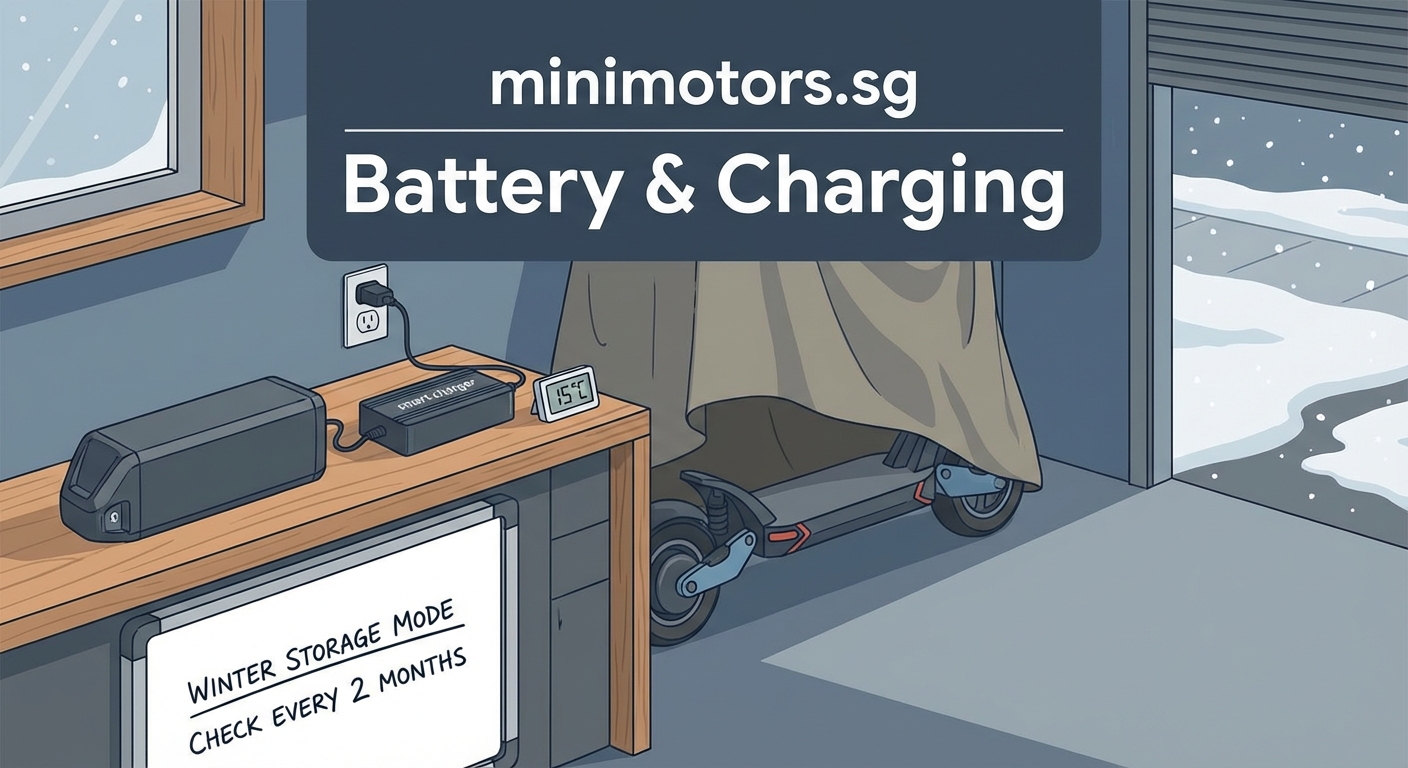
Your battery isn’t hibernating. It still needs attention every four weeks.
Check the voltage or charge level
Use your scooter’s display or a multimeter to verify the battery hasn’t dropped below 40 percent. If it has, charge it back to 50 percent.
This prevents the cells from entering deep discharge, which can trigger permanent lockout.
Inspect for physical damage
Look for swelling, cracks, or leaking fluid. These signs indicate internal failure. If you notice any of these issues, stop using the battery immediately and contact the manufacturer.
Never attempt to charge or use a damaged lithium-ion battery. The risk of fire or explosion is real.
Rotate the battery position
If you’re storing multiple batteries, rotate their positions to ensure even temperature exposure. Batteries closest to exterior walls may experience more temperature variation.
Common winter storage mistakes and how to avoid them
| Mistake | Why It’s Harmful | Correct Approach |
|---|---|---|
| Storing at 100% charge | High voltage stress accelerates degradation | Store at 40 to 60 percent charge |
| Leaving battery in freezing garage | Cold damages cell structure permanently | Keep in climate-controlled space |
| Ignoring battery for entire winter | Deep discharge can lock out cells | Check and recharge monthly |
| Storing on concrete floor | Concrete doesn’t harm modern batteries, but cold does | Use any surface in warm location |
| Charging immediately after bringing in from cold | Thermal shock can crack cells | Let battery warm to room temperature first |
That last point deserves emphasis. If you bring a frozen battery indoors, wait at least two hours before plugging in the charger. Charging cold cells can cause lithium plating and permanent capacity loss.
What to do if you can’t remove your battery
Some scooters have integrated batteries that can’t be easily removed. You’ll need to store the entire scooter in a temperature-controlled location.
Turn off the scooter completely. Some models have a hidden power switch separate from the main display button. Check your manual.
If you must store the scooter in a cold garage, bring it indoors once a month to warm up and recharge to 50 percent. This prevents deep discharge while minimizing exposure to harmful temperatures.
Consider investing in an insulated cover designed for electric vehicles. These covers provide some thermal protection, though they’re not a substitute for proper indoor storage.
“The single most important factor in battery longevity is storage temperature. Even a few degrees can make the difference between a battery that lasts five years and one that fails after three.” – Battery research engineer, MIT Energy Initiative
Bringing your battery back to life in spring
When riding season returns, don’t just plug in and go. Follow this sequence:
- Move the battery to your riding location and let it reach room temperature
- Visually inspect for any damage that occurred during storage
- Charge to 100 percent using the original charger
- Let the battery rest for 30 minutes after charging completes
- Take a short test ride to verify normal performance
Your first few rides may show slightly reduced range. This is normal. The battery needs a few charge cycles to return to optimal performance.
If you notice significant capacity loss or unusual behavior, the battery may have suffered damage during storage. Contact your manufacturer or a qualified repair shop. Understanding how long e-scooter batteries actually last can help you determine if replacement is necessary.
How storage affects different battery chemistries
Most modern e-scooters use lithium-ion batteries, but the specific chemistry varies. Understanding your battery type helps you optimize storage conditions.
Lithium Nickel Manganese Cobalt (NMC) batteries are common in performance scooters. They offer high energy density but are sensitive to temperature extremes. Store these at the lower end of the charge range, around 40 percent.
Lithium Iron Phosphate (LiFePO4) batteries are more stable and tolerate temperature variations better. You can store these closer to 60 percent charge without significant degradation.
Check your scooter’s manual or battery label to identify the chemistry. If you’re unsure, the 50 percent charge rule works for all types.
Planning ahead for next winter
Once you’ve successfully stored your battery through one winter, make the process easier next year.
Set calendar reminders for monthly checks. Use your phone or a physical calendar to ensure you don’t forget.
Keep a simple log noting the date, charge level, and any observations. This helps you spot trends and catch problems early.
Consider buying a smart plug with temperature monitoring. These devices alert you if your storage location gets too cold or hot.
If your scooter sees regular use even in winter, you might benefit from learning about mistakes that kill battery life year-round.
Understanding self-discharge rates
All batteries lose charge over time, even when not in use. This natural process is called self-discharge.
Lithium-ion batteries typically self-discharge at 2 to 3 percent per month at room temperature. Cold storage increases this rate to 5 percent or more.
A battery stored at 50 percent charge will drop to approximately 35 percent after three months in a cold garage. This is why monthly checks are essential.
Self-discharge accelerates as batteries age. A three-year-old battery may lose charge twice as fast as a new one. Adjust your checking schedule accordingly.
Special considerations for dual-battery systems
High-performance scooters sometimes use two batteries in parallel or series. These systems require extra attention during storage.
Remove both batteries if possible. Store them in the same location to ensure equal temperature exposure.
Check both batteries monthly and maintain them at the same charge level. Mismatched charge states can cause imbalance when you reconnect them.
If one battery shows significantly different voltage than the other, don’t use the system until you resolve the discrepancy. Contact the manufacturer for guidance.
What about battery management systems?
Modern e-scooter batteries include built-in protection circuits called battery management systems (BMS). These circuits prevent overcharging, over-discharging, and thermal runaway.
The BMS continues working during storage, drawing a tiny amount of current. This is another reason to check charge levels monthly.
Some advanced BMS units have storage modes that reduce power consumption. Check your manual to see if your scooter offers this feature.
Never bypass or modify the BMS. These safety systems prevent fires and extend battery life. Tampering with them voids your warranty and creates serious hazards.
Cost of neglecting proper storage
Replacing an e-scooter battery typically costs $200 to $800, depending on capacity and brand. That’s a significant expense for something preventable.
Poor storage can reduce battery lifespan by 50 percent or more. A battery designed to last five years might fail after two or three winters of improper care.
Beyond replacement cost, degraded batteries reduce range and performance. You’ll spend more time charging and less time riding.
The hour or two you invest in proper storage preparation pays back many times over in extended battery life and reliable performance.
Keeping your investment protected year after year
Your e-scooter battery represents a substantial investment. Treating it right during winter and extended breaks ensures you get maximum value from that investment.
The techniques outlined here aren’t complicated. They just require consistency and attention to a few key factors: charge level, temperature, and monthly monitoring.
Start planning your storage strategy now, before the first freeze arrives. Set up your climate-controlled storage location, gather your cleaning supplies, and add those monthly check reminders to your calendar. When spring returns, your battery will be ready to deliver the same performance you enjoyed last season, with minimal capacity loss and years of life still ahead.
