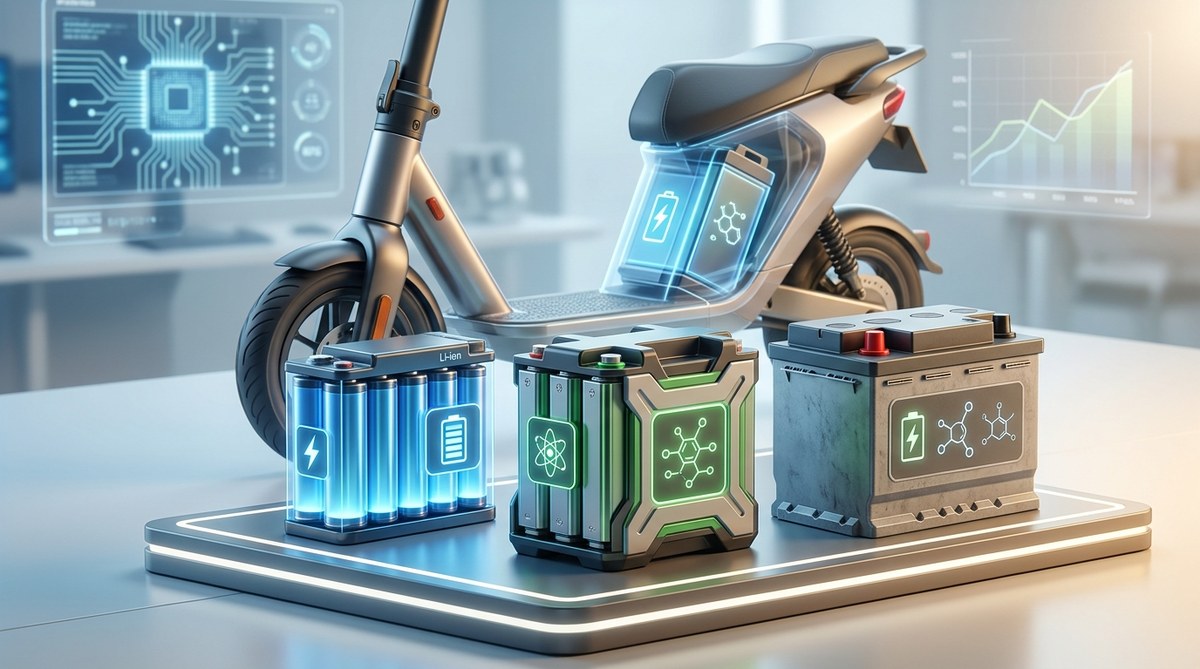
The Complete Guide to E-Scooter Battery Chemistry: Li-ion vs. LiFePO4 vs. Lead-Acid
Choosing a new electric scooter often comes down to one big question: which battery is inside? The battery is the heart of your ride. It decides how far you go, how fast you get there, and how much you spend over the life of the scooter. Three main chemistries dominate the market today: lithium-ion (Li-ion), lithium iron phosphate (LiFePO4), and the older sealed lead-acid (SLA). Each one has strengths and trade-offs. This guide breaks down the real differences so you can pick the right power source for your commute, your budget, and your lifestyle.
Li-ion batteries offer the best balance of weight, range, and lifespan for most riders, making them the top choice for 2026 e-scooters. LiFePO4 excels in safety and longevity but adds weight and cost. Lead-acid is cheap upfront but heavy, short-lived, and inefficient. Your decision should match your budget, daily distance, and willingness to carry extra weight.
How Each Battery Chemistry Works
Understanding the basics helps you see why one chemistry costs more or lasts longer. Here is a simple look at what happens inside each type.
Lithium-ion (Li-ion)
Li-ion is the standard for nearly all modern e-scooters. It uses lithium cobalt oxide or similar compounds in the cathode. These cells pack a lot of energy into a small, light package. A typical 48V Li-ion battery on a commuter scooter weighs around 7 to 10 pounds. That lightness makes the scooter easier to carry up stairs or onto a train. Li-ion also holds voltage well under load, so your top speed stays consistent until the battery is nearly empty.
Lithium Iron Phosphate (LiFePO4)
LiFePO4 is a cousin of Li-ion, but it swaps cobalt for iron phosphate. This change makes the chemistry much more stable. LiFePO4 batteries rarely overheat or catch fire, even if punctured. They also handle more charge cycles. A good LiFePO4 pack can last 2,000 to 5,000 cycles before dropping to 80 percent capacity. The trade-off is lower energy density. A LiFePO4 battery of the same capacity will be about 30 to 40 percent heavier and physically larger than a Li-ion one. You mostly see LiFePO4 in heavy-duty scooters or rental fleets where safety and longevity matter more than weight.
Sealed Lead-Acid (SLA)
Lead-acid is the oldest rechargeable battery technology still in use. It is the same chemistry found in car starter batteries. SLA packs are cheap to manufacture, which is why some budget scooters still use them. But the downsides are huge. Lead-acid is extremely heavy. A 36V 10Ah SLA battery can weigh over 20 pounds. That weight sits low on the scooter, which hurts portability. SLA also suffers from the “memory effect” if you do not fully discharge it before recharging. And its cycle life is poor. Most SLA e-scooter batteries last only 200 to 300 full cycles.
Side-by-Side Comparison Table
This table shows the key specs for each chemistry. Use it to compare at a glance.
| Feature | Li-ion | LiFePO4 | Lead-Acid (SLA) |
|---|---|---|---|
| Energy density (Wh/kg) | 150 to 250 | 90 to 120 | 30 to 50 |
| Typical cycle life | 500 to 1,000 | 2,000 to 5,000 | 200 to 300 |
| Weight (48V 10Ah) | 7 to 10 lbs | 12 to 15 lbs | 20 to 25 lbs |
| Safety risk | Moderate (thermal runaway possible) | Very low (stable chemistry) | Low (but can leak acid) |
| Cost per kWh | $130 to $200 | $200 to $350 | $50 to $100 |
| Voltage sag under load | Low | Low | High |
| Best use case | Commuter scooters, portability | Fleet, long-life applications | Extreme budget builds |
Real-World Performance: Range and Speed
Battery chemistry directly affects how your scooter feels on the road.
Range
Li-ion gives you the most range per pound. A 48V 15.6Ah Li-ion pack can push a typical commuter scooter 25 to 30 miles on a single charge. LiFePO4 with the same amp-hour rating will deliver similar range but adds 4 to 5 pounds of weight. Lead-acid with the same rated capacity will often fall short by 15 to 20 percent in real-world riding because of voltage sag. When you accelerate uphill, the SLA voltage drops, and the scooter slows down noticeably.
Speed Consistency
Li-ion and LiFePO4 maintain near-peak voltage until the last 10 to 15 percent of charge. That means you get full throttle response all the way through your commute. Lead-acid batteries start strong but lose voltage quickly. A scooter that hits 20 mph on a fresh SLA charge might only reach 15 mph halfway through the ride.
Lifespan and Total Cost of Ownership
Upfront price is only part of the story. You also need to factor in how often you will replace the battery.
Here is how the math works for a typical rider doing 10 miles per day, five days a week:
- Li-ion battery costs about $250 and lasts 2 to 3 years (around 600 cycles). Cost per year: roughly $85 to $125.
- LiFePO4 battery costs about $400 but lasts 5 to 8 years (2,000+ cycles). Cost per year: roughly $50 to $80.
- Lead-acid battery costs about $80 but lasts only 8 to 12 months (250 cycles). Cost per year: roughly $80 to $120, plus the hassle of frequent replacements.
LiFePO4 becomes the cheapest option over the long run if you plan to keep your scooter for several years. Li-ion offers the best balance for most people. Lead-acid only makes sense if you are on an extremely tight budget and do not mind replacing the battery every year.
Expert advice: “If you ride daily and want the lowest long-term cost, choose LiFePO4. If you prioritize light weight and portability, stick with Li-ion. Avoid lead-acid unless you are building a low-speed scooter for short trips on flat ground.” — Battery engineer, personal communication, 2026.
Safety Considerations
Safety is a valid concern, especially with Li-ion batteries that have made headlines for fires.
- Li-ion uses a flammable electrolyte. If the battery is physically damaged, overcharged, or exposed to extreme heat, it can enter thermal runaway. Modern battery management systems (BMS) greatly reduce this risk, but the chemistry is still less stable than the alternatives.
- LiFePO4 is the safest consumer lithium chemistry. It does not catch fire even when punctured. That peace of mind is why many rental scooter companies switched to LiFePO4.
- Lead-acid is safe in normal use but contains sulfuric acid. If the case cracks, acid can leak and damage the scooter or cause burns. Lead-acid also vents hydrogen gas during charging, so you should never charge one in an airtight space.
How to Choose the Right Battery for Your E-Scooter
Follow this simple decision flow to narrow down your options.
- Set your budget. If you can only spend $50 to $80 on a replacement battery, lead-acid is your only choice. But be ready for short range and heavy weight.
- Check your daily distance. If you ride more than 10 miles per day, avoid lead-acid. The voltage sag will frustrate you. Li-ion or LiFePO4 both handle longer distances well.
- Consider portability. If you need to carry your scooter up stairs or onto public transit, Li-ion is the clear winner. LiFePO4 is noticeably heavier. Lead-acid is a dealbreaker for portability.
- Think about longevity. If you plan to keep the scooter for more than three years, LiFePO4 saves you money on replacements. If you upgrade often, Li-ion is fine.
- Check your scooter’s compatibility. Some scooters are designed for a specific battery form factor. Make sure the replacement fits the battery tray and that the voltage matches the motor controller.
Common Mistakes to Avoid
These pitfalls can shorten battery life or leave you stranded.
- Mixing chemistries in a scooter that originally used Li-ion. The BMS and charger are tuned for a specific voltage curve. Dropping in a lead-acid battery on a Li-ion scooter can damage the controller.
- Ignoring the BMS. Always buy a battery with a built-in battery management system. A BMS balances cells and prevents overcharge or deep discharge. Cheap lead-acid batteries often lack one.
- Overcharging lead-acid. SLA batteries need a specific charging profile. Using a Li-ion charger on a lead-acid battery will overheat it and shorten its life.
- Storing at full charge. Li-ion and LiFePO4 batteries degrade faster when stored at 100 percent charge for months. Store them at 50 to 60 percent if you are not riding for weeks.
The Future of E-Scooter Batteries in 2026
Solid-state batteries are starting to appear in premium e-scooters. They promise even higher energy density and better safety than Li-ion. Sodium-ion batteries are also emerging as a low-cost, fire-safe alternative. For now, though, Li-ion remains the mainstream choice, and LiFePO4 is the go-to for durability. Lead-acid is fading from the market except in the cheapest models. If you are buying a new scooter today, look for Li-ion or LiFePO4. The small premium pays off in performance and peace of mind.
Making Your Battery Last Longer
No matter which chemistry you choose, these habits will extend its life.
- Charge at room temperature. Extreme cold or heat stresses the cells.
- Use the charger that came with the scooter. Third-party chargers may not match the voltage curve.
- Avoid draining the battery to zero. Recharge when it hits 20 to 30 percent.
- Keep the battery clean and dry. Moisture can corrode terminals and cause shorts.
- If you store the scooter for winter, remove the battery and store it in a cool, dry place at about 50 percent charge.
For more details on maximizing battery lifespan, check out our guide on how to store your e-scooter battery during winter or long breaks. And if you are wondering whether it is time for a new battery or a whole new scooter, read our comparison on should you replace your e-scooter battery or buy a new scooter.
Your Battery, Your Ride
The right battery chemistry turns a good e-scooter into a great one. Li-ion gives you the light, zippy experience most riders want. LiFePO4 rewards you with safety and longevity if you are in it for the long haul. Lead-acid is a budget option that works only for short, flat trips. Match the chemistry to your daily routine, your budget, and how much weight you are willing to carry. Your scooter will thank you with miles of reliable riding.
