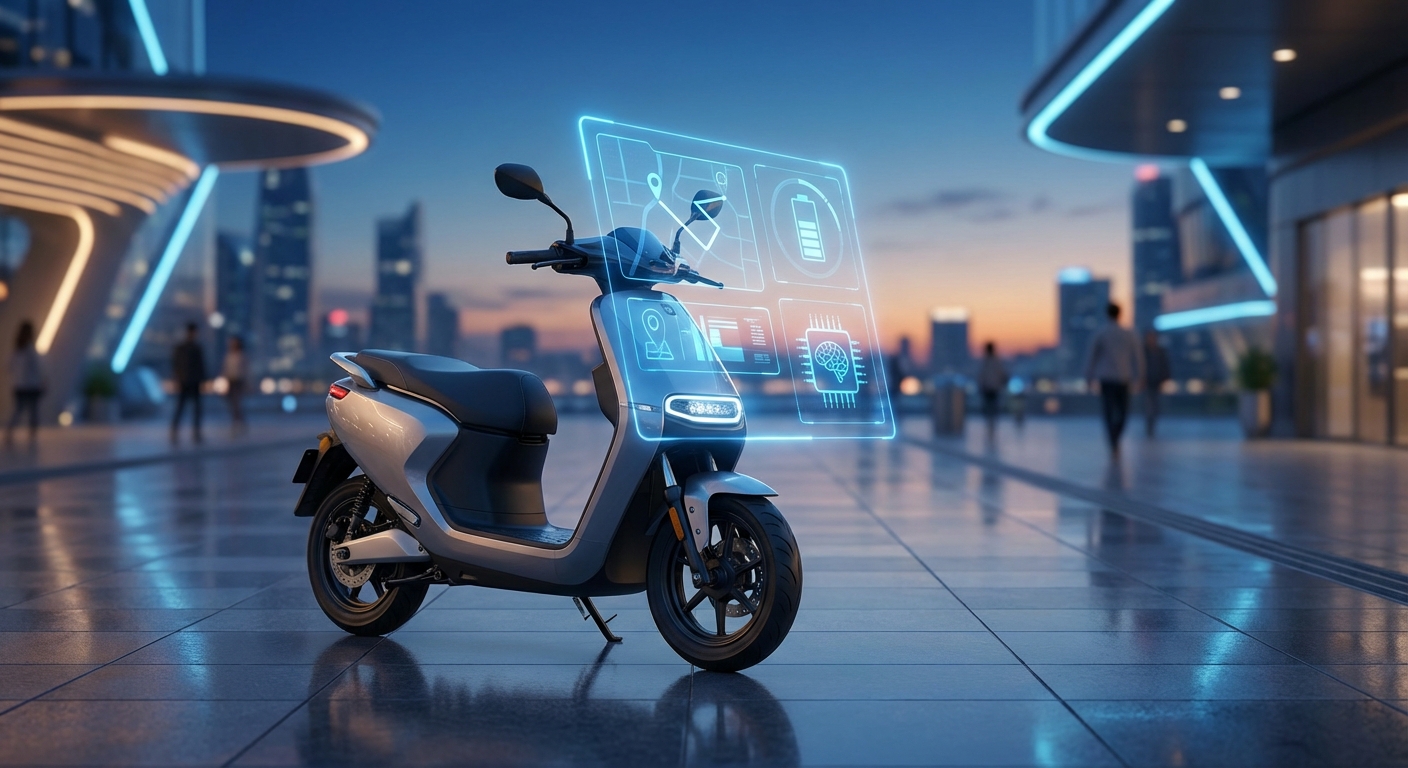
How AI-Powered Smart Features Are Transforming Modern E-Scooters
Artificial intelligence is no longer just for smartphones and smart homes. It’s now embedded in the deck beneath your feet, analyzing every bump, turn, and acceleration pattern as you ride. Modern electric scooters equipped with AI smart features are rewriting the rules of personal mobility, transforming simple two-wheeled vehicles into intelligent transportation companions that learn, adapt, and protect riders in ways that seemed impossible just a few years ago.
AI smart features electric scooters integrate machine learning algorithms, predictive analytics, and connected sensors to deliver adaptive performance, proactive maintenance alerts, enhanced safety systems, and personalized riding experiences. These technologies analyze riding patterns, road conditions, and component health in real time, automatically adjusting power delivery, braking response, and stability control while providing riders with actionable insights through companion smartphone applications that transform ordinary commutes into data-driven journeys.
Machine Learning Powers Adaptive Riding Modes
Your scooter is watching you ride. Not in a creepy way, but in a helpful one.
AI-powered adaptive riding modes analyze your acceleration habits, braking patterns, and typical route conditions to automatically adjust performance parameters. The system learns whether you prefer aggressive starts or smooth acceleration, then fine-tunes throttle response curves to match your style.
Temperature sensors work alongside AI algorithms to compensate for battery performance changes in cold weather. When conditions drop below optimal ranges, the system recalibrates power delivery to maintain consistent acceleration without draining the battery prematurely.
Hill detection represents another breakthrough. Embedded gyroscopes and accelerometers feed data to AI processors that recognize incline angles before you feel the strain. The motor automatically increases torque output, maintaining your target speed without manual intervention.
Some premium models now feature terrain recognition that distinguishes between smooth pavement, rough asphalt, and cobblestone surfaces. The suspension system adjusts damping rates in milliseconds, providing optimal comfort regardless of road quality.
Modern AI systems process over 1,000 data points per second from multiple sensors, creating a dynamic riding profile that evolves with every journey. This continuous learning cycle means your scooter becomes more attuned to your preferences the longer you ride it.
Predictive Maintenance Alerts Prevent Breakdowns
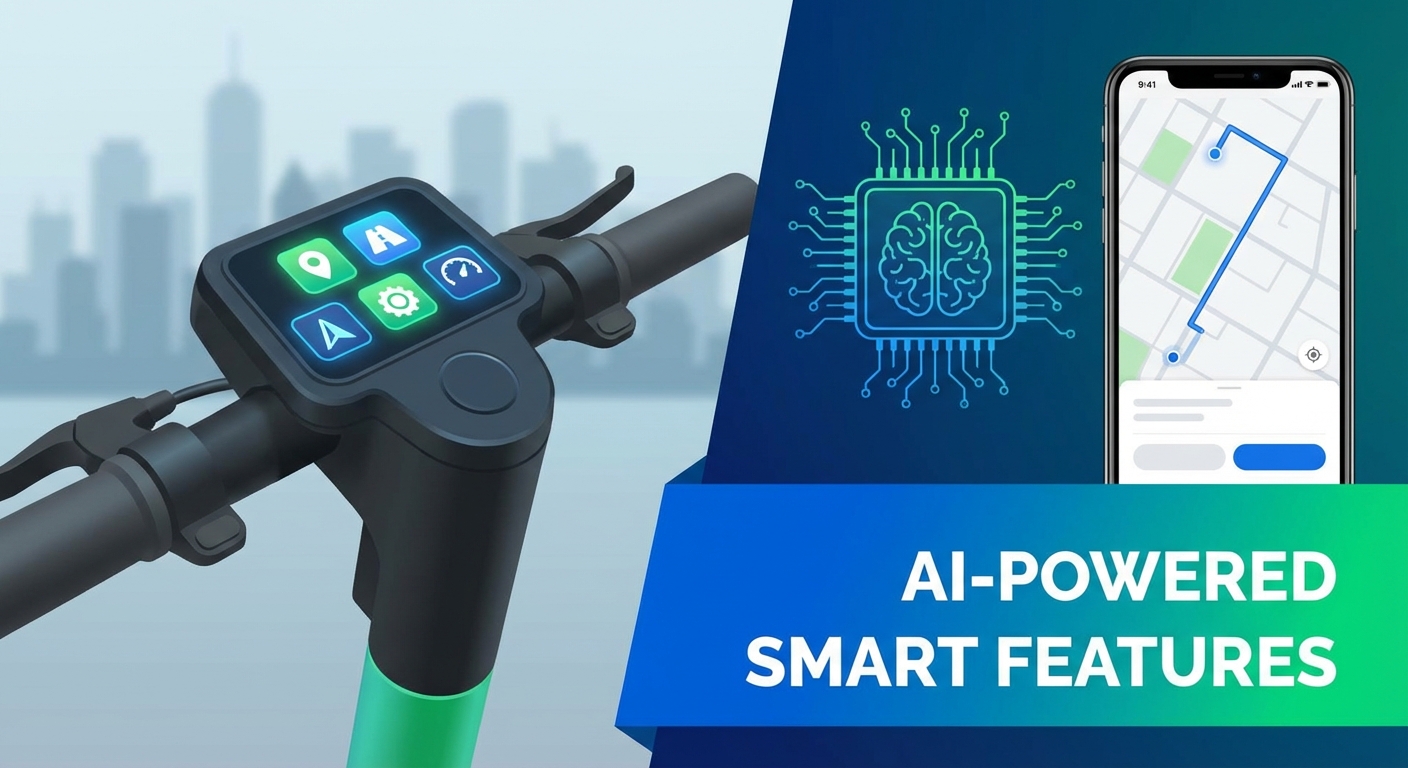
Traditional maintenance schedules rely on arbitrary mileage intervals. AI changes that equation entirely.
Vibration analysis algorithms monitor bearing health, detecting microscopic changes in rotation patterns that indicate wear. The system alerts you weeks before a bearing actually fails, preventing roadside breakdowns and more expensive repairs.
Battery health monitoring goes beyond simple voltage readings. Machine learning models track charge cycles, discharge rates, temperature fluctuations, and capacity degradation patterns. The AI predicts remaining battery lifespan with remarkable accuracy, often within a few percentage points.
Brake pad wear detection uses multiple data sources. Pressure sensors measure brake lever force, while speed sensors calculate deceleration rates. When braking efficiency drops below expected parameters, the system flags potential pad wear or hydraulic issues.
Tire pressure monitoring systems now incorporate AI to distinguish between slow leaks and normal pressure variations caused by temperature changes. False alerts drop dramatically, while genuine problems get flagged immediately.
If you’re curious about maintaining optimal battery performance, our guide on how long e-scooter batteries actually last provides detailed insights into maximizing lifespan through proper care and charging habits.
Real-Time Safety Enhancements Through Computer Vision
Cameras aren’t just for recording your ride anymore. They’re actively protecting you.
Forward-facing cameras equipped with computer vision algorithms detect obstacles, potholes, and road hazards in real time. The system can’t steer for you, but it provides haptic feedback through handlebar vibrations, warning you of dangers ahead.
Blind spot detection systems use side-mounted sensors and AI processing to identify vehicles approaching from behind. LED indicators on the handlebars illuminate when a car enters your blind zone, mimicking automotive safety features.
Automatic emergency braking remains controversial but increasingly common. When sensors detect an imminent collision and the rider hasn’t reacted, the system applies progressive braking force. The AI calibrates braking intensity based on speed, road conditions, and available stopping distance.
Fall detection algorithms analyze acceleration patterns and gyroscope data to recognize crashes. Upon detecting a fall, the system can automatically send location data and emergency alerts to pre-designated contacts. Some models integrate with local emergency services in supported regions.
Night vision enhancement uses infrared sensors and AI image processing to improve low-light visibility on integrated displays. Riders see enhanced representations of their surroundings, making night riding safety significantly more manageable.
Connected Ecosystems and Fleet Management
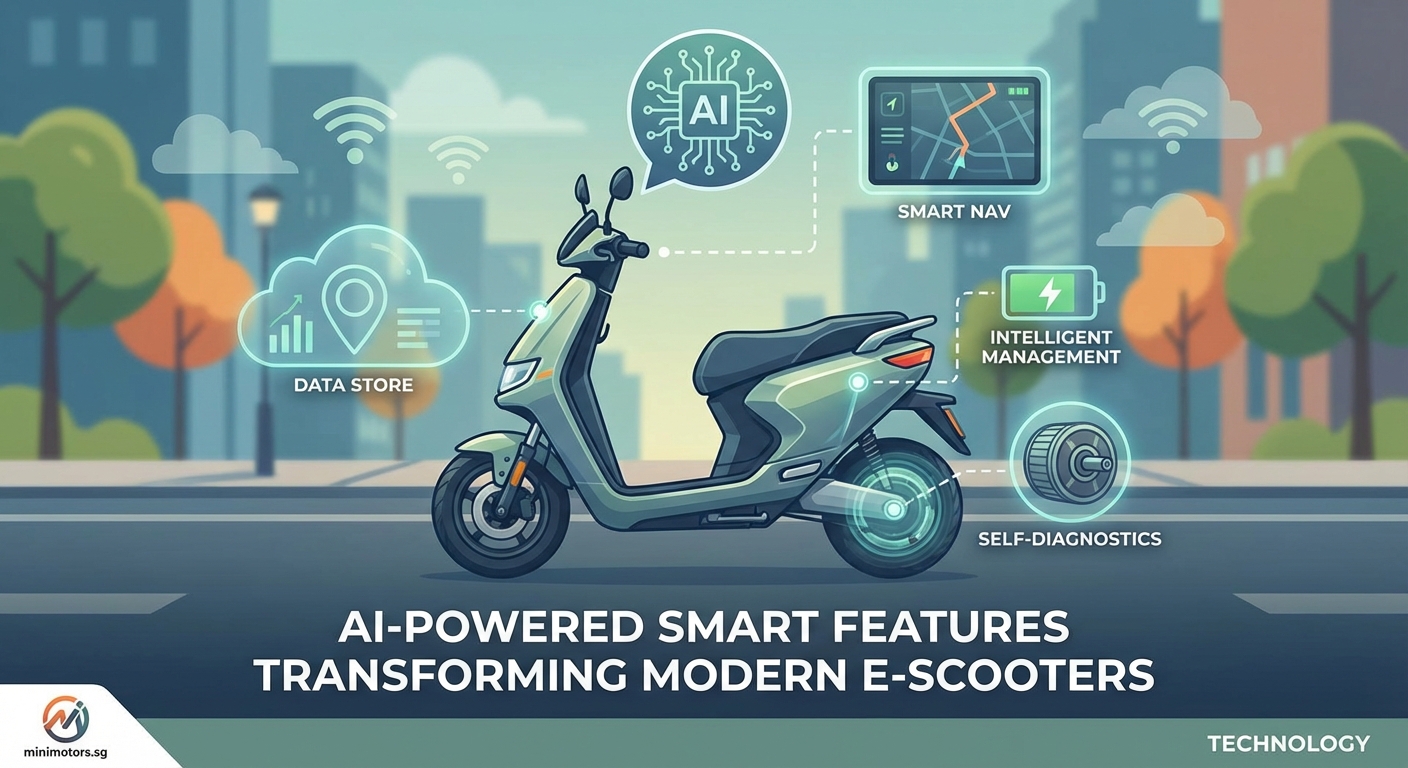
Individual riders benefit from AI features, but fleet operators see transformative advantages.
Shared scooter companies deploy AI to optimize vehicle distribution across cities. Algorithms predict demand patterns based on time of day, weather conditions, local events, and historical usage data. Scooters autonomously report when they need repositioning, reducing operational costs.
Theft prevention systems combine GPS tracking with behavioral analysis. AI recognizes normal riding patterns and flags anomalies that suggest unauthorized use. Geofencing capabilities allow scooters to automatically reduce speed or shut down when entering restricted zones.
Battery swap optimization uses predictive analytics to schedule battery changes before power levels become critically low. Fleet managers receive prioritized lists of vehicles needing attention, maximizing uptime and rider satisfaction.
Usage analytics help cities understand traffic patterns and infrastructure needs. Anonymized data reveals popular routes, dangerous intersections, and areas lacking adequate bike lanes. Urban planners gain insights that inform better micro-mobility infrastructure development.
Smartphone Integration Creates Seamless Experiences
Your phone becomes the command center for AI-powered scooter features.
Companion apps display real-time diagnostics that were previously invisible. Battery health percentages, motor temperature, brake pad wear estimates, and tire pressure readings appear on intuitive dashboards. You know exactly what’s happening with your vehicle at all times.
Route optimization algorithms analyze traffic data, elevation changes, and battery capacity to suggest the most efficient paths. The AI considers your typical riding style and calculates whether you’ll reach your destination with sufficient battery reserve.
Ride history analytics track distance, average speed, energy consumption, and carbon emissions saved compared to car travel. Gamification elements encourage efficient riding habits, rewarding smooth acceleration and regenerative braking usage.
Remote diagnostics allow service technicians to access scooter data before you arrive for repairs. Mechanics prepare necessary parts and tools in advance, reducing service time and getting you back on the road faster.
Firmware updates arrive over-the-air, continuously improving performance and adding features. Your scooter becomes more capable over time, rather than becoming obsolete. For those interested in how connected features enhance safety, our article on smartphone apps making e-scooters safer offers comprehensive analysis.
Personalized Performance Profiles for Multiple Riders
Families sharing a single scooter face compromises. AI eliminates that problem.
User recognition systems identify riders through smartphone Bluetooth signatures or NFC tags. The scooter automatically loads personalized settings including acceleration curves, maximum speed limits, and suspension stiffness preferences.
Weight detection sensors feed data to AI algorithms that adjust power delivery and braking force appropriately. A 150-pound rider receives different calibration than a 220-pound rider, optimizing performance and safety for both.
Skill level adaptation provides beginner modes with gentler acceleration and lower top speeds, then gradually unlocks performance as rider confidence grows. The AI tracks metrics like braking smoothness and cornering stability to assess skill progression.
Multi-user households benefit from individual maintenance tracking. Each rider’s mileage, riding style impact, and component wear contributions are logged separately, ensuring fair cost sharing for repairs and replacements.
Energy Efficiency Optimization Through Predictive Algorithms
Range anxiety disappears when AI accurately predicts remaining distance.
Regenerative braking systems now use machine learning to maximize energy recovery without compromising safety. The AI analyzes upcoming terrain using GPS data and adjusts regenerative braking intensity accordingly. Downhill sections become charging opportunities.
Wind resistance calculations factor into range predictions. Forward-facing sensors measure headwind strength, and the AI adjusts range estimates in real time. You’ll know if that strong breeze means you need to take a different route home.
Traffic prediction algorithms estimate stop-and-go patterns along your route. Since frequent acceleration drains batteries faster than steady cruising, the AI factors expected traffic conditions into range calculations.
Eco-mode optimization goes beyond simple speed limiting. AI systems analyze your typical routes and suggest departure times that minimize battery consumption based on traffic patterns, weather conditions, and elevation changes.
| AI Feature | Energy Savings | Implementation Complexity |
|---|---|---|
| Adaptive regenerative braking | 15-20% range increase | Moderate |
| Predictive power management | 10-15% efficiency gain | High |
| Route optimization | 8-12% battery savings | Low |
| Traffic-aware riding modes | 5-10% consumption reduction | Moderate |
How to Maximize AI Smart Features in Daily Use
Getting the most from intelligent systems requires understanding their capabilities and limitations.
-
Complete the initial calibration process thoroughly. Ride in various conditions during the first few days so AI algorithms can build accurate baseline profiles of your riding style and typical routes.
-
Keep the companion app updated and maintain stable Bluetooth connections. Many AI features rely on smartphone processing power and cloud connectivity to function optimally.
-
Review maintenance alerts promptly rather than dismissing them. Predictive systems lose accuracy when riders ignore early warnings, as the algorithms assume you’ve addressed flagged issues.
-
Provide feedback through app interfaces when AI predictions seem inaccurate. Machine learning systems improve faster when they receive correction data from actual users.
-
Enable location services and sensor permissions. Privacy concerns are valid, but restricting data access severely limits AI functionality. Review privacy policies and adjust sharing settings to your comfort level.
-
Charge batteries according to AI recommendations rather than arbitrary schedules. Smart charging algorithms optimize battery longevity by adjusting charge rates and target levels based on usage patterns and temperature conditions.
Understanding IoT sensors in e-scooters helps you appreciate how these systems gather and process data to deliver intelligent features.
Common Misconceptions About AI in Electric Scooters
Separating reality from marketing hype matters when evaluating smart features.
Myth: AI features drain battery life significantly.
Reality: Modern processors use minimal power, typically less than 2% of total battery capacity. The efficiency gains from optimized power management far exceed the energy cost of running AI algorithms.
Myth: You need constant internet connectivity for AI features to work.
Reality: Most core AI processing happens locally on embedded chips. Cloud connectivity enhances certain features but isn’t required for fundamental functions like adaptive riding modes and predictive maintenance.
Myth: AI makes scooters too complicated for average riders.
Reality: Well-designed systems operate transparently in the background. Most riders never interact directly with AI features, they simply enjoy smoother rides and fewer mechanical problems without understanding the underlying technology.
Myth: Smart features are just gimmicks that add unnecessary cost.
Reality: Predictive maintenance alone saves money by preventing expensive repairs and extending component lifespan. Safety enhancements reduce accident risk, potentially saving thousands in medical bills and vehicle damage.
Privacy and Data Security Considerations
Smart features collect substantial data. Understanding what’s gathered and how it’s used matters.
Location tracking enables route optimization and theft recovery but creates privacy concerns. Reputable manufacturers anonymize location data and provide granular controls over sharing preferences. Read privacy policies carefully before connecting your scooter to cloud services.
Riding behavior data reveals patterns that could identify individuals. Speed preferences, typical routes, and riding times create unique profiles. Ensure your chosen manufacturer encrypts data transmission and storage, particularly if you’re using a shared or rental scooter.
Third-party data sharing remains controversial. Some companies sell aggregated usage data to urban planners, traffic researchers, or advertisers. Opt-out options should be clearly available and easy to execute.
Local data storage provides an alternative to cloud-based systems. Some manufacturers offer AI features that process everything on-device, never transmitting data externally. These systems sacrifice some advanced capabilities but maximize privacy.
Firmware update security prevents malicious code injection. Verify that your scooter manufacturer uses cryptographically signed updates and secure boot processes to prevent unauthorized software modifications.
The Role of Edge Computing in Real-Time Processing
Latency kills when AI needs to prevent accidents. Edge computing solves that problem.
On-device processors handle time-critical decisions without cloud round-trips. Obstacle detection, emergency braking, and stability control require millisecond response times that cloud computing can’t reliably deliver.
Hybrid architectures balance local and cloud processing. Immediate safety functions run on embedded chips while complex analytics like route optimization and long-term predictive maintenance leverage cloud computing power.
5G connectivity promises to blur these lines, enabling near-instantaneous cloud communication. However, network reliability remains inconsistent, making local processing essential for safety-critical features.
Processing power continues advancing rapidly. Chips that were cutting-edge three years ago now appear in budget models, democratizing access to sophisticated AI features across price ranges.
Integration with Smart City Infrastructure
Individual scooter intelligence multiplies when connected to broader urban systems.
Traffic signal optimization allows scooters to communicate with smart intersections. AI predicts light changes and suggests speed adjustments to minimize stops, improving both energy efficiency and traffic flow.
Dynamic lane allocation systems direct scooters to appropriate paths based on real-time traffic density. During rush hours, AI might route riders to less congested parallel streets, reducing conflicts with vehicles and pedestrians.
Parking availability data integrates with scooter navigation systems. You’ll know where legal parking exists before arriving at your destination, reducing time spent searching and minimizing illegal parking violations.
Weather alert integration provides hyperlocal warnings about sudden storms, icy patches, or flooding. The AI can suggest alternative routes or recommend delaying your trip until conditions improve.
Emergency vehicle priority systems detect approaching ambulances or fire trucks through vehicle-to-vehicle communication. Your scooter alerts you to pull over, improving emergency response times.
Cities embracing these technologies see measurable improvements in traffic congestion reduction and overall mobility efficiency.
Future Developments on the Horizon
Current AI capabilities represent just the beginning of intelligent mobility.
Swarm intelligence algorithms will coordinate multiple scooters traveling together, optimizing group routes and energy consumption. Riders heading to the same destination could benefit from drafting effects and synchronized navigation.
Predictive crash avoidance systems under development use machine learning trained on millions of accident scenarios. These systems recognize dangerous situations before they develop, providing earlier warnings than current reactive systems.
Autonomous repositioning for shared fleets will allow scooters to drive themselves to high-demand areas or charging stations. Riders will find available vehicles exactly where needed without manual redistribution.
Biometric integration could eliminate smartphone dependencies. Fingerprint sensors or facial recognition would load personalized settings instantly, making scooter sharing as seamless as unlocking your phone.
Vehicle-to-everything communication will connect scooters with cars, buses, traffic signals, and pedestrian crosswalk systems. This comprehensive data sharing promises to dramatically reduce accidents at intersections and in mixed-traffic environments.
Battery technology improvements will pair with AI to deliver breakthrough battery technologies that adapt charging strategies based on usage patterns and environmental conditions.
Comparing AI Features Across Price Ranges
Budget constraints don’t necessarily exclude smart features. Understanding what’s available at different price points helps set realistic expectations.
Entry-level models ($300-$600) typically offer basic smartphone connectivity, GPS tracking, and simple ride statistics. AI features remain limited, focusing on theft alerts and basic battery management.
Mid-range scooters ($600-$1,200) introduce adaptive riding modes, predictive maintenance alerts, and more sophisticated energy management. These models balance affordability with genuinely useful intelligence.
Premium models ($1,200-$3,000) deliver comprehensive AI ecosystems including computer vision safety features, advanced terrain adaptation, and detailed analytics. Processing power and sensor arrays justify higher prices.
Ultra-premium options ($3,000+) incorporate cutting-edge technology like autonomous parking assistance, advanced collision avoidance, and integration with smart city infrastructure. These scooters target early adopters and technology enthusiasts.
Feature availability changes rapidly as technology costs decline. Capabilities exclusive to premium models two years ago now appear in mid-range options. This democratization trend will continue, making sophisticated AI accessible to broader audiences.
When evaluating whether premium features justify higher costs, consider reading about top features in premium electric scooters to understand which investments deliver real value.
Making Informed Purchase Decisions
Smart marketing can obscure whether AI features deliver genuine value or represent empty buzzwords.
Prioritize features that address your specific needs. Commuters benefit most from range optimization and route planning, while recreational riders might value terrain adaptation and performance customization.
Test ride before buying when possible. Marketing descriptions of “intelligent handling” or “smart acceleration” mean nothing until you experience them firsthand. Many features sound impressive but deliver marginal real-world benefits.
Research manufacturer support and update policies. AI systems require ongoing software improvements to reach full potential. Companies with strong track records of firmware updates provide better long-term value.
Consider ecosystem compatibility. If you already use certain fitness apps or smart home systems, choose scooters that integrate seamlessly with your existing technology stack.
Evaluate privacy policies and data practices. Some riders prioritize features over privacy, while others refuse to compromise personal data regardless of functionality gains. Neither approach is wrong, but understanding tradeoffs before purchasing prevents regret.
Read user reviews focusing on long-term ownership experiences. Initial impressions often differ from satisfaction after months of daily use. Pay attention to comments about AI feature reliability and accuracy improvements over time.
Why Intelligent Mobility Matters Beyond Individual Convenience
AI smart features in electric scooters represent more than personal gadgetry. They’re reshaping urban transportation at fundamental levels.
Reduced maintenance costs make scooter ownership more economically viable for broader populations. Predictive systems prevent expensive failures, while optimized battery management extends replacement intervals. These savings democratize access to personal electric mobility.
Enhanced safety features address legitimate concerns that previously deterred potential riders. Parents feel more comfortable allowing teenagers to commute on scooters equipped with fall detection and emergency alerts. Older adults gain confidence from stability assistance and obstacle warnings.
Environmental benefits multiply as AI optimization reduces energy waste. More efficient rides mean lower electricity consumption, reduced battery production demands, and smaller carbon footprints per mile traveled. These improvements matter at scale as adoption grows.
Data-driven urban planning becomes possible when thousands of scooters feed anonymized usage patterns to city planners. Infrastructure investments target actual needs rather than assumptions, creating better cycling infrastructure and more effective last-mile transportation solutions for everyone.
The technology proves that personal mobility devices can be smart, safe, and sustainable simultaneously. This convergence addresses multiple societal challenges through a single innovation category, demonstrating how thoughtful technology application creates compounding benefits beyond initial design intentions.
Artificial intelligence transforms electric scooters from simple vehicles into responsive partners that adapt, protect, and optimize every aspect of your ride. These systems learn your preferences, predict problems before they occur, and continuously improve through software updates that arrive automatically. Whether you’re a daily commuter seeking reliability or an early adopter excited by cutting-edge technology, AI smart features deliver tangible benefits that justify attention and investment. The future of personal mobility is already here, processing data beneath your feet and making every journey safer, more efficient, and more enjoyable than the last.
