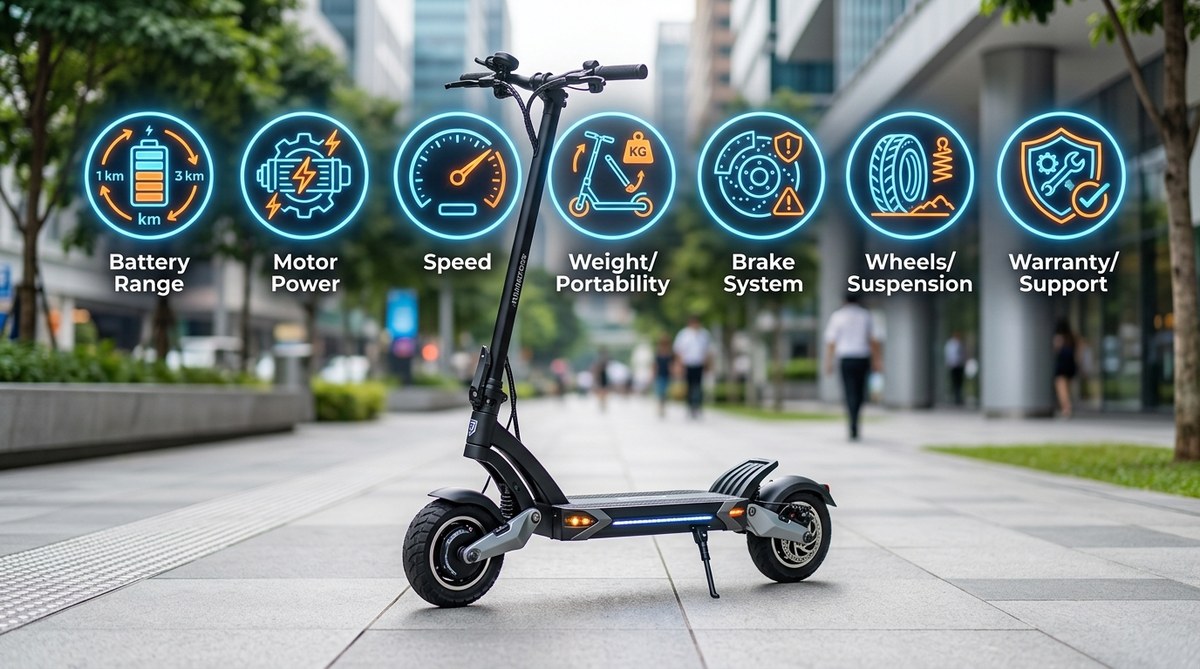
7 Key Questions to Ask Before Buying an Electric Scooter Online
You have decided to buy an electric scooter. You are sitting at your computer, scrolling through dozens of models. Prices range from $300 to over $2,000. Specs blur together. Range, motor power, battery voltage, tire type, braking system. It feels like a foreign language. You want a reliable ride for your daily commute that will not break the bank. You want to make a smart choice. This electric scooter buying guide will help you cut through the noise and find the right scooter for your needs.
The best electric scooter for you balances three things: range, power, and build quality. Focus on your daily commute distance first. Then match it to a scooter with a motor that can handle your local hills. Always check the weight limit and tire type. A cheap scooter that fits your needs beats an expensive one with features you will never use.
Start With Your Real World Commute
Before you compare specs, measure your actual trip. How many miles do you ride each day? Be honest. Do you plan to ride five miles round trip or fifteen? Manufacturers list a maximum range. That number is tested on flat ground at low speeds with a lightweight rider. You will get about 60 to 70 percent of that in real city conditions. If your commute is eight miles, look for a scooter rated for at least fourteen miles. That gives you a safety buffer for hills, wind, and battery degradation over time.
Motor Power and Your Local Terrain
Motor power is measured in watts. A 250W motor works fine on flat sidewalks and bike lanes. If you live in a city with hills like San Francisco or Seattle, you need more. A 500W motor handles moderate inclines. For steep grades, look for 800W or higher. A scooter with a rear wheel drive motor gives you better traction when climbing. Dual motors are great for off road use but add weight and cost. For most commuters, a single 500W motor is the sweet spot.
Battery Range and Charging Habits
Battery capacity is measured in watt hours (Wh). A higher Wh number means more range. It also means longer charging time and more weight. Most commuter scooters have batteries between 200Wh and 500Wh. If you live in an apartment, consider battery portability. Some models let you remove the battery for charging indoors. This is useful if you cannot park your scooter near an outlet. Check out our guide on how long e-scooter batteries actually last to understand lifespan expectations.
Weight Capacity and Rider Size
Every scooter has a maximum weight limit. This number includes you plus any backpack or cargo. A scooter rated for 220 pounds will struggle if you weigh 200 pounds with a full bag. The motor works harder. The battery drains faster. The frame wears out sooner. Look for a scooter with a weight limit at least 30 pounds above your total riding weight. If you are a heavier rider, read our comparison of best e-scooters for heavy riders.
Tire Types: Pneumatic vs Solid vs Honeycomb
Tires affect ride comfort, maintenance, and safety. Here is a breakdown of the three main types:
| Tire Type | Ride Comfort | Puncture Risk | Maintenance | Best For |
|---|---|---|---|---|
| Pneumatic (air filled) | High | Medium | Inflate weekly | Smooth city streets |
| Solid (no air) | Low | None | No maintenance | Flat, smooth paths |
| Honeycomb (gel) | Medium | Very low | No maintenance | Mixed terrain |
Pneumatic tires give the smoothest ride. They absorb bumps and cracks. The downside is the risk of flats. Carry a portable pump. Solid tires never go flat but transmit every bump to your hands and back. Honeycomb tires are a good middle ground. They feel close to pneumatic but do not require inflation.
Braking Systems and Safety
You need brakes that stop you reliably. Three common systems exist.
- Disc brakes: These use a metal disc and caliper. They work in wet conditions. They require occasional adjustment. They are the most common on mid range and premium scooters.
- Drum brakes: These are enclosed inside the wheel hub. They last a long time. They perform well in rain. They are harder to service at home.
- Electronic brakes: These use the motor to slow you down. They are convenient but less powerful than mechanical brakes. They work best as a secondary system.
For safety, look for a scooter with at least one mechanical brake. A combination of a disc brake and electronic brake is ideal. You can learn more about each type in our guide on understanding e-scooter braking systems.
Portability and Folding Mechanism
If you take public transit or store your scooter in a small apartment, portability matters. A folding scooter should lock securely when folded. Test the folding latch. A loose latch can cause accidents. Weight is also a factor. A scooter that weighs 30 pounds is easy to carry up stairs. A 50 pound scooter is a workout. Consider your daily routine. Do you need to carry it up three flights of stairs? Do you need to fit it under a desk? Measure your storage space before you buy.
Build Quality and Water Resistance
Not all scooters are built the same. Look for an IP rating. IP54 means it can handle light rain. IP65 is better for wet conditions. Avoid riding in heavy rain if possible. Water can damage the battery and motor over time. Check the deck material. Aluminum decks are lightweight and durable. Wood decks look nice but can warp. Inspect the welds on the frame. Smooth, even welds indicate good construction.
The 7 Step Online Buying Process
Follow this process to avoid buyer’s remorse.
- Measure your commute distance using Google Maps or your usual route. Add 40 percent for real world range.
- Check local laws in your city. Some cities limit speed to 15 mph or require registration. Read our state by state guide on can you ride an e-scooter on the sidewalk.
- Set a realistic budget. Entry level scooters cost $300 to $500. Mid range costs $600 to $1,000. Premium models go over $1,200. Decide what features matter most.
- Read verified customer reviews. Look for comments about battery life, customer service, and build quality. Avoid reviews that only mention shipping speed.
- Compare three models side by side. Use a spreadsheet or notebook. List range, motor power, weight, and price.
- Check the warranty. A one year warranty is standard. Two years is better. Understand what is covered. Batteries and tires often have shorter coverage.
- Buy from a reputable seller. Avoid unknown brands with no support network. Check if the seller has a physical service center.
Common Mistakes to Avoid
Many first time buyers make the same errors. Here are the most common ones.
- Buying too much scooter. You do not need a 40 mph scooter for a two mile commute. It is heavier, more expensive, and harder to store.
- Ignoring the weight limit. Overloading a scooter stresses the motor and frame. It voids the warranty.
- Forgetting about charging. If you cannot bring the battery inside, you may need to park near an outlet. Cold weather reduces battery performance.
- Skipping the helmet. A good helmet costs less than an emergency room visit. Read our helmet buying guide for recommendations.
“The most expensive scooter is not always the best. The best scooter is the one that fits your specific commute, your body, and your storage situation.” — Industry expert advice for 2026 buyers.
Accessories That Improve Your Ride
You do not need many accessories to start. A few basics make a big difference.
- A good helmet with MIPS technology.
- A sturdy lock. Cable locks are easy to cut. Use a U lock or folding lock.
- A phone mount for navigation. See our list of best phone mounts for e-scooters.
- A rear light for visibility at night.
- A waterproof cover if you park outside.
Making Your Final Decision
You have done the research. You know your commute distance. You understand motor power and tire types. You have checked the weight limit and water resistance. Now it is time to choose. Pick the model that meets your core needs and fits your budget. Do not get distracted by flashy features you will never use. A reliable, mid range scooter from a trusted brand will serve you better than a cheap unknown model with inflated specs.
Take your time. Read one more round of reviews. Ask questions in rider forums. When you feel confident, place your order. Your new scooter will change how you move through your city. It will save you money on gas and parking. It will make your commute faster and more fun. Welcome to the world of electric scooters. Ride safe.
