Can You Ride an E-Scooter on the Sidewalk? State-by-State Rules Explained
Sidewalk riding seems like the safest choice when you’re on an e-scooter. No cars, no traffic, just a smooth path next to pedestrians. But in most states, that decision could cost you a fine or worse. The rules vary dramatically depending on where you live, and many riders don’t realize they’re breaking the law until they get stopped.
Most states prohibit e-scooter riding on sidewalks, requiring riders to use bike lanes or roads instead. Violations typically result in fines ranging from $25 to $500. Laws vary significantly by state and city, with some areas allowing sidewalk use only when no bike infrastructure exists. Understanding your local regulations prevents penalties and keeps both riders and pedestrians safe.
Why sidewalk laws exist for e-scooters
Cities didn’t create sidewalk restrictions to make your commute harder. They emerged from real safety concerns.
Pedestrians walk at roughly 3 miles per hour. E-scooters travel at 15 to 20 miles per hour. That speed difference creates dangerous situations, especially in crowded urban areas.
When riders zip past walkers on narrow sidewalks, collision risks multiply. Elderly pedestrians, children, and people with disabilities face particular danger. They can’t react as fast to an approaching scooter.
Property damage also plays a role. E-scooters weigh 25 to 40 pounds and can cause serious injuries in collisions. Cities face liability concerns when accidents happen on public walkways.
Most municipalities now classify e-scooters as vehicles rather than pedestrian devices. This classification puts them in the same legal category as bikes, which have been banned from sidewalks in many cities for decades.
State-by-state sidewalk riding rules
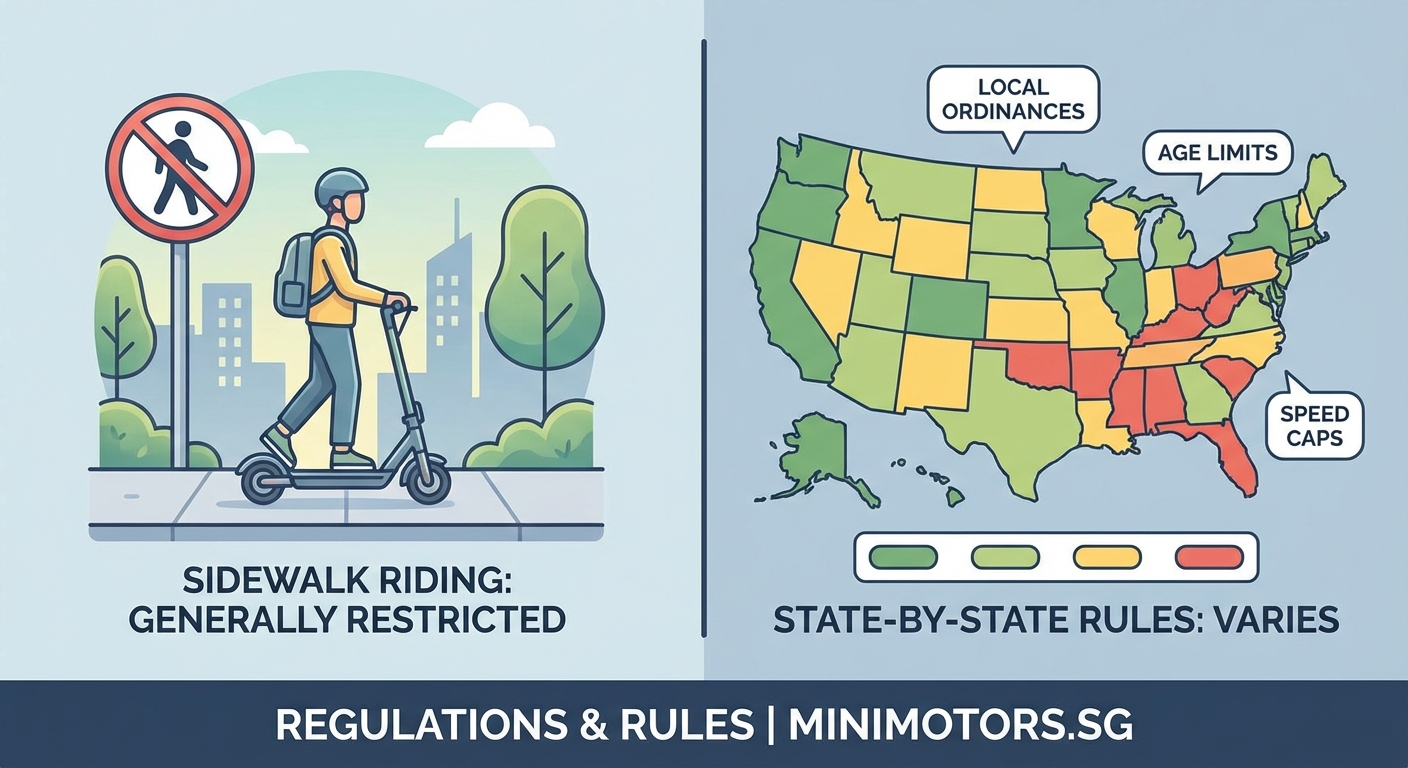
Each state approaches e-scooter regulations differently. Some ban sidewalk riding completely, while others leave decisions to local governments.
States with complete sidewalk bans
California prohibits e-scooter riding on sidewalks statewide. Riders must use bike lanes when available or stay in the road. Violations result in fines up to $250.
Florida enforces similar restrictions. E-scooters belong in bike lanes or on roads with speed limits under 35 mph. Sidewalk riding is only permitted in areas without adequate road infrastructure.
New York requires riders to stay off sidewalks in all circumstances. The state treats e-scooters like bicycles, which have been banned from sidewalks since 1965.
Texas prohibits sidewalk riding in most major cities. State law allows local municipalities to create stricter rules, and most have done so.
States allowing local control
Many states delegate e-scooter regulations to cities and counties. This creates a patchwork of rules that change as you cross municipal boundaries.
Illinois lets cities decide. Chicago bans sidewalk riding entirely, while smaller towns may permit it in certain zones.
Michigan gives local governments full authority. Detroit prohibits sidewalk use, but suburban areas often allow it.
Washington state permits cities to set their own standards. Seattle bans sidewalk riding in business districts but allows it in residential areas.
States with permissive laws
A handful of states take a more relaxed approach to sidewalk riding.
Arizona allows sidewalk use unless local ordinances say otherwise. Riders must yield to pedestrians and travel at reasonable speeds.
Nevada permits sidewalk riding in areas without bike lanes. Riders face restrictions in crowded tourist zones like the Las Vegas Strip.
Oregon allows sidewalk riding outside business districts. Portland has specific zones where sidewalks are off-limits, but residential areas remain open.
How cities modify state rules
State laws provide the framework, but cities add their own layers of regulation. Understanding both levels prevents legal problems.
Many cities create business district restrictions even when state law permits sidewalk riding. Downtown areas with heavy foot traffic typically ban scooters on walkways.
Some municipalities implement time-based rules. Sidewalk riding might be allowed early morning or late evening when pedestrian traffic is light.
Tourist zones often have special restrictions. Beach boardwalks, entertainment districts, and shopping areas frequently prohibit e-scooters on sidewalks regardless of state law.
College towns create campus-specific rules. Universities may ban sidewalk riding on campus property while the surrounding city allows it.
Always check local ordinances before riding. State law tells you the baseline, but city regulations determine what actually happens when enforcement occurs. Ignorance of local rules won’t protect you from fines.
Where you should ride instead of sidewalks
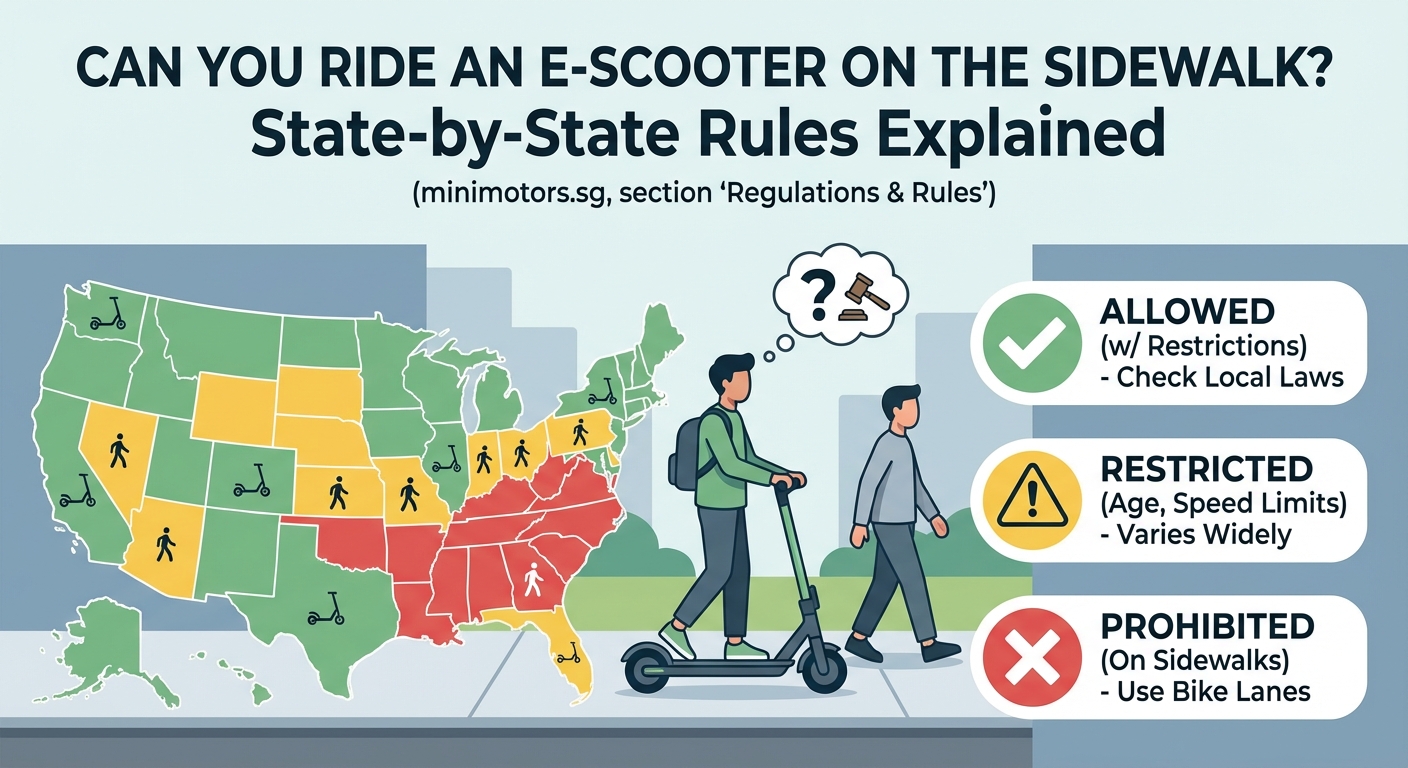
When sidewalks are off-limits, you need to know your legal alternatives.
Bike lanes are your primary option. Protected bike lanes offer separation from both cars and pedestrians. They’re designed for vehicles traveling at e-scooter speeds.
Standard bike lanes without physical barriers still provide a designated space. Cars expect to see slower-moving vehicles in these lanes.
Roads with low speed limits work when bike lanes don’t exist. Streets with 25 mph limits or lower allow you to keep pace with traffic more safely.
Stay as far right as practical. Give cars room to pass while maintaining enough distance from parked vehicles to avoid door strikes.
Shared-use paths accommodate both bikes and pedestrians. These multi-use trails typically allow e-scooters, but speed limits apply. Most cap speeds at 10 to 15 mph on shared paths.
Parking lots and private property follow their own rules. Shopping centers and office parks may permit sidewalk riding on their grounds. Check posted signs or ask property management.
Common exceptions to sidewalk bans
Even strict jurisdictions include certain exceptions. Knowing these can save you from unnecessary detours.
Infrastructure gaps sometimes permit temporary sidewalk use. When a bike lane ends abruptly or road construction blocks your path, some cities allow brief sidewalk riding to navigate the obstacle.
Disability accommodations may apply in specific situations. Riders with mobility limitations might receive permission to use sidewalks when road riding isn’t feasible.
Age restrictions create different rules for children. Some cities allow riders under 16 to use sidewalks while requiring adults to stay on roads.
Private sidewalks aren’t covered by public ordinances. Sidewalks on private property follow the owner’s rules rather than city law.
Emergency situations provide legal cover. If you need to avoid an immediate hazard, briefly moving onto the sidewalk won’t typically result in penalties.
Penalties for illegal sidewalk riding
Fines vary widely depending on location and circumstances. Understanding potential costs helps you make informed decisions.
| Location Type | Typical Fine Range | Additional Penalties |
|---|---|---|
| Major cities | $100 to $500 | Possible impoundment |
| Suburbs | $25 to $150 | Warning for first offense |
| College campuses | $50 to $200 | Campus privileges suspended |
| Tourist zones | $200 to $500 | Mandatory court appearance |
| Residential areas | $25 to $100 | Rarely enforced |
First-time offenders often receive warnings in areas with new regulations. Officers may issue citations without fines to educate riders about local laws.
Repeat violations trigger escalating penalties. Second and third offenses typically result in higher fines and potential equipment confiscation.
Accidents during illegal sidewalk riding compound legal problems. If you hit a pedestrian while breaking sidewalk laws, liability increases significantly. Insurance may not cover damages from illegal riding.
Some cities use automated enforcement. Cameras and sensors detect sidewalk riding in prohibited zones, triggering automatic fines similar to red-light cameras.
How to check your local regulations
Finding accurate, current information requires checking multiple sources. Laws change frequently as cities adapt to e-scooter growth.
-
Visit your city’s official website and search for “e-scooter regulations” or “electric scooter ordinances.” Most municipalities post current rules in their municipal code section.
-
Contact your local police department’s non-emergency line. Officers can clarify enforcement priorities and common violation areas.
-
Check with your state’s Department of Motor Vehicles or transportation department. They maintain summaries of statewide vehicle regulations.
-
Review shared e-scooter company apps if your city has rental programs. These companies must comply with local laws and often include rule summaries in their interfaces.
-
Join local e-scooter rider groups on social media. Experienced riders share enforcement patterns and regulation updates.
-
Look for posted signs in areas where you plan to ride. Cities often place notification signs in zones with special restrictions.
Keep records of where you find information. Regulations change, and having documentation of what rules said on a specific date can help if disputes arise.
Safety considerations beyond legal requirements
Following the law keeps you out of legal trouble, but smart riding practices keep you physically safe.
Even in areas where sidewalk riding is legal, pedestrian safety should guide your decisions. Crowded sidewalks aren’t safe regardless of what the law allows.
Speed management matters more on sidewalks than roads. If you must ride on a sidewalk where it’s permitted, reduce your speed to 5 mph or less near pedestrians.
Visibility challenges increase on sidewalks. Driveways and building exits create blind spots where cars don’t expect to see vehicle-speed traffic.
Surface conditions on sidewalks often surprise riders. Uneven pavement, tree roots, and narrow passages that work fine for walking become hazards at scooter speeds.
Bell or horn usage helps alert pedestrians to your presence. Many jurisdictions require audible warning devices, and they’re essential for safe sidewalk navigation when permitted.
Consider what should you wear when riding an e-scooter daily to maximize your visibility and protection regardless of where you ride.
What happens during traffic stops
Getting pulled over on an e-scooter feels different from a car stop, but the legal principles are similar.
Officers typically approach from behind and signal you to stop. Pull over safely, preferably off the road or path entirely.
Have identification ready. Most states don’t require a license to operate an e-scooter, but officers need to verify your identity for citation purposes.
Be polite and direct. Arguing about regulations rarely changes the outcome and may escalate the situation.
Ask specific questions about the violation. Officers should explain which law you broke and what the penalty involves.
Request written information about contesting the citation. Most jurisdictions allow you to challenge tickets through administrative hearings.
Document the location and circumstances. Take photos of the area, noting any missing signage or confusing infrastructure that might support your case.
Insurance and liability concerns
Sidewalk riding violations affect more than just your wallet. They create liability exposure that extends beyond immediate fines.
Most homeowner’s and renter’s insurance policies don’t cover e-scooter accidents. If you injure someone while riding illegally on a sidewalk, you’re personally liable for medical costs and damages.
Specialized e-scooter insurance exists but often excludes coverage for illegal riding. Policies may deny claims if you violated local ordinances at the time of an accident.
Medical insurance may also create complications. If you’re injured while breaking traffic laws, some policies reduce coverage or increase deductibles.
Property damage liability matters too. If you crash into a storefront, parked car, or other property while riding illegally, you’re responsible for repair costs.
Legal defense costs add up fast. Even if you win a lawsuit stemming from a sidewalk riding accident, attorney fees can reach thousands of dollars.
For more information on coverage options, read about whether you really need e-scooter insurance.
Teaching new riders about sidewalk laws
If you’re introducing someone to e-scooter riding, legal education should come before the first ride.
Start with local regulations specific to your area. Don’t assume they know the rules just because they’ve ridden elsewhere.
Practice identifying legal riding zones. Ride together through your neighborhood, pointing out bike lanes, prohibited areas, and safe road sections.
Explain the reasoning behind sidewalk bans. New riders often resist rules they don’t understand. When they grasp the pedestrian safety rationale, compliance improves.
Demonstrate proper road riding techniques. Many people avoid roads because they lack confidence, not because they prefer sidewalks. Building road riding skills reduces illegal sidewalk use.
Share resources for ongoing education. Provide links to city websites, rider groups, and other information sources they can reference independently.
Consider reviewing 7 essential things every first-time e-scooter rider should know with new riders before their first trip.
How regulations are changing
E-scooter laws continue to evolve as cities gather more data about rider behavior and safety outcomes.
Many cities are creating dedicated e-scooter lanes separate from both bike lanes and car traffic. These new infrastructure elements change where legal riding occurs.
Geofencing technology now allows cities to create virtual boundaries. Some jurisdictions use this to automatically slow scooters in pedestrian zones or prevent operation on sidewalks entirely.
Registration requirements are expanding. More states now require e-scooter registration, which helps enforcement agencies track violations and repeat offenders.
Insurance mandates are under consideration in several states. Proposed laws would require riders to carry liability coverage, similar to automobile requirements.
Speed limit reductions affect where riding is practical. Some cities are lowering e-scooter speed caps to 10 mph, making road riding alongside cars more dangerous and potentially pushing more riders toward illegal sidewalk use.
Pilot programs test new approaches. Cities often implement temporary rules to evaluate different regulatory frameworks before making permanent decisions.
Stay informed about proposed changes by attending city council meetings or subscribing to municipal newsletters. Regulations can shift with little advance notice.
Riding responsibly in gray areas
Not every situation fits neatly into legal categories. Sometimes you’ll face scenarios where the right choice isn’t obvious.
When bike lanes end mid-route, you need to make judgment calls. Briefly using a sidewalk to reach the next bike lane segment might be technically illegal but practically necessary.
Construction zones create confusion. Detour routes may not accommodate e-scooters, forcing you to choose between sidewalks and dangerous traffic patterns.
Weather conditions complicate compliance. Ice or flooding might make roads unsafe while sidewalks remain passable.
In these situations, prioritize safety while minimizing rule violations. Use sidewalks only as long as necessary, travel slowly, and yield completely to pedestrians.
Document unusual circumstances if you receive a citation. Photos of road conditions, missing infrastructure, or safety hazards support your case if you contest the ticket.
Planning routes that keep you legal
Advance planning prevents most sidewalk riding violations. A few minutes of preparation saves fines and frustration.
Use mapping tools that show bike infrastructure. Apps like Google Maps and specialized cycling apps display bike lanes and multi-use paths.
Scout unfamiliar routes before commuting. Walk or drive the path first to identify where legal riding space exists.
Build in extra time for longer legal routes. Roads with bike lanes may add distance compared to sidewalk shortcuts.
Identify safe stopping points along your route. Knowing where you can legally pause helps you avoid impulsive sidewalk riding when you need a break.
Create backup routes for different conditions. Weather, traffic, or events may block your primary path. Having alternatives prevents last-minute illegal choices.
Share your routes with other riders. Local knowledge helps everyone stay compliant while finding the most efficient legal paths.
Making your voice heard on regulations
Current laws may not serve riders or communities well. You can influence how regulations develop.
Attend public hearings when cities review e-scooter ordinances. Your testimony about practical riding challenges helps officials understand real-world impacts.
Join or form rider advocacy groups. Collective voices carry more weight than individual complaints.
Propose specific infrastructure improvements. Instead of just criticizing sidewalk bans, suggest where bike lanes or shared paths would solve problems.
Volunteer for pilot programs. Cities testing new approaches need rider participation to gather meaningful data.
Contact elected representatives directly. City council members and state legislators respond to constituent concerns, especially when you provide constructive solutions.
Support businesses that accommodate e-scooter riders. Establishments with proper parking and charging facilities demonstrate the economic benefits of supporting alternative transportation.
Document problem areas with photos and specific location details. Vague complaints about “unsafe roads” accomplish less than detailed reports about particular intersections or street segments.
Understanding enforcement patterns
Not all violations receive equal attention from law enforcement. Knowing where and when enforcement occurs helps you avoid citations.
Business districts see the most active enforcement. Downtown areas with heavy pedestrian traffic prioritize sidewalk riding violations.
Tourist seasons bring increased patrols. Cities want to protect visitors and maintain positive impressions, leading to stricter enforcement during peak travel periods.
Complaint-driven enforcement targets specific locations. If residents or businesses report sidewalk riding problems, police focus on those areas.
Special events trigger temporary enforcement zones. Festivals, markets, and sporting events often include dedicated officers watching for e-scooter violations.
School zones receive particular attention. Morning and afternoon periods near schools see heightened enforcement of all traffic regulations, including e-scooter rules.
Accident scenes lead to citation reviews. If you’re involved in any incident while riding, officers will examine whether you were following all applicable laws.
Staying legal makes riding better for everyone
Following sidewalk regulations might seem inconvenient, but compliance benefits the entire e-scooter community.
When riders stay off sidewalks voluntarily, cities view e-scooters more favorably. Positive perceptions lead to better infrastructure investment and fewer restrictive regulations.
Pedestrians who feel safe around e-scooters support expanded riding zones. Their advocacy helps create more legal riding options.
Accident rates decline when riders use appropriate infrastructure. Lower injury statistics make cities more willing to embrace e-scooters as legitimate transportation.
Your behavior shapes how others view all riders. Every interaction between e-scooter users and pedestrians influences public opinion about whether these vehicles belong in urban spaces.
Consider how 7 common e-scooter accidents and how to avoid them relates to riding in appropriate spaces. Many incidents occur precisely because riders use infrastructure not designed for their vehicles.
Building better habits from day one
Legal riding becomes automatic when you establish good practices early.
Treat every ride as an opportunity to practice compliance. The more consistently you follow rules, the less tempting shortcuts become.
Celebrate successful legal routes. Acknowledge when you navigated a challenging area without sidewalk violations. Positive reinforcement builds lasting habits.
Learn from mistakes without making excuses. If you catch yourself on a sidewalk illegally, acknowledge it and adjust rather than rationalizing the choice.
Mentor other riders you encounter. Friendly advice to someone riding illegally helps the community more than judgment or criticism.
Invest in equipment that makes legal riding easier. Better lights, mirrors, and safety gear increase your confidence on roads and bike lanes.
Stay current with regulation changes. Set calendar reminders to check for updates quarterly, ensuring you don’t unknowingly violate new rules.
Your next ride starts with knowing where you can go
Understanding whether you can ride electric scooter on sidewalk in your area protects you from fines and keeps pedestrians safe. Laws vary dramatically between states and cities, but the trend clearly moves toward keeping e-scooters off sidewalks and into dedicated infrastructure.
Check your local regulations before your next ride. Take five minutes to verify current rules, identify legal routes, and plan accordingly. That small investment prevents costly citations and helps build a community where e-scooters are welcomed rather than restricted. Your choices today shape the regulations and infrastructure of tomorrow.
