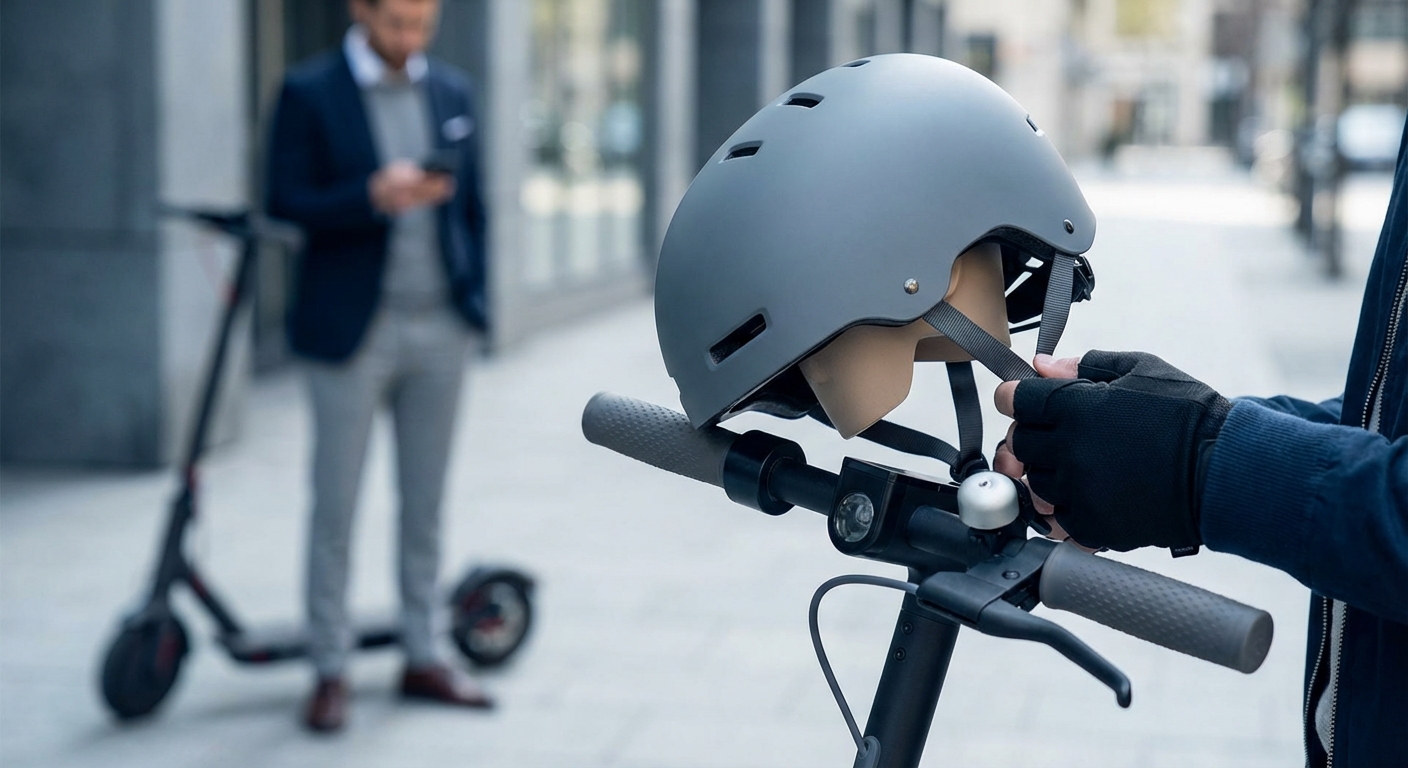
Why Your E-Scooter Helmet Might Not Be Protecting You Properly
You strap on a helmet before every ride. You feel protected. But here’s the uncomfortable truth: that helmet sitting on your head might not be doing what you think it does.
Many riders grab whatever helmet they find in their garage. A bicycle helmet from five years ago. A skateboard helmet their kid outgrew. Sometimes even a motorcycle helmet that’s way too heavy for casual commuting. The problem isn’t that these helmets are bad. It’s that they weren’t designed for the specific risks you face on an electric scooter.
Electric scooter helmet safety depends on proper certification, correct fit, and matching protection level to your riding speed. Many riders use helmets designed for different activities, leaving critical impact zones unprotected. A helmet that passes safety standards, fits snugly without pressure points, and covers your forehead properly can reduce head injury risk by up to 85 percent during crashes.
Why Standard Bike Helmets Fall Short for E-Scooters
Bicycle helmets protect against specific types of falls. You typically fall forward over the handlebars or sideways off the bike. The foam inside absorbs impact from those angles.
E-scooters create different crash dynamics. The smaller wheels hit obstacles that bikes roll over easily. You stand upright instead of leaning forward. When you fall, you often go backward or straight down. Your head hits the pavement at angles bike helmets weren’t tested for.
Speed matters too. Most bike helmets are tested for impacts around 12 to 15 mph. Many e-scooters cruise at 15 to 25 mph. Some performance models go even faster. That extra velocity means harder impacts and more force transferred to your skull.
The rear coverage on bike helmets often sits too high. When you fall backward off a scooter, the back of your head takes the hit. If your helmet doesn’t extend low enough, that critical area stays exposed.
The Certification Labels You Actually Need to Look For
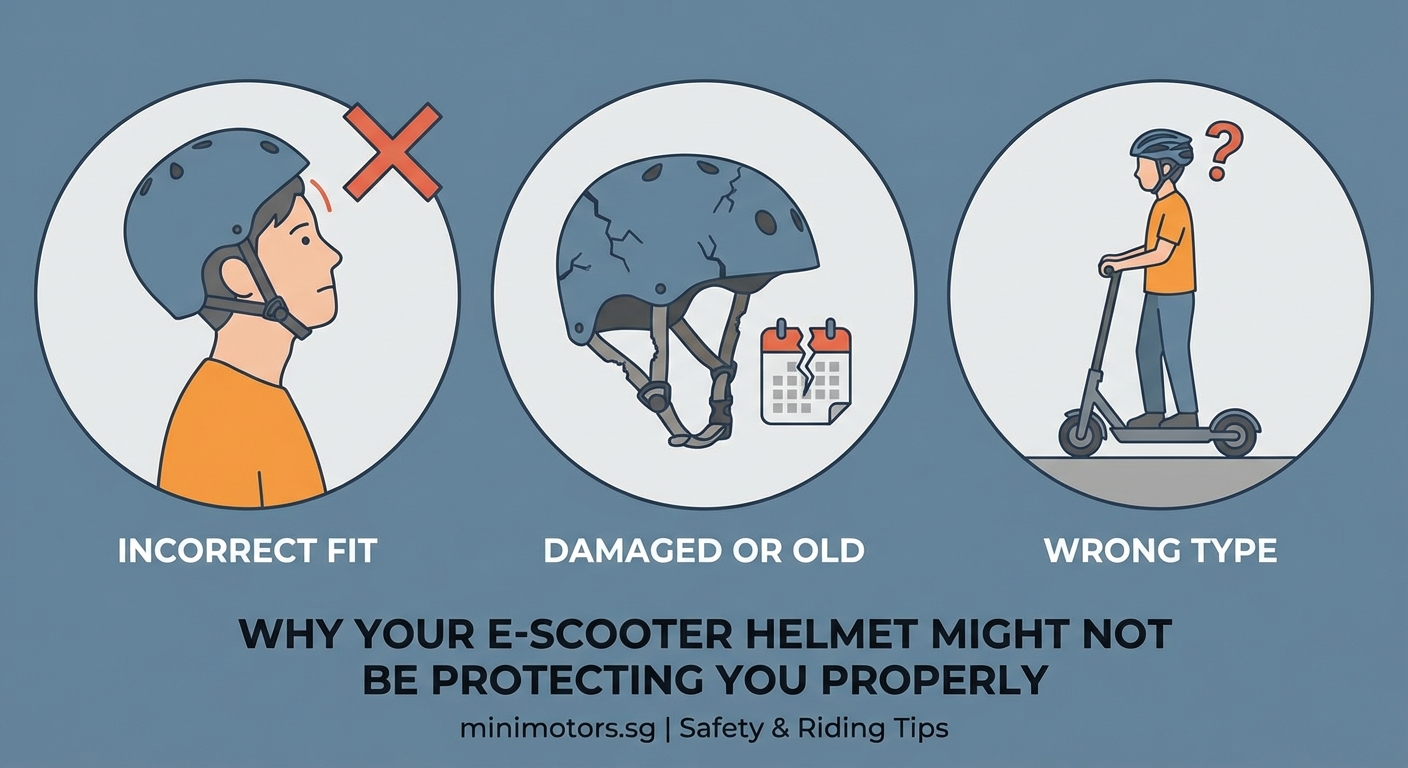
Walk into any store and you’ll see certification stickers on helmets. Most people ignore them. That’s a mistake.
Different countries use different safety standards. Understanding which ones matter helps you make better choices.
| Certification | Testing Standard | Best For | Geographic Region |
|---|---|---|---|
| CPSC | Single impact, front/side/rear | Commuting under 20 mph | United States |
| EN 1078 | Similar to CPSC, European testing | Daily urban riding | Europe |
| ASTM F1952 | Downhill sports, multiple impacts | Speeds over 20 mph | International |
| DOT | Motorcycle standard, heavy duty | High-performance scooters | United States |
| Snell | Rigorous motorcycle testing | Racing or extreme riding | International |
CPSC certification is the minimum you should accept. This standard tests helmets for the types of impacts common in cycling and light mobility device crashes. The helmet must protect against a single significant impact.
But here’s what most riders don’t know: CPSC helmets are designed to protect once, then get replaced. The foam compresses during impact and loses its protective ability. If you crash, even if the helmet looks fine, you need a new one.
For riders who regularly exceed 20 mph, ASTM F1952 or motorcycle certifications provide better protection. These helmets use denser foam and cover more of your head. They’re heavier, but the tradeoff makes sense when you’re moving at motorcycle-equivalent speeds.
“The biggest mistake I see is riders matching their helmet to their scooter’s price instead of its speed. A $2,000 scooter that goes 30 mph needs the same head protection as a motorcycle at that speed.” – Safety instructor at urban mobility training center
How to Actually Measure Your Head Properly
Most people guess their helmet size. Then they wonder why it slides around or gives them headaches.
Measuring takes two minutes and dramatically improves your safety. Here’s the process that actually works:
- Find a soft measuring tape (the kind used for sewing).
- Wrap it around your head about one inch above your eyebrows.
- Keep the tape level, passing just above your ears.
- Note the measurement in centimeters (more accurate than inches).
- Try on helmets within 1 cm of your measurement, not just the “medium” or “large” category.
Head shape matters as much as size. Some people have round heads. Others have oval or elongated shapes. Helmet brands design their molds differently. A helmet that fits your friend perfectly might feel terrible on you even if you wear the same size.
When you try on a helmet, it should feel snug but not painful. Shake your head side to side. The helmet should move with your skin, not slide over it. If you can fit more than two fingers between the strap and your chin, tighten it. The helmet should sit level on your head, covering your forehead about two finger-widths above your eyebrows.
Many riders position helmets too far back, exposing their foreheads. This happens because the helmet feels more comfortable tilted back. But in a forward fall, your forehead hits first. That exposed area can mean the difference between a mild concussion and a skull fracture.
The Hidden Problems with Expired and Damaged Helmets
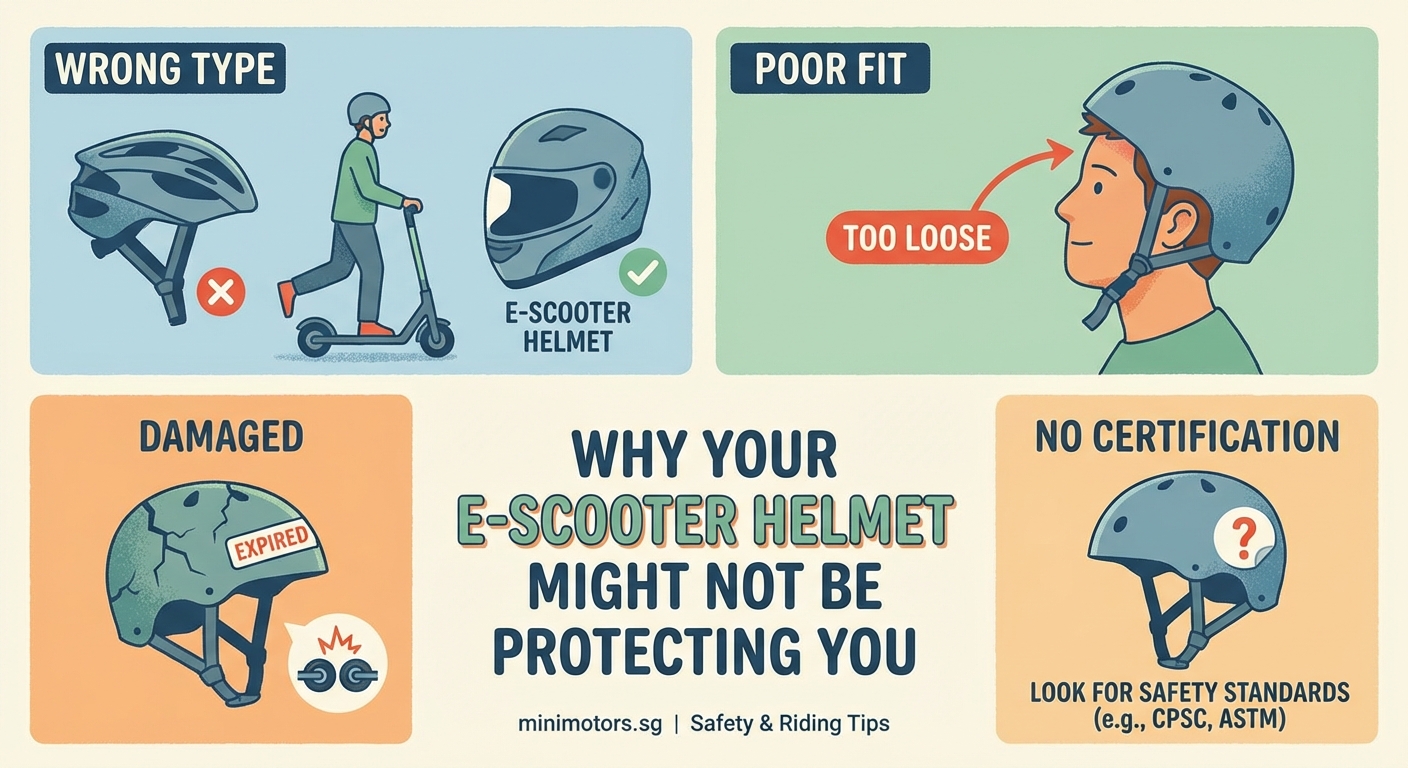
Helmets don’t last forever. The materials degrade over time, even if you never crash.
Most manufacturers recommend replacing helmets every three to five years. The foam inside breaks down from UV exposure, temperature changes, and the oils from your skin and hair. This breakdown is invisible. The helmet looks fine but provides less protection.
If you crash, replace your helmet immediately. Even if you don’t see cracks. The foam compresses during impact, creating weak points you can’t see. Some manufacturers offer crash replacement programs where you can buy a new helmet at a discount if you send in your damaged one.
Storage affects helmet lifespan too. Leaving your helmet in a hot car degrades the foam faster. Dropping it on hard surfaces can create micro-fractures. Even the vibration from hanging it on your handlebars during rides can weaken the structure over time.
Check your helmet regularly for these warning signs:
- Cracks in the outer shell, even small ones
- Dents or flat spots in the foam
- Loose or frayed straps
- Padding that’s compressed and won’t bounce back
- Any visible deformation of the shape
If you bought a used helmet, replace it. You don’t know its history. It might have been in a crash. It might be expired. The $50 to $100 you save isn’t worth the risk.
Matching Helmet Style to Your Actual Riding Conditions
Not every rider needs the same protection level. Your helmet choice should match how and where you ride.
For casual riders who stick to bike paths and rarely exceed 15 mph, a certified bicycle helmet works fine. Look for models with extended rear coverage. Brands that make urban cycling helmets often include this feature because city riders face similar risks to scooter riders.
Commuters who ride in traffic need more visibility features. Bright colors help drivers see you. Some helmets include built-in lights or reflective strips. These features matter more than most riders think. A study of urban mobility accidents found that visibility played a role in 60 percent of collisions between scooters and cars.
Performance riders on scooters that exceed 20 mph should consider downhill mountain bike helmets or even full-face options. These provide chin protection and cover more of your head. They’re heavier and less convenient to carry, but the protection level matches your risk.
Understanding e-scooter braking systems becomes especially important as your speed increases, since your helmet choice should account for how quickly you can stop.
Common Fit Mistakes That Compromise Protection
Even expensive, well-certified helmets fail if they don’t fit correctly. Here are the mistakes that show up most often:
Wearing it too loose. Straps should form a “V” shape under each ear. The chin strap should be snug enough that you can only fit one or two fingers between it and your chin. Many riders leave straps loose for comfort, but a loose helmet can rotate or come off during impact.
Positioning it wrong. The front edge should sit about one inch above your eyebrows. Tilting it back exposes your forehead. Tilting it forward blocks your vision and leaves the back of your head vulnerable.
Ignoring the retention system. Most modern helmets have a dial or adjustment system at the back. This fine-tunes the fit. Many riders never adjust it from the factory setting. Take 30 seconds to dial it in properly.
Not replacing worn padding. The foam pads inside your helmet compress over time from sweat and pressure. Many brands sell replacement padding. Fresh pads improve fit and comfort significantly.
Wearing it over thick hats or hoods. Winter riders sometimes put helmets over beanies. This creates a gap between your head and the protective foam. The helmet can’t do its job properly. Look for winter cycling caps designed to fit under helmets instead.
For riders just starting out, 7 essential things every first-time e-scooter rider should know covers the basics of safe riding beyond just helmet selection.
Special Considerations for Different Weather Conditions
Your helmet needs change with the seasons. Summer heat makes ventilation critical. Winter cold requires different solutions.
Hot weather riding: Look for helmets with multiple vents. More airflow keeps you cooler and reduces sweat buildup. Some riders avoid helmets in summer because they get too hot. The solution isn’t skipping the helmet. It’s finding one with better ventilation.
Cold weather riding: Vents that keep you cool in summer let cold air freeze your head in winter. Some helmets come with vent covers for winter use. Alternatively, wear a thin cycling cap under your helmet. Avoid thick beanies that compromise fit.
Rain riding: Wet conditions increase crash risk. Your helmet should have a visor or brim to keep rain off your face. Some riders use helmet covers designed for cycling. These keep rain out of vents while maintaining protection.
Night riding: Visibility becomes critical after dark. Helmets with built-in lights or reflective elements help drivers see you. Some models have removable light mounts. A helmet light sits higher than handlebar lights, making you more visible to drivers.
The Real Cost of Cheap Helmet Decisions
Budget helmets exist for a reason. They meet minimum safety standards at lower prices. But understanding what you give up helps you make informed choices.
Cheap helmets often use thicker, heavier foam to pass safety tests. This adds weight and reduces comfort. After 20 minutes of riding, that extra weight causes neck strain.
The straps and adjustment systems on budget helmets fail faster. Plastic buckles crack. Adjustment dials strip their threads. You end up replacing the helmet sooner, negating any savings.
Ventilation suffers on cheaper models. Fewer vents or poor airflow design makes them uncomfortable in warm weather. Riders who get too hot often push helmets back on their heads or take them off, defeating the purpose.
That said, a $40 helmet you actually wear beats a $200 helmet that sits at home because it’s “too nice” for daily use. The best helmet is the one on your head during every ride.
Consider this: emergency room visits for head injuries cost thousands of dollars. Serious head trauma can mean permanent disability. A quality helmet costs $80 to $150. The math makes the decision obvious.
How Helmet Technology Keeps Improving
Helmet design has changed significantly in recent years. Understanding these improvements helps you evaluate newer models.
MIPS (Multi-directional Impact Protection System): This technology adds a low-friction layer inside the helmet. During angled impacts, it allows the helmet to rotate slightly instead of transferring all rotational force to your brain. Studies show MIPS reduces concussion risk in certain types of crashes.
WaveCel: A newer technology that uses a collapsible cellular structure instead of traditional foam. It’s designed to flex and glide during impact, reducing both linear and rotational forces. Some brands are replacing MIPS with WaveCel in their premium models.
Koroyd: This material looks like a honeycomb of tubes. It crumples on impact, absorbing energy while maintaining better ventilation than solid foam. It’s lighter than traditional EPS foam too.
Smart helmets: Some models now include crash detection that alerts emergency contacts if you have an accident. Others have built-in turn signals, brake lights, or even bone conduction speakers for navigation. These features add cost and weight, but might appeal to tech-focused riders.
Not every rider needs the latest technology. Basic certified helmets still provide excellent protection. But if you’re replacing an old helmet anyway, newer technologies offer measurable improvements.
Testing Your Helmet Setup Before You Need It
You don’t want to discover fit problems during a crash. Test your helmet properly before you depend on it.
Put your helmet on and fasten all straps. Bend forward at the waist like you’re picking something up. The helmet should stay in place. If it slides forward over your eyes, tighten the rear retention system.
Shake your head vigorously side to side. The helmet should move with your head, not slide around on top of it. If it moves independently, adjust the side straps or try a smaller size.
Open your mouth wide, as if yawning. The helmet should pull down slightly on your head when the chin strap tightens. This confirms the strap is properly adjusted.
Have someone try to rotate the helmet forward and backward on your head. They should only be able to move it about half an inch in either direction. More movement means it’s too loose.
Try your helmet with any eyewear you normally use. Sunglasses, prescription glasses, or goggles should fit comfortably without the helmet pushing them into your face.
For riders concerned about overall safety practices, 7 common e-scooter accidents and how to avoid them provides context for the situations where your helmet might need to protect you.
When to Upgrade Beyond Basic Protection
Some riding situations call for more than a standard helmet. Knowing when to upgrade prevents injuries that basic helmets can’t handle.
If your scooter can exceed 25 mph, consider a full-face helmet. At these speeds, facial injuries become more common. Road rash on your chin and jaw takes months to heal and often leaves scars. Full-face helmets prevent this entirely.
Riders who commute in heavy traffic face higher collision risks. A helmet with better visibility features and more robust construction makes sense. Some riders choose motorcycle helmets for this reason, accepting the extra weight for the added protection.
Off-road riders need different protection too. Trails present risks from tree branches, rocks, and rougher falls. Downhill mountain bike helmets offer more coverage and often include visors to deflect branches.
If you carry passengers or ride in groups frequently, the crash risks increase. More riders mean more variables and potential accidents. Upgrading your protection matches the increased risk.
Making Electric Scooter Helmet Safety a Habit
Knowing all this information doesn’t help if you leave your helmet at home. Building consistent habits matters more than having perfect gear.
Keep your helmet with your scooter. If they’re stored separately, you’ll forget it. Some riders use a cable lock to secure their helmet to their scooter when parked.
Make helmet wearing non-negotiable. No exceptions for “just going down the street” or “I’m only going slow.” Most accidents happen close to home on familiar routes. The ride where you skip your helmet might be the one where you need it most.
Replace your helmet on schedule. Set a reminder on your phone for three years from purchase. When it goes off, order a new helmet even if the old one looks fine.
Inspect your helmet monthly. Check for damage, wear, and proper function of all straps and adjustments. This takes two minutes and catches problems before they matter.
If you’re helping someone choose their first electric scooter, make sure helmet selection is part of that conversation from the start.
Your Head Deserves Better Than “Good Enough”
The helmet you wear right now might be protecting you. Or it might just be making you feel protected while leaving critical vulnerabilities exposed.
Check the certification labels. Measure your head properly. Test the fit. Replace expired helmets. Match your protection level to your actual riding speed and conditions.
These steps take less than an hour total. That hour might prevent injuries that would change your life forever. Your head doesn’t get a second chance. Give it the protection it actually needs, not just the protection that feels convenient.
Electric scooter helmet safety isn’t about buying the most expensive gear or following every trend. It’s about understanding the real risks you face and choosing protection that addresses them. Now you have that understanding. Use it.
