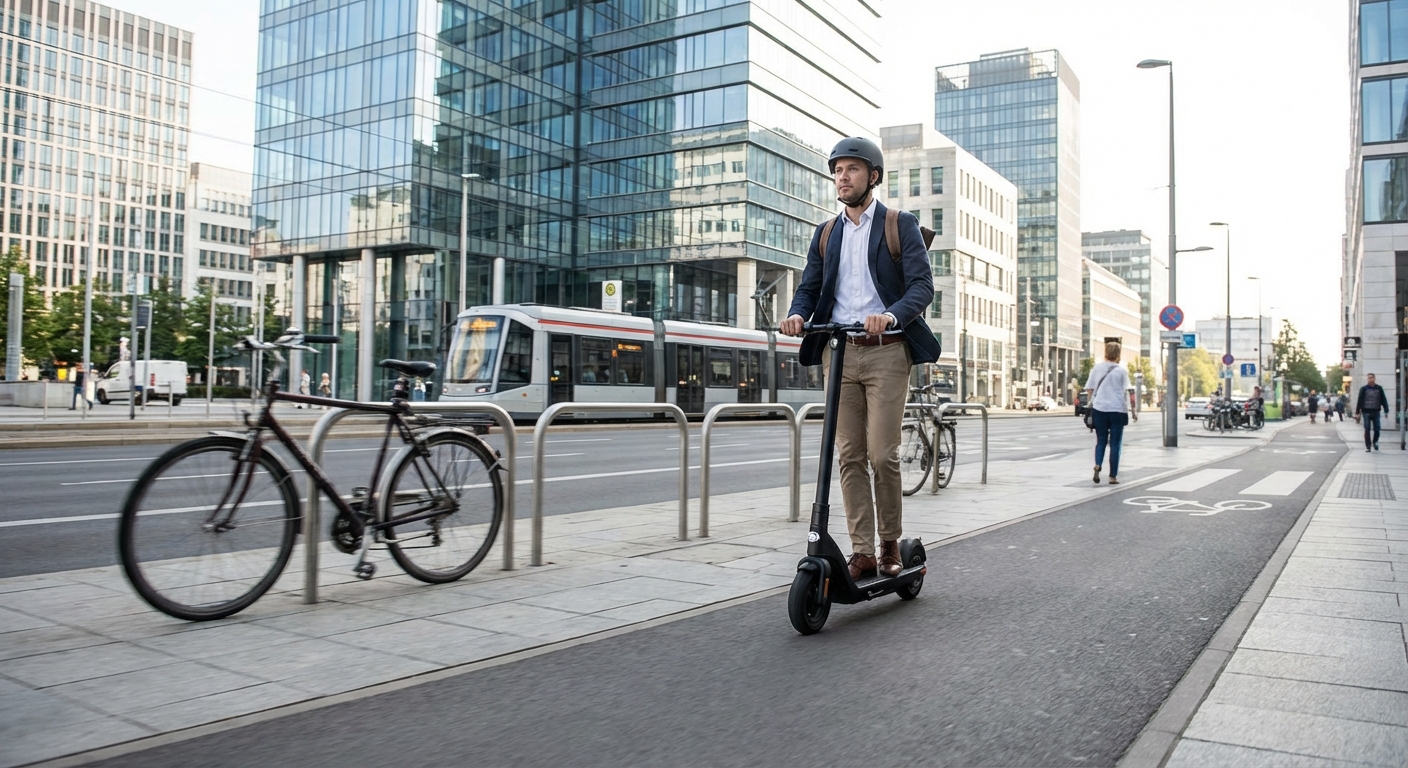
Why E-Scooters Are Replacing Bikes as the Preferred Urban Commute Option
Cities are changing how people move. Walk down any urban street and you’ll see fewer cars idling at lights and more compact vehicles zipping past. Two options dominate the micro-mobility conversation: electric scooters and traditional bikes. Both promise freedom from crowded buses and expensive parking. But which one actually fits your daily routine?
E-scooters offer superior portability and lower upfront costs, making them ideal for short commutes and multi-modal travel. Bikes provide better stability, longer range, and health benefits but require more storage space. Your choice depends on commute distance, storage availability, physical fitness goals, and whether you need to combine your ride with public transit.
Speed and arrival time matter more than you think
Getting to work on time shapes your entire day. E-scooters typically reach 15 to 25 mph depending on the model and local regulations. That puts you at your destination faster than pedaling a standard bike, especially if you’re not in peak physical condition.
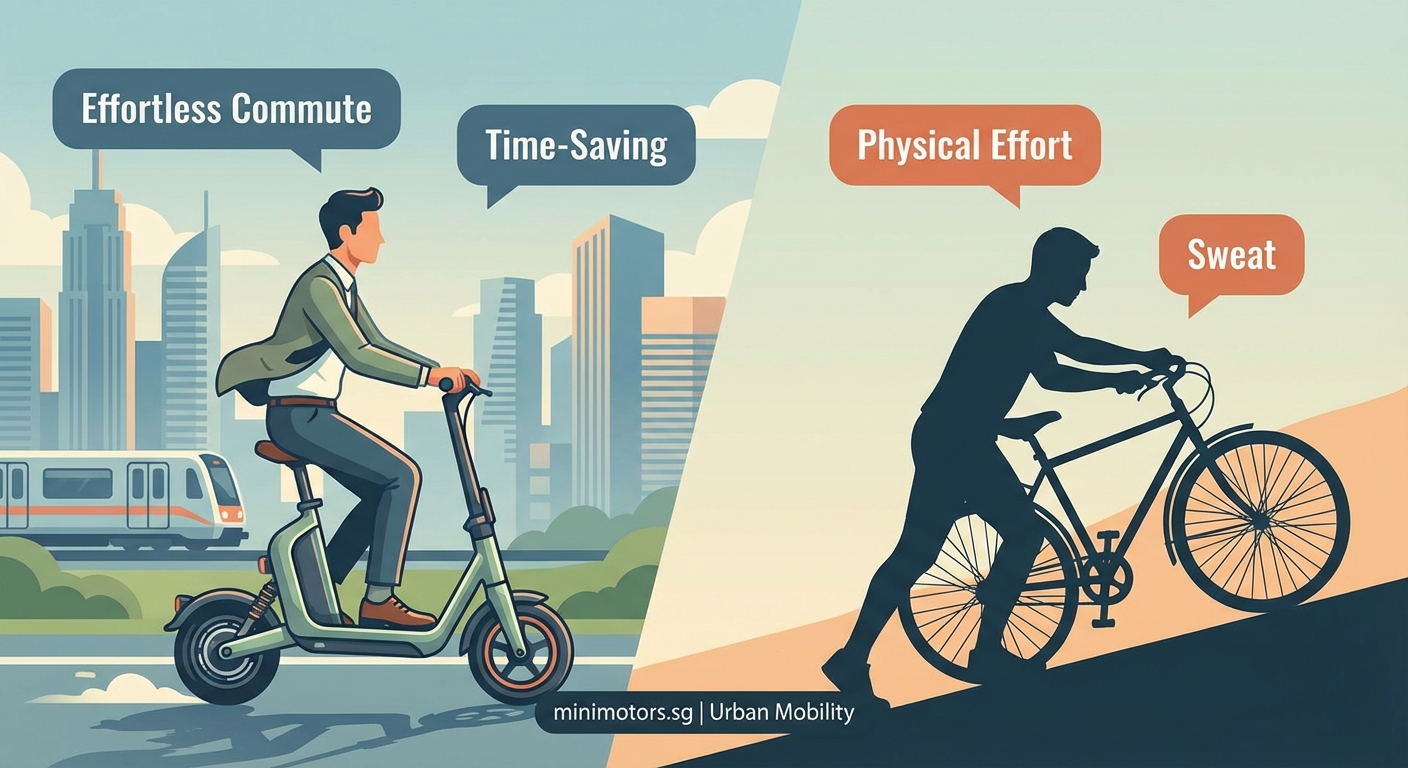
Bikes require consistent effort. Your speed depends entirely on your fitness level and how much you’re willing to sweat before arriving at the office. E-bikes bridge this gap, but they cost significantly more than both standard bikes and most e-scooters.
Traffic lights affect both options equally. The real difference shows up in acceleration. E-scooters get you moving instantly with a thumb throttle. Bikes need a few pedal strokes to build momentum, which adds up over a dozen intersections.
Portability changes everything for mixed commutes
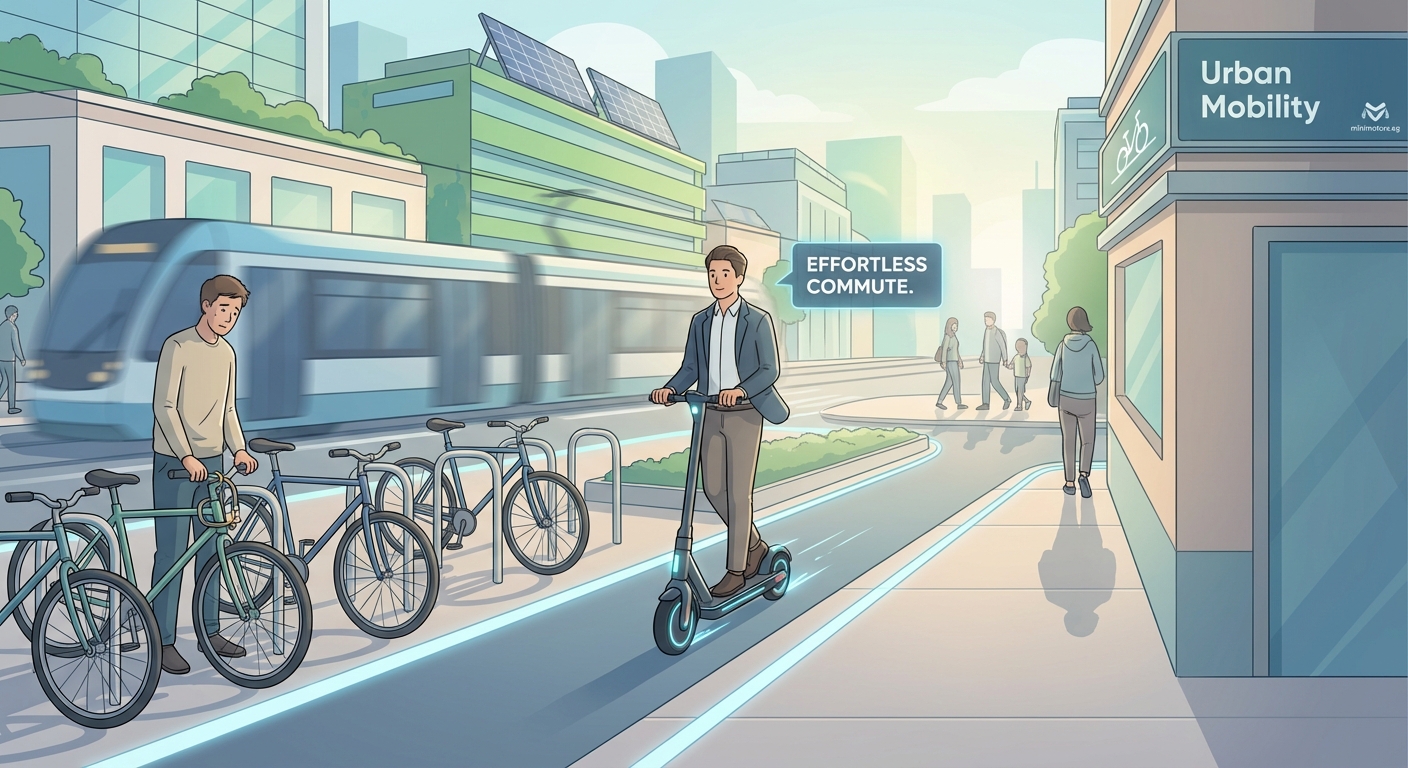
Can you carry it upstairs? That question matters more than most buyers realize. E-scooters fold in seconds. Most models weigh between 25 and 40 pounds, light enough to carry onto a train or store under your desk.
Bikes don’t fold. Even folding bikes remain bulky compared to a collapsed scooter. You need a bike rack, a dedicated storage room, or a very understanding office manager. Theft becomes a real concern when you lock up outside.
Here’s what a typical multi-modal commute looks like:
- Ride your vehicle to the nearest transit station
- Fold or lock your ride
- Board the train or bus
- Exit at your destination stop
- Complete the final mile to your workplace
E-scooters handle steps 2 and 5 with less friction. You fold, carry, and go. Bikes force you to find secure parking at both ends or risk losing your investment to bolt cutters.
Cost comparison reveals surprising differences
Purchase price tells only part of the story. A decent commuter bike starts around $300 to $500. Quality e-scooters occupy the same range, though premium models climb past $1,000.
Maintenance costs favor e-scooters initially. No chain to lubricate. No gears to adjust. Fewer moving parts mean fewer repair visits during the first year. Regular cleaning keeps components working smoothly.
Bikes need periodic tune-ups. Chain replacement, brake pad changes, and tire repairs add up. But here’s the catch: e-scooter batteries degrade. After 300 to 500 charge cycles, you’ll notice reduced range. Battery replacement can cost $200 to $400, sometimes half the scooter’s original price.
| Cost Factor | E-Scooter | Bike |
|---|---|---|
| Initial purchase | $300 to $1,200 | $300 to $800 |
| Monthly maintenance | $5 to $15 | $15 to $30 |
| Battery/major component replacement | $200 to $400 every 2-3 years | $50 to $150 every 3-5 years |
| Electricity/energy cost per month | $2 to $5 | $0 |
| Insurance (optional) | $10 to $20 | $5 to $15 |
Weather protection and comfort levels differ dramatically
Rain turns bikes into a miserable experience. You arrive soaked unless you wear full rain gear. E-scooters face the same water exposure, but many models carry an IP rating that protects electrical components from splashes.
Standing versus sitting changes comfort on longer rides. Bikes let you settle into a saddle. Your legs share the work with your core. E-scooters keep you standing, which tires your legs and lower back after 20 minutes.
Rough pavement punishes scooter riders harder. Smaller wheels (typically 8 to 10 inches) transmit every bump straight to your arms and spine. Bikes roll over cracks and potholes with 26-inch or larger wheels that smooth out the ride.
Cold weather drains e-scooter batteries faster. Lithium-ion cells lose 20% to 40% of their capacity when temperatures drop below freezing. Bikes don’t care about temperature. They work the same in January as they do in July.
Storage and parking create daily friction
Where does it go when you’re not riding? This question determines whether your purchase becomes a daily tool or garage clutter.
E-scooters fit in closets, under desks, and in car trunks. You can bring them inside almost anywhere. No special parking infrastructure needed. No worrying about theft while you grab coffee.
Bikes demand dedicated space. Apartments without bike storage become cluttered. Offices without bike rooms force you to lock up outside. Cities with bike theft problems make this a daily anxiety.
Some buildings ban e-scooters from elevators or apartments due to fire risk from lithium batteries. Check your building’s rules before buying. A few high-profile battery fires have made property managers cautious.
Safety considerations you can’t ignore
Stability matters when cars pass inches away. Bikes offer four contact points: two wheels and two feet (when stopped). E-scooters balance on two small wheels with your feet on a narrow deck. Hitting a pothole at speed can throw you off.
Visibility to drivers varies. Both options sit low compared to cars. But bikes allow easier shoulder checking and hand signals. E-scooter riders need to remove a hand from the handlebar to signal, which feels unstable at speed.
Braking performance separates models dramatically. Quality e-scooters feature dual disc brakes or regenerative braking. Budget models rely on rear fender brakes that wear out and fail in wet conditions. Bikes typically offer more reliable stopping power across price ranges.
Modern cities weren’t designed for vehicles that move at 15 mph. Whether you choose an e-scooter or bike, assume drivers don’t see you. Ride defensively, use lights at night, and wear bright colors during the day.
Physical fitness benefits tilt heavily toward bikes
E-scooters require minimal physical effort. You stand and steer. Your heart rate barely elevates. If fitness matters to you, scooters won’t help you meet health goals.
Bikes turn commuting into exercise. Even casual pedaling burns 300 to 400 calories per hour. Your cardiovascular system gets stronger. Leg muscles develop. Many commuters skip the gym entirely because their ride provides enough activity.
E-bikes offer a middle ground. Pedal assist lets you control effort level. Arrive at work without sweating, then increase assistance on the way home for a workout. This flexibility appeals to people recovering from injuries or building fitness gradually.
Range and distance capabilities set clear boundaries
How far can you go? E-scooters typically manage 15 to 30 miles per charge under ideal conditions. Real-world range drops with hills, headwinds, and rider weight. Running out of battery mid-commute turns your electric scooter into a heavy, awkward kick scooter.
Bikes have unlimited range. Your legs might get tired, but the vehicle never stops working. This psychological freedom matters for people who sometimes extend their commute with errands or spontaneous route changes.
Battery charging habits affect long-term performance. Fast charging degrades cells faster. Standard overnight charging preserves battery health but requires planning.
Practical considerations for different commute types
Your specific situation determines the winner. Here are common scenarios:
Choose an e-scooter if you:
– Commute less than 5 miles each way
– Combine riding with trains or buses
– Work in a high-rise building
– Live in an apartment with limited storage
– Prioritize convenience over exercise
– Face mostly flat terrain
Choose a bike if you:
– Commute more than 5 miles each way
– Want cardiovascular exercise
– Have secure bike parking at both ends
– Carry cargo or groceries regularly
– Ride in areas with poor pavement
– Want minimal ongoing costs
Consider an e-bike if you:
– Face significant hills
– Commute 10+ miles each way
– Want exercise with adjustable intensity
– Can afford the higher initial cost
– Have secure storage for a larger vehicle
Regulatory landscape affects your options
Cities regulate these vehicles differently. Some ban e-scooters from sidewalks but allow bikes. Others restrict e-scooter speeds to 15 mph while bikes face no limits. A few cities require licenses or registration for electric vehicles.
Bike infrastructure exists in most urban areas. Dedicated lanes, traffic signals, and parking racks cater to cyclists. E-scooter infrastructure lags behind. You often share space with pedestrians or cars, neither of which feels safe.
Insurance requirements vary by location. Some cities mandate coverage for electric vehicles. Bikes rarely face such requirements. Check local laws before purchasing to avoid fines or confiscation.
Maintenance demands and technical skills required
Bikes need regular attention. Chain lubrication every few weeks. Brake adjustments monthly. Tire pressure checks before each ride. Many cyclists learn basic repairs to avoid shop fees. Others budget $200 to $400 annually for professional maintenance.
E-scooters require less frequent maintenance but more specialized knowledge. Following a maintenance checklist prevents most problems. Tire changes, brake adjustments, and electrical troubleshooting often require professional help.
Battery issues frustrate many owners. Cells degrade invisibly. One day your scooter works fine. A few months later, range drops by half. Replacement costs hurt, but riding with degraded batteries leaves you stranded.
Technology features separate modern models from basic ones
Connected features add convenience and security to newer e-scooters. GPS tracking helps recover stolen vehicles. Smartphone apps lock and unlock your scooter remotely. Ride statistics track your distance and speed.
Bikes rarely offer such technology unless you add aftermarket accessories. Smart locks, GPS trackers, and cycling computers cost extra. E-scooters increasingly bundle these features at no additional charge.
Display technology varies widely. Budget scooters use basic LED indicators. Premium models feature full-color screens showing speed, battery, distance, and navigation. Bikes typically offer no display unless you mount a cycling computer.
Environmental impact beyond the marketing claims
Both options beat cars for carbon emissions. Manufacturing footprints differ though. E-scooter batteries require lithium mining, which damages ecosystems. Bikes use more traditional materials with established recycling paths.
Lifespan matters for environmental calculations. A well-maintained bike lasts 10 to 20 years. E-scooters typically survive 3 to 5 years before battery degradation or component failure forces replacement. Shorter lifespans mean more frequent manufacturing impacts.
Shared scooter programs complicate this picture. Rental scooters last only 6 to 12 months on average due to vandalism and heavy use. Personal ownership extends lifespan significantly, reducing per-mile environmental cost.
Real user experiences reveal hidden trade-offs
Talk to daily commuters and patterns emerge. E-scooter riders love the convenience but miss the exercise. They arrive at work energized but leave feeling stiff from standing. Battery anxiety creeps in after a year of use.
Bike commuters appreciate the predictability. No charging to remember. No battery degradation to monitor. But they struggle with sweat management in summer and secure parking year-round. Theft stories are common.
Weather drives many decisions. One rainy season convinces some e-scooter owners to switch. Others abandon bikes after too many soaked arrivals. Your local climate matters more than general advice.
Making the choice that fits your actual life
Forget what the marketing says. Think about your specific situation. Measure your commute distance. Check your building’s storage options. Consider your fitness goals honestly.
Test ride both options if possible. Rental programs let you experience e-scooters without commitment. Bike shops often allow test rides. A 15-minute spin reveals comfort issues no review can capture.
Budget for the total cost of ownership, not just purchase price. Add maintenance, replacement parts, insurance, and eventual battery replacement for e-scooters. Factor in tune-ups, tire replacements, and potential theft for bikes.
Your commute deserves the right tool
Neither option wins universally. E-scooters excel at short, mixed-mode commutes where portability matters. Bikes dominate longer distances and situations where exercise adds value. Your priorities determine the winner.
Start by mapping your typical week. Count how many days you’d actually use each option. Consider weather, distance, storage, and whether you need to combine riding with other transport. The vehicle that fits most of your real situations beats the one that works perfectly in ideal conditions. Choose based on your actual life, not the one you imagine having.
