
Where Are E-Scooters Banned? A Complete List of Cities and Countries with Restrictions
Planning a trip with your electric scooter can turn into a legal nightmare if you don’t know the rules. Some cities welcome riders with open arms. Others will fine you on the spot or confiscate your scooter entirely. The landscape changes constantly as governments react to safety concerns, sidewalk clutter, and rider behavior.
Electric scooter bans vary dramatically by location. Some countries prohibit private ownership entirely, while others restrict usage to bike lanes or rental programs only. Cities like Paris banned rental scooters after public votes, but private ownership remains legal. Understanding local laws before you ride prevents fines, confiscation, and legal trouble. Always check current regulations for your specific destination before traveling with your scooter.
Countries with complete or near-complete bans
A handful of nations have drawn hard lines against electric scooters. These restrictions apply to both private and rental models.
Singapore maintains one of the strictest policies globally. Personal mobility devices are banned on all footpaths following a series of accidents. Riders face fines up to SGD 5,000 and potential jail time. The city-state permits scooters only on park connector networks and certain cycling paths.
Japan takes a similarly cautious approach. Electric scooters fall under motorized vehicle classifications, requiring license plates, insurance, and a driver’s license. Most models sold internationally don’t meet Japanese road standards. This effectively creates a ban for tourists and casual riders.
The Netherlands prohibits electric scooters on public roads and bike paths. Dutch authorities classify them as motorized vehicles without proper safety equipment. The country’s extensive cycling infrastructure doesn’t extend to scooters. Violators face fines starting at €95.
India implemented regional bans in multiple states after accidents involving pedestrians. Delhi, Mumbai, and Bangalore restrict scooter usage on most public roads. Enforcement varies, but the legal framework discourages widespread adoption.
Local enforcement matters more than written law. A technically legal scooter can still result in fines if police interpret regulations differently than you expect.
Cities that banned rental programs but allow private scooters
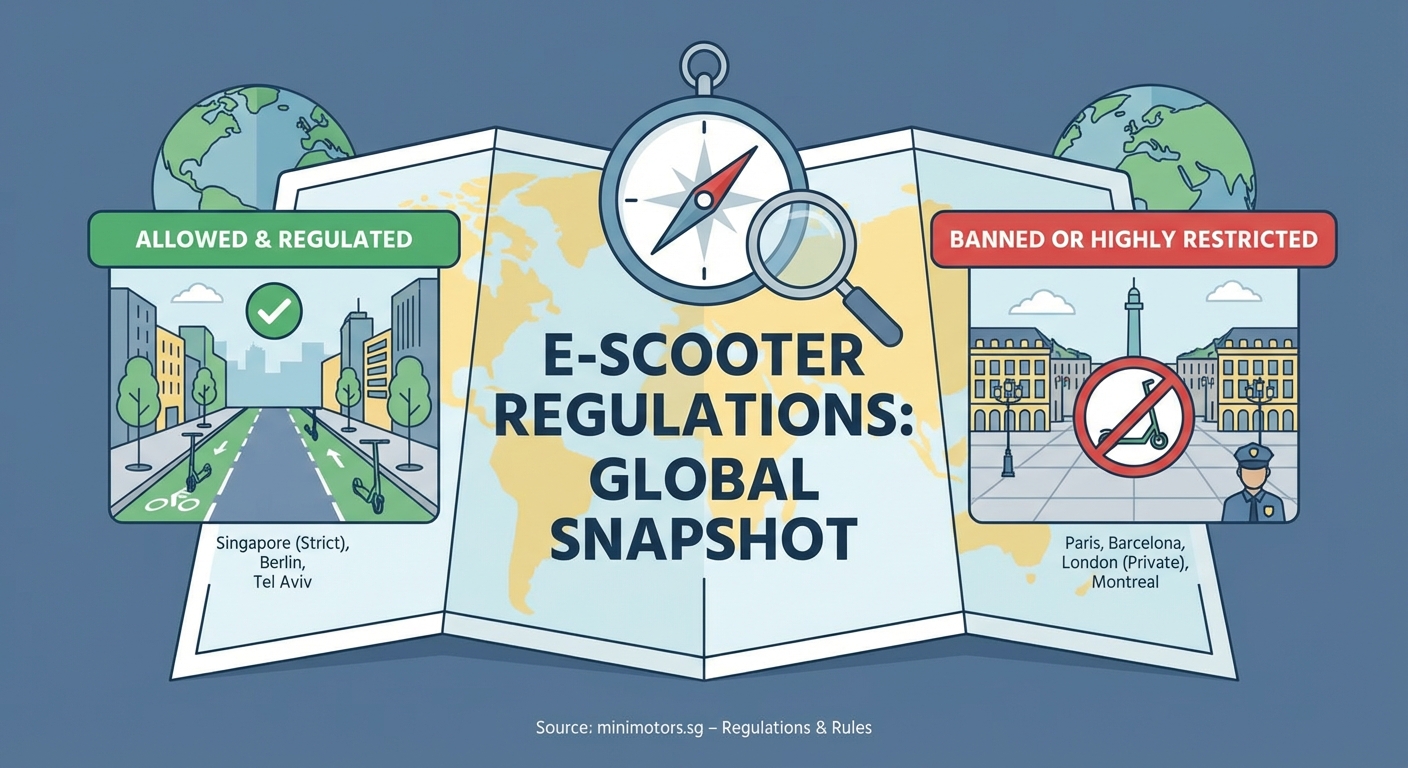
Many urban centers target rental fleets while leaving private owners alone. This distinction matters if you’re considering how to choose your first electric scooter for personal use.
Paris made headlines in 2023 by becoming Europe’s first major city to ban rental scooters completely. A public referendum showed 89% opposition to rental programs, citing sidewalk clutter and reckless riding. Private scooters remain legal with restrictions on speed and parking.
Montreal banned rental services in 2020 after pilot programs failed to meet safety standards. Personal scooters face fewer restrictions but must follow bicycle rules. Riders need bells, lights, and reflectors after dark.
Barcelona ended its rental program trial after complaints about tourist behavior and improper parking. The city now focuses on expanding bike infrastructure instead. Private scooters are tolerated but not actively encouraged.
Melbourne restricted rental scooters to specific zones after pedestrian injuries increased. Private riders face fewer limitations but must stay off sidewalks in the central business district.
United States restrictions by state and city
American regulations create a patchwork of rules that confuse even experienced riders. State laws set baseline requirements, but cities often add their own restrictions.
States with broad permissions
California allows electric scooters on roads with speed limits under 35 mph. Riders must be 16 or older. Helmets are required only for those under 18. Cities can create additional rules about sidewalk usage and parking.
Texas permits scooters statewide but leaves most decisions to local governments. Austin embraces them fully. San Antonio restricts them to certain neighborhoods. Dallas requires geofencing to prevent sidewalk riding in busy areas.
Florida classifies scooters as vehicles, requiring riders to follow traffic laws. Sidewalk riding is generally prohibited unless local ordinances say otherwise. Miami and Tampa have different parking requirements.
Cities with heavy restrictions
New York City banned electric scooters until 2020, then legalized them with tight controls. Riders must stay in bike lanes. Maximum speed is 15 mph. Rental programs operate only in specific boroughs.
Los Angeles caps rental fleet sizes and requires companies to share rider data with the city. Private scooters face fewer rules but must follow the same traffic laws as bicycles.
Seattle limits where scooters can be parked and requires riders to take safety photos before ending rentals. The city suspended programs multiple times due to compliance issues.
European Union variations and inconsistencies
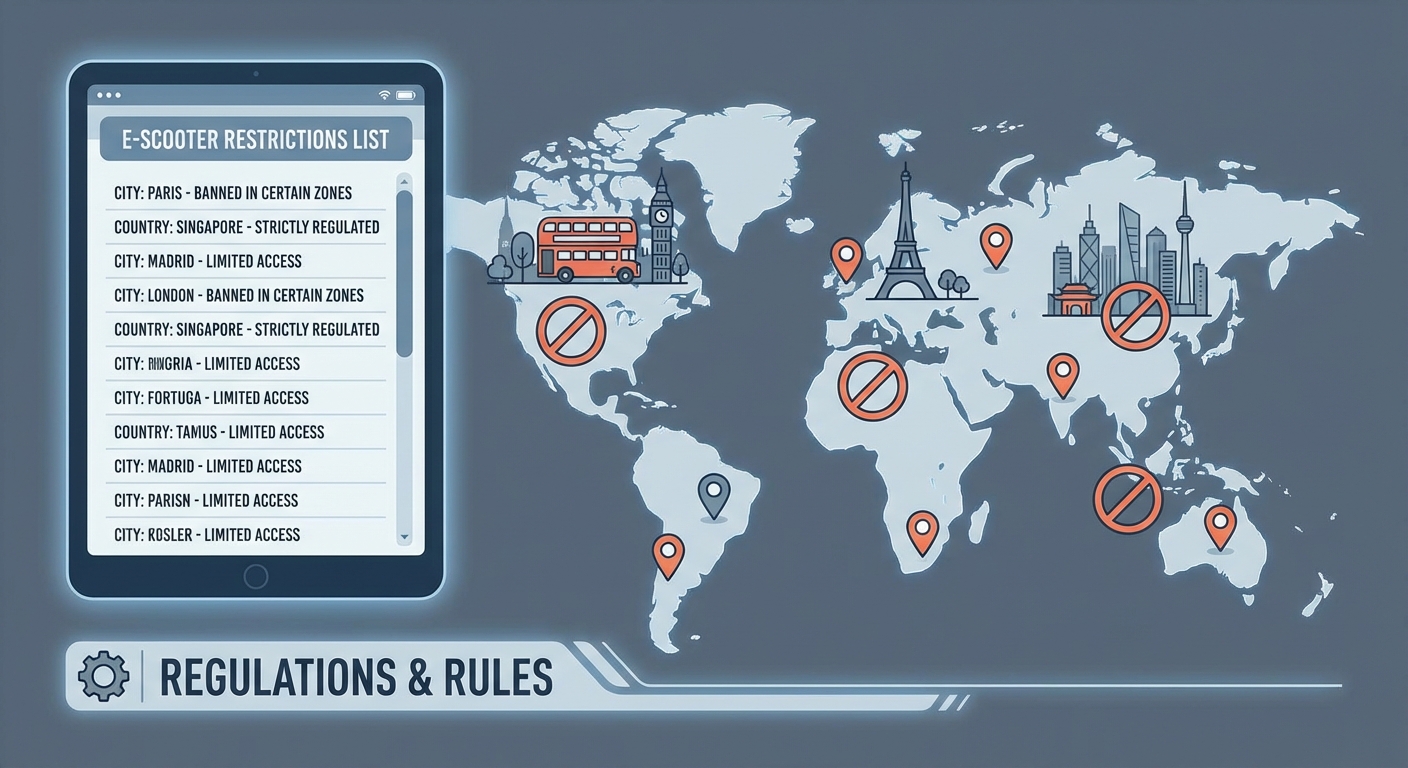
Europe lacks unified scooter regulations despite shared transportation goals. Each country sets its own standards.
Germany legalized electric scooters in 2019 with comprehensive rules. Riders need insurance, lights, and bells. Maximum speed is 20 km/h. Scooters are banned from sidewalks but allowed on bike paths and roads without cycle infrastructure.
France requires riders to be 12 or older. Scooters are limited to 25 km/h. Sidewalk riding is prohibited except in designated zones. Insurance is mandatory. Parking restrictions vary by city.
United Kingdom runs rental trials in select cities but bans private scooters on public roads entirely. This creates a confusing situation where tourists can rent but not bring their own devices. The law classifies private scooters as motor vehicles requiring registration, which manufacturers don’t provide.
Spain delegates most decisions to regional governments. Madrid allows scooters on roads and bike lanes. Valencia requires helmets. Seville bans them from the historic center during peak hours.
Italy permits scooters in cities that establish specific regulations. Rome, Milan, and Florence have different speed limits and parking rules. Riders must be 14 or older nationwide.
| Country | Max Speed | Age Requirement | Insurance | Helmet |
|---|---|---|---|---|
| Germany | 20 km/h | 14+ | Required | Not required |
| France | 25 km/h | 12+ | Required | Not required |
| UK (rental only) | 15.5 mph | 16+ | Included in rental | Not required |
| Spain | 25 km/h | 16+ | Varies by region | Varies by city |
| Italy | 25 km/h | 14+ | Not required | Not required |
Asia Pacific regulations and enforcement
Asian countries balance innovation with public safety concerns differently than Western nations.
Australia allows electric scooters in most states with varying rules. Queensland permits them on footpaths at 12 km/h or roads at 25 km/h. New South Wales restricts them to private property only. Victoria allows them on bike paths but not roads or footpaths.
South Korea requires registration and insurance for scooters over 25 km/h. Riders need a license for models exceeding that speed. Enforcement is strict in Seoul, where sidewalk riding results in immediate fines.
Thailand legalized scooters in 2022 after years of gray-market usage. Bangkok now has rental programs with 20 km/h speed limits. Riders must be 18 or older. Helmets are recommended but not required.
New Zealand classifies scooters as vehicles, requiring riders to follow road rules. They’re banned from footpaths in most cities. Auckland and Wellington have specific parking zones to prevent clutter.
How to research local laws before you travel
Checking regulations takes less time than dealing with confiscation or fines. Follow these steps for any destination.
- Check national transportation ministry websites for baseline rules.
- Search the specific city’s municipal code for local ordinances.
- Contact your hotel or accommodation to ask about nearby restrictions.
- Join local scooter forums or social media groups for real-world enforcement insights.
- Call the local police non-emergency line if you can’t find clear information.
- Download apps from rental companies operating in the area to see where they’re allowed.
Government websites often lag behind actual enforcement. A law passed six months ago might not appear online yet. Recent news articles about scooter incidents reveal how authorities currently treat riders.
Travel forums show which rules police actively enforce versus those they ignore. A technically illegal action might be tolerated if done safely and respectfully.
Common restrictions even where scooters are legal
Most jurisdictions that allow scooters impose similar limitations. Understanding these patterns helps you ride legally anywhere.
- Sidewalk bans in business districts
- Speed limits between 15 and 25 km/h
- Age minimums ranging from 12 to 18
- Mandatory lights and reflectors after dark
- Prohibitions on carrying passengers
- Bans from highways and high-speed roads
- Parking restrictions in historic areas
- Alcohol limits matching those for drivers
Some cities use geofencing technology to automatically slow rental scooters in pedestrian zones. Private scooters lack this feature, making you responsible for knowing and following speed limits.
Parking violations generate more tickets than moving violations in most cities. Scooters blocking wheelchair ramps, building entrances, or bus stops attract immediate enforcement.
What happens if you break the rules
Penalties vary dramatically based on location and violation severity. Minor infractions might result in warnings. Serious violations lead to significant consequences.
Fines range from $25 in lenient American cities to over $1,000 in Singapore. European cities typically charge between €50 and €200 for first offenses. Repeat violations increase penalties exponentially.
Confiscation occurs in countries with total bans or when riders ignore multiple warnings. Retrieving your scooter often requires paying storage fees plus the original fine. Some jurisdictions destroy confiscated devices after 30 days.
Criminal charges apply in extreme cases. Riding under the influence, causing accidents, or fleeing from police can result in arrest. Japan treats unlicensed scooter operation as seriously as driving without a license.
Liability for damages extends beyond fines. If you injure a pedestrian while breaking local laws, insurance might not cover medical costs or legal fees. Some countries hold riders personally responsible for all damages.
Understanding 7 common e-scooter accidents and how to avoid them helps you ride safely regardless of location.
Why cities ban or restrict electric scooters
Governments cite consistent reasons when implementing restrictions. Understanding their perspective helps predict future regulatory changes.
Safety concerns top the list. Emergency room data shows increasing scooter-related injuries. Cities worry about both rider and pedestrian safety. Accidents involving elderly pedestrians generate particularly strong political pressure.
Infrastructure limitations create practical problems. Narrow sidewalks can’t accommodate scooters safely. Bike lane networks remain incomplete in many cities. Streets designed for cars lack space for new vehicle types.
Parking chaos frustrates residents and business owners. Rental scooters blocking doorways, wheelchair ramps, and sidewalks generate thousands of complaints. Cities struggle to enforce parking rules without dedicated staff.
Political pressure from taxi companies, public transit operators, and disability advocates influences policy. These groups see scooters as competition or hazards. Their lobbying shapes regulations more than rider preferences.
Revenue generation motivates some restrictions. Permit fees, parking fines, and rental program taxes create new income streams. Cities facing budget shortfalls see scooters as revenue opportunities.
The future of electric scooter regulations
Regulatory trends point toward standardization and integration with existing transportation networks. Several patterns are emerging globally.
More cities are creating dedicated micromobility lanes separate from both cars and pedestrians. Copenhagen and Amsterdam lead this infrastructure development. Other cities are following their example as scooter adoption increases.
Registration requirements are spreading as governments seek better data. Knowing how many scooters operate in a city helps with planning. How to register your electric scooter is becoming necessary in more locations.
Technology mandates are increasing. Cities require GPS tracking, speed governors, and parking sensors. These features help enforce rules automatically without constant police presence.
Insurance requirements are becoming standard in Europe and parts of Asia. This protects both riders and the public from accident costs. Expect more countries to follow this trend.
Rental programs are maturing with better accountability systems. Companies now face strict performance metrics. Cities quickly revoke permits from operators who don’t maintain fleets or prevent parking violations.
Making smart decisions about scooter ownership and travel
Buying a scooter for international travel requires careful consideration. Rental options often make more sense for tourists. Local regulations might make your personal scooter unusable at your destination.
Before purchasing, research laws in places you visit regularly. A scooter perfect for your home city might be illegal elsewhere. Models with adjustable speed limits and removable batteries offer more flexibility.
Consider whether commuter vs off-road e-scooters better fits your travel needs. Commuter models meet more regulatory requirements. Off-road scooters often exceed speed and power limits.
Battery capacity affects both what is the average range of an electric scooter on a single charge and airline travel restrictions. Larger batteries provide better range but can’t fly in cargo holds. Balance your needs carefully.
For frequent travelers, maintaining relationships with rental companies in multiple cities provides more flexibility than shipping your personal scooter. Many programs offer discounts for repeat users.
Your next steps for legal riding anywhere
Laws will continue changing as cities adapt to scooter popularity. Staying informed protects you from unnecessary hassles and expenses.
Start by bookmarking official transportation websites for cities you visit regularly. Set up news alerts for scooter regulation changes in those locations. Join online communities where riders share real-time enforcement updates.
Treat every new city as having different rules until you verify otherwise. The five minutes spent researching beats hours dealing with police or towing companies. Your scooter represents a significant investment worth protecting through informed riding.
Remember that being technically legal isn’t enough. Ride respectfully and safely regardless of what laws permit. Your behavior shapes how future regulations develop. Cities watching other locations make decisions based on rider conduct. Be the example that keeps scooters legal for everyone who comes after you.
