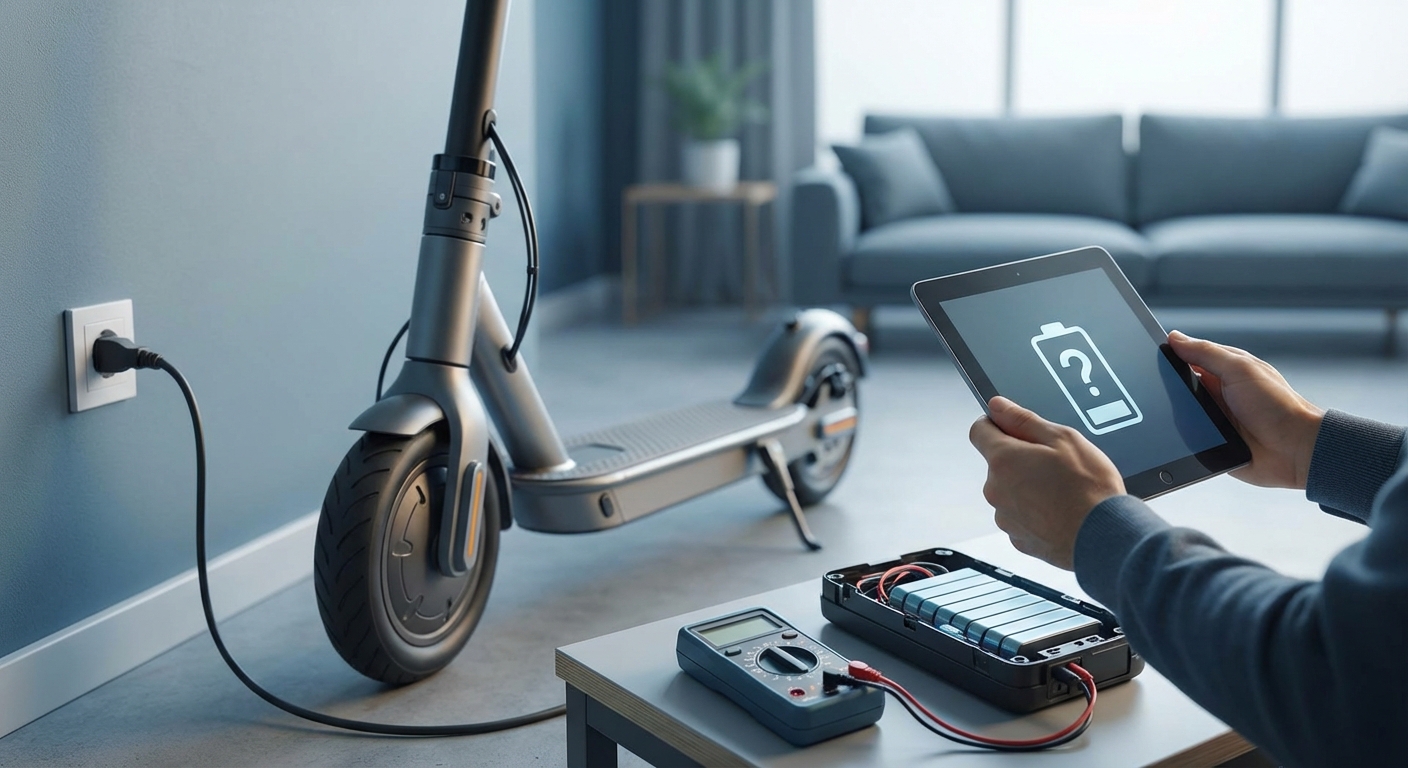
What to Do When Your E-Scooter Battery Won’t Hold a Charge
You plug in your e-scooter overnight, wake up to a full charge indicator, and by the time you reach your second stop, the battery icon is already flashing red. Sound familiar? A battery that won’t hold a charge is one of the most frustrating problems riders face, but the good news is that most charging issues have clear causes and practical fixes you can tackle yourself.
When your e-scooter battery won’t hold a charge, start by checking the charger and connections for damage, then test charging behavior over multiple cycles. Most issues stem from temperature exposure, improper storage, or charging habits. If your battery is over two years old or shows voltage irregularities, replacement is often more cost-effective than continued troubleshooting.
Understanding Why Batteries Lose Their Capacity
Lithium-ion batteries degrade naturally over time, but external factors accelerate this process dramatically.
Every charge cycle wears down the chemical structure inside your battery cells. Think of it like a sponge that gradually loses its ability to absorb water. After 300 to 500 full cycles, most e-scooter batteries retain only 70 to 80 percent of their original capacity.
Temperature plays a massive role too. Storing your scooter in a hot garage during summer or leaving it outside in freezing weather damages the battery at a cellular level. Heat causes the electrolyte to break down faster. Cold temperatures reduce the battery’s ability to transfer energy efficiently.
Poor charging habits compound these issues. Letting your battery drain to zero regularly, or keeping it plugged in at 100 percent for days, stresses the cells unnecessarily. Both extremes shorten lifespan.
Physical damage matters as well. A hard fall or constant vibration from rough terrain can loosen internal connections or crack protective casings. Once moisture gets inside, corrosion begins.
Step-by-Step Diagnosis Process
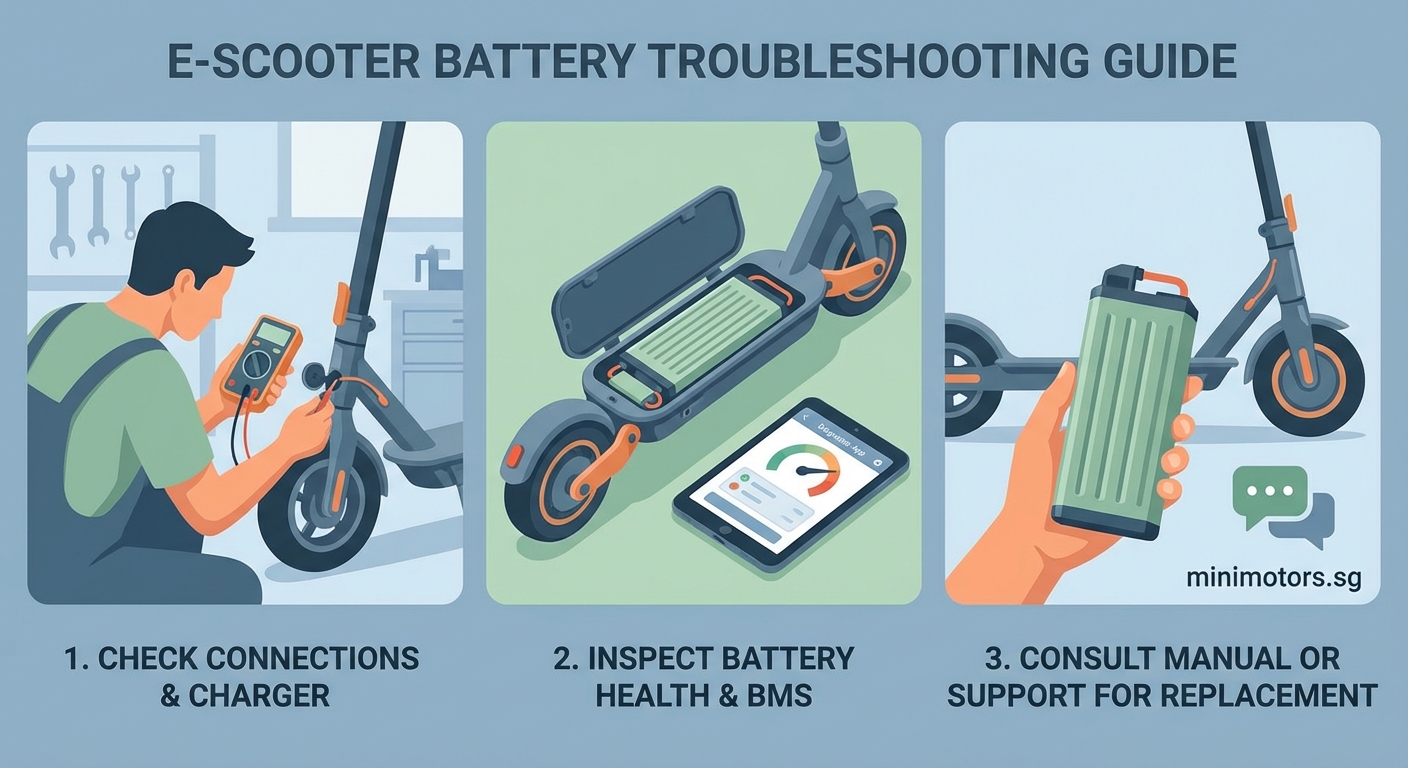
Before assuming your battery is dead, run through this systematic check.
-
Inspect the charger first. Plug it into the wall and look for an indicator light. No light means the charger itself might be faulty. Try a different outlet to rule out electrical issues.
-
Examine all connection points. Check where the charger plugs into your scooter. Look for bent pins, corrosion, or debris inside the port. Clean gently with compressed air or a dry cloth.
-
Test the charging cycle. Plug in your scooter and monitor what happens. Does the battery indicator light up? Does it show charging progress? Time how long it takes to reach full charge compared to when the scooter was new.
-
Measure actual riding range. Charge fully, then ride at moderate speed on flat terrain. Track how far you get before the battery dies. Compare this to your scooter’s rated range.
-
Check for voltage drops. If you have a multimeter, measure the battery voltage when fully charged and again after a short ride. A healthy battery should maintain voltage steadily.
-
Monitor temperature during charging. The battery should feel slightly warm, not hot. Excessive heat indicates internal problems.
If your battery fails multiple tests, the issue is likely internal degradation rather than external factors.
Common Mistakes That Drain Battery Health
Many riders unknowingly damage their batteries through everyday habits.
| Mistake | Why It Hurts | Better Approach |
|---|---|---|
| Charging to 100% daily | Keeps cells under constant stress | Charge to 80-90% for regular use |
| Draining to 0% frequently | Forces deep discharge cycles | Recharge at 20-30% remaining |
| Storing at full charge | Accelerates chemical degradation | Store at 50-60% charge level |
| Riding in extreme cold | Reduces capacity temporarily | Warm battery indoors before use |
| Using fast chargers constantly | Generates excess heat | Use standard charger for routine charging |
| Ignoring firmware updates | Misses battery management improvements | Update scooter software regularly |
The 7 mistakes that are killing your e-scooter battery life go deeper into how charging behaviors impact longevity.
Troubleshooting Specific Charging Problems
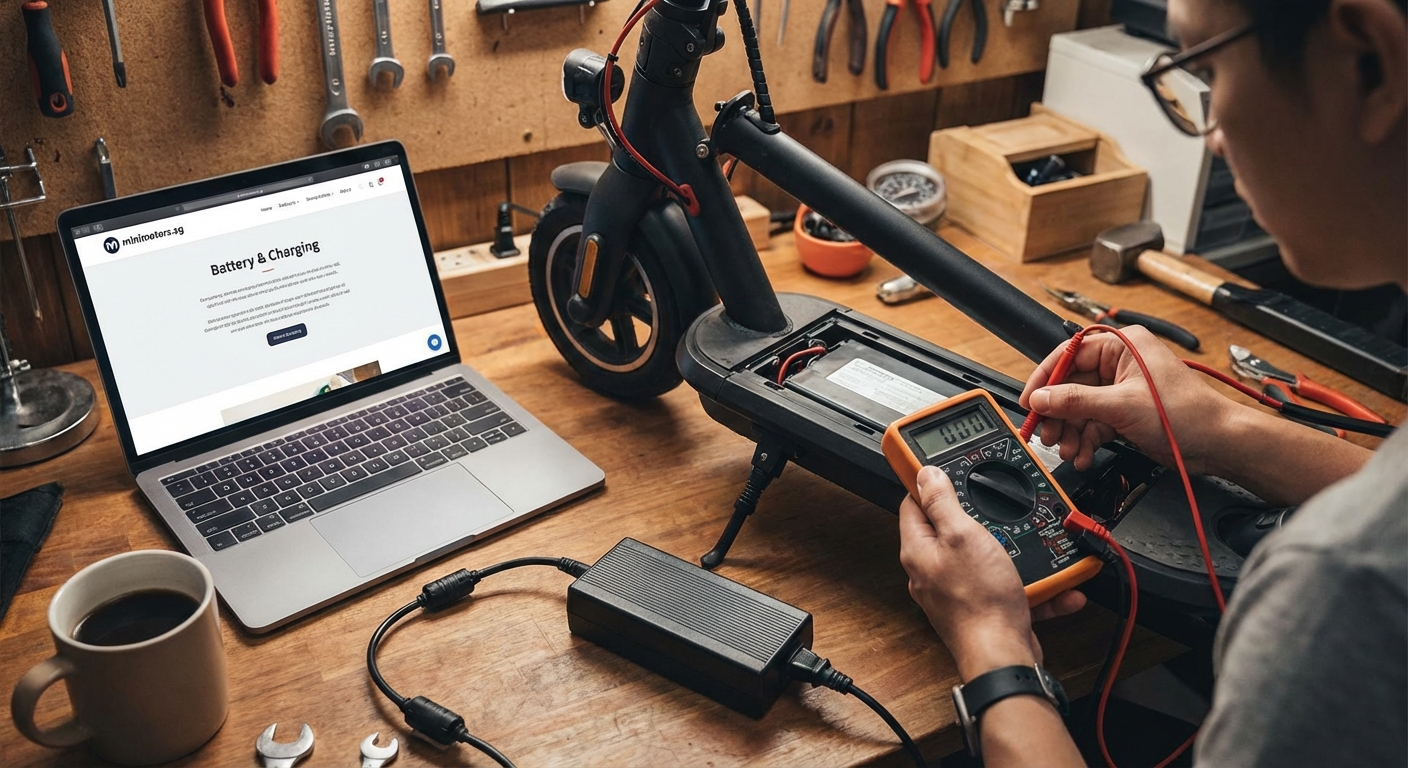
Different symptoms point to different root causes.
Battery charges but dies within minutes: This usually means individual cells have failed. Lithium batteries contain multiple cells wired together. When one dies, the entire pack’s capacity plummets. Replacement is the only fix.
Charger gets extremely hot: Your charger might be pushing too much current. Stop using it immediately. A failing charger can damage a healthy battery or even cause fires. Replace with an original manufacturer charger.
Charge indicator stuck at one percentage: The battery management system (BMS) might need recalibration. Try a full discharge followed by an uninterrupted full charge. This resets the BMS’s understanding of capacity limits.
Scooter won’t charge at all: Check the fuse in your charger or scooter. Many models have a small fuse that blows during power surges. Replacing a $2 fuse beats buying a new battery.
Range drops suddenly after storage: Batteries self-discharge during storage. If you left your scooter unused for months, the battery might have dropped below its minimum safe voltage. Some BMS systems shut down permanently to prevent damage. Professional recovery is sometimes possible, but not guaranteed.
“Most riders don’t realize their charging habits matter more than the battery brand. I’ve seen premium batteries die in 18 months from poor care, and budget batteries last three years with proper maintenance. Temperature control and avoiding extreme charge levels make the biggest difference.” – Battery technician with 8 years in e-scooter repair
When to Replace vs. Repair Your Battery
Not every battery problem requires a new pack.
If your scooter is less than a year old and still under warranty, contact the manufacturer first. Many honor warranties for capacity loss beyond normal degradation rates.
For older batteries showing gradual decline, you might extend life by a few months through better charging habits. But if you’re getting less than 50 percent of original range, replacement makes more financial sense than limping along.
Replacement costs vary widely. Budget scooter batteries run $80 to $150. Premium models with larger capacities cost $300 to $600. Factor in whether your scooter is worth the investment. A $200 battery on a $400 scooter might not make sense.
Some riders attempt cell replacement, swapping individual failed cells inside the battery pack. This requires soldering skills and safety knowledge. Lithium batteries can catch fire if mishandled. Unless you have experience, leave this to professionals.
Consider battery age alongside symptoms. Most manufacturers rate their batteries for 500 full cycles. If you ride daily and charge nightly, that’s roughly 18 months of expected life. Beyond that point, degradation accelerates naturally.
The question of how long do e-scooter batteries actually last depends heavily on your specific usage patterns and care routine.
Extending Life in a Degraded Battery
Even a weakened battery can serve you longer with smart management.
-
Reduce your speed. Riding at maximum speed drains batteries exponentially faster than moderate cruising. Drop from 25 mph to 18 mph and you might gain 30 percent more range.
-
Minimize weight. Every extra pound reduces efficiency. Carry only what you need. Consider whether that heavy backpack is necessary for today’s ride.
-
Plan routes carefully. Hills murder battery life. Map flatter alternatives even if they take a few minutes longer. Your battery will thank you.
-
Check tire pressure weekly. Under-inflated tires create drag that forces the motor to work harder. Proper pressure improves efficiency by 10 to 15 percent.
-
Use eco mode. Most scooters offer power-saving modes that limit acceleration and top speed. You’ll ride slightly slower but extend range significantly.
-
Charge more frequently. Instead of one full drain per day, charge twice at shallower depths. Two charges from 50 to 90 percent stress the battery less than one full cycle.
Temperature management helps too. In winter, store your scooter indoors overnight. In summer, park in shade and let the battery cool before charging. Extreme temperatures during charging cause more damage than during riding.
Preventing Future Charging Issues
Good habits today prevent expensive replacements tomorrow.
Start with proper storage practices. If you won’t ride for more than a week, charge the battery to 60 percent and disconnect it from the scooter if possible. Store in a cool, dry place between 50 and 70 degrees Fahrenheit.
How to store your e-scooter battery during winter or long breaks covers seasonal storage in detail.
Never leave your scooter plugged in for days after reaching full charge. Modern chargers have cutoff circuits, but they’re not perfect. Trickle charging at 100 percent slowly degrades cells.
The debate around can you overcharge your e-scooter battery explores whether overnight charging actually causes harm.
Use the original charger whenever possible. Third-party chargers might have different voltage specifications that confuse your battery management system. The $30 you save isn’t worth risking a $300 battery.
Keep firmware updated. Manufacturers release updates that improve battery management algorithms. These updates can extend life by optimizing charge rates and discharge patterns.
Perform regular maintenance checks. Once monthly, inspect battery housing for cracks, check connection points for corrosion, and verify that mounting bolts are tight. Vibration loosens hardware over time.
Evaluating Replacement Options
When replacement becomes necessary, choose wisely.
Original equipment manufacturer (OEM) batteries guarantee compatibility but cost more. They’re worth the premium if your scooter is relatively new or high-end.
Third-party batteries offer savings but carry risks. Verify the seller’s reputation thoroughly. Check that voltage, amp-hour rating, and physical dimensions match your original. A battery that doesn’t fit properly creates safety hazards.
Some riders upgrade to higher-capacity batteries during replacement. This works if your scooter’s motor controller can handle the extra power. Check manufacturer specifications before upgrading. Overloading the controller can cause failures elsewhere in the system.
Installation difficulty varies by model. Some batteries slide out with two screws. Others require partial disassembly and careful wire management. Watch model-specific tutorials before attempting DIY replacement.
Factor in disposal costs. Lithium batteries can’t go in regular trash. Many shops charge $10 to $20 for proper recycling. Some retailers offer trade-in credits when you buy a replacement.
Consider whether 5 breakthrough battery technologies that will change e-scooters forever might make waiting worthwhile if your scooter still functions adequately.
Understanding Battery Management Systems
Your scooter’s BMS does more than you might think.
This small circuit board monitors individual cell voltages, temperature, current flow, and charge state. It prevents overcharging, over-discharging, and overheating. When something goes wrong, the BMS is your first line of defense.
Sometimes the BMS itself fails rather than the battery cells. Symptoms include erratic charge percentage readings, sudden shutdowns at 50 percent charge, or refusal to charge at all. BMS replacement costs $40 to $100 and requires technical skill.
The BMS also balances cells during charging. In a multi-cell pack, individual cells charge at slightly different rates. The BMS ensures they all reach full capacity together. This balancing process takes extra time, which is why the final 10 percent of charging takes longer than the first 90 percent.
Modern BMS units communicate with smartphone apps, providing detailed battery health data. If your scooter has this feature, check it regularly. Sudden changes in reported capacity or unusual cell voltage differences indicate developing problems.
Making the Call on Your Battery’s Future
At some point, you need to decide whether to invest in repairs or move on.
Calculate cost per mile over your scooter’s lifetime. If you’ve ridden 3,000 miles on a $600 scooter, that’s 20 cents per mile. A $200 battery replacement drops that to 27 cents per mile if you get another 1,500 miles. Still cheaper than any alternative transportation.
But if your scooter has other issues beyond the battery, multiple repairs might exceed replacement cost. Factor in tire wear, brake condition, and motor health. Sometimes a failing battery signals that the entire scooter has reached end of life.
Consider your riding needs too. If your daily commute has grown longer since you bought your scooter, maybe it’s time to upgrade to a model with better range rather than replacing an undersized battery.
For many riders, what’s the best e-scooter range for your daily commute helps clarify whether current equipment still matches their needs.
Getting Back on the Road
A battery that won’t hold a charge doesn’t have to end your riding season.
Start with the diagnosis steps above. Most problems have identifiable causes and clear solutions. Even if replacement becomes necessary, understanding what went wrong helps you avoid repeating the same mistakes with your next battery.
Remember that battery degradation is normal, not a design flaw. Every rechargeable battery has a finite lifespan. The goal isn’t to make batteries last forever, but to maximize their useful life through smart habits and timely intervention.
Whether you’re troubleshooting your current battery or shopping for a replacement, the key is matching your solution to your specific situation. A commuter who rides five miles daily has different needs than a weekend recreational rider. Your charging habits, storage conditions, and maintenance routine should reflect your actual usage patterns.
Take care of your battery, and it’ll take care of you. Most riders get 18 to 36 months of reliable service with proper maintenance. That’s hundreds of miles of efficient, affordable transportation. When problems do arise, you now have the knowledge to diagnose them accurately and choose the best path forward.
