What Happens If You Get Caught Riding an Unregistered E-Scooter?
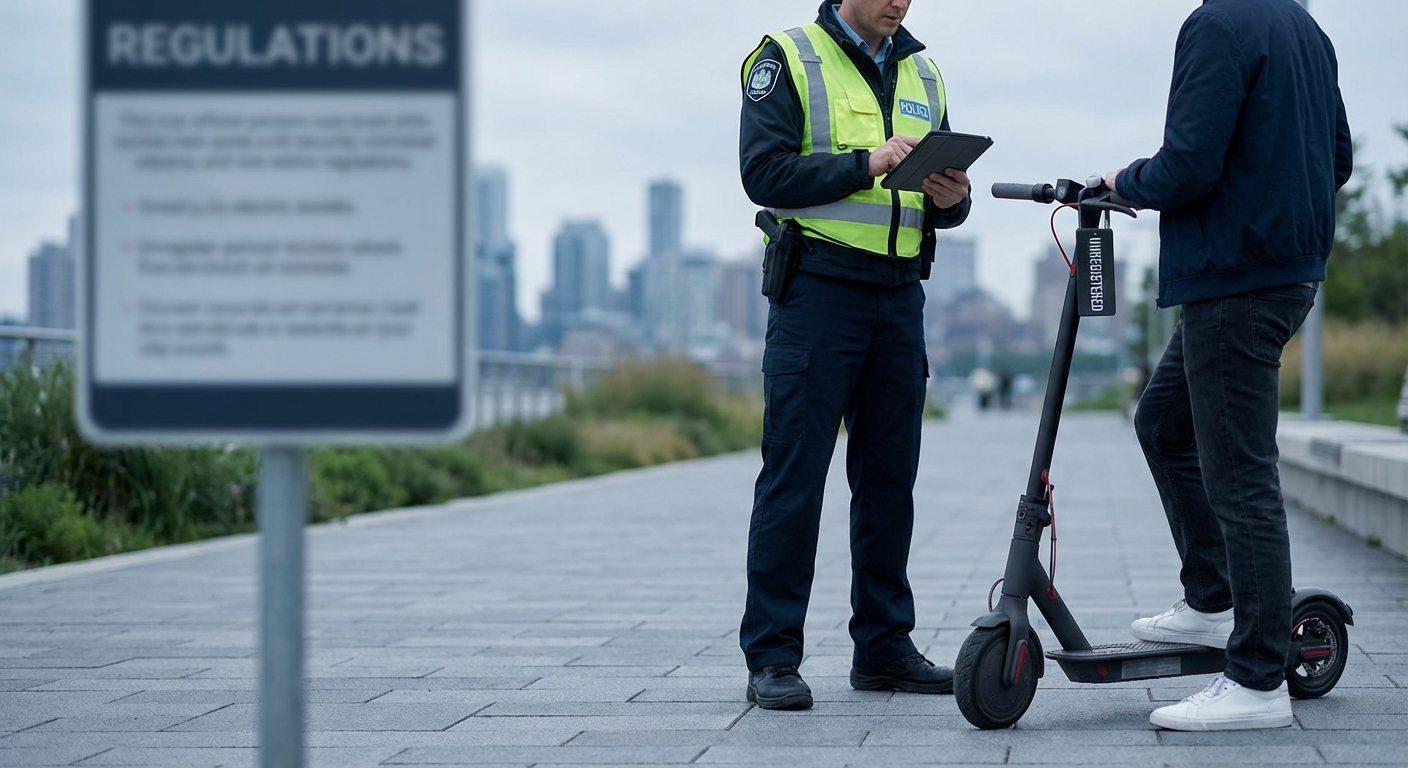
Getting stopped by law enforcement while riding an unregistered e-scooter can turn a normal commute into a stressful situation. The consequences vary depending on where you live, but they often include fines, vehicle impoundment, and potential criminal charges. Understanding what happens during a stop and what penalties you might face can help you make informed decisions about registration and legal compliance.
Being caught riding an unregistered electric scooter typically results in immediate vehicle seizure, fines ranging from $200 to $1,000 depending on jurisdiction, and possible court appearances. Officers will verify registration status, issue citations, and may impound your scooter on the spot. Repeat offenses often carry steeper penalties including license suspension and criminal charges. Registration requirements exist to ensure safety standards and accountability.
What happens during the traffic stop
The moment law enforcement signals you to pull over, your first priority is safety. Move to the side of the road or path, turn off your scooter, and remain calm.
Officers will typically ask for identification and proof of registration. If you cannot produce registration documents, they will run your details through their system to confirm the vehicle’s status.
Most jurisdictions require e-scooters above certain power or speed thresholds to be registered. The officer will check your scooter’s specifications against local regulations. They may examine the motor wattage, maximum speed capability, and whether it meets street-legal requirements.
During this process, expect questions about where you purchased the scooter, how long you’ve owned it, and whether you were aware of registration requirements. Your answers matter. Honesty typically works in your favor, while providing false information can escalate the situation.
The stop usually takes 15 to 30 minutes. Officers document the scooter’s make, model, serial number, and condition. They may photograph the vehicle for their records.
Immediate penalties you can expect
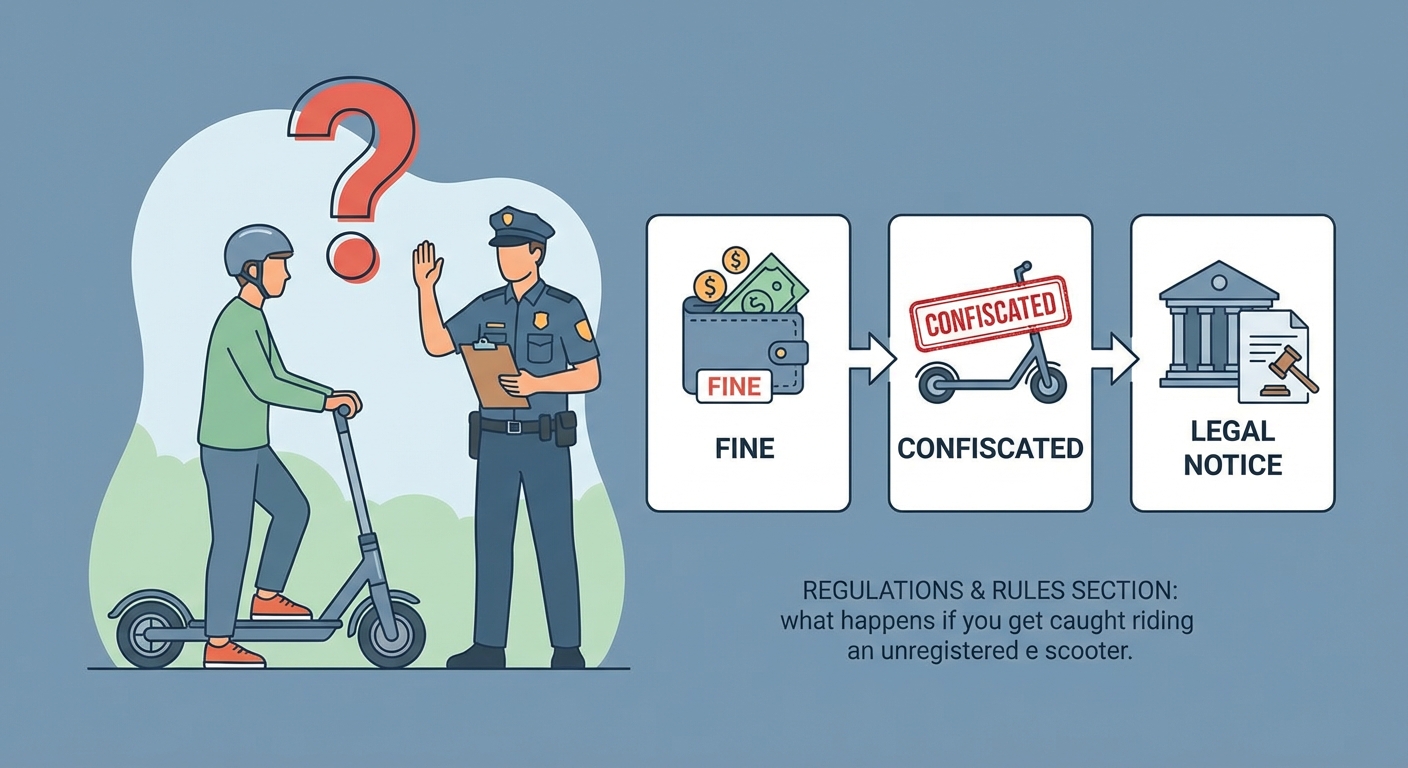
Once the officer confirms your scooter is unregistered, several things happen rapidly.
Citation issuance
You will receive a traffic citation listing the specific violation. This ticket includes the offense code, fine amount, court date, and instructions for payment or contesting the charge.
Fines for operating an unregistered e-scooter typically range from $200 to $500 for first-time offenders. Some areas impose higher penalties for vehicles that exceed power limits or lack required safety equipment.
Vehicle impoundment
Many jurisdictions authorize immediate seizure of unregistered vehicles. The officer will arrange for a tow truck to transport your scooter to an impound lot.
You cannot ride the scooter home, even if you live nearby. The vehicle stays impounded until you resolve the legal issues and pay storage fees.
Impound fees accumulate daily. Daily storage charges range from $20 to $75, plus an initial towing fee of $100 to $300. These costs add up fast. A scooter impounded for two weeks can rack up $500 to $1,000 in storage alone.
Additional charges
Officers may add supplementary violations if they discover other issues during the stop. Common additions include:
- Operating without insurance
- Lack of required safety equipment (lights, reflectors, horn)
- Riding in prohibited areas
- Exceeding speed limits
- No valid driver’s license (if required for your scooter class)
Each violation carries its own fine and potential penalties.
The court process and your options
Your citation includes a court date, typically scheduled 30 to 60 days from the violation date. You have several options for responding.
-
Pay the fine and accept responsibility. This is the simplest path but results in a conviction on your record. Submit payment by the deadline listed on your ticket. The court processes your payment and closes the case. Your scooter remains impounded until you complete registration or prove you’ve sold it.
-
Contest the citation in court. You can plead not guilty and request a hearing. This requires appearing before a judge to present your defense. Common defenses include proving you were in the process of registering the vehicle, demonstrating the scooter doesn’t meet the threshold requiring registration, or showing the officer made an error in classification.
-
Request a reduced charge or deferred adjudication. Some courts allow first-time offenders to complete requirements like safety courses or community service in exchange for reduced fines or dismissed charges. You typically need to register your scooter properly and provide proof to the court.
Appearing in court gives you a chance to explain your circumstances. Judges sometimes reduce fines for riders who demonstrate they’ve since registered their vehicle and taken steps to comply with regulations.
Missing your court date results in additional penalties. The court may issue a warrant for your arrest, suspend your driver’s license, or increase your fine substantially.
Getting your scooter back from impound
Retrieving an impounded e-scooter requires completing several steps and paying multiple fees.
Documentation requirements
You need to bring:
- Valid government-issued ID
- Proof of ownership (receipt, title, or bill of sale)
- Valid registration (if you’ve since registered the scooter)
- Proof of insurance (if required in your area)
- Payment for all fees
Fee structure
| Fee Type | Typical Range | Notes |
|---|---|---|
| Initial tow | $100 to $300 | One-time charge |
| Daily storage | $20 to $75 | Accumulates each day |
| Administrative processing | $50 to $150 | One-time paperwork fee |
| Release fee | $25 to $100 | Charged upon pickup |
| Total (7-day impound) | $335 to $1,375 | Varies by location |
Registration before release
Many impound facilities require proof of current registration before releasing your scooter. This creates a catch-22 situation. You need the scooter to complete certain registration steps, but you cannot retrieve it without registration.
Contact your local motor vehicle department to explain the situation. Some jurisdictions allow temporary permits or special procedures for impounded vehicles. You may need to submit photos, serial numbers, and specifications to complete registration remotely.
If registration isn’t possible (perhaps your scooter exceeds legal limits), you may need to sell the vehicle while it’s impounded or sign it over to the impound facility to avoid continued storage fees.
Long-term consequences beyond the initial fine
The immediate penalties are just the beginning. Being caught riding an unregistered electric scooter can create lasting complications.
Criminal record implications
In some jurisdictions, operating an unregistered motor vehicle is a misdemeanor criminal offense, not just a traffic infraction. A misdemeanor conviction appears on background checks and can affect:
- Employment opportunities, especially jobs requiring driving
- Housing applications
- Professional licensing
- Immigration status for non-citizens
Insurance complications
If you later register your scooter and seek insurance, companies may charge higher premiums based on your violation history. Some insurers refuse coverage to riders with recent unregistered vehicle convictions.
License points and suspension
Certain areas add points to your driver’s license for operating unregistered vehicles. Accumulate too many points from multiple violations, and you risk license suspension. This affects your ability to drive cars, motorcycles, and in some cases, any motorized vehicle.
Repeat offender penalties
Second and third offenses carry significantly harsher consequences:
- Fines double or triple
- Mandatory court appearances
- Longer impound periods
- Possible jail time (typically 30 to 90 days for third offenses)
- Permanent vehicle forfeiture
Law enforcement databases track violations across jurisdictions. Moving to a new city doesn’t erase your violation history. Officers can see your prior offenses during any traffic stop, which influences how they handle subsequent encounters.
Why registration requirements exist
Understanding the reasoning behind registration laws helps contextualize the penalties.
Registration serves multiple purposes:
- Safety standards verification: Registered vehicles must meet minimum safety requirements for brakes, lights, and construction quality.
- Accountability: Registration links vehicles to owners, making it easier to resolve hit-and-run incidents or property damage.
- Insurance compliance: Many areas require minimum insurance coverage, verified during registration.
- Theft prevention: Registered vehicles with documented serial numbers are harder to sell if stolen.
- Revenue for infrastructure: Registration fees fund bike lanes, path maintenance, and traffic safety programs.
These aren’t arbitrary rules designed to generate ticket revenue. They create a framework for safe shared road use.
Different vehicle classes have different requirements. A 250-watt scooter with a 15 mph top speed faces different regulations than a 3,000-watt model capable of 40 mph. Know which category your scooter falls into.
Preventing registration issues before they start
The best way to handle being caught riding an unregistered electric scooter is to never be in that situation. Prevention is straightforward.
Research requirements before purchasing
Before buying any e-scooter, check your local regulations. Key questions include:
- What power threshold triggers registration requirements?
- What is the maximum speed for unregistered scooters?
- Do I need a driver’s license to operate this model?
- Are there age restrictions?
- What safety equipment is mandatory?
Manufacturers sometimes sell scooters that aren’t street-legal in certain jurisdictions. The seller’s claims about legality matter less than your local laws.
Complete registration promptly
If your scooter requires registration, start the process immediately after purchase. Most jurisdictions give you 30 to 90 days from the purchase date to complete registration.
The process typically involves:
- Submitting proof of purchase
- Providing the vehicle identification number or serial number
- Passing a safety inspection
- Paying registration fees
- Obtaining insurance (if required)
- Installing a license plate or registration sticker
Set reminders for renewal dates. Registration isn’t a one-time task. Most areas require annual or biennial renewal.
Maintain documentation
Keep registration documents on your person whenever you ride. Store copies in your phone as photos or PDFs. This allows you to produce proof immediately if stopped, potentially avoiding impoundment even if you forgot your physical documents.
Proper maintenance keeps your scooter running safely, which reduces the likelihood of stops for equipment violations that might reveal registration issues.
What to do if you’re stopped today
If you’re reading this after already being stopped, you still have options.
Immediate actions
Contact the impound facility to understand their specific requirements and fee structure. Ask about payment plans if you cannot afford immediate payment. Some facilities work with owners on extended payment arrangements.
Start the registration process immediately. Gather all required documents and submit your application. Having a pending registration application may help in court.
Legal representation
Consider consulting a traffic attorney, especially if you face criminal charges rather than simple traffic citations. Attorneys familiar with local vehicle codes can often negotiate reduced charges or alternative sentencing.
Many attorneys offer free initial consultations. They can review your citation and advise whether fighting the charge makes sense in your situation.
Financial assistance
If impound fees are mounting and you cannot afford retrieval, explore options like:
- Payment plans with the impound facility
- Small personal loans from credit unions
- Community assistance programs
- Selling the scooter to the impound facility or a third party
Ignoring the situation makes it worse. Fees continue accumulating, and after a certain period (often 30 to 90 days), the impound facility can auction your scooter to recover costs.
Riding legally moving forward
Once you’ve resolved your current situation, commit to legal operation going forward.
Register any scooter that requires it. Follow all traffic laws. Wear required safety equipment. Stay in designated riding areas.
Legal compliance isn’t just about avoiding fines. It makes you a safer rider and contributes to better infrastructure for everyone. Cities are more likely to invest in bike lanes and scooter-friendly paths when riders demonstrate responsibility.
If your current scooter exceeds legal limits and cannot be registered, consider selling it and purchasing a compliant model. The cost of a legal scooter is less than the cumulative penalties of repeated violations.
Stay informed about regulation changes. E-scooter laws are evolving rapidly as these vehicles become more common. What’s legal today might change next year. Subscribe to updates from your local transportation department or follow trusted sources that track mobility regulations.
Making informed choices about your ride
Being caught riding an unregistered electric scooter creates immediate headaches and potential long-term consequences. The penalties are real, the costs add up fast, and the legal complications can follow you for years.
Registration requirements exist for legitimate safety and accountability reasons. Meeting these requirements protects you legally and contributes to safer streets for everyone. The small investment of time and money to register properly pays dividends in peace of mind and legal protection. Take the steps today to ensure your next ride is completely legal and worry-free.
