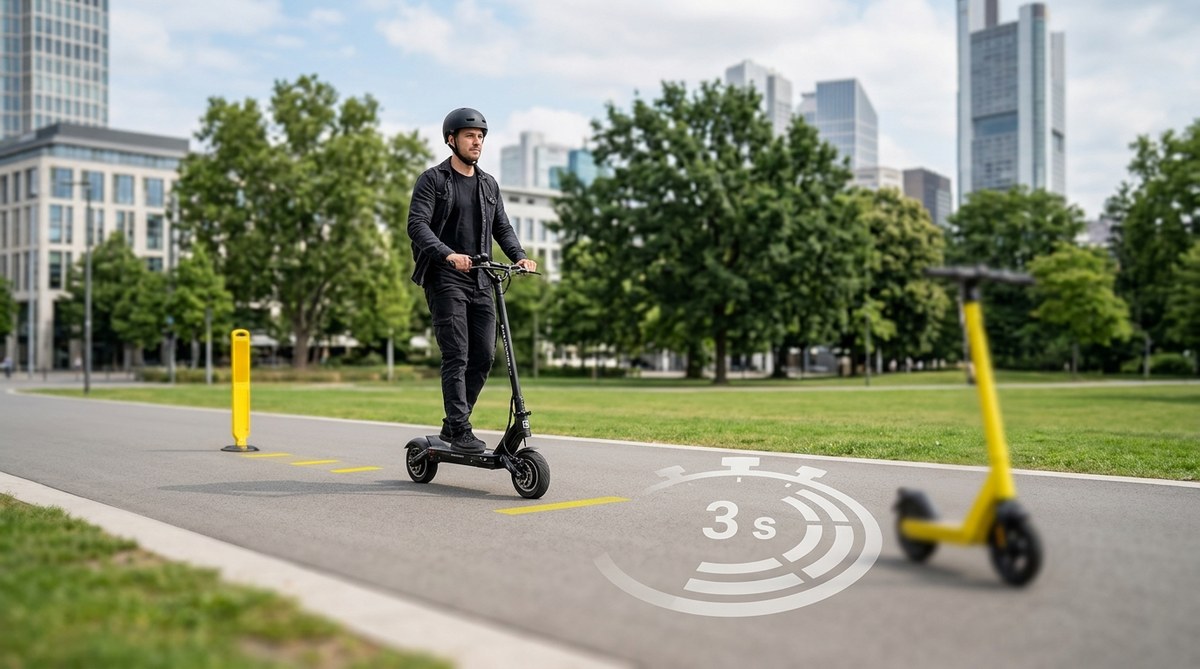
The 3-Second Rule That Prevents Most E-Scooter Crashes
Riding an e-scooter through a busy city feels like freedom. You zip past traffic, skip the subway crowds, and arrive at work with a smile. But that freedom comes with a catch. One wrong move, one car that turns without signaling, one pothole you did not see, and your day changes. Most crashes are avoidable. The trick is learning one simple habit that experienced riders use every single time. It is called the three second rule, and it stops the majority of e-scooter accidents before they start.
The three second rule means you scan your surroundings three full seconds ahead of your current position. It gives your brain enough time to spot a car door opening, a pedestrian stepping off the curb, or a patch of wet leaves. Combined with a pre ride inspection, proper gear, and defensive positioning, this single habit can prevent most collisions. You do not need expensive gadgets. You need awareness and a little patience.
The Three Second Rule Explained
The idea is simple. Look ahead of your scooter by a distance equal to about three seconds of travel time at your current speed. If you are going 15 mph, that is roughly 65 feet. Why three seconds? Because that is the minimum amount of time your brain needs to process a hazard, decide how to react, and execute a safe maneuver.
Most new riders stare at the ground directly in front of their front tire. They see cracks and pebbles but miss the bigger picture. A car door swinging open. A delivery truck backing out of a driveway. A cyclist swerving to avoid a grate. If you only see what is five feet ahead, you are always reacting too late.
Try this on your next ride. Pick a fixed point in the distance, like a manhole cover or a crosswalk line. Count slowly: one one thousand, two one thousand, three one thousand. If you reach that point before you finish counting, you are looking too close. Adjust your gaze further ahead until the count matches.
Why Three Seconds Works So Well
Urban streets change in an instant. A pedestrian might step off the sidewalk without looking. A parked car might have a driver who opens the door without checking their mirror. A construction zone might have loose gravel that turns your tires sideways.
Three seconds gives you a buffer. It is the difference between slamming your brakes and gliding to a smooth stop. It is the difference between a broken collarbone and a close call. When you train your eyes to scan that far ahead, your body starts to anticipate instead of panic.
“The riders I see in the ER are almost always the ones who were looking down at their handlebars. They never saw the hazard coming. Three seconds of forward vision would have saved them.” – Dr. Maria Chen, emergency medicine physician in Portland, Oregon.
The Pre Ride Check You Cannot Skip
Before you even push the throttle, spend sixty seconds checking your scooter. A mechanical failure at speed turns a minor issue into a major crash. Here is a list of what to inspect every time you ride.
- Tires. Check for proper inflation if you have pneumatic tires. Squeeze them. They should feel firm, not spongy. Look for cuts or embedded debris.
- Brakes. Squeeze both levers. They should engage smoothly and stop the wheel from spinning when you lift the scooter.
- Folding mechanism. Make sure the latch is fully closed and locked. A folding scooter that collapses mid ride is a disaster.
- Lights. Turn on the front light and rear light. If one is dead, replace it. You need to be seen.
- Bell or horn. Give it a press. It should be loud enough to alert a pedestrian who has earbuds in.
This takes less than a minute. Do it every time, even if you are running late.
Gear That Actually Keeps You Safe
You do not need a motorcycle suit to ride an e-scooter. But you do need a few pieces of gear that make a real difference in a fall.
A helmet is non negotiable. Not a bike helmet that sits loose on your head. A properly fitted helmet that meets safety standards. It should sit level on your head, not tilted back. The straps should form a V under your ears. It should feel snug but not painful. If you are not sure what to look for, read our guide on what to look for when buying an e-scooter helmet.
Gloves are underrated. When you fall, your hands hit the pavement first. A good pair of cycling gloves with padded palms saves you from weeks of scraped skin.
A high visibility vest or jacket is smart, especially if you ride at dawn, dusk, or night. Drivers are not looking for small, fast objects. Make yourself obvious. Our article on night riding safety covers more visibility tips.
How to Position Yourself on the Road
Where you ride matters as much as how you ride. On most city streets, you have three options: the bike lane, the sidewalk, or the road itself. Each has different rules and risks.
Bike lanes are the safest choice if they are available. Stay to the right side of the lane so faster cyclists can pass you on the left. Watch for driveways and intersections where cars might cut across the lane.
Sidewalks are illegal in many cities, and they are dangerous. Pedestrians move unpredictably. Driveways are blind corners. If you must ride on a sidewalk, go at walking speed and yield to everyone.
On the road without a bike lane, ride in the center of the lane. It sounds counterintuitive, but it forces cars to change lanes to pass you instead of squeezing by with inches to spare. Never hug the curb. That is where debris collects and where car doors swing open.
Common Mistakes and How to Fix Them
Even experienced riders slip into bad habits. Here is a table that shows the most common mistakes, why they happen, and what to do instead.
| Mistake | Why It Happens | The Fix |
|---|---|---|
| Looking at the ground | Fear of hitting small obstacles | Practice the three second rule until it becomes automatic |
| Riding too fast for conditions | Running late or overconfidence | Slow down. Arriving two minutes later is better than not arriving at all |
| Braking with the rear brake only | Habit from bicycles | Use both brakes evenly. Front brake provides most stopping power |
| Ignoring the battery level | Assuming you have more range | Check your battery before every ride. Learn your scooter’s real world range |
| Not signaling turns | Forgetting or not knowing how | Point with your hand. It is free, visible, and legal |
A Step by Step Process for Safer Riding
Follow these steps every time you ride. They build a routine that keeps you safe without requiring extra thought.
- Perform your sixty second pre ride check. Tires, brakes, folding latch, lights, bell.
- Put on your helmet and gloves. Adjust straps so nothing moves.
- Plan your route. Choose streets with bike lanes or low speed limits. Avoid major arterials if possible.
- Mount the scooter and place both feet on the deck. Push off with one foot before engaging the throttle.
- Scan three seconds ahead. Keep your head up and eyes moving.
- Ride predictably. Hold your line. Signal turns. Do not weave between parked cars.
- Brake early and gently. Give yourself room to stop without skidding.
- Dismount at your destination. Fold the scooter if it has that feature. Lock it securely.
What to Do in an Emergency
No matter how careful you are, surprises happen. A dog runs into your path. A car runs a red light. A pedestrian steps out from behind a bus.
Your first instinct might be to swerve. That is often the wrong move. Swerving at speed makes you lose balance and can throw you into traffic. Instead, brake hard while keeping the scooter straight. Both brakes at once. Squeeze, do not grab. If you have to bail, step off the scooter and run forward a few steps to absorb your momentum.
Practice emergency braking in an empty parking lot. Get a feel for how fast you can stop without the rear wheel skidding. That muscle memory will save you when it counts. Our guide on mastering e-scooter braking techniques walks through this in more detail.
Weather Conditions Change Everything
Rain, wet leaves, and sand turn a normal ride into a slip hazard. If the road is wet, your stopping distance doubles or triples. Reduce your speed by at least half. Avoid painted lane markings and metal grates. They are slippery when wet.
If you ride in the rain often, consider tires with better grip. Pneumatic tires with a tread pattern perform much better than solid tires on wet pavement. Our comparison of which e-scooter tires are best for you can help you choose.
Night riding requires extra caution. Your lights help you see and be seen, but they have limits. A car turning left across your path may not see you until it is too late. Slow down at every intersection. Make eye contact with drivers when possible.
Keeping Your Scooter in Safe Condition
A well maintained scooter is a safe scooter. Loose bolts, worn brake pads, and under inflated tires all increase your crash risk. Set a reminder on your phone to do a deeper check once a week.
- Check the brake pads for wear. If they are down to the metal, replace them.
- Tighten any loose bolts on the stem, deck, and handlebars.
- Clean the deck. Mud and oil make your shoes slip off when you need traction.
- Lubricate the folding mechanism so it clicks shut properly.
The ultimate e-scooter maintenance checklist covers everything you need to keep your ride reliable.
Your New Safety Habit Starts Today
The three second rule is not complicated. It does not require a special app or expensive gear. It just requires you to lift your eyes and pay attention. On your next ride, try it. Pick a point three seconds ahead. Watch how the street opens up in front of you. You will notice things you missed before. A car with its engine running, ready to pull out. A pedestrian looking at their phone while walking toward the curb. A storm drain grate that could catch your tire.
That extra time lets you adjust before the danger gets close. It turns you from a passenger into a driver of your own safety. Start using it today. Your future self will thank you.
