How to Ride an E-Scooter in the Rain Without Losing Control
Rain doesn’t always wait for your commute to end. When clouds open up mid-ride, knowing how to handle your electric scooter in wet conditions becomes essential for safety and equipment longevity. Most riders panic the first time they encounter slippery roads, reduced visibility, and the fear of damaging expensive electronics. But with the right techniques and preparation, you can maintain control and arrive safely even when the weather turns against you.
Riding an electric scooter in rain requires reducing speed by 30-40%, increasing following distance, avoiding painted surfaces and metal grates, using gentle braking, and understanding your scooter’s IP rating. Proper tire pressure, waterproof gear, and post-ride maintenance protect both rider and device. Most accidents occur from overconfidence in wet conditions, not the rain itself.
Understanding your scooter’s water resistance rating
Before you ride in any wet conditions, check your scooter’s IP (Ingress Protection) rating.
This two-digit code tells you exactly how much water exposure your device can handle. The first digit measures dust protection (0-6), while the second measures water resistance (0-9).
An IP54 rating means your scooter can handle light splashes but not sustained rain. IP65 offers protection against water jets from any direction. IP67 models can survive temporary submersion in shallow water.
Most commuter scooters fall between IP54 and IP65. If your model lacks any IP rating, avoid riding in rain altogether. The risk of electrical damage outweighs any convenience.
Check your owner’s manual or manufacturer website for specific guidance. Some brands void warranties if you ride rated models beyond their stated limits.
Water can enter through charging ports, display screens, throttle mechanisms, and battery compartments. Even water-resistant models have vulnerable points that need extra protection during heavy downpours.
Essential pre-ride preparations for wet weather
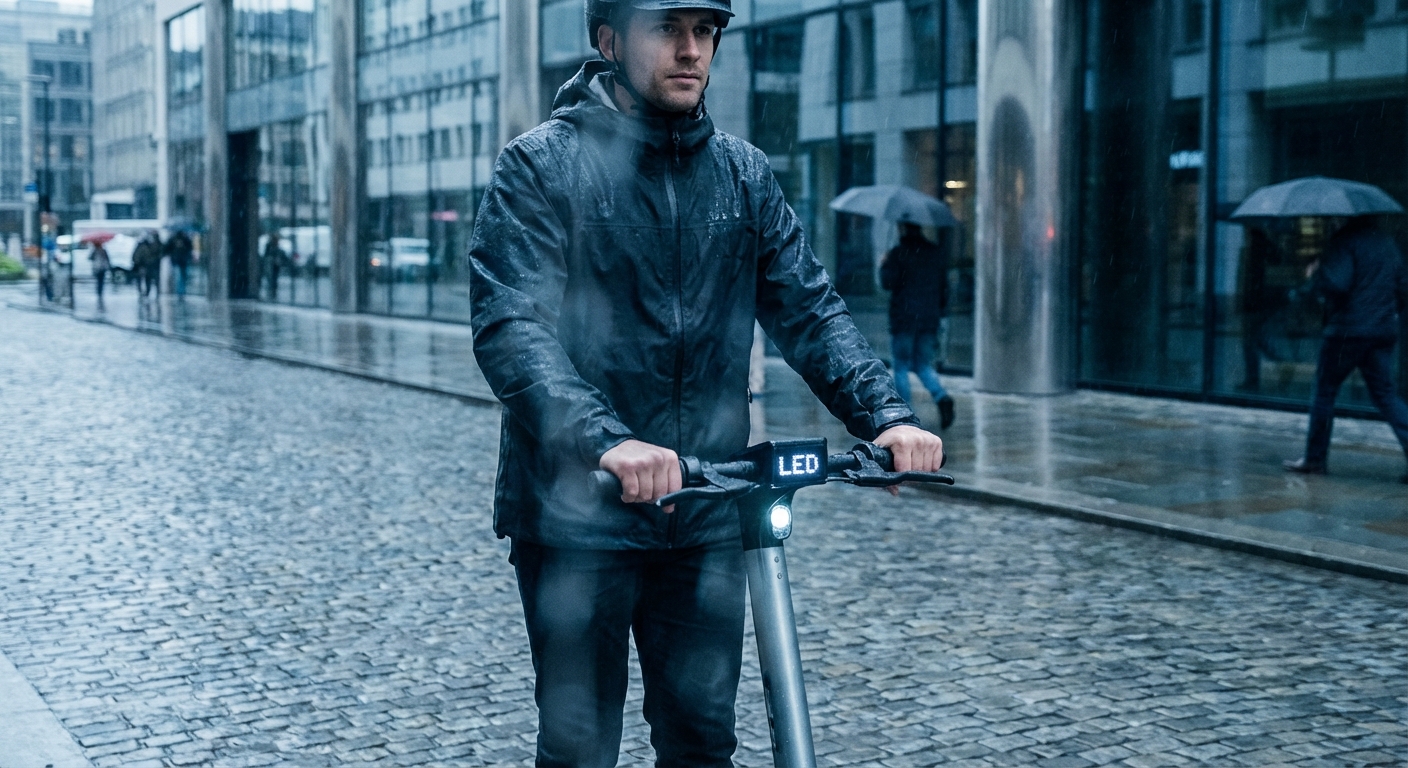
Tire pressure makes or breaks your wet-weather performance.
Inflate your tires to the manufacturer’s recommended PSI before riding in rain. Under-inflated tires increase hydroplaning risk, while over-inflated ones reduce traction on slippery surfaces.
Inspect your tire tread depth. Worn tires cannot channel water away effectively, creating a dangerous skating effect on wet pavement. If you can’t see clear tread patterns, replace your tires before attempting rain rides.
Test your brakes in a safe area before entering traffic. Wet conditions reduce braking power by 20-40% depending on your brake type. Understanding your braking system helps you anticipate how they’ll perform when wet.
Cover or seal your charging port with waterproof tape or the provided rubber cap. This single step prevents most water-related electrical failures.
Apply a thin layer of dielectric grease to exposed electrical connections. This creates a moisture barrier without interfering with conductivity.
Wear waterproof clothing that doesn’t restrict movement. Loose rain ponchos can catch wind and affect balance. Fitted rain jackets with reflective strips work best for visibility and control.
Speed reduction techniques that actually work
Cut your normal riding speed by 30-40% in wet conditions.
This isn’t a suggestion. It’s the difference between maintaining control and sliding into traffic.
Start slowing down before you encounter hazards, not when you’re already on top of them. Wet brakes need more distance to engage effectively.
Use gradual throttle adjustments instead of sudden accelerations. Abrupt power changes break traction and cause rear-wheel slip on slick surfaces.
Maintain steady speed through turns rather than accelerating or braking mid-corner. Weight transfer during speed changes reduces tire contact and increases skid risk.
Watch for standing water deeper than half your wheel diameter. Hitting deep puddles at speed can flood electrical components or cause instant loss of control.
Reduce speed even further (10-15 mph maximum) when crossing:
* Painted crosswalks and lane markings
* Metal manhole covers and grates
* Wet leaves or debris
* Oil-slicked areas near parking lots
* Bridge expansion joints
These surfaces become ice-like when wet, offering almost zero traction.
Braking methods for maximum wet-weather control

Never grab your brakes suddenly in rain.
Apply both brakes simultaneously with gentle, progressive pressure. Start with light pressure and gradually increase until you reach the desired deceleration.
If you have dual braking systems, favor your rear brake slightly more than usual. Front brake dominance in wet conditions can cause the front wheel to lock and slide.
Electronic brakes perform differently than mechanical ones when wet. Test your specific system’s response in a controlled environment before relying on it in traffic.
Leave at least 20 feet between you and the vehicle ahead. Double your normal following distance to account for extended stopping distances.
Pump your brakes gently when approaching stops rather than applying constant pressure. This technique maintains better control and prevents wheel lockup.
“The biggest mistake I see riders make in rain is braking the same way they do in dry conditions. Wet surfaces require a completely different touch. Think of it like the difference between stopping on pavement versus stopping on a gym floor in socks.” – Urban Mobility Safety Instructor
If you feel your wheel starting to skid, release brake pressure immediately, then reapply with less force. Fighting a skid usually makes it worse.
Cornering and turning strategies for slippery surfaces
Approach every turn as if it’s twice as sharp as it looks.
Slow down to your target speed before entering the turn, not during it. All your braking should happen while traveling straight.
Lean your body into turns rather than steering aggressively with the handlebars. Subtle weight shifts maintain better tire contact than dramatic steering inputs.
Keep your body relaxed and centered over the deck. Tension in your arms transmits to the handlebars, causing jerky movements that break traction.
Take the widest possible line through corners when safe to do so. Wider turns require less lean angle and reduce the risk of sliding out.
Avoid turning on painted surfaces, metal plates, or wet leaves. If you must cross these materials, do so while traveling straight, then resume your turn afterward.
Watch for camber (road tilt) that pushes water toward gutters. The outside edge of crowned roads often has better traction than the center or gutter side.
Never accelerate until your scooter has completely straightened out after a turn. Early throttle application can spin the rear wheel and cause a lowside slide.
Visibility improvements that keep you seen and safe
Rain reduces everyone’s visibility, not just yours.
Turn on all your scooter’s lights even during daytime rain. Running lights make you visible to drivers whose vision is compromised by wet windshields and wipers.
Wear bright colors or reflective gear that contrasts with gray, rainy backgrounds. Yellow, orange, and lime green show up best in low-light wet conditions.
Add auxiliary lights or reflective tape to your scooter’s sides. Most vehicles approach from angles where your front and rear lights aren’t visible.
Clean your display screen and any mirrors before riding. Water droplets act like tiny lenses that distort your view of traffic and obstacles.
Reduce your speed in areas with poor street lighting. Wet pavement reflects light unpredictably, creating glare that masks potholes and debris.
Make eye contact with drivers at intersections. Never assume they see you, even if you’re directly in their line of sight.
Position yourself in lane positions that maximize your visibility to other traffic. Don’t hide in blind spots or hug curbs where drivers don’t expect to see vehicles.
Common wet-weather mistakes and how to avoid them
| Mistake | Why It’s Dangerous | Correct Approach |
|---|---|---|
| Riding through deep puddles | Hidden potholes, water ingress, hydroplaning | Go around or dismount and walk through |
| Using cruise control in rain | Can’t react fast enough to traction changes | Manual throttle control only |
| Wearing headphones | Can’t hear traffic, sirens, or skidding sounds | Keep ears uncovered for audio awareness |
| Ignoring battery warnings | Wet conditions drain batteries faster | Start with full charge, monitor closely |
| Riding over painted lines | Zero traction when wet | Cross at 90-degree angles or avoid entirely |
| Aggressive acceleration | Breaks rear wheel traction instantly | Gradual, smooth throttle application |
Many riders overestimate their scooter’s capabilities after checking the IP rating. A water-resistant rating doesn’t mean waterproof, and it certainly doesn’t improve traction or handling.
Riding too close to parked cars creates splash-back that soaks you and reduces visibility. Maintain at least three feet of clearance when passing parked vehicles.
Stopping suddenly to avoid puddles often causes more problems than riding through them. Plan your path ahead and make gradual adjustments rather than panic moves.
Post-ride maintenance to prevent water damage
Your work isn’t done when you arrive at your destination.
Wipe down all exposed metal components with a dry cloth. Water sitting on metal surfaces accelerates corrosion, especially on brake components and folding mechanisms.
Remove the battery if your model allows it, then dry the battery compartment thoroughly. Even water-resistant compartments can trap moisture that degrades connections over time.
Prop your scooter at an angle that allows water to drain from the deck and any hollow frame sections. Don’t store it flat immediately after rain exposure.
Leave the charging port uncovered in a dry location so any trapped moisture can evaporate. Wait at least two hours before plugging in to charge.
Check brake pads for water saturation. Wet brake pads lose effectiveness and can damage rotors if used repeatedly without drying.
Apply a light coating of silicone spray to exposed cables and pivot points. This displaces water and prevents rust formation.
Inspect electrical connections for any signs of moisture intrusion. Cloudy or corroded connections need immediate cleaning and sealing.
Run your scooter for a few minutes in a dry area after extended rain exposure. The motor’s heat helps evaporate internal moisture before it causes problems.
When to avoid riding completely
Some conditions exceed even the best preparation and technique.
Thunderstorms with lightning put you at risk as the tallest conductive object in open areas. Find shelter immediately if you hear thunder within 30 seconds of seeing lightning.
Standing water that covers more than half your wheel diameter can flood electrical systems regardless of IP rating. Find an alternate route or wait for water levels to recede.
Temperatures near or below freezing create black ice that’s invisible on wet pavement. No amount of skill overcomes zero-traction surfaces.
Heavy rain that limits visibility to less than 100 feet makes you nearly invisible to drivers. If you can’t see clearly, they definitely can’t see you.
Flooding conditions where water crosses roadways at any depth warrant finding alternative transportation. Moving water creates currents strong enough to sweep scooters and riders off course.
Wind gusts above 25 mph combined with rain create control problems that technique can’t overcome. Your scooter’s small contact patch makes it vulnerable to being blown off course.
If your pre-ride inspection reveals any mechanical issues, don’t compound problems by adding wet-weather stress. Fix issues before attempting rain rides.
Gear that makes rain riding practical
Standard clothing won’t cut it for regular wet-weather commuting.
Invest in a quality rain jacket with ventilation zippers. Waterproof materials trap body heat and moisture, creating internal condensation that soaks you from the inside.
Waterproof gloves maintain grip and dexterity better than bare hands on wet handlebars. Look for models with rubberized palms and touch-screen compatible fingertips.
Rain pants or waterproof overpants keep your lower body dry without the bulk of full rain suits. Many models feature side zippers for easy removal without taking off shoes.
Waterproof shoe covers or dedicated rain boots prevent the misery of wet feet during long commutes. Wet socks cause blisters and reduce pedal grip.
A waterproof backpack cover or fully waterproof bag protects electronics, documents, and spare clothes. Even “water-resistant” bags fail during sustained rain exposure.
Anti-fog treatments for glasses or face shields maintain clear vision when temperature differences cause condensation. Reapply these treatments regularly for best results.
Consider waterproof covers designed specifically for your scooter model. These protect vulnerable components during storage and add an extra layer during rides.
Building confidence through practice
Don’t wait for an emergency commute to learn wet-weather riding.
Find an empty parking lot after a light rain and practice basic maneuvers at low speed. Test your braking distance, turning radius, and acceleration response on wet pavement.
Gradually increase speed as you become comfortable with how your scooter handles in wet conditions. Build muscle memory for the gentler inputs required in rain.
Practice emergency stops from various speeds. Learn exactly how much distance you need and how your scooter responds when you need maximum braking.
Experiment with different body positions during turns. Find the balance point that gives you the best control without overloading either wheel.
Test your scooter’s limits in controlled conditions so you know its capabilities when conditions matter. Understanding where traction breaks helps you stay safely below that threshold.
Ride in progressively worse conditions as your skills improve. Start with light mist, advance to steady rain, and only tackle heavy downpours after mastering lighter precipitation.
Track your experiences in different weather conditions. Note what worked, what didn’t, and what you’d do differently next time.
Staying safe when conditions change mid-ride
Weather can shift from clear to stormy in minutes.
Monitor weather apps before departing and check radar for approaching systems. Modern weather apps show precipitation intensity and movement patterns that help you plan routes.
Identify shelter locations along your regular routes. Know where you can wait out sudden downpours if conditions exceed your comfort level.
Reduce speed immediately when you feel the first drops. Roads are most slippery during the first 10 minutes of rain as oil residue mixes with water.
Pull over safely if conditions deteriorate beyond your skill level. No appointment or schedule is worth risking a serious accident.
Communicate your status to someone who expects your arrival. Let them know if you’re delayed by weather or taking an alternate route.
Keep emergency contact information and your scooter’s details in a waterproof case. If you need assistance, responders should know your device specifications.
Trust your instincts about when conditions feel unsafe. Experienced riders develop intuition about their limits through practice and honest self-assessment.
Making rain riding routine instead of risky
The difference between confident and anxious rain riding comes down to preparation and practice.
Start building your wet-weather skills during light rain rather than waiting for a downpour to test your abilities. Gradual exposure builds confidence and competence simultaneously.
Maintain your scooter’s critical components year-round, not just when problems appear. Regular maintenance prevents small issues from becoming dangerous failures in challenging conditions.
Invest in quality rain gear that you’ll actually wear rather than cheap alternatives you’ll avoid using. Comfort and protection encourage safe riding habits.
Learn from each wet-weather ride. What techniques worked? What felt unsafe? How can you improve for next time?
Remember that even experienced riders respect rain’s impact on control and visibility. Caution isn’t weakness. It’s intelligence applied to changing conditions.
Rain doesn’t have to end your commute or force you into expensive ride-sharing. With proper technique, appropriate gear, and honest assessment of conditions, you can ride confidently through wet weather while protecting both yourself and your investment. Start practicing these methods during the next light rain, and you’ll be ready when heavier weather arrives.
