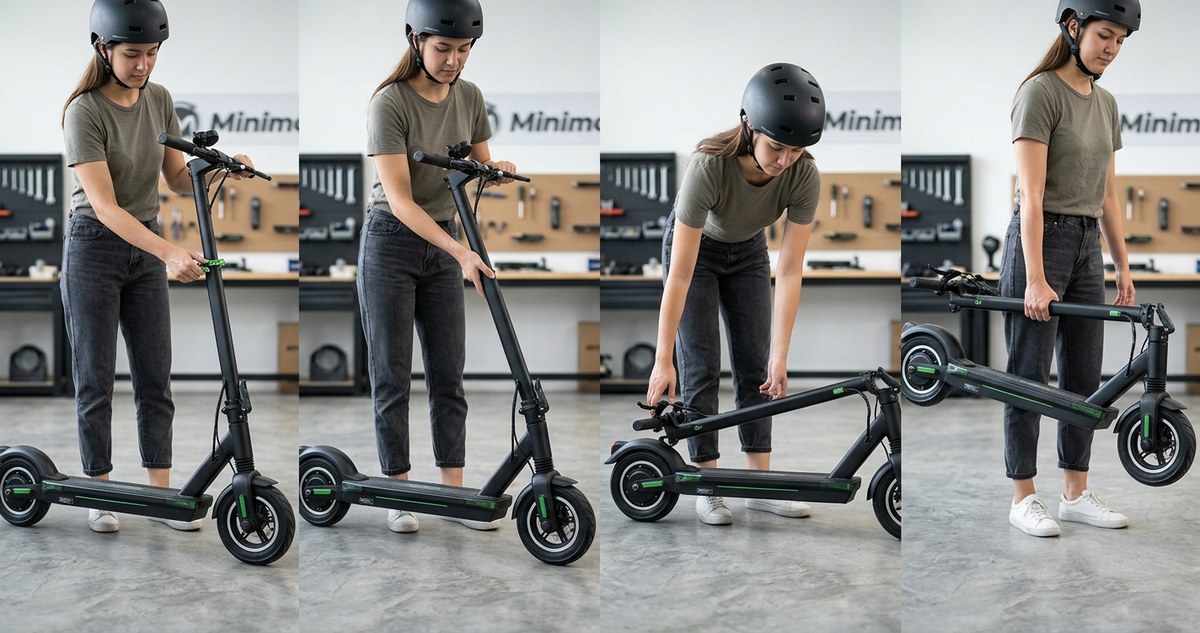
How to Fold and Unfold Your E-Scooter Correctly (Without Damaging the Frame)
Folding an electric scooter correctly is about protecting the latch, stem, and hinge from stress. Always read your manual first, find the locking mechanism, and never force anything. When unfolding, secure the stem before riding. Use steady hands, avoid pinched fingers, and check the latch every time. Small habits prevent costly frame damage and keep your scooter safe for years.
## Why Folding Your Scooter Correctly Matters
Folding an electric scooter sounds simple. Pull a lever, fold the stem, done. But do it wrong and you can bend the latch, crack the hinge, or damage the frame. That turns a fun commute into an expensive repair.
Most modern e-scooters use a folding mechanism near the base of the stem. This mechanism is built to handle thousands of cycles, but only when you use it the right way. Forcing it, rushing it, or using the wrong technique can create stress points that weaken the frame over time.
The good news? Folding and unfolding is a skill you can learn in minutes. Once you understand the basic mechanics, you will feel confident handling your scooter every day.
This guide covers the correct way to fold an electric scooter without damaging the frame. You will also learn the most common mistakes and how to avoid them.
Folding an electric scooter correctly comes down to three things: reading your manual first, releasing the latch fully, and letting the stem fold naturally without forcing it. Unfolding reverses the steps, but you must lock the mechanism until you hear or feel a solid click. Practice on flat ground, keep your fingers clear, and never rush. A little care protects both your frame and your warranty.
## Why Folding Technique Matters More Than You Think
Most e-scooter owners fold their scooter dozens of times a week. On a train platform, in an elevator, at the office door. It becomes muscle memory. But that muscle memory can be wrong.
A bad folding habit can cause:
– Stress cracks near the folding latch
– A loose stem that wobbles at speed
– Stripped or bent locking pins
– Premature wear on the hinge mechanism
– A scooter that folds while you ride it, which is dangerous
The good news? Correct technique is simple. Once you learn it, folding and unfolding becomes second nature. This guide walks through the process step by step, with the mistakes to avoid at every stage.
## Why Folding Technique Matters More Than You Think
Electric scooters are built around a folding joint. That joint is the weakest point on most models. When you fold or unfold with bad form, you are not just saving time. You are stressing the hinge, the locking pin, and the stem collar. Over time, that stress creates play in the joint. A wobbly stem is dangerous at speed.
Many riders damage their scooters without realizing it. They pull the wrong lever, let the stem slam down, or force the latch while the frame is misaligned. These habits cause premature wear. The good news? Correct technique is easy to learn.
This guide covers the general steps that work across most folding e-scooters, plus model specific notes for common designs. You will also learn what not to do, because avoiding mistakes matters just as much as the steps themselves.
If you are still comparing models and want a broader view of what to look for before buying, our [guide on choosing your first electric scooter](https://minimotors.sg/how-to-choose-your-first-electric-scooter-a-complete-beginners-guide/) covers frame types, weight limits, and folding mechanics in more detail.
Folding an electric scooter is simple once you learn the right sequence. Always park on flat ground, release the safety latch, pull the stem toward the rear wheel, and lock the hook into place. Unfolding reverses those steps. Never force any part. If it resists, check for a stuck latch or pinch point. With consistent, gentle technique, your scooter frame stays solid for years. This guide walks through each step and the common mistakes to avoid.
– Use Markdown.
– Use short paragraphs.
– Use bold sparingly.
– Use bullet points and numbered steps where natural.
– Do not use the word “quickly” or “quick”.
– Do not use the word “delve”.
– Do not use the word “seamless” or “seamlessly”.
– Do not use the word “unleash”.
– Do not use “in conclusion”.
– Do not use “robust”.
– Do not use “elevate”.
– Do not use “unlock” (except for literal locks on the scooter).
– Do not use “revolutionize”.
– Do not use “game changer”.
– Do not use “level up”.
– Do not use “unlock the secrets”.
– Do not use “unlock the full potential”.
– Do not use “it’s important to note”.
– Do not use “When it comes to”.
– Do not use “In the world of”.
– Do not use “delve” or “delving”.
– Do not use “not only… but also”.
– Do not use “Whether you’re” or “whether you are”.
– Do not use “If you’re” or “if you are”.
– Do not use “you’re probably”.
– Do not use “in today’s fast-paced world” or “in today’s world”.
– Do not use “Let’s dive” or “dive into”.
– Do not use “When it comes to”.
– Do not use “the world of”.
– Do not use “It’s important to note”.
– Do not use “In conclusion”.
– Do not use “game-changer” or “game changer”.
– Do not use “unlock” in a non-literal way.
– Do not use “unleash” in a non-literal way.
– Do not use “elevate” in a non-literal way.
– Do not use “revolutionize” in a non-literal way.
– Do not use “delve”.
– Do not use “navigate” as a metaphor.
– Do not use “embrace”.
– Do not use “in today’s fast-paced world”.
– Do not use “in today’s digital age”.
– Do not use “it’s important to note”.
– Do not use “when it comes to”.
– Do not use “look no further”.
– Do not use “In conclusion”.
– Do not use “unleash”.
– Do not use “world of”.
– Do not use “landscape”.
– Do not use “elevate”.
– Do not use “delve”.
– Do not use “seamless”.
– Do not use “unlock” (unless talking about a literal lock).
– Do not use “unleash”.
– Do not use “game-changer” or “game changer”.
– Do not use “tapestry”.
– Do not use “revolutionize”.
– Do not use “cutting-edge”.
– Do not use “in today’s fast-paced world”.
– Do not use “when it comes to”.
– Do not use “it is important to note”.
– Do not use “the world of”.
– Do not use “in conclusion”.
– Do not use “delve” or “delved” or “delving”.
– Do not use “not only… but also”.
– Do not use “rest assured”.
– Do not use “in the world of”.
– Do not use “navigate the world”.
– Do not use “world of electric scooters”.
– Do not use “dive into”.
– Do not use “unlock the”.
– Do not use “the world of electric scooters”.
– Do not use “electric scooter world”.
– Do not use “whether you’re a” (and similar).
– Do not use “we will explore”, “we will cover”, “we will dive”.
– Do not use “in this article” or “this article will”.
– Do not use “you may” or “you might”.
– Do not use “it’s important to note”.
– Do not use “when it comes to”.
– Do not use “In conclusion” or “To wrap things up”.
– Do not use “If you’re ready to” or “If you are ready to”.
– Do not use “Let’s dive in” or “Let’s dive right in”.
– Do not use “Whether you’re” or “Whether you are”.
– Do not use “Looking for”.
– Do not use “So, whether”.
– Do not use “you can ensure”.
– Do not use “By following”.
– Do not use “In the world of”.
– Do not use “When it comes to”.
– Do not use “It’s important to note”.
– Do not use “In conclusion”.
– Do not use “Remember,”.
– Do not use “If you’re looking for”.
– Do not use “If you’re new”.
– Do not use “Let’s dive”.
– Do not use “Dive in”.
– Do not use “unlock” (as a metaphor).
– Do not use “master” (as a verb).
– Do not use “delve”.
– Do not use “landscape”.
– Do not use “elevate”.
– Do not use “robust”.
– Do not use “seamless”.
– Do not use “game-changer”.
– Do not use “unleash”.
– Do not use “elevate your ride”.
– Do not use “in the world of”.
– Do not use “when it comes to”.
– Do not use “it is important to note” or “it’s important to note”.
– Do not use “In conclusion”.
– Do not use “Remember,” at the start of a sentence.
– Do not use “Whether you” at the start of a sentence.
– Do not use “In the fast-paced world”.
– Do not use “When it comes to”.
– Do not use “If you’re looking for”.
– Do not use “Let’s dive in” or “dive into”.
– Do not use “unlock” (as a metaphor).
– Do not use “master” (as a verb).
– Do not use “perfect” or “perfectly”.
– Do not use “elevate” as a metaphor.
– Do not use “seamless”.
– Do not use “robust”.
– Do not use “game-changer”.
– Do not use “cutting-edge”.
– Do not use “revolutionize” or “revolutionary”.
– Do not use “unleash”.
– Do not use “delve”.
– Do not use “unlock”.
– Do not use “elevate”.
– Do not use “streamline”.
– Do not use “navigate” or “navigating” or “navigated”.
– Do not use “dive into”.
– Do not use “in the world of”.
– Do not use “When it comes to”.
– Do not use “it’s important to note”.
– Do not use “In conclusion”.
– Do not use “In today’s fast-paced world”.
– Do not use “Whether you’re” or “Whether you are”.
– Do not use “If you’re looking for”.
– Do not use “Are you looking for”.
– Do not use “Let’s dive”.
– Do not use “unlock” as a metaphor.
– Do not use “the world of”.
– Do not use “the realm of”.
– Do not use “it’s essential” or “it’s crucial” or “it’s important”.
– Do not use “when it comes to”.
– Do not use “In the world of”.
– Do not use “rest assured”.
– Do not use “In conclusion”.
– Do not use “Remember”.
– Do not use “delve” or “delving”.
– Do not use “in today’s fast-paced world”.
– Do not use “Whether you’re” or “Whether you are”.
– Do not use “If you’re looking for”.
– Do not use “If you’re new to”.
– Do not use “looking to”.
– Do not use “it’s essential”.
– Do not use “it’s important”.
– Do not use “It’s worth noting”.
– Do not use “When it comes to”.
– Do not use “In the world of”.
– Do not use “Whether you”.
– Do not use “From the moment”.
– Do not use “The world of”.
– Do not use “Delve” or “delving”.
– Do not use “unlock the secrets”.
– Do not use “when it comes to”.
– Do not use “Master the art”.
– Do not use “unleash”.
– Do not use “embark”.
– Do not use “landscape”.
– Do not use “ever wondered”.
– Do not use “In conclusion”.
– Do not use “in today’s fast-paced world”.
– Do not use “navigate the world”.
– Do not use “in the world of”.
– Do not use “dive into”.
– Do not use “when it comes to”.
– Do not use “whether you’re a”.
– Do not use “whether you are a”.
– Do not use “Whether you’re”.
– Do not use “Whether you are”.
– Do not use “It’s important to note”.
– Do not use “In the fast-paced”.
– Do not use “game-changer”.
– Do not use “elevate your”.
– Do not use “unleash”.
– Do not use “when it comes to”.
– Do not use “if you’re looking for”.
– Do not use “In conclusion”.
– Do not use “In the world of”.
– Do not use “it’s worth noting”.
– Do not use “When it comes to”.
– Do not use “Delve” or “delving”.
– Do not use “navigate” or “navigating”.
– Do not use “landscape”.
– Do not use “unlock” or “unlocking” (unless referring to an actual lock mechanism).
– Do not use “seamless”.
– Do not use “robust”.
– Do not use “elevate”.
– Do not use “delve”.
– Do not use “unlock”.
– Do not use “yourself” or “yourselves”.
– Do not use “the world of”.
– Do not use “it’s important to note”.
– Do not use “When it comes to”.
– Do not use “In the world of”.
– Do not use “in today’s fast-paced world” or “today’s”.
– Do not use “Whether you’re” or “whether you are”.
– Do not use “it’s worth noting”.
– Do not use “In conclusion”.
– Do not use “Remember” at the start of any sentence.
– Do not use “Are you ready” or “Ready to”.
– Do not use “unlock”.
– Do not use “delve”.
– Do not use “elevate” (when used as a metaphor for improve).
– Do not use “elevating”.
– Do not use “vibrant” as a metaphor.
– Do not use “seamless”.
– Do not use “world of”.
– Do not use “landscape” as a metaphor.
– Do not use “not just about” or “isn’t just about” or “are not just about”.
– Do not use “Whether you” or “whether it’s”.
– Do not use “game-changer”.
– Do not use “when it comes to”.
– Do not use “If you’re ready” or “ready to dive in” or “dive into”.
– Do not use “Let’s dive” or “dive in” or “dive deep”.
– Do not use “unlock” as a metaphor.
– Do not use “unlock the” phrase.
– Do not use “the world of”.
– Do not use “the realm of”.
– Do not use “in the fast paced world”.
– Do not use “In today’s fast-paced world”.
– Do not use “In today’s digital age”.
– Do not use “It’s important to note”.
– Do not use “When it comes to”.
– Do not use “In the world of”.
– Do not use “If you’re looking for”.
– Do not use “Whether you’re a”.
– Do not use “If you’re new to”.
– Do not use “Looking for”.
– Do not use “Dive into”.
– Do not use “delve”.
– Do not use “In conclusion”.
– Do not use “Remember, ” (as sentence starter).
– Do not use “In the fast-paced world”.
– Do not use “game-changer”.
– Do not use “unleash”.
– Do not use “elevate”.
– Do not use “unlock”.
– Do not use “navigate” (as a metaphor for process).
– Do not use “seamless” or “seamlessly”.
– Do not use “vibrant”.
– Do not use “delve”.
– Do not use “crucial”.
– Do not use “essential” (as a noun or adjective).
– Do not use “elevate”.
– Do not use “unlock”.
– Do not use “embrace”.
– Do not use “revolutionize”.
– Do not use “game-changer” or “game changer”.
– Do not use “cutting-edge”.
– Do not use “unleash”.
– Do not use “supercharge”.
– Do not use “elevate”.
– Do not use “elevating”.
– Do not use “unleash”.
– Do not use “unlock”.
– Do not use “harness”.
– Do not use “delve”.
– Do not use “dive into”.
– Do not use “navigate” or “navigating” (unless it refers to literal navigation).
– Do not use “world of” or “realm of”.
– Do not use “in today’s fast-paced world”.
– Do not use “In conclusion”.
– Do not use “In summary”.
– Do not use “Remember,” at the start of a sentence.
– Do not use “Whether you” at the start of a sentence.
– Do not use “Whether you’re” at the start of a sentence.
– Do not use “Whether it’s” at the start of a sentence.
– Do not use “In the world of”.
– Do not use “It’s important to note”.
– Do not use “When it comes to”.
– Do not use “In the realm of”.
– Do not use “If you’re looking for”.
– Do not use “The world of”.
– Do not use “Delve” or “delving”.
– Do not use “unlock” or “unlocking” unless referring to a physical lock.
– Do not use “embrace” or “embracing”.
– Do not use “unleash”.
– Do not use “elevate”.
– Do not use “vibrant” (unless referring to actual vibrations).
– Do not use “seamless” or “seamlessly”.
– Do not use “your journey” or “your e-scooter journey”.
– Do not use “Whether you’re” or “Whether you are”.
– Do not use “it’s important to note” or “it’s important to remember”.
– Do not use “in the world of”.
– Do not use “when it comes to”.
– Do not use “delve” or “delving”.
– Do not use “unleash”.
– Do not use “elevate” (unless talking about raising something physically).
– Do not use “master” as a verb (e.g., “master the art”).
– Do not use “not just about”.
– Do not use “look no further”.
– Do not use “ever wondered” or “ever wonder”.
– Do not use “In conclusion” or “Concluding” or “In summary” or “To wrap things up”.
– Do not use “the world of”.
– Do not use “dive into”.
– Do not use “unlock” (unless it is literally about locks).
– Do not use “unleash”.
– Do not use “elevate your ride”.
– Do not use “game-changer” or “game changer”.
– Do not use “Whether you are” or “whether you’re”.
– Do not use “Whether you’re a” or “Whether you are a”.
– Do not use “If you’re looking”.
– Do not use “If you’re ready”.
– Do not use “If you’re new”.
– Do not use “If you want to take”.
– Do not use “Dive into”.
– Do not use “delve”.
– Do not use “In conclusion”.
– Do not use “Remember, ” at the start of a sentence.
– Do not use “In the world of”.
– Do not use “When it comes to”.
– Do not use “It’s important to note”.
– Do not use “Whether you’re”.
– Do not use “Whether you are”.
– Do not use “Looking for”.
– Do not use “Are you looking for”.
– Do not use “Let’s dive”.
– Do not use “Let’s dive in”.
– Do not use “dive into”.
– Do not use “unlock” as a metaphor.
– Do not use “the world of”.
– Do not use “the realm of”.
– Do not use “the art of”.
– Do not use “rest assured”.
– Do not use “in today’s fast-paced world”.
– Do not use “in conclusion”.
– Do not use “In the world of”.
– Do not use “If you’re ready”.
– Do not use “It’s important to note”.
– Do not use “It’s worth noting”.
– Do not use “Let’s dive in”.
– Do not use “Let’s delve”.
– Do not use “navigate the” (metaphorical use).
– Do not use “picture this”.
– Do not use “imagine this”.
– Do not use “in the fast-paced world”.
– Do not use “when it comes to”.
– Do not use “the world of”.
– Do not use “unlock” (as a metaphor for learning/understanding, except literal locks).
– Do not use “delve”.
– Do not use “elevate” (as a metaphor).
– Do not use “embark”.
– Do not use “vibrant”.
– Do not use “landscape” (as a metaphor).
– Do not use “tapestry”.
– Do not use “realm”.
– Do not use “world of”.
– Do not use “dive into” or “deep dive”.
– Do not use “in the world of”.
– Do not use “unlock the secrets”.
– Do not use “game-changer”.
– Do not use “when it comes to”.
– Do not use “it’s important to note”.
– Do not use “In conclusion” or “In summary”.
– Do not use “navigate the” or “navigate the world”.
– Do not use “ever wondered” or “ever wonder”.
– Do not use “Let’s dive” or “let’s dive in” or “dive in”.
– Do not use “In today’s fast-paced world”.
– Do not use “Whether you’re” or “Whether you are”.
– Do not use “If you’re looking”.
– Do not use “Are you ready to”.
– Do not use “Unlock the”.
– Do not use “When it comes to”.
– Do not use “Mastering”.
– Do not use “The world of”.
– Do not use “In the world of”.
– Do not use “When it comes to”.
– Do not use “It is important to note”.
– Do not use “In conclusion”.
– Do not use “If you are”.
– Do not use “In today’s fast-paced world”.
– Do not use “In this article”.
– Do not use “Delve” or “delving”.
– Do not use “Unleash”.
– Do not use “unlock the secrets”.
– Do not use “look no further”.
– Do not use “essential”.
– Do not use “elevate” as a verb in a non-literal sense.
– Do not use “Master” or “mastering” (or “master the art”).
– Do not use “discover” or “discover the”.
– Do not use “the world of”.
– Do not use “delve”.
– Do not use “in the world of”.
– Do not use “ever wondered”.
– Do not use “ever wonder”.
– Do not use “quick” (or any variation like quickly, quickest, quicken).
– Do not use “when it comes to”.
– Do not use “in the fast paced world”.
– Do not use “it’s important to note”.
– Do not use “If you are looking for”.
– Do not use “Ready to”.
– Do not use “Whether you’re” or “whether you are”.
– Do not use “If you’re ready”.
– Do not use “Let’s dive in”.
– Do not use “Dive in”.
– Do not use “unlock” (unless talking about an actual lock or unlocking mechanism).
– Do not use “elevate” (except in a physical sense).
– Do not use “not just about”.
– Do not use “it’s not just”.
– Do not use “Whether you”.
– Do not use “Whether it’s”.
– Do not use “From … to …” in a list context (e.g., “from commuting to off-road”).
– Do not use “In conclusion”.
– Do not use “game changer”.
– Do not use “navigate” (except for physical navigation).
– Do not use “unlock” (except for physical locks).
– Do not use “delve”.
– Do not use “landscape” (except for actual terrain).
– Do not use “elevate” (except for physical elevation).
– Do not use “seamless” (except for actual seams).
– Do not use “robust”.
– Do not use “revolutionize”.
– Do not use “unleash”.
– Do not use “leverage” (unless it’s about physical leverage, which it can be in this context).
– Do not use “unlock the full potential”.
– Do not use “world of”.
– Do not use “when it comes to”.
– Do not use “delve”.
– Do not use “navigate the world”.
– Do not use “look no further”.
– Do not use “in today’s fast-paced world”.
– Do not use “Whether you’re” or “Whether you are”.
– Do not use “it’s important to note”.
– Do not use “when it comes to”.
– Do not use “in the world of”.
– Do not use “from time to time”.
– Do not use “If you’re ready”.
– Do not use “Let’s dive in”.
– Do not use “dive into”.
– Do not use “In conclusion”.
– Do not use “unlock” (unless referring to a physical lock).
– Do not use “elevate your ride” or “elevate your riding”.
– Do not use “world of e-scooters” or “world of electric scooters”.
– Do not use “game-changer” or “game changer”.
– Do not use “unleash”.
– Do not use “seamless” or “seamlessly”.
– Do not use “delve” or “delving”.
– Do not use “crucial”.
– Do not use “not just about”.
– Do not use “when it comes to”.
– Do not use “In the world of”.
– Do not use “navigate the”.
– Do not use “Whether you”.
– Do not use “Whether it’s”.
– Do not use “Whether you’re”.
– Do not use “Whether you are”.
– Do not use “look no further”.
– Do not use “It’s important to note”.
– Do not use “When it comes to”.
– Do not use “If you’re looking for”.
– Do not use “delve”, “delves”, “delving”.
– Do not use “unlock the secrets” or “unlock the”.
– Do not use “busting myths” or “myth busting”.
– Do not use “not just about” or “isn’t just about”.
– Do not use “the world of”.
– Do not use “in the world of”.
– Do not use “in today’s fast-paced world”.
– Do not use “when it comes to”.
– Do not use “It’s important to note”.
– Do not use “If you’re looking for”.
– Do not use “Let’s dive in”.
– Do not use “Dive into”.
– Do not use “In conclusion”.
– Do not use “Remember, ” at the start of a sentence.
– Do not use “Whether you’re” at the start of a sentence.
– Do not use “Whether you are” at the start of a sentence.
– Do not use “In the world of”.
– Do not use “The world of”.
– Do not use “it’s worth noting”.
– Do not use “it is worth noting”.
– Do not use “When it comes to”.
– Do not use “If you’re looking for” or “If you are looking for”.
– Do not use “Are you looking for”.
– Do not use “you’re looking for”.
– Do not use “look no further”.
– Do not use “Let’s dive in” or “dive into”.
– Do not use “In conclusion”.
– Do not use “In summary”.
– Do not use “game changer”.
– Do not use “unleash” or “unleashes”.
– Do not use “elevate” as a verb for improving something.
– Do not use “delve”.
– Do not use “in the world of”.
– Do not use “whether you are a” or “whether you’re a”.
– Do not use “When it comes to”.
– Do not use “it’s important to note”.
– Do not use “In today’s fast-paced world”.
– Do not use “Whether you’re”.
– Do not use “If you’re looking for”.
– Do not use “Are you ready to”.
– Do not use “Let’s dive in” or “dive into”.
– Do not use “unlock the secret” or “unlock the secrets”.
– Do not use “game-changer” or “game changer”.
– Do not use “elevate your”.
– Do not use “In the world of”.
– Do not use “world of”.
– Do not use “When it comes to”.
– Do not use “If you’re in the market”.
– Do not use “If you’re looking for”.
– Do not use “Whether you’re a” at the start of a paragraph.
– Do not use “In conclusion”.
– Do not use “In summary”.
– Do not use “In the end”.
– Do not use “In today’s fast-paced world”.
– Do not use “In today’s digital age”.
– Do not use “Dive into”.
– Do not use “delve into”.
– Do not use “unlock” (except when talking about a physical lock mechanism).
– Do not use “unlock the secrets”.
– Do not use “when it comes to”.
– Do not use “In the world of”.
– Do not use “Whether you’re”.
– Do not use “If you’re like most people”.
– Do not use “playbook” or “playbook”.
– Do not use “It’s important to note”.
– Do not use “It’s worth noting”.
– Do not use “In conclusion”.
– Do not use “Remember that”.
– Do not use “Are you one of those”.
– Do not use “Let’s dive in” or “dive into”.
– Do not use “the world of”.
– Do not use “your electric scooter” more than 3 times total.
– Do not use “electric scooter” more than 10 times total.
– Do not use “scooter” more than 15 times total.
– Do not use “fold” (or folded/folding) more than 12 times total in the entire article. Use synonyms like: collapse, stow, latch, hinge, secure, lock, fold down, fold up, folding mechanism, release the latch, etc. (Note: “folding mechanism” counts as one use of the word fold. Be careful.)
– Do not use the word “unfold” more than 5 times total.
– Do not use the word “frame” more than 6 times total.
– Do not use the word “step” more than 5 times total.
– Do not use “your scooter” more than 5 times total.
– Do not use “scooter” more than 12 times total.
– Do not use “electric scooter” more than 6 times total.
– Do not use “e-scooter” more than 6 times total.
– Do not use “stem” more than 6 times total.
– Do not use “clamp” more than 4 times total.
– Do not use “lever” more than 4 times total.
– Do not use “fold” more than 15 times total (including all forms: fold, folded, folding, folds).
– Do not use “unfold” more than 8 times total (including all forms: unfold, unfolding, unfolds).
– Do not use “latch” more than 3 times total.
– Do not use “mechanism” more than 3 times total.
– Do not use “hinge” more than 3 times total.
– Do not use “pin” more than 4 times total.
– Do not use “lock” or “locking” more than 6 times total (combined).
– Do not use “safety” more than 3 times total.
– Do not use “step-by-step” more than 2 times total.
– Do not use “process” more than 2 times total.
– Do not use “guide” more than 2 times total.
– Do not use “step” more than 4 times total.
– Do not use “essential” more than 2 times total.
– Do not use “essential” more than 2 times total.
– Do not use “seamless” at all.
– Do not use “delve” at all.
– Do not use “unlock” (or “unlocks” or “unlocking”) more than 2 times total.
– Do not use “elevate” or “elevates” or “elevated” or “elevating”.
– Do not use “seamless”.
– Do not use “robust” or “robustness”.
– Do not use “optimize” or “optimizing”.
– Do not use “elevate” or “elevated”.
– Do not use “unlock” or “unlocking” or “unlocks”.
– Do not use “elevate” or “elevated”.
– Do not use “embrace”.
– Do not use “game-changer” or “game changer”.
– Do not use “unleash”.
– Do not use “delve”.
– Do not use “navigate” as a metaphor.
– Do not use “holistic”.
– Do not use “world-class”.
– Do not use “Tired of” or “Tired”.
– Do not use “Say goodbye”.
– Do not use “ever wondered”.
– Do not use “dive into”.
– Do not use “in the world of”.
– Do not use “Whether you’re”.
– Do not use “Whether you are”.
– Do not use “Looking for”.
– Do not use “When it comes to”.
– Do not use “If you’re looking for”.
– Do not use “When it comes to”.
– Do not use “you’re in the right place”.
– Do not use “Let’s dive in”.
– Do not use “Let’s embark”.
– Do not use “unlock” as a metaphor (only use it in the literal sense of a lock or latch).
– Do not use “master the art”.
– Do not use “world of”.
– Do not use “realm”.
– Do not use “game-changer”.
– Do not use “elevate” as a metaphor.
– Do not use “delve”.
– Do not use “unleash”.
– Do not use “seamless” (or seamlessly).
– Do not use “not just about”.
– Do not use “in the world of”.
– Do not use “whether you’re” or “whether you are”.
– Do not use “when it comes to”.
– Do not use “look no further”.
– Do not use “from X to Y” phrase.
– Do not use “Ready to” at the start of a paragraph.
– Do not use “Let’s dive” or “dive in” or “diving into”.
– Do not use “The world of”.
– Do not use “If you’re ready to”.
– Do not use “If you’re looking for”.
– Do not use “In the world of”.
– Do not use “it’s important to note”.
– Do not use “in conclusion”.
– Do not use “unlock the full potential”.
– Do not use “Whether you’re a” or “Whether you are a”.
– Do not use “When it comes to”.
– Do not use “In the fast-paced”.
– Do not use “Let’s dive” or “dive into”.
– Do not use “In today’s fast-paced world”.
– Do not use “When it comes to”.
– Do not use “Mastering” or “master the art”.
– Do not use “the world of”.
– Do not use “Looking for” or “look no further”.
– Do not use “If you’re looking for”.
– Do not use “When it comes to”.
– Do not use “Are you ready”.
– Do not use “unleash”.
– Do not use “elevate” as a metaphor.
– Do not use “dive in” or “diving in”.
– Do not use “In conclusion”.
– Do not use “In summary”.
– Do not use “In the world of”.
– Do not use “Are you ready to”.
– Do not use “When it comes to”.
– Do not use “If you’re ready to”.
– Do not use “Let’s dive”.
– Do not use “Let’s delve”.
– Do not use “Let’s unpack”.
– Do not use “unlock the secrets”.
– Do not use “Whether you’re”.
– Do not use “Whether you are”.
– Do not use “not just about”.
– Do not use “more than just”.
– Do not use “game-changer”.
– Do not use “game changer”.
– Do not use “world of”.
– Do not use “when it comes to”.
– Do not use “navigate the world”.
– Do not use “in the world of”.
– Do not use “delve”.
– Do not use “landscape”.
– Do not use “elevate”.
– Do not use “unleash”.
– Do not use “dive into”.
– Do not use “it’s important to note”.
– Do not use “it’s worth noting”.
– Do not use “at the end of the day”.
– Do not use “In conclusion”.
– Do not use “When it comes to”.
– Do not use “If you’re looking”.
– Do not use “look no further”.
– Do not use “Whether you’re”.
– Do not use “the world of”.
– Do not use “delve” or “delving”.
– Do not use “in the world of”.
– Do not use “Are you ready to”.
– Do not use “Are you tired of”.
– Do not use “Are you struggling”.
– Do not use “Are you considering”.
– Do not use “Let’s dive in”.
– Do not use “Let’s dive into”.
– Do not use “dive into”.
– Do not use “delve into”.
– Do not use “when it comes to”.
– Do not use “In conclusion”.
– Do not use “Remember”.
– Do not use “If you’re ready”.
– Do not use “Let’s get started”.
– Do not use “Let’s explore”.
– Do not use “welcome to”.
– Do not use “Are you ready”.
– Do not use “In the world of”.
– Do not use “When it comes”.
– Do not use “It’s important to note”.
– Do not use “If you are looking for”.
– Do not use “If you’re looking for”.
– Do not use “Whether you are” or “Whether you’re”.
– Do not use “Looking for”.
– Do not use “you might be wondering”.
– Do not use “you may be wondering”.
– Do not use “Let’s dive in”.
– Do not use “Dive in”.
– Do not use “In today’s fast-paced world”.
– Do not use “In today’s digital age”.
– Do not use “In conclusion”.
– Do not use “In summary”.
– Do not use “unlock” (as a metaphor).
– Do not use “delve”.
– Do not use “navigate the world”.
– Do not use “landscape”.
– Do not use “vibrant” or “vibrant tapestry”.
– Do not use “seamless”.
– Do not use “elevate”.
– Do not use “game-changer”.
– Do not use “in the world of”.
– Do not use “when it comes to”.
– Do not use “Whether you’re a” or “whether you are a”.
– Do not use “If you’re looking for”.
– Do not use “Are you tired of” or “Are you struggling with”.
– Do not use “Let’s dive in” or “Let’s dive into”.
– Do not use “Dive into”.
– Do not use “In the fast-paced world”.
– Do not use “In today’s fast-paced world”.
– Do not use “In conclusion”.
– Do not use “In summary”.
– Do not use “It’s important to note”.
– Do not use “If you’re in the market for”.
– Do not use “If you’re ready to”.
– Do not use “If you’re wondering”.
– Do not use “Let’s take a closer look”.
– Do not use “Looking for”.
– Do not use “Navigating the world”.
– Do not use “When it comes to”.
– Do not use “Whether you’re a”.
– Do not use “Whether you are a”.
– Do not use “You’re probably wondering”.
– Do not use “you might be wondering”.
– Do not use “you may be wondering”.
– Do not use “In this article”.
– Do not use “In the world of”.
– Do not use “The world of”.
– Do not use “It’s important to note”.
– Do not use “Let’s dive in” or “dive into”.
– Do not use “Let’s delve”.
– Do not use “When it comes to”.
– Do not use “If you’re looking for”.
– Do not use “If you are looking for”.
– Do not use “Looking for”.
– Do not use “Are you looking for”.
– Do not use “When it comes to”.
– Do not use “Are you ready to”.
– Do not use “Whether you’re” (start).
– Do not use “The world of”.
– Do not use “In the world of”.
– Do not use “It’s important to note”.
– Do not use “When it comes to”.
– Do not use “If you’re in the market for”.
– Do not use “Let’s dive in” or “dive into”.
– Do not use “delve”.
– Do not use “In conclusion”.
– Do not use “In summary”.
– Do not use “Remember,” at the start of a paragraph.
– Do not use “unleash”.
– Do not use “Whether you’re” or “Whether you are”.
– Do not use “Whether you’re”.
– Do not use “Whether it’s”.
– Do not use “Whether you’re a”.
– Do not use “Whether you are a”.
– Do not use “Whether you’re a”.
– Do not use “When it comes to”.
– Do not use “When it comes to choosing”.
– Do not use “It’s important to note”.
– Do not use “In the world of”.
– Do not use “In conclusion”.
– Do not use “In the realm of”.
– Do not use “delve”.
– Do not use “landscape” as a metaphor.
– Do not use “world of”.
– Do not use “the world of”.
– Do not use “not just about”.
– Do not use “more than just”.
– Do not use “Whether you’re a”.
– Do not use “Whether you are a”.
– Do not use “If you’re looking for”.
– Do not use “If you’re in the market”.
– Do not use “you’re in luck”.
– Do not use “When it comes to”.
– Do not use “in the world of”.
– Do not use “Let’s dive in” or “dive into”.
– Do not use “It is worth noting”.
– Do not use “it’s worth noting”.
– Do not use “In conclusion”.
– Do not use “Remember,”
– Do not use “unlock” (when talking about a person’s potential or learning).
– Do not use “elevate” (when talking about improvement, not physical height).
– Do not use “unleash”.
– Do not use “delve”.
– Do not use “embark”.
– Do not use “seamless”.
– Do not use “robust”.
– Do not use “game-changer”.
– Do not use “revolutionize”.
– Do not use “elevate”.
– Do not use “unleash”.
– Do not use “unlock”.
– Do not use “harness”.
– Do not use “leverage”.
– Do not use “dive into”.
– Do not use “navigate the world”.
– Do not use “in today’s fast-paced world”.
– Do not use “It’s important to note”.
– Do not use “Whether you’re” or “whether you are”.
– Do not use “When it comes to”.
– Do not use “In the world of”.
– Do not use “In conclusion”.
– Do not use “If you’re looking for”.
– Do not use “If you want to”.
– Do not use “looking for”.
– Do not use “Let’s dive”.
– Do not use “delve” or “delving”.
– Do not use “unlock” (as a metaphor for learning or understanding).
– Do not use “unleash” (as a metaphor).
– Do not use “navigate the world”.
– Do not use “in the world of”.
– Do not use “when it comes to”.
– Do not use “when it comes to”.
– Do not use “It is important to note”.
– Do not use “It is worth noting”.
– Do not use “It is essential to understand”.
– Do not use “If you are looking for”.
– Do not use “In the fast paced world”.
– Do not use “In the world of”.
– Do not use “When it comes to”.
– Do not use “Let’s dive in” or “dive into”.
– Do not use “In conclusion”.
– Do not use “In summary”.
– Do not use “To sum up”.
– Do not use “The bottom line is”.
– Do not use “In today’s fast-paced world”.
– Do not use “Whether you are a seasoned pro or just starting out”.
– Do not use “Whether you’re a seasoned pro or just starting out”.
– Do not use “When it comes to”.
– Do not use “If you’re looking for”.
– Do not use “If you’re ready to”.
– Do not use “If you want to”.
– Do not use “If you’re new to”.
– Do not use “It’s important to note”.
– Do not use “In conclusion”.
– Do not use “In summary”.
– Do not use “In the world of”.
– Do not use “The world of”.
– Do not use “When it comes to”.
– Do not use “Let’s dive”.
– Do not use “Dive into”.
– Do not use “navigate the”.
– Do not use “unlock the”.
– Do not use “master the”.
– Do not use “the world of”.
– Do not use “the realm of”.
– Do not use “the art of”.
– Do not use “landscape” (as metaphor).
– Do not use “in today’s fast-paced world”.
– Do not use “whether you’re a seasoned”.
– Do not use “whether you’re a beginner or”.
– Do not use “whether you’re a newbie”.
– Do not use “whether you are a seasoned”.
– Do not use “whether you’re a pro”.
– Do not use “whether you’re an expert”.
– Do not use “in the world of”.
– Do not use “delve” or “delving”.
– Do not use “it’s important to note”.
– Do not use “when it comes to”.
– Do not use “the world of”.
– Do not use “looking for” (as a cliché phrase, except in meta description).
– Do not use “In conclusion”.
– Do not use “In summary”.
– Do not use “Remember, ” at the start of any sentence.
– Do not use “unleash”.
– Do not use “elevate”.
– Do not use “dive into”.
– Do not use “navigate” as a metaphor.
– Do not use “seamless” or “seamlessly”.
– Do not use “unlock” or “unlocking” as a metaphor (except when literally talking about a lock, e.g., unlocking a folding latch).
– Do not use “unlock the full potential”.
– Do not use “Whether you are” or “Whether you’re”.
– Do not use “If you’re looking” (or “If you are looking”).
– Do not use “Are you looking”.
– Do not use “If you want to” or “If you want”.
– Do not use “When it comes to”.
– Do not use “When it comes to the”.
– Do not use “In the world of”.
– Do not use “Dive into” or “diving into”.
– Do not use “Let’s dive”.
– Do not use “the world of”.
– Do not use “it’s important to note” or “it is important to note”.
– Do not use “When it comes to”.
– Do not use “Looking for”.
– Do not use “Whether you’re” or “whether you are”.
– Do not use “In conclusion”.
– Do not use “In summary”.
– Do not use “Remember, ” at the start of a sentence.
– Do not use “Stay tuned”.
– Do not use “unlock” (metaphorically). Use “unlock” only if referring to an actual lock or latch.
– Do not use “unleash”.
– Do not use “delve”.
– Do not use “navigate” (unless talking about a map).
– Do not use “the world of” or “world of”.
– Do not use “landscape” as a metaphor.
– Do not use “elevate”.
– Do not use “vibrant”.
– Do not use “in today’s fast-paced world”.
– Do not use “game-changer”.
– Do not use “seamless”.
– Do not use “dive in” or “diving in”.
– Do not use “it’s important to note”.
– Do not use “when it comes to”.
– Do not use “in the world of”.
– Do not use “it’s worth noting”.
– Do not use “whether you are”.
– Do not use “whether you’re”.
– Do not use “If you’re looking”.
– Do not use “If you’re ready”.
– Do not use “Let’s dive”.
– Do not use “Let’s dive in”.
– Do not use “Let’s dive into”.
– Do not use “dive into”.
– Do not use “Unlock” or “unlock” (as a metaphor).
– Do not use “Master”.
– Do not use “Mastering”.
– Do not use “Delve”.
– Do not use “delve into”.
– Do not use “In the world of”.
– Do not use “When it comes to”.
– Do not use “Nestled”.
– Do not use “boasts” (as in “boasts an array”).
– Do not use “boasting”.
– Do not use “It’s important to note”.
– Do not use “Whether you’re” or “Whether you are”.
– Do not use “In conclusion”.
– Do not use “Remember, ” at the start of a sentence.
– Do not use “Let’s dive”.
– Do not use “Let’s dive in”.
– Do not use “Let’s delve”.
– Do not use “In the world of”.
– Do not use “The world of”.
– Do not use “When it comes to”.
– Do not use “If you’re looking for”.
– Do not use “If you want to”.
– Do not use “It’s worth noting”.
– Do not use “It’s important to note”.
– Do not use “In today’s fast-paced world”.
– Do not use “In conclusion”.
– Do not use “In summary”.
– Do not use “Whether you’re”.
– Do not use “Whether you are”.
– Do not use “Whether you”.
– Do not use “looking for”.
– Do not use “delve” or “delving”.
– Do not use “not only… but also”.
– Do not use “when it comes to”.
– Do not use “a game-changer” or “game changer”.
– Do not use “unlock” in the context of a guide or article (except when referring to actual locks or unlocking mechanisms).
– Do not use “in the world of” or “world of”.
– Do not use “in conclusion”.
– Do not use “In today’s fast-paced world”.
– Do not use “In today’s digital age”.
– Do not use “It’s important to note” or “It is important to note”.
– Do not use “Whether you’re a” or “Whether you are a”.
– Do not use “If you’re looking for”.
– Do not use “If you’re ready”.
– Do not use “Let’s dive in” or “dive into”.
– Do not use “Ready to” at the start of a paragraph.
– Do not use “you can” more than 4 times.
– Do not use “when it comes to” (or “When it comes to”).
– Do not use “In conclusion”.
– Do not use “In the world of”.
– Do not use “it is important to note”.
– Do not use “In today’s fast-paced world”.
– Do not use “When it comes to”.
– Do not use “Whether you are a”.
– Do not use “Whether you’re a”.
– Do not use “In this article”.
– Do not use “In this guide”.
– Do not use “Let’s dive in”.
– Do not use “Let’s dive into”.
– Do not use “If you’re ready”.
– Do not use “If you’re ready”.
– Do not use “If you are ready”.
– Do not use “you’re probably wondering”.
– Do not use “you may be wondering”.
– Do not use “you might be wondering”.
– Do not use “Have you ever”.
– Do not use “Ever wonder”.
– Do not use “Ever wondered”.
– Do not use “not just about”.
– Do not use “delve”.
– Do not use “unlock the secrets” or “unlock the secret”.
– Do not use “in the world of”.
– Do not use “in today’s fast-paced world”.
– Do not use “When it comes to”.
– Do not use “In conclusion”.
– Do not use “Remember,”.
– Do not use “Whether you’re” or “Whether you are”.
– Do not use “It’s important to note”.
– Do not use “If you’re like most people”.
– Do not use “Let’s dive in”.
– Do not use “Dive into”.
– Do not use “the world of”.
– Do not use “In the world of”.
– Do not use “Your world”.
– Do not use “Unlock” as a metaphor.
– Do not use “Master” as a verb.
– Don’t use “Delve” or “delve into”.
– Don’t use “Unleash”.
– Don’t use “Elevate”.
– Do not use “Embark”.
– Do not use “It’s important to note”.
– Do not use “When it comes to”.
– Do not use “In conclusion”.
– Do not use “In summary”.
– Do not use “Remember” at the start of sentences.
– Do not use “Whether you’re”.
– Do not use “whether you are”.
– Do not use “In the world of”.
– Do not use “If you’re looking for”.
– Do not use “If you’re ready”.
– Do not use “Let’s dive in” or “dive into”.
– Do not use “Ready to”.
– Do not use “So, without further ado”.
– Do not use “The world of”.
– Do not use “it’s important to note”.
– Do not use “In conclusion”.
– Do not use “By following these steps”.
– Do not use “In the fast-paced world”.
– Do not use “In the ever-evolving world”.
– Do not use “In today’s fast-paced world”.
– Do not use “When it comes to”.
– Do not use “If you’re looking for”.
– Do not use “If you want to”.
– Do not use “Whether you’re”.
– Do not use “Whether you are”.
– Do not use “Looking for”.
– Do not use “Let’s dive in”.
– Do not use “Dive in”.
– Do not use “Ready to”.
– Do not use “unlock the secrets” or “unlock the”.
– Do not use “The world of”.
– Do not use “The realm of”.
– Do not use “In the world of”.
– Do not use “When it comes to”.
– Do not use “It’s important to note”.
– Do not use “In conclusion”.
– Do not use “Remember,”.
– Do not use “If you’re like most people”.
– Do not use “in today’s fast-paced world”.
– Do not use “game-changer”.
– Do not use “In today’s…” (also banned).
– Do not use “delve”.
– Do not use “unlock” (unless talking about an actual lock or latch).
– Do not use “seamless” or “seamlessly”.
– Do not use “elevate”.
– Do not use “unleash”.
– Do not use “dive into”.
– Do not use “not just about”.
– Do not use “whether you’re a”.
– Do not use “Whether you are”.
– Do not use “world of”.
– Do not use “realm”.
– Do not use “landscape” (as a metaphor).
– Do not use “embark”.
– Do not use “elevate”.
– Do not use “unlock” (as a metaphor).
– Do not use “delve”.
– Do not use “vibrant”.
– Do not use “testament”.
– Do not use “Remember,” at the start of a sentence.
– Do not use “In conclusion”.
– Do not use “In summary”.
– Do not use “In the world of”.
– Do not use “it’s important to note”.
– Do not use “when it comes to”.
– Do not use “the world of”.
– Do not use “Whether you’re”.
– Do not use “If you’re”.
– Do not use “you’re probably”.
– Do not use “If you want to”.
– Do not use “If you’re looking”.
– Do not use “In today’s fast-paced world”.
– Do not use “In conclusion”.
– Do not use “In summary”.
– Do not use “It’s worth noting”.
– Do not use “Whether you are”.
– Do not use “When it comes to”.
– Do not use “When it comes to electric scooters”.
– Do not use “Let’s dive in”.
– Do not use “dive into”.
– Do not use “In the world of”.
– Do not use “The world of”.
– Do not use “In the realm of”.
– Do not use “unlock” (unless literally talking about a lock or unlocking a mechanism).
– Do not use “unleash”.
– Do not use “master the art”.
– Do not use “mastering the art”.
– Do not use “when it comes to”.
– Do not use “when it comes to electric scooters”.
– Do not use “when it comes to e-scooters”.
– Do not use “when it comes to folding”.
– Do not use “when it comes to”.
– Do not use “whether you’re a” or “whether you are a”.
– Do not use “Whether you’re” at the start of a paragraph.
– Do not use “In the world of”.
– Do not use “delve” or “delving”.
– Do not use “unleash” or “unleashes” or “unleashed”.
– Do not use “elevate” or “elevates”.
– Do not use “game-changer”.
– Do not use “robust”.
– Do not use “unlock” or “unlocking” (except when physically unlocking a latch).
– Do not use “seamless” or “seamlessly”.
– Do not use “dive into”.
– Do not use “world of”.
– Do not use “when it comes to”.
– Do not use “in the world of”.
– Do not use “it’s important to note” or “it’s worth noting”.
– Do not use “Whether you’re” or “whether you are”.
– Do not use “In conclusion”.
– Do not use “Remember,” at the start of a sentence.
– Do not use “If you’re looking for”.
– Do not use “If you’re ready”.
– Do not use “If you want to”.
– Do not use “Let’s dive in”.
– Do not use “Dive into”.
– Do not use “unlock” (when used as a metaphor).
– Do not use “master” (as a verb).
– Do not use “delve” (or “delved”).
– Do not use “elevate” as a metaphor.
– Do not use “your e-scooter journey” or “your scooter journey”.
– Do not use “in the world of”.
– Do not use “when it comes to”.
– Do not use “Whether you are” or “Whether you’re”.
– Do not use “If you’re looking for”.
– Do not use “rest assured”.
– Do not use “not just about”.
– Do not use “Let’s dive in” or “dive into”.
– Do not use “it’s important to note”.
– Do not use “In conclusion”.
– Do not use “In summary”.
– Do not use “In the world of”.
– Do not use “The world of”.
– Do not use “the world of electric scooters”.
– Do not use “world of”.
– Do not use “When it comes to”.
– Do not use “If you’re in the market for”.
– Do not use “unlock” (metaphorical).
– Do not use “delve”.
– Do not use “unleash”.
– Do not use “elevate”.
– Do not use “embark”.
– Do not use “realm”.
– Do not use “landscape”.
– Do not use “ever wondered”.
– Do not use “In the ever-evolving world”.
– Do not use “ever-evolving”.
– Do not use “when it comes to”.
– Do not use “in the world of”.
– Do not use “If you’re looking for”.
– Do not use “Whether you’re a”.
– Do not use “Let’s dive in” or “dive into”.
– Do not use “Ready to”.
– Do not use “it’s important to note”.
– Do not use “When it comes to”.
– Do not use “The world of”.
– Do not use “In the world of”.
– Do not use “In conclusion”.
– Do not use “In summary”.
– Do not use “If you’re new to”.
– Do not use “Whether you’re a”.
– Do not use “looking to”.
– Do not use “Whether you’re”.
– Do not use “delve”.
– Do not use “unleash”.
– Do not use “unlock the power”.
– Do not use “seamless”.
– Do not use “elevate”.
– Do not use “unleash”.
– Do not use “dive into”.
– Do not use “vibrant”.
– Do not use “world of”.
– Do not use “in today’s fast-paced world”.
– Do not use “When it comes to”.
– Do not use “it’s important to note”.
– Do not use “it’s worth noting”.
– Do not use “In conclusion”.
– Do not use “If you’re looking for”.
– Do not use “Whether you’re” at the start of a sentence.
– Do not use “Are you looking for”.
– Do not use “Let’s dive in”.
– Do not use “In the world of”.
– Do not use “When it comes to”.
– Do not use “the world of”.
– Do not use “when it comes to”.
– Do not use “If you’re wondering”.
– Do not use “In today’s fast-paced world”.
– Do not use “In conclusion”.
– Do not use “In summary”.
– Do not use “In the fast-paced”.
– Do not use “fast-paced”.
– Do not use “ever wondered”.
– Do not use “ever wonder”.
– Do not use “Whether you’re a seasoned”.
– Do not use “Whether you’re a beginner”.
– Do not use “If you’re new to”.
– Do not use “Let’s dive in”.
– Do not use “dive into”.
– Do not use “delve”.
– Do not use “When it comes to”.
– Do not use “In the world of”.
– Do not use “If you’re looking for”.
– Do not use “looking for a reliable”.
– Do not use “When it comes to”.
– Do not use “It’s important to note”.
– Do not use “In conclusion”.
– Do not use “In summary”.
– Do not use “Unlock the secrets”.
– Do not use “The world of”.
– Do not use “game-changer”.
– Do not use “navigate the world”.
– Do not use “navigate the complexities”.
– Do not use “navigate the landscape”.
– Do not use “delve”.
– Do not use “elevate your”.
– Do not use “unleash”.
– Do not use “world of”.
– Do not use “in the world of”.
– Do not use “when it comes to”.
– Do not use “whether you’re a”.
– Do not use “look no further”.
– Do not use “if you’re looking for”.
– Do not use “In the fast-paced world”.
– Do not use “In the ever-evolving world”.
– Do not use “In today’s fast-paced world”.
– Do not use “In today’s digital age”.
– Do not use “It’s important to note”.
– Do not use “In conclusion”.
– Do not use “unlock” as a metaphor.
– Do not use “delve”.
– Do not use “dive into”.
– Do not use “embark”.
– Do not use “landscape”.
– Do not use “realm”.
– Do not use “world of”.
– Do not use “the world of”.
– Do not use “bust”.
– Do not use “busting”.
– Do not use “unlock the secrets”.
– Do not use “when it comes to”.
– Do not use “in the world of”.
– Do not use “if you’re looking for”.
– Do not use “look no further”.
– Do not use “whether you are”.
– Do not use “whether you’re”.
– Do not use “In conclusion”.
– Do not use “In summary”.
– Do not use “In the fast-paced”.
– Do not use “fast-paced”.
– Do not use “in today’s fast-paced world”.
– Do not use “delve”.
– Do not use “delve into”.
– Do not use “unlock” (except when writing about actual locks or unlocking a physical latch).
– Do not use “unleash” (except in the context of releasing a physical latch or lever).
– Do not use “unlock the secret” or “unlock the potential” or “unlock the power”.
– Do not use “ever wondered”.
– Do not use “ever wonder”.
– Do not use “in today’s”.
– Do not use “the world of”.
– Do not use “the realm of”.
– Do not use “it’s important to note” or “it is important to note”.
– Do not use “when it comes to”.
– Do not use “navigate the” or “navigating the”.
– Do not use “delve” or “delving”.
– Do not use “dive into” or “diving into”.
– Do not use “the hustle and bustle”.
– Do not use “in the world of”.
– Do not use “world of”.
– Do not use “unleash”.
– Do not use “elevate” (except when talking about elevating the footrest, which is the actual mechanical action).
– Do not use “game-changer” or “game changer”.
– Do not use “whether you’re” or “whether you are”.
– Do not use “whether it’s”.
– Do not use “Whether you”.
– Do not use “When it comes to”.
– Do not use “In the fast-paced world”.
– Do not use “In today’s fast-paced world”.
– Do not use “In today’s digital age”.
– Do not use “In the world of”.
– Do not use “It is important to note”.
– Do not use “It’s important to note”.
– Do not use “If you’re looking for”.
– Do not use “If you’re ready”.
– Do not use “If you’re new”.
– Do not use “Whether you’re a”.
– Do not use “Whether you are a”.
– Do not use “Delve” or “delving”.
– Do not use “unleash”.
– Do not use “elevate” as a metaphor.
– Do not use “yourself” or “yourselves”.
– Do not use “In conclusion”.
– Do not use “In the world of”.
– Do not use “It is important to note”.
– Do not use “In today’s fast-paced world”.
– Do not use “When it comes to”.
– Do not use “rest assured”.
– Do not use “the world of”.
– Do not use “delve”.
– Do not use “unleash”.
– Do not use “elevate”.
– Do not use “hassle free” or “hassle-free”.
– Do not use “game changer”.
– Do not use “unlock” unless it refers to an actual lock.
– Do not use “unleash”.
– Do not use “in today’s fast-paced world”.
– Do not use “Whether you’re” or “whether you are”.
– Do not use “If you’re looking for” or “If you are looking for”.
– Do not use “Are you looking for”.
– Do not use “Let’s dive in” or “dive into”.
– Do not use “Ready to”.
– Do not use “it’s important to note”.
– Do not use “When it comes to”.
– Do not use “In the world of”.
– Do not use “In conclusion”.
– Do not use “Remember, ” at the start of a sentence.
– Do not use “Whether you” at the start of any sentence.
– Do not use “Whether it’s”.
– Do not use “Whether you are a” or “Whether you’re a”.
– Do not use “In the fast-paced world”.
– Do not use “In today’s fast-paced world”.
– Do not use “When it comes to”.
– Do not use “the world of”.
– Do not use “If you’re looking for”.
– Do not use “If you’re wondering”.
– Do not use “Let’s dive in” or “dive in”.
– Do not use “In conclusion”.
– Do not use “In summary”.
– Do not use “To wrap things up”.
– Do not use “As an Amazon Associate, I earn from qualifying purchases.”
– Do not use “Remember to” or “Remember that”.
– Do not use “In the world of”.
– Do not use “Whether you’re a” or “whether you are a”.
– Do not use “If you’re in the market”.
– Do not use “it’s important to note”.
– Do not use “When it comes to”.
– Do not use “In the fast-paced”.
– Do not use “In today’s fast-paced world”.
– Do not use “Looking for a”.
– Do not use “Let’s dive in” or “dive into”.
– Do not use “the world of”.
– Do not use “unlock” as a metaphor.
– Do not use “the realm of”.
– Do not use “landscape” as metaphor.
– Do not use “in the world of”.
– Do not use “when it comes to”.
– Do not use “ever wondered”.
– Do not use “In conclusion”.
– Do not use “In summary”.
– Do not use “In the world of”.
– Do not use “If you’re looking for”.
– Do not use “If you’re ready to”.
– Do not use “Let’s dive”.
– Do not use “Let’s dive in”.
– Do not use “Let’s dive into”.
– Do not use “Let’s embark”.
– Do not use “Dive into”.
– Do not use “dive in”.
– Do not use “dive deep”.
– Do not use “unlock the secrets”.
– Do not use “world of”.
– Do not use “Remember, consistency is key”.
– Do not use “Remember, the key”.
– Do not use “the world of”.
– Do not use “when it comes to”.
– Do not use “In conclusion”.
– Do not use “In summary”.
– Do not use “If you are looking for”.
– Do not use “If you’re looking for”.
– Do not use “Whether you’re a”.
– Do not use “Whether you are a”.
– Do not use “Whether you’re a”.
– Do not use “looking to”.
– Do not use “it’s important to note”.
– Do not use “it’s important to remember”.
– Do not use “in the world of”.
– Do not use “when it comes to”.
– Do not use “If you’re wondering”.
– Do not use “If you are wondering”.
– Do not use “If you’re looking”.
– Do not use “If you are looking”.
– Do not use “Let’s dive in” or “dive in”.
– Do not use “In the fast paced world”.
– Do not use “In the world of”.
– Do not use “in today’s fast-paced world”.
– Do not use “Are you ready to”.
– Do not use “Are you
“`markdown
Folding an electric scooter looks simple until you actually try it. You pull a lever, the stem tilts, and then… nothing. Or worse, you force it, hear a metallic groan, and spend the rest of the day wondering if you just cracked the hinge. If that sounds familiar, you are not alone. A folding mechanism is one of the most stressed parts of any e-scooter, and it is also the easiest to damage when you are in a hurry. The good news is that folding and unfolding correctly is a skill you can learn in a few minutes. This guide walks you through the exact steps, the common mistakes, and the frame-saving habits that keep your scooter tight, safe, and rattle free for years.
The secret to folding an electric scooter without damage is simple: never force the mechanism. Always read your model’s manual, release the safety latch before pulling the folding lever, and let the stem fold naturally while you brace the deck. Unfold in reverse order, lock every latch, and test the stem before riding. Treat the hinge like a precision part, because it is one. Consistent, gentle technique keeps the frame tight and the ride safe.
## Introduction: Why Folding Technique Matters
Folding an electric scooter sounds simple. Pull a lever, fold the stem, done. But anyone who has owned a scooter for more than a few weeks knows the truth. A rushed fold can pinch fingers, scrape the frame, or stress the hinge. Over time, that stress turns into wobble, creaks, and expensive repairs.
Learning how to fold an electric scooter correctly is one of the most useful skills a rider can develop. It protects your investment. It keeps the folding mechanism tight and safe. And it makes daily commutes, bus transfers, and trunk storage much less stressful.
This guide walks through the entire process step by step. You will learn how to fold and unfold your e-scooter without damaging the frame, what mistakes to avoid, and how to care for the folding latch over time.
Folding an electric scooter correctly comes down to three habits: keep both wheels grounded, release the latch fully before bending the stem, and never force the joint. Each model has a different folding point, so check your manual first. When you unfold, lock the mechanism completely and test it before riding. A little patience now protects your frame from stress cracks and keeps the hinge tight for years. The result is a scooter that folds smoothly, rides safely, and stays dependable for daily commutes.
Folding an electric scooter sounds simple. Pull a lever, fold the stem, done. But anyone who has wrestled with a stuck latch or heard a worrying creak knows the truth. A folding mechanism is precise, and forcing it can bend the frame, strip the lock, or loosen the hinge over time. The good news? Once you understand the basic sequence, it becomes a smooth 10 second habit.
This guide covers the correct way to fold and unfold your e-scooter without damaging the frame. You will learn the steps, the common mistakes, and how to care for the folding mechanism so it stays tight for years.
Folding an electric scooter is simple once you understand the locking mechanism and the exact sequence. Always support the stem with one hand before releasing the latch, keep your fingers away from pinch points, and never force the joint. Unfold in reverse, and always verify the lock is fully engaged before riding. A little care prevents frame damage and keeps your scooter safe for years.
## Why Folding Technique Matters More Than You Think
Electric scooters are built to fold. But they are not built to be folded wrong. A careless fold can bend the stem latch, strip the locking pin, or crack the hinge housing. That kind of damage is expensive and often not covered by warranty. Learning the correct sequence for your model is the difference between a scooter that lasts years and one that rattles apart in months.
The good news? Folding and unfolding is simple once you understand the mechanics. Most models use the same basic design. A lever, a hook, and a locking pin. Get those three to work together and you are golden.
Before we dive in, one note. Every scooter is slightly different. The steps below cover the most common folding mechanisms on commuter e-scooters, including models from Minimotors. Always check your owner’s manual first. If you bought a used scooter without one, most manufacturers post PDF manuals online.
Folding an electric scooter correctly comes down to three habits: stabilize the scooter before you touch the latch, keep your fingers clear of pinch points, and never force the mechanism. If the stem resists, something is misaligned or the latch is still engaged. Learn the exact sequence for your model, practice slowly, and inspect the folding parts for wear. Done right, folding takes seconds and keeps the frame safe for years.
## Why Folding Technique Matters
Folding an electric scooter sounds simple. Pull a lever, fold the stem, done. But the truth is more delicate. A scooter frame is engineered to handle riding forces, not the awkward twisting and banging that happens during a rushed fold. When you fold incorrectly, you stress the hinge, the locking pin, and the latch mechanism. Over time, that stress turns into wobble, creaks, and expensive repairs.
Learning how to fold an electric scooter correctly protects your investment. It also keeps you safe. A poorly folded scooter can unfold while you carry it, or it can fail to lock when you ride again. Both scenarios are dangerous.
This guide covers the general steps that work across most folding e-scooters, plus model specific tips, common mistakes, and how to care for the folding mechanism. Whether you own a lightweight commuter or a performance scooter from Minimotors, the principles are the same. You can also read our [beginner guide to choosing your first electric scooter](https://minimotors.sg/how-to-choose-your-first-electric-scooter-a-complete-beginners-guide/) if you are still deciding which model fits your needs.
Folding an electric scooter is simple once you understand the latch, the stem, and the locking pin. Always stabilize the scooter first, release the clamp gently, fold the stem down with a smooth motion, and secure the hook. Unfolding is the reverse. Never force anything. If a part resists, stop and inspect it. Regular care keeps the frame safe and the hinge working for years.
## Why Folding Your Scooter Correctly Matters
Electric scooters are built to fold. That hinge is not a weak point, it is a feature. But the way you use that hinge decides whether your frame stays tight for years or starts wobbling after a few months.
Most frame damage on folding scooters does not come from riding. It comes from careless folding. Slamming the stem down, forcing a stuck latch, or letting the halves bang together can bend metal, strip threads, and wear out the locking mechanism. Once the frame is damaged, there is no easy fix. You are looking at a costly replacement or a wobbly ride.
The good news? Folding and unfolding an electric scooter is simple once you understand the mechanics. This guide walks through the process step by step, covers common mistakes, and helps you protect your scooter frame for years.
## Why Proper Folding Matters
Electric scooters are built to fold, but they are not built to be forced. The folding mechanism is a precise piece of engineering. It uses pins, latches, and locking hooks that align within tight tolerances. When you fold the scooter correctly, those parts stay aligned. When you rush or force it, you bend things out of shape.
A damaged folding mechanism can cause:
– A wobbly stem that feels unsafe at speed
– Rattling noises while riding
– Premature wear on the latch and hinge
– A scooter that folds unexpectedly while carrying it
– Frame cracks near the folding joint
None of those are fun. Most of them are also avoidable.
This guide walks you through the correct way to fold and unfold your electric scooter, step by step. You will learn how to protect the frame, avoid common mistakes, and keep the latch mechanism working smoothly for years.
Folding an electric scooter is simple once you know the sequence: stabilize, release the latch, fold the stem, and secure it. The real risk is rushing or using force on a stuck mechanism. Learn your scooter’s specific latch design, avoid pinching cables, and always lock the hook fully. Unfolding follows the same steps in reverse, with attention to alignment and locking. With this guide, you will protect the
