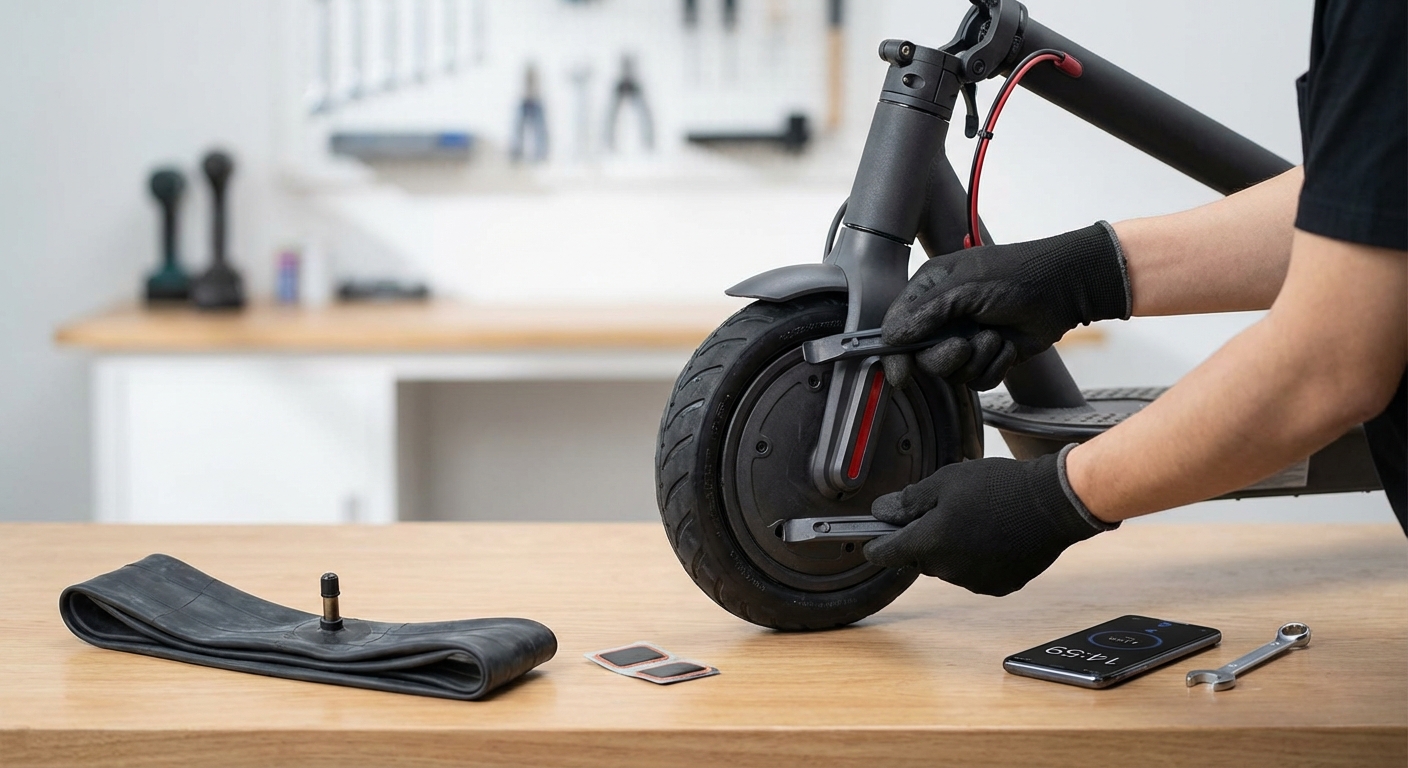
How to Fix a Flat Tire on Your Electric Scooter in Under 15 Minutes
You’re halfway to work when you feel it. That sinking, sluggish drag. Your electric scooter isn’t rolling smoothly anymore. You stop, look down, and there it is: a completely flat tire. Your heart drops a little. But here’s the good news. You don’t need a mechanic. You don’t need expensive tools. And you definitely don’t need to abandon your scooter on the sidewalk. With about 15 minutes and a few basic supplies, you can fix this yourself and get back on the road.
Fixing a flat tire on your electric scooter takes 15 minutes with basic tools. You’ll need tire levers, a pump, and either a patch kit or new inner tube. Remove the wheel, inspect for damage, patch or replace the tube, reassemble, and inflate. This DIY repair saves time and money while keeping you mobile without professional help or specialized equipment.
What You Actually Need Before You Start
Let’s talk tools. You won’t need a full workshop. Most repairs use items you already have at home or can pick up at any hardware store.
Here’s your shopping list:
- Tire levers (two or three plastic ones work great)
- Hand pump or portable electric pump
- Patch kit or spare inner tube
- Small adjustable wrench or Allen key set
- Clean rag
- Bowl of water (for finding leaks)
That’s really all there is to it. The entire kit fits in a small bag you can carry in your riding backpack for emergencies.
One more thing. Make sure you know your tire size before buying a replacement tube. Check the sidewall of your tire. You’ll see numbers like 8.5 x 2 or 10 x 2.5. Write that down.
Step-by-Step Repair Process
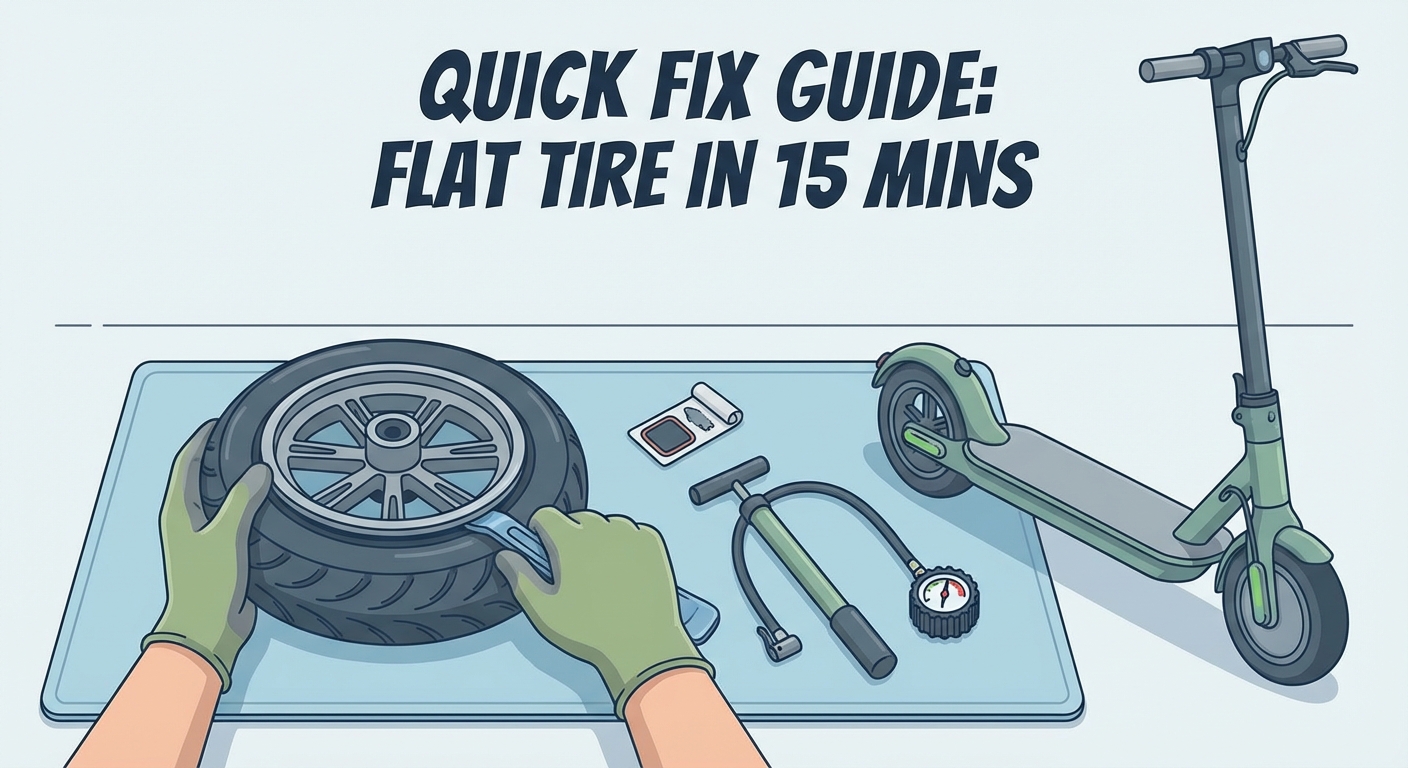
Let’s get your scooter rolling again. Follow these steps in order.
1. Remove the Wheel
First, turn off your scooter completely. Flip it upside down or lean it on its side. You need access to the wheel with the flat.
Most electric scooters use one of two systems: bolt-on wheels or quick-release axles. Check which one you have.
For bolt-on wheels, use your wrench or Allen key to loosen the axle nuts. Keep these nuts in your pocket so they don’t roll away. For quick-release systems, just flip the lever and slide the wheel out.
If your scooter has disc brakes, be gentle. Don’t yank the wheel. Slide it straight out so you don’t damage the brake caliper.
2. Take the Tire Off the Rim
Now comes the part that feels tricky the first time but gets easier with practice.
Deflate the tire completely if there’s any air left. Press the valve stem to let everything out.
Insert your first tire lever between the tire bead and the rim. Pry the tire edge up and over the rim. Hook the lever onto a spoke if you can. This holds it in place.
Take your second lever and insert it a few inches away. Pry up another section. Keep working your way around the rim until one side of the tire is completely off.
Pull out the inner tube. Start at the valve stem and work your way around. The tire stays on the rim. You only need one side off to access the tube.
3. Find the Puncture
This step matters more than you think. You need to know where the hole is and what caused it.
Pump a little air into the tube. Not much. Just enough to give it shape.
Hold the tube close to your ear and listen for hissing. Rotate slowly. If you can’t hear anything, use your bowl of water. Submerge sections of the tube and watch for bubbles.
Found it? Mark the spot with a pen or your finger.
Now here’s the part most people skip. Check inside the tire for whatever caused the puncture. Run your fingers carefully along the inside surface. Look for glass, thorns, metal shards, or sharp stones. If you don’t remove the object, your new patch or tube will puncture again immediately.
4. Patch or Replace the Tube
You have two options here. Patch the existing tube or swap in a new one.
Patching works great for small punctures. It’s cheaper and faster if you have a kit handy. Clean the area around the hole with your rag. Rough up the surface with the sandpaper included in most patch kits. Apply a thin layer of rubber cement. Wait 30 seconds. Press the patch firmly over the hole. Hold for a minute.
Replacing the tube makes sense for large tears, multiple punctures, or old tubes that have been patched before. Just make sure your new tube matches your tire size.
5. Reinstall Everything
Put a tiny bit of air in the tube. Just enough so it holds its shape but stays flexible.
Tuck the valve stem through the hole in the rim first. Then work the tube back inside the tire, going around the rim.
Now push the tire bead back over the rim edge. Start opposite the valve stem. Use your hands first. Only use tire levers if you absolutely must, and be careful not to pinch the tube between the lever and rim.
Work your way around both sides until the tire sits completely inside the rim. Check that the tube isn’t trapped or twisted anywhere.
6. Inflate and Test
Pump the tire to the recommended pressure. Check the sidewall for the PSI range. Most electric scooter tires run between 40 and 50 PSI.
Don’t overinflate. Too much pressure makes your ride harsh and increases puncture risk. Too little makes the scooter handle poorly and drains your battery faster.
Spin the wheel. Make sure it rotates smoothly without wobbling.
7. Put the Wheel Back On
Slide the wheel back into the fork or swing arm. Line up the axle with the dropouts.
If you have disc brakes, guide the rotor carefully between the brake pads.
Tighten the axle nuts or close the quick-release lever. Make sure everything is snug. A loose wheel is dangerous.
Give the wheel another spin. Check that the brakes work properly. Squeeze the lever and make sure the wheel stops.
Common Mistakes That Make Repairs Take Longer
People mess up flat tire repairs in predictable ways. Avoid these and you’ll save yourself frustration.
| Mistake | Why It Matters | How to Avoid It |
|---|---|---|
| Skipping the tire inspection | The puncture happens again immediately | Always check inside the tire for debris |
| Pinching the new tube during installation | Creates a new hole before you even ride | Keep the tube slightly inflated while installing |
| Over-tightening axle bolts | Strips threads or damages bearings | Snug is enough; you don’t need gorilla strength |
| Using the wrong tire pressure | Poor handling or another flat | Check the sidewall and use a pressure gauge |
| Forgetting to test brakes | Dangerous first ride back | Always spin and brake test before riding |
When You Should Replace Instead of Repair
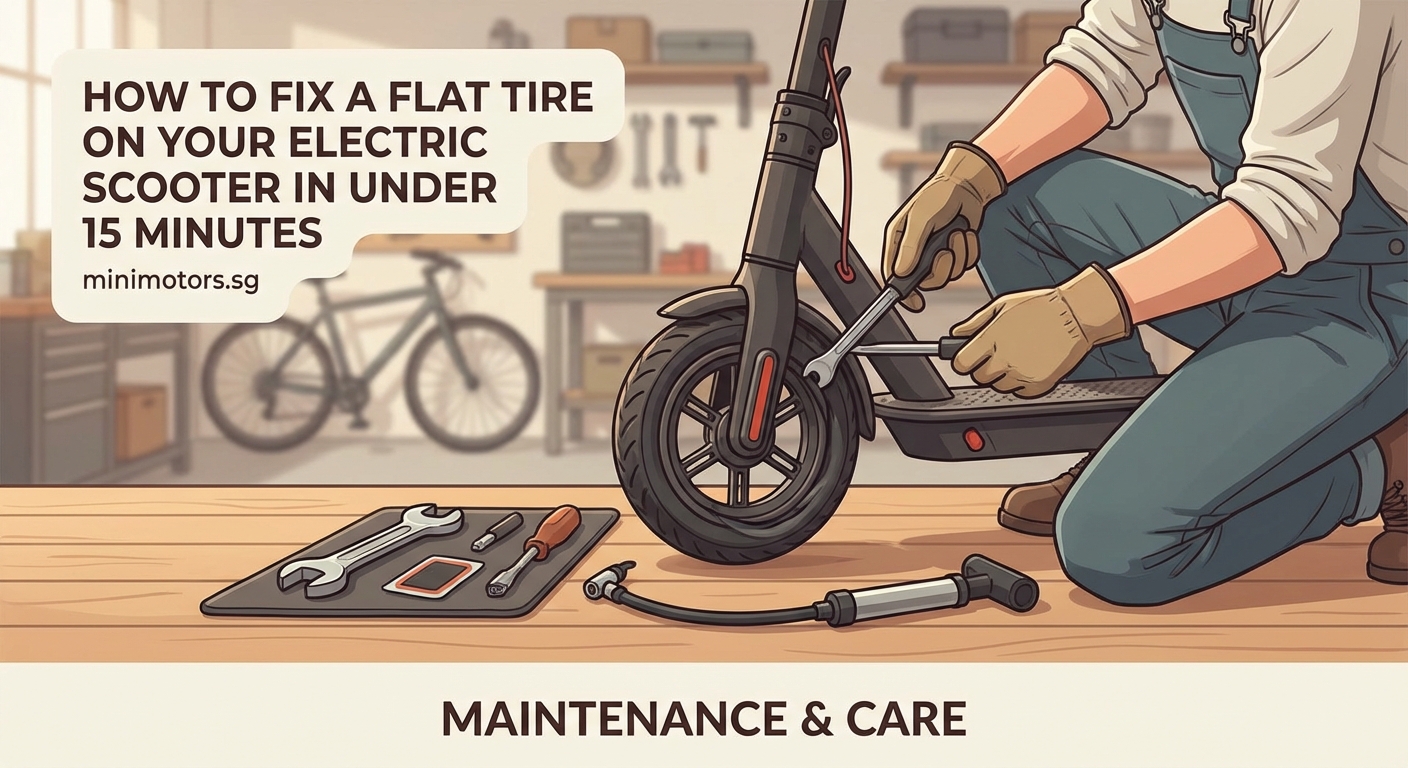
Sometimes patching isn’t worth the effort. Here’s when you need a new tire or tube entirely.
Replace the tube if you see multiple punctures close together. One patch is fine. Three patches in the same area means the tube is done.
Replace the tire if the tread is worn smooth. Bald tires lose grip, especially in rain. They also puncture more easily because the rubber is thinner.
Replace both if you see cracks in the tire sidewall. These only get worse. A blowout at speed is not something you want to experience.
Age matters too. Rubber degrades over time even without use. If your scooter has been sitting for years, consider fresh rubber all around.
“The best flat tire repair is the one you never need. Check your tire pressure weekly and inspect for embedded debris after every ride. Most flats are preventable with basic maintenance.”
Preventing Your Next Flat Tire
Now that you know how to fix flat tire electric scooter problems, let’s talk about avoiding them altogether.
Check your tire pressure every week. Seriously. Low pressure is the number one cause of pinch flats. These happen when the tube gets squeezed between the rim and an obstacle like a pothole or curb.
Avoid debris when you can. Glass, metal, and thorns love to hide in bike lanes and road edges. Stay alert and steer around obvious hazards.
Consider tire sealant. This liquid sits inside your tube and automatically plugs small punctures as they happen. It won’t stop everything, but it handles thorns and small glass shards beautifully.
Upgrade to puncture-resistant tires if flats become a regular problem. These have thicker rubber and sometimes Kevlar layers. They cost more but save you repair time.
Inspect your tires monthly. Look for cuts, bulges, embedded objects, and tread wear. Catching problems early prevents roadside repairs.
Tools Worth Carrying on Every Ride
You can’t always fix a flat at home. Sometimes you’re miles away when it happens.
Build a small emergency kit that lives on your scooter. Keep it compact so it doesn’t add much weight.
Include a spare tube that fits your tire size. This is faster than patching on the roadside.
Add a mini pump or CO2 inflator with cartridges. Hand pumps take longer but never run out. CO2 is fast but you only get a few uses.
Throw in two tire levers and a multi-tool with Allen keys. Most scooter repairs need 4mm, 5mm, or 6mm sizes.
Keep a small rag for cleaning your hands. Tire repairs are dirty work.
This entire kit fits in a bag smaller than a sandwich. Strap it under your deck or in your backpack. You’ll forget it’s there until you desperately need it.
What First-Time Owners Should Know
If this is your first flat, welcome to scooter ownership. This won’t be your last. But that’s okay.
Every electric scooter gets flats eventually. It’s normal maintenance, not a defect. Even expensive models with premium tires deal with punctures.
The first repair always takes longer. You’re learning. By the third or fourth time, you’ll knock this out in ten minutes without thinking.
Don’t panic if you can’t get the tire back on the rim at first. Take a break. Have some water. Try again. The tire will cooperate eventually.
Some scooters are harder to work on than others. Models with hub motors require more disassembly. Choosing your first electric scooter with maintenance in mind can save headaches later.
Consider learning this skill even if you plan to use a shop for major repairs. Being able to fix a flat yourself means you’re never stranded. That independence is worth the 15 minutes of practice.
Why This Skill Matters More Than You Think
Knowing how to fix flat tire electric scooter issues changes how you use your ride. You stop worrying about getting stranded. You take routes you might have avoided before. You save money on shop visits that cost three times what a tube costs.
This repair is the foundation of scooter maintenance. Once you can change a tube, other repairs seem less intimidating. Brake adjustments, chain tightening, and bearing maintenance all follow similar logic.
You also start noticing problems earlier. When you’re familiar with how your scooter works, you catch issues before they become expensive failures. That weird noise from your scooter suddenly makes sense because you understand the components.
Most importantly, you stay mobile. Your scooter becomes reliable transportation instead of a fair-weather toy. Rain or shine, smooth roads or rough, you know you can handle basic problems and keep rolling.
Getting Back on the Road
You’ve got this. The first flat feels like a disaster. The second one is just an annoyance. By the third, you’ll barely break stride.
Keep your tools organized. Check your pressure regularly. Ride with confidence knowing you can handle whatever the road throws at you. That’s what scooter ownership is really about. Not avoiding problems, but knowing exactly how to solve them when they show up.
Now get out there and ride. Your newly repaired tire is waiting.
