How GPS Tracking and Anti-Theft Technology Actually Protect Your E-Scooter
Your e-scooter cost you a decent chunk of money. Now it sits outside while you grab coffee, and that nagging feeling hits. Is it still there? Will someone just roll it away? You’re not being paranoid. E-scooter theft is real, common, and frustrating. A GPS tracker for electric scooter can change that worry into confidence, but only if you understand what these devices actually do and how they protect your investment.
A GPS tracker for electric scooter uses satellite positioning to monitor your scooter’s location in real time. When theft occurs, you receive instant alerts and can track the device through your phone. The best trackers combine GPS accuracy with long battery life, discreet installation, and geofencing features. Choosing the right system means understanding how each technology works, where to hide the tracker, and what features actually help you recover a stolen scooter.
Why e-scooters attract thieves
E-scooters are portable, valuable, and easy to resell. A thief can grab one in seconds.
Most models fold. That makes them simple to carry. No tools needed. No loud noise. Just fold and walk away.
The resale market is active. Online marketplaces make selling stolen scooters straightforward. Buyers rarely ask for proof of ownership.
Parking spots are often unmonitored. You lock your scooter outside a shop, restaurant, or office. No cameras. No security guards. Thieves know this.
Traditional locks help, but they’re not foolproof. Bolt cutters defeat cable locks. Angle grinders cut through U-locks. Determined thieves come prepared.
That’s where tracking technology changes the game.
How a GPS tracker for electric scooter actually works
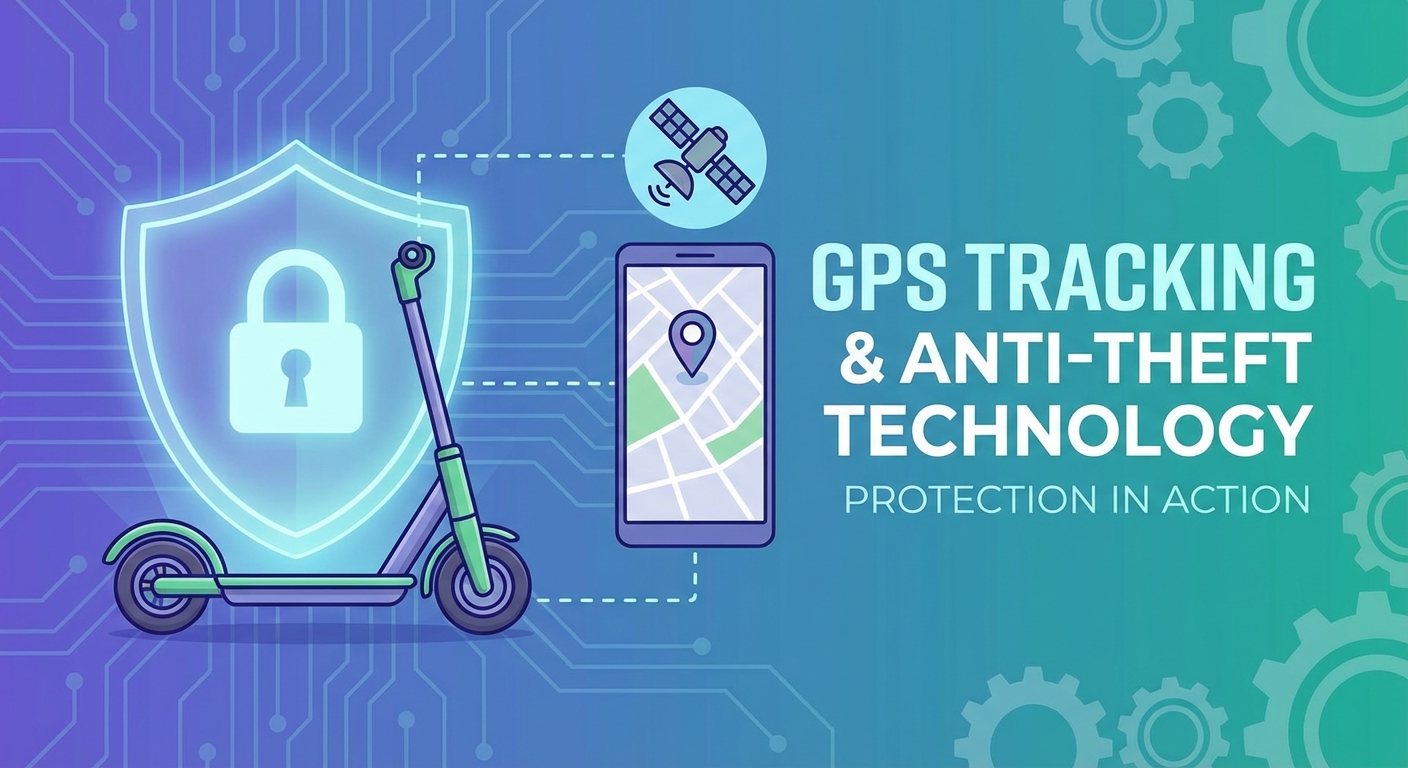
GPS stands for Global Positioning System. Satellites orbiting Earth send signals. Your tracker receives those signals and calculates its position.
The tracker then sends that location data to your phone through cellular networks or Bluetooth. You see your scooter’s position on a map in real time.
Here’s the process:
- The GPS module inside the tracker receives signals from multiple satellites.
- It calculates latitude, longitude, and sometimes altitude.
- The tracker transmits this data using a SIM card or Bluetooth connection.
- Your smartphone app displays the location on a map.
- You receive alerts when the scooter moves outside a designated area.
Some trackers update every few seconds. Others check in every few minutes to save battery.
The accuracy depends on satellite visibility. Open spaces give precise locations within a few meters. Dense urban areas or indoor parking can reduce accuracy.
Cellular-based trackers need network coverage. If a thief takes your scooter into a basement or remote area, the signal might drop temporarily. But once the scooter moves back into coverage, tracking resumes.
Bluetooth trackers work differently. They rely on nearby devices to relay location data. If your scooter moves out of Bluetooth range and no other users are nearby, tracking stops until someone with the app passes by.
Types of tracking systems you can install
Not all GPS trackers work the same way. Three main types exist, each with distinct advantages.
GPS with cellular connection
These trackers use a SIM card to send location data over mobile networks. They offer real-time tracking anywhere with cell service.
Battery life varies. Some last weeks. Others need charging every few days. Installation is usually hidden inside the scooter’s frame or battery compartment.
Monthly subscription fees apply because the device uses cellular data. Expect to pay between $5 and $15 per month.
Bluetooth trackers
These small devices connect to your phone when nearby. They’re affordable and easy to attach.
But they have a major limitation. Once your scooter moves beyond Bluetooth range (usually 30 to 100 meters), you lose direct tracking. Some systems use crowdsourced networks where other users’ phones can detect your tracker and update its location anonymously.
No subscription fees. Battery life is excellent, often lasting months.
Hybrid trackers
These combine GPS and Bluetooth. They switch between technologies based on what’s available.
When your scooter is nearby, Bluetooth saves battery. When it moves away, GPS takes over. You get the best of both worlds but at a higher cost.
Features that actually matter when choosing a tracker
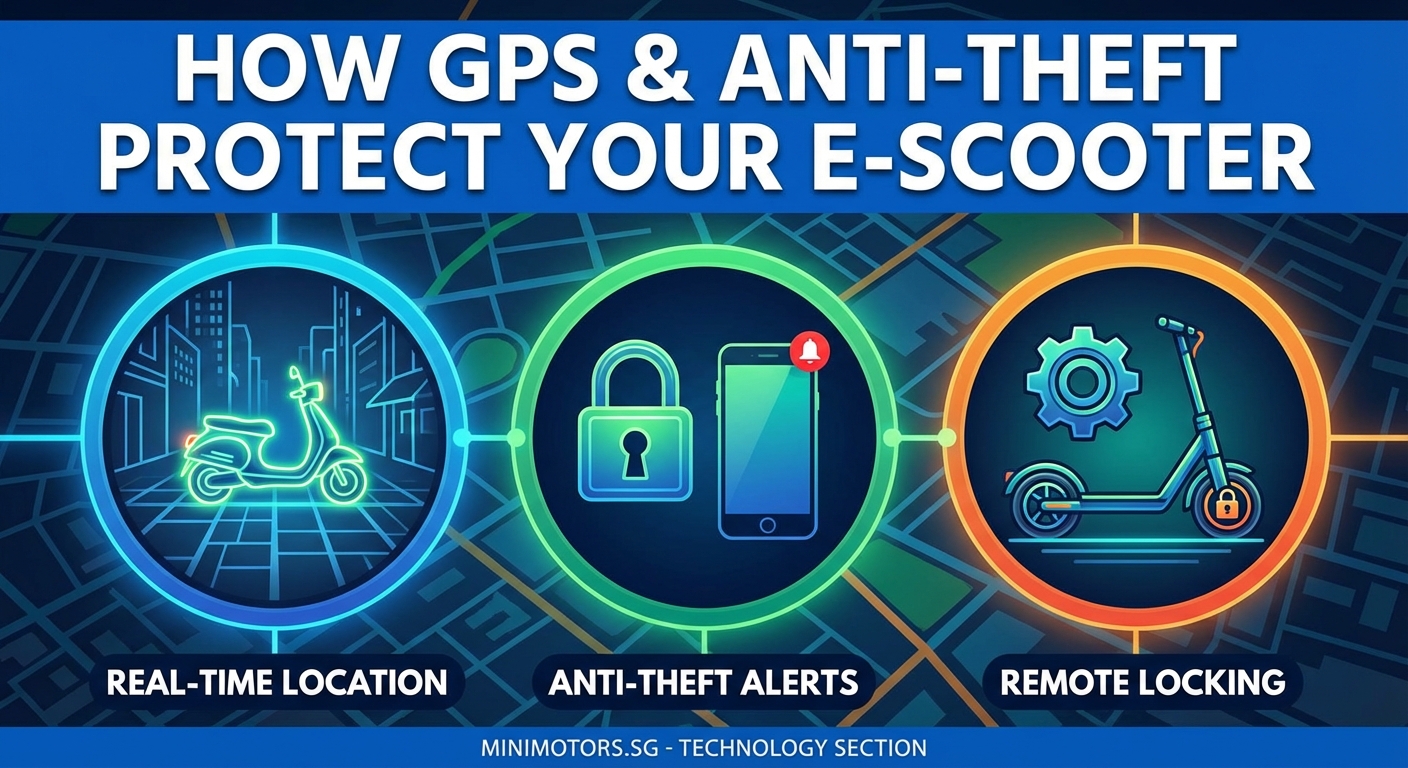
Shopping for a GPS tracker means sorting through marketing claims. Focus on these practical features.
Battery life
How long does the tracker run before needing a charge? Some devices last three days. Others go three weeks.
Consider your charging habits. If you charge your scooter daily, a tracker with shorter battery life might work fine. If you ride occasionally, longer battery life prevents the tracker from dying between uses.
Installation location
Where can you hide the tracker? The best spot is inside your scooter’s frame or battery compartment. Thieves check obvious locations like under the deck or in storage compartments.
Some trackers are designed to fit specific scooter models. Others are universal but bulkier.
Waterproofing matters. Rain happens. Your tracker should have at least an IP65 rating.
Geofencing alerts
This feature lets you draw a virtual boundary on a map. If your scooter moves outside that zone, you get an instant notification.
Set a geofence around your home, workplace, or parking spot. If someone moves your scooter, you know immediately.
Not all trackers offer this. Check before buying.
Movement detection
Sensors detect when your scooter is moved or tilted. You receive an alert even if the scooter hasn’t left the geofenced area yet.
This gives you a head start. You can check on your scooter before a thief gets far.
App quality
The smartphone app is your control center. It should be intuitive, reliable, and fast.
Look for apps with good reviews. Glitchy apps defeat the purpose of having a tracker.
Features to check:
– Real-time location updates
– Location history
– Battery status monitoring
– Alert customization
– Multiple device support if you own more than one scooter
Installing your tracker the right way
Proper installation keeps your tracker hidden and functional. Follow these steps.
-
Choose the location carefully. Inside the scooter’s stem or battery compartment works best. Avoid external mounting where thieves can spot and remove it.
-
Secure it firmly. Use zip ties, adhesive, or mounting brackets. The tracker shouldn’t rattle or shift during rides.
-
Test the signal. Before sealing everything up, check that GPS signals reach the tracker. Walk outside and verify the app shows accurate location data.
-
Waterproof the installation. Even if your tracker is waterproof, protect connection points. Use silicone sealant or waterproof tape around any openings.
-
Document the installation. Take photos of where you placed the tracker. If you need to remove or replace it later, you’ll remember the exact spot.
Some riders install multiple trackers. One obvious decoy and one hidden backup. Thieves who find the first one might think they’ve disabled all tracking.
Common mistakes that reduce tracker effectiveness
Even good trackers fail if you make these errors.
Forgetting to charge it
A dead tracker is useless. Set reminders to check battery status weekly. Some apps send low battery alerts, but don’t rely solely on those.
Poor signal placement
Metal frames block GPS signals. If your tracker is buried too deep inside the scooter’s metal body, it might struggle to get a fix.
Test signal strength after installation. If accuracy is poor, reposition the tracker.
Ignoring subscription renewals
Cellular trackers stop working when your subscription lapses. Set up auto-renewal or calendar reminders.
Not testing the system
Install the tracker and assume it works. Then when theft happens, you discover it’s not functioning.
Test your system monthly. Move your scooter outside the geofence. Verify you receive alerts. Check that location updates are accurate.
Relying only on tracking
A GPS tracker helps recover stolen scooters, but prevention is better. Use a quality lock. Park in visible areas. Combine physical security with tracking technology.
What to do when your scooter gets stolen
Your phone buzzes. Movement alert. Your scooter is moving, and you didn’t touch it.
Stay calm. Act fast.
Immediate steps:
- Open your tracking app and check the real-time location.
- Do not confront the thief yourself. Theft recovery can be dangerous.
- Call the police and provide them with the live location data.
- Screenshot the location history in case the tracker loses signal.
- Monitor the tracker continuously and update police if the location changes.
Some police departments respond better to theft reports with GPS evidence. You’re giving them exact coordinates, not just a description.
If the scooter stops moving, note the address. Thieves often take scooters to a home or storage location before reselling them.
Recovery success rates
GPS trackers significantly improve recovery odds. Without tracking, stolen e-scooters are rarely found. With tracking, recovery rates jump to 50% or higher, depending on how fast you report and how responsive local police are.
Time matters. Report immediately. The longer you wait, the harder recovery becomes.
Comparing tracker options side by side
Different tracking technologies suit different needs. This table breaks down the key differences.
| Feature | GPS with Cellular | Bluetooth Only | Hybrid System |
|---|---|---|---|
| Real-time tracking | Yes, anywhere with cell service | Only within Bluetooth range | Yes, switches between both |
| Monthly cost | $5 to $15 subscription | None | $5 to $15 subscription |
| Battery life | 3 to 21 days | 3 to 12 months | 5 to 30 days |
| Installation complexity | Moderate, needs hiding | Easy, just attach | Moderate, needs hiding |
| Recovery effectiveness | High | Low to moderate | High |
| Best for | Daily commuters who park in various locations | Riders who keep scooter at home mostly | Users wanting maximum flexibility |
Choose based on how you use your scooter. Daily commuters benefit most from cellular GPS. Casual riders who store their scooter at home might find Bluetooth sufficient.
Real-world limitations you should know
GPS trackers are powerful, but they’re not magic. Understanding limitations helps set realistic expectations.
Signal blackouts
Underground parking garages, thick buildings, and remote areas can block GPS signals. If a thief stores your scooter in a basement, tracking stops until the scooter moves back into signal range.
Battery dependency
If your tracker’s battery dies before you notice, tracking stops. This is why battery life is such a critical feature.
Clever thieves
Some thieves know about GPS trackers. They might search for them or use signal jammers. This is rare but happens.
Multiple hidden trackers reduce this risk. Finding one tracker doesn’t mean finding all of them.
Legal considerations
Tracking technology is legal for protecting your own property. But confronting thieves yourself can be dangerous and might complicate legal proceedings.
Always involve police. Let them handle recovery. Your job is to provide accurate location data.
Integrating trackers with other security measures
A GPS tracker works best as part of a layered security system. Think of it as your last line of defense, not your only one.
Physical locks
Use a high-quality U-lock or chain lock. Secure both the frame and wheel to an immovable object. This slows thieves down and might deter them entirely.
Parking strategy
Choose well-lit, busy areas. Thieves prefer working unnoticed. Visibility is your friend.
Avoid leaving your scooter in the same spot daily. Predictable patterns help thieves plan.
Insurance
Some insurance policies cover e-scooter theft. GPS tracking data can support your claim and prove theft occurred.
Check your policy. Some insurers offer discounts if you install approved tracking devices.
Smartphone app features
Many modern e-scooters come with built-in apps that offer basic tracking. These work through the scooter’s own connectivity. While not as robust as dedicated GPS trackers, they add another layer.
If your scooter supports app-based tracking, enable it. Use it alongside a dedicated tracker for redundancy. You can learn more about how these features work in our guide on smartphone apps for e-scooter safety.
Regular maintenance
A well-maintained scooter is easier to identify if recovered. Keep records of your scooter’s serial number, unique marks, and photos. This documentation helps prove ownership.
For tips on keeping your scooter in top condition, check out our maintenance checklist.
Cost versus value analysis
GPS trackers range from $30 to $200, plus potential monthly fees. Is it worth it?
Consider your scooter’s value. If you own a $300 budget model, a $150 tracker might not make financial sense. But for a $1,500 premium scooter, spending $100 on tracking is a smart investment.
Break-even thinking:
If your tracker costs $80 plus $10 per month, that’s $200 in the first year. If it helps you recover a stolen $1,500 scooter even once, it’s paid for itself seven times over.
Even if you never face theft, the peace of mind has value. You park without constant worry. You can leave your scooter outside while you run errands.
Insurance savings:
Some insurance companies reduce premiums if you install approved tracking devices. Ask your insurer. The discount might offset subscription costs.
Privacy and data security considerations
Your GPS tracker knows where your scooter goes. That means it knows where you go.
Choose reputable brands with clear privacy policies. Your location data should be encrypted and not sold to third parties.
Check these points:
- Does the company encrypt data transmission?
- Who has access to your location history?
- Can you delete your data?
- Is there a data breach notification policy?
Avoid cheap, no-name trackers from unknown manufacturers. They might have security vulnerabilities that expose your data.
“The best security system is one you actually use consistently. A complex tracker you forget to charge is worse than a simple one you maintain regularly. Choose technology that fits your routine, not just your budget.”
Maintenance and long-term reliability
Your GPS tracker needs attention to stay effective.
Monthly checks:
- Verify battery level
- Test geofencing alerts
- Confirm location accuracy
- Check for firmware updates
Quarterly tasks:
- Clean the tracker if accessible
- Inspect mounting security
- Review subscription status
- Test recovery procedures
Set calendar reminders. Make tracker maintenance part of your regular scooter care routine.
Firmware updates improve performance and fix bugs. Most trackers update through their smartphone app. Enable automatic updates if available.
When tracking technology isn’t enough
Sometimes thieves defeat tracking. Your scooter might be stripped for parts, making recovery pointless even if you know the location.
This is why prevention matters more than recovery. Make your scooter a harder target than the one next to it. Thieves choose easy opportunities.
If you live in a high-theft area, consider:
- Storing your scooter indoors whenever possible
- Using multiple locks of different types
- Removing the battery when parked long-term
- Engraving your contact information on the frame
Tracking helps, but it’s not a substitute for common sense security practices.
Making the right choice for your situation
No single GPS tracker suits everyone. Your choice depends on several factors.
For daily commuters:
Choose a cellular GPS tracker with strong battery life and reliable geofencing. You need real-time tracking across the city.
For casual riders:
A Bluetooth tracker might suffice if you mostly ride locally and store your scooter at home. Lower cost and longer battery life fit your usage pattern.
For premium scooter owners:
Invest in a hybrid system with backup power and multiple alert types. Your scooter’s value justifies the extra cost.
For budget-conscious riders:
Start with a basic GPS tracker. You can always upgrade later. Some protection beats no protection.
Test before you commit. Some companies offer trial periods. Use them to verify the tracker works with your scooter and meets your needs.
Your scooter deserves real protection
You worked hard to buy your e-scooter. It gets you to work, saves money on transportation, and makes daily life easier. Protecting it isn’t paranoia. It’s practical.
A GPS tracker for electric scooter gives you tools to fight back against theft. You get real-time alerts, accurate location tracking, and a realistic shot at recovery if the worst happens. Combined with good locks and smart parking, tracking technology transforms your scooter from an easy target into a protected investment. Choose a tracker that fits your budget and usage pattern, install it properly, and maintain it regularly. Your future self will thank you the first time that movement alert saves your ride.
