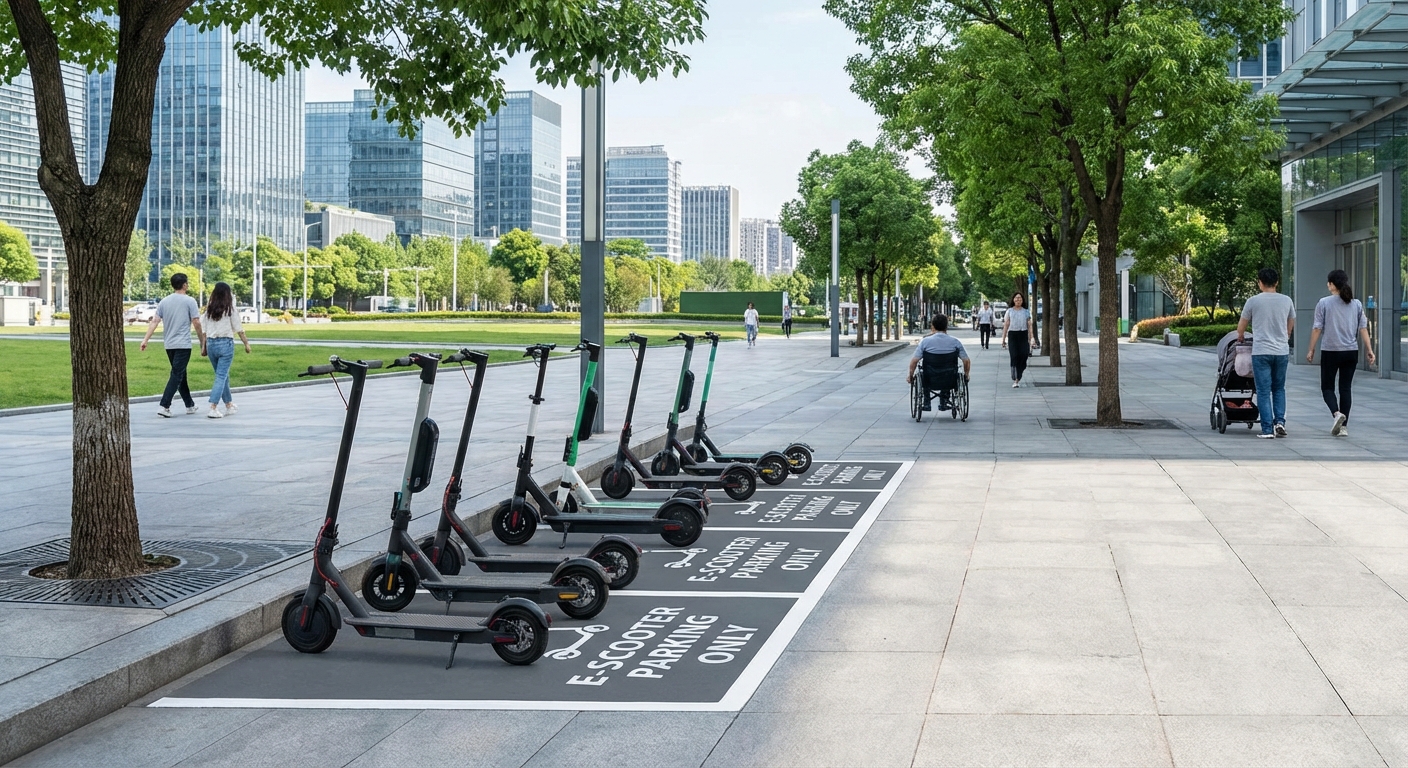
How E-Scooter Parking Zones Are Transforming Sidewalk Management
Cities around the world are grappling with a new challenge: thousands of e-scooters scattered across sidewalks, blocking wheelchair ramps, and frustrating pedestrians. What started as a promising solution for last-mile transportation has turned into a public space management headache. But the good news? Cities that implement structured e-scooter parking management are seeing dramatic improvements in sidewalk accessibility, rider compliance, and public satisfaction.
Effective e-scooter parking management combines designated zones, geofencing technology, rider incentives, and enforcement policies. Cities that adopt these systems see up to 80% compliance rates and significantly cleaner sidewalks. Success requires coordination between municipal officials, operators, and riders, supported by real-time data and clear regulations that balance accessibility with urban mobility goals.
Why sidewalk clutter became an urban crisis
The explosion of shared e-scooter programs caught many cities off guard. Between 2018 and 2023, over 200 cities launched micromobility programs without adequate parking infrastructure. Riders ended trips wherever convenient, leaving scooters blocking doorways, bus stops, and crosswalks.
Accessibility advocates raised urgent concerns. A scooter left sideways on a narrow sidewalk forces wheelchair users into the street. Parents with strollers face similar obstacles. Elderly residents with limited mobility find themselves navigating obstacle courses daily.
The problem extends beyond inconvenience. Improperly parked scooters create liability issues for cities. Trip and fall incidents increased in areas with high scooter density. Some municipalities responded by banning shared programs entirely, eliminating a valuable transportation option because of parking failures.
But cities that invested in proper e-scooter parking management found a different outcome. They maintained the benefits of micromobility while dramatically reducing sidewalk conflicts.
The core components of effective parking systems
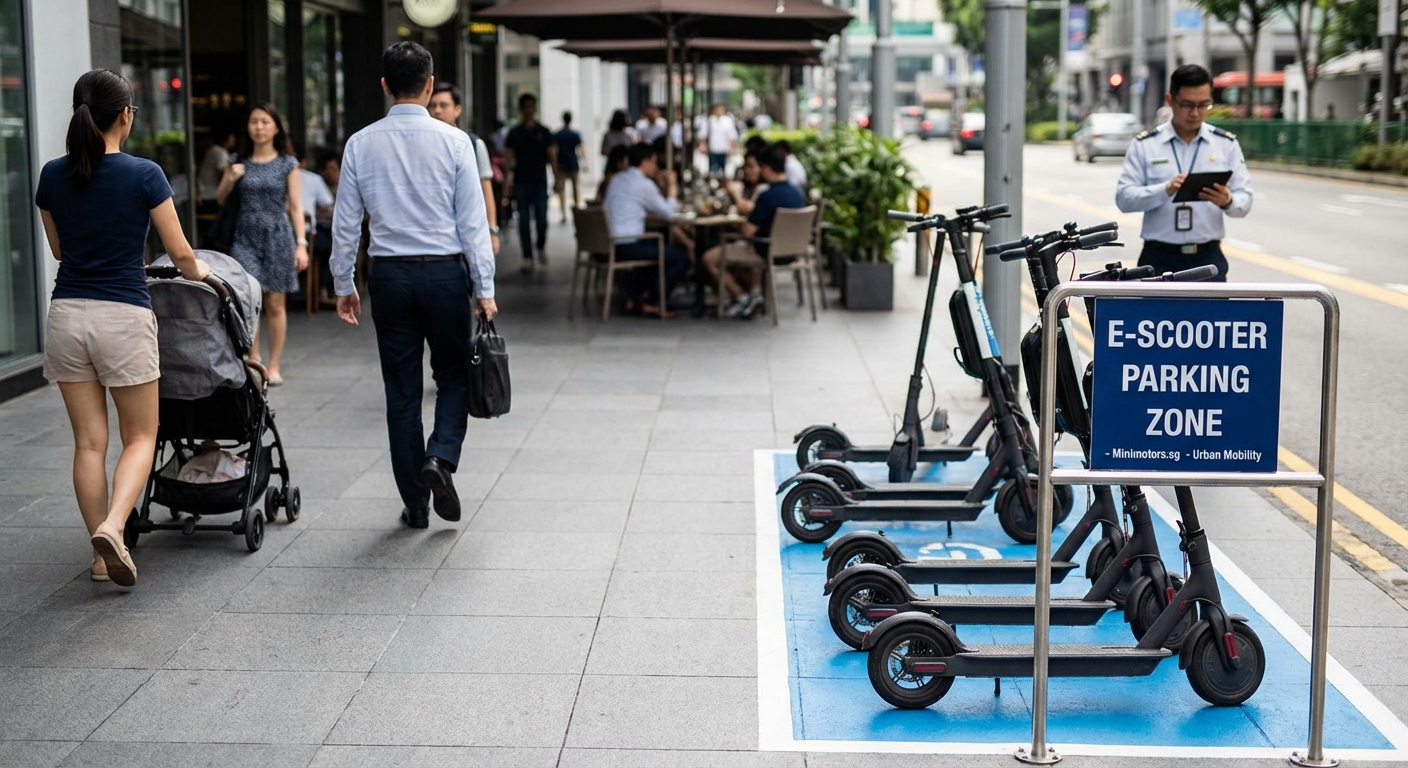
Successful e-scooter parking management relies on four interconnected elements working together.
Designated parking zones
Physical infrastructure forms the foundation. Cities need clearly marked parking areas that riders can easily locate and access. These zones should be:
- Visible from typical riding routes
- Spaced at 100 to 200 meter intervals in high-traffic areas
- Located near transit hubs, commercial districts, and residential areas
- Marked with durable pavement markings or signage
- Sized appropriately for local demand patterns
Portland, Oregon installed over 500 designated parking corrals in its first year. The city saw compliance rates jump from 34% to 76% within six months.
Geofencing technology
Modern scooters equipped with GPS can detect their location within meters. Operators use this capability to create virtual boundaries that modify scooter behavior based on location.
Geofencing enables several parking management tools:
- Slow zones that reduce speed near crowded pedestrian areas
- No-ride zones that prevent operation in prohibited areas
- No-parking zones that prevent trip completion in restricted areas
- Preferred parking zones that offer incentives for proper parking
The technology works through the scooter’s onboard systems, which communicate with operator servers in real time. When a rider attempts to end a trip outside designated areas, the app prevents completion and directs them to the nearest approved zone.
Cities like Singapore and others working to reduce traffic congestion have implemented comprehensive geofencing that covers their entire urban core.
Incentive and penalty structures
Changing rider behavior requires both carrots and sticks. Effective programs use financial incentives to reward proper parking while imposing fees for violations.
Common incentive approaches include:
- Credits toward future rides for parking in preferred zones
- Discounted rates for consistent compliance
- Loyalty program benefits tied to parking behavior
- Gamification elements that reward streaks of proper parking
Penalties typically escalate with repeated violations:
| Violation | First Offense | Second Offense | Third+ Offense |
|---|---|---|---|
| Improper parking | Warning | $5 fee | $15 fee + suspension |
| Blocking accessibility | $10 fee | $25 fee | Account suspension |
| No-parking zone | $15 fee | $35 fee | Permanent ban |
The key is making compliance easier and cheaper than violations. When parking properly saves money and time, most riders choose to follow rules.
Real-time monitoring and enforcement
Data systems allow cities to track parking patterns, identify problem areas, and measure compliance. Operators typically provide APIs that share scooter locations, trip data, and parking events with municipal authorities.
Cities use this information to:
- Adjust parking zone locations based on actual demand
- Identify hotspots requiring additional infrastructure
- Monitor operator compliance with permit requirements
- Generate enforcement reports for violations
- Measure program effectiveness over time
Some cities employ field staff who reposition improperly parked scooters and document violations. Others rely on photo verification systems where riders must submit images proving proper parking before completing trips.
Building a parking management framework from scratch
Cities starting new programs or reforming existing ones should follow a structured implementation process.
Step 1: Assess current conditions and needs
Begin with data collection. Map existing scooter usage patterns, pedestrian traffic flows, and problem areas. Survey residents about accessibility concerns and desired improvements.
Identify high-priority locations for parking infrastructure:
- Transit stations and bus stops
- Commercial corridors with retail and dining
- University campuses and educational facilities
- Residential areas with apartment complexes
- Parks and recreational destinations
Document current sidewalk widths, existing furniture, and accessibility requirements. This baseline data informs infrastructure decisions.
Step 2: Design parking zone network
Create a comprehensive network that covers the areas where riders want to go. Spacing matters tremendously. Zones too far apart reduce compliance because riders won’t walk extra distance. Zones too close together waste resources and clutter sidewalks.
The optimal spacing depends on local context:
- Dense urban cores: 75 to 150 meters between zones
- Commercial districts: 150 to 250 meters
- Residential neighborhoods: 250 to 400 meters
- Suburban areas: 400 to 600 meters
Each zone should accommodate 4 to 12 scooters depending on demand. Overflowing zones frustrate riders and reduce compliance.
Step 3: Establish operator requirements
Develop clear permit requirements that operators must meet. These should specify:
- Minimum geofencing accuracy standards
- Required parking compliance rates
- Response times for rebalancing and maintenance
- Data sharing requirements and formats
- Penalty structures for operator violations
- Insurance and liability coverage
“The most successful programs treat operators as partners, not adversaries. Clear expectations and collaborative problem-solving produce better outcomes than adversarial enforcement.” – Urban Mobility Consultant
Step 4: Implement technology infrastructure
Work with operators to deploy geofencing systems that match your parking zone network. Test the technology thoroughly before public launch. Riders should receive clear in-app guidance about where parking is allowed.
Consider integrating IoT sensors that monitor scooter locations and conditions in real time. These systems provide the data needed for effective management.
Step 5: Launch public education campaign
Rider education determines initial compliance rates. Use multiple channels to communicate parking rules:
- In-app tutorials and reminders
- Social media campaigns with visual examples
- Signage at popular destinations
- Partnership with local organizations
- Media coverage of program launch
Show riders exactly what proper parking looks like. Use photos and diagrams that demonstrate correct positioning, appropriate spacing, and accessibility considerations.
Step 6: Monitor, measure, and adjust
Track key performance indicators from day one:
- Overall compliance rate
- Compliance by zone type and location
- Average distance from designated zones
- Accessibility complaints and incidents
- Rider satisfaction scores
- Operator performance metrics
Review data monthly and adjust strategies quarterly. Successful programs evolve based on evidence rather than assumptions.
Common mistakes that undermine parking programs
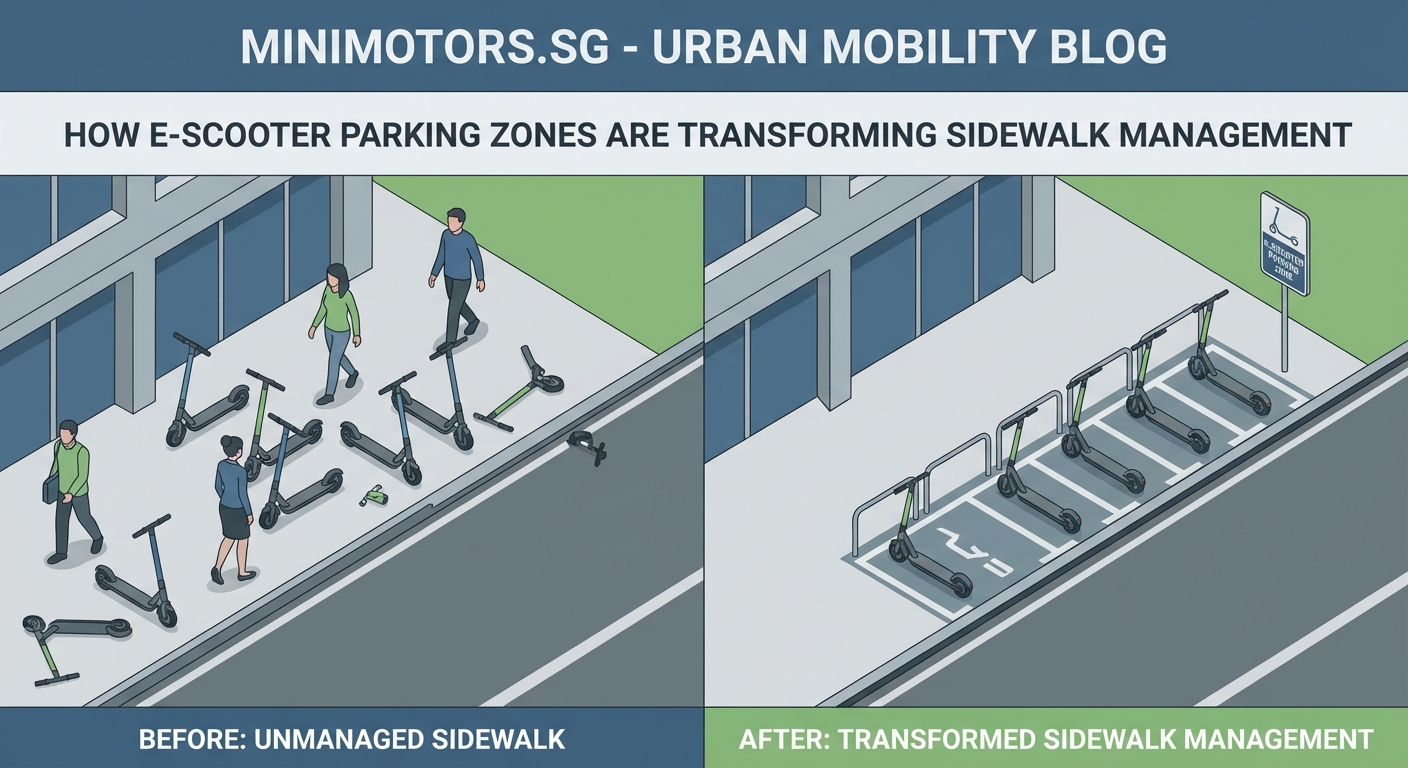
Many cities stumble when implementing e-scooter parking management. Avoiding these pitfalls increases your chances of success.
Insufficient parking capacity: Cities that provide too few parking zones force riders into non-compliance. If every nearby zone is full, riders have no good option. Right-size your network for actual demand, not theoretical minimums.
Inconsistent enforcement: Sporadic enforcement teaches riders they can ignore rules without consequences. Consistent, predictable enforcement establishes expectations and changes behavior. Automated systems work better than intermittent manual enforcement.
Poor zone placement: Parking zones located where riders don’t want to go sit empty while riders park illegally at their actual destinations. Let usage data guide placement decisions, not arbitrary spacing on a map.
Inadequate operator accountability: When operators face no consequences for poor performance, they have little incentive to maintain high standards. Permit systems should include performance bonds, escalating fines, and potential permit suspension for persistent violations.
Ignoring accessibility: Parking zones that block wheelchair access or reduce sidewalk clearance below ADA requirements create new problems while solving old ones. Every parking installation should maintain minimum clearance standards and avoid blocking curb ramps, bus stops, and building entrances.
Technology tools that improve compliance
Modern parking management relies on several technological capabilities working together.
Photo verification systems
Some cities require riders to photograph their parked scooter before completing the trip. AI algorithms analyze these images to verify proper parking. The system checks for:
- Scooter within designated zone boundaries
- Upright positioning on kickstand
- Adequate clearance from obstacles
- No blocking of accessibility features
Riders who submit photos showing violations receive immediate feedback and cannot complete the trip until they correct the issue.
Acoustic parking sensors
Ground-based sensors detect scooter presence and positioning. These devices communicate with central management systems to provide real-time occupancy data for each parking zone.
Benefits include:
- Accurate capacity monitoring
- Detection of improperly parked scooters
- Data for rebalancing operations
- Evidence for enforcement actions
The sensors typically cost $200 to $400 per zone but pay for themselves through improved compliance and reduced manual monitoring.
Predictive rebalancing
Machine learning algorithms analyze historical usage patterns to predict demand by location and time. Operators use these predictions to preemptively reposition scooters, ensuring parking zones have appropriate capacity when and where riders need it.
This proactive approach prevents the common problem of empty zones in high-demand areas, which forces riders to park improperly or abandon trips.
Integrated mobility platforms
Some cities deploy unified apps that show parking availability across all micromobility operators. Riders can see which nearby zones have space before ending their trip. This transparency improves compliance by eliminating uncertainty about where parking is available.
Measuring success and demonstrating value
City officials need clear metrics to evaluate parking management effectiveness and justify continued investment.
Primary success indicators include:
- Compliance rate: Percentage of trips ending in designated zones
- Accessibility complaints: Reported incidents of blocked pathways
- Rider satisfaction: Survey scores regarding parking convenience
- Operator performance: Compliance with permit requirements
- Infrastructure utilization: Average occupancy of parking zones
Secondary metrics provide additional context:
- Trip completion rate in areas with parking infrastructure
- Time spent searching for parking
- Rebalancing efficiency and cost
- Public space quality scores from community surveys
- Integration with broader traffic management goals
Document both quantitative metrics and qualitative feedback. Photos showing before and after conditions powerfully demonstrate impact. Testimonials from accessibility advocates, business owners, and residents add human context to statistical improvements.
Policy frameworks that support long-term success
Effective e-scooter parking management requires supportive policy infrastructure beyond operational details.
Permit systems with performance requirements
Structure operator permits around measurable outcomes rather than just operational rules. Include specific compliance thresholds operators must maintain to retain permits.
Example performance standards:
- Minimum 75% parking compliance rate
- Maximum 2-hour response time for reported violations
- Minimum 95% scooter availability rate
- Maximum 24-hour downtime for maintenance issues
Tie permit renewal to demonstrated performance. Operators who consistently meet standards earn longer permit terms and potentially expanded fleet sizes.
Sidewalk clearance standards
Codify minimum sidewalk clearance requirements that apply to all street furniture, including scooter parking zones. Typical standards require:
- 4 feet (1.2 meters) minimum clear path on all sidewalks
- 5 feet (1.5 meters) in commercial districts
- No obstruction of curb ramps or crosswalks
- Adequate clearance around transit stops
- Visibility triangles at intersections maintained
These standards protect accessibility while providing clear guidance for parking zone placement.
Revenue sharing agreements
Some cities negotiate revenue sharing with operators, using proceeds to fund parking infrastructure, enforcement, and accessibility improvements. Typical arrangements allocate 5% to 15% of gross revenue to the municipality.
Use these funds strategically to expand and improve the parking network, creating a virtuous cycle where better infrastructure enables program growth that generates additional resources for further improvements.
Making parking management work for your community
Every city faces unique challenges based on its geography, density, existing infrastructure, and mobility culture. Successful implementation requires adapting general principles to local conditions.
Start with pilot programs in limited areas. Test different approaches, gather data, and learn what works before citywide rollout. Engage stakeholders throughout the process, particularly accessibility advocates whose input prevents costly mistakes.
Remember that e-scooter parking management serves broader goals: accessible sidewalks, sustainable transportation options, and livable urban spaces. The parking zones and technology are means to these ends, not ends in themselves.
Cities that approach parking management as an ongoing process rather than a one-time project achieve the best results. Regular evaluation, continuous improvement, and willingness to adjust strategies based on evidence separate successful programs from failed experiments.
With thoughtful planning, appropriate technology, and consistent execution, e-scooter parking management transforms a source of conflict into a model of how cities can accommodate new mobility options while protecting public space for everyone.
