How AI and IoT Are Making E-Scooters Smarter and Safer
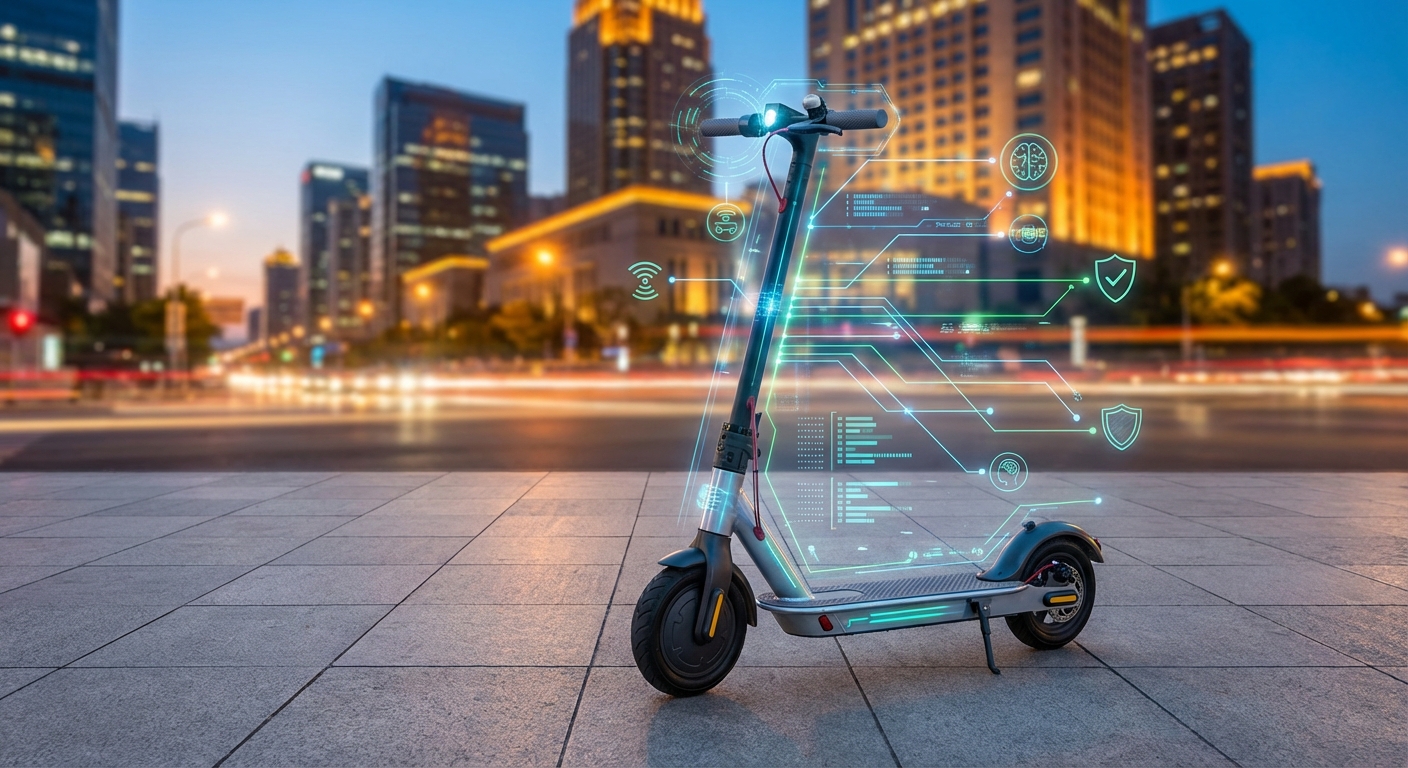
Your morning commute just got a lot smarter. The electric scooter you ride today isn’t just a motor and battery on wheels anymore. It’s a connected device that monitors tire pressure, predicts maintenance needs, and can even call for help if you crash. AI IoT electric scooters represent a fundamental shift in how we think about personal mobility, turning simple transportation into an intelligent system that learns from every ride.
Modern AI IoT electric scooters use artificial intelligence and Internet of Things sensors to monitor performance, predict failures, enhance safety, and optimize battery life. These technologies enable real-time diagnostics, automatic firmware updates, theft prevention, and personalized riding modes that adapt to your habits. The result is a safer, more reliable, and more efficient commuting experience that traditional scooters simply cannot match.
Understanding the Technology Behind Connected Scooters
AI and IoT aren’t just buzzwords slapped onto marketing materials. These technologies fundamentally change how your scooter operates.
IoT sensors constantly collect data about every aspect of your ride. Temperature sensors monitor battery health. Accelerometers detect sudden impacts. GPS modules track location and route patterns. Gyroscopes measure balance and stability.
Artificial intelligence processes this flood of information in real time. Machine learning algorithms identify patterns that humans would miss. The system learns what “normal” looks like for your specific scooter and riding style.
When something deviates from normal, the AI flags it immediately. A slight wobble in the front wheel. An unusual battery drain pattern. A motor temperature that’s climbing faster than it should.
This isn’t science fiction. It’s happening right now in premium electric scooters hitting the market.
How IoT Sensors Monitor Your Scooter in Real Time
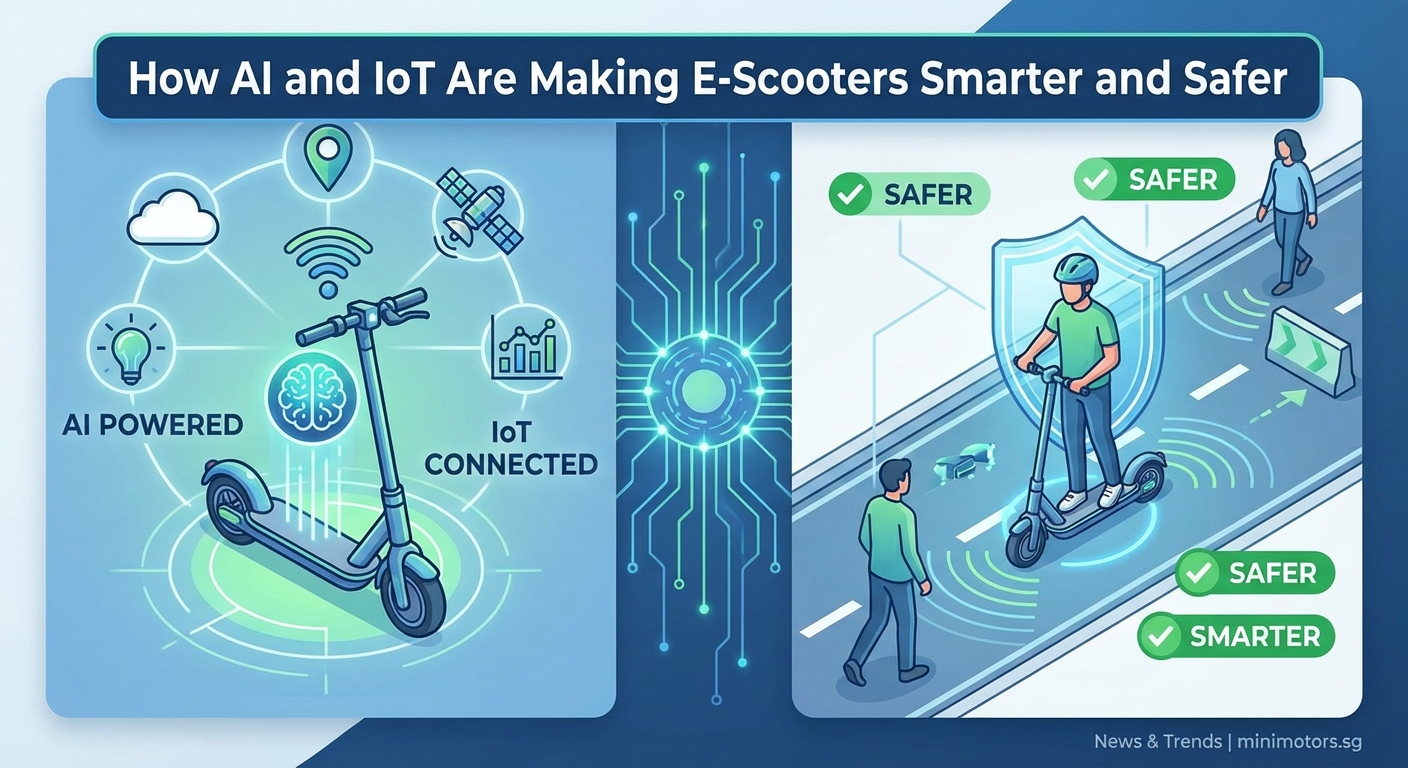
The sensor network inside a modern scooter is surprisingly sophisticated. Here’s what’s actually being measured:
Battery Management Sensors
– Cell voltage monitoring
– Temperature tracking across multiple points
– Charge cycle counting
– Discharge rate analysis
Mechanical Health Sensors
– Bearing vibration detection
– Brake pad wear estimation
– Tire pressure monitoring (on equipped models)
– Suspension compression tracking
Environmental Sensors
– Ambient temperature
– Humidity levels
– Road surface conditions
– Incline detection
All this data flows to a central processing unit that makes split-second decisions. Should the motor reduce power on a slippery surface? Is the battery getting too hot during fast charging? Does the rider need a warning about low tire pressure?
The IoT sensors work continuously to keep you informed and safe.
AI-Powered Safety Features That Protect Riders
Safety improvements are where AI really shines. Traditional scooters have static safety features. AI-equipped models adapt to conditions.
Predictive Crash Detection
The system analyzes acceleration patterns, sudden stops, and unusual movements. If it detects a crash signature, it can automatically:
- Send your GPS location to emergency contacts
- Trigger an audible alarm to alert nearby people
- Log the exact conditions leading up to the incident
- Lock the scooter to prevent theft while you’re incapacitated
Adaptive Traction Control
Rain makes roads slippery. Ice makes them treacherous. AI monitors wheel slip and adjusts power delivery thousands of times per second.
When the rear wheel starts to lose traction, the system reduces motor output before you even notice. When you’re climbing a wet hill, it modulates power to prevent wheel spin.
This is similar to how riding in rain requires special techniques, but the AI handles it automatically.
Intelligent Speed Limiting
Geofencing isn’t new. But AI-powered speed management is smarter. The system considers:
- Local speed regulations
- Current road conditions
- Your riding history
- Traffic density
- Time of day
If you’re approaching a school zone at 8:15 AM on a Tuesday, the scooter knows to limit speed even before you see the sign.
Predictive Maintenance Through Machine Learning
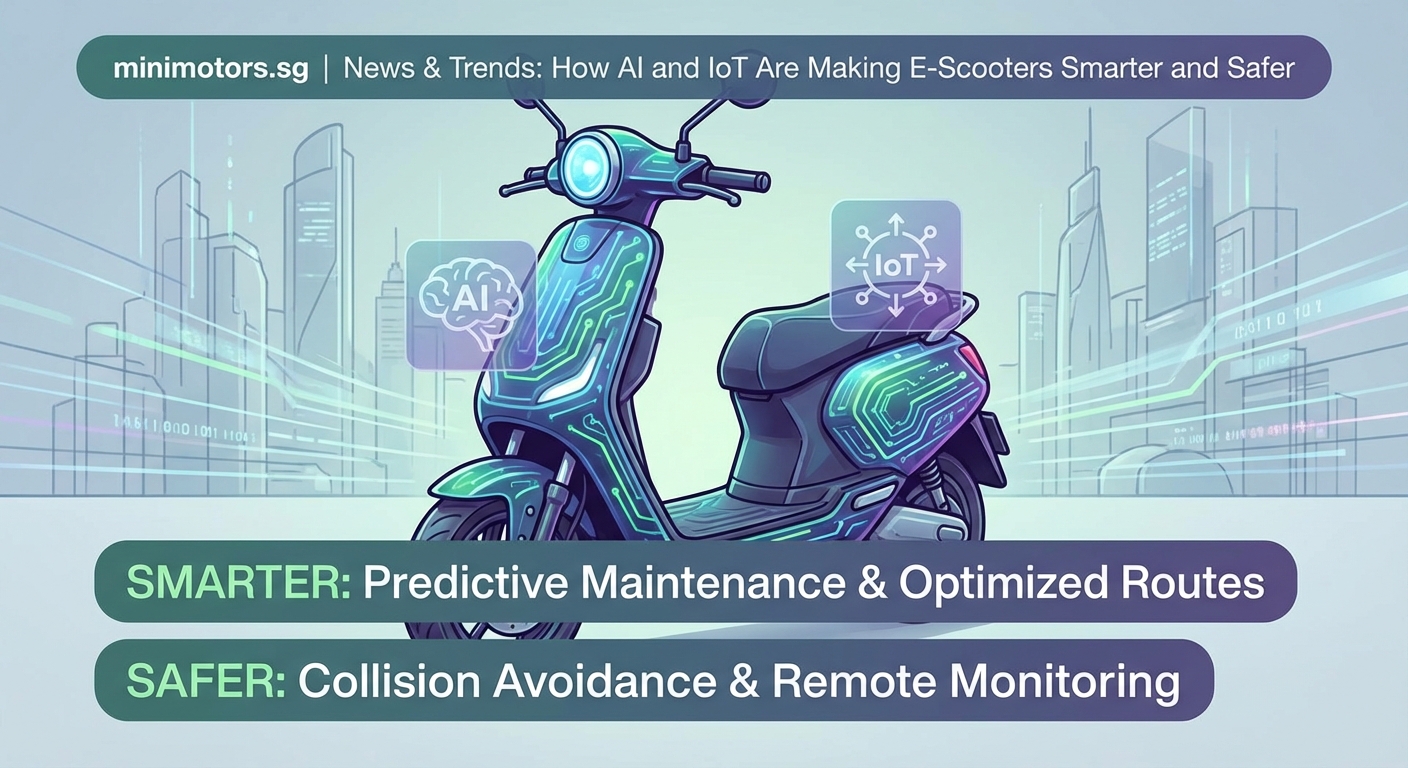
Here’s where AI saves you money and prevents breakdowns.
Traditional maintenance schedules are based on time or distance. Change the brake pads every 1,000 miles. Replace the battery after two years. These are rough estimates.
AI tracks actual component wear. It knows how hard you brake. How often you ride uphill. Whether you charge to 100% every time (which degrades batteries faster).
The system builds a predictive model specific to your scooter and habits. Instead of generic intervals, you get personalized maintenance alerts:
“Your front brake pads have 15% life remaining. Based on your typical usage, they’ll need replacement in approximately 3 weeks.”
This precision prevents two problems:
- Premature replacement of parts that still have life
- Unexpected failures from worn components
The smartphone app integration makes these alerts impossible to miss.
Smart Battery Management Systems
Battery technology is advancing, but AI makes existing batteries work better.
Adaptive Charging Algorithms
Your charging habits affect battery lifespan. Fast charging every day degrades cells faster than slower charging. Storing at 100% charge reduces cycle life.
AI-powered battery management learns your schedule. If you always ride at 7 AM, the system can time the charge to finish right before you leave, minimizing time spent at full charge.
It also adjusts charging speed based on temperature. Cold batteries shouldn’t fast charge. Hot batteries need cooling time.
Some systems even communicate with smart home devices to charge during off-peak electricity hours, saving money while protecting battery health.
Range Prediction That Actually Works
Traditional range estimates are wildly inaccurate. “30-mile range” means nothing when you’re riding uphill in the cold with a headwind.
AI considers dozens of variables:
- Current battery state
- Recent energy consumption patterns
- Planned route elevation changes
- Weather conditions
- Rider weight
- Tire pressure
- Motor efficiency at current temperature
The result is a range estimate that updates in real time and actually reflects reality. No more being stranded three miles from home.
Understanding average range capabilities helps set realistic expectations.
Theft Prevention and Recovery Features
GPS tracking is standard on connected scooters. But AI adds layers of security.
Movement Detection
The scooter knows your typical parking spots. If it detects movement when it should be stationary, it sends an immediate alert.
Usage Pattern Recognition
AI learns how you ride. Your typical acceleration. Your preferred speed. Your regular routes.
If someone steals your scooter and rides it differently, the system flags suspicious activity. Combined with GPS tracking, this dramatically improves recovery rates.
Remote Immobilization
Through the companion app, you can disable the motor remotely. The thief gets a heavy, non-functional scooter that’s still broadcasting its location.
Some advanced systems even trigger the alarm and flash the lights to draw attention.
Personalized Riding Modes and Performance Optimization
Not everyone rides the same way. AI adapts to your preferences.
Learning Your Style
After a few rides, the system understands:
- How aggressively you accelerate
- Your preferred cruising speed
- How hard you typically brake
- Whether you prioritize range or performance
It can automatically adjust motor response curves to match your style without requiring manual mode switching.
Dynamic Performance Tuning
Battery level affects performance. At 80% charge, you get full power. At 20%, traditional scooters feel sluggish.
AI manages power delivery to maintain consistent performance across the entire charge range. The ride feels the same whether you’re at 90% or 30% battery.
It also compensates for rider weight, temperature effects on battery output, and motor efficiency variations.
Connected Features That Enhance Daily Use
The smartphone app is the command center for your scooter’s intelligence.
Real-Time Diagnostics Dashboard
– Current battery health percentage
– Estimated remaining component life
– Recent trip statistics
– Energy consumption trends
– Maintenance recommendations
Ride History and Analytics
– Total distance traveled
– Average speed patterns
– Most common routes
– Energy efficiency by route
– Carbon emissions saved versus driving
Firmware Updates
New features arrive over the air. Bug fixes. Performance improvements. Safety enhancements. Your scooter gets better over time without visiting a shop.
Community Features
Some platforms connect riders. Share routes. Report road hazards. Warn about speed traps or dangerous intersections.
Comparing Traditional vs Smart Scooter Technology
| Feature | Traditional Scooter | AI IoT Scooter |
|---|---|---|
| Maintenance alerts | Time/distance based | Condition-based prediction |
| Range estimation | Static manufacturer claim | Dynamic real-time calculation |
| Theft protection | Physical lock only | GPS + remote disable + alerts |
| Performance tuning | Manual mode selection | Automatic adaptation |
| Safety features | Fixed settings | Adaptive to conditions |
| Diagnostics | Requires shop visit | Real-time app monitoring |
| Updates | Hardware replacement | Over-the-air firmware |
| Battery management | Basic charge controller | AI-optimized charging |
Privacy and Data Security Considerations
All this connectivity raises valid privacy questions.
What Data Gets Collected?
– Location history
– Riding patterns
– Mechanical performance metrics
– Battery usage data
– Personal settings and preferences
Who Has Access?
Reputable manufacturers encrypt data and limit access. Read the privacy policy. Understand what’s shared and with whom.
Some systems allow you to disable location tracking when parked. Others let you delete ride history. Control over your data matters.
Security Vulnerabilities
Connected devices can be hacked. Manufacturers must implement proper security:
- Encrypted communication
- Secure authentication
- Regular security updates
- Vulnerability disclosure programs
Choosing your first scooter now includes evaluating the manufacturer’s approach to data security.
Integration with Smart City Infrastructure
The real power emerges when individual scooters connect to broader urban systems.
Cities are deploying smart infrastructure:
- Traffic signals that detect approaching scooters
- Dedicated lanes with condition monitoring
- Charging stations with availability data
- Parking zones with automatic billing
Your scooter communicates with these systems. It knows which charging stations have open spots. It can suggest routes that avoid congested areas. It automatically pays parking fees when you lock up in designated zones.
This integration makes last-mile transportation seamless and efficient.
The Role of Edge Computing in Scooter Intelligence
Not all processing happens in the cloud. Edge computing brings AI directly to the scooter.
Why It Matters
– Faster response times for safety features
– Works without cellular connection
– Reduces data transmission costs
– Improves privacy (data stays local)
Critical functions like traction control and crash detection run on the scooter’s onboard processor. They can’t wait for a round trip to the cloud.
Less time-sensitive features like maintenance predictions and route optimization can use cloud processing for more sophisticated analysis.
Future Developments in Smart Scooter Technology
The technology continues to advance rapidly.
Vehicle-to-Vehicle Communication
Scooters will talk to each other. Share road condition data. Warn about hazards ahead. Coordinate in dense traffic.
Advanced Rider Assistance
Think of it as autopilot for scooters. Not full autonomy, but:
- Automatic emergency braking
- Lane keeping assistance
- Blind spot detection
- Collision warning systems
Health Monitoring
Sensors that detect rider fatigue. Heart rate monitoring through handlebar grips. Alerts if you seem impaired or drowsy.
Augmented Reality Displays
Navigation projected onto the road ahead. Speed and battery info in your field of vision without looking down.
These aren’t decades away. Some are already in development.
Making Sense of Smart Features When Buying
Not all “smart” scooters are equally intelligent. Here’s what actually matters:
Essential Smart Features
– Real-time battery monitoring
– GPS tracking with theft alerts
– Predictive maintenance warnings
– Firmware update capability
– Companion app with diagnostics
Nice-to-Have Features
– Ride analytics and history
– Customizable performance modes
– Community integration
– Smart city connectivity
– Advanced crash detection
Overhyped Features
– Excessive app complexity
– Social media integration
– Gamification that distracts from riding
– Features requiring constant connectivity
Focus on technology that solves real problems. Ignore gimmicks.
Common Mistakes When Using Connected Scooters
Even smart technology requires smart usage.
Ignoring Software Updates
Updates include critical security patches and performance improvements. Install them.
Disabling Important Alerts
Maintenance warnings exist for a reason. Don’t silence them just because they’re annoying.
Sharing Access Carelessly
App access means scooter control. Be selective about who you add.
Neglecting Physical Maintenance
Sensors detect problems, but they don’t fix them. Still need to perform regular maintenance.
Trusting Technology Blindly
AI assists but doesn’t replace judgment. You’re still responsible for safe riding.
Real-World Benefits for Daily Commuters
Theory is interesting. Results matter more.
Time Savings
– No more guessing about battery life
– Faster route planning with real-time data
– Reduced maintenance downtime through predictions
– Efficient charging scheduling
Cost Savings
– Extended battery life through smart charging
– Prevented breakdowns from early warnings
– Optimized energy consumption
– Reduced insurance costs (some providers offer discounts)
Safety Improvements
– Fewer accidents from mechanical failures
– Better visibility through automatic light control
– Improved stability from adaptive systems
– Faster emergency response if needed
Convenience Gains
– Remote diagnostics eliminate guesswork
– Automatic performance optimization
– Seamless integration with other apps
– Simplified maintenance tracking
Understanding what to wear while commuting complements the technical safety features.
How Smart Technology Changes the Ownership Experience
Owning an AI IoT scooter feels different from owning a traditional model.
You develop a relationship with the device. It learns your preferences. You learn to trust its recommendations.
The app becomes part of your routine. Check battery status before bed. Review tomorrow’s weather and adjust charging. Plan your route based on current conditions.
Maintenance becomes proactive instead of reactive. You replace parts before they fail, not after they leave you stranded.
The scooter feels less like a tool and more like a partner in your daily commute.
Why This Technology Matters for Urban Mobility
Cities face transportation challenges. Congestion. Pollution. Infrastructure costs. Limited space.
Smart scooters address these problems:
- Reduced car dependency
- Lower emissions per passenger mile
- Minimal infrastructure requirements
- Efficient use of urban space
- Integration with public transit
When scooters are reliable, safe, and convenient, more people choose them over cars. AI and IoT make that reliability possible.
Smart cities are already integrating these vehicles into their transportation networks.
Getting Started with Your First Smart Scooter
Ready to experience connected mobility?
- Research manufacturers with proven track records in connected technology
- Read actual user reviews about app reliability and feature usefulness
- Test ride if possible to experience the smart features firsthand
- Verify the privacy policy and data handling practices
- Confirm the warranty covers electronic components
- Check for active development (recent app updates indicate ongoing support)
- Join user communities to learn from experienced riders
The technology should enhance your experience, not complicate it. Choose systems that feel intuitive and solve problems you actually have.
The Intelligence Revolution on Two Wheels
AI IoT electric scooters represent more than incremental improvement. They’re a fundamental reimagining of personal transportation.
Your scooter knows when it needs maintenance before you do. It adapts to weather conditions automatically. It protects itself from theft. It learns your habits and optimizes performance accordingly.
This intelligence makes scooters safer, more reliable, and more practical for daily use. The technology removes barriers that previously kept people from choosing scooters over cars.
As these systems mature and become more affordable, connected features will shift from premium options to standard equipment. The scooter you buy next year will be smarter than anything available today.
The future of urban mobility isn’t just electric. It’s intelligent. And it’s already here.
