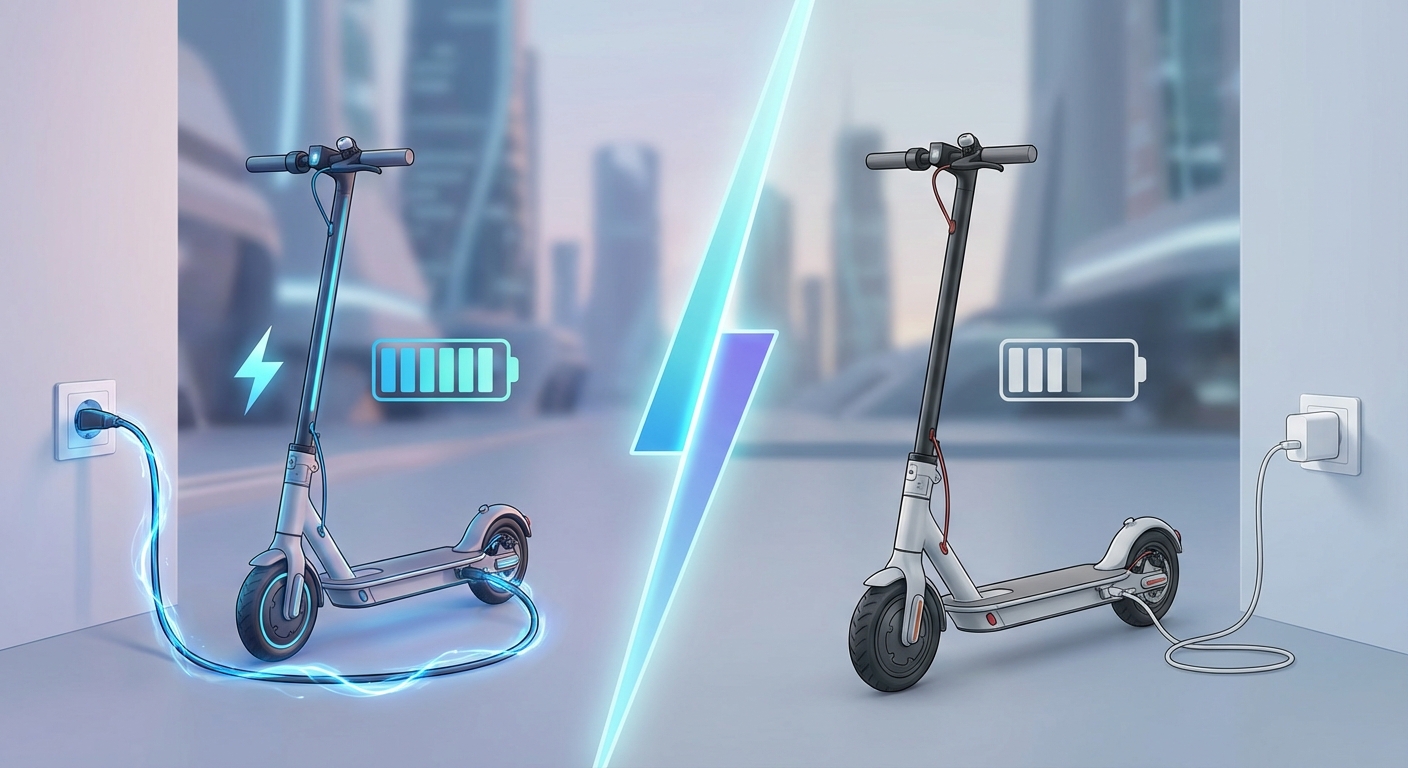
Fast Charging vs. Standard Charging: Which Is Better for Your E-Scooter?
Your e-scooter’s battery is plugged in again. You’re staring at the charger, wondering if you should grab the fast charger to get back on the road sooner or stick with the standard one that came in the box. The choice seems simple, but it has real consequences for your battery’s health and your wallet.
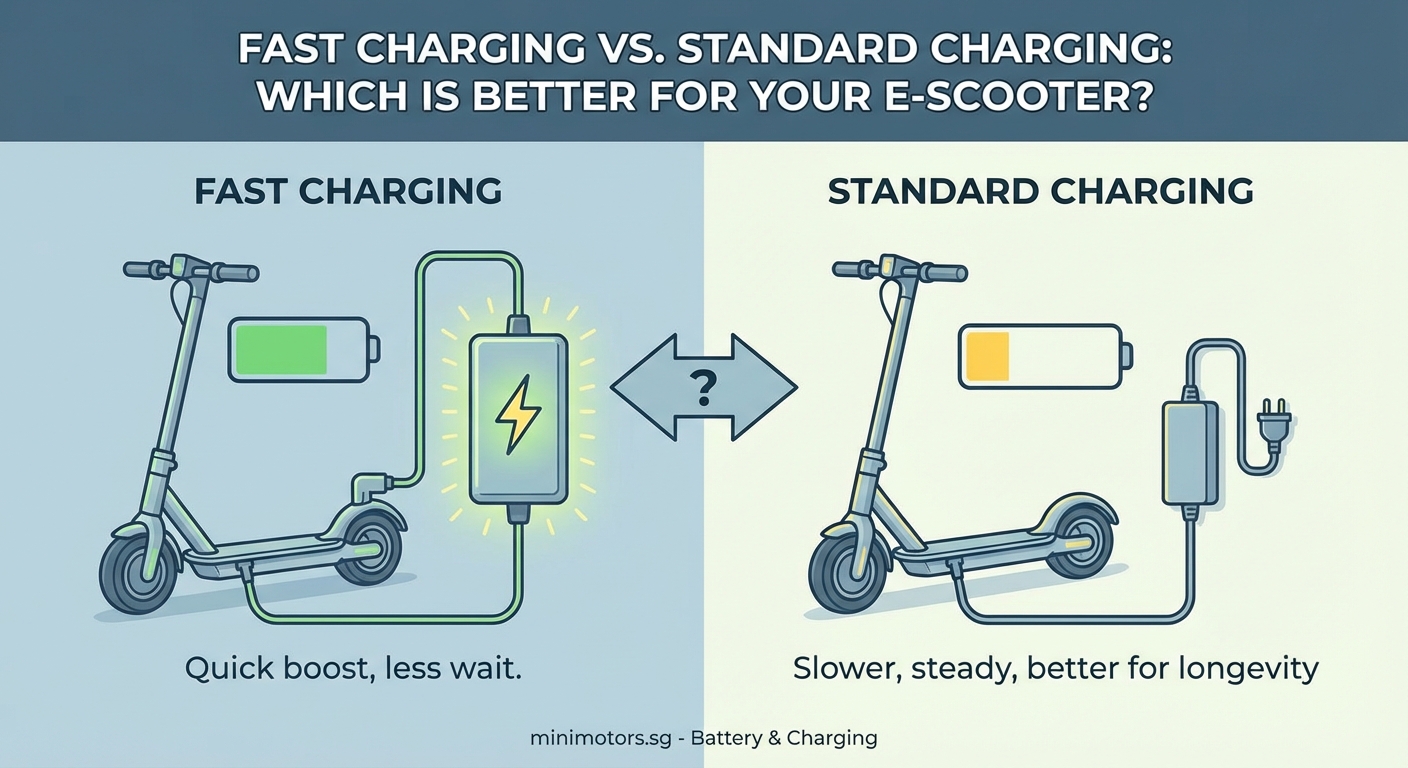
Fast charging fills your e-scooter battery in 2 to 4 hours but generates more heat and stress, which can reduce overall battery lifespan by 20 to 30 percent. Standard charging takes 6 to 8 hours, runs cooler, and preserves battery health for longer. Your choice depends on how you ride, how often you need a full charge, and whether you prioritize convenience or longevity.
What makes fast charging different from standard charging
Fast charging pushes more current into your battery in less time. Standard chargers typically deliver 2 to 3 amps, while fast chargers can push 5 to 8 amps or more. The higher amperage fills your battery faster but also creates more heat inside the cells.
Heat is the enemy of lithium-ion batteries. Every time your battery heats up during charging, the internal chemistry degrades slightly. Over hundreds of charge cycles, this adds up.
Standard charging operates at a gentler pace. The lower current generates less heat, which means less stress on the battery’s internal structure. The trade-off is time. You’ll wait longer, but your battery will thank you.
Most e-scooter manufacturers design their standard chargers to balance speed and safety. They aim for a charge time that fits overnight use without pushing the battery too hard.
Fast chargers are built for convenience. They’re perfect when you need to top up between errands or during a lunch break. But they’re not meant for daily use.
How each charging method affects battery lifespan
Battery lifespan is measured in charge cycles. One cycle equals a full discharge and recharge. Most e-scooter batteries are rated for 500 to 1,000 cycles before they drop to 80 percent of their original capacity.
Fast charging accelerates this degradation. Studies show that consistent fast charging can reduce total cycle life by 20 to 30 percent. That means a battery rated for 800 cycles might only deliver 560 to 640 cycles if you fast charge regularly.
Standard charging preserves those cycles. The slower process keeps temperatures lower and reduces chemical stress. You’ll get closer to the manufacturer’s rated lifespan.
Here’s a practical example. If you commute daily and charge every night, you’ll complete about 365 cycles per year. With standard charging, your battery might last 2 to 3 years. With frequent fast charging, that could drop to 18 to 24 months.
The cost difference matters. Replacement batteries for quality e-scooters range from $200 to $600. Losing a year of battery life means spending that money sooner.
“Think of fast charging like sprinting. Your battery can do it, but doing it every day wears it out faster than a steady jog.” — Battery engineer at a major e-scooter manufacturer
When fast charging makes sense for your routine
Fast charging isn’t always the villain. There are situations where it’s the smarter choice.
If you ride multiple times per day, fast charging between trips keeps you moving. Delivery riders and shared scooter operators rely on fast chargers to maximize uptime.
For occasional riders, fast charging won’t significantly impact battery life. If you only ride once or twice a week, using a fast charger when you need a quick top-up is fine.
Emergency situations also justify fast charging. You forgot to charge overnight and need to leave in an hour. A fast charger can give you enough range to get where you’re going.
Some modern e-scooters include smart charging systems that automatically slow down as the battery approaches full capacity. These systems reduce the damage from fast charging by managing heat during the final 20 percent of the charge cycle.
If your scooter has this feature, fast charging becomes less risky. Check your manual or contact us if you’re unsure whether your model includes smart charging.
When standard charging protects your investment
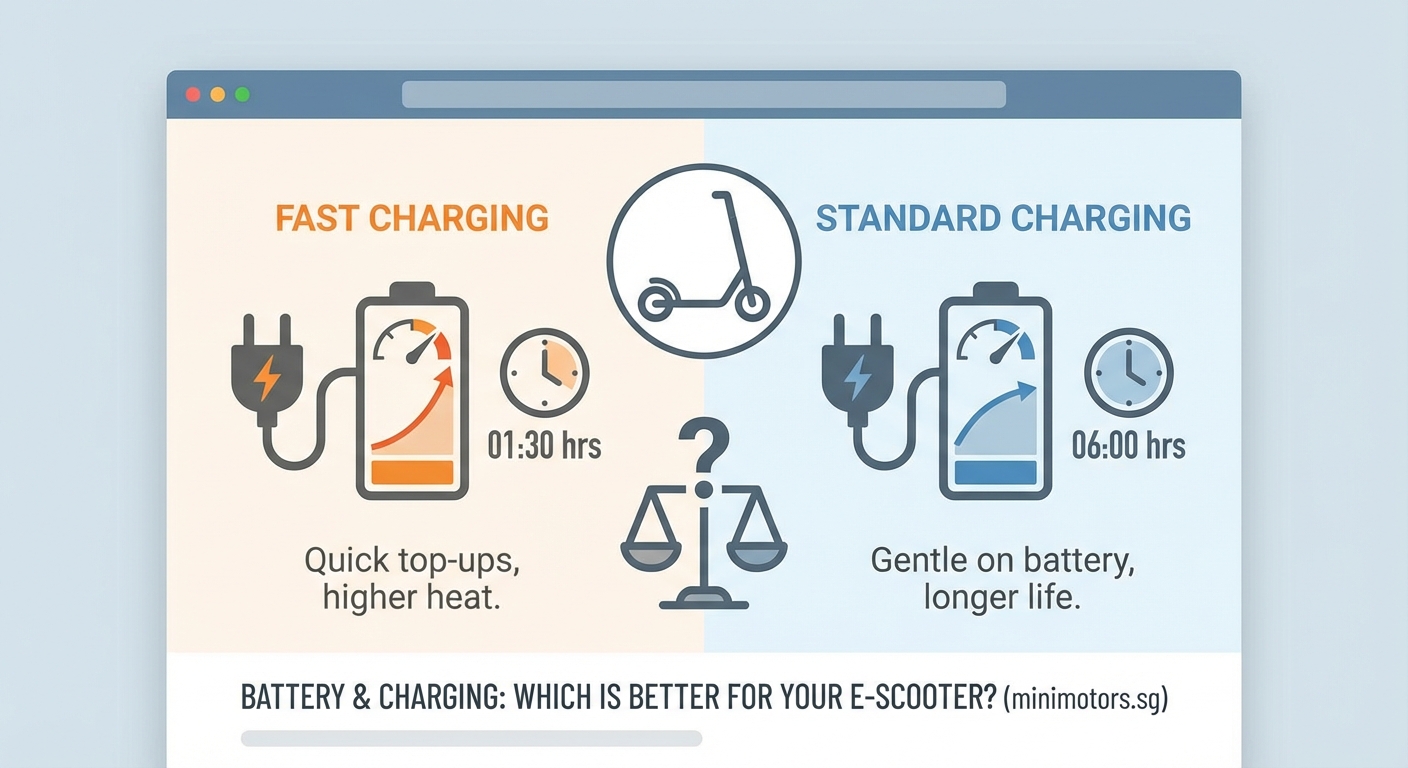
Standard charging is the default choice for most riders. It’s the safest way to maintain battery health over time.
If you have a predictable schedule, standard charging fits perfectly. Plug in when you get home, and your scooter is ready the next morning.
Riders who store their scooters in temperature-controlled environments benefit even more from standard charging. Cool, stable temperatures combined with slow charging create ideal conditions for battery longevity.
Standard charging also works better for long-term storage. If you won’t ride for a few weeks, charge to 50 to 60 percent using a standard charger, then disconnect. This storage charge level minimizes stress and degradation.
For budget-conscious riders, standard charging saves money. You avoid the cost of a fast charger (typically $50 to $150) and extend your battery’s life, delaying the need for a replacement.
If you’re new to e-scooters, start with standard charging. You’ll develop good habits and learn your battery’s behavior without risking premature wear. Our guide on how to choose your first electric scooter covers more basics for new riders.
The science behind battery degradation during charging
Lithium-ion batteries work through a chemical reaction. Lithium ions move from the cathode to the anode during charging and back during discharge.
Fast charging forces these ions to move faster. This creates bottlenecks at the anode, causing lithium plating. Plated lithium reduces capacity and increases internal resistance.
Heat accelerates these reactions. For every 10 degrees Celsius increase in temperature, chemical reactions inside the battery roughly double in speed. That’s why keeping your battery cool matters.
Standard charging keeps ion movement steady and controlled. Fewer ions get stuck, and less plating occurs. The battery maintains its structure longer.
Voltage stress also plays a role. Fast chargers often push batteries to higher voltages to speed up the process. This voltage stress weakens the battery’s internal components over time.
Understanding these mechanisms helps you make informed choices. You’re not just following rules. You’re protecting the chemistry that powers your rides.
Practical charging strategies for daily commuters
Daily commuters need a strategy that balances convenience and battery health. Here’s how to build one.
- Use standard charging for your primary overnight charge. This should cover 90 percent of your charging needs.
- Keep a fast charger at work or in your bag for emergencies. Use it only when you absolutely need extra range during the day.
- Avoid charging to 100 percent every time. Stop at 80 to 90 percent when possible. This reduces voltage stress and extends battery life.
- Let your battery cool down before charging. If you just finished a long ride, wait 15 to 30 minutes before plugging in.
- Monitor your battery’s temperature. If it feels hot to the touch during charging, unplug and let it cool.
These steps create a routine that prioritizes battery health without sacrificing convenience. You’ll get more years out of your battery and save money on replacements.
If your commute requires a full charge every day, consider whether your current scooter has enough range. Our article on what’s the best e-scooter range for your daily commute helps you evaluate your needs.
Comparing charging methods side by side
| Factor | Standard Charging | Fast Charging |
|---|---|---|
| Charge time | 6 to 8 hours | 2 to 4 hours |
| Heat generation | Low | High |
| Battery stress | Minimal | Moderate to high |
| Impact on lifespan | Preserves full lifespan | Reduces lifespan 20 to 30 percent |
| Best for | Daily overnight charging | Emergency top-ups |
| Cost | Included with scooter | $50 to $150 extra |
| Ideal use frequency | Every charge | 1 to 2 times per week maximum |
This table gives you a clear snapshot of what each method offers. Use it as a reference when deciding which charger to use.
Common mistakes that damage your battery regardless of charger type
Even with the right charger, bad habits can kill your battery. Avoid these errors.
- Charging in extreme temperatures. Never charge below freezing or above 35 degrees Celsius. Extreme temps cause permanent damage.
- Leaving the battery plugged in for days. Disconnect once charging is complete. Trickle charging at 100 percent stresses the battery.
- Draining to zero regularly. Deep discharges wear out lithium-ion batteries faster. Recharge when you hit 20 to 30 percent.
- Using cheap third-party chargers. Off-brand chargers may lack proper voltage regulation. Stick with manufacturer-approved chargers.
- Ignoring battery health warnings. If your scooter’s app or display shows battery errors, address them immediately.
These mistakes compound the effects of fast charging. If you’re already fast charging regularly and making these errors, your battery will degrade even faster.
For more on preserving battery health, read our guide on 7 mistakes that are killing your e-scooter battery life.
How to tell if your battery is already damaged from improper charging
Batteries don’t fail suddenly. They show warning signs first.
Watch for reduced range. If your scooter used to go 25 miles on a charge but now only manages 18, your battery is degrading.
Check for longer charging times. A battery that used to charge in 6 hours but now takes 9 might have internal damage.
Feel for excessive heat during charging or riding. Hot batteries are working harder to deliver the same power, which indicates wear.
Look for swelling or bulging. This is a serious safety issue. Stop using the scooter immediately and replace the battery.
Monitor your scooter’s battery management system. Many modern scooters display battery health as a percentage. If it drops below 80 percent, plan for a replacement soon.
If you notice these signs, switch to standard charging exclusively. It won’t reverse the damage, but it will slow further degradation. Our article on what to do when your e-scooter battery won’t hold a charge offers troubleshooting steps.
Choosing the right charger for your specific model
Not all chargers work with all scooters. Using the wrong charger can damage your battery or create safety hazards.
Check your scooter’s voltage and amperage requirements. These are usually printed on the original charger or listed in the manual.
Match the voltage exactly. A 48-volt scooter needs a 48-volt charger. Using a 52-volt charger will overcharge the battery and cause damage.
For amperage, you have some flexibility. A charger with lower amperage will charge slower but won’t harm the battery. A charger with higher amperage charges faster but generates more heat.
Look for chargers with built-in safety features. Overcharge protection, short-circuit protection, and temperature monitoring add layers of safety.
Stick with chargers from your scooter’s manufacturer or reputable third-party brands. Cheap chargers save money upfront but risk expensive battery damage later.
If you’re upgrading to a premium model, check out our guide on top features to look for when buying a premium electric scooter for insights on advanced charging systems.
Balancing convenience and battery health in real life
You don’t need to be perfect. The goal is to make smart choices most of the time.
Use standard charging as your default. This single habit will do more for your battery than any other strategy.
Allow yourself occasional fast charges. If you need one once a week, your battery will survive just fine.
Pay attention to your battery’s behavior. If you notice changes in performance or charging time, adjust your habits.
Invest in a second battery if your riding demands it. Some scooters support swappable batteries, letting you carry a spare instead of relying on fast charging. Learn more about this option in our article on are swappable batteries the future of e-scooter convenience.
Track your charging habits for a month. Note when you use fast charging and why. You might find patterns that help you plan better.
Most riders find that standard charging covers 90 percent of their needs once they establish a routine. The remaining 10 percent can safely use fast charging without major consequences.
Making the choice that fits your riding style
Your charging strategy should match how you use your scooter. There’s no one-size-fits-all answer.
Casual riders who use their scooters a few times per week can rely entirely on standard charging. You have time between rides, so there’s no need to rush.
Daily commuters benefit from overnight standard charging with a fast charger as backup. This combination handles predictable needs while covering emergencies.
Heavy users who ride multiple times per day might need to accept some battery degradation from fast charging. In this case, budget for battery replacement every 18 to 24 months instead of 3 years.
Weekend adventurers should charge fully before each trip using standard charging. Plan your rides around your battery’s range to avoid mid-trip charging needs.
Think about your lifestyle, not just your scooter. If you’re forgetful about charging, a fast charger saves you from being stranded. If you’re disciplined, standard charging maximizes your battery investment.
For riders still figuring out their needs, our guide on 7 essential things every first-time e-scooter rider should know covers the basics.
Building habits that extend your battery’s working life
Good charging habits become automatic with practice. Start with these simple rules.
Plug in at the same time every day. Consistency helps you remember and ensures your scooter is always ready.
Set a reminder to unplug once charging is complete. Your phone’s alarm or a smart plug with a timer works perfectly.
Store your charger near your scooter. This removes friction and makes charging easier.
Keep a charging log for the first month. Note the time you plug in, unplug, and which charger you used. Patterns will emerge.
Review your battery health monthly. Most scooter apps display this data. Tracking it helps you spot problems early.
These habits take minimal effort but deliver maximum results. Your battery will last longer, perform better, and save you money.
Finding the right balance for your budget and needs
Fast charging offers convenience. Standard charging offers longevity. Your choice depends on what you value more.
If money is tight, standard charging is the clear winner. You’ll avoid the cost of a fast charger and extend your battery’s life, delaying a $200 to $600 replacement.
If time is your limiting factor, a fast charger makes sense. Just use it sparingly and accept that you’ll replace your battery sooner.
Calculate the real cost. If fast charging shortens your battery life by one year and a replacement costs $400, you’re paying about $1.10 per day for that convenience. Is it worth it?
For most riders, the answer is to own both chargers but favor the standard one. You get flexibility without sacrificing too much battery health.
Your scooter is an investment. Treat it like one. Small daily decisions about charging add up to big differences in total cost of ownership.
Getting the most from every charge cycle
Every charge cycle counts toward your battery’s total lifespan. Make each one count.
Charge when you hit 20 to 30 percent remaining. This sweet spot avoids deep discharge stress while maximizing usable range.
Stop charging at 80 to 90 percent for daily use. Save 100 percent charges for days when you need maximum range.
Avoid partial charges throughout the day. One full charge cycle is better than three small top-ups for battery health.
Let your battery rest between charging and riding. A 10 to 15 minute cool-down period helps regulate temperature.
Use your scooter regularly. Batteries degrade faster when sitting unused. Aim for at least one ride per week.
These strategies work with both charging methods. They’re about respecting your battery’s chemistry and working with it instead of against it.
If you’re planning to store your scooter for a while, check our guide on how to store your e-scooter battery during winter or long breaks.
Your charging strategy starts today
You now understand the trade-offs between fast and standard charging. The science is clear, but the choice is personal.
Standard charging protects your battery and saves money over time. Fast charging offers convenience when you need it most. Most riders thrive with a mix of both, weighted heavily toward standard charging.
Start tonight. Plug in your scooter with the standard charger before bed. Make it part of your evening routine, like brushing your teeth. Your battery will last longer, perform better, and keep you riding for years to come.
