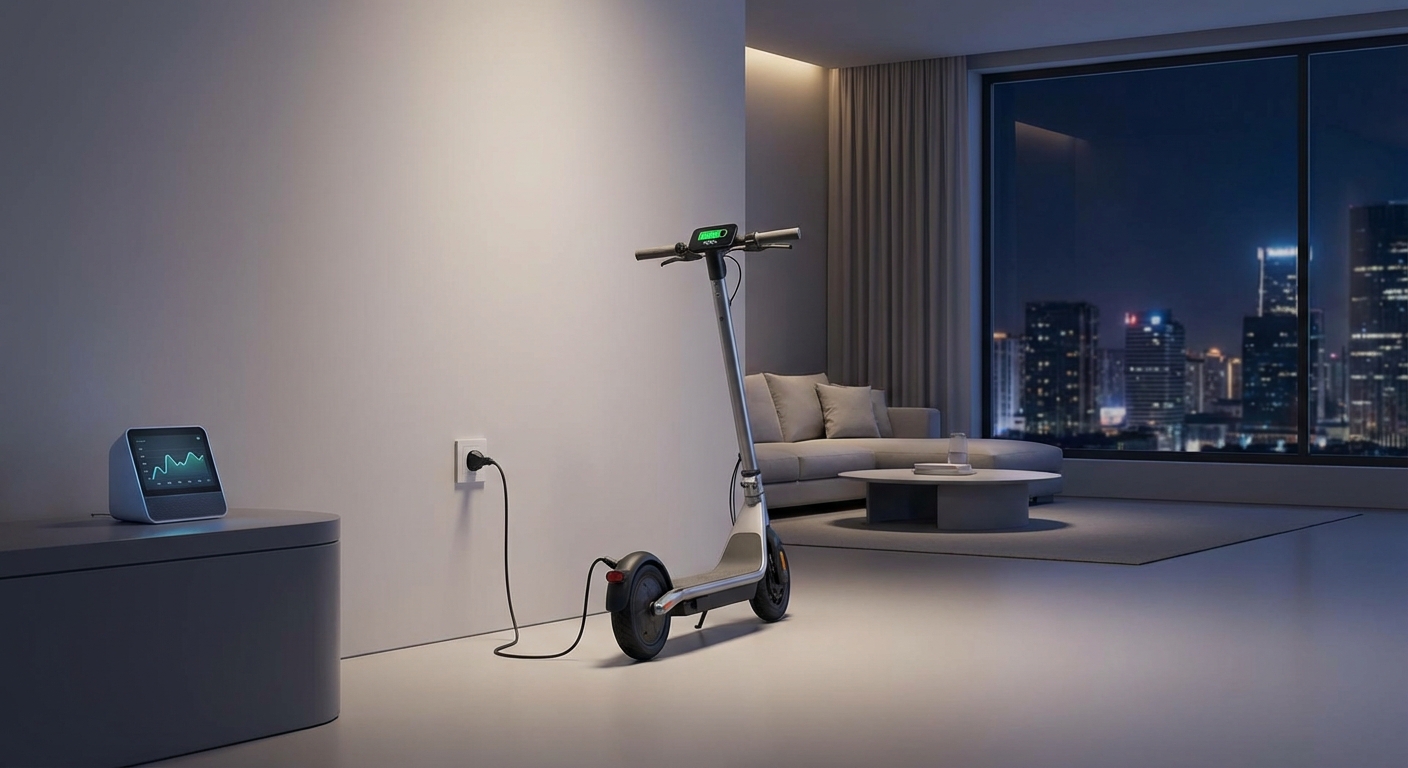
Can You Overcharge Your E-Scooter Battery? The Truth About Charging Overnight
You plug in your electric scooter before bed, set your alarm, and wonder if you’ll wake up to a damaged battery or worse. It’s a concern shared by thousands of commuters who rely on their scooters daily. The good news is that modern electric scooters are designed with your overnight charging habits in mind, but there are still important factors that determine whether this practice is truly safe for your specific model.
Most modern electric scooters can safely charge overnight thanks to built-in battery management systems that prevent overcharging. However, battery health depends on factors like charger quality, ambient temperature, and charging frequency. Following manufacturer guidelines and avoiding extreme temperatures will maximize your battery’s lifespan while maintaining the convenience of overnight charging for daily commutes.
Understanding modern battery management systems
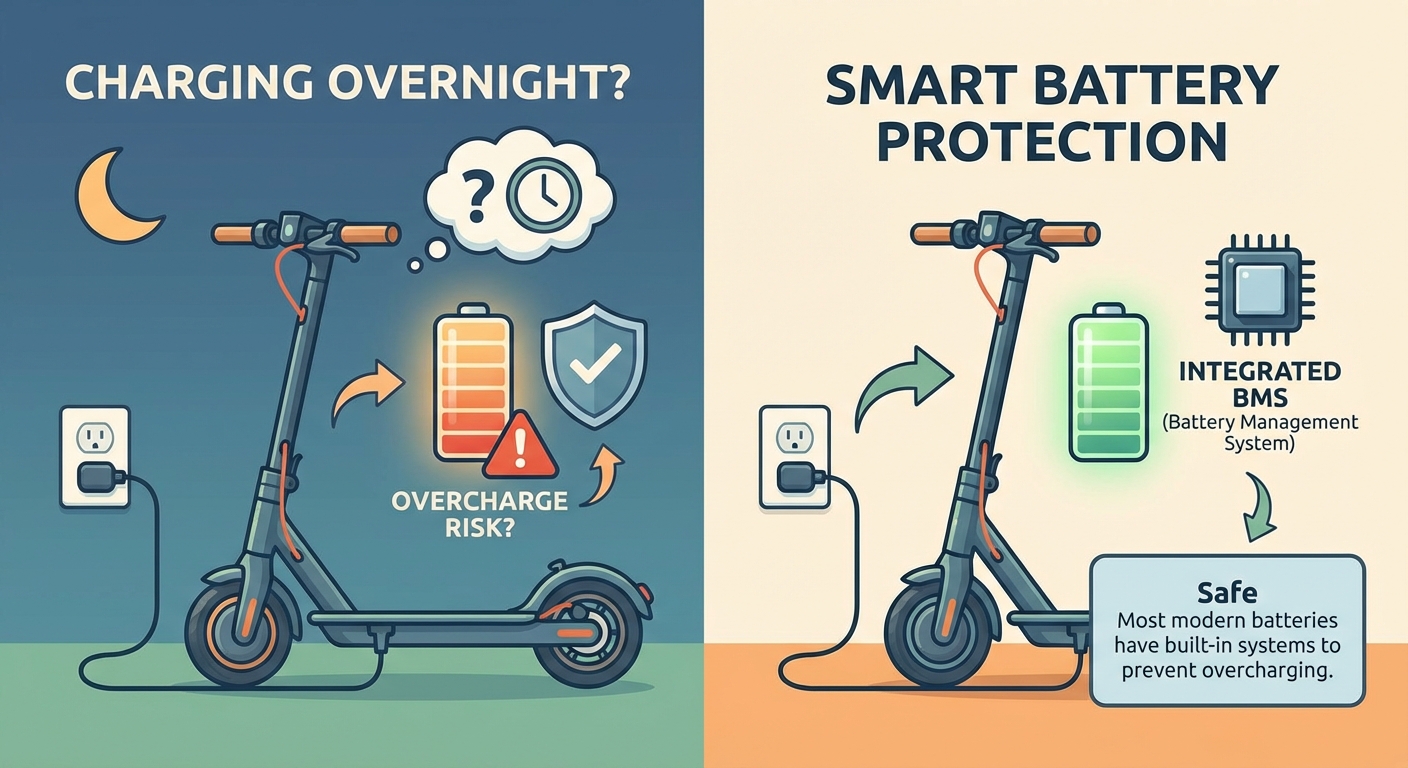
Electric scooters today use lithium-ion batteries paired with sophisticated battery management systems (BMS). These systems monitor voltage, current, and temperature throughout the charging process.
When your battery reaches 100%, the BMS automatically stops the charging current. The charger may remain connected, but no electricity flows into the battery cells. This built-in protection makes overnight charging far safer than it was a decade ago.
However, not all scooters are created equal. Budget models sometimes use lower-quality BMS components that may not offer the same level of protection. Check your manufacturer’s documentation to understand what safeguards your specific model includes.
How long does charging actually take?
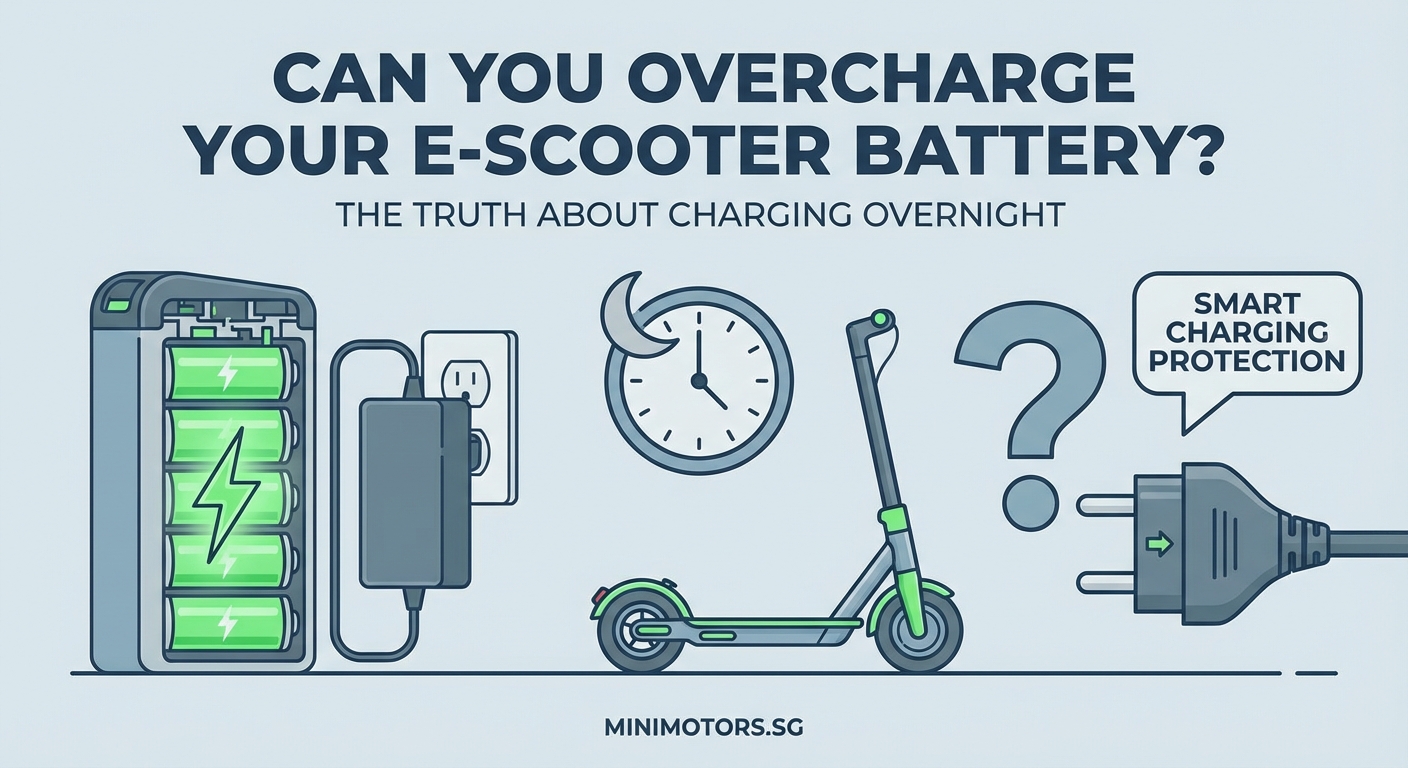
Most electric scooter batteries reach full charge within 4 to 8 hours, depending on capacity and charger output. A typical commuter scooter with a 36V 10Ah battery takes about 5 hours with a standard 2A charger.
If you plug in at 11 PM and wake at 7 AM, your scooter sits fully charged for roughly 3 hours. During this time, a quality BMS maintains the battery in a safe state without continuous charging.
Here’s how charging times vary by battery size:
| Battery Capacity | Standard Charger | Fast Charger | Typical Full Charge Time |
|---|---|---|---|
| 7.5Ah | 2A | 3A | 3-4 hours |
| 10Ah | 2A | 4A | 4-5 hours |
| 15Ah | 2A | 5A | 6-8 hours |
| 20Ah | 3A | 6A | 7-9 hours |
Understanding your specific charging time helps you decide whether overnight charging is even necessary or if you can charge during shorter windows.
The real risks of overnight charging
While modern systems offer protection, certain conditions can still compromise battery health or safety.
Heat buildup remains the primary concern. Batteries generate heat during charging, and if your scooter is in an enclosed space with poor ventilation, temperatures can rise to damaging levels. Never charge your scooter in a closet, under blankets, or in direct sunlight streaming through a window.
Charger quality matters enormously. Third-party chargers that don’t match your battery’s specifications can deliver incorrect voltage or current, bypassing BMS protections. Always use the manufacturer-supplied charger or a certified replacement.
Aging batteries become less stable over time. If your scooter is more than two years old and has been through hundreds of charge cycles, the battery cells may not respond predictably to charging. Watch for signs like unusual heat, swelling, or dramatically reduced range.
A battery that’s kept at 100% charge for extended periods experiences faster degradation than one maintained between 20% and 80%. If you charge overnight regularly, consider unplugging once you wake up rather than leaving it connected all day.
Steps for safer overnight charging
Follow this process to minimize risks while maintaining convenience:
-
Place your scooter on a hard, non-flammable surface away from carpets, curtains, or furniture. A garage floor, tile, or concrete works best.
-
Ensure adequate ventilation around the battery compartment. Don’t cover the scooter or block air vents during charging.
-
Check the charger and cable for damage before each use. Frayed wires, bent prongs, or cracked housings indicate it’s time for a replacement.
-
Monitor ambient temperature in the charging area. Ideal charging occurs between 50°F and 77°F (10°C to 25°C). Avoid charging in freezing garages or hot storage rooms.
-
Unplug in the morning rather than leaving it connected indefinitely. This simple habit reduces stress on battery cells.
-
Install a smart plug with a timer if you want automated control. Set it to cut power after your typical charge time plus one hour of buffer.
These practices work together to create a safer charging environment while preserving battery longevity. For more guidance on protecting your investment, read about common mistakes that are killing your e-scooter battery life.
What manufacturers actually recommend
Most major electric scooter brands provide specific charging guidance in their manuals. Here’s what leading manufacturers typically advise:
- Charge after each ride if you use your scooter daily for commuting
- Avoid letting the battery drop below 20% before recharging
- Don’t leave the battery fully discharged for extended periods
- Charge in a dry, temperature-controlled environment
- Use only approved chargers that match your model’s specifications
Some manufacturers explicitly approve overnight charging, while others suggest unplugging once the indicator shows full charge. Check your specific model’s documentation or contact customer support for clarification.
If you’re selecting your first scooter and battery management is a priority, consider reading our guide on how to choose your first electric scooter for features to prioritize.
Charging habits that extend battery life
Beyond the overnight question, your overall charging patterns significantly impact how long your battery maintains its capacity.
Partial charging is actually better for lithium-ion batteries than always charging to 100%. If you only need 60% capacity for tomorrow’s commute, charging to 80% tonight reduces stress on the cells.
Avoiding deep discharges matters more than most riders realize. Running your battery down to 5% regularly causes more damage than any overnight charging session. Try to recharge when you hit 20-30% remaining.
Temperature awareness extends beyond the charging environment. If you ride in cold weather, let your scooter warm to room temperature before charging. Similarly, after a long summer ride, wait 15-20 minutes for the battery to cool before plugging in.
Storage charging requires different practices. If you won’t ride for a week or more, charge the battery to 50-60% and store it in a cool, dry place. For extended storage during winter, learn the proper techniques in our article on how to store your e-scooter battery during winter or long breaks.
Signs your charging setup needs attention
Watch for these warning signals that indicate potential problems:
- Excessive heat from the battery compartment or charger during charging
- Unusual smells like burning plastic or chemical odors
- Longer charging times than specified in your manual
- The charger fan running constantly without stopping
- Battery swelling or deformation of the casing
- Inconsistent charging indicators that skip percentages or behave erratically
Any of these symptoms warrants immediate attention. Disconnect the charger, let everything cool, and inspect both the battery and charger for visible damage. If problems persist, contact your manufacturer or a certified repair service.
Don’t ignore minor issues hoping they’ll resolve themselves. Battery problems typically worsen over time and can create safety hazards if left unaddressed. For troubleshooting guidance, check out what to do when your e-scooter battery won’t hold a charge.
Comparing charging methods
Different charging approaches suit different lifestyles and usage patterns. Here’s how they compare:
Overnight charging offers maximum convenience for daily commuters. You maintain a consistent routine and always start the day with a full battery. The downside is potential overcharging duration if your scooter takes only 4 hours to charge during an 8-hour night.
Post-ride charging means plugging in immediately after your commute and unplugging once full. This method gives you control over charge duration but requires you to remember to unplug, which isn’t practical if you charge at work or arrive home late.
Timed charging using smart plugs or timers provides the best of both worlds. Set the timer to provide exactly the hours needed for a full charge, cutting power automatically. This approach requires knowing your charging time but eliminates the overcharging concern entirely.
Opportunity charging involves topping up whenever convenient, rather than waiting for low battery. This works well if you have access to charging at work or other locations throughout the day. It keeps the battery in the optimal 40-80% range but requires multiple charging locations.
For riders considering different charger types, our comparison of fast charging vs. standard charging explains the tradeoffs in detail.
When overnight charging makes the most sense
Certain situations make overnight charging not just convenient but practically necessary.
Long daily commutes that use 60-80% of your battery capacity require full recharges. If you’re traveling 15-20 miles daily, you need that full charge and overnight is often the only practical window.
Shared scooter households where multiple family members use the scooter at different times benefit from overnight charging to ensure availability. The scooter is ready whenever someone needs it.
Cold weather riding drains batteries faster, meaning you need more frequent full charges. Winter commuters often find overnight charging essential to maintain sufficient range.
Workplace charging unavailable leaves overnight as your primary option. Not everyone has access to power outlets at their office or the ability to charge during work hours.
Creating a charging routine that works
Consistency matters more than perfection when it comes to battery care. Build a routine that balances convenience with best practices.
Start by identifying your actual charging needs. Track your battery percentage after typical rides for a week. If you’re consistently using only 40-50% of capacity, you don’t need nightly full charges.
Designate a specific charging location that meets safety criteria. This spot should have good ventilation, stable temperature, and be away from flammable materials. Make this your consistent charging station.
Set reminders if you struggle with unplugging in the morning. A simple phone alarm labeled “unplug scooter” takes five seconds to set up and prevents extended periods at 100% charge.
Perform monthly battery health checks. Note your full-charge range and compare it to previous months. Gradual decline is normal, but sudden drops indicate problems requiring attention.
For comprehensive maintenance beyond charging, review our ultimate e-scooter maintenance checklist covering all aspects of scooter care.
Safety equipment worth considering
A few inexpensive items can significantly improve charging safety.
Smart plugs with energy monitoring let you track power consumption and set automatic shutoffs. Models with smartphone apps provide real-time notifications when charging completes.
Smoke detectors specifically placed near your charging area provide early warning of any problems. Battery fires are rare but potentially serious.
Fire extinguishers rated for electrical fires (Class C) should be accessible near your charging location. A small 5-pound extinguisher costs less than $50 and provides peace of mind.
Surge protectors with circuit breakers protect both your charger and scooter electronics from power fluctuations. Don’t use standard power strips; invest in a quality surge protector.
Temperature sensors or smart thermometers can alert you if your charging area becomes too hot or cold. Some riders use baby monitor cameras to visually check on charging scooters remotely.
What the data says about battery longevity
Research on lithium-ion battery degradation provides useful insights for scooter owners.
Studies show that batteries kept at 100% charge degrade roughly 20% faster than those maintained at 80% charge over the same period. However, this difference plays out over years, not months.
Temperature impact is more dramatic. Charging at 95°F (35°C) can reduce battery lifespan by up to 35% compared to charging at 68°F (20°C). This makes environmental control more important than charging duration.
Charge cycle count matters most. Most scooter batteries are rated for 500-1000 full charge cycles. Whether those cycles happen overnight or during the day makes little difference to the total count.
The practical takeaway is that overnight charging itself isn’t the enemy. Poor charging conditions, extreme temperatures, and neglecting battery health indicators cause far more damage than simply leaving your scooter plugged in for a few extra hours.
Making the right choice for your situation
Your decision about overnight charging should consider your specific circumstances rather than following universal rules.
If you have a modern scooter from a reputable manufacturer, use the original charger, charge in a safe environment, and unplug in the morning, overnight charging poses minimal risk. The convenience likely outweighs the marginal impact on battery longevity.
If you have an older scooter, use a third-party charger, or lack a safe charging location, consider alternative approaches. Charge during times when you can monitor the process or invest in safety equipment before continuing overnight charging.
If you’re unsure about your scooter’s capabilities, reach out to the manufacturer or check user forums for your specific model. Real-world experiences from other owners provide valuable insights beyond official documentation.
For riders planning their daily routine around charging needs, understanding what’s the best e-scooter range for your daily commute helps match your scooter’s capabilities to your actual requirements.
Charging habits for the long haul
The best charging approach is one you’ll actually maintain consistently over months and years of ownership.
Simple routines beat complex optimization strategies. If remembering to unplug creates stress or causes you to forget entirely, a smart plug timer provides better results than attempting perfect manual control.
Seasonal adjustments matter. Your winter charging routine may differ from summer practices based on temperature and daylight hours. Review your approach quarterly and adjust as needed.
Battery replacement is inevitable regardless of charging habits. Even with perfect care, lithium-ion batteries lose capacity over time. When your range drops to 60-70% of original capacity, start budgeting for replacement rather than obsessing over charging optimization.
Focus on the factors that make the biggest difference: using quality chargers, maintaining appropriate temperatures, avoiding deep discharges, and responding promptly to warning signs. These practices protect your battery more effectively than worrying about an extra hour at full charge.
Keeping your commute powered and safe
Charging your electric scooter overnight is generally safe with modern battery management systems, but safety requires more than just plugging in and walking away. Create a designated charging area with good ventilation and stable temperatures. Use only manufacturer-approved chargers. Unplug when you wake up rather than leaving it connected all day. Monitor your battery’s health through range tracking and visual inspections. These straightforward practices let you enjoy the convenience of overnight charging while protecting both your investment and your safety. Your morning commute depends on a fully charged battery, and with the right approach, overnight charging delivers exactly that without compromise.
