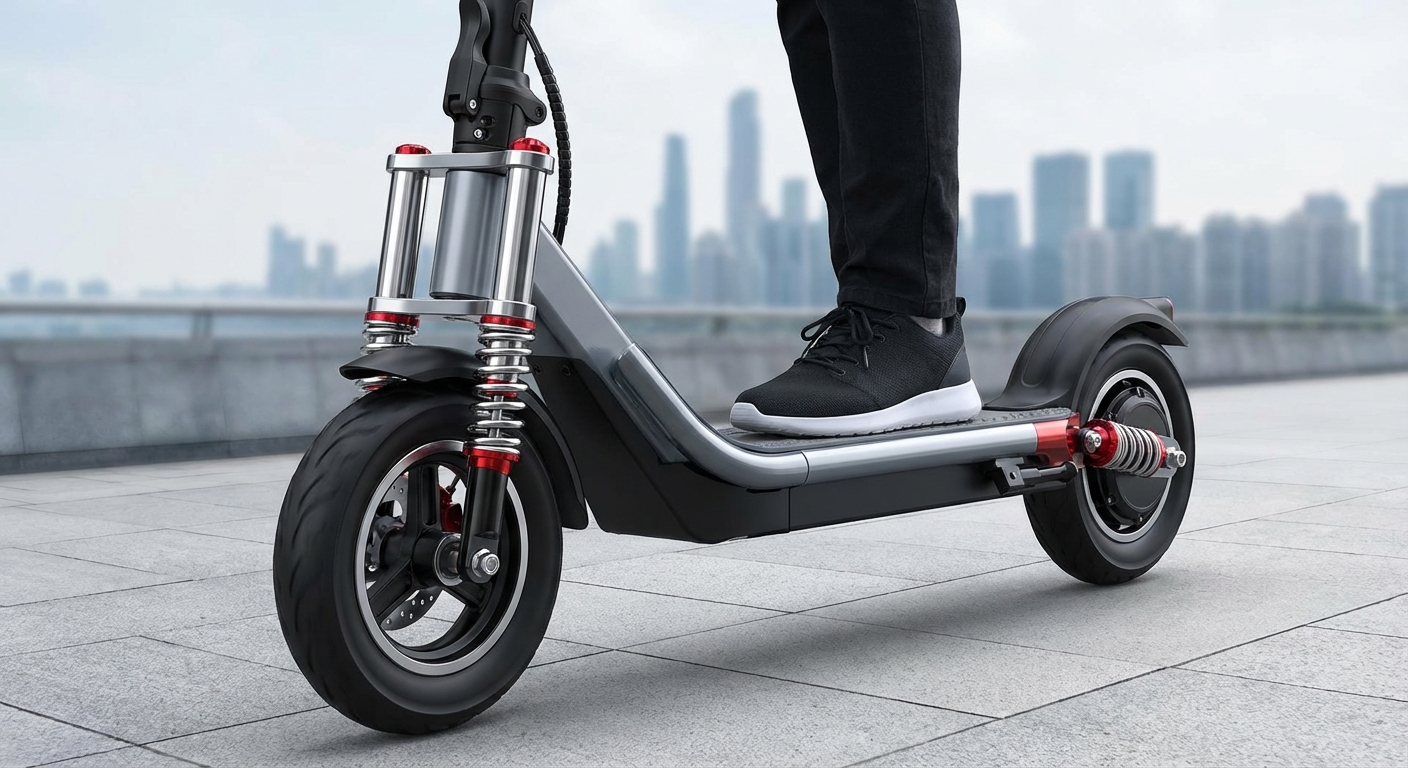
Are Suspension Upgrades Worth It for Your E-Scooter?
You’re eyeing a suspension upgrade for your e-scooter, or maybe you’re deciding between a budget model and one with built-in shocks. The price difference can be significant. Before you spend that extra cash, you need to know if smoother rides actually translate to better value for your daily commute.
Suspension upgrades deliver measurable comfort on rough roads but add weight and cost. Budget riders on smooth pavement can skip them. Daily commuters facing potholes, cracked sidewalks, or longer distances see immediate benefits. Aftermarket upgrades range from $50 to $300, while factory-equipped models cost $150 to $500 more. Your terrain and ride frequency determine whether the investment pays off.
Understanding what suspension actually does for your ride
Suspension systems absorb shock from uneven surfaces before it reaches your body. Without it, every bump transfers directly through the deck to your feet, legs, and spine.
Spring suspension uses coiled metal to compress and rebound. Hydraulic systems add oil damping for smoother motion. Rubber bushings offer basic cushioning at the lowest cost.
The difference shows up most on cracked pavement, speed bumps, and gravel paths. A rigid scooter rattles your joints. A suspended one glides over the same obstacles with less jarring impact.
When suspension upgrades make financial sense
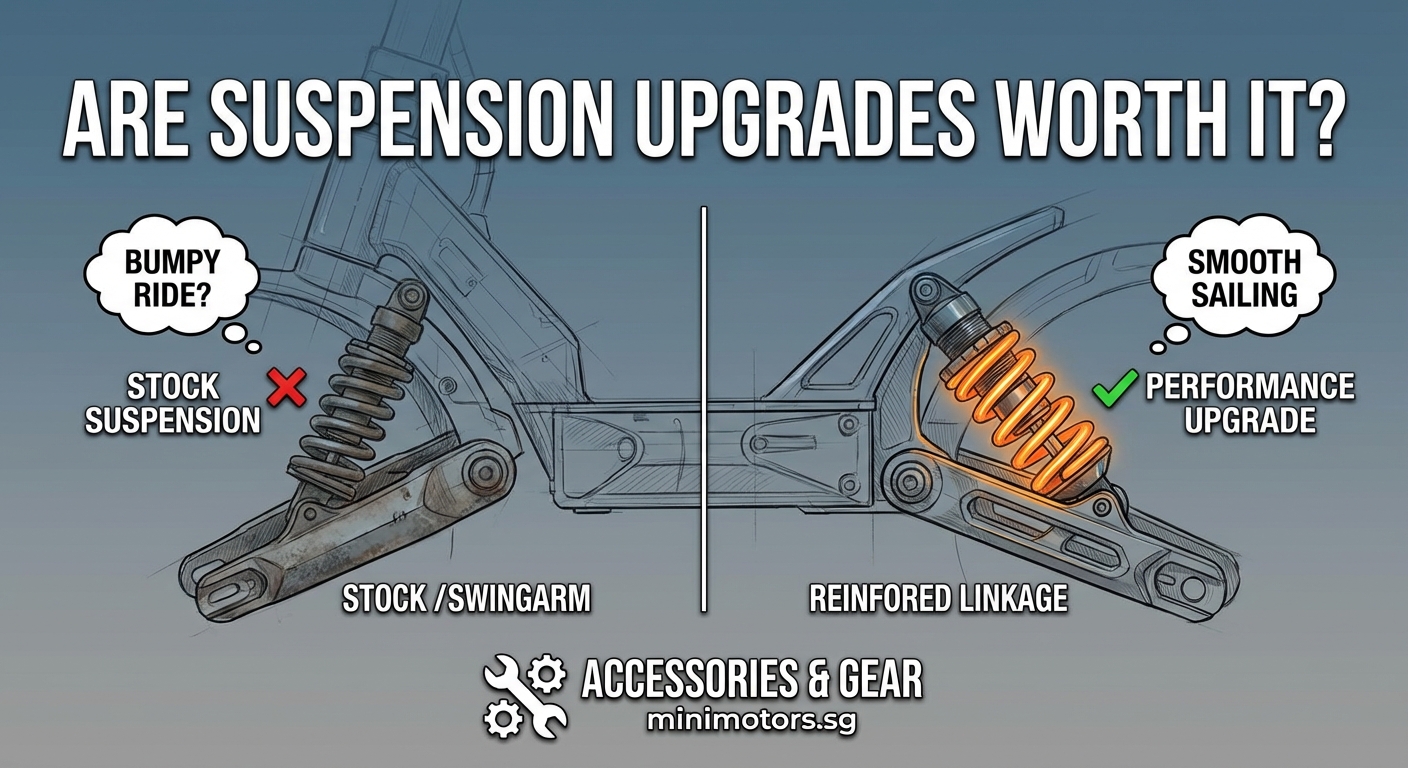
Not every rider needs better shock absorption. Your specific situation determines whether the cost justifies the benefit.
You’ll benefit from suspension if you:
- Commute more than 3 miles daily on mixed surfaces
- Ride on roads with frequent potholes or construction patches
- Experience hand numbness or joint pain after rides
- Carry cargo that shifts on bumpy terrain
- Weigh over 180 pounds (more force transfers to the frame)
- Ride at speeds above 15 mph regularly
Budget-conscious riders on smooth bike paths can save the money. The improvement won’t change your experience enough to matter.
If you’re still figuring out your needs, check out our guide on how to choose your first electric scooter to match features to your riding style.
Real costs of suspension upgrades
Aftermarket suspension kits vary widely in price and quality. Here’s what you’ll actually spend.
| Upgrade Type | Price Range | Installation Difficulty | Typical Lifespan |
|---|---|---|---|
| Front spring fork | $80-$150 | Moderate (2-3 hours) | 2-3 years |
| Rear shock absorber | $60-$120 | Easy (30-60 minutes) | 2-4 years |
| Dual suspension kit | $200-$300 | Advanced (4-6 hours) | 3-5 years |
| Rubber dampers | $15-$40 | Easy (15 minutes) | 1-2 years |
Installation costs add another $50 to $100 if you hire a shop. Some upgrades require frame modifications that void warranties.
Factory-equipped suspension models cost $150 to $500 more than rigid versions with identical motors and batteries. You’re paying for engineering integration and warranty coverage.
How to evaluate your current ride quality
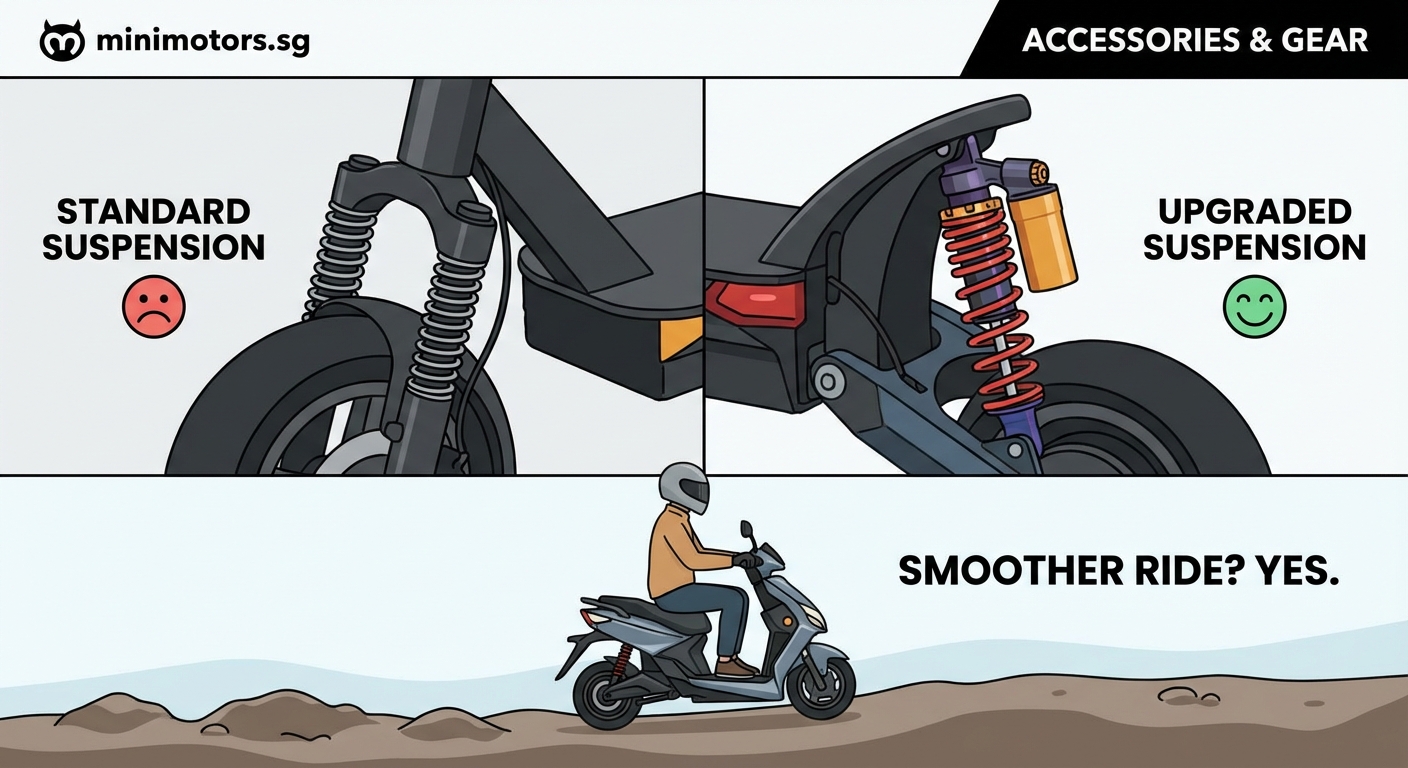
Before spending money, test whether your current setup actually needs improvement.
Follow these steps to assess your suspension needs:
- Ride your normal commute route at your typical speed
- Note specific locations where bumps cause discomfort
- Check if hand grips vibrate enough to numb your fingers
- Stand on the deck and bounce to test existing flex
- Compare your experience to a friend’s suspended model if possible
- Document any rattling sounds from loose components
If you only notice problems on one or two bad sections, adjusting your route costs nothing. Persistent discomfort across your entire ride signals a real suspension gap.
Some riders confuse tire pressure issues with suspension problems. Underinflated pneumatic tires feel sluggish but absorb more shock. Overinflated ones ride harsh but roll faster. Test different pressures before assuming you need new hardware.
Types of suspension systems and their trade-offs
Each suspension type solves different problems. Matching the right system to your terrain matters more than buying the most expensive option.
Spring suspension
Coil springs compress under impact and return to shape. They’re durable and require minimal maintenance.
Springs work well for moderate bumps and predictable surfaces. They bottom out hard on severe potholes. Adjustable springs let you tune stiffness for your weight.
Cost runs $60 to $120 for quality units. Cheap springs sag within months.
Hydraulic suspension
Oil-filled dampers control compression and rebound speed. This prevents bouncing after impacts.
Hydraulic systems deliver the smoothest ride but cost more and need occasional servicing. Seals can leak after 2-3 years of heavy use.
Expect to pay $150 to $250 for genuine hydraulic upgrades. Budget hydraulics often use thin oil that breaks down fast.
Rubber suspension
Polyurethane or rubber blocks compress to absorb shock. They’re simple, lightweight, and cheap.
Rubber works fine for light riders on mildly rough pavement. It degrades faster than metal springs and offers limited travel. Temperature changes affect stiffness.
Prices start at $15 for basic kits. They’re worth trying before committing to expensive upgrades.
Weight and portability penalties
Suspension adds 2 to 6 pounds depending on the system. That might not sound like much, but it matters if you carry your scooter upstairs or onto buses.
Front suspension forks typically add 2-3 pounds. Rear shocks add 1-2 pounds. Full dual suspension systems can add 5-6 pounds total.
The extra weight also reduces range on a single charge by 5-10% because the motor works harder. If you’re already pushing your battery limits, this trade-off hurts.
Riders who fold and carry their scooters frequently should weigh the comfort gains against the portability loss. A rigid scooter that’s easy to transport might beat a suspended one you avoid carrying.
Maintenance requirements you need to know
Suspension systems need regular attention to perform well. Neglect leads to worse ride quality than no suspension at all.
“Most riders install suspension and forget about it. Six months later they’re riding on worn bushings and wondering why it feels worse than before. Basic maintenance takes 15 minutes every few months and prevents expensive replacements.” – Mike Chen, e-scooter mechanic with 8 years experience
Essential maintenance tasks:
- Inspect mounting bolts for tightness every 2 weeks
- Clean dirt and debris from spring coils monthly
- Check hydraulic seals for oil leaks every month
- Lubricate pivot points every 3 months
- Replace worn rubber bushings every 12-18 months
- Test compression travel to ensure full range of motion
Skipping maintenance accelerates wear and creates safety hazards. Loose suspension can affect steering control, especially at higher speeds.
If you’re hearing unusual sounds from your scooter, our guide on troubleshooting common noises can help identify suspension issues before they worsen.
Alternative solutions that cost less
Before investing in suspension, consider these cheaper options that improve ride comfort.
Tire upgrades often deliver better results than basic suspension. Switching from solid to pneumatic tires costs $40-80 and absorbs more shock than cheap spring kits. Larger diameter wheels (10 inches instead of 8 inches) roll over obstacles more smoothly.
Deck padding adds cushioning under your feet for $10-20. Foam or gel pads reduce vibration transmission without adding mechanical complexity.
Grip upgrades with ergonomic designs reduce hand fatigue. Better grips cost $15-30 and help you maintain control on rough surfaces.
Route optimization costs nothing. Apps can map smoother paths that add only 2-3 minutes to your commute while avoiding the worst road sections.
For riders who need portability and comfort, a lighter scooter with good tires often beats a heavier suspended model. Our comparison of commuter versus off-road e-scooters explains how different designs prioritize different features.
Common mistakes when upgrading suspension
Budget-conscious buyers often make these errors that waste money and compromise safety.
Buying incompatible parts tops the list. Not all suspension kits fit all scooters. Measure your fork diameter, mounting hole spacing, and clearance before ordering. Returns cost shipping both ways.
Ignoring weight limits causes premature failure. A suspension rated for 150 pounds will bottom out constantly under a 200-pound rider. Always exceed the minimum rating by 20%.
Installing without proper tools leads to stripped bolts and misalignment. You need hex keys, torque wrenches, and sometimes specialized bearing presses. Improper installation creates dangerous handling issues.
Mixing cheap and quality parts creates imbalanced performance. A good front fork with a terrible rear shock makes the scooter pitch forward on bumps. Match quality levels front and rear.
Skipping test rides before committing. Some shops let you demo suspended models. Rent one for a day if possible. The difference might not justify the cost for your specific routes.
Performance differences you’ll actually notice
Suspension upgrades deliver measurable improvements in specific scenarios. Understanding realistic expectations prevents disappointment.
On smooth pavement, you won’t feel much difference. The benefit appears when surfaces degrade. A 2-inch pothole that jolts a rigid scooter barely registers on a well-suspended one.
Comfort improves most on rides longer than 20 minutes. Short trips don’t give vibration enough time to cause fatigue. Daily commuters see bigger benefits than weekend recreational riders.
Speed matters too. At 10 mph, your body absorbs bumps fairly well. At 20 mph, the same bumps hit much harder. Faster riders gain more from suspension upgrades.
Cargo carrying becomes easier with suspension. Backpacks and bags bounce less, reducing strain on your shoulders. If you frequently carry items, check our guide on choosing the right backpack for e-scooter riding.
Warranty and resale considerations
Aftermarket modifications often void manufacturer warranties. Installing third-party suspension means you’re responsible for any resulting damage.
Some brands explicitly prohibit modifications. Others allow them but exclude modified components from coverage. Read your warranty terms before drilling new mounting holes.
Resale value gets complicated. Quality suspension upgrades can increase value for buyers seeking comfort. Poorly installed or mismatched systems decrease value because buyers assume maintenance problems.
Keep original parts if you upgrade. Returning to stock configuration before selling maximizes your buyer pool. Some buyers specifically want unmodified scooters.
Who should skip suspension upgrades entirely
Certain rider profiles get minimal benefit from better suspension. Save your money if you fit these categories.
Casual riders who use their scooter once or twice weekly for short trips won’t notice enough improvement. The occasional rough patch doesn’t justify the cost and maintenance.
Smooth-path commuters on well-maintained bike lanes and sidewalks already have comfortable rides. Adding suspension solves a problem you don’t have.
Maximum portability seekers who prioritize the lightest possible scooter should avoid suspension. Every ounce matters when you’re carrying it up three flights of stairs twice daily.
Tight budget buyers stretching to afford any scooter should prioritize motor power and battery capacity over suspension. Those features affect whether you can complete your commute at all.
Short-distance riders traveling under a mile each way won’t develop the cumulative fatigue that suspension prevents. Your body handles brief exposure to vibration without issues.
If you’re just getting started with e-scooters, our list of essential things every first-time rider should know covers more important basics than suspension systems.
Making the decision with your budget in mind
Calculate the true cost over your scooter’s lifetime. A $200 suspension upgrade on a $400 scooter represents a 50% increase. That same upgrade on a $1,200 scooter is only 17%.
Consider cost per mile of improved comfort. If you ride 10 miles weekly, a $200 upgrade costs about $0.04 per mile over the first year. That’s reasonable for daily commuters but expensive for occasional riders.
Factor in maintenance costs. Budget another $30-50 annually for replacement bushings, lubricants, and occasional adjustments. These ongoing expenses add up over 3-4 years.
Compare upgrade costs to buying a better scooter. Sometimes spending an extra $300 on a model with factory suspension beats adding $200 in aftermarket parts to a budget model. Factory integration usually performs better and maintains warranty coverage.
Test before committing. Borrow a friend’s suspended scooter or rent one for a day. Ride your normal route and honestly assess whether the improvement matters enough to justify the expense.
Getting the most value from your investment
If you decide suspension upgrades make sense for your situation, maximize the return on your investment.
Buy quality components from reputable brands. Cheap suspension often fails within months, forcing replacement purchases. Spending $150 once beats spending $60 three times.
Install correctly or pay for professional installation. Poor installation causes more problems than no suspension at all. Loose components create safety hazards and accelerate wear on other parts.
Maintain regularly from day one. Set calendar reminders for monthly inspections. Catching small issues early prevents expensive repairs later.
Adjust settings for your weight and riding style. Most quality suspension offers preload or damping adjustments. Spending 30 minutes tuning the setup dramatically improves performance.
Document your upgrade with photos and receipts. This helps with warranty claims on unaffected components and proves value to future buyers if you sell.
For riders concerned about other maintenance aspects, understanding how long e-scooter batteries actually last helps you budget for total ownership costs beyond suspension.
What your riding style reveals about suspension needs
Your daily habits predict whether suspension delivers value better than any general recommendation.
Aggressive riders who take corners hard and accelerate fast benefit more from suspension. The system helps maintain tire contact through rough patches, improving control and safety. Check our guide on common e-scooter accidents and how to avoid them for more safety considerations.
Conservative riders who cruise at moderate speeds and brake gently see smaller improvements. Their riding style already minimizes impact forces.
Stop-and-go commuters who frequently brake and accelerate put more stress on their bodies. Suspension reduces the cumulative fatigue from dozens of daily transitions.
Long-distance riders covering 5+ miles per trip gain the most. Vibration fatigue compounds over time. What feels tolerable for 10 minutes becomes exhausting after 30.
Balancing comfort with practical constraints
The best suspension setup balances multiple competing priorities. Perfect comfort often conflicts with other important features.
Weight matters for portability. Range matters for completing your commute. Cost matters for your budget. Maintenance time matters for your schedule.
Rank these priorities honestly before choosing. A rider who carries their scooter upstairs daily should prioritize weight over maximum comfort. Someone with a secure ground-floor parking spot can accept heavier suspension.
Consider your mechanical skill level. Complex hydraulic systems require more expertise to maintain than simple springs. If you’re not comfortable with basic repairs, simpler systems reduce long-term hassle.
Think about your upgrade path. Starting with basic rubber dampers lets you test the concept cheaply. If you notice significant improvement, upgrading to springs or hydraulics later makes sense. If the difference feels minimal, you’ve only spent $20-30 to find out.
Finding the right suspension for your budget and needs
Match your investment to your actual usage patterns. Overspending on features you won’t use wastes money. Underspending on critical comfort creates daily frustration.
Budget tier ($15-50): Rubber dampers and tire pressure optimization work for occasional riders on moderately rough surfaces. These simple solutions require minimal maintenance and add negligible weight.
Mid tier ($80-150): Quality spring suspension suits daily commuters on mixed urban surfaces. Expect 2-3 years of reliable service with basic maintenance. This range offers the best value for most riders.
Premium tier ($200-300): Hydraulic systems or dual suspension setups serve long-distance riders, heavier riders, or those on particularly rough routes. The extra cost buys measurable performance improvements and longer lifespan.
Test your assumptions with cheap solutions first. A $25 rubber upgrade might satisfy your needs completely, saving you $175 compared to hydraulic systems you don’t actually need.
Your comfort investment deserves smart planning
Suspension upgrades work brilliantly for the right riders in the right situations. They waste money for everyone else.
Calculate your actual riding patterns over the next month. Track distance, surface quality, and discomfort levels. This data reveals whether suspension addresses a real problem or just seems like a nice feature.
Start with the cheapest solution that might work. Adjust tire pressure, add grip padding, or try rubber dampers. If these don’t solve your comfort issues, then consider spending more on mechanical suspension.
Remember that suspension is just one factor in overall ride quality. Proper tire choice, correct riding posture, and route selection often matter more than shock absorption. Balance all these elements before committing significant budget to any single upgrade.
Your money goes further when you match the solution precisely to your needs. A well-chosen upgrade delivers years of improved comfort. A poorly matched one sits unused while you wish you’d spent the money elsewhere.
