E-Scooter Manufacturers Are Going All-In on Solid-State Batteries: Here’s What Riders Need to Know
Battery technology is about to change everything you know about electric scooters. Solid state batteries are moving from research labs into production vehicles, and manufacturers are betting big on this shift. The difference isn’t just incremental. We’re talking about batteries that could double your range, charge in minutes instead of hours, and eliminate the fire risks that have plagued lithium-ion packs.
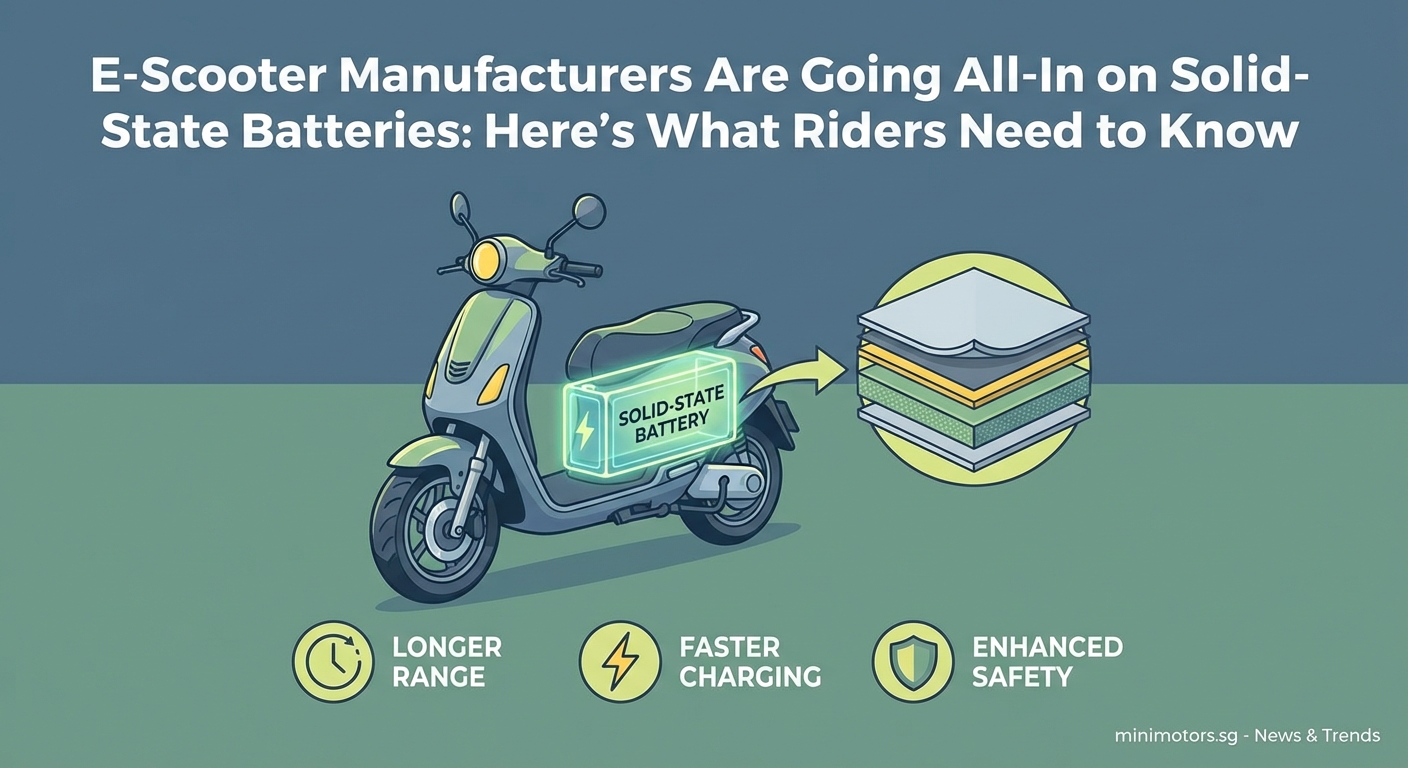
Solid state batteries replace liquid electrolytes with solid materials, offering electric scooter riders significantly higher energy density, faster charging times, improved safety, and longer lifespan compared to current lithium-ion technology. While commercial models are just beginning to appear in 2026, this technology will reshape performance expectations, purchase decisions, and the entire micromobility landscape within the next few years.
What makes solid state batteries different from what’s in your scooter now
Your current electric scooter almost certainly runs on lithium-ion batteries. These use a liquid electrolyte to move ions between the positive and negative terminals. It works, but that liquid creates limitations.
Solid state batteries swap the liquid for a solid electrolyte material. That single change creates a cascade of benefits.
The solid electrolyte allows manufacturers to use lithium metal anodes instead of graphite. Lithium metal stores far more energy in the same space. This means a battery pack the same size as your current one could hold twice the charge.
Temperature stability improves dramatically. Liquid electrolytes become less efficient in cold weather and can overheat in hot conditions. Solid electrolytes maintain consistent performance across a much wider temperature range.
The construction is simpler too. Fewer separators, no liquid containment systems, and more compact cell designs. This translates to lighter weight for the same capacity.
How solid state technology changes your riding experience
Range anxiety disappears when your battery capacity doubles. A scooter that currently gets 30 miles per charge could hit 60 miles with solid state batteries of the same physical size.
But the real game changer is charging speed. Solid state batteries can handle much higher charge rates without degrading. What takes four hours now could take 20 minutes.
Think about what that means for your daily routine. You could top up during a lunch break instead of planning your day around battery life. Long weekend rides become possible without carrying a charger or mapping out charging stops.
Weight reduction matters more than most riders realize. Shaving 5 to 10 pounds off your scooter’s battery makes it easier to carry up stairs, lift into a trunk, or maneuver in tight spaces. The weight savings from solid state batteries could offset heavier motors or larger decks without increasing overall scooter weight.
Performance stays consistent throughout the battery’s discharge cycle. Lithium-ion batteries experience voltage sag as they drain, reducing available power. Solid state batteries maintain stable voltage output until nearly depleted.
The safety improvements that matter most
Battery fires make headlines because they’re dramatic and dangerous. Liquid electrolytes in lithium-ion batteries are flammable. Damage to the battery can cause thermal runaway, where heat builds uncontrollably until the battery catches fire.
Solid electrolytes are non-flammable. They can’t leak. They’re far more resistant to puncture damage.
This isn’t just about catastrophic failures. It affects everyday safety too. You can store your scooter in your apartment without worrying about charging fires. You can ride in the rain with less concern about water damage to the battery. You can handle minor crashes without wondering if you’ve compromised the battery pack.
The improved thermal stability also means less need for complex cooling systems. Current high-performance scooters often include fans, heat sinks, and temperature sensors to manage battery heat. Solid state batteries generate less heat and tolerate higher temperatures, simplifying the entire thermal management system.
“The transition to solid state batteries represents the biggest leap in energy storage since lithium-ion technology replaced lead-acid batteries. For electric scooters, this means we can finally deliver the range and charging speeds that riders have been demanding without compromising safety or adding weight.”
Understanding the current limitations and timeline
Solid state batteries aren’t perfect yet. Manufacturing remains expensive. The production processes are more complex than lithium-ion manufacturing, which has benefited from decades of optimization and scale.
Cost per kilowatt-hour is currently three to five times higher than lithium-ion batteries. That premium will decrease as production scales up, but early adopters will pay more.
Cycle life data is still being gathered. While lab tests show promising results, real-world longevity over thousands of charge cycles hasn’t been fully proven. Current lithium-ion batteries in quality scooters can handle 500 to 1,000 full charge cycles before significant degradation. Solid state batteries should exceed this, but we need more field data.
Cold weather performance, while better than lithium-ion in many ways, still shows some limitations in extreme conditions. Solid electrolytes can become more resistant to ion flow at very low temperatures.
The timeline for mainstream adoption looks like this:
- 2026: First production vehicles with solid state batteries ship, primarily in premium motorcycles and specialty vehicles
- 2027 to 2028: High-end electric scooters begin offering solid state options as premium upgrades
- 2029 to 2030: Mid-range scooters adopt solid state batteries as costs decrease
- 2031 and beyond: Solid state becomes the standard, with lithium-ion relegated to budget models
Comparing battery technologies side by side
| Feature | Lithium-Ion | Solid State | Impact for Riders |
|---|---|---|---|
| Energy density | 250 Wh/kg | 400-500 Wh/kg | Double the range or half the weight |
| Charge time | 3-5 hours | 15-30 minutes | Practical mid-day charging |
| Cycle life | 500-1,000 cycles | 2,000+ cycles | Battery lasts twice as long |
| Fire risk | Moderate to high | Very low | Safe indoor storage and charging |
| Temperature range | 32°F to 95°F optimal | 14°F to 122°F optimal | Year-round performance |
| Cost per kWh | $100-150 | $300-500 currently | Premium pricing initially |
These numbers aren’t theoretical. They’re based on production batteries shipping in 2026 vehicles. The technology is here. It’s just expensive and limited in availability.
What to consider before buying your next scooter
If you’re shopping for a scooter right now, you face a timing decision. Buy current technology at mature prices, or wait for solid state batteries to become available?
For most riders, buying a quality lithium-ion scooter today makes sense. The technology works well. Prices are reasonable. You’ll get years of reliable service.
But if you’re considering a premium scooter purchase in the $2,000 to $4,000 range, waiting 12 to 18 months might be worth it. Manufacturers will likely announce solid state options in this price bracket during that timeframe.
Consider your actual needs. If your current scooter meets your range requirements and charges overnight while you sleep, the benefits of solid state batteries might not justify the premium. If you constantly wish for more range or need faster charging, the new technology could transform your experience.
Think about your replacement cycle too. If you typically keep a scooter for three to five years, buying lithium-ion now means your next scooter will almost certainly have solid state options available. If you upgrade every year or two, you might want to wait.
The used market will shift dramatically. Current scooters will depreciate faster once solid state models arrive. That’s normal technology progression, but it’s worth factoring into your purchase decision.
How manufacturers are preparing for the transition
Major scooter manufacturers aren’t waiting passively. They’re investing in battery partnerships, redesigning chassis to accommodate new battery form factors, and preparing marketing campaigns.
Some are taking the incremental approach. They plan to offer solid state batteries as premium upgrades on existing models. This lets them test market demand and work out manufacturing issues without redesigning entire product lines.
Others are developing new flagship models designed specifically around solid state battery advantages. These scooters will feature lighter frames, more powerful motors, and designs that weren’t practical with heavier lithium-ion packs.
Battery swapping systems might finally become practical. The faster charging times and improved safety of solid state batteries make centralized charging stations more viable. You could swap a depleted battery for a charged one in seconds, similar to propane tank exchanges.
This could reshape urban micromobility. Instead of owning your battery, you might subscribe to a battery service. Always have a fresh, fully charged battery available. Never worry about battery degradation or replacement costs.
The environmental angle riders should understand
Solid state batteries use fewer rare earth materials than lithium-ion batteries. The solid electrolyte eliminates the need for certain compounds that are environmentally problematic to mine and process.
Manufacturing energy requirements are currently higher, but this should improve with scale. The longer lifespan means fewer batteries end up in landfills. A battery that lasts twice as long effectively cuts battery waste in half.
Recycling processes are still being developed. Lithium-ion recycling has matured significantly in recent years. Solid state batteries use different materials, requiring new recycling approaches. This is an active area of development.
The overall environmental impact depends on how you use your scooter. If solid state batteries enable you to replace more car trips with scooter rides, the environmental benefit is substantial. If they just make recreational riding more convenient, the impact is smaller.
Energy grid considerations matter too. Faster charging means higher peak power draw. If everyone charges their scooters simultaneously during peak hours, it stresses the grid. Smart charging systems that spread load across off-peak hours will become more important.
Practical steps to prepare for the solid state transition
You don’t need to wait passively. Here’s how to position yourself for the technology shift:
- Research your local market: Follow manufacturers active in your region to see when they announce solid state models
- Calculate your actual needs: Track your current range usage and charging patterns to determine if solid state benefits justify the premium
- Plan your purchase timing: If your current scooter works fine, ride it until solid state options mature and prices drop
- Stay informed about infrastructure: Watch for charging stations or battery swap programs in your area
- Consider resale value: If you plan to sell your current scooter, do it before solid state models flood the market
Understanding how long e-scooter batteries actually last helps you make smarter decisions about when to upgrade and what features matter most for your riding style.
What this means for different types of riders
Commuters benefit most from solid state batteries. The combination of extended range and fast charging eliminates the anxiety of running out of power mid-commute. You can charge at work in 20 minutes instead of bringing a charger and hoping for a full charge by day’s end.
Recreational riders gain flexibility. Weekend adventures can cover more distance. You’re no longer limited to routes with charging infrastructure.
Heavy riders see amplified benefits. Current scooters often sacrifice range when carrying heavier loads. The higher energy density of solid state batteries maintains performance regardless of rider weight. This aligns well with considerations from best e-scooters for heavy riders.
Urban riders appreciate the safety improvements. Storing and charging your scooter in a small apartment becomes less risky. The fire resistance of solid state batteries provides genuine peace of mind.
Off-road enthusiasts benefit from the temperature tolerance. Solid state batteries maintain performance in cold morning rides or hot afternoon trails better than lithium-ion packs. This matters when choosing between commuter vs off-road e-scooters.
Common misconceptions about solid state batteries
Misconception: Solid state batteries are just marketing hype.
Reality: Production vehicles are shipping now with solid state batteries. The technology is real and proven.
Misconception: You’ll need new chargers for solid state batteries.
Reality: Most solid state scooters will use standard charging ports. The battery management system handles the differences internally.
Misconception: Solid state batteries eliminate all safety risks.
Reality: They’re much safer than lithium-ion, but all batteries carry some risk. Proper charging practices still matter.
Misconception: Current scooters will become obsolete overnight.
Reality: Lithium-ion scooters will remain viable for years. The transition will be gradual.
Misconception: Solid state batteries never degrade.
Reality: They degrade more slowly than lithium-ion batteries, but they still lose capacity over time.
How to evaluate solid state claims from manufacturers
Marketing departments love new technology. Not all claims are equal. Here’s how to separate substance from hype:
Look for specific numbers. “Longer range” is vague. “80 miles on a single charge” is measurable. Manufacturers confident in their technology provide concrete specifications.
Check for independent testing. Third-party reviews and certifications carry more weight than manufacturer claims. Look for real-world testing data, not just lab results.
Understand the testing conditions. Range claims often assume ideal conditions: flat terrain, moderate speed, optimal temperature, average rider weight. Your real-world results will vary.
Ask about warranty coverage. Manufacturers confident in their solid state batteries offer strong warranties. A five-year battery warranty suggests genuine confidence. A one-year warranty suggests they’re still working out issues.
Research the battery supplier. Not all solid state batteries are created equal. Different manufacturers use different materials and processes. Some have years of development and testing. Others are rushing products to market.
Making sense of the pricing premium
Solid state scooters will cost more initially. How much more depends on several factors.
Premium tier scooters might add $500 to $1,000 for solid state batteries. Mid-range models could see $300 to $500 premiums once the technology reaches that market segment.
Calculate the value proposition. If solid state batteries double your range, you’re essentially getting two lithium-ion battery packs worth of capacity. If they last twice as long, you’re avoiding a future battery replacement cost of $300 to $600.
Faster charging has economic value too. If you can charge during a lunch break instead of overnight, you gain flexibility. That might enable you to use your scooter for trips you currently can’t make.
The safety premium is harder to quantify. What’s it worth to eliminate fire risk? For some riders, that alone justifies the cost. For others, it’s a minor consideration.
Consider financing options. Some manufacturers might offer payment plans that spread the premium over time, making it more digestible.
Why solid state batteries matter beyond performance specs
The shift to solid state batteries represents more than just better numbers. It changes what’s possible with electric scooters.
Designers gain new freedom. Without the weight and heat constraints of lithium-ion batteries, they can create scooters that weren’t previously viable. Lighter folding mechanisms. More powerful motors without thermal concerns. Sleeker designs without bulky battery compartments.
Cities might reconsider regulations. Many current restrictions stem from safety concerns about lithium-ion batteries. Solid state technology could ease those concerns, opening new areas to scooter use.
Insurance costs could drop. Fire risk is a major factor in insurance pricing. Safer batteries might lead to lower premiums.
Resale values should improve. A scooter with a battery rated for 2,000 cycles instead of 500 cycles retains value longer. The used market becomes more viable when buyers aren’t inheriting degraded batteries.
The technology enables new use cases. Emergency services could use scooters knowing they’ll perform reliably in extreme temperatures. Delivery services could run all day on a single charge with one mid-day top-up.
Preparing for a world where solid state is standard
Five years from now, shopping for an electric scooter with lithium-ion batteries will feel like buying a phone with a small screen. Possible, but clearly outdated.
Understanding this trajectory helps you make better decisions today. If you’re choosing your first electric scooter, buying a quality lithium-ion model now gives you several good years of service. You’ll upgrade to solid state when prices normalize and selection improves.
If you’re replacing an aging scooter and have the budget for premium models, waiting 12 to 18 months positions you to be an early adopter of proven solid state technology.
The infrastructure will evolve too. Charging stations will adapt to faster charging capabilities. Battery swap programs might emerge. IoT sensors in e-scooters will communicate more effectively with solid state battery management systems.
Stay informed about developments in your region. Battery technology often rolls out in waves, hitting some markets before others. Following what the latest e-scooter sales data reveals helps you anticipate when solid state options will reach your area.
When the future of battery technology arrives at your doorstep
Solid state batteries represent the most significant advancement in electric scooter technology since brushless motors replaced brushed ones. The benefits are real, measurable, and coming soon.
You don’t need to rush. Current lithium-ion scooters work well and will continue serving riders reliably for years. But understanding what’s coming helps you time your purchases, set realistic expectations, and recognize genuine innovation when manufacturers start making claims.
The transition is happening now. Production vehicles are shipping. Prices will drop. Selection will expand. Within a few years, solid state batteries will be the expected standard, not the premium option.
Your job as a rider is to stay informed, understand your actual needs, and make purchase decisions based on solid information rather than hype. The technology is impressive, but it’s still just a tool to get you where you need to go. Choose based on what improves your actual riding experience, not just what sounds cool in a spec sheet.
