The Ultimate Guide to E-Scooter Display Technology: LCD vs LED vs OLED Screens
Your e-scooter’s display is the command center of your ride. It tells you speed, battery life, riding mode, and sometimes even navigation details. But not all screens are created equal. The type of display technology your scooter uses affects readability in sunlight, battery consumption, durability, and price.
E-scooter display types include LCD, LED, and OLED screens, each with distinct trade-offs. LCD displays offer affordability and decent sunlight visibility but consume more power. LED displays are bright and durable but limited in detail. OLED screens provide vibrant colors and deep blacks with low power draw, though they cost more and can suffer from screen burn-in over time.
Understanding the three main e-scooter display types
Most modern e-scooters use one of three screen technologies. Each has strengths and weaknesses that matter when you’re riding daily.
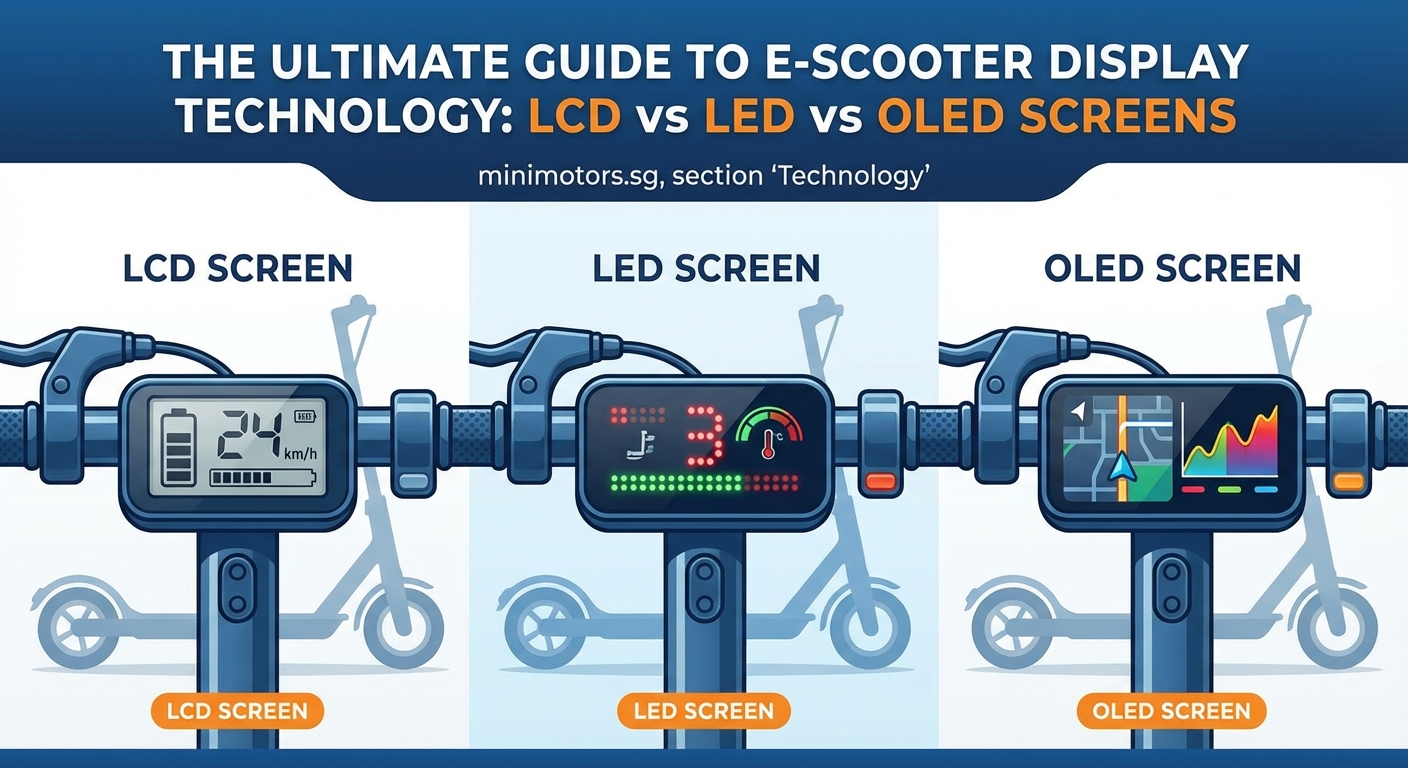
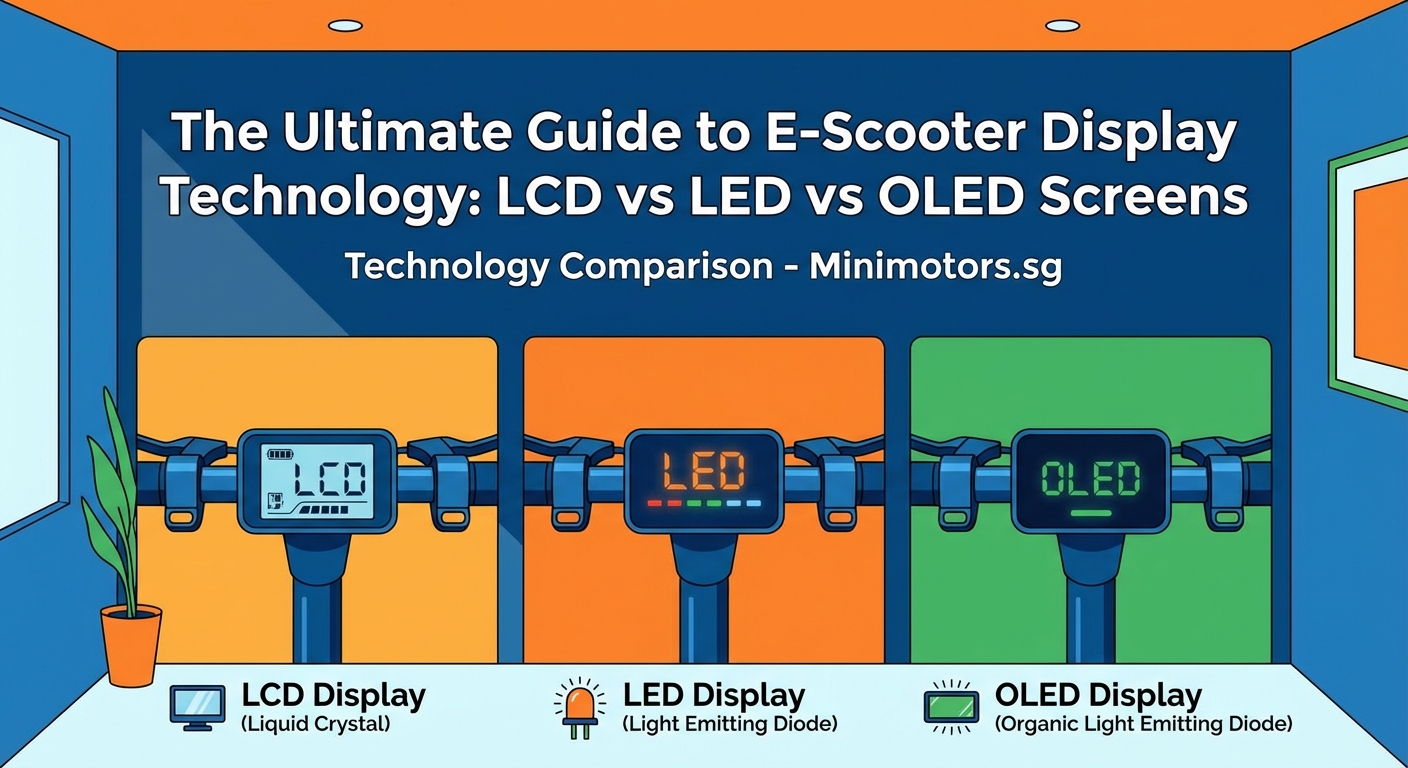
LCD stands for Liquid Crystal Display. These screens use a backlight that shines through liquid crystals to create images. They’re the most common type on budget and mid-range scooters.
LED displays use individual light-emitting diodes. On e-scooters, this usually means simple segmented displays rather than full-color screens. Think digital alarm clock style.
OLED means Organic Light-Emitting Diode. Each pixel produces its own light, eliminating the need for a backlight. Premium scooters often feature OLED screens.
How LCD displays work on e-scooters
LCD screens need a constant backlight to function. This backlight stays on whenever the display is active, even if most of the screen shows black content.
The liquid crystals act like shutters, blocking or allowing light through to create the image you see. Color LCD displays add red, green, and blue filters to produce full-color visuals.
Most entry-level and mid-range e-scooters use monochrome or basic color LCD screens. They’re affordable to manufacture and easy to read in many conditions.
Pros of LCD technology
- Lower manufacturing cost keeps scooter prices down
- Good visibility in direct sunlight
- Mature technology with reliable performance
- Wide viewing angles on quality panels
- No risk of permanent burn-in
Cons of LCD technology
- Higher power consumption drains battery faster
- Blacks appear gray due to backlight bleed
- Thicker panel design adds weight
- Limited contrast compared to OLED
- Backlight can fail over time
LED displays and their practical applications
True LED displays on e-scooters typically use segmented LEDs rather than full matrix screens. These show numbers and basic symbols using individual light segments.
You’ve seen this technology on microwaves and alarm clocks. It’s simple but effective for displaying essential information like speed and battery percentage.
Some riders prefer LED displays for their extreme brightness and simplicity. There’s no confusion about what the numbers mean.
When LED displays make sense
LED displays excel in specific scenarios:
- Bright sunlight riding where visibility is critical
- Minimalist riders who want only essential data
- Budget builds where cost matters most
- Situations requiring maximum durability
- Riders who prefer large, easy-to-read numbers
Limitations of basic LED screens
LED displays can’t show complex graphics or detailed maps. You get numbers and maybe a few icons, nothing more.
They also lack the visual appeal of modern color screens. If you want smartphone apps that integrate with your display, a basic LED screen won’t cut it.
OLED technology and premium e-scooter displays
OLED screens represent the current peak of display technology. Each pixel generates its own light, allowing true blacks and incredible contrast ratios.
When an OLED pixel displays black, it turns completely off. This saves power and creates stunning visual depth that LCD can’t match.
Premium e-scooter models increasingly feature OLED displays. The technology provides a smartphone-like experience on your handlebars.
Advantages of OLED screens
OLED displays offer several compelling benefits:
- Perfect blacks and infinite contrast ratio
- Lower power consumption when displaying dark content
- Faster response time with no motion blur
- Thinner, lighter panel construction
- Wider color gamut for vibrant visuals
- Better viewing angles than LCD
Drawbacks to consider
OLED technology isn’t perfect. Screen burn-in can occur if static elements stay on screen for extended periods. Your speed indicator or battery icon might leave permanent ghost images.
Direct sunlight readability can be challenging on some OLED panels. While they produce deep blacks indoors, bright outdoor conditions sometimes wash out the display.
Cost is the biggest barrier. OLED displays significantly increase the price of an e-scooter.
Comparing display performance in real riding conditions
Theory matters, but how do these screens perform when you’re actually riding?
Sunlight readability is crucial for safety. You need to check your speed and battery at a glance without squinting or shading the screen.
LCD displays generally perform best in bright sunlight. Their backlight punches through ambient light effectively. LED displays are even brighter, though they show less information.
OLED screens can struggle in direct sun. Some premium models compensate with brightness boost modes, but this drains battery faster.
Night riding presents different challenges. OLED and LCD displays both work well, though OLED’s perfect blacks create less light pollution and eye strain.
Rain and water resistance matter more than display type. Look for IP ratings regardless of screen technology. A waterproof LCD beats a water-damaged OLED every time.
Battery impact of different display technologies
Your display affects overall range more than you might think. The screen runs continuously during rides, drawing power from the same battery that moves you forward.
LCD displays typically consume 0.5 to 2 watts depending on size and brightness. Over a 30-minute commute, that’s meaningful battery drain.
OLED displays use less power when showing dark content. A black background with white text is ideal. Unfortunately, many e-scooter interfaces use bright backgrounds that negate this advantage.
LED displays use minimal power, often under 0.3 watts. If maximum range matters and you don’t need fancy graphics, LED makes sense.
The display might seem like a minor component, but on longer rides, every watt counts. I’ve seen riders gain 5-10% more range simply by dimming their LCD display or switching to a darker theme on OLED screens.
Durability and weather resistance across display types
E-scooter displays face harsh conditions. Rain, dust, vibration, temperature swings, and occasional impacts all take their toll.
LCD displays are mechanically robust. The backlight and liquid crystal layers can withstand significant vibration without damage.
LED displays are nearly indestructible. Individual LEDs rarely fail, and the simple construction has few points of failure.
OLED displays are more fragile. The organic materials degrade over time, especially with heat and UV exposure. Proper sealing is critical.
Temperature extremes affect all displays differently. LCD screens can freeze or become sluggish in cold weather. OLED displays handle cold better but may dim in extreme heat. LED displays work across the widest temperature range.
Cost considerations for different screen technologies
Display type significantly impacts e-scooter pricing. Understanding these costs helps you evaluate whether premium displays are worth the investment.
| Display Type | Typical Cost Impact | Best For | Avoid If |
|---|---|---|---|
| Basic LED | $10-30 | Budget builds, maximum simplicity | You want detailed information |
| Monochrome LCD | $20-50 | Balanced cost and functionality | You need color graphics |
| Color LCD | $40-100 | Mid-range scooters, good value | You want the best visuals |
| OLED | $80-200+ | Premium models, best experience | Budget is tight |
Budget e-scooters under $500 almost always use LED or basic LCD displays. This keeps costs down while providing essential information.
Mid-range models between $500 and $1,500 typically feature color LCD screens. This offers good value and functionality for most riders.
Premium scooters above $1,500 increasingly include OLED displays as a differentiating feature. The improved experience justifies the cost for serious riders.
Making the right choice for your riding style
Your ideal display type depends on how and where you ride. There’s no universal best option.
Daily commuters who ride in varied conditions need reliable sunlight visibility. LCD displays offer the best balance of readability and features for most commuters.
Weekend recreational riders who want the best visual experience should consider OLED. The stunning display quality enhances the riding experience even if it costs more.
Performance riders who track detailed metrics benefit from color displays with customizable data fields. LCD or OLED both work, depending on budget.
Minimalist riders who want simplicity and maximum reliability might prefer basic LED displays. Less complexity means fewer things to break.
Features beyond basic display technology
Modern e-scooter displays offer more than just screen type. Consider these additional features when evaluating options:
- Bluetooth connectivity for smartphone integration
- Customizable data fields and layouts
- Auto-brightness adjustment for different conditions
- Turn-by-turn navigation support
- Riding mode indicators and trip computers
- Battery health and diagnostic information
These features often matter more than the underlying display technology. A well-designed LCD interface beats a poorly implemented OLED screen.
When choosing your first electric scooter, consider the entire package rather than fixating on display type alone.
Upgrading or replacing your e-scooter display
Some riders consider aftermarket display upgrades. This is possible on certain models but comes with challenges.
Compatibility is the biggest issue. E-scooter displays connect to the controller through proprietary protocols. You can’t simply swap a generic display onto any scooter.
A few manufacturers offer official display upgrades. These maintain full compatibility and warranty coverage but cost more than generic options.
Third-party displays exist for popular models. Research thoroughly before buying. Incompatible displays can cause errors or even damage your controller.
If your current display fails, replacement is usually straightforward. Order the correct part for your model and follow installation guides. Most displays connect with simple plug-and-play connectors.
Maintenance tips for all display types
Proper care extends display life regardless of technology:
- Clean the screen gently with a microfiber cloth
- Avoid harsh chemicals that can damage coatings
- Check seals regularly for water intrusion
- Use appropriate brightness levels to reduce wear
- Protect from direct impacts with handlebar positioning
- Store your scooter away from extreme temperatures
LCD displays benefit from occasional full brightness cycles to prevent backlight degradation. Run maximum brightness for a few minutes monthly.
OLED displays last longer with varied content. Avoid leaving static images on screen for extended periods. Use screensavers or auto-off features.
LED displays need minimal maintenance. Keep connections clean and check for loose segments occasionally.
Future trends in e-scooter display technology
Display technology continues advancing rapidly. Future e-scooters will likely feature even better screens.
MicroLED technology promises OLED-level contrast with better brightness and longer lifespan. Expect to see this on premium models within a few years.
E-ink displays might appear on ultra-efficient models. These use almost no power and offer excellent sunlight readability, though refresh rates are currently too slow for real-time speed displays.
Augmented reality integration could project information onto helmet visors or glasses, reducing the need for handlebar displays entirely.
Flexible displays might enable new form factors and mounting options. Imagine a display that wraps around your handlebar grip.
Color e-paper technology is improving. This could combine the power efficiency of LED displays with the information density of LCD screens.
Display technology fits into the bigger picture
Your e-scooter display is just one component of the overall riding experience. It needs to work harmoniously with other systems.
Battery capacity matters more than display efficiency for total range. A scooter with a larger battery and LCD display will outlast one with a small battery and OLED screen.
Controller quality affects how smoothly information updates on any display type. Laggy controllers make even premium OLED screens frustrating to use.
Build quality and regular maintenance matter more than display type for long-term satisfaction. A well-maintained scooter with a basic display beats a neglected one with premium OLED.
What screen technology really means for your ride
The display on your e-scooter does more than show numbers. It’s your primary interface with the machine, affecting safety, convenience, and enjoyment.
LCD displays offer the best all-around value for most riders. They balance cost, visibility, features, and reliability effectively.
LED displays work perfectly for riders who value simplicity and maximum durability over fancy graphics.
OLED displays provide the premium experience that serious riders appreciate, assuming you’re willing to pay extra and accept some trade-offs.
Choose based on your actual needs rather than specifications alone. The best display is the one you can read clearly while riding safely. Test different types if possible before committing to a purchase. Your eyes and riding style will tell you what works best.
