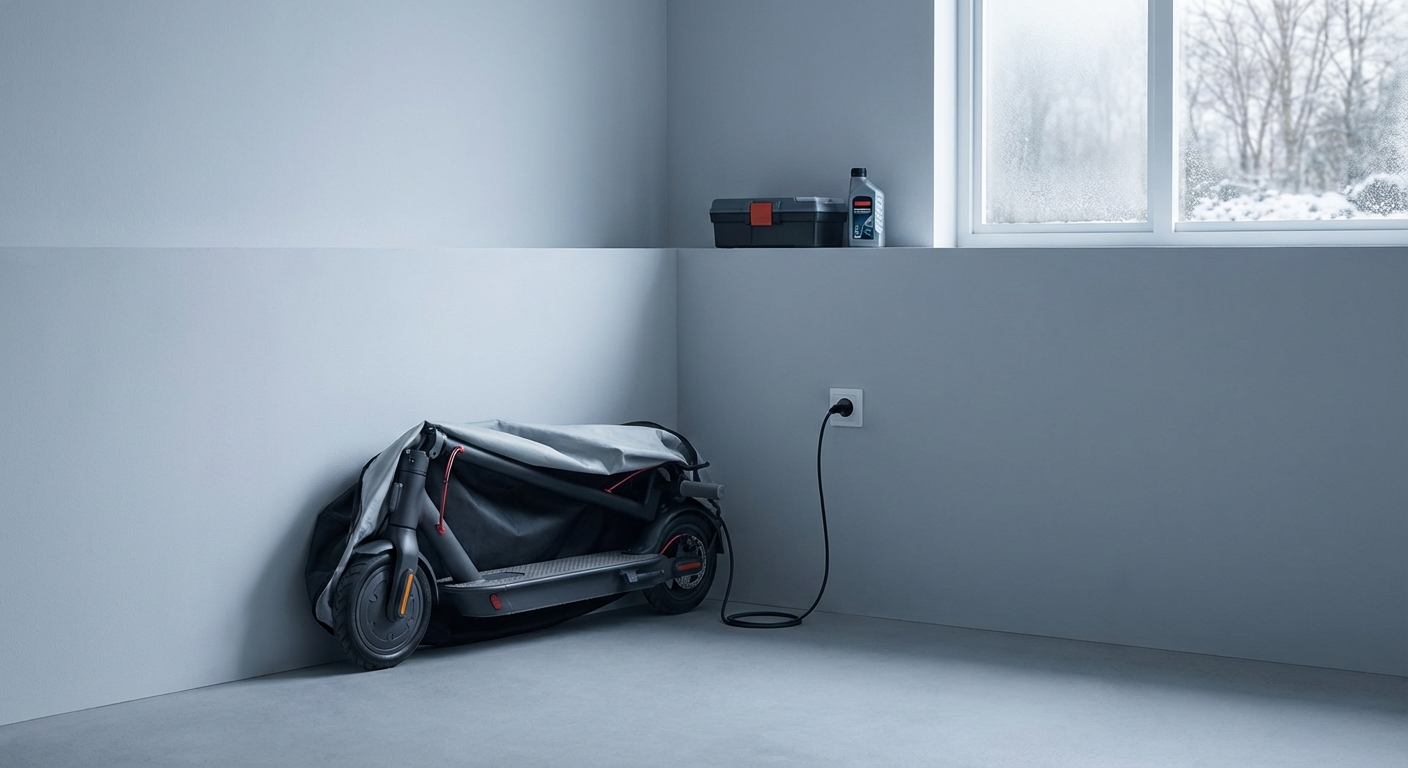
How to Properly Store Your Electric Scooter During Winter and Off-Season
Winter changes everything for electric scooter owners. The temperature drops, snow piles up, and your daily commute suddenly becomes impossible. But parking your scooter in the garage and forgetting about it until spring is a recipe for dead batteries, cracked tires, and corroded parts.
Proper winter storage isn’t complicated, but it does require a plan. The difference between a scooter that fires up perfectly in April and one that needs expensive repairs comes down to how you treat it during those cold months.
Winter storage for electric scooters requires cleaning, battery maintenance, and choosing the right location. Store your scooter at 40 to 60% charge in a temperature-controlled space between 32°F and 77°F. Check the battery monthly, keep tires inflated, and protect moving parts with lubricant. Proper preparation prevents damage and extends your scooter’s lifespan significantly.
Why Winter Storage Matters for Your Scooter
Cold weather attacks your scooter from multiple angles. Lithium-ion batteries lose capacity when temperatures drop below freezing. Moisture seeps into electrical connections and causes corrosion. Tire rubber becomes brittle and can crack. Brake fluid thickens. Lubricants congeal.
Leaving your scooter outside or in an unheated shed exposes it to all these problems at once. Even a few weeks of neglect can lead to permanent battery damage that cuts how long do e-scooter batteries actually last by months or years.
The good news is that a little preparation in November saves you hundreds of dollars in repairs come spring. Think of winter storage as an investment in your scooter’s future.
Step-by-Step Winter Storage Process
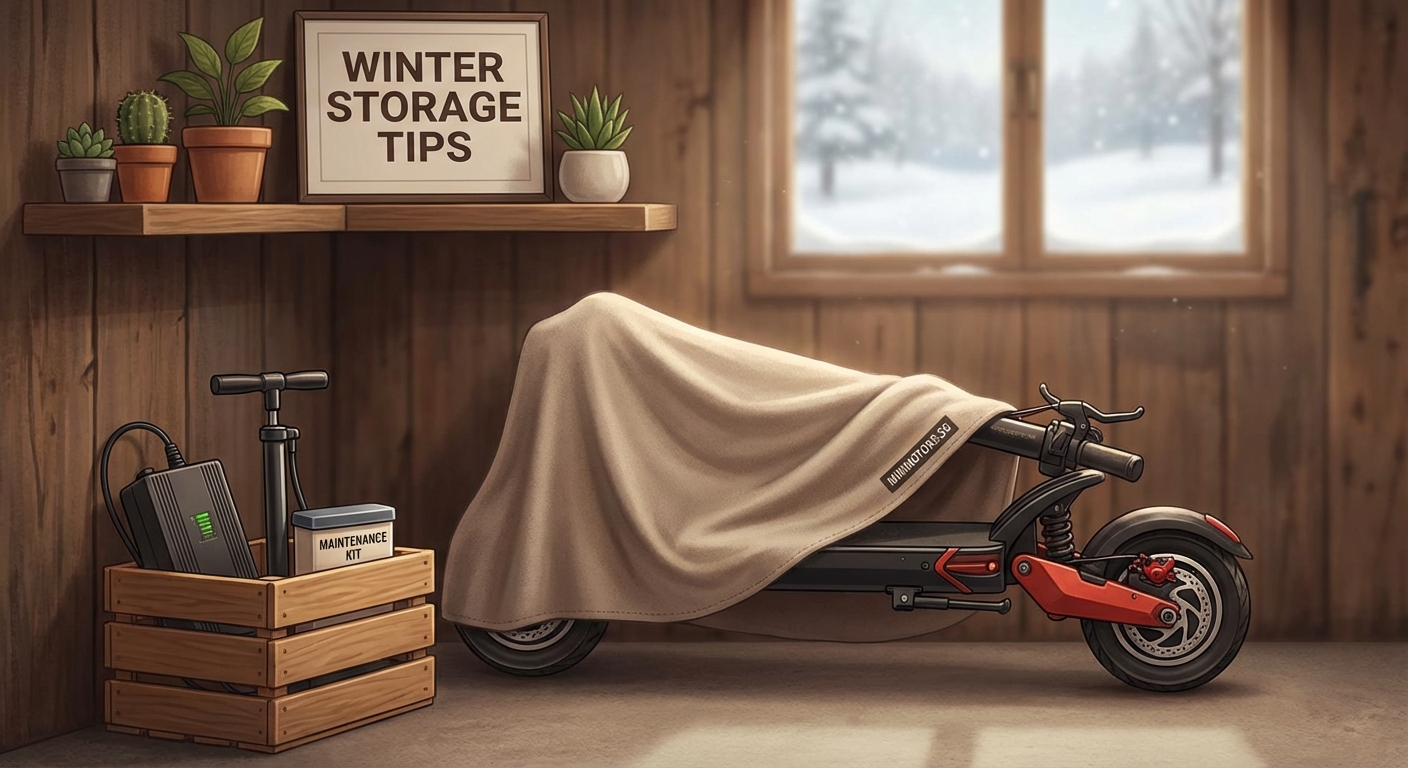
Follow these steps in order to prepare your scooter for hibernation.
1. Clean Your Scooter Thoroughly
Start with a complete cleaning. Use a damp cloth to wipe down the deck, handlebars, and stem. Pay special attention to the battery compartment and charging port.
Remove any dirt, salt, or debris from the wheels and suspension. Salt is particularly nasty because it accelerates corrosion on metal parts.
Dry everything completely. Moisture trapped under protective covers or in tight spaces will cause rust and corrosion during storage.
2. Inspect for Damage
Look for loose bolts, frayed cables, or worn brake pads. Winter storage is the perfect time to address these issues.
Check tire pressure and inflate to the recommended PSI. Underinflated tires can develop flat spots when sitting for months.
Test the understanding e-scooter braking systems to make sure everything works smoothly. If you notice any problems, fix them now rather than discovering them in spring.
3. Prepare the Battery
This is the most critical step. Lithium-ion batteries degrade faster when stored at full charge or completely empty.
Charge your battery to between 40% and 60%. This range minimizes stress on the cells during long-term storage.
Remove the battery if your scooter allows it. Store it separately in a temperature-controlled space. If you can’t remove it, that’s fine, just make sure the entire scooter stays in a suitable environment.
Plan to check the battery once a month. If it drops below 30%, charge it back up to 50%. This prevents deep discharge, which can permanently damage the cells.
4. Lubricate Moving Parts
Apply lubricant to the folding mechanism, suspension components, and any other moving parts. This prevents rust and keeps everything operating smoothly.
Use a silicone-based lubricant rather than oil-based products, which can attract dirt and gum up over time.
Wipe away any excess. You want a thin protective layer, not a thick coating that collects dust.
5. Protect Electrical Connections
Spray electrical contact cleaner on charging ports, display connections, and any exposed wiring. This removes moisture and creates a protective barrier against corrosion.
Cover the charging port with tape or a rubber plug to keep dust and moisture out.
6. Choose the Right Storage Location
Temperature matters more than anything else. Your scooter needs to stay between 32°F and 77°F during storage.
A basement, heated garage, or spare room works perfectly. Avoid unheated sheds, outdoor storage, or anywhere that experiences temperature swings.
Keep the scooter away from direct sunlight, which can fade plastic parts and damage the battery.
If possible, elevate the scooter slightly to take weight off the tires. Use a stand or hang it from wall mounts. This prevents flat spots from developing.
7. Cover It Up
Use a breathable cover to protect your scooter from dust. Avoid plastic tarps, which trap moisture and create condensation.
A cotton sheet or purpose-made scooter cover works best. Make sure air can still circulate around the scooter.
Battery Care During Winter
The battery deserves special attention because it’s the most expensive component to replace. What is the average range of an electric scooter on a single charge depends entirely on battery health, and winter storage done wrong can cut that range permanently.
“Storing a lithium-ion battery at full charge in cold temperatures is one of the fastest ways to degrade its capacity. Keep it at 50% charge in a room-temperature environment, and it will last for years.”
Check your battery monthly. Set a calendar reminder for the 15th of each month from November through March. This takes five minutes and prevents expensive mistakes.
If you notice the battery dropping faster than expected, there might be a parasitic drain. Turn off the scooter completely and disconnect any accessories that might be drawing power.
Storage Location Comparison
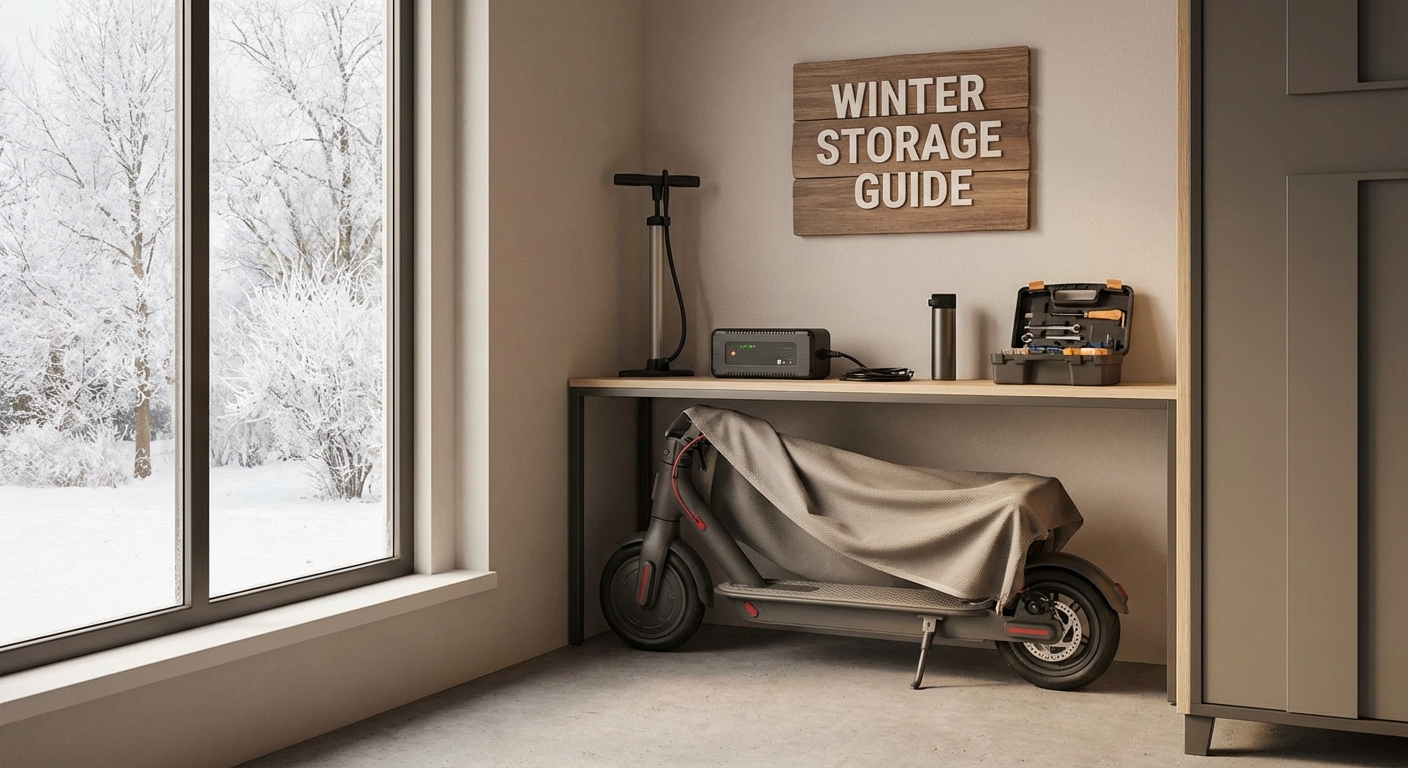
Different storage locations offer different levels of protection. Here’s how they stack up.
| Location | Temperature Control | Moisture Risk | Security | Best For |
|---|---|---|---|---|
| Heated garage | Excellent | Low | High | Year-round protection |
| Basement | Good | Medium | High | Most homeowners |
| Bedroom/closet | Excellent | Very low | Highest | Apartment dwellers |
| Unheated garage | Poor | Medium | Medium | Short-term only |
| Outdoor shed | Very poor | High | Low | Not recommended |
The ideal spot is dry, temperature-controlled, and secure. A spare closet or corner of a bedroom works better than an unheated garage, even if the garage feels more convenient.
Common Winter Storage Mistakes
Avoid these errors that damage scooters every winter.
-
Storing at full charge. This stresses the battery and reduces its lifespan. Always store at 40 to 60% charge.
-
Ignoring monthly checks. Batteries self-discharge over time. A monthly inspection prevents deep discharge damage.
-
Using plastic covers. Plastic traps moisture and creates condensation. Use breathable fabric instead.
-
Leaving tires underinflated. Low tire pressure leads to flat spots that make your ride bumpy in spring.
-
Skipping lubrication. Moving parts can seize up or rust when left untreated for months.
-
Storing in extreme temperatures. Freezing cold or excessive heat both damage batteries and other components.
-
Forgetting to clean first. Salt and grime cause corrosion during storage. Always clean thoroughly before putting your scooter away.
What to Do Before Riding Again
When spring arrives and you’re ready to ride, don’t just grab your scooter and go. Take a few minutes to prepare it properly.
Charge the battery fully before your first ride. This recalibrates the battery management system and ensures accurate range readings.
Check tire pressure and inflate to the recommended PSI. Tires often lose pressure during storage.
Inspect all bolts and connections. Tighten anything that’s come loose.
Test the brakes before you leave your driveway. Make sure they engage smoothly and stop you effectively.
Take a short test ride in a safe area. Listen for unusual sounds and pay attention to how everything feels. If you notice anything wrong, address it before heading out into traffic.
For riders who are new to scooters or returning after a long break, reviewing 7 essential things every first-time e-scooter rider should know can help you get back up to speed safely.
Special Considerations for Different Climates
Not all winters are created equal. Your storage strategy should match your local climate.
Mild Winters (Rarely Below Freezing)
You might be able to ride year-round with some adjustments. Store your scooter indoors on particularly cold nights, but you don’t need the full winter storage treatment.
Focus on keeping the battery warm and protected from rain. A waterproof cover and regular cleaning might be all you need.
Extreme Cold (Regularly Below 0°F)
Take extra precautions in very cold climates. Remove the battery and store it in a warm room, not just a heated garage.
Consider using a dehumidifier in your storage area to prevent moisture buildup.
Check your scooter more frequently, perhaps every two weeks instead of monthly.
Wet Winters (Lots of Rain or Snow)
Moisture is your biggest enemy. Make absolutely sure your scooter is completely dry before storing it.
Use desiccant packets or moisture absorbers near your scooter to keep humidity low.
Check for water damage around electrical connections before putting your scooter away.
Maintenance Tasks to Handle During Storage
Winter storage isn’t just about parking your scooter and walking away. It’s also an opportunity to handle maintenance tasks that you’ve been putting off.
Replace worn brake pads. Order new tires if yours are getting thin. Clean and regrease bearings. Update firmware if your scooter supports it.
These tasks are easier to complete when you’re not rushing to get somewhere. You’ll thank yourself in spring when your scooter is in perfect condition.
If you’ve been hearing strange sounds during rides, winter is the time to figure out why is my electric scooter making noise and fix the underlying issues.
Long-Term Storage Beyond Winter
Some riders need to store their scooters for longer than just winter. Maybe you’re moving, deploying overseas, or recovering from an injury.
The same principles apply, but you’ll need to check your scooter more frequently. Every three weeks is better than monthly for storage periods longer than six months.
Consider having a friend or family member handle the monthly checks if you won’t be around. Show them how to check the battery level and charge it when needed.
For very long storage periods (over a year), you might want to fully charge the battery every three months and run the scooter briefly to keep everything working.
Protecting Your Investment
Your electric scooter represents a significant investment. Proper storage protects that investment and ensures you get years of reliable service.
The techniques covered here apply whether you how to choose your first electric scooter last month or you’ve been riding for years. Every scooter benefits from proper winter care.
Budget a few hours in late fall to prepare your scooter properly. That small time investment prevents hundreds of dollars in repairs and extends your scooter’s useful life by years.
Getting Ready for Spring Riding
Winter storage doesn’t last forever. Before you know it, the snow will melt and you’ll be itching to ride again.
When that day comes, your properly stored scooter will be ready. The battery will hold a charge. The tires will be round and firm. The brakes will work smoothly. All because you took the time to prepare it correctly.
Set a reminder for early spring to start your pre-ride inspection. Give yourself a week or two to address any issues before you actually need to commute.
And remember, proper storage isn’t just about winter. The same principles apply any time you won’t be riding for more than a few weeks. Summer vacations, work travel, or recovery from injuries all call for similar preparation.
Take care of your scooter during the off-season, and it will take care of you when riding season returns.
