5 Breakthrough Battery Technologies That Will Change E-Scooters Forever
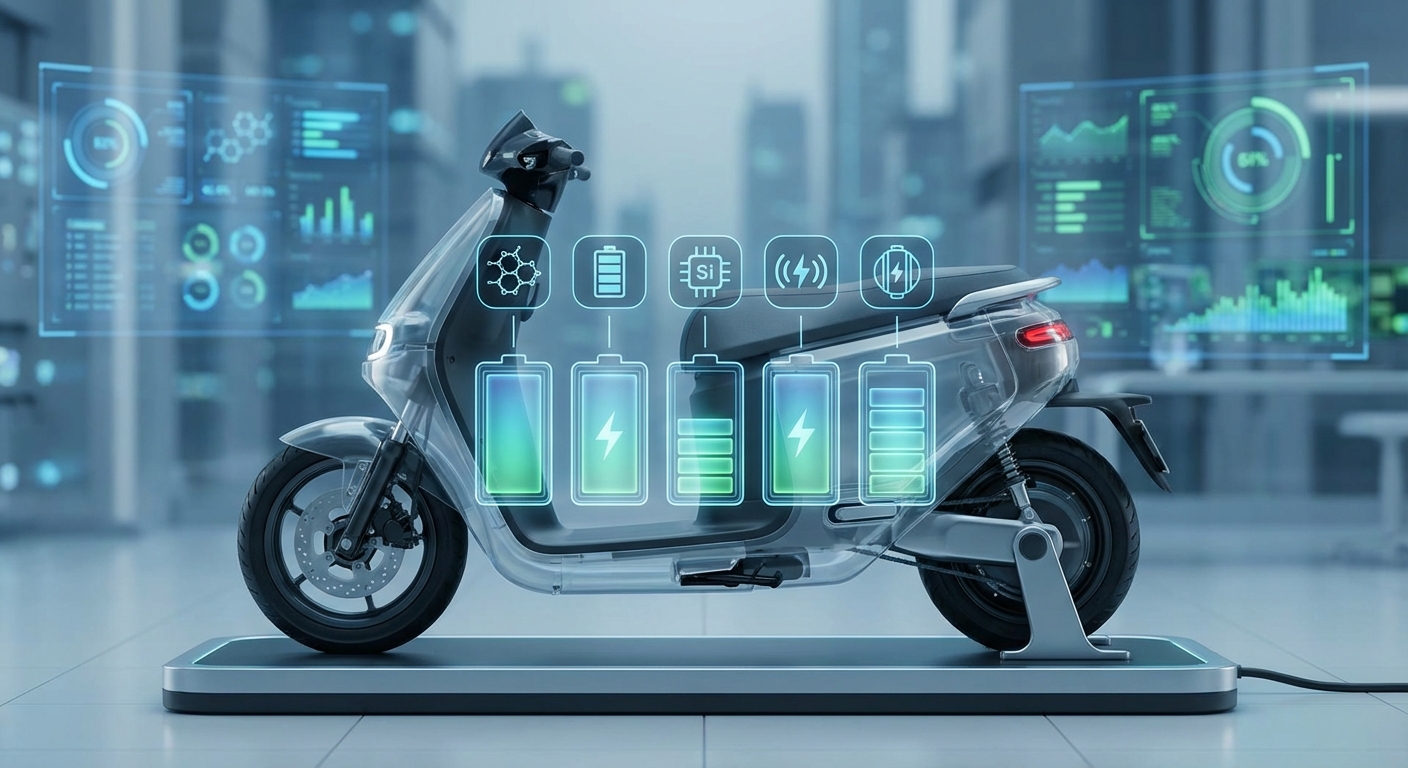
The battery in your e-scooter is about to get a major upgrade. Five emerging technologies are racing toward mass production, and they promise to fix nearly every frustration you’ve experienced with current lithium-ion packs. Longer rides, faster charging, and lighter weight are all within reach.
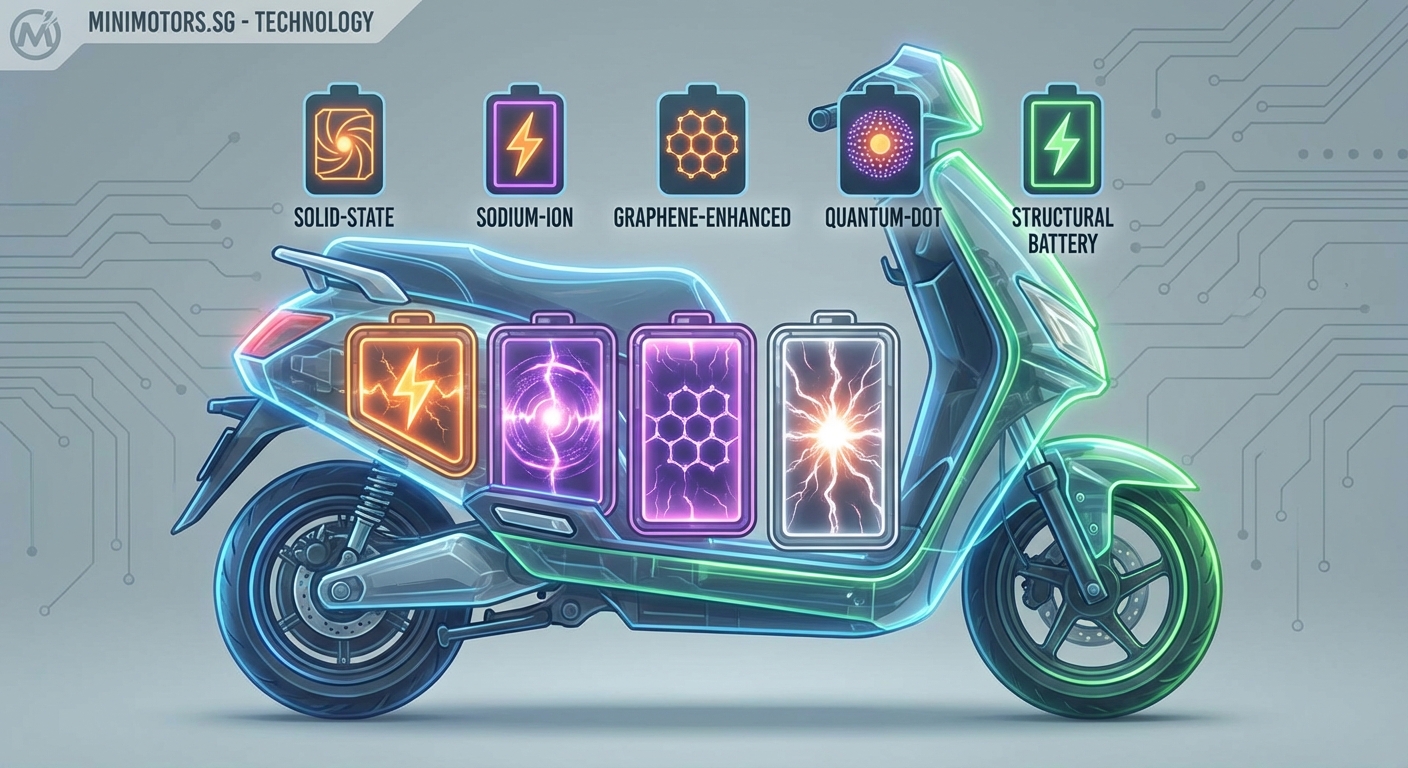
Breakthrough battery technologies including solid-state cells, lithium-sulfur chemistry, graphene-enhanced anodes, aluminum-ion systems, and sodium-ion alternatives are set to transform e-scooter performance. These innovations promise double the range, ten-minute charging times, lighter weight, improved safety, and lower environmental impact compared to today’s lithium-ion batteries.
Solid-State Batteries Will Double Your Range
Solid-state batteries replace the liquid electrolyte in conventional lithium-ion cells with a solid ceramic or polymer layer. This change eliminates one of the biggest safety risks in current batteries while dramatically increasing energy density.
The numbers are impressive. A solid-state pack can store up to 500 watt-hours per kilogram, compared to 250 Wh/kg in today’s best lithium-ion cells. For your e-scooter, that means doubling your range on a single charge without adding any weight.
Major manufacturers are already testing prototypes. Toyota announced plans to begin mass production by 2027, and several Chinese battery makers have working samples in labs right now. The timeline for e-scooter applications is shorter than you might think.
Here’s what solid-state technology brings to your ride:
- No thermal runaway risk (the battery can’t catch fire)
- 80% charge in under 15 minutes
- 2,000+ charge cycles before capacity drops below 80%
- Operating range from -20°C to 60°C
- 30% lighter than equivalent lithium-ion packs
The main challenge holding back solid-state batteries is manufacturing cost. Current estimates put production at three to five times the price of lithium-ion. But costs are dropping fast as factories scale up.
“Solid-state batteries will be the standard for premium e-scooters by 2028. The performance gap is too large for manufacturers to ignore.” — Dr. Sarah Chen, Battery Research Institute
Lithium-Sulfur Chemistry Cuts Weight in Half
Lithium-sulfur batteries use sulfur cathodes instead of the cobalt or nickel compounds found in lithium-ion cells. Sulfur is abundant, cheap, and incredibly light. The result is a battery pack that weighs half as much while storing the same energy.
Weight matters more than most riders realize. A lighter battery means better acceleration, easier portability, and less stress on your scooter’s frame and suspension. If you’ve ever carried your scooter up three flights of stairs, you understand the appeal immediately.
The energy density of lithium-sulfur cells reaches 400 to 600 Wh/kg in current prototypes. That’s two to three times better than conventional batteries. For a typical commuter scooter, you could maintain the same 30-mile range while cutting battery weight from 15 pounds to just 7 pounds.
There are still hurdles to overcome:
- Sulfur cathodes degrade faster than metal oxide cathodes
- The battery loses capacity after 300 to 500 cycles
- Low-temperature performance drops significantly below freezing
- Manufacturing requires specialized equipment
Researchers at Oxford University recently solved the degradation problem by coating sulfur particles with a protective carbon layer. Their prototype maintained 85% capacity after 1,000 cycles. That breakthrough moves lithium-sulfur from lab curiosity to commercial viability.
Several startups are targeting 2026 for initial production runs. Early applications will focus on drones and specialized vehicles, but e-scooter integration should follow within 18 months.
Graphene-Enhanced Anodes Enable Ten-Minute Charging
Graphene is a single layer of carbon atoms arranged in a honeycomb pattern. It conducts electricity better than any other material at room temperature. When manufacturers add graphene to battery anodes, charging speed increases dramatically.
Standard lithium-ion batteries take 3 to 6 hours for a full charge. Fast charging can reduce that to 90 minutes, but it stresses the battery and shortens its lifespan. Graphene-enhanced cells charge to 80% in just 10 minutes without any degradation penalty.
The technology works by creating more surface area for lithium ions to attach during charging. Traditional graphite anodes have a layered structure that ions must squeeze between. Graphene’s three-dimensional structure provides countless attachment points, allowing ions to flow in and out much faster.
Real Auto, a Chinese battery manufacturer, already produces graphene-enhanced cells for electric buses. Their batteries charge in 15 minutes and last for 5,000 cycles. Adapting the technology to smaller e-scooter packs is straightforward.
| Battery Type | Full Charge Time | Cycle Life | Cost Premium |
|---|---|---|---|
| Standard Li-ion | 4-6 hours | 500-800 | Baseline |
| Fast-charge Li-ion | 90 minutes | 300-500 | +15% |
| Graphene-enhanced | 10-15 minutes | 2,000-5,000 | +40% |
The cost premium is significant right now, but it’s dropping as production scales up. Within two years, graphene batteries should cost only 20% more than standard cells.
For commuters, ten-minute charging changes everything. You can top up during a coffee break instead of planning your day around battery life. That convenience factor alone will drive adoption once prices become reasonable.
Aluminum-Ion Batteries Solve the Fire Risk Problem
Aluminum-ion batteries use aluminum anodes and graphite cathodes in a non-flammable ionic liquid electrolyte. They can’t catch fire, even if you puncture them with a nail or crush them with a hammer. That makes them ideal for riders concerned about battery safety.
The safety advantage comes from the electrolyte. Lithium-ion batteries use organic solvents that ignite easily. Aluminum-ion batteries use ionic liquids that remain stable at high temperatures. You could literally set the battery on fire and it would just get warm.
Performance has improved dramatically in recent years:
- Charge time under 5 minutes for 80% capacity
- 7,500+ charge cycles with minimal degradation
- Operates safely from -40°C to 120°C
- 100% recyclable with simple chemical processes
- No rare earth metals or conflict minerals
The energy density still lags behind lithium-ion at around 150 Wh/kg. That means aluminum-ion packs need to be slightly larger to match the same range. But for many riders, the safety and longevity benefits outweigh the size penalty.
Graphene Manufacturing Group in Australia is building the first commercial production facility. They expect to ship their first e-scooter batteries in late 2026. Initial pricing will be comparable to premium lithium-ion packs.
The most compelling feature is cycle life. An aluminum-ion battery could last the entire lifetime of your scooter with zero capacity loss. No more replacing expensive battery packs every two years. That long-term value proposition will appeal to anyone planning to keep their scooter for five or more years.
Sodium-Ion Technology Drops Battery Costs by 40%
Sodium-ion batteries replace lithium with sodium, one of the most abundant elements on Earth. Sodium is cheap, easy to extract, and available everywhere. That translates directly to lower battery costs without sacrificing too much performance.
The chemistry is similar to lithium-ion, which means manufacturers can use existing production equipment with minimal modifications. CATL, the world’s largest battery maker, already produces sodium-ion cells at scale. They cost 40% less than equivalent lithium-ion batteries.
Energy density sits at around 160 Wh/kg for current sodium-ion cells. That’s lower than lithium-ion, but sufficient for most urban commuting needs. A typical scooter would see its range drop from 30 miles to about 22 miles with a sodium-ion pack of the same size.
The tradeoff makes sense for budget-conscious riders:
- Battery pack costs $200 instead of $350
- Same charge time as standard lithium-ion
- Safer chemistry with lower fire risk
- No dependency on lithium supply chains
- Better cold-weather performance
Sodium-ion batteries actually perform better than lithium-ion in cold weather. They maintain 90% of their capacity at 0°F, compared to 60% for lithium-ion. That makes them ideal for riders in northern climates who struggle with winter battery storage.
Several manufacturers are planning sodium-ion e-scooter models for 2026. The lower cost will make electric scooters accessible to a much wider audience. Combined with improving infrastructure, sodium-ion could accelerate the shift away from gas-powered vehicles.
Comparing the Five Technologies Side by Side
Each battery technology offers different advantages depending on your priorities. Here’s how they stack up across key metrics:
| Technology | Energy Density | Charge Time | Cycle Life | Safety | Cost | Availability |
|---|---|---|---|---|---|---|
| Solid-State | Excellent | Very Fast | Excellent | Excellent | High | 2027-2028 |
| Lithium-Sulfur | Excellent | Moderate | Fair | Good | Medium | 2026-2027 |
| Graphene-Enhanced | Good | Ultra Fast | Excellent | Good | Medium-High | 2025-2026 |
| Aluminum-Ion | Fair | Ultra Fast | Outstanding | Excellent | Medium | 2026-2027 |
| Sodium-Ion | Fair | Moderate | Good | Good | Low | Available Now |
Your choice depends on what matters most for your riding style:
- Maximum range: solid-state or lithium-sulfur
- Fastest charging: graphene-enhanced or aluminum-ion
- Best value: sodium-ion
- Longest lifespan: aluminum-ion
- Safest option: solid-state or aluminum-ion
Most riders will benefit from waiting 12 to 18 months. By mid-2026, at least three of these technologies should be available in production scooters. Prices will be competitive, and you’ll have real-world performance data to guide your decision.
What This Means for Your Next E-Scooter Purchase
These battery innovations will reshape the e-scooter market faster than most people expect. Within three years, today’s lithium-ion batteries will look as outdated as lead-acid packs do now.
If you’re shopping for a scooter in 2026, look for models that support battery swapping or modular packs. That way you can upgrade to newer technology without replacing the entire scooter. Some manufacturers are already designing frames with standardized battery compartments.
The performance gains will be substantial. Imagine a scooter that goes 60 miles on a charge, weighs 25 pounds, charges in 10 minutes, lasts 10 years, and costs less than current models. That’s not science fiction. Every piece of that vision exists in working prototypes right now.
For current owners, these technologies mean your next battery replacement will be significantly better than what you have now. Hold off on expensive battery upgrades for another year if you can. The wait will be worth it.
The shift to breakthrough battery technologies will also accelerate broader adoption of e-scooters as serious transportation. When range anxiety disappears and charging becomes faster than stopping for gas, the barriers to switching from cars drop dramatically. Cities are already preparing for this transition by expanding micro-mobility infrastructure.
Keep an eye on manufacturer announcements over the next six months. The first major brand to ship a solid-state or graphene-enhanced scooter will set off a technology race that benefits everyone. Better batteries mean better rides, and that future is closer than you think.
