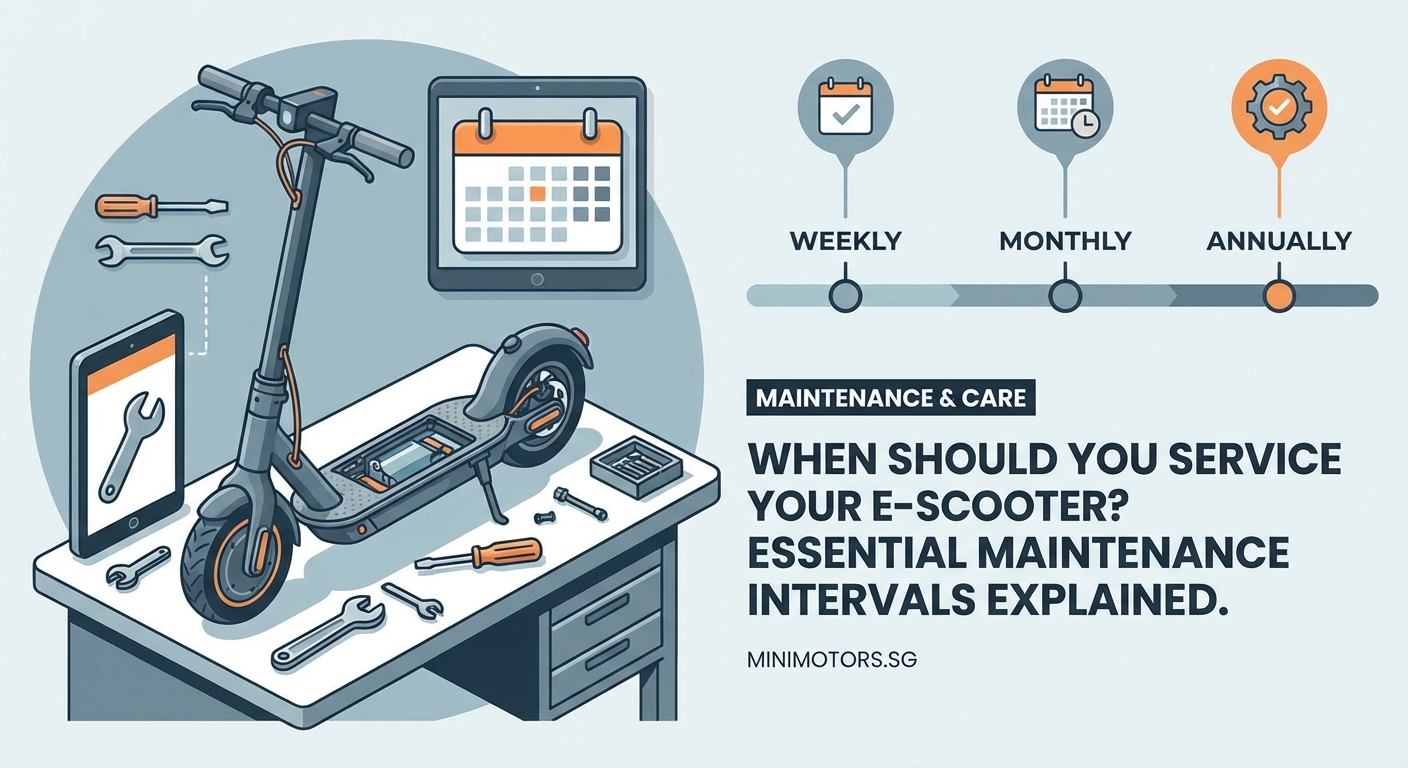
When Should You Service Your E-Scooter? Essential Maintenance Intervals Explained
Your e-scooter gets you to work every morning, handles grocery runs on weekends, and maybe even takes a beating on rough city streets. But unlike a car that reminds you with dashboard lights and scheduled dealer visits, your electric scooter won’t tell you when it needs attention. Most riders don’t think about maintenance until something breaks, and by then, a simple fix has often turned into an expensive repair.
Service your electric scooter every 300 to 500 miles or every three months, whichever comes first. Daily commuters need monthly inspections, while casual riders can extend intervals to quarterly checks. Critical components like brakes, tires, and battery connections require attention every 150 miles. Professional servicing once or twice yearly prevents major failures and extends your scooter’s lifespan significantly.
Understanding service intervals based on your riding habits
The frequency of your e-scooter maintenance depends entirely on how you use it.
A daily commuter riding 10 miles each way racks up 100 miles per week. That’s 400 miles monthly. Compare that to someone who rides 5 miles on Saturday mornings, totaling maybe 20 miles per month.
These two riders need completely different service schedules.
Daily riders should inspect their scooters weekly. Weekend warriors can get away with monthly checks. But both need professional servicing at regular mileage intervals.
Here’s a practical breakdown:
- Daily commuters (15+ miles/day): Weekly inspections, monthly detailed checks, professional service every 500 miles
- Regular riders (5-15 miles/day): Bi-weekly inspections, service every 750 miles
- Casual riders (under 5 miles/day): Monthly inspections, service every 1,000 miles
- Occasional users: Pre-ride checks before each use, service every six months regardless of mileage
Your riding environment matters too. Rough roads, steep hills, and wet conditions accelerate wear. If you regularly ride in challenging conditions, cut these intervals in half.
Breaking down the three-tier maintenance system
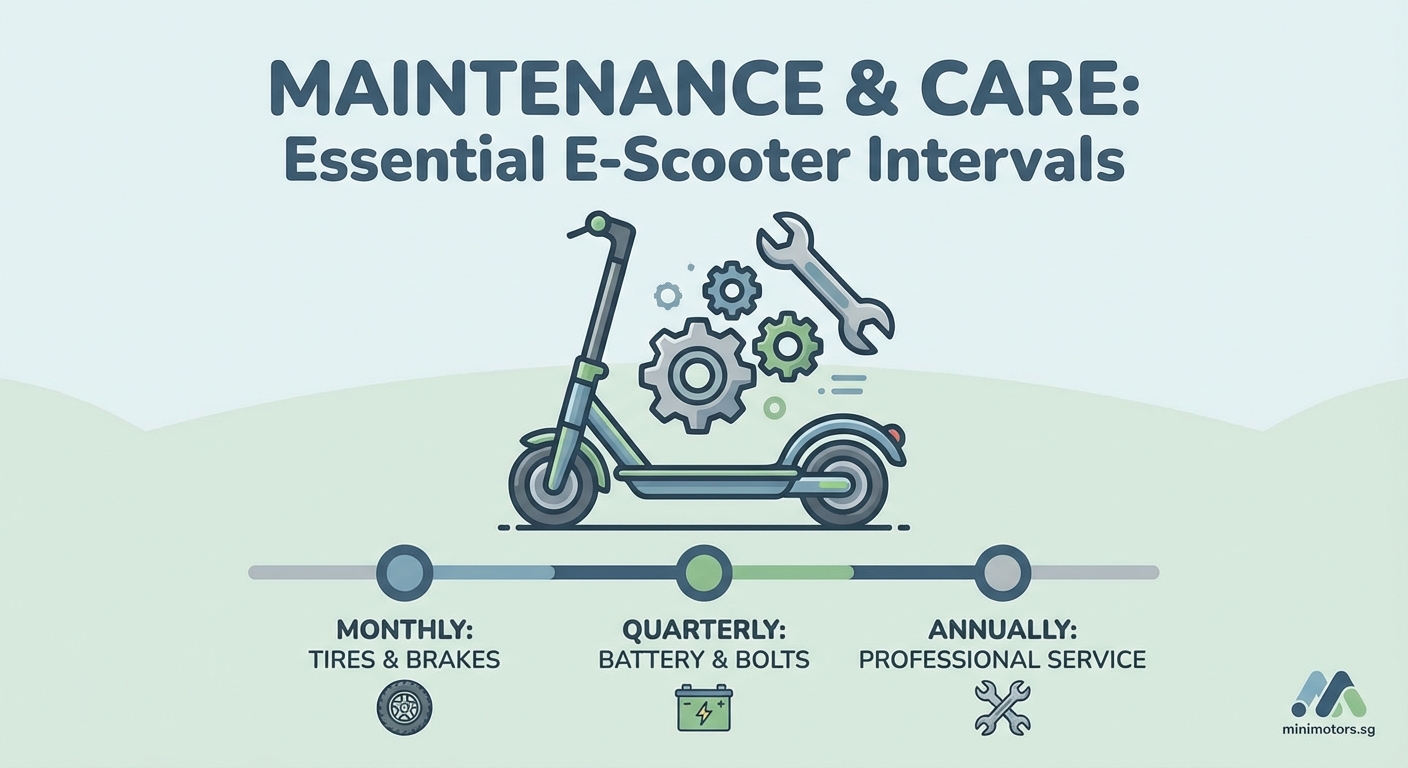
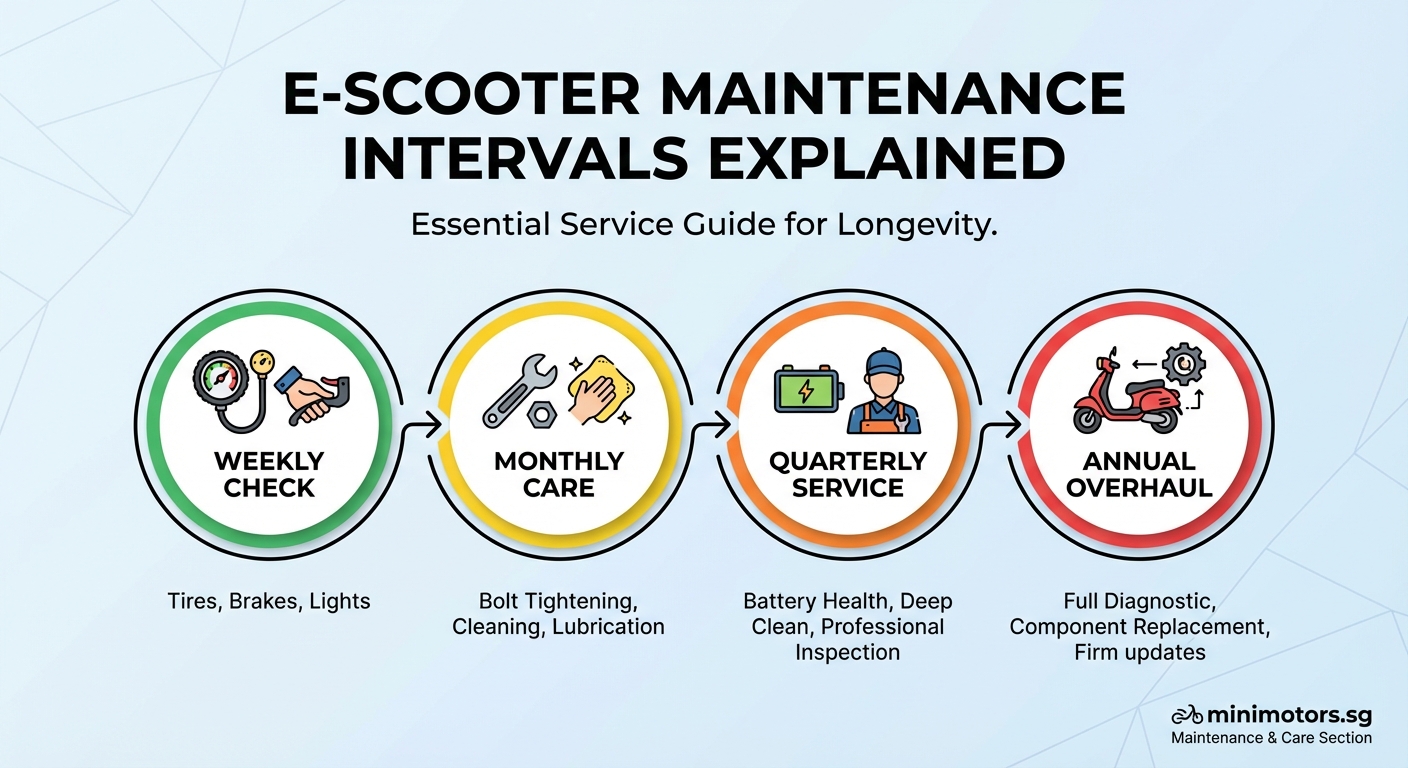
Think of e-scooter maintenance in three layers: basic checks you do yourself, routine maintenance you can handle at home, and professional service that needs expert hands.
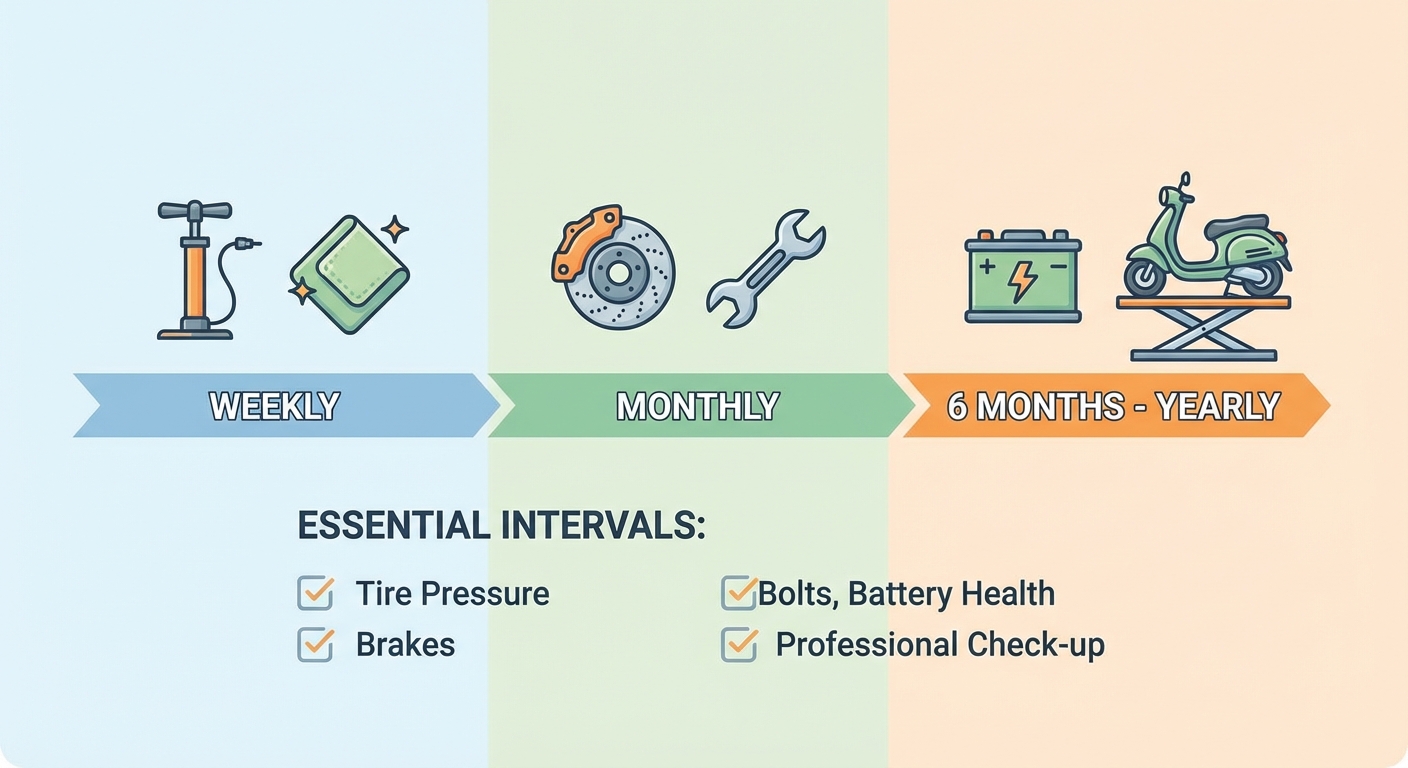
Basic checks happen before every ride or weekly, depending on use. These take two minutes and catch problems before they strand you.
Routine maintenance happens monthly or every 300 miles. You can handle most of these tasks with basic tools and a bit of confidence.
Professional service happens every six months or 1,000 miles. Some tasks require specialized equipment or expertise.
This three-tier approach keeps your scooter running without obsessing over every bolt. You’re not ignoring maintenance, but you’re not wasting time on unnecessary tasks either.
The ultimate e-scooter maintenance checklist breaks down exactly what to check at each interval, but here’s the essential framework.
What to inspect before every ride
Your pre-ride check should become automatic. Like buckling a seatbelt, you do it without thinking.
Start with the obvious stuff:
- Squeeze both brake levers. They should engage smoothly and stop the wheel when lifted.
- Check tire pressure by pressing your thumb into the tire. Pneumatic tires should feel firm, not squishy.
- Wiggle the handlebars. No looseness, no clicking sounds.
- Test the throttle and brake response while the scooter is off the ground.
- Verify all lights work if you’re riding at dusk or dawn.
This entire routine takes 90 seconds once you’ve done it a few times.
Look for anything unusual. Strange sounds, wobbling parts, or sluggish responses all signal problems.
The pre-ride inspection checklist covers additional safety points, but these five steps catch most issues before they become dangerous.
Monthly maintenance tasks you can handle yourself
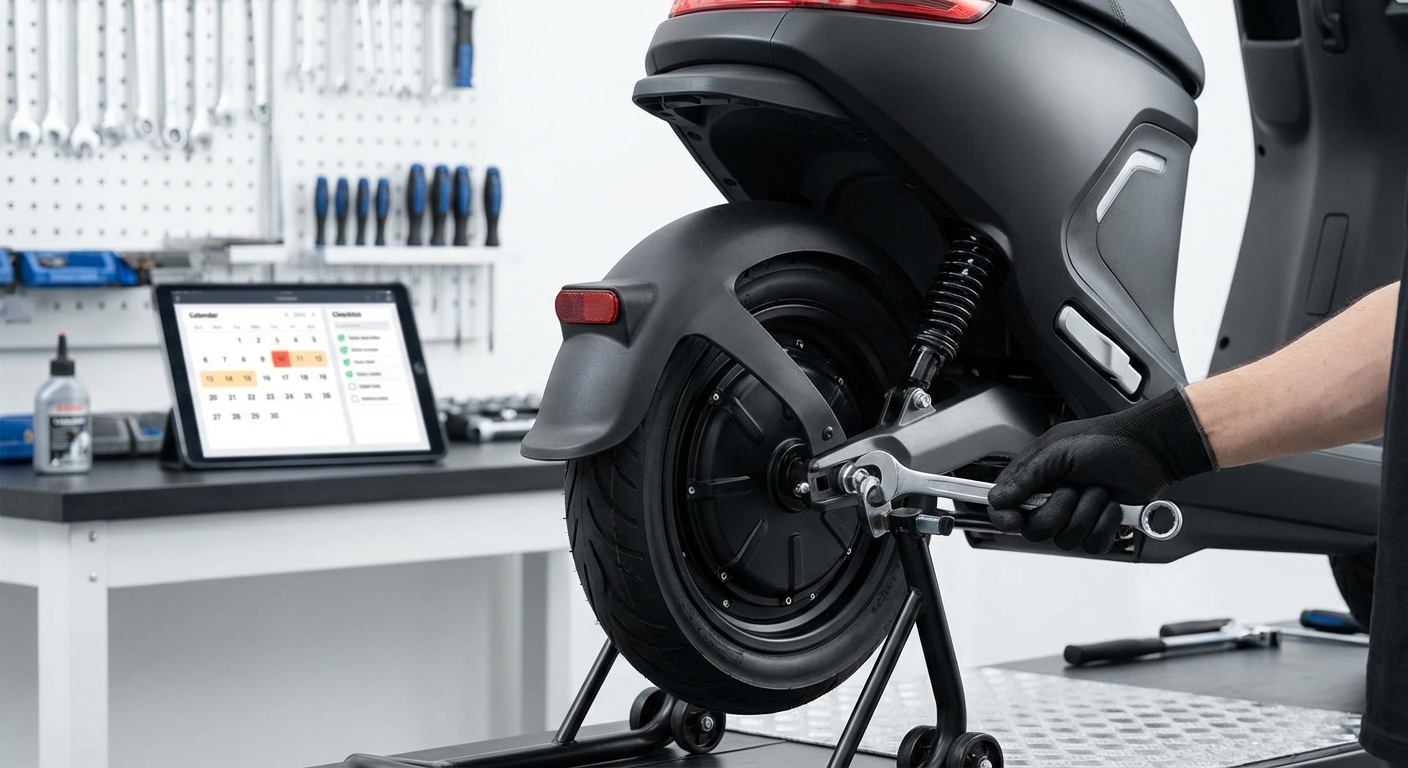
Every month or 300 miles, set aside 30 minutes for deeper maintenance.
Clean your scooter thoroughly. Dirt and grime hide problems and accelerate wear. Use a damp cloth, not a pressure washer. Water and electronics don’t mix.
Check all visible bolts and screws. Vibration loosens them over time. A simple hex key set handles most e-scooter hardware.
Inspect your tires for cuts, embedded debris, or uneven wear. Solid tires last longer but show wear patterns that indicate alignment issues. Pneumatic tires need pressure checks and visual inspection for damage.
Test your brakes under controlled conditions. Find an empty parking lot and practice emergency stops from different speeds. Brakes that felt fine at low speeds might fade dangerously at higher velocities.
“Most e-scooter accidents happen because of brake failure or tire blowouts, both of which are completely preventable with basic monthly maintenance. I’ve seen riders avoid serious injury simply because they caught worn brake pads during a routine check.” – Certified e-scooter technician with 8 years experience
Clean and check battery connections. Corrosion on battery terminals reduces performance and can cause sudden power loss. A wire brush and electrical contact cleaner solve this in minutes.
Lubricate moving parts. The folding mechanism, brake cables, and suspension components need occasional lubrication. Use silicone spray, not WD-40, which attracts dirt.
When to schedule professional service appointments
Some maintenance tasks require professional expertise or specialized tools.
Schedule professional service every six months or 1,000 miles for these critical tasks:
Brake system overhaul: Disc brakes need pad replacement and rotor inspection. Drum brakes require internal cleaning and adjustment. Electronic brakes need software calibration.
Electrical system diagnosis: Professionals can test battery health, check controller function, and identify electrical gremlins you’ll never find with a multimeter.
Bearing replacement: Wheel bearings, steering bearings, and suspension bearings wear gradually. Professionals can detect early wear and replace them before they fail catastrophically.
Tire replacement: While changing a tire isn’t rocket science, getting it right matters. Improperly installed tires cause accidents. The guide on how to change e-scooter tires explains the process, but your first few changes benefit from professional guidance.
Firmware updates: Many modern scooters need occasional software updates that optimize performance and fix bugs.
Don’t wait for your scheduled service if you notice problems. Grinding sounds, reduced range, brake fade, or handling changes all warrant immediate professional attention.
Adjusting service frequency for different conditions
Your environment dramatically affects maintenance needs.
Riders in rainy climates need more frequent inspections. Water intrusion damages electronics and accelerates rust on metal components. After riding in rain, dry your scooter thoroughly and check for moisture in electrical compartments.
The article about riding in rain safely covers immediate precautions, but long-term maintenance in wet climates requires extra vigilance.
Dusty or sandy environments clog moving parts and scratch bearing surfaces. Clean your scooter after every ride in these conditions. Consider protective covers for sensitive components.
Hilly terrain stresses brakes and motors. If you regularly climb steep grades, inspect brake pads monthly instead of quarterly. Motor bearings also wear faster under constant load.
Cold weather affects battery performance and tire pressure. Check tire pressure weekly during winter months. Store your battery indoors if temperatures drop below freezing regularly.
Hot climates stress batteries and can degrade plastic components. Park in shade when possible and check for sun damage to grips, fenders, and cable insulation.
| Riding Condition | Service Frequency Adjustment | Key Focus Areas |
|---|---|---|
| Daily commuting | Increase by 50% | Brake pads, tire wear, battery connections |
| Weekend only | Decrease by 30% | Pre-ride safety checks, battery storage |
| Wet climate | Increase by 40% | Electrical connections, rust prevention, brake function |
| Dusty/sandy | Increase by 60% | Bearing cleaning, motor ventilation, folding mechanism |
| Hilly terrain | Increase by 50% | Brake system, motor cooling, suspension |
| Extreme heat | Increase by 30% | Battery health, plastic components, tire pressure |
Recognizing the warning signs that demand immediate attention
Don’t wait for scheduled maintenance if your scooter tells you something’s wrong.
Unusual sounds always mean something. Grinding, clicking, or squealing noises indicate worn components. The guide on troubleshooting common sounds helps identify specific problems.
Reduced range signals battery issues. If your scooter suddenly goes 20% less distance on a full charge, get the battery tested professionally.
Handling changes mean structural problems. Wobbling, pulling to one side, or difficulty steering all indicate loose components or alignment issues.
Brake performance degradation happens gradually, making it easy to miss. If you find yourself pulling the lever harder or needing more distance to stop, service your brakes immediately.
Power delivery problems like stuttering acceleration, sudden power cuts, or inconsistent speed suggest electrical issues that need professional diagnosis.
Visible damage never fixes itself. Cracks in the deck, bent handlebars, or damaged wiring will only get worse.
Battery-specific service intervals that extend lifespan
Your battery represents the most expensive component on your scooter. Proper maintenance dramatically extends its life.
Charge your battery correctly every time. Don’t let it drain completely. Don’t leave it at 100% for days. The sweet spot is 20% to 80% for daily use.
Store your battery at 50% to 60% charge if you won’t ride for more than a week. Full or empty storage accelerates degradation.
Every three months, perform a full charge cycle. Drain to 20%, then charge to 100% without interruption. This recalibrates the battery management system.
Clean battery contacts monthly. Corrosion here causes poor connections and reduced performance.
Professional battery testing every six months identifies cells that are failing before they damage the entire pack. Most shops offer this service for $20 to $30.
Understanding how long batteries actually last helps you plan for eventual replacement, but proper maintenance can double the useful lifespan.
Creating your personalized maintenance schedule
Generic advice only goes so far. You need a schedule that matches your specific situation.
Start by tracking your mileage. Most e-scooters have odometers, but if yours doesn’t, use a phone app to log rides. Knowing your actual mileage makes scheduling precise.
Create a simple spreadsheet or use a phone calendar with recurring reminders:
- Set weekly reminders for basic safety checks
- Schedule monthly reminders for detailed inspections
- Add mileage-based alerts at 300, 600, and 1,000 miles
- Mark your calendar for six-month professional service appointments
Keep a maintenance log. Note what you checked, what you found, and what you fixed. This history helps identify patterns and proves invaluable when selling your scooter.
Adjust your schedule based on results. If you never find problems during weekly checks, reduce frequency. If you consistently discover issues at monthly inspections, increase frequency.
Cost considerations for different service approaches
Maintenance costs money, but neglect costs more.
DIY maintenance saves substantially. A basic tool kit costs $30 to $50. Cleaning supplies, lubricants, and spare parts might add another $50 annually.
Professional service typically runs $75 to $150 per visit, depending on what needs attention. Budget $150 to $300 annually for professional maintenance.
Compare that to major repairs. A new battery costs $200 to $600. Motor replacement runs $150 to $400. New brake systems cost $50 to $150 per wheel.
One missed maintenance interval can easily cost you $500 in repairs that proper servicing would have prevented.
Think of maintenance as insurance. You’re paying small amounts regularly to avoid catastrophic expenses later.
Budget riders on scooters under $500 especially need regular maintenance. Cheaper components wear faster and forgive less neglect.
Seasonal maintenance that prevents off-season damage
Seasonal transitions demand special attention.
Spring preparation after winter storage:
- Fully charge the battery
- Check tire pressure (cold weather reduces it)
- Inspect all rubber components for cold-weather cracking
- Test brakes thoroughly before riding
- Clean accumulated dust and check for rodent damage if stored in a garage
Summer readiness:
- Verify cooling vents are clear
- Check battery health before hot weather stresses it
- Inspect tires for dry rot
- Test all lights for evening rides
Fall preparation:
- Deep clean before wet weather arrives
- Apply protective coating to metal components
- Check brake performance before slippery conditions
- Verify all lights work for shorter days
Winter storage (if you don’t ride in cold weather):
- Clean thoroughly before storage
- Charge battery to 50-60%
- Remove battery if possible and store indoors
- Cover scooter to prevent dust accumulation
- Check monthly and charge battery if it drops below 40%
The guide on storing batteries during winter provides detailed instructions for long-term storage.
Documentation that protects your investment
Keep records of all maintenance and service.
Photograph your scooter before first use. Document its condition with date-stamped images.
Save all receipts for parts and professional service. These prove you maintained the scooter properly, which matters for warranty claims and resale value.
Create a simple maintenance log:
- Date of service
- Mileage at service
- Tasks performed
- Parts replaced
- Issues discovered
- Cost of service
This log takes 30 seconds to update but provides invaluable information. You’ll spot patterns, remember what you did six months ago, and have proof of maintenance for buyers.
Many manufacturers require proof of regular maintenance for warranty coverage. Your log satisfies this requirement.
Making maintenance a sustainable habit
The hardest part of any maintenance schedule is actually doing it.
Tie maintenance to existing habits. Check your scooter while your morning coffee brews. Clean it while listening to your favorite podcast. Schedule professional service when you get your haircut.
Make it convenient. Keep cleaning supplies near where you store your scooter. Put your tool kit in an obvious spot.
Set phone reminders you can’t ignore. Don’t dismiss them. Either do the maintenance or reschedule immediately.
Find a reliable service shop before you need one. Establish a relationship with a technician who knows your scooter. They’ll catch problems earlier and give you honest advice.
Join local e-scooter groups. Other riders share maintenance tips, recommend shops, and often help with simple repairs.
Keeping your ride running for years
Regular maintenance isn’t exciting, but it’s the difference between a scooter that lasts three years and one that’s still running strong after seven.
Start with the basics. Check your scooter before rides. Clean it monthly. Get professional service twice yearly. Adjust these intervals based on how you ride and where you ride.
Pay attention to what your scooter tells you. Unusual sounds, changed handling, or reduced performance all mean something needs attention now, not later.
Track your maintenance in a simple log. Future you will appreciate having this information, especially when something goes wrong or when you’re ready to sell.
Your e-scooter is more than transportation. It’s freedom from traffic, money saved on gas, and a more enjoyable commute. Treat it right, and it’ll keep delivering that freedom for years to come. Set your first maintenance reminder right now, before you forget. Your scooter will thank you.
