The Ultimate E-Scooter Maintenance Checklist: Daily, Weekly, and Monthly Tasks
Your electric scooter deserves the same care you’d give any vehicle you depend on daily. Skip maintenance, and you’ll find yourself stranded with a dead battery, flat tire, or worse. Follow a structured routine, and your scooter will reward you with years of reliable service.
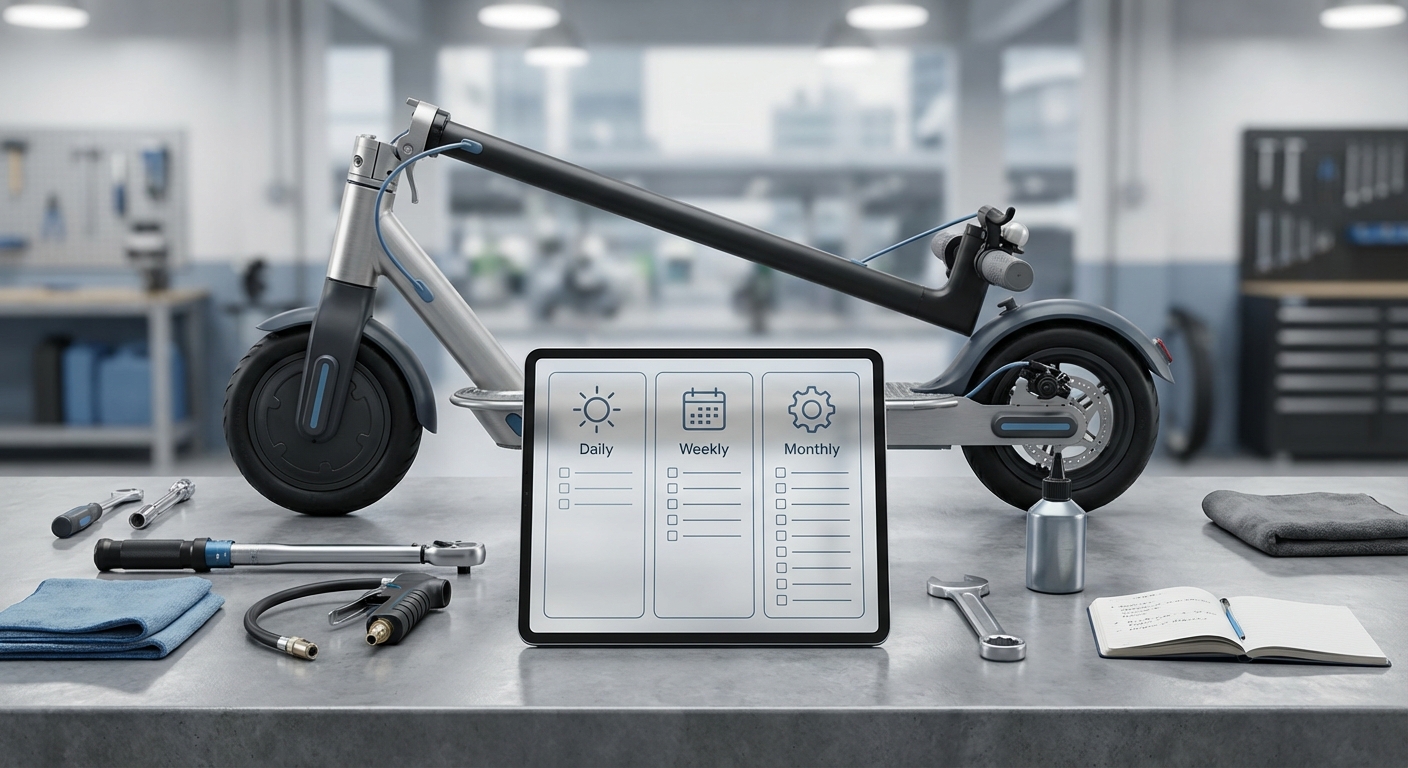
A proper electric scooter maintenance checklist includes daily safety checks, weekly cleaning and tire inspections, and monthly deep maintenance of batteries, brakes, and electrical connections. Regular maintenance prevents costly repairs, extends your scooter’s lifespan by up to 50%, and keeps you safe on every ride. This guide breaks down exactly what to check and when.
Daily tasks before every ride
Before you kick off each morning, spend two minutes running through these essential checks.
Start with your tires. Press down on them with your thumb. Pneumatic tires should feel firm, not squishy. If you can easily compress them, add air before riding. Solid tires should show no visible cracks or chunks missing from the tread.
Test both brakes while standing still. Squeeze each lever individually. They should engage smoothly without grinding or squealing. If you hear metal-on-metal scraping, stop and inspect your brake pads immediately.
Check your lights and display. Turn on your headlight, taillight, and any turn signals. Make sure your display screen powers up and shows accurate battery level. A malfunctioning display might indicate electrical issues brewing beneath the surface.
Look for loose bolts on your handlebars, stem, and folding mechanism. Give each a gentle wiggle. Any movement means you need to tighten them before riding. Carry a basic multitool in your bag for on-the-go adjustments.
“Most scooter breakdowns happen because riders ignore small problems until they become big ones. A loose bolt today becomes a broken stem tomorrow.” – Workshop technician with 8 years of experience
Run through the pre-ride inspection checklist if you want a more detailed safety protocol.
Weekly maintenance routine
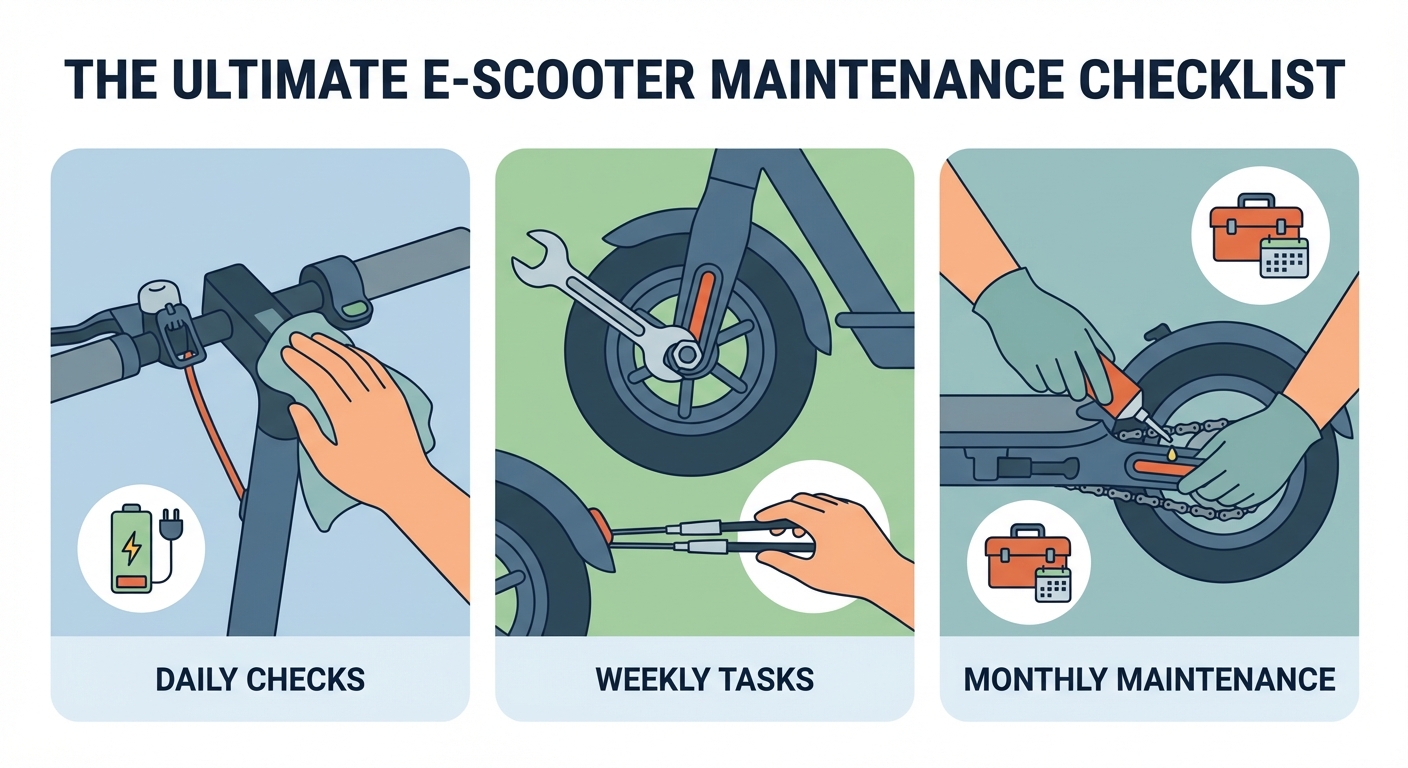
Set aside 15 minutes every Sunday for these deeper checks.
Clean your scooter with a damp microfiber cloth. Wipe down the deck, stem, and handlebars. Avoid spraying water directly into electrical ports or the charging socket. Dirt buildup around moving parts causes premature wear.
Inspect your tire pressure if you have pneumatic tires. Use a digital pressure gauge for accuracy. Most commuter scooters need 40-50 PSI, but check your manual for exact specifications. Under-inflated tires drain your battery faster and reduce handling precision.
Examine your brake cables for fraying. Run your fingers along the entire length, feeling for any rough spots or loose strands poking out. Replace cables immediately if you find damage. Brake failure at speed can turn a routine commute into a hospital visit.
Check your battery charge level. If your scooter sits unused for several days, top it up to around 50-60%. Lithium batteries hate being stored completely empty or fully charged for extended periods. This simple habit can add months to your battery’s total lifespan.
Test your folding mechanism. Open and close it three times. It should lock securely with an audible click. A wobbly fold indicates worn latches that need replacement soon.
For riders who frequently encounter wet conditions, read about riding in the rain safely to protect both yourself and your scooter from water damage.
Monthly deep maintenance schedule
Once a month, give your scooter the attention it truly deserves.
- Remove and inspect your wheels completely. Look for embedded debris, uneven wear patterns, or bulges in pneumatic tires.
- Clean your brake pads with isopropyl alcohol. Remove any glazing or buildup that reduces stopping power.
- Tighten every bolt on your scooter using a torque wrench. Follow your manufacturer’s specifications exactly.
- Inspect all electrical connections for corrosion. Clean any green or white buildup with contact cleaner.
- Lubricate your folding mechanism hinge with dry PTFE lubricant. Avoid oil-based products that attract dirt.
- Check your suspension (if equipped) for leaks or damage. Compressed air shocks should maintain consistent pressure.
Your battery needs special attention monthly. Check the charging port for debris or bent pins. Wipe it clean with a dry cotton swab. If you notice your battery draining faster than usual, review these common battery-killing mistakes.
Examine your motor housing for cracks or unusual vibration. Place your hand on the motor after a ride. It should feel warm, not burning hot. Excessive heat indicates potential electrical problems that need professional diagnosis.
Test your regenerative braking system if your scooter has one. Ride down a gentle slope without touching the throttle. You should feel slight resistance as the motor converts motion back into battery charge. Learn more about how regenerative braking works to maximize this feature.
Seasonal and storage maintenance
When temperatures drop below freezing or you plan to store your scooter for more than two weeks, take these extra steps.
Remove your battery if possible. Store it indoors at room temperature between 40-80°F. Cold temperatures permanently reduce lithium battery capacity. Heat above 90°F accelerates chemical degradation inside the cells.
Cover your scooter with a breathable fabric cover, not plastic. Plastic traps moisture and promotes rust on metal components. A simple cotton sheet works perfectly.
Elevate your scooter off the ground if storing long-term. Hang it on wall hooks or place it on a stand. This prevents flat spots from developing on pneumatic tires.
Apply a thin coat of silicone spray to exposed metal parts. This creates a protective barrier against humidity and oxidation. Wipe off excess to avoid attracting dust.
Check out the complete guide on battery storage during winter for detailed temperature and charge level recommendations.
Common maintenance mistakes to avoid
| Mistake | Why it’s harmful | Correct approach |
|---|---|---|
| Pressure washing your scooter | Forces water into sealed electrical components | Use damp cloth and gentle spray bottle only |
| Ignoring strange noises | Small problems escalate into expensive repairs | Investigate and fix unusual sounds immediately |
| Over-tightening bolts | Strips threads and cracks plastic housings | Use torque wrench with manufacturer specs |
| Using WD-40 on chains | Attracts dirt and washes away proper lubricant | Apply dry chain lube designed for bicycles |
| Riding on critically low battery | Deep discharge damages lithium cells permanently | Recharge when battery hits 20% remaining |
| Storing in direct sunlight | UV rays degrade plastic and rubber components | Keep in shaded, climate-controlled space |
Many riders make these errors without realizing the long-term consequences. Your scooter might seem fine today, but accumulated damage shows up six months later as mysterious failures.
Essential tools and supplies
Keep these items on hand for routine maintenance:
- Digital tire pressure gauge (accurate to 0.5 PSI)
- Metric hex key set (2mm through 10mm)
- Torque wrench (2-20 Nm range)
- Microfiber cleaning cloths
- Isopropyl alcohol (90% or higher)
- PTFE dry lubricant spray
- Contact cleaner for electrical connections
- Spare inner tubes for your tire size
- Basic multimeter for electrical troubleshooting
You don’t need a full workshop. These basics handle 95% of home maintenance tasks. Store everything in a small toolbox that fits under your scooter’s deck.
For riders interested in performance improvements, check out accessories that actually make a difference beyond basic maintenance.
Troubleshooting common issues
Strange grinding noise from your motor? That usually means debris caught in the wheel well or a failing bearing. Stop riding immediately and inspect the area around your motor.
Battery not holding charge like it used to? First, check how you’ve been charging it. Leaving it plugged in for days after reaching 100% degrades cells faster. Read about overnight charging myths to protect your investment.
Wobbly handlebars even after tightening? Your stem bearings might be worn. This requires disassembly and replacement with new bearings matched to your model’s specifications.
Brakes squealing constantly? Clean your brake pads and rotors with alcohol. If that doesn’t help, you’ve glazed the pads from excessive heat. Replace them and adjust your braking technique to apply gradual pressure instead of sudden stops.
For comprehensive troubleshooting of unusual sounds, reference this guide on diagnosing scooter noises.
When to seek professional service
Some tasks exceed the scope of home maintenance.
Motor replacement requires specialized tools and electrical knowledge. Don’t attempt this unless you have experience with high-voltage systems.
Battery cell replacement involves soldering and balancing individual cells. One mistake can create a fire hazard. Leave this to certified technicians.
Controller board repairs need diagnostic equipment most riders don’t own. If your scooter won’t power on despite a charged battery, take it to a professional.
Structural cracks in your frame or deck demand expert welding or replacement. Riding on compromised structural components risks catastrophic failure.
Most shops recommend professional service every 500-1000 miles for comprehensive inspection. They catch problems invisible to untrained eyes. Learn about recommended service intervals for your riding style.
Record keeping for maintenance tracking
Start a simple maintenance log. Note the date, mileage, and tasks completed each time you work on your scooter.
This record helps you spot patterns. Maybe your rear tire wears out every 800 miles. That tells you when to order a replacement before you’re stranded with a flat.
Track your battery performance over time. Write down how many miles you get per charge each month. Gradual decline is normal. Sudden drops indicate problems needing attention.
Document any unusual incidents. “Hit pothole at 15mph on Oak Street” helps explain why your front fork started clicking three days later.
Use a simple notebook or phone app. The format doesn’t matter. Consistency does.
Building maintenance into your routine
The best maintenance schedule is one you actually follow.
Link tasks to existing habits. Check tire pressure every Sunday morning while your coffee brews. Wipe down your scooter right after arriving home from work.
Set phone reminders for monthly tasks. “First Saturday of the month = scooter deep clean” removes the mental burden of remembering.
Make it enjoyable. Put on your favorite podcast during maintenance sessions. The time passes faster when you’re entertained.
Involve family members if they also ride. Teaching someone else reinforces your own knowledge and creates accountability.
If you’re new to electric scooters, start with the essential knowledge every first-time rider needs before building your maintenance routine.
Your scooter rewards consistency
Maintenance isn’t glamorous. Nobody posts Instagram stories about cleaning brake dust or checking bolt torque.
But those boring tasks determine whether your scooter lasts two years or ten. Whether you arrive safely or end up in the emergency room. Whether you spend $50 annually on upkeep or $500 on emergency repairs.
Start with the daily checks. Add weekly tasks once those become automatic. Build up to monthly deep maintenance as your confidence grows.
Your scooter is an investment in your mobility, health, and independence. Treat it accordingly, and it will serve you faithfully for thousands of miles to come.
