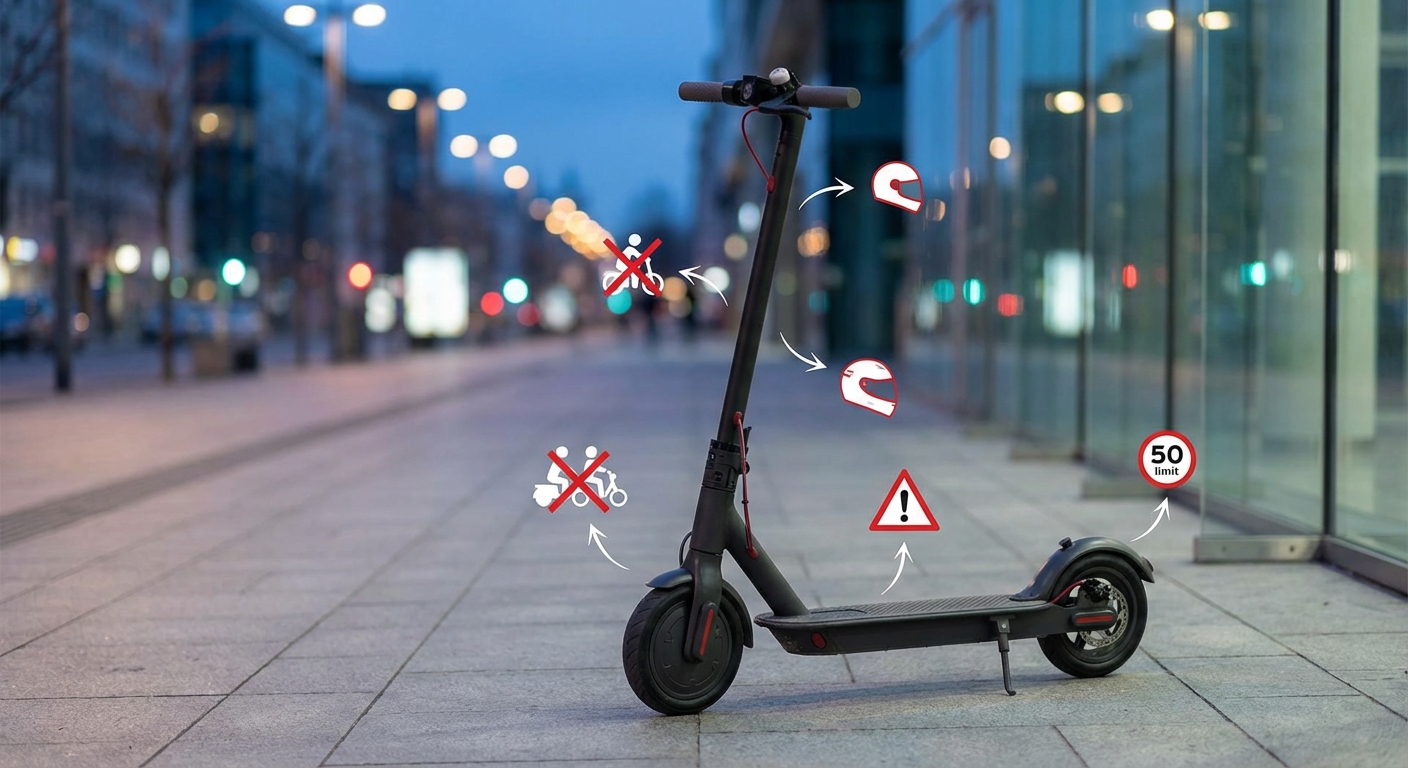
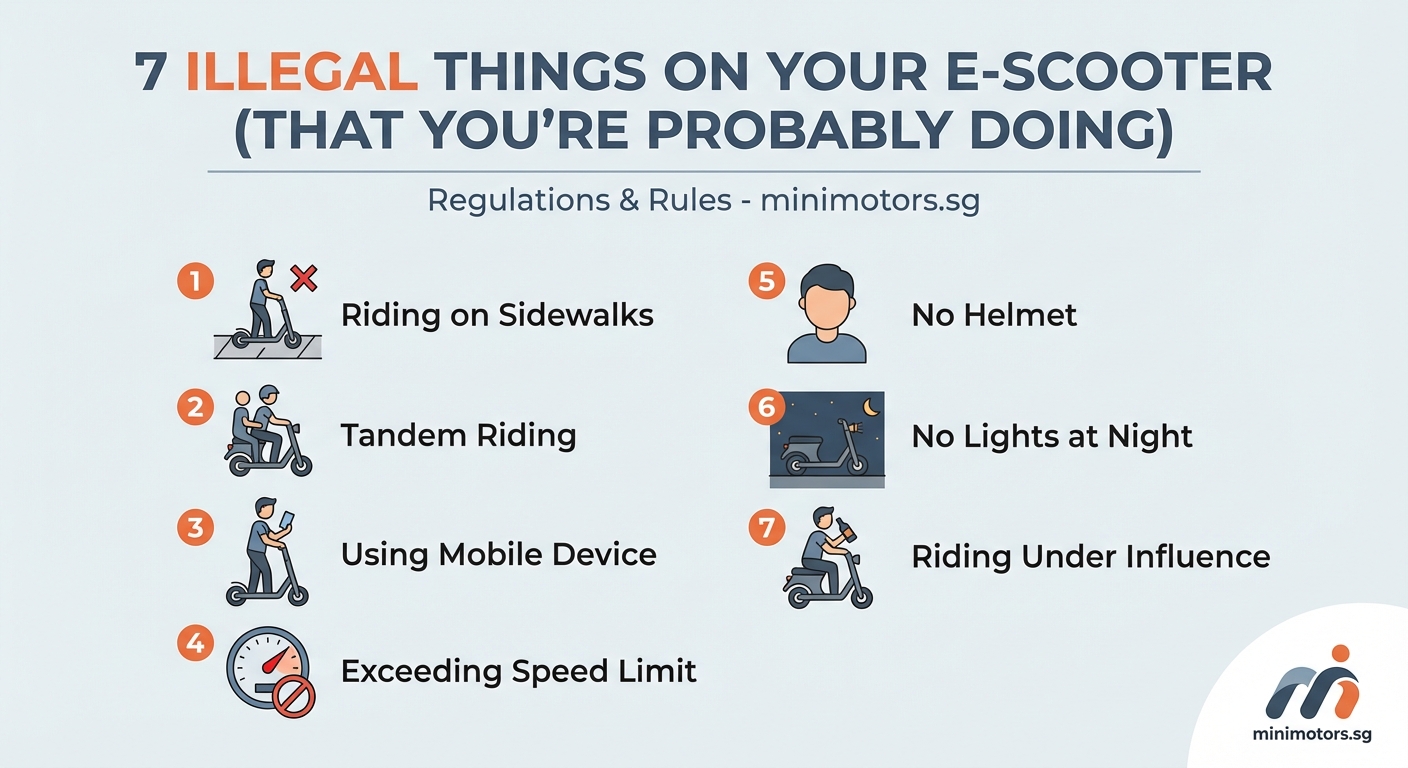
7 Things That Are Illegal on Your E-Scooter (That You’re Probably Doing)
You bought an electric scooter to make your commute easier. But the moment you hit the street, questions start piling up. Can you ride on the sidewalk? Do you need insurance? What happens if you get pulled over? The rules vary wildly depending on where you live, and ignorance isn’t a defense when fines start at $200.
Electric scooter laws differ by country, state, and city. Most jurisdictions limit speeds to 15-25 mph, require riders to be at least 16 years old, and mandate helmet use for minors. Registration and insurance requirements vary widely. Sidewalk riding is banned in most urban areas. Understanding your local regulations prevents fines, keeps you safe, and helps normalize e-scooters as legitimate transportation options in your community.
Why Electric Scooter Regulations Exist
Lawmakers didn’t wake up one day and decide to make your life harder. They responded to real problems.
Between 2019 and 2023, e-scooter injuries tripled in major cities. Emergency rooms saw fractured wrists, head trauma, and collision injuries. Pedestrians complained about riders zooming past on sidewalks. Cities struggled with abandoned scooters blocking wheelchair ramps.
Regulations aim to balance innovation with public safety. They create predictable rules for riders, pedestrians, and drivers sharing the same space.
The challenge? Laws haven’t caught up with technology. Some cities still classify e-scooters as toys. Others treat them like motorcycles. This patchwork creates confusion for riders who cross city or state lines.
Speed Limits and Power Restrictions
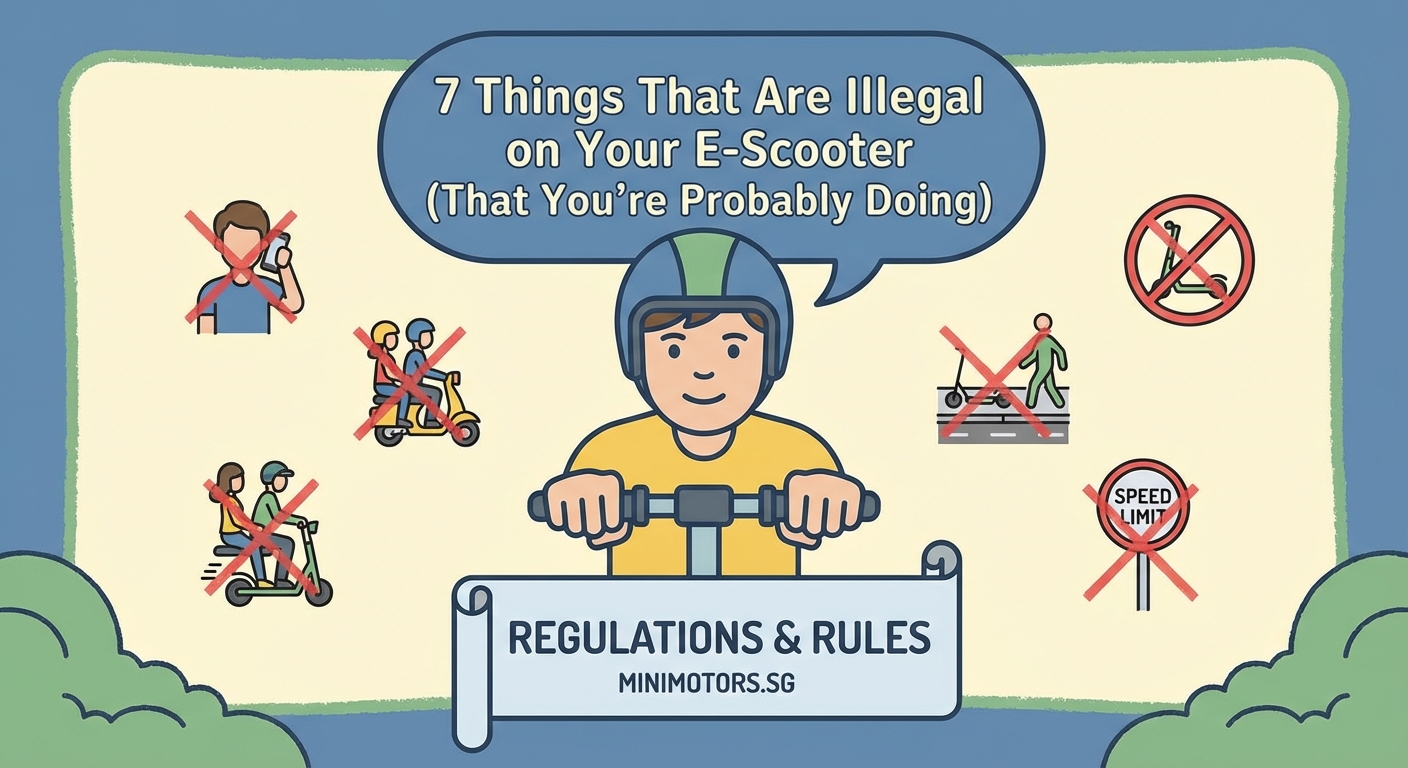
Most jurisdictions cap e-scooter speeds between 15 and 25 mph. These limits aren’t arbitrary.
At 15 mph, you can stop within 20 feet on dry pavement. At 25 mph, that distance doubles. Reaction time matters when a car door opens or a child runs into the street.
Some areas implement tiered speed limits:
- 8 mph in pedestrian zones
- 15 mph on bike lanes
- 20 mph on roads with speed limits under 35 mph
Motor power restrictions typically range from 500 to 1000 watts. Higher wattage scooters often require motorcycle licenses or registration. Before you choose your first electric scooter, verify that its specifications comply with local power limits.
Manufacturers sometimes ship scooters with speed limiters you can unlock through the app. Tampering with these limiters violates regulations in most areas and voids your warranty.
Age Requirements and Licensing
Minimum age requirements protect younger riders who lack the judgment and reaction time needed for street riding.
Common age thresholds:
- 12+ for supervised riding on private property
- 14+ for bike path riding
- 16+ for street riding
- 18+ for rental scooters
Driver’s license requirements vary dramatically. California doesn’t require a license for e-scooters under 750 watts. New York requires a standard driver’s license or learner’s permit. Some European countries mandate special e-scooter licenses with written tests.
Parental supervision rules apply in many jurisdictions for riders under 16. This means an adult must be present and visible, not just available by phone.
“We see too many 12-year-olds riding 30 mph scooters on busy streets. Age limits exist because younger riders underestimate stopping distances and overestimate their control in emergencies.” – Traffic Safety Research Institute
Helmet and Safety Equipment Standards
Helmet laws follow inconsistent patterns across regions.
| Jurisdiction Type | Typical Helmet Requirement |
|---|---|
| Urban centers | Required for riders under 18 |
| Suburban areas | Required for all riders |
| College campuses | Required for all riders |
| Private property | No requirement |
The helmet must meet safety certification standards. Look for DOT, CPSC, or EN 1078 labels. Bike helmets work fine. Skateboard helmets provide better coverage for the back of your head during backward falls.
Some areas require additional equipment:
- Front white light visible from 500 feet
- Rear red reflector or light
- Bell or horn
- Reflective clothing after dark
Insurance requirements remain rare but growing. France mandates liability insurance for all e-scooter riders. Several U.S. states are considering similar laws. Check whether your homeowner’s or renter’s insurance covers e-scooter accidents.
Where You Can and Cannot Ride
Sidewalk riding tops the list of violations. Most cities ban it completely to protect pedestrians.
Permitted riding locations typically include:
- Bike lanes (protected or painted)
- Streets with speed limits under 35 mph
- Shared-use paths explicitly allowing e-scooters
- Private property with owner permission
Prohibited areas often include:
- Sidewalks in business districts
- Highways and freeways
- Tunnels and bridges without bike access
- Parks unless specifically designated
- School zones during certain hours
Some cities create geofenced zones where rental scooters automatically slow down or stop. These zones typically surround hospitals, government buildings, and transit hubs.
Parking rules matter as much as riding rules. You can’t just leave your scooter anywhere. Most regulations require parking:
- Upright and stable
- At least 3 feet from building entrances
- Outside the pedestrian path of travel
- In designated scooter parking areas when available
Registration and Documentation Requirements
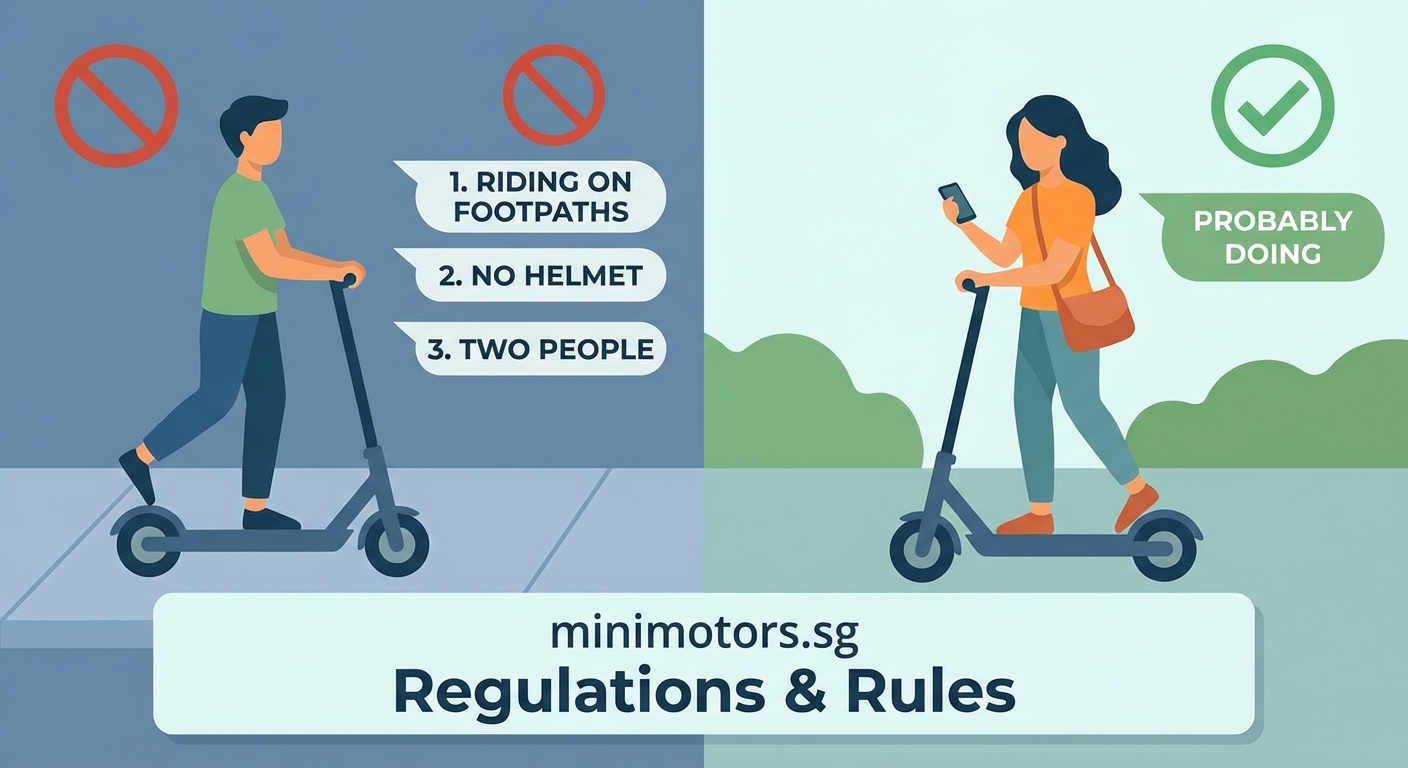
Registration requirements separate casual riders from serious commuters in many jurisdictions.
Singapore requires all e-scooters to display registration plates. Riders must complete a safety course and pass a test. The process takes about two weeks and costs roughly $50.
Germany requires insurance stickers renewed annually. These cost between €40 and €80 depending on the provider.
The United States takes a fragmented approach. Most states don’t require registration for e-scooters under 750 watts. Michigan requires registration similar to mopeds. Alabama treats them as motorcycles requiring full licensing.
Documentation you should carry while riding:
- Proof of ownership (receipt or registration)
- Insurance card (where required)
- Driver’s license or ID
- Contact information for emergencies
If you’re registering your electric scooter for the first time, gather your purchase receipt, serial number, and proof of residence before visiting the DMV.
Riding Under the Influence and Traffic Violations
DUI laws apply to e-scooters in most jurisdictions. You can get arrested for riding drunk.
Blood alcohol limits mirror those for cars:
- 0.08% in most U.S. states
- 0.05% in many European countries
- 0.00% for riders under 21
Penalties range from $250 fines to license suspension. Some states classify e-scooter DUIs as misdemeanors carrying potential jail time.
Common traffic violations and typical fines:
| Violation | Typical Fine Range |
|---|---|
| Sidewalk riding | $50 – $200 |
| No helmet (where required) | $25 – $100 |
| Speeding | $100 – $500 |
| Running red lights | $150 – $400 |
| Riding without lights at night | $75 – $200 |
Points on your driver’s license depend on local laws. California adds points for serious e-scooter violations. These points increase your insurance rates just like car violations.
Multi-Rider and Passenger Restrictions
That Instagram photo of two people on one scooter? Probably illegal.
Most regulations prohibit passengers completely. E-scooters are designed for single riders. Adding weight:
- Reduces braking effectiveness
- Destabilizes handling
- Exceeds weight capacity ratings
- Blocks the rider’s view
Exceptions exist for specially designed two-person scooters with dual footboards and higher weight ratings. These models require different classifications in many areas.
Cargo restrictions also apply. Most laws prohibit carrying items that:
- Obstruct your view
- Prevent proper handlebar control
- Extend more than 6 inches beyond the scooter
- Weigh more than 20 pounds
Choosing the right backpack helps you carry essentials legally while maintaining balance and control.
Insurance and Liability Considerations
When you hit a pedestrian, who pays their medical bills?
Personal liability becomes your problem without proper coverage. Medical costs for serious injuries easily exceed $50,000. Legal fees add thousands more.
Insurance options for e-scooter riders:
- Homeowner’s or renter’s insurance (check if e-scooters are covered)
- Personal liability umbrella policies
- Specialized e-scooter insurance
- Credit card coverage for rental scooters
Most standard auto insurance policies exclude e-scooters. You need specific endorsements or separate policies.
Rental scooter companies typically provide limited liability coverage. Read the fine print. Coverage often excludes injuries to the rider, only covering damage to third parties.
Property damage liability matters too. You’re responsible if you crash into a parked car or storefront window. Document the condition of your scooter with photos and maintenance records. This evidence helps if someone claims you caused damage you didn’t.
International Travel with Electric Scooters
Your scooter might be legal at home but banned at your vacation destination.
The United Kingdom allows e-scooters only through approved rental schemes. Private e-scooters remain illegal on public roads, though this may change soon.
Japan restricts e-scooters to speeds under 6 mph without a license. Faster models require motorcycle licenses and registration.
Australia’s laws vary by state. New South Wales allows them. Northern Territory bans them completely.
Before traveling:
- Research destination laws at least two weeks ahead
- Contact local authorities for clarification
- Verify your scooter meets local specifications
- Check airline policies for battery transport
- Locate legal riding areas in advance
Battery restrictions complicate air travel. Most airlines limit lithium batteries to 160 watt-hours. Larger batteries must ship as cargo or stay home. Understanding battery capacity helps you plan accordingly.
Enforcement Trends and Future Changes
Police enforcement varies dramatically by location and time.
Some cities assign dedicated e-scooter enforcement teams. Officers use radar guns to catch speeders and issue citations for sidewalk riding. Other areas rarely enforce regulations unless accidents occur.
Enforcement typically increases:
- During tourist season
- After high-profile accidents
- In response to pedestrian complaints
- Near universities at semester start
Technology changes enforcement methods. Some cities use automated cameras to catch violations. Rental companies can remotely disable scooters that enter restricted zones or exceed speed limits.
Future regulatory trends to watch:
- Mandatory insurance becoming standard
- Standardized federal regulations in the U.S.
- Integration with smart city infrastructure
- Age verification through biometric scanning
- Real-time violation reporting systems
Several countries are testing digital license plates that display rider information and insurance status. These systems could become mandatory within five years.
How to Stay Compliant in Your Area
Keeping up with changing regulations takes ongoing effort.
Start by identifying your local authority. City regulations often override state laws. Check both sources.
Official resources for current laws:
- Municipal transportation department websites
- State DMV or equivalent agencies
- Local police department traffic divisions
- E-scooter advocacy organizations
Join local rider groups on social media. Members share enforcement updates and regulation changes faster than official channels.
Set calendar reminders to check for updates quarterly. Laws change frequently as cities experiment with different approaches.
When regulations seem unclear, contact authorities directly. Get written confirmation of their interpretation. Save these communications. They provide evidence of good faith compliance if questions arise later.
Understanding common accidents and how to avoid them helps you ride defensively within legal boundaries.
What Happens When You Get Cited
You’re riding along when lights flash behind you. Now what?
Stay calm and pull over safely. Arguing with the officer won’t help. Be polite and provide requested documentation.
The citation process typically involves:
- Officer explains the violation
- You receive a ticket with court date
- You can pay the fine or contest in court
- Points may be added to your license
Contesting makes sense if:
- The violation description is factually wrong
- Signage was missing or unclear
- Equipment failure caused the violation
- You have evidence contradicting the citation
Bring photos, witness statements, and maintenance records to court. Judges appreciate prepared defendants who take the process seriously.
Some cities offer traffic school alternatives. Completing an e-scooter safety course can reduce fines or eliminate points.
Multiple violations can result in:
- Scooter impoundment
- License suspension
- Increased insurance rates
- Criminal charges for serious or repeated offenses
Teaching Others to Ride Legally
You’re responsible when you let friends borrow your scooter.
Before handing over the keys, ensure they understand:
- Local speed limits and where they apply
- Helmet requirements
- Prohibited riding areas
- Basic traffic laws
- Emergency procedures
Create a simple checklist covering essential rules. Keep it in your scooter storage compartment.
Parents teaching children face extra responsibility. Start in empty parking lots. Practice stopping, turning, and emergency maneuvers before allowing street riding.
First-time riders need specific guidance beyond just legal requirements. Safety and confidence matter as much as compliance.
Rental scooter users often skip the tutorial videos. If you see someone riding dangerously, a friendly heads-up about local laws helps everyone. Most riders appreciate the information.
Making Informed Riding Decisions
Legal compliance isn’t just about avoiding tickets. It’s about being part of the solution.
Every violation reinforces negative stereotypes about e-scooter riders. Every responsible rider helps normalize e-scooters as legitimate transportation.
Cities watching e-scooter programs decide whether to expand or ban them based on rider behavior. Your actions influence policy for everyone.
Understanding regulations also protects your investment. Illegal modifications void warranties. Violations can lead to impoundment and expensive retrieval fees.
The rules might seem restrictive now. But they create the framework that allows e-scooters to exist in shared spaces. Without regulations, cities would simply ban them completely.
Stay informed, ride responsibly, and help build a future where e-scooters are accepted as normal parts of urban transportation. The laws will continue evolving as cities learn what works. Your compliance today shapes tomorrow’s regulations.
