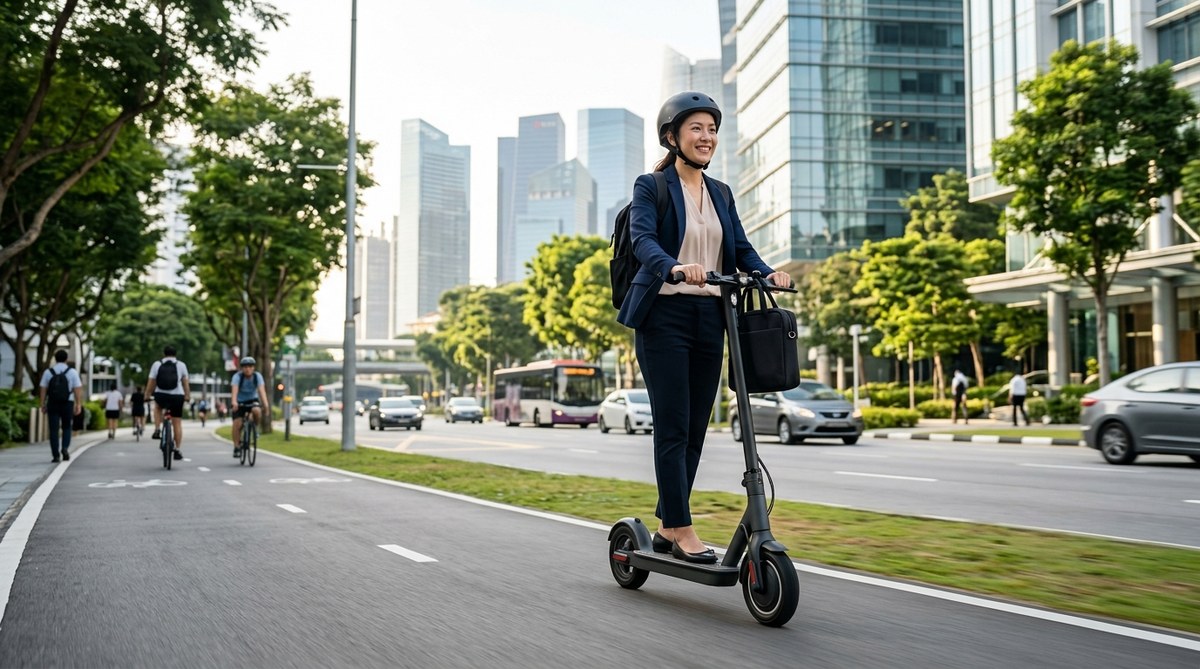
Is an Electric Scooter Right for Your Commute? A Practical Guide
Traffic is getting worse. Parking costs keep rising. Public transit schedules don’t always line up with your day. If any of that sounds familiar, you have probably thought about ditching the car or the bus pass for something smaller and more flexible. An electric scooter for commute use is not just a trend anymore. It is a real solution that thousands of riders across the United States rely on every day. But is it the right move for you? Let’s walk through the pros, the cons, and the practical details so you can decide with confidence.
An electric scooter works best for commutes under 10 miles in cities with decent bike lanes or low-speed roads. You will save money on gas and parking, but you must budget for a quality model, safety gear, and basic maintenance. Check your local laws first. If your route is flat and dry, an e-scooter can cut your travel time in half compared to driving or waiting for a bus.
What Makes an Electric Scooter a Good Fit for Your Commute?
The short answer is distance. Most commuter e-scooters offer a real-world range of 10 to 20 miles on a single charge. If your round trip falls inside that window, you can leave the gas pump behind. The longer answer involves your local infrastructure. Cities with protected bike lanes, wide sidewalks (where allowed), and moderate speed limits are ideal. If your route is mostly hills, you will need a scooter with a more powerful motor and a larger battery.
Think about your daily stress points. Do you waste 15 minutes circling the block for parking? An e-scooter folds up and goes under your desk. Do you hate standing at a bus stop in the rain? You leave when you are ready. An e-scooter gives you control over your schedule.
The Real Costs of E-Scooter Commuting
Money is probably the biggest factor. Let’s break it down honestly.
Upfront cost. A reliable electric scooter for commute use starts around $400 and goes up to $1,500 or more. The cheap $200 models from big box stores often have poor batteries and weak motors. They might save you money today but cost you more in frustration later.
Ongoing expenses. Electricity to charge a scooter costs pennies per day. A full charge might add a dollar or two to your monthly bill. Compare that to $50 for a tank of gas or $100 for a monthly transit pass. You will also need a helmet, a lock, and maybe a set of lights for night riding.
Maintenance. Tires, brakes, and bearings wear out. Budget about $50 to $100 per year for basic upkeep. If you ride in wet conditions or on rough pavement, expect to replace tires more often.
Here is a quick comparison table so you can see how the costs stack up against other options.
| Expense Category | Car (Monthly) | Transit Pass (Monthly) | E-Scooter (Monthly) |
|---|---|---|---|
| Fuel / Fare | $150 – $250 | $80 – $130 | $1 – $3 |
| Parking / Storage | $100 – $300 | $0 | $0 |
| Insurance | $80 – $150 | $0 | $0 – $15 |
| Maintenance | $50 – $150 | $0 | $5 – $10 |
| Total Estimate | $380 – $850 | $80 – $130 | $6 – $28 |
The savings are obvious. But you also need to factor in the initial purchase price. If you spend $800 on a solid scooter, it pays for itself in about two to three months compared to driving.
What to Look for When Buying
Not every scooter is built for daily commuting. Here are the features that matter most.
Battery range with a buffer. Do not buy a scooter that claims exactly the distance you need. If your commute is 5 miles each way, look for a scooter rated for at least 15 miles. Cold weather, hills, and your weight all reduce real-world range. A buffer keeps you from walking the last mile.
Tire type. Pneumatic (air-filled) tires give a smoother ride and better grip on wet pavement. Solid tires never go flat but transfer every bump into your hands and feet. For a commute, pneumatic tires are usually the better choice.
Braking system. Disc brakes are the gold standard. They stop you reliably in wet conditions and are easy to maintain. Drum brakes also work well but can be harder to service. Electronic brakes alone are not enough for emergency stops.
Portability. If you need to carry your scooter up stairs or onto a train, weight matters. Look for models under 30 pounds. If you can park it in a bike room, a heavier, more stable scooter might be fine.
Build quality. A wobbly stem or a loose folding latch is dangerous at speed. Read reviews from actual commuters, not just sponsored riders. Check the warranty. A good brand stands behind its product.
A Step-by-Step Process to Test Your Route
Before you spend any money, try this process to see if an electric scooter for commute use will actually work for you.
- Map your route. Use a bike-friendly navigation app. Measure the distance and note the elevation changes. Look for bike lanes, shared paths, and low-speed roads.
- Do a dry run on a rental. If there is a scooter share service in your city, rent one for a day. Ride the route at the time you usually commute. Pay attention to traffic patterns, curb cuts, and road surface quality.
- Check local laws. Some cities require helmets for adults. Others ban scooters on sidewalks or limit speed to 15 mph. Visit your city’s transportation website or call the local police department to confirm.
- Plan for storage. Where will you keep the scooter at home and at work? Does your office have a secure bike room? If not, you will need a good U-lock and maybe a cable lock for the wheels.
- Calculate the total time. Ride your rental at a moderate pace. Add time for locking and unlocking. Compare that to your current driving or transit time. If the scooter is faster or equal, you have a winner.
“I tell new riders to always buy a scooter with more range than they think they need. A 10-mile rated scooter might only give you 7 miles in the winter. Plan for the worst day, not the best one.” — Veteran commuter and scooter shop owner in Portland, Oregon.
Common Mistakes New Commuters Make
Avoiding these pitfalls will save you money and frustration.
- Buying based on top speed alone. A scooter that goes 30 mph is exciting, but you will rarely use that speed in traffic. Range, comfort, and reliability matter more.
- Ignoring the weight limit. Every scooter has a maximum rider weight. Exceeding it strains the motor, drains the battery, and increases the risk of a flat tire. Always add 20 pounds to your own weight when checking specs.
- Skipping the helmet. A fall at 15 mph can cause serious injury. A good helmet costs $40 to $80. That is cheap insurance.
- Forgetting about rain. Unless you live in a desert, you will eventually get caught in a shower. Look for an IP65 or higher water resistance rating. Even then, avoid puddles deeper than the scooter’s deck.
- Not securing the scooter properly. A cable lock can be cut in seconds. Use a heavy U-lock through the frame. If your scooter has a removable battery, take it with you.
Is an E-Scooter Right for Your Commute? The Final Checklist
Let’s sum it up with a simple bulleted list. If most of these apply to you, an electric scooter is probably a great fit.
- Your commute is 10 miles or less round trip.
- Your route is mostly flat or has gentle hills.
- Your city has bike lanes or low-speed streets.
- You have a place to store the scooter at both ends.
- You are willing to wear a helmet and follow traffic laws.
- You can afford to spend at least $400 on a quality model.
- You do not mind getting a little damp on rainy days.
If you checked most of those boxes, welcome to the club. If not, you might be better off with an e-bike, a folding bike, or sticking with your current setup.
Making the Switch Work for You
The first week on an electric scooter for commute use will feel different. You will learn which streets have the smoothest pavement and which intersections are best to avoid. You will figure out how to layer clothing for changing weather. You will get faster at folding and locking. Give yourself that adjustment time. Most riders never go back.
Once you settle into the routine, the benefits become obvious. You arrive at work awake and energized instead of drained from sitting in traffic. You save money every single day. You get a little fresh air and movement before and after sitting at a desk. It is not just a commute. It is a small upgrade to your daily life.
If you are ready to start shopping, check out our guide on how to choose your first electric scooter for a deeper look at models and specs. For more on range and battery life, read what’s the best e-scooter range for your daily commute. And if you are worried about staying safe on the road, our article on 5 defensive riding techniques every e-scooter commuter should know will help you ride with confidence.
The decision is yours. But if you are tired of traffic, tired of parking fees, and tired of waiting for the bus, an electric scooter might be the best change you make all year.
