7 Key Components That Make Every Electric Scooter Work
You bought your first electric scooter, or you are shopping for one. You see numbers like 36V, 500W, and 10Ah, and you wonder what they actually mean. The good news is that every electric scooter, from a budget model to a premium machine, works using the same seven basic parts. Once you understand these components, you can maintain your ride, fix problems, and choose the right scooter for your needs. Let’s break down the parts that make your scooter move.
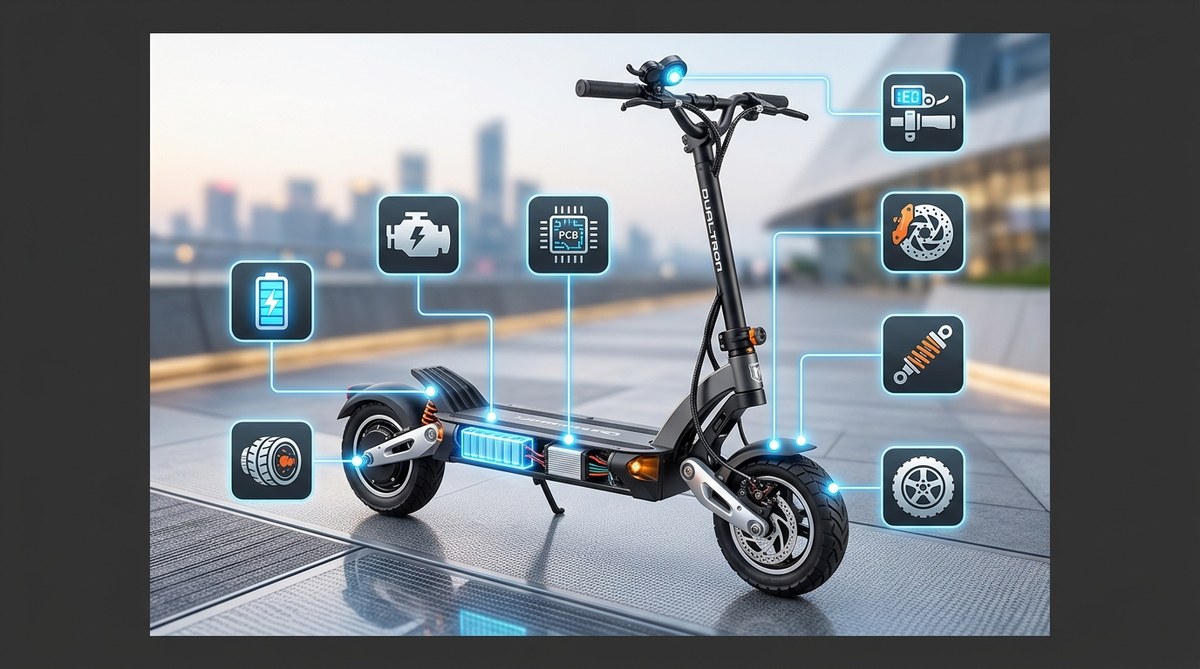
Every electric scooter relies on seven core components working together: the battery, motor, controller, throttle, display, braking system, and tires. The battery stores energy, the motor turns it into motion, and the controller manages the flow. Understanding these parts helps you troubleshoot issues, perform maintenance, and make smarter buying decisions.
The Battery: Where All the Energy Lives
The battery is the heart of your scooter. Without it, nothing happens. Most modern e-scooters use lithium-ion battery packs, similar to what you find in a laptop or electric car. The battery stores direct current (DC) electricity and supplies it to the motor and other electronics.
Battery capacity is measured in watt-hours (Wh) or amp-hours (Ah). A higher number means more range. For example, a 36V battery rated at 10Ah gives you 360 watt-hours of energy. That is enough to power a typical commuter scooter for 15 to 20 miles, depending on your weight, speed, and terrain.
You should also know about battery voltage. A 36V system is standard for entry-level scooters. Higher voltage systems, like 48V or 52V, provide more power and speed. If you are curious about how long these packs last, our guide on how long e-scooter batteries actually last covers the lifespan you can expect.
The Motor: Turning Electricity into Motion
The motor converts electrical energy from the battery into mechanical energy that spins the wheels. Two main types exist:
- Hub motors: The motor is built directly into the wheel hub. This is the most common design. It is simple, quiet, and requires little maintenance.
- Chain or belt-driven motors: A motor mounted on the frame transfers power to the wheel via a chain or belt. These are less common but offer better torque for climbing hills.
Motor power is measured in watts (W). A 250W motor is enough for flat, casual riding. A 500W motor handles moderate hills. For steep inclines or heavier riders, look for 800W or more. Our article on how to choose the right motor power for your e-scooter needs can help you decide.
Most scooters use a single motor, but some high-performance models use dual motors for extra acceleration and climbing ability.
The Controller: The Brain of the Scooter
The controller is a small computer that manages the flow of electricity from the battery to the motor. When you press the throttle, the controller reads that signal and tells the motor how much power to deliver.
The controller also handles safety features. It monitors the battery voltage, motor temperature, and speed. If something goes wrong, it can cut power to prevent damage.
Think of the controller as the traffic cop for electricity. Without it, the motor would either get full power or no power, with nothing in between. That would make for a very jerky ride. If you want a deeper look, check out our guide on what does an e-scooter controller do.
The Throttle and Display: Your Controls
The throttle is your primary input device. It tells the controller how fast you want to go. Most throttles are thumb-operated or twist-grip. You press or twist, and the scooter responds.
The display shows you important information. Common readouts include:
- Current speed
- Battery level
- Total distance traveled
- Riding mode (eco, standard, sport)
Some displays also show error codes when something is wrong. If your scooter has a smart display, you might be able to connect it to a phone app. Our article on what does each icon on your e-scooter display mean explains all the symbols you might see.
The Braking System: How You Stop
Stopping is just as important as going. Most e-scooters use one or more of these braking methods:
- Electronic brake (regen brake): The motor reverses polarity to slow down. This is frictionless and helps recharge the battery slightly.
- Disc brake: A caliper pinches a metal disc attached to the wheel. This provides strong, reliable stopping power.
- Drum brake: Brake shoes press outward against a drum inside the wheel hub. These are sealed against dirt and water.
- Foot brake: You press down on the rear fender to create friction against the tire. This is common on cheap or rental scooters.
For most riders, a combination of an electronic brake and a disc brake offers the best balance of safety and control. We have a full breakdown of e-scooter braking systems if you want the details.
The Tires and Suspension: Your Connection to the Road
Tires affect your ride quality, safety, and maintenance. Three main types exist:
| Tire Type | Pros | Cons | Best For |
|---|---|---|---|
| Pneumatic (air-filled) | Smooth ride, good traction | Can get flats | Comfort on rough roads |
| Solid (airless) | No flats, low maintenance | Rough ride, less grip | Smooth pavement only |
| Honeycomb (semi-solid) | No flats, better than solid | Still stiff, limited sizes | Urban commuting |
Suspension systems absorb shocks from bumps and cracks in the road. Spring suspension is common on budget models. Hydraulic or air suspension offers a smoother ride but costs more. If you ride on city streets with potholes, suspension makes a big difference. Our guide on how to decide if your e-scooter needs suspension can help you decide.
How All the Parts Work Together
Understanding the individual parts is one thing. Seeing how they work together is another. Here is a step-by-step look at what happens when you ride:
- You press the throttle. This sends a low-voltage signal to the controller.
- The controller checks the battery voltage and motor temperature.
- The controller draws power from the battery and sends it to the motor.
- The motor spins, turning the wheel and moving you forward.
- When you squeeze the brake lever, a signal goes to the controller and the mechanical brake.
- The controller cuts power to the motor, and the brake engages.
- The display updates your speed and battery level in real time.
This cycle repeats every second you ride. The harmony between these parts determines how your scooter feels.
Expert advice: If your scooter stops working, start with the simplest check. Make sure the battery is charged and the connections are tight. A loose wire is more common than a dead motor. Always check the controller connections before replacing expensive parts.
Common Mistakes New Riders Make
Even experienced riders sometimes overlook these issues. Here are the most common problems and how to avoid them:
- Overinflating pneumatic tires: Too much air makes the ride harsh and increases the risk of a blowout. Follow the PSI printed on the tire sidewall.
- Ignoring brake pad wear: Worn pads reduce stopping power. Replace them when you hear metal-on-metal scraping.
- Using the wrong charger: A charger with a higher voltage can damage your battery. Always use the charger that came with your scooter.
- Riding with a low battery: Voltage drops under load. A battery that shows 20% can suddenly cut out on a hill. Charge before you ride.
If you want a complete maintenance routine, our ultimate e-scooter maintenance checklist covers daily, weekly, and monthly tasks.
Putting It All Together for Your Next Ride
You do not need to be an engineer to keep your scooter running well. Knowing the seven key components gives you the confidence to troubleshoot problems, talk to a repair shop, or choose your next scooter wisely.
The next time you look at a scooter spec sheet, you will know what those numbers mean. A 48V battery with a 500W motor and disc brakes tells you this scooter can handle moderate hills and stop reliably. A 36V battery with a 250W motor and a foot brake is best for flat, slow-speed cruising.
Take care of your battery, check your tires before every ride, and listen to your brakes. Your scooter will reward you with thousands of miles of reliable service. If you are shopping for your first scooter, our beginner’s guide to choosing your first electric scooter is a great next step.
Now you know the parts. Go enjoy the ride.
