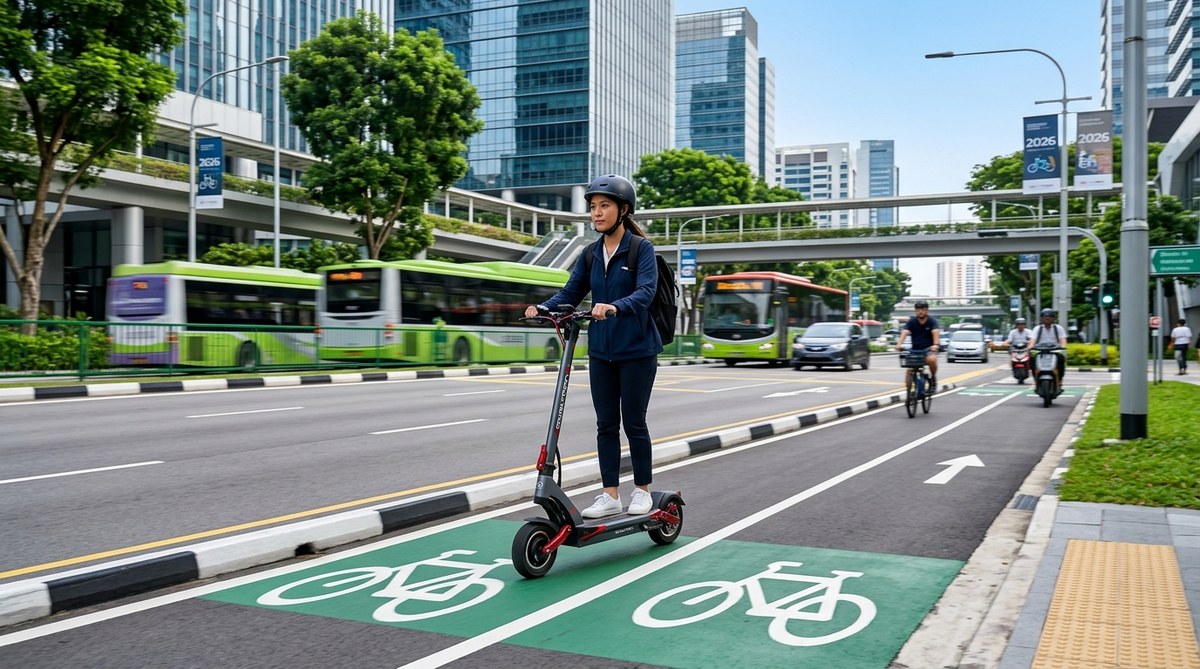
Are E-Scooters Legal on Bike Lanes in 2026?
Riding an electric scooter to work or school is one of the best ways to skip traffic and save money. But the moment you step onto a bike lane, a question pops into your head: am I actually allowed to be here? The rules around e-scooters and bike lanes have changed a lot over the last few years. In 2026, the answer is not the same for every city or state. Some places welcome e-scooters on bike lanes with open arms. Others treat them like motor vehicles and keep them on the road. And a few still ban them from bike lanes entirely. Let’s break down exactly where you can ride today so you can plan your route without worrying about a ticket.
In 2026, e-scooters are legal on bike lanes in most US states and European countries, but local city ordinances often override state laws. Always check your city’s specific rules. The trend is toward allowing e-scooters on bike lanes, especially if your scooter stays under 20 mph and you wear a helmet. When in doubt, stick to bike lanes over sidewalks or busy roads.
The Short Answer: Yes, But It Depends on Where You Live
The most direct answer to “are e-scooters legal on bike lanes in 2026” is yes for the majority of riders in the United States and Europe. But there are exceptions. About 40 US states have passed laws that classify e-scooters as “electric personal assistive mobility devices” or similar categories. These laws generally allow them on bike lanes, paths, and roads with speed limits under 25 or 30 mph. However, cities like New York, San Francisco, and Washington D.C. have their own stricter rules. In Europe, the situation is similar. Countries like Germany, France, and the UK have national frameworks, but individual cities can add restrictions.
The safest approach is to treat bike lanes as your default riding spot unless a local sign says otherwise. Bike lanes are usually safer than sidewalks (where you might hit pedestrians) and much safer than riding in car traffic.
How to Check Your Local Laws in 5 Minutes
You don’t need a lawyer to figure out the rules. Here is a simple process you can follow right now.
- Search for your state or country’s e-scooter classification. In the US, look for terms like “electric scooter law” or “motorized scooter statute.” In Europe, search for “e-scooter Straßenverkehrsordnung” (Germany) or “e-scooter Code de la route” (France).
- Check your city’s municipal code. City laws often override state laws. Search for your city name plus “e-scooter ordinance” or “bike lane regulations.”
- Look for posted signs. Many cities now have signs at the start of bike lanes that say “E-Scooters Allowed” or “No Motorized Vehicles.”
- Call your local transportation department. A quick phone call can clear up any confusion.
- Ask a local e-scooter shop. People who sell and repair scooters every day usually know the local rules better than anyone.
What the Table Says: US State vs. City Rules
Here is a quick reference table that shows how different places treat e-scooters on bike lanes in 2026.
| Location | E-Scooters Allowed on Bike Lanes? | Key Notes |
|---|---|---|
| California | Yes (statewide) | Must be 16+, helmet required, max 15 mph on bike paths. |
| New York City | No | E-scooters are banned from bike lanes. Must ride in the street. |
| Texas | Yes (statewide) | No helmet law for adults, but recommended. |
| Florida | Yes (statewide) | Local cities can restrict. Miami allows bike lane use. |
| Illinois (Chicago) | Yes | Must yield to bikes. Speed limit of 15 mph on paths. |
| Germany | Yes (nationwide) | Must have insurance plate, max 20 km/h (12.4 mph). |
| France | Yes (nationwide) | Max 25 km/h (15.5 mph). Helmet required for under 12. |
| United Kingdom | No (private only) | E-scooters are still illegal on public roads and bike lanes. Rental pilot schemes only. |
Expert tip from a traffic lawyer in Austin, Texas: “The biggest mistake riders make is assuming state law covers them everywhere. Even in a scooter-friendly state like Texas, a local park district can ban e-scooters from its bike paths. Always check local signage before you ride.”
Why Some Cities Still Say No
You might wonder why places like New York City and London keep e-scooters off bike lanes. The main reason is safety. Bike lanes were designed for bicycles, which move at a consistent speed and have larger wheels. E-scooters can accelerate faster and have smaller wheels that handle potholes poorly. Cities worry about collisions between e-scooters and traditional bikes. There is also the issue of sidewalk riding. When e-scooters are banned from bike lanes, some riders move to sidewalks, which creates danger for pedestrians. This creates a cycle of complaints that leads to more restrictions.
In 2026, many cities are testing “shared bike lanes” that are wider and have a separate section for scooters. These lanes often have a lower speed limit of 10 or 12 mph. If your city has these lanes, you are usually required to use them instead of the main bike lane.
Common Mistakes That Get Riders Fined
Even in places where e-scooters are legal on bike lanes, you can still get a ticket if you break the rules. Here are the most common mistakes riders make.
- Riding on the sidewalk when a bike lane is available. Most cities fine you for this.
- Exceeding the posted speed limit in a bike lane. Many bike lanes have a 10 or 15 mph limit.
- Not yielding to pedestrians when crossing a crosswalk.
- Riding an e-scooter that is too powerful. Some cities limit e-scooters to 750 watts or less.
- Not wearing a helmet where required. This is a common ticket in states like California and Oregon.
Avoid these mistakes and you will likely never have a problem. If you want to learn more about general safety, check out our guide on how to safely navigate crowded sidewalks and bike lanes on your e-scooter.
What to Do If You Get Stopped
If a police officer stops you for riding in a bike lane, stay calm. Here is what you should do.
- Be polite and respectful. Arguing rarely helps.
- Ask for the specific law you broke. Officers can sometimes be wrong about local ordinances.
- Show your scooter’s specifications if you have them. A printout of the manual can prove your scooter stays under the legal speed or power limit.
- Accept the warning or ticket and move on. Fighting a ticket in court is possible, but it’s usually easier to just pay it if you were in the wrong.
How E-Scooter Classes Affect Bike Lane Access
In 2026, more states are adopting a three-class system for e-scooters, similar to the system used for e-bikes. This makes it easier to know where you can ride.
- Class 1: Low-speed scooters (max 15 mph). Almost always allowed on bike lanes.
- Class 2: Mid-speed scooters (max 20 mph). Allowed on bike lanes in most places.
- Class 3: High-speed scooters (max 28+ mph). Often banned from bike lanes. You may need to ride on the road.
If you own a high-speed scooter, you should check your local laws carefully. Many cities do not allow Class 3 scooters on bike lanes because they create a safety risk for cyclists. If you are shopping for a new scooter, you can learn more about what to look for in an e-scooter for 2026.
A Quick Checklist Before You Ride
Before you head out, run through this short list.
- Is my scooter legal in my state or country?
- Does my city have any special rules for bike lanes?
- Am I wearing a helmet if required?
- Is my scooter speed limited to the local bike lane limit?
- Do I have lights and a bell if required by law?
If you can answer yes to all of these, you are ready to ride.
The Future of E-Scooters on Bike Lanes
The trend in 2026 is moving toward clearer, more uniform rules. More cities are building dedicated micro-mobility lanes that separate e-scooters from both bikes and cars. This is great news for riders. As more people choose e-scooters for their commute, cities are realizing that banning them from bike lanes just pushes them onto sidewalks or roads, which is worse for everyone. The smart solution is to build better infrastructure.
If you are curious about how your city is adapting, check out our article on how e-scooters are reducing traffic congestion in major cities. It covers the positive changes happening in urban planning right now.
Ride Smart, Ride Legal
Knowing the answer to “are e-scooters legal on bike lanes in 2026” is just the first step. The real key is to stay informed about your local laws. Rules change fast as cities figure out how to handle new forms of transportation. A law that was true last year might be different today. Always check for new signs and updates from your city’s transportation department.
The good news is that for most riders, bike lanes are a safe and legal place to ride. They keep you away from cars and give you a smooth path to your destination. Just remember to be respectful of cyclists, follow the speed limit, and wear your helmet. Ride safe out there.
