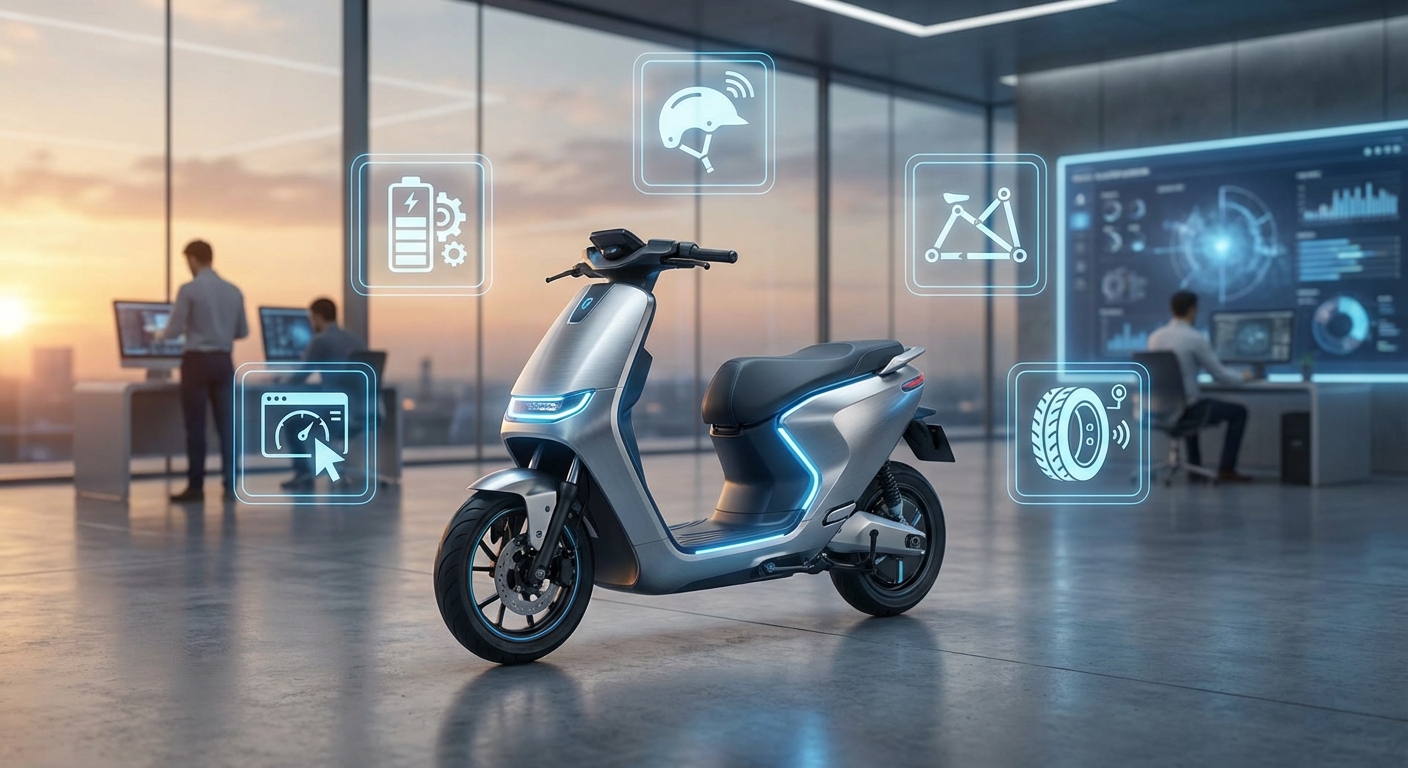
5 Game-Changing E-Scooter Technologies Coming in the Next 12 Months
The electric scooter industry is about to experience its biggest transformation yet. Over the next 12 months, five groundbreaking technologies will hit the market and fundamentally change how we think about personal electric transportation. These aren’t minor tweaks or marketing gimmicks. They’re substantial innovations that will make e-scooters faster, safer, smarter, and more practical for everyday use.
The next 12 months will bring solid-state batteries offering 200+ mile ranges, AI-powered collision avoidance systems, self-healing tire technology, wireless charging pads, and adaptive suspension that adjusts in real time. These upcoming e-scooter technology advances will make rides safer, longer, and more comfortable while reducing maintenance headaches. Early adopters can expect these features in premium models by late 2026, with mainstream availability following in 2027.
Solid-State Batteries Will Double Your Range
Current lithium-ion batteries have served us well, but they’re reaching their limits. Solid-state batteries represent the next generation of energy storage, and they’re finally ready for commercial e-scooters.
The difference is dramatic. Where today’s best e-scooters might offer 40 to 60 miles on a single charge, solid-state batteries will push that to 100 miles or more. Some prototypes are already hitting 200 miles in testing.
But range isn’t the only benefit. These batteries charge faster, last longer, and weigh significantly less than traditional lithium-ion packs. A solid-state battery that delivers 100 miles of range might weigh the same as a current battery that only provides 40 miles.
Safety improves too. Solid-state batteries don’t use flammable liquid electrolytes, so they’re far less likely to catch fire or explode if damaged. This addresses one of the biggest safety concerns people have about e-scooters.
What This Means for Your Daily Commute
Imagine never worrying about range anxiety again. You could take the scenic route home, run errands after work, and still have plenty of charge left. For those considering how to choose your first electric scooter, this technology will make range a non-issue.
The first models with solid-state batteries should arrive by fall 2026. Expect them in premium scooters first, with prices gradually dropping as production scales up.
AI-Powered Collision Avoidance Systems
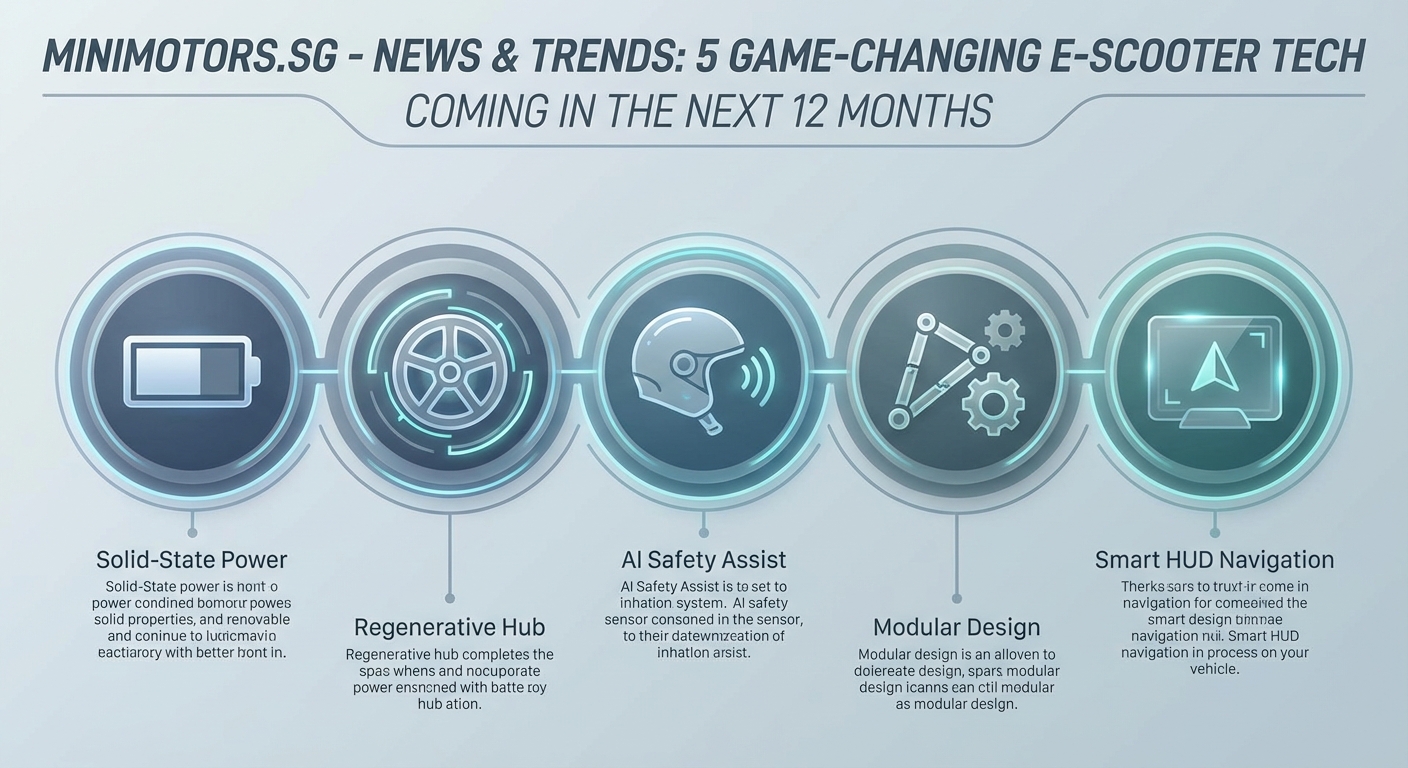
Your next e-scooter might be smarter than your car. Advanced AI systems are coming that can detect obstacles, predict potential collisions, and automatically adjust speed or apply brakes to prevent accidents.
These systems use a combination of cameras, radar sensors, and machine learning algorithms. They can identify pedestrians, vehicles, potholes, and other hazards in real time. The system learns your riding patterns and the routes you take, getting better at predicting danger the more you ride.
Here’s how it works in practice:
- Sensors continuously scan the road ahead and to the sides
- AI algorithms process this data and identify potential threats
- The system calculates the safest response based on your speed and direction
- If needed, it automatically reduces power or applies brakes
- You receive haptic feedback through the handlebars warning you of the danger
The technology builds on systems already used in AI-powered smart features but takes them several steps further. Current systems can detect basic obstacles. These new systems can predict what a pedestrian or vehicle is likely to do next.
“The AI doesn’t just react to what’s happening now. It anticipates what’s about to happen. That split-second warning can mean the difference between a close call and a serious accident.” – Dr. Sarah Chen, Autonomous Vehicle Research Lab
Real-World Applications
Picture riding through a busy intersection. A car starts to turn without signaling. Before you even register the danger, your scooter has already begun slowing down and vibrating the handlebars to alert you. The system gives you time to react and avoid the collision.
Or consider riding at night when visibility is poor. The AI can see in the dark better than you can, detecting obstacles and hazards you might miss. This makes night riding safety far less stressful.
Self-Healing Tire Technology
Flat tires are one of the most common e-scooter problems. They’re inconvenient, potentially dangerous, and often happen at the worst possible times. Self-healing tire technology aims to eliminate this problem entirely.
These tires contain a special sealant layer that automatically fills punctures as they occur. When a sharp object pierces the tire, the sealant flows into the hole and hardens within seconds, maintaining air pressure and allowing you to continue riding.
The technology works for punctures up to 6mm in diameter, which covers the vast majority of common road debris like nails, screws, and glass shards. Larger punctures still require traditional repair, but those are relatively rare.
Benefits Beyond Convenience
Self-healing tires offer several advantages:
- Eliminates most roadside breakdowns
- Reduces long-term maintenance costs
- Improves safety by preventing sudden air loss
- Extends tire lifespan by preventing small punctures from becoming larger tears
- Works with both air-filled and tubeless tire designs
For riders who’ve dealt with the frustration of fixing a flat tire, this technology is genuinely transformative. You’ll rarely need to worry about punctures again.
The first self-healing tires should appear on mid-range and premium scooters by mid-2026. Initial pricing will add about $100 to $150 to the scooter cost, but that premium will decrease as adoption grows.
Wireless Charging Infrastructure
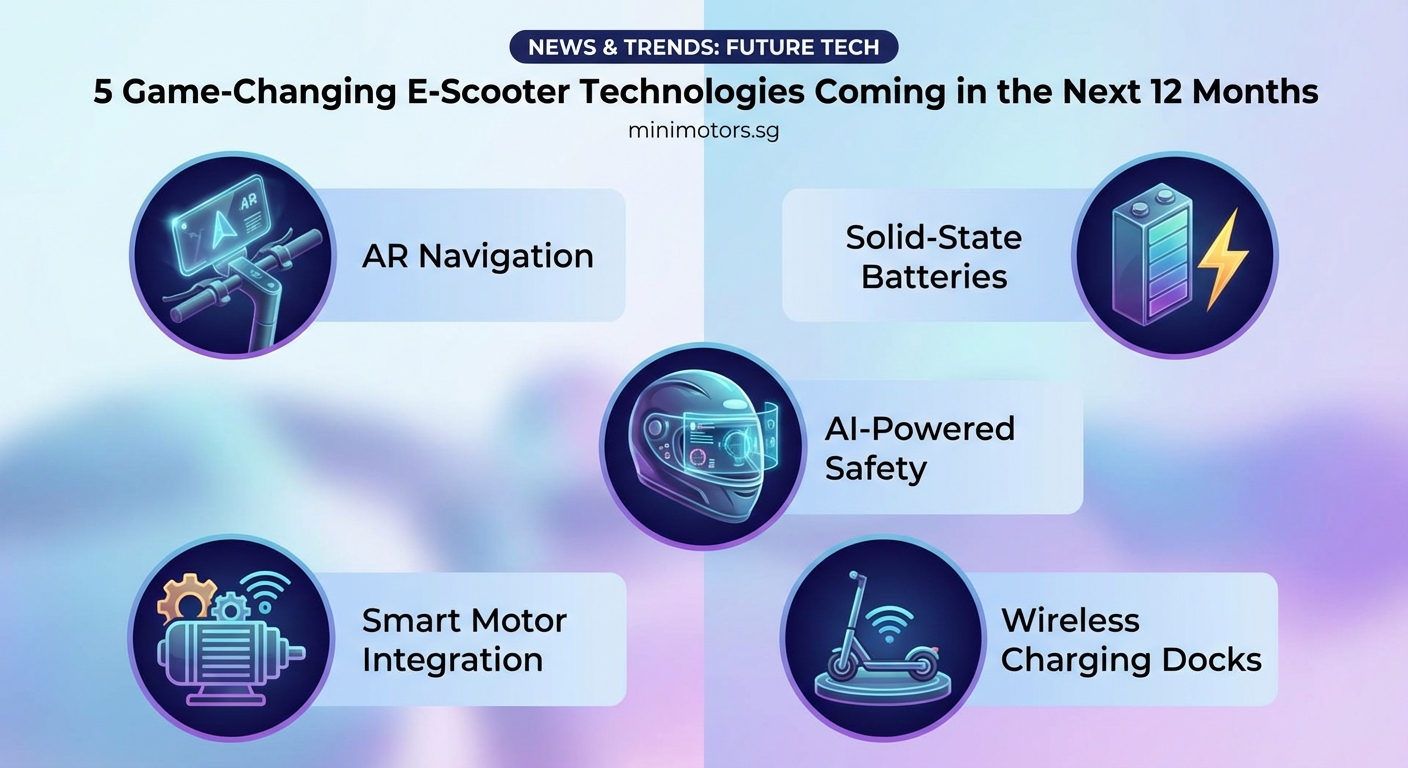
Plugging in your e-scooter every night works, but it’s not ideal. Wireless charging pads will make powering up as simple as parking your scooter in the right spot.
The technology uses inductive charging, similar to wireless phone chargers but scaled up. You park your scooter over a charging pad, and power transfers automatically. No cables to plug in, no connectors to wear out, no forgetting to charge because you were too tired to deal with cords.
Cities are already planning to install public wireless charging stations at transit hubs, shopping centers, and office parks. Park your scooter while you work or shop, and it charges automatically. Some systems will even handle payment through your phone, billing you only for the power you actually use.
Home Installation Made Simple
Home wireless charging pads will be easy to install. Most will simply plug into a standard outlet and sit on your garage or apartment floor. Park your scooter on the pad, and charging begins automatically.
Advanced versions will integrate with smart home systems, allowing you to:
- Schedule charging during off-peak electricity hours to save money
- Monitor charging status from your phone
- Set charge limits to extend battery life
- Receive alerts if charging isn’t working properly
The convenience factor is huge. You’ll never have a dead scooter because you forgot to plug it in. Just park it in the same spot every time, and it stays charged.
Adaptive Suspension Systems
Current e-scooter suspension is either on or off, soft or firm. Adaptive suspension changes stiffness in real time based on road conditions, your weight, and how you’re riding.
The system uses sensors to monitor road surface quality, detect bumps and potholes, and measure how much weight is on each wheel. Electronic actuators then adjust suspension stiffness hundreds of times per second, providing the optimal ride quality for current conditions.
Riding on smooth pavement? The suspension firms up for better efficiency and handling. Hit a rough patch? It softens instantly to absorb impacts and keep you comfortable. Leaning into a turn? It adjusts to reduce body roll and improve stability.
Comparing Traditional vs Adaptive Suspension
| Feature | Traditional Suspension | Adaptive Suspension |
|---|---|---|
| Adjustment speed | Manual, requires stopping | Automatic, instant |
| Road adaptation | Fixed settings for all conditions | Optimizes for current surface |
| Weight compensation | Set once, doesn’t change | Continuously adjusts |
| Maintenance needs | Periodic manual adjustment | Self-calibrating |
| Ride quality | Good for one condition | Excellent for all conditions |
| Energy efficiency | Standard | Improved by 8-12% |
The efficiency improvement comes from reduced energy waste. When suspension is too soft, power gets absorbed by unnecessary movement. When it’s too firm, the motor works harder to overcome bumps. Adaptive suspension finds the sweet spot automatically.
For riders comparing commuter vs off-road e-scooters, adaptive suspension might eliminate the need to choose. One scooter could handle both smooth city streets and rough trails equally well.
How These Technologies Work Together
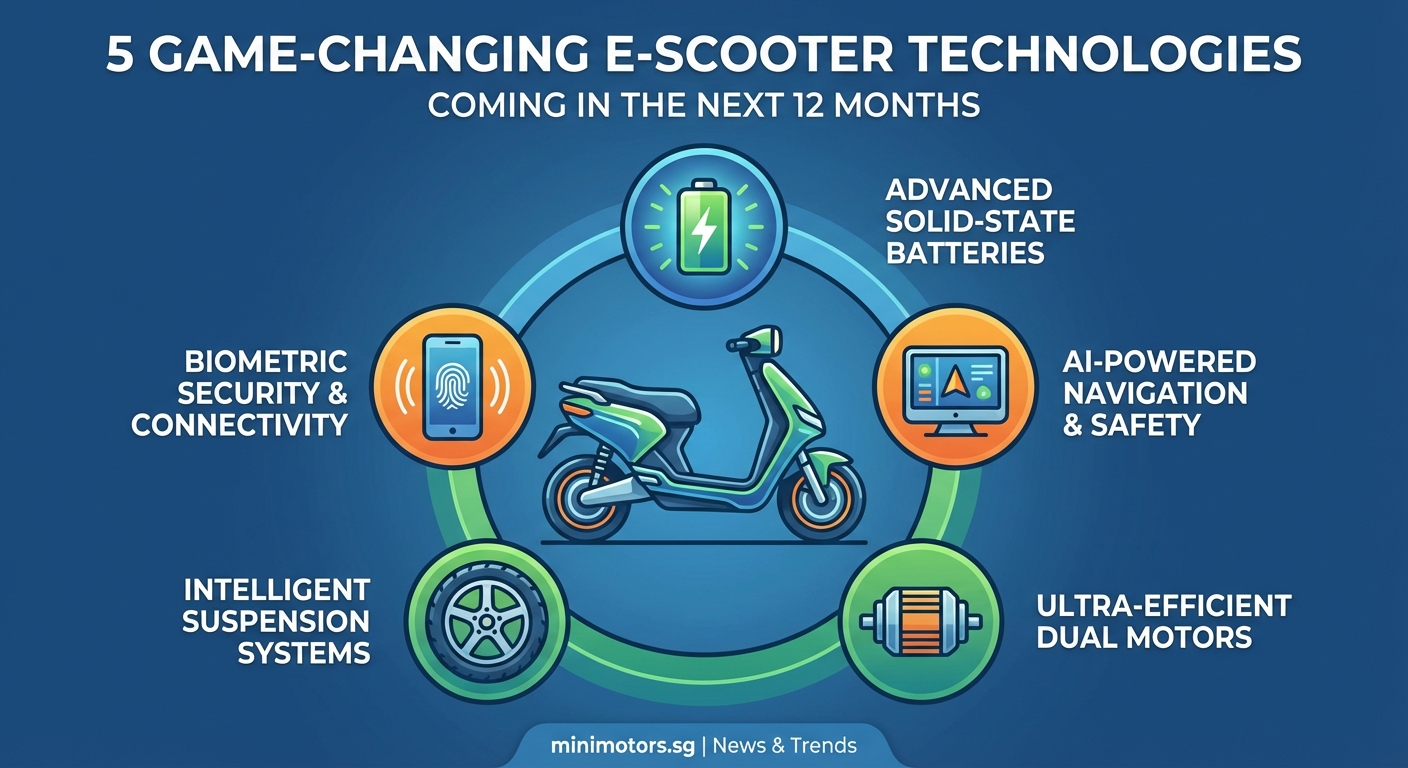
The real magic happens when these technologies combine. Imagine a typical morning commute with all five innovations working in concert.
You walk to your scooter, which charged wirelessly overnight. The solid-state battery shows 100% charge and 150 miles of range. You start riding, and the adaptive suspension immediately adjusts for your weight and the smooth parking lot surface.
As you enter traffic, the AI collision avoidance system activates, monitoring cars and pedestrians. You hit a pothole you didn’t see. The adaptive suspension softens just before impact, and you barely feel it. A piece of glass punctures your tire, but the self-healing technology seals it before you notice any air loss.
You arrive at work and park on a wireless charging pad. Eight hours later, you return to a fully charged scooter, ready for the trip home and any evening errands.
This isn’t science fiction. Every piece of this scenario will be possible within 12 months.
Common Concerns About New Technology
New technology always raises questions. Here are the most common concerns and what you need to know:
Will these features make e-scooters too expensive?
Initially, yes. Early adopters will pay a premium. But prices drop rapidly in the e-scooter market. Features that cost $500 extra today often become standard within two years. If budget is a concern, check out budget e-scooters under $500 to see what’s currently available.
Are these technologies reliable enough for daily use?
Manufacturers are testing these systems extensively before release. Solid-state batteries have been in development for over a decade. AI collision systems build on automotive technology that’s already proven. Self-healing tires have been used in commercial vehicles for years. The e-scooter versions benefit from all that prior development.
Will older scooters become obsolete?
Not at all. Current e-scooters will continue working just fine. These new technologies add convenience and capability, but they don’t make existing scooters unusable. Think of it like smartphones. A five-year-old phone still works, even if newer models have better features.
How much maintenance will these systems need?
Less than current technology in most cases. Solid-state batteries last longer than lithium-ion. Self-healing tires reduce maintenance. Wireless charging eliminates wear on charging ports. AI systems update automatically. Adaptive suspension is self-calibrating. Overall maintenance should actually decrease.
Preparing for the Technology Shift
You don’t need to wait passively for these innovations to arrive. Here’s how to prepare:
Stay informed about release dates. Follow manufacturer announcements and industry news. Sign up for newsletters from major e-scooter brands. The first models with these technologies will likely sell out fast.
Evaluate your current needs. If your existing scooter meets your needs, there’s no rush to upgrade. But if you’re planning to buy soon anyway, it might be worth waiting a few months for next-generation models.
Consider your budget. Early versions of these technologies will command premium prices. Decide whether being an early adopter is worth the extra cost, or if you’d rather wait for prices to drop.
Check local regulations. Some jurisdictions have rules about maximum e-scooter speeds or features. Make sure new technologies are legal in your area before buying. Understanding what’s legal in your city helps avoid problems.
Think about infrastructure. If you’re interested in wireless charging, check whether your home or workplace can accommodate charging pads. Most require nothing more than a standard outlet, but it’s worth confirming.
What to Look for When Shopping
When these new technologies start appearing in stores, here’s how to evaluate them:
- Battery specifications: Look for actual range tests, not just manufacturer claims. Check charge time and expected battery lifespan.
- AI system capabilities: Ask what specific hazards the system can detect. Request demonstration videos showing the system in action.
- Tire warranty: Self-healing tires should come with guarantees. Check what types of punctures are covered and for how long.
- Charging pad compatibility: Verify that wireless charging pads work with your home electrical system. Check if they’re weatherproof for outdoor use.
- Suspension adjustability: Even adaptive systems should allow manual override for personal preference. Make sure you can customize settings.
Don’t just focus on individual features. Consider how well they integrate. The best implementations will have all systems working together seamlessly, not just bolted on as separate add-ons.
The Bigger Picture for Urban Mobility
These technologies represent more than just better e-scooters. They’re part of a larger shift in how cities think about transportation.
As e-scooters become more capable and reliable, they’ll replace more car trips. Better batteries mean longer ranges, making e-scooters viable for trips that currently require driving. Improved safety features address one of the main concerns keeping people from adopting e-scooters.
Cities are responding by investing in infrastructure. More bike lanes, more charging stations, more parking areas designed specifically for micro-mobility. The relationship between e-scooters and urban planning is evolving rapidly.
This creates a positive feedback loop. Better technology drives more adoption. More adoption drives better infrastructure. Better infrastructure makes e-scooters even more practical, driving further adoption.
Making the Most of Current Technology While You Wait
While these innovations are exciting, don’t ignore what’s available now. Current e-scooters are already quite capable, and you can enhance them with smart accessories and proper maintenance.
Consider adding quality accessories like phone mounts, better lights, or upgraded grips. These relatively small investments can significantly improve your riding experience. Check out must-have accessories that work with any scooter.
Proper maintenance extends the life of your current scooter and keeps it running smoothly. Follow a regular schedule for cleaning, tire pressure checks, and brake adjustments. Understanding essential maintenance intervals prevents problems before they start.
And don’t overlook riding technique. Even the best technology can’t replace good judgment and skill. Practice emergency braking, learn to read road conditions, and always ride defensively.
Why These Innovations Matter Now
The timing of these technologies isn’t random. They’re arriving because several trends are converging.
Battery technology has reached a tipping point where solid-state production is finally economically viable. AI processing power has become cheap and compact enough to fit in small devices. Materials science has advanced to make self-healing compounds practical. Wireless charging standards have matured.
The e-scooter market has also grown large enough to justify major R&D investments. When only a few thousand people rode e-scooters, manufacturers couldn’t afford to develop expensive new technologies. Now, with millions of riders worldwide, the business case is clear.
Consumer expectations are rising too. Early adopters were willing to tolerate limited range, frequent maintenance, and basic features. Mainstream buyers want e-scooters that match the sophistication of their other devices. These new technologies deliver that sophistication.
Your Next Steps
The upcoming e-scooter technology revolution is coming whether you’re ready or not. The question is how you’ll respond.
If you’re shopping for an e-scooter now, consider whether your needs can wait a few months. The first models with these technologies should appear by summer 2026. If you need a scooter immediately, buy something that meets your current needs and plan to upgrade later.
If you already own an e-scooter, decide whether these new features justify upgrading. For some riders, the answer will be an immediate yes. For others, their current scooter will serve them well for years to come.
Either way, stay informed. The e-scooter industry is moving fast, and being knowledgeable helps you make better decisions. Follow industry news, read reviews, and talk to other riders.
Most importantly, think about how these technologies will change your relationship with personal transportation. An e-scooter with 150-mile range, AI safety features, and maintenance-free tires isn’t just a toy or a fair-weather convenience. It’s a legitimate transportation option that can replace many car trips.
The Road Ahead for E-Scooter Innovation
These five technologies are just the beginning. The next 12 months will transform what’s possible with electric scooters, but innovation won’t stop there.
Looking further ahead, expect to see even more advanced features. Fully autonomous parking, where your scooter drives itself to a charging station. Vehicle-to-vehicle communication, allowing scooters to warn each other about hazards. Modular designs that let you swap components as technology improves.
The e-scooter of 2030 will be as different from today’s models as today’s models are from the first generation. Battery ranges will extend to 300 miles or more. AI will handle most safety decisions automatically. Maintenance will become almost entirely automated.
But you don’t have to wait until 2030 to experience the future. The next generation of e-scooters arrives in just a few months, bringing capabilities that seemed impossible just a few years ago. Whether you’re a current rider looking to upgrade or someone considering their first e-scooter purchase, this is an exciting time to be watching the industry.
The technologies we’ve covered will make e-scooters safer, more practical, and more enjoyable to ride. They’ll reduce the barriers that have kept some people from adopting e-scooters as their primary transportation. And they’ll prove that electric micro-mobility isn’t just a trend, but a fundamental shift in how we move through cities.
Get ready. The future of e-scooters is almost here, and it’s going to be an incredible ride.
