5 Signs Your E-Scooter Tires Need Replacement (And How to Change Them)
Your morning commute felt different today. The ride was bumpier. Braking took longer. Your scooter seemed to slip more than usual on that familiar corner. These aren’t random issues. Your tires are trying to tell you something important.
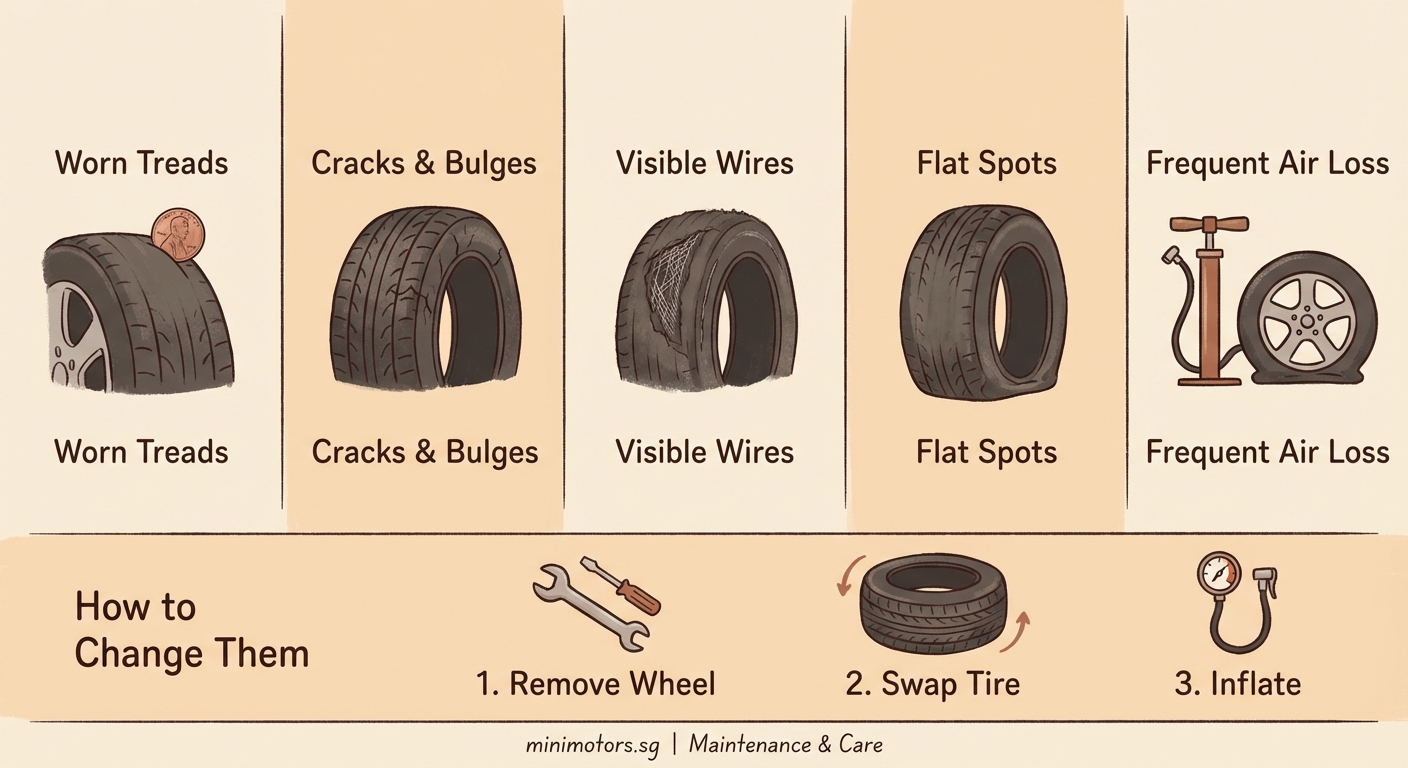
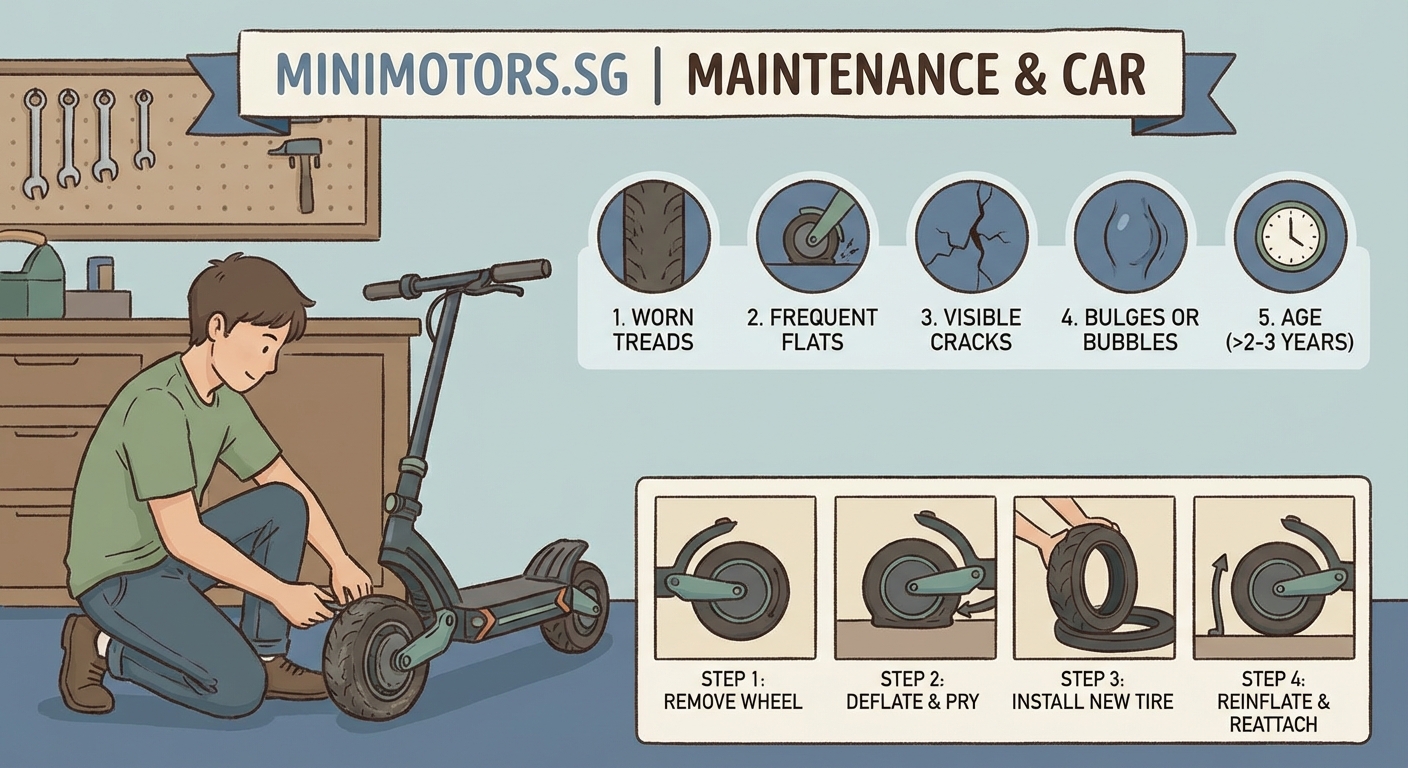
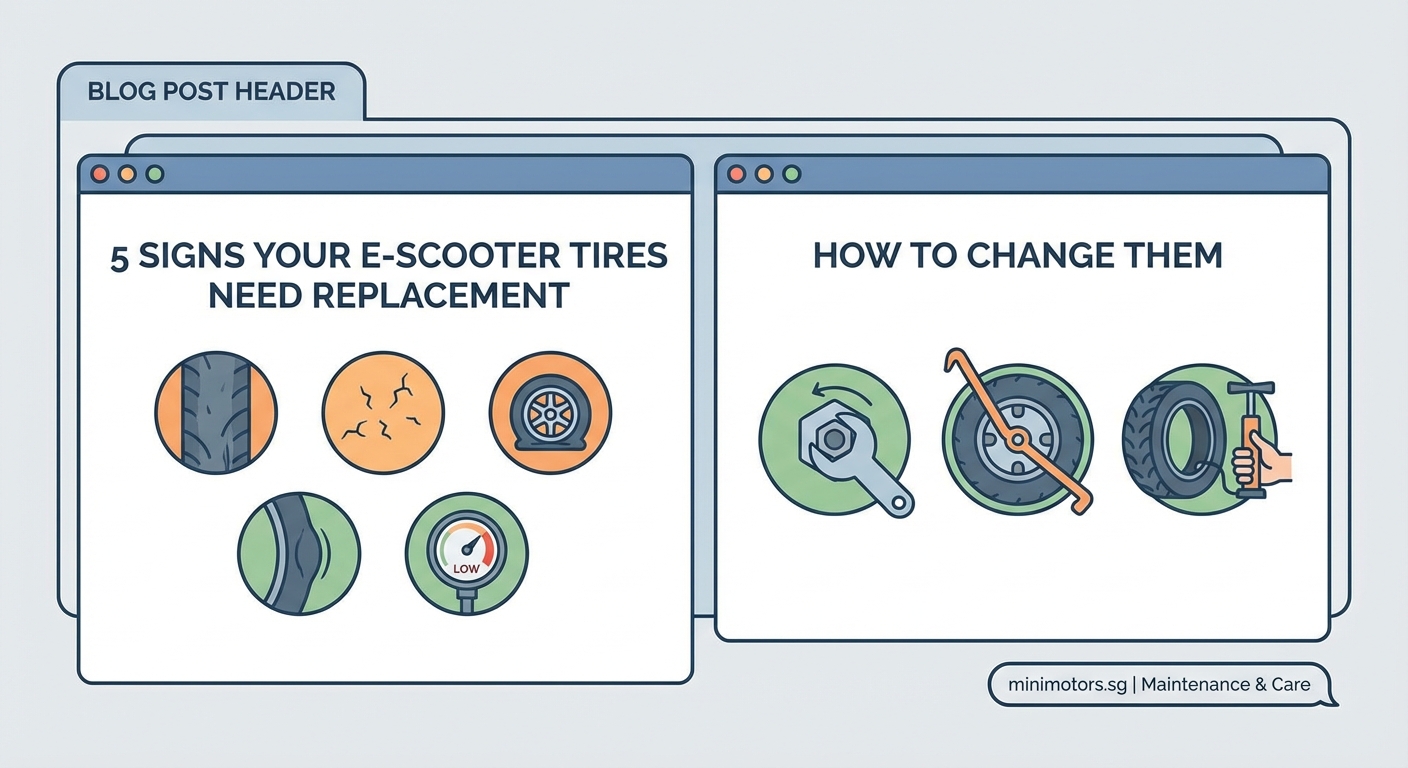
Knowing when to replace electric scooter tires prevents accidents and improves performance. Watch for five critical signs: visible tread wear, sidewall cracks, bulges or deformities, frequent flats, and reduced grip. Most pneumatic tires last 1,000 to 3,000 miles depending on riding conditions, while solid tires can reach 5,000 miles. Regular inspection every two weeks keeps you safe and extends tire life significantly.
Understanding tire wear patterns on electric scooters
Tires don’t fail overnight. They degrade gradually through normal use.
The center of your tire wears faster if you ride mostly on smooth pavement. Edge wear happens when you corner aggressively or ride on uneven surfaces. Uneven wear between front and rear tires is completely normal because weight distribution differs.
Front tires typically wear 20 to 30 percent faster than rear tires on most models. The front handles steering forces and absorbs more impact from obstacles. Rear tires deal with acceleration forces and rider weight.
Temperature affects wear rates too. Hot pavement in summer months softens rubber compounds. Cold weather makes tires harder and more brittle. Both extremes accelerate degradation.
Your riding style matters more than you think. Aggressive acceleration, hard braking, and sharp turns all increase wear. Smooth, predictable riding extends tire life by months.
Five clear signs your tires need immediate replacement
Tread depth below the safety threshold
New pneumatic tires have grooves about 2 to 3 millimeters deep. When tread depth drops below 1 millimeter, replacement becomes urgent.
Run your finger across the tire surface. If you can barely feel the grooves, the tire is too worn. Some manufacturers mold wear indicators into the tread. These small bumps sit at the minimum safe depth. When the tread wears level with these indicators, replace the tire.
Solid tires don’t have traditional tread but they do wear smooth. A shiny, glass-like surface means the protective outer layer is gone. The tire will offer minimal grip in wet conditions.
Cracks in the sidewall or tread
Rubber naturally degrades over time. UV exposure, ozone, and temperature cycling all cause cracking.
Small surface cracks less than 1 millimeter deep might not require immediate action. Monitor them closely. Deep cracks that penetrate more than 2 millimeters compromise structural integrity. These can lead to sudden blowouts.
Cracks appear most often on the sidewalls where rubber is thinner. Check both the outer and inner sidewalls during your inspection. Inner sidewall damage often goes unnoticed until it’s too late.
Age matters as much as mileage. Tires older than three years should be replaced even if tread looks adequate. Rubber compounds lose elasticity and grip over time regardless of use.
Bulges, bubbles, or deformed sections
A bulge means the internal structure has failed. The tire’s fabric layers or belt have separated from the rubber. This creates a weak spot that will eventually burst.
Never ride on a bulging tire. The failure risk is too high. Even a small bubble can blow out under normal riding pressure.
Deformities also include flat spots from long-term storage or uneven inflation. These create vibration and reduce handling precision. If the tire won’t round out after a few rides, replacement is necessary.
Frequent punctures or air loss
One flat tire is bad luck. Multiple flats in a short period signal deeper problems.
Worn tires puncture more easily because the protective rubber layer is thinner. Small debris that would normally bounce off can now penetrate. The tire’s ability to resist damage decreases exponentially as it wears.
Slow leaks from valve stems or bead seating issues are different. These require repair, not replacement. But if you’re patching the same tire every few weeks, the tire itself has reached end of life.
Solid tires eliminate puncture worries but they still wear out. Chunks missing from the surface or visible separation between layers means replacement time.
Reduced traction and longer stopping distances
This sign is subtle but critical. You know your scooter’s normal behavior. If braking distances increase or the rear tire slides more easily, grip has deteriorated.
Test this safely in a controlled environment. Find an empty parking lot. Brake firmly from 15 miles per hour. Note the stopping distance. Repeat the test every few weeks. A noticeable increase means tire replacement should happen soon.
Cornering feel changes too. Worn tires feel vague and less responsive. You’ll need to slow down more for turns you used to take confidently. This isn’t just about comfort. It’s a safety issue.
“Most riders wait too long to replace tires. They focus on visible damage and ignore performance degradation. Reduced grip kills your emergency braking ability. That’s when accidents happen.” — Workshop technician with 12 years of e-scooter maintenance experience
How riding conditions affect replacement timing
Your environment determines tire lifespan more than any other factor.
Urban commuting on smooth roads: Expect 2,000 to 3,000 miles from quality pneumatic tires. Solid tires might reach 4,000 to 5,000 miles. The consistent, predictable surface is gentle on rubber.
Mixed terrain with occasional gravel or dirt: Lifespan drops to 1,500 to 2,500 miles for pneumatic tires. Abrasive surfaces wear tread faster. Sharp stones increase puncture risk.
Heavy off-road use: Pneumatic tires might last only 800 to 1,200 miles. Rocks, roots, and rough terrain destroy tread quickly. Sidewall damage becomes common. Consider commuter vs off-road e-scooters for terrain-specific guidance.
Wet climate riding: Water itself doesn’t damage tires but it accelerates wear. Wet surfaces require more aggressive braking. Tires slip more, grinding away tread. Inspect tires more frequently if you ride in rain regularly.
High-temperature environments: Heat above 95°F softens rubber compounds. Tires wear 15 to 25 percent faster in hot climates. Store your scooter in shade when possible.
Cold weather operation: Below 40°F, rubber hardens and becomes brittle. Cracks develop faster. Grip decreases. Some riders switch to winter-specific compounds in cold climates.
| Riding Condition | Pneumatic Tire Lifespan | Solid Tire Lifespan | Primary Wear Factor |
|---|---|---|---|
| Urban commuting | 2,000-3,000 miles | 4,000-5,000 miles | Normal abrasion |
| Mixed terrain | 1,500-2,500 miles | 3,000-4,000 miles | Abrasive surfaces |
| Off-road | 800-1,200 miles | 2,000-3,000 miles | Impact damage |
| Wet climate | 1,500-2,500 miles | 3,500-4,500 miles | Increased slip |
| Hot weather | 1,700-2,700 miles | 3,500-4,500 miles | Compound softening |
| Cold weather | 1,800-2,800 miles | 4,000-5,000 miles | Brittleness |
Pneumatic vs solid tires: different replacement schedules
Pneumatic tires offer better ride quality but require more maintenance. They need regular pressure checks. Underinflation accelerates wear dramatically. A tire at 20 PSI when it should be at 50 PSI will wear out twice as fast.
Check pressure every two weeks minimum. More often if you ride daily. Proper inflation distributes weight evenly across the tread. This maximizes lifespan and performance.
Solid tires eliminate maintenance but sacrifice comfort. They transmit every bump directly to the deck. This increases stress on other components like bearings and suspension.
Solid tires wear more predictably. You won’t deal with sudden flats. But when they do reach end of life, replacement is often more difficult. Some solid tires require heating or special tools for installation.
Honeycomb or foam-filled tires split the difference. They offer puncture resistance with better ride quality than solid rubber. Replacement timing falls between pneumatic and solid options.
Creating a tire inspection routine
Regular inspection catches problems before they become dangerous. Build this into your weekly routine.
- Clean the tires with a damp cloth to remove debris and dirt.
- Inspect the entire circumference of both tires for cuts, cracks, or embedded objects.
- Check tread depth using a ruler or depth gauge at three points around each tire.
- Examine sidewalls for bulges, cracks, or discoloration on both inner and outer surfaces.
- Verify proper tire pressure with a quality gauge if you have pneumatic tires.
- Spin each wheel and watch for wobble or uneven rotation.
- Document findings in a simple log with date and mileage.
This process takes five minutes. Do it before your first ride of the week. Catching a developing crack early might save you from a crash later.
Keep records of when you installed tires and their current mileage. This helps predict when replacement will be needed. Most riders underestimate how many miles they accumulate.
For daily commuters, the ultimate e-scooter maintenance checklist provides a comprehensive approach to all components.
Common mistakes that shorten tire life
Many riders unknowingly destroy their tires through poor practices.
Ignoring pressure recommendations: Running tires at incorrect pressure is the number one killer. Too low causes excessive flexing and heat buildup. Too high reduces contact patch and makes the tire more susceptible to impact damage.
Skipping rotation: Some scooters allow tire rotation between front and rear. This equalizes wear and extends overall lifespan. Check your manual to see if rotation is possible on your model.
Aggressive riding style: Jackrabbit starts and panic stops wear tread rapidly. Smooth acceleration and gradual braking can double tire life. This doesn’t mean riding slowly. It means being deliberate with throttle and brake inputs.
Neglecting storage conditions: Tires stored in direct sunlight age faster. UV rays break down rubber compounds. Store your scooter indoors or use a cover if outdoor storage is necessary.
Using wrong tire type: Installing tires not designed for your scooter’s weight or speed rating causes premature failure. Always match manufacturer specifications. Budget tires might save money initially but need replacement sooner.
Overloading the scooter: Exceeding weight limits stresses tires beyond their design capacity. This accelerates wear and increases blowout risk. If you’re near your scooter’s weight limit, consider e-scooters for heavy riders with appropriate capacity.
What to look for when buying replacement tires
Not all replacement tires are equal. Quality varies dramatically between brands.
Match original specifications: Tire width, diameter, and load rating must match your scooter’s requirements. Installing a narrower tire reduces stability. A wider tire might not fit properly and can rub against the fender or deck.
Consider compound hardness: Softer compounds offer better grip but wear faster. Harder compounds last longer but provide less traction. Most riders do best with a mid-range durometer rating around 60 to 70 Shore A.
Check manufacturing date: Tires degrade even when stored properly. Look for a date code on the tire. Avoid tires more than two years old regardless of their unused condition.
Read reviews from actual users: Other riders’ experiences reveal real-world performance. Look for feedback about durability, puncture resistance, and grip in various conditions.
Balance cost with quality: The cheapest tires rarely offer good value. They wear out faster and perform worse. Premium tires cost more upfront but often last twice as long. Calculate cost per mile rather than just purchase price.
Verify compatibility: Some scooters use proprietary tire sizes or mounting systems. Confirm the tire will work with your specific model before ordering. Return policies vary, so buy from retailers with good customer service.
DIY replacement vs professional service
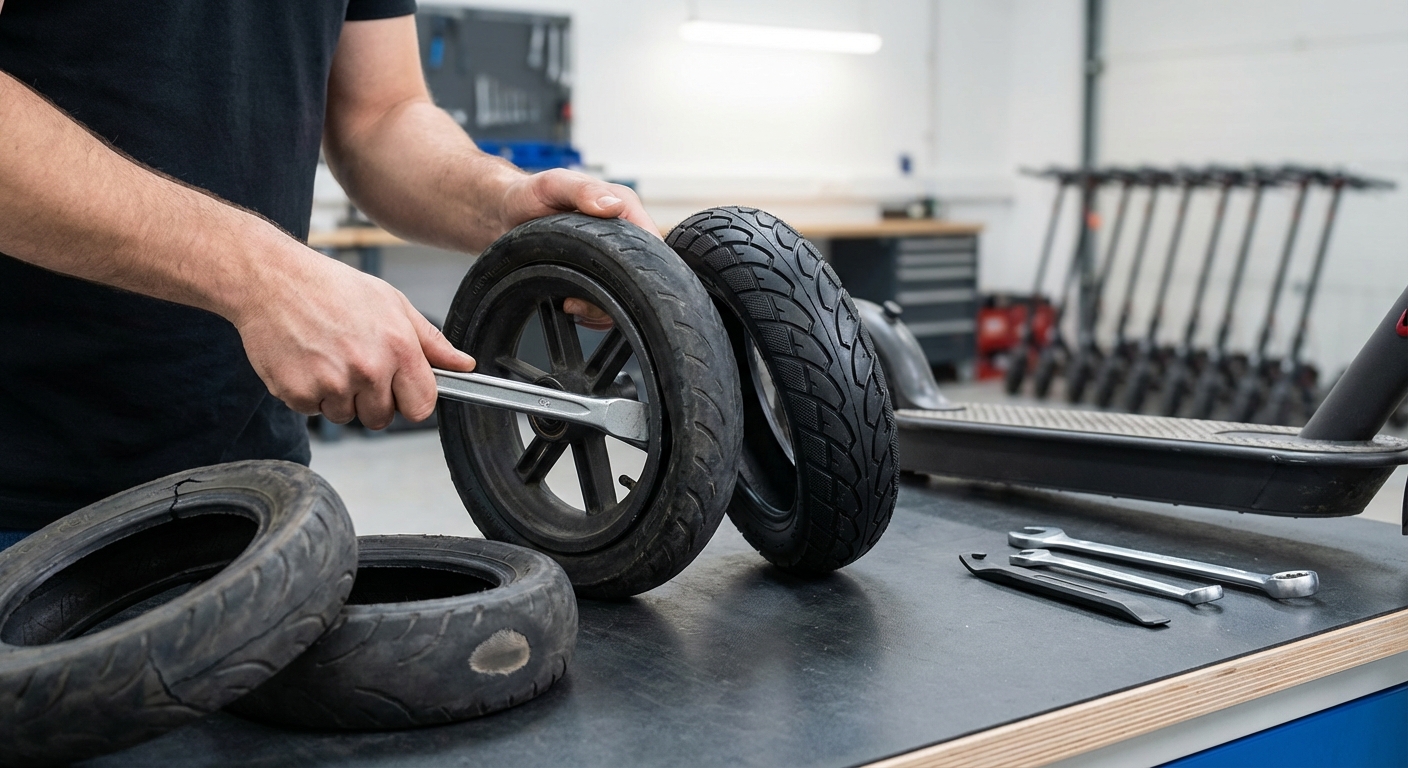
Changing tires yourself saves money but requires tools and patience. Pneumatic tires are easier to replace than solid ones.
For pneumatic tires, you’ll need tire levers, a valve core tool, and a pump. The process takes 20 to 40 minutes once you’ve done it a few times. How to fix a flat tire on your electric scooter covers the basic technique.
Solid tire replacement is more challenging. Some require heating the tire to make it pliable. Others need significant force to stretch over the rim. Special tools help but aren’t always necessary. Budget 45 to 90 minutes for your first solid tire change.
Professional service costs $30 to $80 per tire depending on your location and tire type. This includes labor and usually disposal of old tires. The mechanic has proper tools and experience, reducing installation time and risk of damage.
Consider professional service if you’re not mechanically inclined or lack tools. One damaged rim from improper installation costs more than paying for professional service.
Extending tire life through proper care
Simple habits dramatically increase how long tires last.
- Maintain correct tire pressure at all times
- Avoid riding over glass, metal debris, or sharp objects when possible
- Reduce speed over rough surfaces and potholes
- Store the scooter indoors away from direct sunlight
- Clean tires regularly to remove embedded stones and debris
- Rotate tires if your model allows it
- Use fenders to protect tires from water and road spray
- Apply tire sealant in pneumatic tires for added puncture protection
Tire sealant is particularly effective for commuters. It seals small punctures automatically as they occur. This prevents most flats before they happen. Reapply sealant every six months for continued protection.
Weight management helps too. Carry only what you need. A heavy backpack increases tire stress. Consider choosing the right backpack for e-scooter riding to distribute weight properly.
Safety implications of worn tires
Riding on worn tires isn’t just uncomfortable. It’s genuinely dangerous.
Stopping distance increases by 20 to 40 percent on severely worn tires. In an emergency, those extra few feet might mean the difference between a close call and a collision.
Worn tires are more likely to slip in corners. This is especially dangerous in wet conditions or on painted road markings. What feels stable on new tires becomes unpredictable on worn ones.
Blowouts at speed can throw you off the scooter. Even experienced riders struggle to maintain control during sudden tire failure. The risk increases exponentially as tires age and wear.
Your insurance might not cover accidents caused by inadequate maintenance. Worn tires count as poor maintenance. Document your tire inspections and replacements. This proves you’ve maintained the scooter properly.
For riders concerned about overall safety, 7 common e-scooter accidents and how to avoid them provides broader context.
Seasonal considerations for tire replacement
Different seasons create different challenges for tires.
Spring: Road debris from winter accumulates. Potholes are common. Inspect tires more frequently during spring months. This is also an ideal time for replacement before summer riding season begins.
Summer: Heat accelerates wear. Check pressure more often because heat increases PSI. Consider replacing worn tires before a summer road trip to avoid problems far from home.
Fall: Wet leaves reduce traction. If your tires are marginal, replace them before fall weather arrives. Worn tires on wet leaves are incredibly slippery.
Winter: Cold temperatures reduce grip even on good tires. If you ride through winter, start the season with fresh tires. The improved traction is worth the investment. How to store your e-scooter battery during winter offers related winterization guidance.
Making the replacement decision with confidence
You’ve learned the warning signs. You understand the factors that affect tire life. Now you need to decide when your specific tires need replacement.
Trust your observations more than arbitrary mileage numbers. A tire with 1,500 miles in harsh conditions might need replacement while another with 2,500 miles in ideal conditions could have plenty of life left.
When in doubt, replace the tire. The cost of new tires is minimal compared to medical bills from an accident. Your safety and the safety of others around you depends on proper tire maintenance.
Keep your old tires for a few weeks after replacement. This lets you compare wear patterns and better understand how your riding style affects tire life. This knowledge helps you make better decisions about future replacements.
Check your tires this week. Really look at them. Run your hands over the tread and sidewalls. You might be surprised by what you find. Those few minutes of inspection could prevent your next accident and keep you riding safely for thousands of miles to come.
