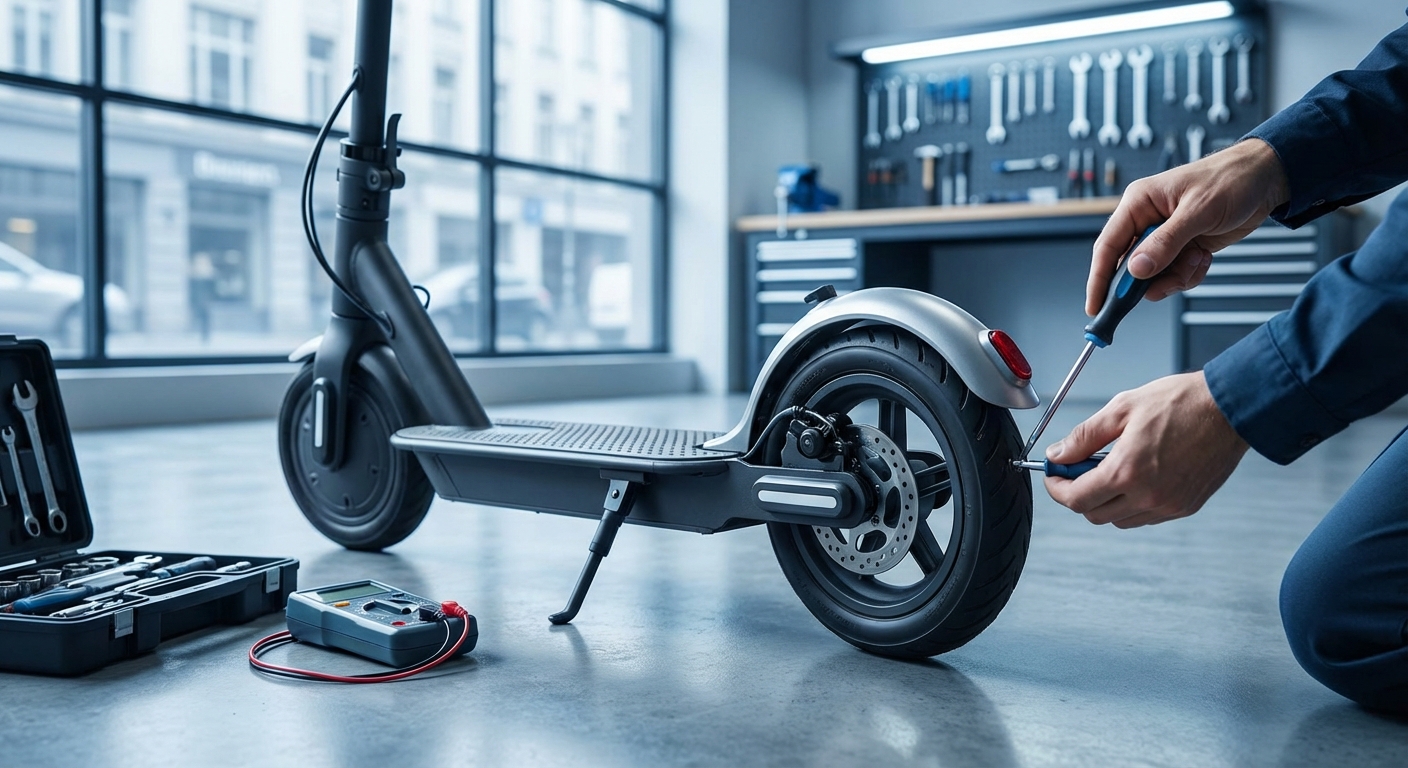
Why Is My Electric Scooter Making Noise? Troubleshooting Common Sounds
Your morning commute was smooth yesterday. Today, your electric scooter sounds like a coffee grinder mixed with a squeaky door. Something changed overnight, and now you’re wondering if it’s safe to ride or if you need to book a repair appointment.
Most noises don’t mean your scooter is about to fall apart. They’re signals pointing to specific problems, many of which you can fix yourself with basic tools and 20 minutes of your time.
Electric scooter noises usually indicate loose parts, worn components, or debris interference. Clicking often means loose bolts, squeaking points to brake or bearing issues, grinding suggests worn brake pads, and rattling indicates loose accessories or damaged suspension. Most problems are fixable at home with basic tools and proper diagnosis.
Clicking Sounds When You Accelerate
That rhythmic click-click-click in sync with your wheel rotation? It’s almost always a loose component.
Start with your wheel nuts. Grab a wrench and check both front and rear wheels. They should be tight enough that you can’t budge them by hand. If they’re loose, they’ll click against the axle with every rotation.
Motor mount bolts are the next culprit. These connect your motor to the frame. When they loosen, the motor shifts slightly under load, creating a distinct clicking sound that matches your throttle input.
Brake disc bolts deserve attention too. They’re small, easy to overlook, and prone to loosening from vibration. A loose disc will click against the brake caliper as it rotates.
Regular bolt checks prevent 80% of clicking noises. Make it part of your weekly routine, especially if you ride on rough roads.
Squeaking That Won’t Stop
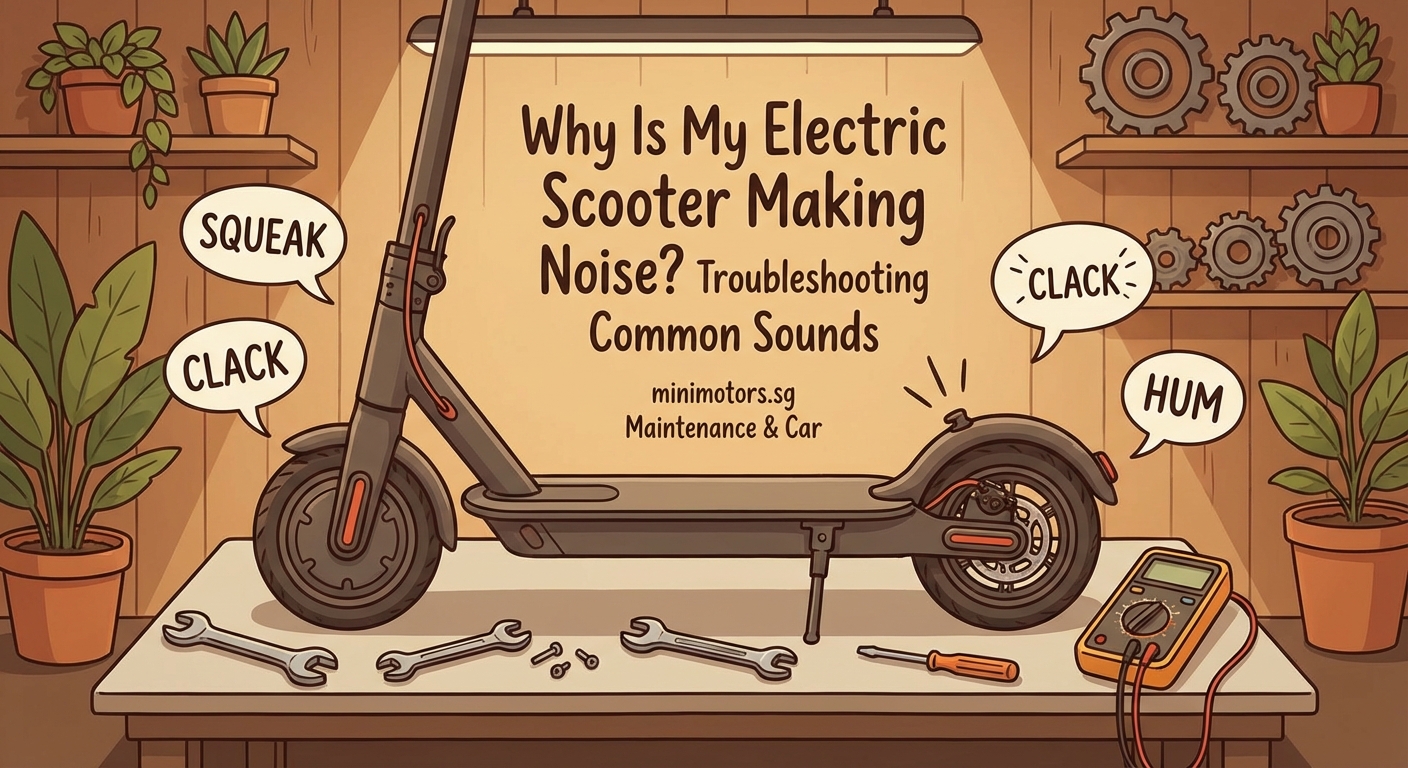
Squeaks are annoying but informative. They tell you exactly where friction is happening without proper lubrication.
Brake pads are the usual suspect. When they wear down or get contaminated with oil, they squeal against the disc. Clean your brake discs with isopropyl alcohol and check pad thickness. If they’re less than 2mm thick, replace them.
Suspension squeaks come from dry bushings or pivot points. Apply a silicone-based lubricant (never WD-40, which attracts dirt) to all moving joints in your suspension system. Work the suspension up and down to distribute the lubricant.
Folding mechanism hinges squeak when they need grease. Open and close the mechanism while listening carefully. Apply white lithium grease to the pivot points, wipe off excess, and test again.
Stem bearings can develop squeaks over time. If the noise comes from your handlebar area when you turn, your headset bearings need adjustment or replacement.
Grinding Noises That Sound Expensive
Grinding is metal on metal. It’s never a good sign, but it’s usually fixable before major damage occurs.
Worn brake pads grinding against rotors create the most common grinding sound. Check your pads immediately. If you see metal backing plate touching the disc, stop riding. You’re damaging the rotor with every rotation.
Wheel bearings make a grinding or rumbling sound that increases with speed. Lift your scooter and spin each wheel. A healthy wheel spins smoothly and quietly for several seconds. A grinding wheel stops abruptly or makes noise throughout the spin.
Motor bearings produce a grinding sound from inside the wheel hub. This requires professional repair in most cases, but you can diagnose it by disconnecting the motor and spinning the wheel. If the grinding continues, it’s the wheel bearing. If it stops, it’s the motor.
Chain or belt drive systems (less common) grind when misaligned or worn. Check for proper tension and alignment according to your manual specifications.
Rattling From Somewhere You Can’t Pinpoint
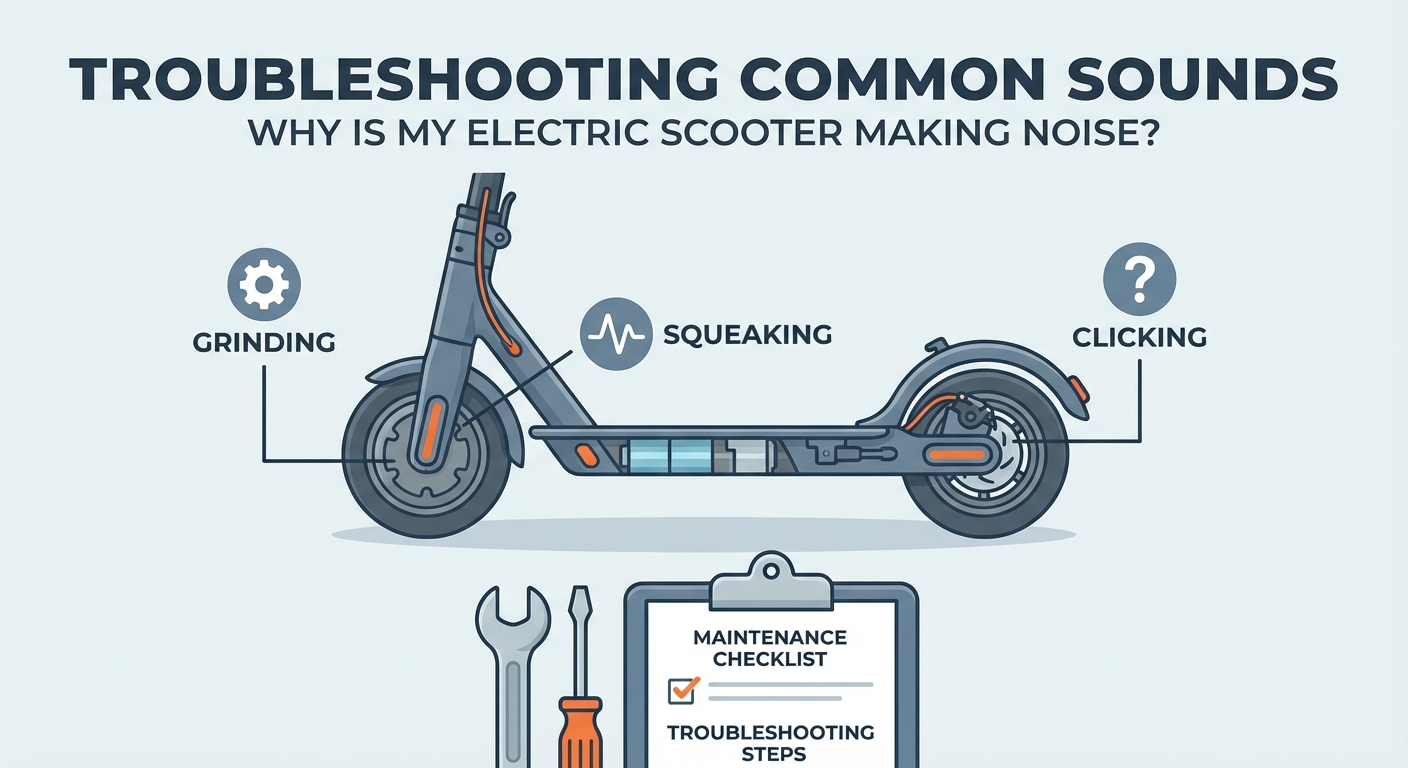
Rattles are tricky because they can come from anywhere and often hide their source.
Loose accessories top the list. Phone mounts, bags, bells, lights, and aftermarket additions all rattle when their mounting hardware loosens. Remove accessories one by one until the rattle disappears.
Battery compartment screws work loose from vibration. Open your battery cover and check every screw. A loose battery can rattle inside its housing, creating sounds that seem to come from everywhere.
Wiring harnesses sometimes come loose from their clips. Open your deck and look for wires that aren’t secured. Use zip ties to bundle and secure any loose cables away from moving parts.
Suspension components can rattle when worn. Check for play in your suspension arms by grabbing the wheel and trying to move it side to side. Any movement means worn bushings or loose bolts.
Fender stays and mudguards rattle against the wheel when their mounting brackets bend or loosen. Tighten all fender hardware and check for cracks in plastic components.
Humming or Whining Under Power
Electronic components create their own sound signature. Some humming is normal, but changes in pitch or volume indicate problems.
Motor coil whine increases with throttle input. A certain amount is normal, but if it suddenly gets louder, your motor controller might be failing. This usually comes with reduced performance or stuttering acceleration.
Controller whine from inside your deck suggests electrical issues. If accompanied by power loss or battery drain, have it checked professionally. Controllers are complex and dangerous to repair without expertise.
Tire resonance creates a humming that changes with speed. Worn or improperly inflated tires can hum against the road surface. Check your tire pressure and tread depth.
Thumping That Feels Like a Flat Tire
A rhythmic thump-thump-thump usually means wheel or tire problems.
Flat spots on tires develop from hard braking or skidding. Run your hand around the tire circumference. You’ll feel any flat spots as bumps or depressions. Severe flat spots require tire replacement.
Wheel rim damage from impacts creates thumping. Spin your wheel slowly and watch the gap between tire and frame. A bent rim will wobble noticeably.
Tire bubbles or delamination show up as bulges in the tire sidewall. These are dangerous and require immediate replacement. The tire can blow out during riding.
Loose wheel hub components create thumping that sounds like it’s coming from deep inside the wheel. This needs professional diagnosis and repair.
Systematic Diagnosis Process
Finding noise sources requires methodical testing. Random guessing wastes time and misses problems.
-
Isolate the noise by speed. Does it happen only when moving, or also when stationary? Lift your scooter and run the motor. If the noise disappears, it’s related to road contact or suspension.
-
Test with power off. Push your scooter without power. Noises that persist are mechanical, not electrical. This eliminates motor and controller issues immediately.
-
Check one system at a time. Start with wheels, move to brakes, then suspension, then accessories. Mark each system as checked to avoid repeating work.
-
Record the sound. Use your phone to record the noise. Play it back at different speeds. Sometimes slowing down audio reveals the rhythm or pattern that identifies the source.
-
Feel for vibration. Touch different components while the noise occurs. Vibrating parts are either causing the noise or receiving it from nearby components.
-
Compare left and right. If your scooter has dual motors or brakes, compare sounds from each side. Differences point to specific components.
Common Fixes You Can Do Today
| Problem | Solution | Time Required | Tools Needed |
|---|---|---|---|
| Loose bolts | Tighten all fasteners | 15 minutes | Allen keys, wrench set |
| Squeaky brakes | Clean discs, check pads | 10 minutes | Isopropyl alcohol, cloth |
| Dry suspension | Lubricate pivot points | 20 minutes | Silicone spray, grease |
| Rattling accessories | Remove or secure mounts | 5 minutes | Screwdriver |
| Worn brake pads | Replace pad set | 30 minutes | Allen keys, new pads |
| Low tire pressure | Inflate to spec | 5 minutes | Pump with gauge |
Mistakes That Make Noise Problems Worse
Over-tightening bolts strips threads and cracks components. Use a torque wrench for critical fasteners. Most scooter bolts need 8-12 Nm, not gorilla strength.
Using the wrong lubricant attracts dirt or damages rubber. Silicone spray for moving parts, lithium grease for bearings, nothing petroleum-based near brake components.
Ignoring small noises lets them become big problems. A loose bolt that falls out can jam in your wheel or damage your motor. Fix noises when they start, not when they get unbearable.
Riding with worn brakes damages rotors. Brake pads cost $20. Rotors cost $60. Do the math and replace pads before metal touches metal.
Guessing at problems instead of diagnosing wastes money on wrong parts. Spend 30 minutes finding the actual problem before spending money on solutions.
When Professional Help Makes Sense
Some noises indicate problems beyond DIY repair. Motor internal grinding, controller failures, and structural frame damage need professional assessment.
Electrical issues can be dangerous. If you smell burning plastic or see sparks, stop riding immediately. Battery and controller problems can cause fires.
Warranty work should stay with authorized service centers. Opening sealed components voids most warranties. Check your coverage before attempting repairs.
If you’ve systematically checked everything and still can’t find the source, a professional has diagnostic tools and experience you don’t. Sometimes paying for an expert saves time and prevents expensive mistakes.
For complex issues or when you’re unsure about safety, you can always reach out to experienced riders who might have encountered similar problems.
Prevention Beats Diagnosis Every Time
Regular maintenance prevents most noise problems before they start. Following a proper maintenance schedule catches loose bolts, worn parts, and developing issues early.
- Check all bolts weekly, especially after riding rough terrain
- Clean and lubricate moving parts monthly
- Inspect brake pads every 200 miles
- Check tire pressure before every ride
- Listen for new sounds and investigate immediately
Riding style affects wear patterns. Aggressive acceleration and hard braking stress components more than smooth riding. Jumping curbs and hitting potholes loosens bolts faster than smooth pavement cruising.
Storage matters too. Leaving your scooter in humid conditions causes rust and corrosion. Temperature swings expand and contract materials, loosening fasteners over time.
Sound Patterns That Need Immediate Attention
Some noises mean stop riding now, not later. Loud snapping or popping from your frame suggests structural failure. Metal-on-metal grinding from your motor indicates bearing collapse. Hissing or sizzling from your battery compartment means electrical problems.
Sudden changes are more concerning than gradual ones. A noise that appears instantly after hitting a pothole needs immediate inspection. Something broke or came loose.
Noises accompanied by performance loss indicate serious problems. If your scooter slows down, loses power, or handles differently along with new sounds, stop and diagnose before continuing.
Safety systems deserve extra attention. Any noise from your brakes, steering, or suspension affects your ability to control the scooter. These take priority over cosmetic rattles.
Keeping Your Scooter Running Smooth
Your electric scooter talks to you through sounds. Learning its language helps you catch problems early, fix them cheaply, and avoid dangerous failures.
Most noises have simple causes and simpler solutions. A few minutes with basic tools solves 90% of sound problems. The other 10% need professional help, but at least you’ll know when to seek it.
Start listening to your scooter today. Notice its normal sounds so you’ll recognize when something changes. Keep basic tools handy, follow a maintenance schedule, and address noises when they’re whispers instead of waiting until they’re screams. Your scooter will reward you with years of reliable, quiet service.
