What the Latest E-Scooter Sales Data Reveals About Consumer Preferences in 2026
The electric scooter market is experiencing a fundamental shift in 2026. Buyers are making different choices than they did just two years ago. Understanding these changes isn’t just interesting, it’s essential for anyone making strategic decisions in this space.
E-scooter consumer preferences in 2026 show a decisive shift toward longer-range models, integrated smart features, and premium build quality. Budget models are losing market share while mid-tier offerings with advanced safety systems are gaining traction. Buyers prioritize reliability and total ownership cost over initial price, fundamentally changing how manufacturers should approach product development and marketing strategies.
Range Anxiety Drives Purchase Decisions
Battery range has become the single most important factor for buyers in 2026.
Sales data shows that models offering less than 25 miles per charge have dropped to just 18% of total market share, down from 34% in 2024.
The sweet spot has shifted dramatically. Models with 30 to 45 mile ranges now represent 52% of all sales. Buyers are willing to pay $200 to $400 more for extended range capabilities.
This shift reflects real-world usage patterns. Commuters want enough capacity for round trips without charging anxiety. The best e-scooter range for your daily commute has become a primary research topic for prospective buyers.
Weather conditions play a role too. Battery performance drops in cold weather, and buyers now factor this into their decisions. They’re choosing models with 20% to 30% more range than their minimum daily needs.
Smart Features Are No Longer Optional
Connected features have moved from premium extras to baseline expectations.
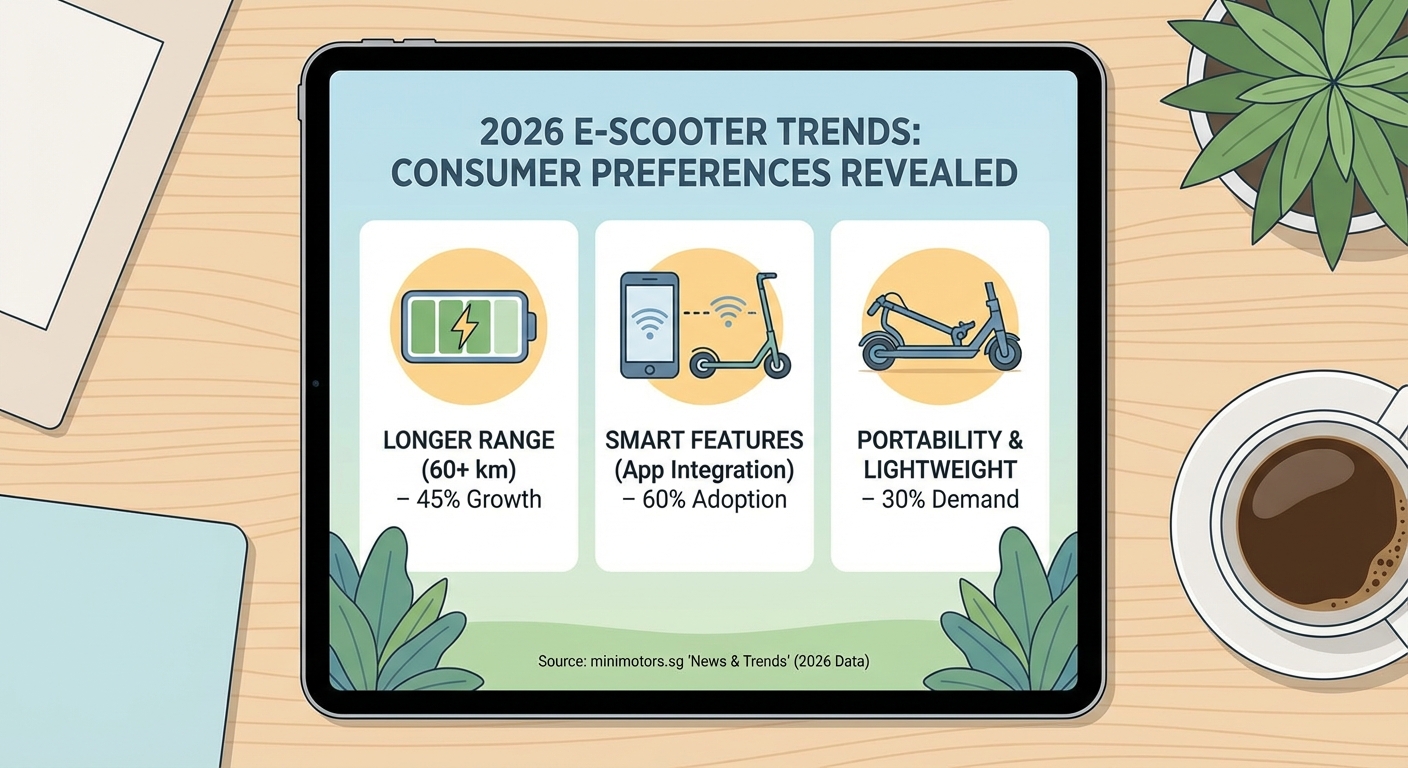
App connectivity now appears in 67% of all e-scooters sold in 2026, compared to just 31% two years ago. Buyers expect real-time diagnostics, GPS tracking, and theft alerts as standard features.
The data reveals specific preferences:
- Anti-theft GPS tracking (requested by 78% of buyers)
- Battery health monitoring (71%)
- Ride statistics and route tracking (64%)
- Remote locking capabilities (59%)
- Firmware update capability (52%)
Models without smartphone integration are increasingly relegated to the budget segment. Even mid-tier buyers expect some level of connectivity.
AI-powered smart features are transforming modern e-scooters, and buyers are responding enthusiastically to these innovations.
Interestingly, younger buyers (ages 18 to 34) prioritize app features more heavily than older demographics. But even buyers over 50 now expect basic connectivity options.
Build Quality Trumps Initial Price
The race to the bottom on pricing has reversed course in 2026.
Premium and mid-tier models now account for 61% of unit sales, up from 43% in 2024. Buyers are spending more upfront to avoid replacement and repair costs.
Average transaction prices have increased by 23% year over year. This isn’t inflation driven, it’s a conscious choice by buyers to invest in quality.
What Buyers Mean by Quality
When surveyed, buyers define quality through specific criteria:
- Frame durability and material choice
- Waterproofing and weather resistance
- Brake system reliability
- Suspension performance
- Tire quality and puncture resistance
The understanding of e-scooter braking systems has become more sophisticated among buyers. They’re asking detailed questions about brake types before purchase.
Warranty coverage has become a decision factor too. Models with 24-month warranties outsell 12-month warranty competitors by significant margins, even at higher price points.
Safety Features Command Premium Prices
Safety technology is driving purchasing decisions in unprecedented ways.
Models with integrated lighting systems sell at a 34% premium over basic models, and buyers are paying it willingly. Front, rear, and side lighting is now expected, not optional.
Braking systems have evolved into a key differentiator. Dual braking systems (combining electronic and mechanical brakes) appear in 73% of models sold above $600.
Here’s how safety features rank by buyer priority:
| Safety Feature | Buyer Priority Score | Price Premium Accepted |
|---|---|---|
| Dual brake systems | 9.2/10 | Up to $150 |
| Integrated lighting | 8.9/10 | Up to $120 |
| Turn signals | 7.8/10 | Up to $80 |
| Reflective elements | 7.3/10 | Up to $40 |
| Horn/bell systems | 6.4/10 | Up to $25 |
The data shows that night riding safety features are particularly important to buyers who commute in early morning or evening hours.
Insurance companies are starting to offer discounts for scooters with advanced safety features, further incentivizing these purchases.
Weight Capacity Matters More Than Expected
Buyer interest in weight capacity specifications has increased by 127% compared to 2024.
This isn’t just about rider weight. Buyers are factoring in backpacks, groceries, and cargo when evaluating capacity limits.
Models rated for 220 pounds or less are seeing declining sales, even among lighter riders. The preference has shifted toward 250 to 300 pound capacity models across all buyer segments.
This trend correlates with the rise of e-scooters as car replacements for errands and shopping trips. Buyers need capacity for both rider and cargo.
The importance of weight limits extends beyond just supporting the load. Higher capacity models typically feature more robust construction overall.
Portability Versus Performance Trade-offs
The market has split into distinct use-case segments.
Commuters who need to carry their scooters on public transit prioritize models under 35 pounds, even if it means sacrificing some features. This segment represents 28% of sales.
The majority (54%) now prefer performance over portability. These buyers accept weights between 40 and 55 pounds in exchange for better range, power, and features.
A small but growing segment (18%) chooses heavy-duty models over 55 pounds, treating their e-scooters as car replacements rather than portable devices.
“The portability premium has collapsed. Buyers used to pay extra for lighter models, but now they’re willing to accept more weight if it means better performance and reliability. The calculation has flipped.” (Market analyst commentary from Q1 2026 industry report)
This shift has implications for product development. Manufacturers focusing solely on weight reduction are missing the broader market opportunity.
Suspension Systems Influence Buying Decisions
Ride comfort has emerged as a significant purchase factor in 2026.
Models with dual suspension systems command 31% higher prices than single suspension models, and sales data shows buyers are willing to pay this premium.
The breakdown by suspension type reveals clear preferences:
- Dual suspension (front and rear): 44% of sales
- Front suspension only: 32% of sales
- No suspension (solid tires): 24% of sales
Urban riders dealing with poor road conditions particularly value suspension systems. Cities with older infrastructure show even higher preference rates for dual suspension models.
Interestingly, suspension preference correlates strongly with intended use distance. Buyers planning trips over 5 miles consistently choose better suspension, while shorter-distance riders show more price sensitivity.
Tire Technology Preferences
Pneumatic versus solid tire debates have reached a resolution in buyer minds.
Pneumatic (air-filled) tires dominate sales at 68%, despite requiring more maintenance. Buyers prioritize ride comfort and traction over convenience.
Solid tire sales have declined to 19% of the market, primarily in the budget segment. Honeycomb and foam-filled alternatives capture 13%, appealing to buyers who want puncture resistance without the harsh ride of solid tires.
The signs that tires need replacement have become common knowledge among buyers, who now factor tire maintenance into their purchase decisions.
Tire size preferences have shifted toward larger diameters. 10-inch tires now represent 58% of sales, up from 41% in 2024. Buyers associate larger tires with stability and comfort.
Motor Power Sweet Spot
The motor power arms race has plateaued at practical levels.
Models with 500 to 750 watt motors capture 49% of sales. This range provides adequate hill climbing and acceleration without excessive battery drain or regulatory concerns.
Budget 250 to 350 watt models hold 23% market share, primarily among flat-terrain urban riders. High-power 1000+ watt models represent just 12% of sales, mainly in the enthusiast and off-road segments.
Buyers have become more sophisticated about choosing the right motor power for their specific needs rather than simply choosing the most powerful option.
Dual motor models remain niche at 8% of sales, though this segment is growing among buyers in hilly regions or those who want all-wheel drive capability.
Charging Speed Expectations
Fast charging capability has become a standard expectation for mid-tier and premium models.
Buyers now expect full charges in 4 to 6 hours maximum. Models requiring 8+ hours to charge show 34% lower sales velocity than faster-charging competitors at similar price points.
The fast charging versus standard charging debate has been settled in buyers’ minds. They want speed without compromising battery longevity.
Removable batteries are gaining traction, appearing in 31% of new models sold in 2026. Buyers appreciate the ability to charge indoors without bringing the entire scooter inside.
Charging port placement and protection have become quality indicators. Buyers specifically check for weatherproof charging ports during the purchase process.
Display and Interface Preferences
Dashboard displays have evolved from nice-to-have to essential features.
LED displays appear in 76% of models sold, with color OLED screens commanding premium prices in the high-end segment. Buyers want clear visibility in direct sunlight, which LED provides better than LCD alternatives.
Essential display information according to buyer surveys:
- Current speed (98% want this)
- Battery percentage (97%)
- Trip distance (84%)
- Total odometer (76%)
- Riding mode indicator (71%)
- Error codes (63%)
The guide to e-scooter display technology shows how buyers are making informed choices about display types based on their riding conditions.
Touchscreen interfaces remain rare and not particularly desired. Physical buttons are preferred for safety and usability while riding.
Color and Aesthetic Trends
Black remains dominant at 42% of sales, but color preferences are diversifying.
Gray and silver finishes capture 23% of sales, appealing to buyers who want something less common than black but still professional looking.
Bright colors (red, blue, green) account for 19% of sales, primarily among younger buyers and those concerned about visibility.
White and cream finishes have grown to 11% of sales, up from just 4% in 2024. These lighter colors appeal to buyers who want their scooters to stand out.
Customization options add value. Models offering multiple color choices sell 18% faster than single-color offerings, even at identical specifications.
Brand Loyalty and Reputation
Brand considerations have intensified in 2026.
Established brands command 15% to 25% price premiums over unknown manufacturers, and buyers are paying it. The days of purely price-driven decisions have ended for most buyers.
Factors driving brand preference:
- Customer service reputation (weighted 31% in purchase decisions)
- Parts availability (28%)
- Warranty terms and honor rate (24%)
- Community and forum support (11%)
- Brand heritage (6%)
First-time buyers show stronger brand preference than experienced buyers, suggesting that established brands have an advantage in market expansion but must earn loyalty for repeat purchases.
Maintenance and Serviceability Concerns
Total cost of ownership has become a primary consideration.
Buyers now research maintenance requirements before purchase, with 68% of prospective buyers specifically asking about service intervals and costs.
Models with easily accessible components for basic maintenance sell better than sealed designs, even at similar price points. Buyers want the option to perform simple tasks themselves.
The ultimate maintenance checklist has become required reading for serious buyers who want to understand long-term ownership costs.
Parts availability concerns are real. Buyers specifically ask retailers about replacement part lead times before committing to a purchase.
Warranty Coverage Expectations
Warranty terms have become a key differentiator in 2026.
The minimum acceptable warranty has shifted to 12 months for the complete scooter and 24 months for the battery. Models offering less struggle to compete.
Premium models with 24-month comprehensive warranties sell at significant premiums, and buyers view this as worth the investment.
Warranty coverage details matter too. Buyers read the fine print about what’s covered, exclusions, and the claim process. Brands with reputation for honoring warranties without hassle gain market share.
Extended warranty purchase rates have increased to 34% of transactions, up from 19% in 2024. Buyers want protection beyond the standard coverage period.
Environmental and Sustainability Considerations
Eco-consciousness influences 41% of purchase decisions in 2026.
Buyers want information about battery recyclability, manufacturing practices, and product lifecycle. This isn’t just virtue signaling, it affects actual purchase behavior.
The sustainability and environmental impact analysis shows that informed buyers are making choices based on comprehensive environmental considerations.
Brands that provide transparency about their supply chain and end-of-life programs gain favor with environmentally conscious buyers. This segment skews younger but is growing across all demographics.
Battery chemistry matters to informed buyers. Lithium-ion remains standard, but buyers ask about responsible sourcing and recycling programs.
Regulatory Compliance Awareness
Buyers in 2026 are much more aware of local regulations than in previous years.
67% of buyers now research local e-scooter laws before purchase. They want models that comply with their jurisdiction’s speed limits, power restrictions, and equipment requirements.
The understanding of speed limits by city helps buyers choose appropriate models for their location.
Models with adjustable speed limiters appeal to buyers who travel between jurisdictions with different regulations. This feature appears in 44% of new models sold.
Insurance requirements are becoming more common, and buyers factor this into their total cost calculations. Models that qualify for lower insurance rates have a competitive advantage.
Common Mistakes Buyers Want to Avoid
Purchase research patterns reveal what buyers fear most.
| Mistake | Buyer Concern Level | Research Time Spent |
|---|---|---|
| Buying inadequate range | Very High | 4.2 hours average |
| Choosing wrong motor power | High | 2.8 hours average |
| Ignoring weight capacity | Medium-High | 2.1 hours average |
| Overlooking warranty terms | Medium | 1.6 hours average |
| Underestimating maintenance costs | Medium | 1.4 hours average |
First-time buyers spend significantly more time researching than repeat buyers, but they still make predictable mistakes. The essential things first-time riders should know addresses these common pitfalls.
Buyers particularly regret choosing models with insufficient range or inadequate build quality. These two factors drive the highest rates of buyer’s remorse.
Demographic Variations in Preferences
Age significantly influences purchase priorities.
Buyers aged 18 to 29 prioritize smart features and aesthetics. They’re willing to compromise on range for lighter weight and better looks.
The 30 to 45 age group focuses on reliability and total cost of ownership. They spend more upfront for quality and prefer established brands.
Buyers over 45 prioritize safety features and ease of use. They’re less interested in smart features but want excellent lighting and stable handling.
Gender differences appear in color preferences and safety feature priorities, but performance requirements show remarkable similarity across demographics.
Geographic Market Variations
Regional preferences vary based on infrastructure and climate.
Urban dense markets (New York, San Francisco, Singapore) show strong preference for portable models under 40 pounds. Buyers need to carry scooters up stairs and on public transit.
Suburban markets prefer longer-range, more comfortable models. Buyers are willing to accept more weight for better performance on longer trips.
Climate significantly affects preferences. Cold-weather markets show much higher interest in battery capacity and cold-weather performance specifications.
Cities with good cycling infrastructure show different buying patterns than cities where e-scooters must compete with car traffic. Infrastructure shapes what buyers need.
Price Sensitivity and Value Perception
The market has segmented into clear price tiers with distinct buyer profiles.
Budget segment (under $400): 22% of sales, primarily first-time buyers and students. Price is the dominant factor, features are secondary.
Mid-tier ($400 to $900): 51% of sales, the largest segment. Buyers want good value, balancing features, quality, and price.
Premium ($900 to $1,500): 19% of sales, buyers prioritizing quality and advanced features over price.
Ultra-premium (over $1,500): 8% of sales, enthusiasts and buyers replacing cars with e-scooters.
The budget e-scooters under $500 analysis shows that value-conscious buyers can still find quality options, but compromises are necessary.
Accessory Purchase Patterns
Accessory sales have grown alongside scooter sales in 2026.
73% of buyers purchase at least one accessory at the time of scooter purchase. The most common additions are locks (68%), helmets (61%), and phone mounts (44%).
The must-have accessories for commuters shows what buyers prioritize for practical daily use.
Buyers increasingly view accessories as part of the total purchase, not afterthoughts. Retailers bundling accessories with scooters see higher transaction values and customer satisfaction.
Storage solutions, additional lighting, and weather protection accessories show the strongest growth rates in 2026.
Financing and Payment Preferences
Payment flexibility influences purchase decisions more than ever.
38% of buyers now use financing options, up from 24% in 2024. Buy now, pay later services appear in 67% of e-scooter retail transactions.
Interest-free financing periods of 6 to 12 months are standard expectations. Buyers compare financing terms across retailers as part of their decision process.
Subscription models remain niche at 4% of the market, but this segment is growing. The subscription-based ownership model appeals to buyers who want flexibility and included maintenance.
Trade-in programs are emerging, with 12% of buyers trading in old scooters toward new purchases. This creates a secondary market that benefits the entire ecosystem.
What This Means for Industry Strategy
The data paints a clear picture of where the market is heading.
Manufacturers need to focus on the mid-tier segment with strong fundamentals. Range, build quality, and safety features matter more than cutting-edge innovation or rock-bottom pricing.
Smart features need to be standard, not optional. Buyers expect connectivity in anything above entry-level pricing.
Brand building and customer service investment will pay dividends. Buyers are willing to pay premiums for trusted names with good support.
Product development should prioritize practical improvements over flashy features. Better batteries, stronger frames, and more reliable components win sales.
Retailers need to educate buyers about total cost of ownership, not just sticker price. The buyers who understand this make better decisions and become loyal customers.
The e-scooter market in 2026 is maturing. Buyers are more informed, more demanding, and more willing to invest in quality. Companies that recognize and respond to these preferences will thrive in this evolving landscape.
