The Rise of Three-Wheeled E-Scooters: Why Stability Models Are Gaining Market Traction
Stability matters more than speed when you’re choosing personal mobility. That simple truth drives thousands of buyers toward three wheel electric scooters every month, especially those who need confidence more than performance. Whether you’re recovering from an injury, managing balance issues, or simply want a safer ride, the third wheel changes everything about how secure you feel on pavement.
Three wheel electric scooters deliver enhanced stability through wider bases, lower centers of gravity, and improved weight distribution. They suit [elderly riders](https://www.nia.nih.gov/health/falls-and-falls-prevention/falls-and-fractures-older-adults-causes-and-prevention), people with balance concerns, and anyone prioritizing safety over portability. Battery life, weight capacity, and turning radius vary significantly across models, making careful comparison essential before purchase.
Why the third wheel makes such a difference
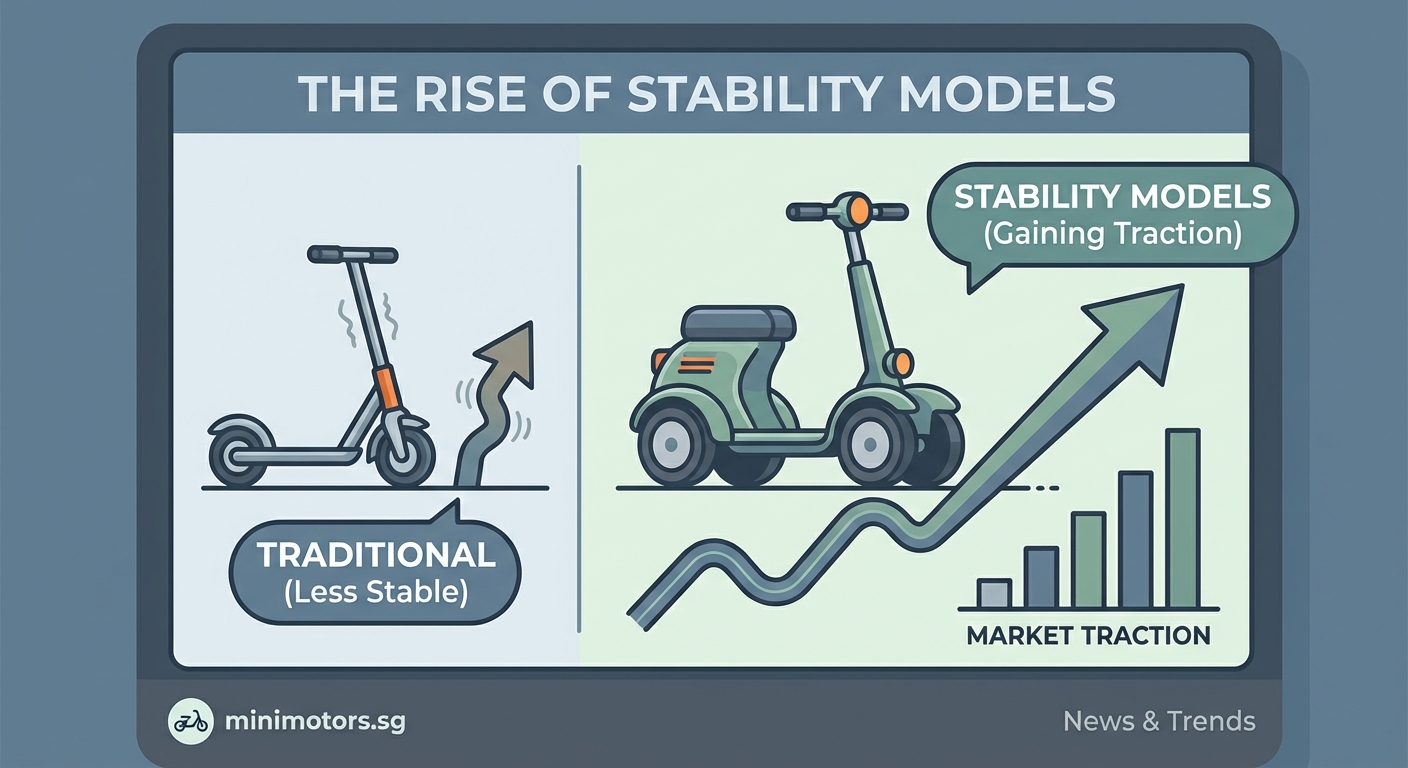
Traditional two-wheel scooters demand constant balance adjustments. Your body compensates for every bump, turn, and stop.
Three wheel designs eliminate that mental load.
The geometry creates a stable platform that stays upright without rider input. You can stop completely without putting a foot down. You can look over your shoulder to check traffic without wobbling. You can carry groceries without shifting weight to compensate.
The front two wheels handle steering while the rear wheel provides drive power in most configurations. Some models reverse this, placing two wheels at the back for different handling characteristics.
Neither design is objectively better. Front dual-wheel models turn more sharply. Rear dual-wheel versions feel more planted during acceleration.
Your riding environment determines which layout works best. Urban riders navigating tight sidewalks often prefer front dual-wheel agility. Suburban users on wider paths appreciate rear dual-wheel stability at higher speeds.
Who benefits most from three wheel stability
Age alone doesn’t determine whether you need three wheels. Plenty of 70-year-olds ride two-wheel scooters confidently.
Balance concerns come from many sources:
– Inner ear conditions affecting equilibrium
– Medications causing dizziness
– Previous injuries reducing core strength
– Neurological conditions affecting coordination
– Simple anxiety about falling
Any of these factors makes three wheel electric scooters worth considering, regardless of your age.
Parents buying for elderly relatives often focus too heavily on top speed specifications. A scooter that goes 15 mph means nothing if the rider feels unsafe above 8 mph.
Confidence matters more than capability. A stable platform that someone actually uses beats a powerful machine that sits in the garage.
Weight capacity deserves equal attention. Many budget three-wheelers max out at 220 pounds. Heavier riders need models rated for 300+ pounds, which typically cost more but provide essential safety margins.
Comparing three wheel configurations side by side
| Configuration | Best For | Turning Radius | Stability at Speed | Typical Price Range |
|---|---|---|---|---|
| Front dual-wheel | Urban sidewalks | Tight (4-6 feet) | Moderate | $800-$1,500 |
| Rear dual-wheel | Open paths | Wide (6-10 feet) | High | $1,200-$2,200 |
| All-terrain triple | Mixed surfaces | Variable | Very high | $1,800-$3,500 |
The table shows general patterns, but individual models vary significantly. Some front dual-wheel designs achieve remarkable straight-line stability through suspension tuning. Certain rear dual-wheel models turn surprisingly well using differential steering.
Test rides reveal more than specifications ever will. If possible, try both configurations on surfaces you’ll actually ride. Parking lots feel different than sidewalks. Smooth concrete differs from cracked pavement.
Many dealers now offer home trials for mobility scooters. You pay a deposit, ride for a week, and return it if the model doesn’t suit your needs. This option costs more upfront but prevents expensive mistakes.
Essential features beyond the wheel count
Three wheels solve the stability problem. Other features determine whether you’ll actually enjoy riding.
Seat design matters tremendously for longer trips. Padded seats with backrests reduce fatigue. Adjustable height accommodates different leg lengths. Swivel seats make mounting and dismounting easier for riders with hip mobility issues.
Storage capacity often gets overlooked until you need it. Front baskets hold 10-15 pounds typically. Rear cargo areas can manage 30+ pounds on heavy-duty models. Some scooters include USB charging ports for phones, which proves surprisingly useful for navigation.
Lighting systems vary from basic to comprehensive. Minimum acceptable lighting includes a front headlight and rear brake light. Better systems add turn signals, side markers, and ground-level accent lights that improve visibility to drivers.
Brake types affect stopping confidence. Drum brakes require less maintenance but offer less stopping power. Disc brakes grip harder but need periodic adjustment. Electronic regenerative braking feels smoothest but depends on battery charge to function fully.
“The best three wheel scooter is the one you’ll actually ride. Don’t over-optimize for features you’ll never use. Focus on the basics that matter for your specific situation: comfortable seat, adequate range, and confidence-inspiring stability.”
Battery considerations for daily use
Range anxiety affects scooter buyers just like electric car shoppers. Everyone wants maximum distance per charge.
Reality check: most riders cover far less ground than they imagine. Track your typical walking routes for a week. Add 20% for detours and inefficiency. That number represents your real range requirement.
A 15-mile range covers most daily errands comfortably. You’ll charge nightly anyway, just like your phone. Paying extra for 30-mile range makes sense only if you regularly take longer trips.
Battery chemistry affects more than range. Lithium-ion batteries weigh less and charge faster than sealed lead-acid alternatives. They also cost significantly more and require specialized recycling.
Lead-acid batteries work fine for budget-conscious buyers who don’t mind extra weight. They’re proven technology with simple replacement procedures. Many users prefer them precisely because they’re less complicated.
Charging time varies from 4 to 8 hours for most models. Fast-charging systems cut this to 2-3 hours but may reduce overall battery lifespan through increased heat generation.
Cold weather reduces range by 20-40% regardless of battery type. Plan accordingly if you live in northern climates. Some riders keep batteries indoors overnight during winter to maintain performance.
If you’re curious about typical battery performance across different scooter types, what is the average range of an electric scooter on a single charge covers the details thoroughly.
Step-by-step process for choosing your model
Making a smart purchase requires systematic evaluation. Here’s how to narrow your options:
- Measure your typical riding distances for one week using a fitness tracker or phone app.
- List every surface type you’ll encounter: smooth sidewalks, cracked pavement, gravel paths, grass, ramps.
- Note the steepest hill on your regular routes and measure its grade using a phone app.
- Identify storage locations at home and destinations to ensure the scooter fits.
- Set a realistic budget including accessories like helmets, locks, and weather covers.
- Test ride at least three models in different price ranges before deciding.
This process takes time but prevents expensive regrets. Many buyers skip steps 2 and 3, then discover their scooter can’t handle their actual environment.
Hills deserve special attention. A 10% grade feels manageable on foot but challenges many scooters. Motor power ratings don’t tell the whole story. Weight distribution and gear ratios matter equally.
Some manufacturers list “maximum climbing angle” specifications. Treat these as optimistic estimates. Real-world performance typically falls 20-30% below advertised maximums, especially with heavier riders.
Storage dimensions matter more than you’d expect. Measure doorways, elevator widths, and vehicle cargo areas before buying. Many three wheel scooters don’t fold, making transport more complicated than two-wheel alternatives.
Safety features that actually matter
Marketing materials emphasize flashy features that sound impressive but rarely get used. Focus on safety elements that protect you daily.
Anti-tip wheels prevent backward rollovers when climbing steep ramps. These small auxiliary wheels extend behind the main rear wheel, catching the frame before it tips past the balance point.
Automatic speed reduction in turns prevents skidding on tight corners. Better models use gyroscopic sensors to detect lean angle and reduce motor power accordingly.
Visibility enhancements go beyond basic lights. Reflective strips on sides and rear improve detection by drivers during twilight hours. Bright color schemes help, though many riders prioritize aesthetics over safety here.
Audible alerts warn pedestrians of your approach. Some models include customizable horn tones. Others offer voice alerts that announce turns or stops.
Emergency stop buttons provide instant power cutoff if controls malfunction. This feature matters most for riders with limited hand strength who might struggle with standard brake levers.
Weather resistance ratings indicate how well electronics tolerate rain. IP54 rating handles light rain. IP65 manages heavy rain. IP67 allows brief submersion, though you should still avoid puddles when possible.
For riders new to personal electric vehicles, 7 essential things every first-time e-scooter rider should know covers fundamental safety practices worth reviewing.
Common mistakes buyers make
Experience reveals patterns in purchase regrets. Avoid these frequent errors:
- Prioritizing speed over stability when balance is the actual concern
- Ignoring weight capacity specifications and overloading the scooter
- Buying online without test rides to save money, then hating the ride quality
- Choosing the cheapest model without researching replacement part availability
- Overlooking maintenance requirements and service costs
- Assuming all three wheel designs handle identically
- Neglecting to verify that the scooter fits through home doorways
The last point catches many buyers off guard. Three wheel scooters with front dual-wheel configurations measure 24-28 inches wide. Standard interior doorways span 30-32 inches. The fit seems obvious until you account for hand position on controls and natural steering wobble.
Measure carefully. Add 4 inches to the scooter’s width specification to ensure comfortable clearance through doorways and between obstacles.
Maintenance realities for long-term ownership
Three wheel electric scooters require less maintenance than cars but more than bicycles. Setting realistic expectations prevents frustration.
Tire pressure checks should happen monthly. Underinflated tires reduce range and make steering feel sluggish. Overinflated tires create a harsh ride and increase puncture risk.
Brake adjustments typically need attention every 3-6 months depending on usage. Mechanical brakes stretch and wear. Electronic brakes need sensor calibration. Neither type is maintenance-free despite marketing claims.
Battery care determines lifespan more than any other factor. Partial charges work fine for lithium batteries. Full discharge cycles actually harm them. Lead-acid batteries prefer full charge cycles and suffer from partial charging.
Cleaning prevents corrosion and keeps moving parts functioning smoothly. Wipe down after wet rides. Remove dirt from wheel wells monthly. Check electrical connections quarterly for corrosion.
Professional servicing makes sense annually even if nothing seems wrong. Technicians catch developing problems before they cause breakdowns. Many shops offer service packages that cost less than emergency repairs.
Replacement parts availability varies dramatically by manufacturer. Popular brands stock parts readily. Obscure imports leave owners stranded when components fail. Research parts availability before buying, especially for specialized components like controllers and display panels.
Real-world performance in different conditions
Specifications describe ideal conditions. Reality involves weather, terrain, and unexpected obstacles.
Wet pavement reduces traction significantly. Three wheels help, but physics still limits cornering speed. Braking distances increase 30-50% on wet surfaces. Plan accordingly and reduce speed in rain.
Gravel and loose surfaces challenge stability despite the third wheel. Front dual-wheel designs handle loose surfaces better because weight distribution keeps both front wheels planted. Rear dual-wheel models can fishtail if you accelerate too aggressively on gravel.
Curbs and obstacles require different techniques than two-wheel scooters. You can’t hop a curb by shifting weight. Instead, approach at an angle to climb one wheel at a time, or find a curb cut.
Wind affects three wheel scooters more than two-wheel designs because of increased frontal area. Strong crosswinds push the scooter sideways. Riders with limited upper body strength may struggle to maintain direction in gusty conditions.
Temperature extremes affect more than batteries. Plastic components become brittle in extreme cold. Rubber seals dry out in intense heat. Store your scooter in moderate temperatures when possible.
Understanding different braking technologies helps you maintain control in varying conditions. Understanding e-scooter braking systems explains how each type performs in real-world scenarios.
Price ranges and what they actually include
Budget models ($600-$1,000) provide basic transportation with minimal features. Expect:
– Lead-acid batteries with 10-15 mile range
– Basic lighting and minimal storage
– Simple controls without displays
– 250-watt motors suitable for flat terrain
– Limited weather resistance
Mid-range options ($1,000-$2,000) add comfort and capability:
– Lithium batteries with 15-25 mile range
– Comfortable seating with adjustable features
– Digital displays showing speed and battery level
– 500-watt motors handling moderate hills
– Better build quality and weather sealing
Premium models ($2,000-$4,000+) maximize performance and features:
– High-capacity lithium batteries with 25-40 mile range
– Suspension systems for smooth rides
– Advanced displays with navigation integration
– 750+ watt motors conquering steep hills
– Comprehensive lighting and safety systems
Price doesn’t always indicate quality. Some expensive models charge premium prices for brand names rather than superior components. Research individual models thoroughly rather than assuming higher prices mean better scooters.
Warranty coverage matters as much as initial price. A $1,500 scooter with a 2-year comprehensive warranty often costs less long-term than a $1,000 model with 90-day coverage.
Making the final decision with confidence
You’ve researched specifications, compared models, and identified your needs. Now comes the actual purchase decision.
Test rides remain essential despite all the research. A scooter that looks perfect on paper might feel wrong in person. Seat comfort, control placement, and overall ergonomics vary by individual body proportions.
Bring someone along for test rides if possible. They can observe your riding position and spot issues you might miss while concentrating on controls.
Take notes during test rides. After trying three or four models, they blur together in memory. Write down specific likes and dislikes immediately.
Consider buying from local dealers rather than online retailers when possible. The price premium buys you several advantages:
– Professional assembly and setup
– Face-to-face instruction on operation and maintenance
– Local service and warranty support
– Opportunity to build relationship with knowledgeable staff
– Easier returns or exchanges if needed
Online purchases save money but shift all responsibility to you. Assembly errors can cause safety issues. Warranty claims require shipping the entire scooter back. Returns cost significant money in freight charges.
For buyers who want comprehensive guidance on the entire selection process, how to choose your first electric scooter walks through every consideration systematically.
Accessories that enhance the ownership experience
The scooter itself represents just the starting point. Several accessories improve safety and convenience significantly.
Weather covers protect your investment from rain and sun damage. Custom-fit covers work better than universal options. They stay in place during wind and provide complete coverage without gaps.
Rear-view mirrors mount to handlebars and dramatically improve safety. Checking over your shoulder destabilizes some riders. Mirrors let you monitor traffic without turning your head.
Phone mounts keep navigation visible without requiring you to hold your device. Choose vibration-dampened models designed for motorcycles rather than bicycle mounts. Scooter vibration differs from bicycle movement.
Additional lighting beyond factory equipment helps in low-visibility conditions. Helmet lights, spoke lights, and underglow strips all improve visibility to drivers. Legal requirements vary by location, so verify local regulations.
Cargo solutions expand carrying capacity. Rear baskets, side panniers, and handlebar bags all work, but verify weight limits. Overloading affects handling and can damage mounting points.
Security devices prevent theft. U-locks work better than cable locks. GPS trackers help recover stolen scooters. Some insurance companies offer discounts for using approved security devices.
Finding support and community resources
Ownership questions arise after purchase. Knowing where to find answers prevents frustration.
Manufacturer support varies widely. Premium brands offer phone support, detailed manuals, and video tutorials. Budget brands provide email-only support with slow response times.
Online forums connect owners of specific models. Experienced users share maintenance tips, troubleshooting advice, and modification ideas. Search for forums before buying to gauge community support quality.
Local scooter groups organize rides and share route information. These groups often include members with mechanical skills who help with repairs and maintenance. Social media makes finding local groups easier than ever.
YouTube channels dedicated to mobility scooters provide visual guides for maintenance and repairs. Watching someone perform a task before attempting it yourself reduces errors and builds confidence.
Parts suppliers beyond the manufacturer often stock components at lower prices. Cross-reference part numbers to find compatible alternatives. Generic batteries, tires, and accessories often work fine and cost significantly less than branded versions.
Your path to stable, confident riding
Three wheel electric scooters transform mobility for people who need stability without sacrificing independence. The third wheel isn’t a compromise or training wheels. It’s a legitimate design choice that prioritizes confidence and safety over portability and speed.
Your specific needs determine the right model. Balance concerns, weight requirements, terrain challenges, and budget constraints all factor into the decision. No single scooter works perfectly for everyone.
Take time with the selection process. Test multiple models. Ask questions. Verify specifications. Check warranty terms. Build relationships with dealers who’ll support you after the sale.
The right three wheel electric scooter expands your world rather than limiting it. You’ll rediscover errands and activities that had become difficult or impossible. That freedom justifies the research effort and financial investment.
Start your search with clear priorities. Focus on stability features that address your specific concerns. Don’t get distracted by specifications that don’t matter for your situation. The perfect scooter for you exists, and systematic evaluation will help you find it.
