IoT Sensors in E-Scooters: How Your Ride Monitors Itself in Real-Time
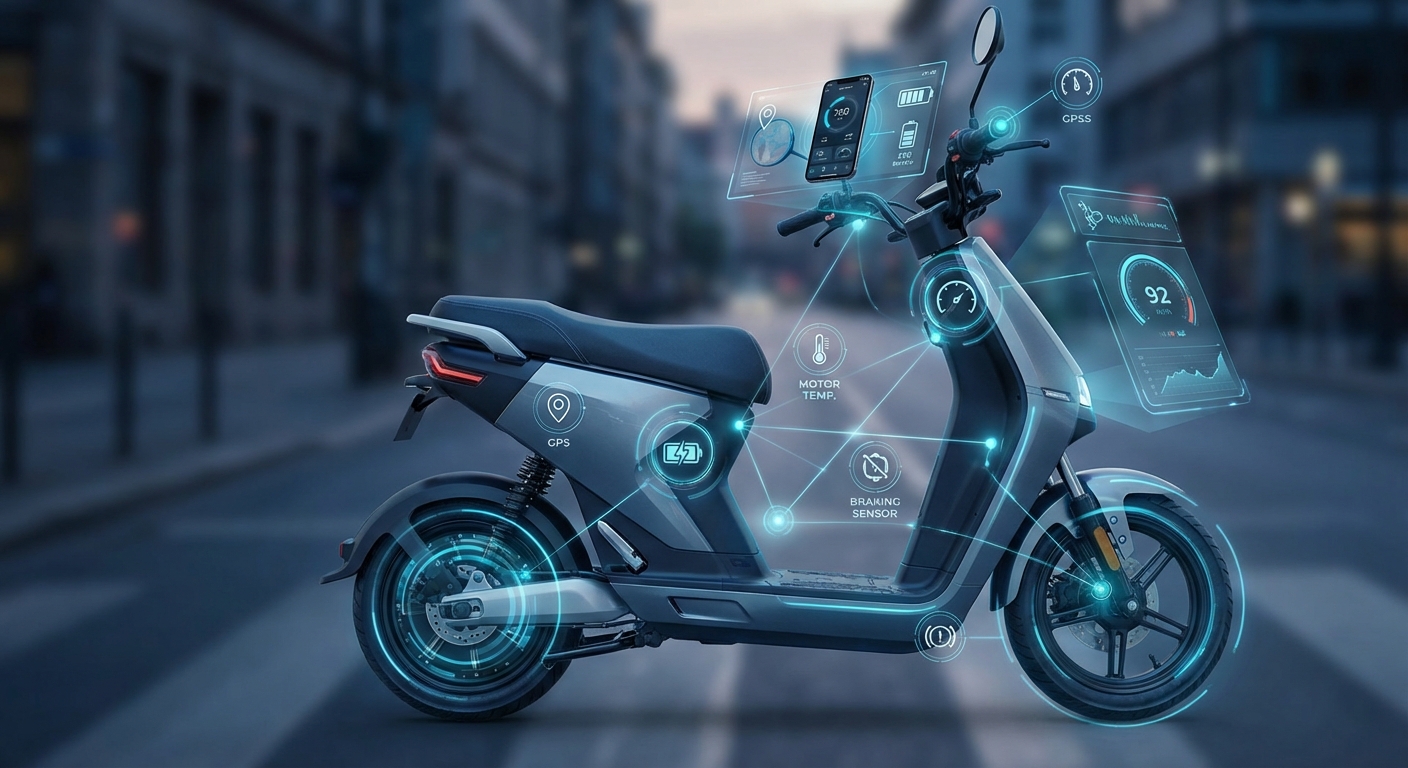
Your electric scooter knows more about your ride than you think. Every acceleration, every bump, every battery percentage drop gets tracked by a network of tiny sensors working together in real time. These aren’t just fancy add-ons. They’re the reason modern e-scooters can warn you about low tire pressure before you notice, adjust motor power based on terrain, and even call for help if you crash.
IoT sensors in electric scooters continuously monitor battery health, speed, location, tilt angle, temperature, and rider behavior. These sensors communicate with onboard controllers and smartphone apps to optimize performance, prevent accidents, enable theft tracking, and provide real-time diagnostics. Understanding how these sensors work helps riders maintain their scooters better and make smarter purchasing decisions when evaluating advanced features.
What makes a scooter “smart” in the first place
Traditional electric scooters had basic components. A motor, a battery, a throttle, and brakes.
Modern smart scooters add a layer of intelligence through IoT sensors that collect data constantly. These sensors feed information to a central controller that makes split-second decisions about power delivery, braking force, and system alerts.
The difference shows up in daily use. A non-smart scooter just moves when you press the throttle. A smart scooter adjusts motor output based on your weight, battery level, incline angle, and current speed to give you consistent performance.
This real-time monitoring creates a feedback loop. Sensors detect conditions, the controller processes data, and the system responds automatically. You feel this as smoother acceleration, more predictable braking, and fewer unexpected shutdowns.
The sensor types doing the heavy lifting
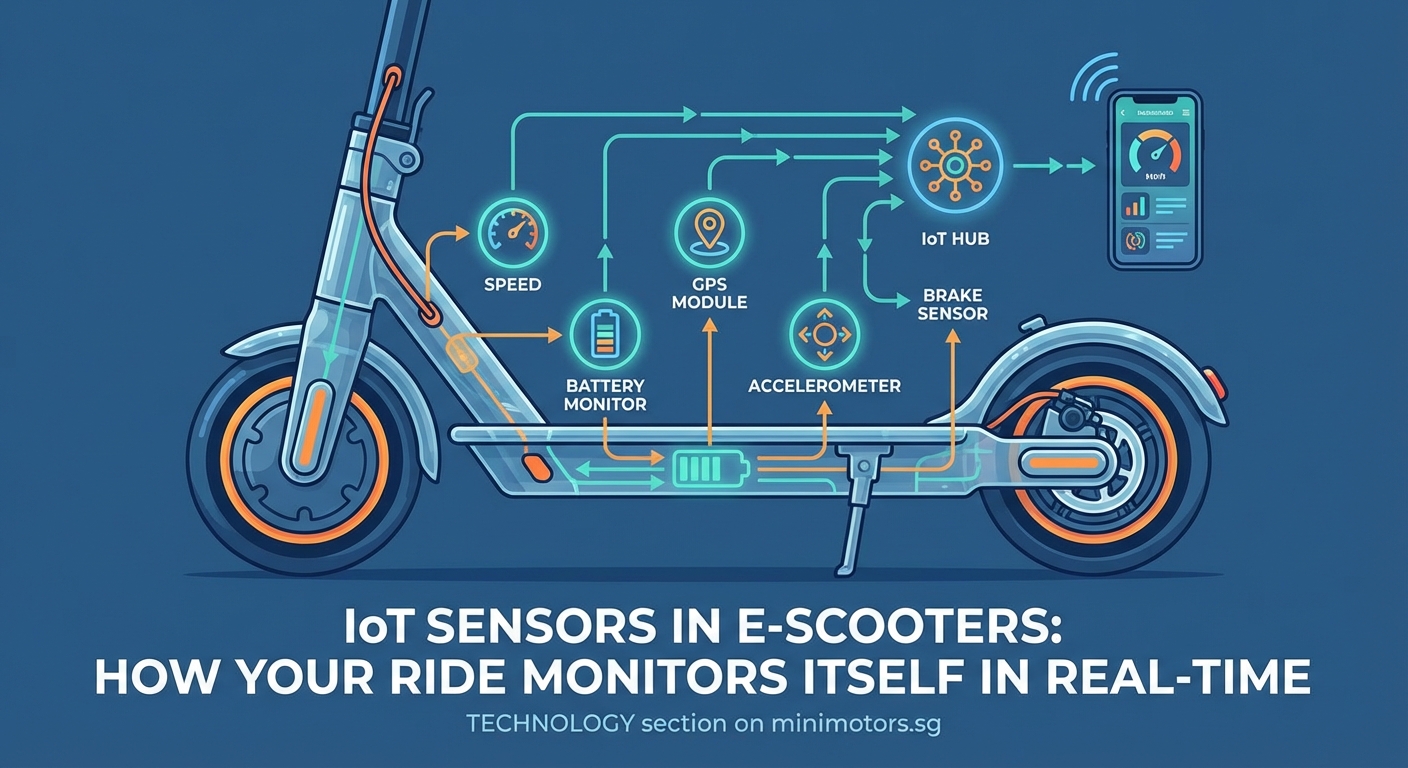
Different sensors handle different jobs. Here’s what’s actually inside your scooter’s frame.
Accelerometers measure movement in three dimensions. They detect when you’re going uphill, downhill, or leaning into a turn. This data helps the controller adjust power distribution and can trigger automatic alerts if the scooter tips over or experiences a sudden impact.
Gyroscopes track rotational movement and orientation. Combined with accelerometer data, they create a complete picture of your scooter’s position and movement patterns. Some advanced models use this information to enable self-balancing features or detect unsafe riding angles.
Hall effect sensors monitor motor rotation and wheel speed. They’re essential for cruise control, speedometer accuracy, and regenerative braking systems. These sensors also help detect motor malfunctions before they cause complete failure.
Temperature sensors sit near the battery pack, motor, and controller. Overheating is one of the biggest risks in electric vehicles. These sensors trigger cooling protocols or power reduction when components get too hot, preventing damage and fires.
Battery management sensors track voltage, current, and individual cell health. They provide accurate range estimates and prevent overcharging or deep discharge that shortens battery life. If you’ve noticed your scooter’s range estimate getting more accurate over time, that’s these sensors learning your riding patterns.
GPS modules enable location tracking for anti-theft features and ride logging. They also allow manufacturers to create geofencing zones that limit speed in restricted areas or prevent operation in prohibited zones.
Pressure sensors in some premium models monitor tire inflation. Proper tire pressure affects range, handling, and safety, but most riders forget to check manually.
How sensors talk to each other and to you
These sensors don’t work in isolation. They’re connected through a CAN bus or similar communication protocol that lets them share data instantly.
The flow looks like this:
- Sensors continuously collect raw data about speed, position, temperature, battery state, and motor performance.
- This data streams to the main controller, typically mounted near the deck or battery compartment.
- The controller runs algorithms that interpret sensor readings and make operational decisions within milliseconds.
- Adjusted commands go out to the motor, brake system, and display screen.
- Simultaneously, processed data gets transmitted via Bluetooth to your smartphone app for logging and analysis.
This happens hundreds of times per second. The lag between sensor detection and system response is measured in milliseconds.
Your smartphone app acts as a window into this sensor network. Most apps show real-time speed, battery percentage, trip distance, and riding mode. Advanced apps display motor temperature, individual cell voltages, error codes, and maintenance reminders based on sensor data.
Some manufacturers use cloud connectivity to aggregate sensor data from thousands of scooters. This helps them identify common failure patterns, push firmware updates that improve performance, and even predict when specific components might fail based on usage patterns.
Real-time monitoring that actually matters
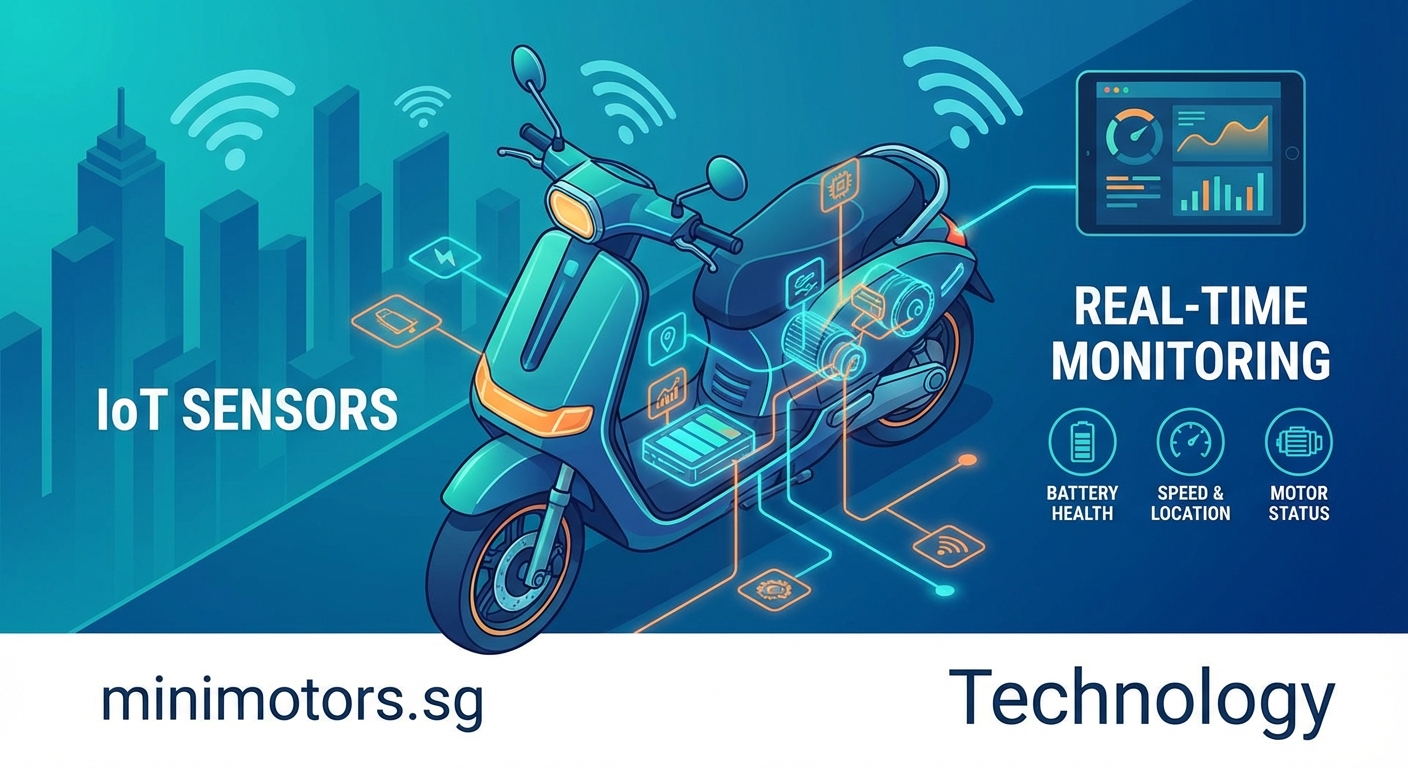
The practical benefits show up in ways you notice every ride.
Battery optimization happens automatically. Sensors detect how much power you’re drawing and adjust motor assistance to maximize range. If you’re riding conservatively on flat ground, the system knows it can maintain current speed with less power. If you’re climbing a steep hill, it allocates maximum current to prevent stalling.
Theft protection relies on GPS and motion sensors. If someone moves your locked scooter, you get an instant alert. Some systems activate an alarm or remotely disable the motor. Location tracking helps recovery teams find stolen scooters, though success rates vary by region.
Predictive maintenance alerts appear before components fail. Temperature sensors warn about motor overheating. Battery sensors flag cells that aren’t holding charge properly. Accelerometer data can detect bearing wear by measuring vibration patterns. These warnings let you schedule repairs instead of dealing with roadside breakdowns.
Safety features activate based on sensor input. If accelerometers detect a crash, some scooters automatically send your location to emergency contacts. Tilt sensors can cut power if the scooter tips beyond safe angles. Speed limiters engage in rain (detected by moisture sensors on premium models) or when battery charge drops below critical levels.
Riding analytics help you understand your habits. Apps show average speed, top speed, total distance, elevation gain, and energy efficiency. This data reveals whether you’re riding aggressively (shorter battery life) or conservatively (better range). Some riders use this information to improve their technique and extend their scooter’s operational range.
The smartphone connection everyone uses
Bluetooth connectivity turns your phone into a control center and diagnostic tool.
Most scooter apps let you:
- Lock and unlock the motor remotely
- Switch between riding modes (eco, normal, sport)
- Update firmware to fix bugs or add features
- View detailed battery health metrics
- Set cruise control speed limits
- Enable or disable lights
- Check error codes when something malfunctions
- Share ride data with friends or maintenance shops
The connection works both ways. Your phone sends commands to the scooter, and the scooter streams sensor data back to your phone.
This creates privacy considerations. Your riding patterns, locations, and usage data get stored on company servers in most cases. Some manufacturers anonymize this data, others use it for targeted marketing. Check your app’s privacy settings and terms of service if this concerns you.
Connection quality matters for safety features. If your phone loses Bluetooth connection mid-ride, basic functions still work (the scooter doesn’t shut down), but features like theft alerts, remote locking, and ride logging stop functioning until reconnection.
For riders interested in how these connected features improve safety, smartphone apps really make e-scooters safer through real-time monitoring and emergency response capabilities.
Common sensor problems and what they mean
Sensors fail. Here’s how to recognize issues before they strand you.
| Symptom | Likely Sensor Issue | What To Do |
|---|---|---|
| Inaccurate speed display | Hall effect sensor misalignment | Check wheel magnets, recalibrate in app |
| Battery percentage jumps randomly | BMS sensor calibration drift | Full charge/discharge cycle to recalibrate |
| Motor cuts out on hills | Temperature sensor false reading | Let motor cool, check for obstructions |
| GPS location wrong by blocks | Poor satellite reception | Update GPS firmware, use outdoors |
| Tilt warnings on flat ground | Accelerometer calibration error | Perform flat-surface calibration in settings |
| App won’t connect | Bluetooth module failure | Restart both devices, check for interference |
Most sensor issues show up as error codes in your app. Write down the code and search your manufacturer’s support database. Many problems get fixed through firmware updates that recalibrate sensor readings or adjust threshold values.
Physical damage affects sensors too. If you crash hard or ride through deep water, accelerometers and temperature sensors can fail. Moisture is particularly problematic for electronic sensors, even on scooters rated for water resistance.
Regular maintenance helps prevent sensor failures. Keep firmware updated. Clean the scooter regularly to prevent debris buildup around sensor housings. Check battery connections periodically, since loose wiring affects sensor accuracy.
If you’re troubleshooting unusual sounds that might indicate sensor-related issues, understanding common scooter noises can help identify whether the problem stems from mechanical wear or electronic malfunctions.
Privacy and data security considerations
Your scooter collects a lot of personal information. Location history reveals where you live, work, and spend time. Riding patterns indicate your daily schedule. Speed data shows how aggressively you ride.
This data sits on company servers in most cases. Manufacturers use it to improve products, but it also creates risk. Data breaches happen. Third parties sometimes purchase aggregated mobility data for urban planning or marketing purposes.
You have some control over data collection:
- Disable location services when not using theft tracking
- Turn off ride logging if you don’t need statistics
- Use guest mode in shared scooters to avoid account linking
- Review app permissions regularly and revoke unnecessary access
- Check if your manufacturer allows data deletion requests
Some riders prefer scooters with minimal connectivity. Basic models without apps or cloud features still use sensors for performance optimization, but they don’t transmit data off the device. This limits features like theft tracking and remote diagnostics but maximizes privacy.
Government regulations around IoT device data are evolving. GDPR in Europe and similar laws elsewhere give you rights to access, correct, and delete your data. Exercise these rights if data privacy matters to you.
How sensor data improves future scooter designs
Manufacturers collect sensor data from thousands of riders to identify patterns and problems.
If temperature sensors across 10,000 scooters show motors overheating on 15-degree inclines, the next model gets better cooling or a more powerful motor. If battery sensors reveal that most riders never use the top speed setting, future designs might prioritize range over maximum speed.
This feedback loop makes each generation of scooters better suited to real-world use. Early e-scooters had theoretical specs based on lab testing. Modern scooters have specs validated by millions of miles of actual riding data.
Firmware updates bring these improvements to existing scooters. A software patch might adjust motor controller algorithms based on sensor data showing inefficient power delivery in certain conditions. Your scooter literally gets smarter over time without hardware changes.
Crowdsourced sensor data also helps cities plan infrastructure. Aggregated GPS data shows which routes riders prefer, where accidents cluster, and which areas need better bike lanes. This information influences urban planning decisions that make cities more scooter-friendly.
The evolution toward AI-powered smart features builds directly on the sensor foundation. Machine learning algorithms need data to learn from, and IoT sensors provide exactly that.
What to look for when buying a sensor-equipped scooter
Not all smart scooters use sensors equally well. Here’s what separates good implementations from marketing gimmicks.
Sensor redundancy matters for critical functions. Premium scooters use multiple temperature sensors at different battery locations instead of relying on a single reading. Dual accelerometers provide backup if one fails. This redundancy prevents false alerts and improves reliability.
App quality reflects overall system integration. Download the manufacturer’s app before buying and read recent reviews. Buggy apps with poor ratings indicate the company doesn’t prioritize software development. A polished app suggests the sensor ecosystem is well-designed and maintained.
Firmware update frequency shows manufacturer commitment. Companies that push regular updates are actively improving their products based on sensor data. Scooters that haven’t received updates in over a year likely have abandoned software support.
Error code documentation helps with troubleshooting. Good manufacturers publish comprehensive error code lists that explain what each sensor alert means and how to resolve it. Poor documentation leaves you guessing when problems arise.
Sensor calibration options give you control. Look for scooters that let you recalibrate accelerometers, reset battery management systems, and adjust sensor thresholds through the app. This flexibility helps you maintain accuracy as components age.
Data export features let you own your information. Some apps allow CSV export of ride data, battery health logs, and maintenance records. This helps if you switch scooters or want to analyze performance trends in third-party tools.
For riders selecting their first connected scooter, choosing your first electric scooter should include evaluating which sensor features actually match your riding needs versus which are unnecessary complexity.
Battery sensors deserve special attention
Battery management systems use the most sophisticated sensor arrays in your scooter.
Each lithium cell gets monitored individually. Voltage sensors track charge levels. Current sensors measure discharge rates. Temperature sensors watch for thermal runaway. The BMS uses this data to balance cells during charging and prevent dangerous conditions.
Modern battery management systems can extend lithium cell life by 40% compared to basic charge controllers. The difference comes from precise monitoring that prevents damaging charge cycles and keeps cells balanced.
You see this as accurate range estimates. Simple scooters show battery percentage based only on voltage, which drops non-linearly and gives wildly inaccurate predictions. Smart scooters factor in current draw, temperature, riding history, and terrain to predict remaining range within a few percent.
Battery sensors also enable safety features that prevent fires. If one cell overheats, the BMS can isolate it or shut down the entire pack. If voltage drops too low, the system prevents deep discharge that permanently damages cells. If charging current exceeds safe levels, the BMS throttles input power.
This protection explains why quality scooters cost more. Cheap battery packs skip sophisticated sensors and rely on basic voltage cutoffs. They work initially but fail faster and create safety risks.
Understanding how long e-scooter batteries actually last requires knowing how sensor-equipped battery management systems protect cells from the usage patterns that cause premature degradation.
The future of scooter sensor technology
Next-generation sensors will make current systems look primitive.
LiDAR and radar sensors for obstacle detection are already in development. These would enable automatic emergency braking when pedestrians step into your path or cars pull out unexpectedly. The technology exists but remains too expensive for consumer scooters. Expect it in premium models within three years.
Biometric sensors could monitor rider fatigue or intoxication. Heart rate sensors in handlebar grips might detect when you’re too tired to ride safely. Reaction time tests through the app could prevent drunk riding. Privacy concerns make this controversial, but the technology is feasible.
Predictive terrain mapping using GPS and accelerometer data could warn about upcoming potholes or rough surfaces. If 100 riders hit the same bump hard enough to trigger accelerometer alerts, the system flags that location for future riders. This crowdsourced hazard mapping could significantly improve safety.
Wear sensors embedded in brake pads, tires, and bearings would provide precise replacement timelines instead of rough estimates. You’d know exactly when components need service based on actual degradation, not guesswork.
Environmental sensors measuring air quality, noise levels, and weather conditions could adjust performance automatically. The scooter might reduce speed in heavy rain, warn about poor visibility in fog, or suggest alternate routes through cleaner air.
The trend points toward scooters that require less rider attention because sensors handle more decision-making. This creates convenience but also dependency. When sensors fail, riders who’ve relied on automated systems might lack the skills to manage manually.
Staying informed about breakthrough battery technologies and AI integration helps you anticipate which sensor innovations will actually reach consumer scooters versus which remain lab concepts.
Making sense of all this technology
IoT sensors transform electric scooters from simple vehicles into data-gathering platforms that optimize performance, prevent failures, and enable features impossible with purely mechanical systems.
The sensors working behind the scenes every ride monitor dozens of parameters simultaneously, make thousands of adjustments per second, and collect data that improves both your current scooter and future designs. This technology makes modern scooters more reliable, safer, and more efficient than previous generations.
Understanding what these sensors do helps you maintain your scooter better, troubleshoot problems faster, and make informed decisions when comparing models. The scooter with the most sensors isn’t necessarily the best, but knowing which sensors matter for your riding style lets you choose features that add real value instead of marketing hype.
Your scooter is monitoring itself constantly. Now you know what it’s watching and why it matters.
