
How to Register Your Electric Scooter: Complete Documentation Guide
You just unboxed your new electric scooter. The excitement is real. But before you hit the road, there’s one critical step that many new riders overlook: registration. Getting your e-scooter properly registered isn’t just about following rules. It protects your investment, keeps you legal, and helps you avoid fines that can cost hundreds of dollars.
Electric scooter registration requirements vary by location, but most jurisdictions require proof of purchase, identification, insurance documents, and a completed application form. The process typically takes 7 to 14 business days and costs between $15 and $75. Riding an unregistered e-scooter can result in fines ranging from $200 to $500, vehicle impoundment, and potential legal complications that affect your ability to register in the future.
Understanding Why Registration Matters
Registration creates a legal link between you and your scooter. Think of it like getting a birth certificate for your ride.
When your e-scooter gets stolen, registration documentation helps police track it down. Insurance claims require proof of ownership. If you’re involved in an accident, registration demonstrates you’re a legitimate operator who followed proper procedures.
Many cities now require registration for any electric scooter capable of exceeding 15 mph. Some regions extend this requirement to all motorized personal mobility devices, regardless of speed. The rules change based on where you live, so checking local regulations before your first ride saves headaches later.
Unregistered riders face real consequences. Fines start around $200 in most areas. Repeat offenders can see penalties climb to $500 or more. Some jurisdictions impound unregistered vehicles, forcing you to pay storage fees on top of fines just to get your scooter back.
Gathering Your Required Documents
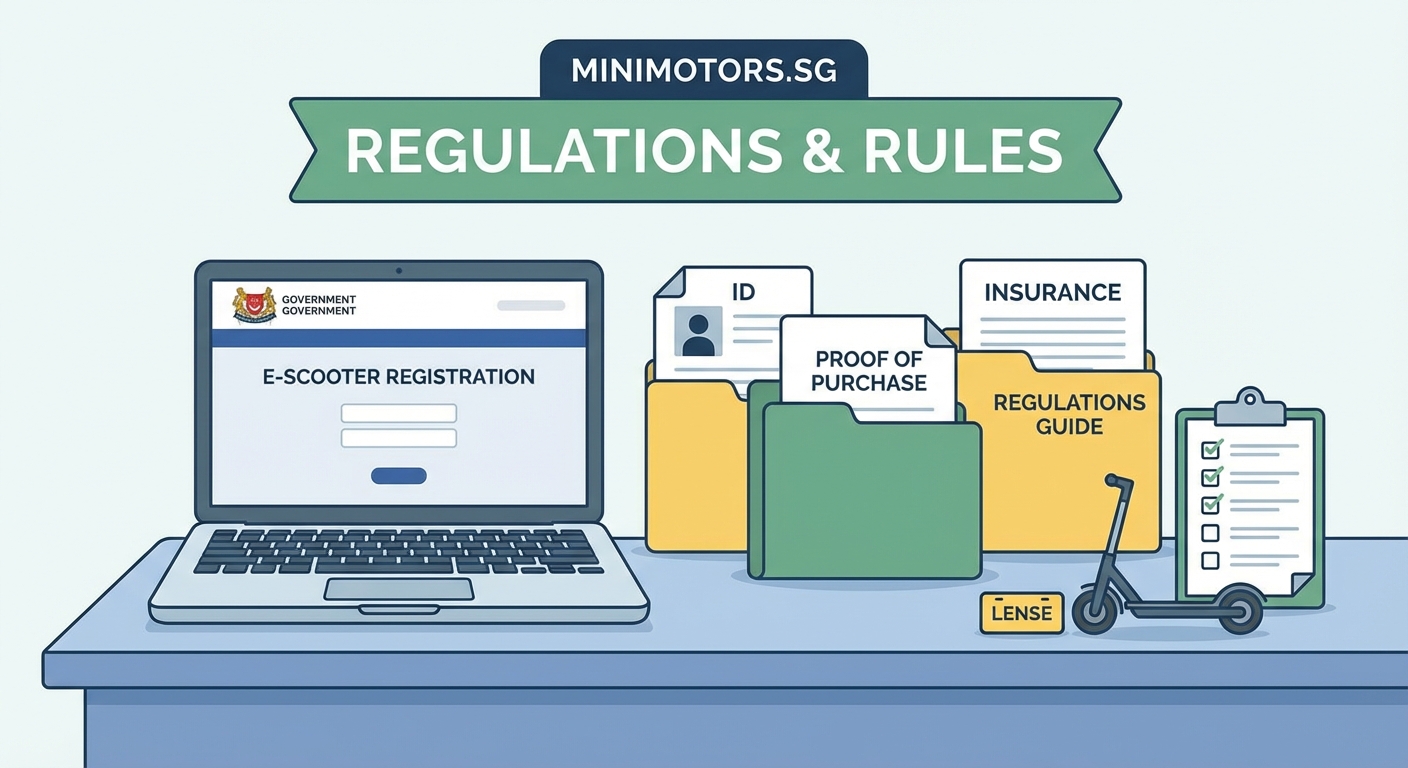
Before starting the registration process, collect everything you’ll need. Missing even one document can delay your application by weeks.
Here’s what most registration offices require:
- Proof of purchase: Original receipt, invoice, or bill of sale showing the purchase date, seller information, and amount paid
- Government-issued photo ID: Driver’s license, state ID, or passport that matches the name on your purchase documents
- Proof of residence: Utility bill, lease agreement, or bank statement dated within the last 60 days
- Vehicle specifications sheet: Manufacturer documentation showing motor power, top speed, and weight capacity
- Insurance certificate: Proof of liability coverage meeting your jurisdiction’s minimum requirements
- Completed application form: Downloaded from your local DMV or transportation authority website
Some regions require additional items. California residents need proof of safety certification. New York requires a notarized affidavit if buying used. Florida demands a vehicle inspection certificate for scooters over 750 watts.
Keep copies of everything. Submit photocopies or scans, never originals. If your application gets lost in processing, you’ll need backup documentation to start over without repurchasing anything.
Step-by-Step Registration Process
The actual registration follows a predictable pattern, though specific requirements differ by location. Understanding what insurance options work best for your situation helps streamline this process, which you can learn more about through resources on do you really need e-scooter insurance.
Here’s how to complete registration from start to finish:
-
Visit your local registration authority website and locate the e-scooter or personal mobility device section. Download all required forms. Read instructions completely before filling anything out. Many applications get rejected for simple errors like missing signatures or incomplete fields.
-
Complete the application form accurately. Use black ink if submitting paper forms. Double-check VIN numbers, serial numbers, and model information against your scooter’s documentation. Mistakes here cause the longest delays.
-
Gather your supporting documents and organize them in the order listed on the application checklist. Attach them securely without stapling through important information like serial numbers or signatures.
-
Pay the registration fee using accepted payment methods. Most offices accept checks, money orders, or credit cards. Keep your payment receipt separate from your application as proof of payment.
-
Submit your application either online, by mail, or in person. Online submissions process fastest, typically within 5 to 7 business days. Mail submissions take 10 to 14 days. In-person submissions offer immediate error checking but require waiting in line.
-
Track your application status using the confirmation number provided at submission. Most registration systems offer online tracking that updates daily.
-
Receive your registration certificate and plates (if required in your area). Some jurisdictions issue stickers instead of plates. Others provide digital registration accessible through smartphone apps.
“The biggest mistake new e-scooter owners make is assuming registration is optional or can wait. Start the process the same day you buy your scooter. Processing times mean you might be waiting weeks before you can legally ride, and riding unregistered isn’t worth the risk.” — Transportation compliance officer, Seattle DOT
Navigating Common Registration Challenges
Even with perfect preparation, complications arise. Knowing how to handle them keeps your registration moving forward.
Used scooter purchases create the most confusion. If the previous owner never registered the vehicle, you’ll need extra documentation proving the chain of ownership. Request a signed bill of sale with the seller’s driver’s license number. Some states require the seller to complete a transfer of ownership form.
Import models without U.S. certification face additional scrutiny. You may need to provide independent safety testing results or modify the scooter to meet local standards before registration approval.
Kit-built or modified scooters require engineering certifications in most jurisdictions. If you’ve upgraded the motor, controller, or battery beyond factory specifications, expect to provide professional inspection reports.
Missing VIN or serial numbers halt registration immediately. Contact the manufacturer for replacement identification plates. If that’s not possible, some states allow alternative identification methods through authorized inspection stations.
| Registration Challenge | Solution | Typical Processing Time |
|---|---|---|
| Missing proof of purchase | Request duplicate receipt from seller or use credit card statement | 3-5 business days |
| Expired identification | Renew ID before submitting application | Varies by state |
| Incorrect VIN entry | Submit correction form with photo of actual VIN plate | 5-7 business days |
| Insufficient insurance coverage | Upgrade policy to meet minimum requirements | 1-2 business days |
| Out-of-state purchase | Provide additional residency documentation | 7-10 business days |
| Modified specifications | Obtain engineering certification from licensed inspector | 14-21 business days |
Understanding Registration Fees and Costs
Registration isn’t free, but costs remain reasonable compared to automobile registration.
Most jurisdictions charge between $15 and $75 for initial registration. Annual renewal fees typically run $10 to $40. Some areas waive fees entirely for low-power scooters under 500 watts.
Additional costs include:
- Insurance premiums: $100 to $300 annually for basic liability coverage
- Safety inspection: $25 to $50 if required in your area
- Plate or sticker fees: $5 to $15 for physical identification markers
- Late registration penalties: $50 to $150 if registering after the grace period
- Expedited processing: $20 to $40 for faster application review
Payment methods vary. Most offices accept credit cards, but some only take checks or money orders. Online submissions usually require electronic payment. Keep receipts for tax purposes, as some jurisdictions allow deductions for transportation-related expenses.
Maintaining Your Registration Status
Registration isn’t a one-time task. Keeping your status current requires ongoing attention.
Most registrations expire annually. Renewal notices arrive 30 to 60 days before expiration, but don’t wait for the reminder. Mark your calendar with the expiration date and renew at least two weeks early.
Address changes must be reported within 30 days in most areas. Failure to update your address means missing renewal notices and potentially riding with expired registration.
Ownership transfers require formal documentation. If you sell your scooter, complete the transfer paperwork immediately. Remaining the registered owner makes you liable for tickets or accidents involving your old scooter.
Insurance lapses automatically invalidate registration in many jurisdictions. Maintain continuous coverage and provide updated certificates when policies renew.
Specification changes need reporting. Upgrading to a more powerful motor or increasing top speed may move your scooter into a different registration class with different requirements.
Regional Differences You Need to Know
Registration requirements shift dramatically based on location. What’s mandatory in one city might be completely unnecessary 50 miles away. For a comprehensive understanding of how these rules vary across different areas, check out the detailed breakdown of understanding e-scooter speed limits.
California requires registration for any e-scooter exceeding 20 mph or 1000 watts. The process runs through the DMV and costs $23 for two years. Riders must carry proof of registration at all times.
New York mandates registration for scooters over 750 watts. The fee is $18 annually. Insurance requirements are stricter here, demanding $50,000 minimum liability coverage.
Texas takes a hands-off approach. Most cities don’t require registration for personal e-scooters, though commercial rental fleets need permits.
Florida requires registration only for scooters classified as motor vehicles (typically over 30 mph). Standard commuter models operate registration-free.
Washington implements city-by-city rules. Seattle requires registration and annual inspections. Spokane has no registration requirements at all.
Check your specific municipality’s website. State laws provide the baseline, but cities often add extra requirements.
What Happens If You Skip Registration
Riding unregistered seems tempting when you’re eager to try your new scooter. The consequences make it a terrible gamble.
Traffic stops for unregistered e-scooters result in immediate citations. Officers can impound your scooter on the spot in some jurisdictions. You’ll pay the fine, impound fees, and storage charges before getting it back.
Insurance claims get denied without valid registration. If you’re in an accident and can’t prove registration, your policy won’t cover damages or injuries.
Future registration becomes harder. Some areas flag riders caught operating unregistered vehicles, requiring additional documentation or higher fees when they finally attempt legitimate registration.
Legal liability increases. If you injure someone while riding unregistered, courts view it as evidence of negligence. Personal injury lawsuits become harder to defend.
The small investment in proper registration protects you from all these risks. The hour you spend registering your scooter saves countless hours dealing with legal problems later.
Special Considerations for First-Time Owners
If this is your first electric scooter, registration represents just one piece of responsible ownership. New riders benefit from understanding the complete picture before taking their first ride. Learning about 7 essential things every first-time e-scooter rider should know provides valuable context beyond just registration requirements.
Age requirements affect registration eligibility. Most areas require riders to be at least 16 years old. Some set the minimum at 18. Parents cannot register scooters in their name for underage children to operate in most jurisdictions.
Learner periods exist in some regions. New registrants might face speed restrictions or route limitations for the first 30 to 90 days.
Safety course completion becomes mandatory in certain areas before registration approval. These courses typically cost $25 to $75 and take 2 to 4 hours to complete.
Equipment requirements must be met before registration. Functional lights, reflectors, and braking systems aren’t optional. Inspectors will verify these features during registration review.
Starting with the right information prevents costly mistakes. Take time to understand all requirements before purchasing your scooter. Some models don’t meet registration standards in certain areas, leaving you with an expensive paperweight.
Digital Registration and Modern Solutions
Technology is transforming how registration works. Many jurisdictions now offer completely digital processes that eliminate paperwork and waiting.
Mobile apps handle the entire registration workflow. Upload photos of required documents, pay fees electronically, and receive digital registration certificates accessible from your phone. Some apps even remind you about renewal dates.
Blockchain verification is emerging in progressive cities. Your registration gets recorded on distributed ledgers, making fraud nearly impossible and ownership verification instant.
Smart scooter integration allows certain models to automatically update registration information. When you move or update insurance, the scooter’s connected systems notify registration authorities.
QR code identification replaces traditional plates in some areas. Officers scan a code on your scooter to instantly verify registration status, insurance coverage, and inspection compliance.
These digital solutions speed up processing and reduce errors. If your jurisdiction offers electronic registration, use it. The convenience outweighs any learning curve.
Getting Started Today
Registration might seem like bureaucratic hassle, but it’s straightforward once you understand the steps. Most new owners complete the process in under an hour of actual work, with the rest being waiting time.
Start by visiting your local transportation authority’s website. Download the required forms and create a checklist of needed documents. Gather everything in one place before beginning your application.
Choose the submission method that fits your schedule. Online processing offers speed. In-person visits provide immediate feedback. Mail submissions work fine if you’re not in a rush.
Track your application status regularly. If processing takes longer than expected, follow up with a phone call. Sometimes applications sit in queues simply because of staffing shortages.
Once your registration arrives, keep it with your scooter at all times. Digital copies on your phone work in most areas, but carrying the physical certificate prevents complications during traffic stops.
Registration transforms your e-scooter from an unverified purchase into a legitimate vehicle. The small effort protects your investment, keeps you legal, and lets you ride with confidence knowing you’ve handled your responsibilities correctly. Get it done before your first ride, and you’ll never worry about it again until renewal time rolls around.
