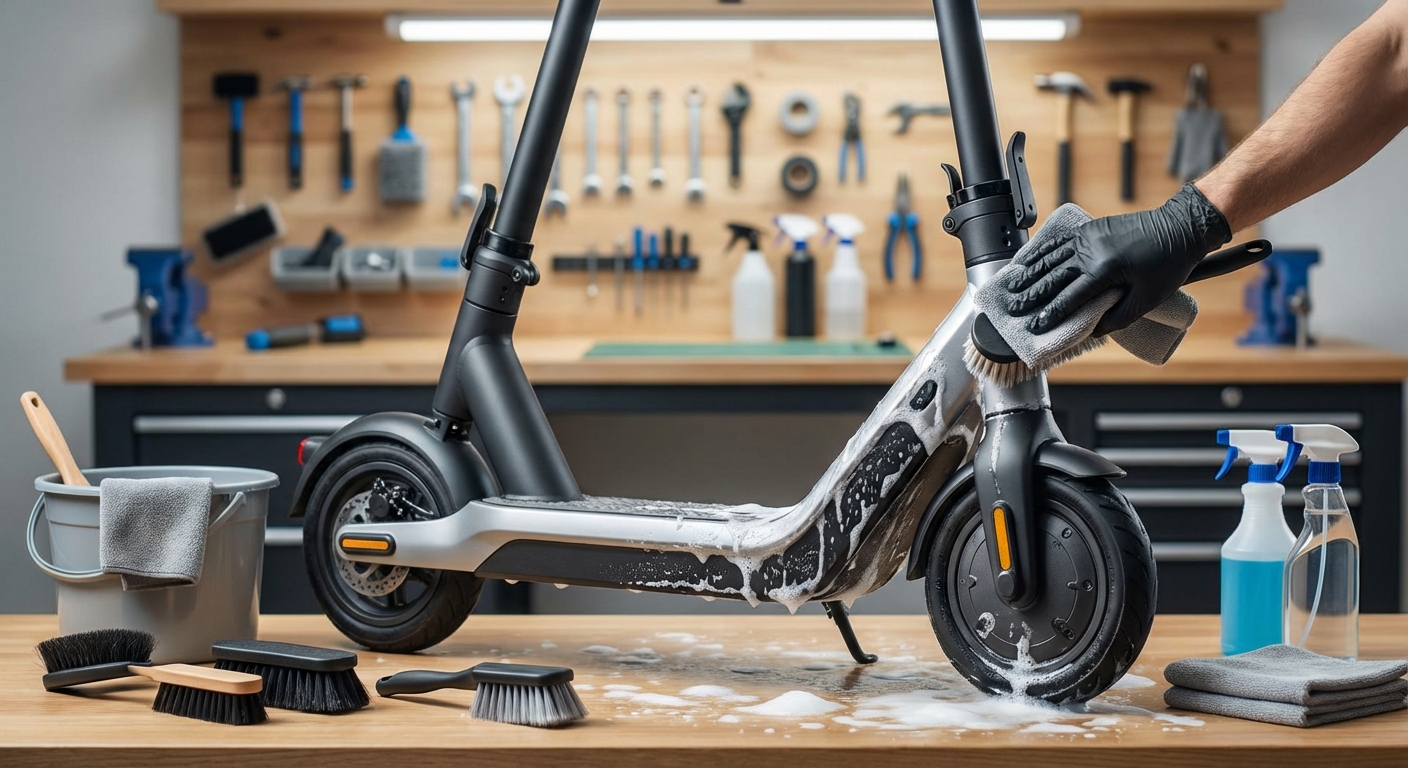
How to Deep Clean Your Electric Scooter: A Complete Step-by-Step Guide
Your electric scooter carries you through dusty streets, wet sidewalks, and everything in between. All that grime builds up fast. Most new owners hesitate because they worry about water damage to the electronics. That fear is valid, but cleaning your scooter doesn’t have to be risky when you know the right approach.
Cleaning your electric scooter requires avoiding direct water spray on electrical components while using gentle cleaners and soft brushes. The process takes 20 to 30 minutes and includes protecting sensitive areas, removing dirt from the deck and wheels, wiping down electronics carefully, and drying everything thoroughly. Regular cleaning every two weeks prevents buildup that damages parts and maintains performance.
Why Regular Cleaning Matters for Your Scooter
Dirt isn’t just cosmetic. It works its way into bearings, brakes, and folding mechanisms.
Salt from roads corrodes metal parts. Mud clogs your wheel wells and adds weight. Grime on brake pads reduces stopping power.
A clean scooter lasts longer. You’ll spot loose bolts, worn tires, and other issues before they become problems.
Plus, it just feels better to ride something that looks cared for.
Essential Tools and Supplies You’ll Need
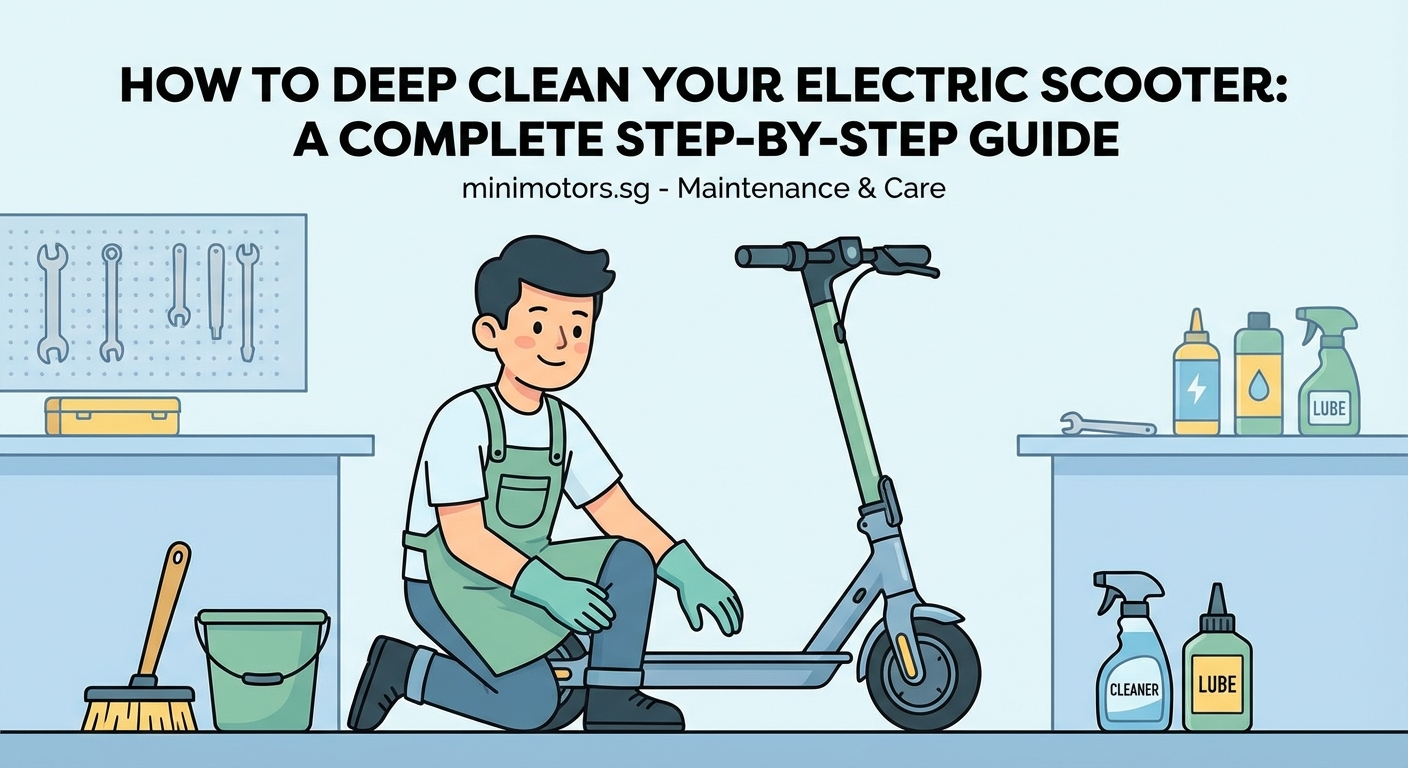
Gather these items before you start:
- Two buckets (one for soapy water, one for rinsing)
- Microfiber cloths (at least three)
- Soft-bristle brush or old toothbrush
- Dish soap or bike cleaner
- Spray bottle filled with water
- Dry towels
- Compressed air or a small air pump
- Optional: chain lubricant, silicone spray
Avoid pressure washers. They force water into sealed compartments where it doesn’t belong.
Don’t use harsh chemicals like bleach or ammonia. They damage plastic and rubber parts.
Preparing Your Scooter for Cleaning
Turn off your scooter completely. Remove the battery if your model allows it.
This step is critical. Even water-resistant scooters can short circuit if powered on during cleaning.
Find a shaded spot outdoors or a well-ventilated garage. Direct sunlight dries soap too fast and leaves streaks.
Cover electrical connections with plastic bags and tape. Focus on the charging port, display screen, and any exposed wiring.
Check your owner’s manual for specific waterproofing ratings. An IP54 rating means light splashes are fine. IP67 can handle brief submersion, but you still shouldn’t spray directly at ports.
Step-by-Step Cleaning Process
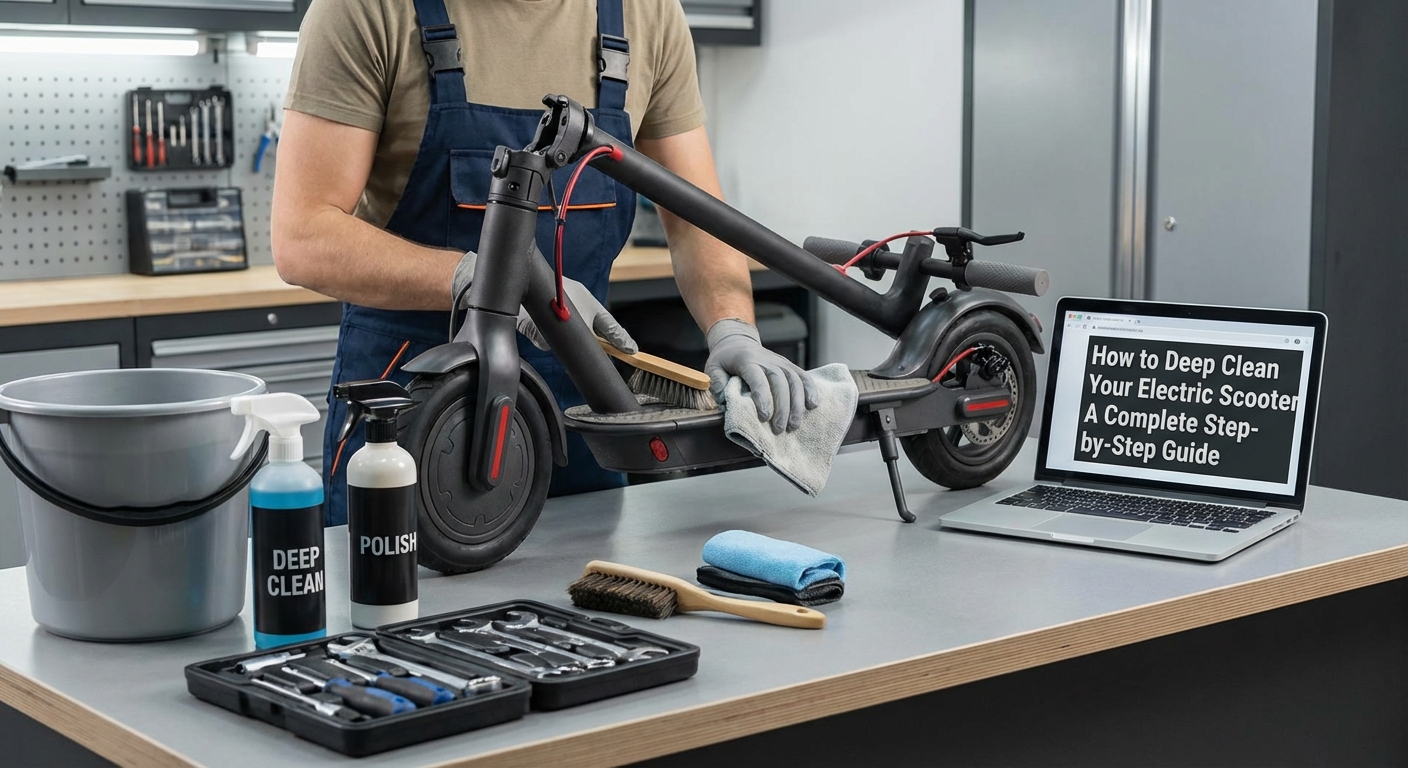
Here’s how to clean your scooter without causing damage.
1. Remove Loose Dirt and Debris
Start dry. Use a soft brush to sweep off dust, leaves, and dried mud.
Pay attention to the deck, around the wheels, and under the fenders. Compressed air works great for tight spaces.
This prevents you from grinding dirt into surfaces when you start washing.
2. Wash the Frame and Deck
Mix a few drops of dish soap into a bucket of warm water.
Dip your cloth into the soapy water, wring it out well, and wipe down the frame. The cloth should be damp, not dripping.
Work from top to bottom. Gravity helps carry dirt downward.
For stubborn grime, use your soft-bristle brush with gentle circular motions. Don’t scrub aggressively near painted surfaces.
3. Clean the Wheels and Tires
Wheels collect the worst gunk. Mud, grease, and road tar stick to rubber and rims.
Use your brush and soapy water to scrub the tire tread. Check for embedded glass or metal.
Wipe down the wheel hubs and spokes. If you have pneumatic tires, inspect the valve stems for damage.
Avoid getting water inside the motor hub if you have hub motors. Wipe around the motor casing carefully without soaking it.
4. Address the Handlebars and Controls
The handlebars get sweaty and grimy from constant contact.
Use a damp microfiber cloth to wipe the grips, throttle, and brake levers. Don’t spray water directly on the display or control buttons.
For the display screen, use a slightly damp cloth designed for electronics. Dry it immediately with a clean towel.
If your grips are removable, take them off occasionally and wash them separately with soap and water.
5. Clean the Braking System
Brakes need special attention. Dirt on brake pads reduces stopping power.
For disc brakes, wipe the rotor with a clean, dry cloth. Avoid touching it with oily hands afterward.
If you have drum brakes, clean around the housing without forcing water inside.
Never use oil-based cleaners near brakes. They contaminate the pads and make braking dangerous.
6. Rinse and Dry Thoroughly
Use your spray bottle to mist away soap residue. Don’t spray directly at electronics.
Alternatively, use a second damp cloth with clean water to wipe surfaces.
Dry everything with clean towels. Pay extra attention to areas where water pools: the deck, folding joints, and around the stem.
Leave your scooter in a dry area for at least an hour before riding. This ensures hidden moisture evaporates.
What Not to Do When Cleaning
Avoid these common mistakes that damage scooters.
| Mistake | Why It’s Harmful | Better Approach |
|---|---|---|
| Using a hose or pressure washer | Forces water into sealed electronics | Use damp cloths and spray bottles |
| Cleaning while powered on | Risk of short circuits | Always turn off and remove battery |
| Spraying cleaner directly on display | Liquid seeps behind screen | Spray onto cloth first, then wipe |
| Ignoring the charging port | Water causes corrosion | Cover with tape or keep completely dry |
| Using abrasive scrubbers | Scratches paint and plastic | Stick to soft brushes and microfiber |
| Skipping the drying step | Rust and electrical issues | Dry thoroughly and air out |
Deep Cleaning Problem Areas
Some spots need extra work.
Folding mechanism: Dirt here makes folding stiff or causes jamming. Open the mechanism and brush out debris. Wipe with a damp cloth, then apply a small amount of silicone spray to keep it moving smoothly.
Suspension: If your scooter has suspension, clean around the springs or shock absorbers. Grime reduces performance and causes squeaking.
Cable housing: Brake and throttle cables run through protective housing. Wipe down the exterior and check for fraying. If cables feel sticky, they might need lubrication inside the housing.
Kickstand: This small part gets forgotten. Clean around the spring and pivot point. A dirty kickstand won’t stay up or down properly.
Protecting Your Scooter After Cleaning
Cleaning removes protective oils. Add them back.
Apply chain lubricant to any exposed chains. Wipe off excess to avoid attracting dirt.
Spray silicone lubricant on folding joints, hinges, and the kickstand. This prevents rust and keeps moving parts smooth.
For painted or powder-coated frames, consider a thin layer of car wax. It repels water and makes future cleaning easier.
Check tire pressure after cleaning. Water sometimes reveals slow leaks you didn’t notice before.
Regular cleaning isn’t just about appearance. It’s preventive maintenance that catches small problems before they become expensive repairs. A clean scooter is a safe scooter.
How Often Should You Clean Your Scooter
Frequency depends on riding conditions.
Ride daily in the city? Clean every two weeks. Dust and exhaust residue build up fast on pavement.
Ride in wet or muddy conditions? Clean after every ride. Moisture accelerates rust.
Store your scooter indoors and ride occasionally? Once a month is fine.
Always do a spot clean after riding through puddles, mud, or snow. You don’t need a full wash, just wipe down wet areas and dry them.
Between deep cleans, keep a microfiber cloth handy for wiping down the deck and handlebars. This takes two minutes and prevents grime buildup.
Cleaning Different Scooter Types
Not all scooters clean the same way.
Budget models often have lower waterproof ratings. Be extra cautious with water. Focus on wiping rather than rinsing.
Premium scooters with IP67 ratings can handle more moisture, but you should still avoid submerging them. The rating protects against accidents, not intentional soaking.
Off-road scooters with knobby tires collect more mud. Use a stiff brush on the tires, but keep the same gentle approach on the frame and electronics.
Folding scooters need attention at the hinge. Dirt here affects the locking mechanism and can make folding dangerous.
If you’re considering what type works best for your needs, understanding the differences between commuter and off-road models helps with maintenance planning too.
Dealing with Stubborn Stains and Rust
Sometimes soap and water aren’t enough.
For grease stains on the deck, use a degreaser designed for bikes. Apply it with a cloth, let it sit for a minute, then wipe clean.
Rust spots appear on cheaper scooters or after riding in winter. Scrub lightly with fine steel wool, then touch up with paint or clear coat to prevent spreading.
Scuff marks on the deck from shoes? A magic eraser works well. Dampen it and rub gently.
Tree sap or tar? Rubbing alcohol on a cloth dissolves it without harming paint.
Never use sandpaper or harsh abrasives. They remove protective coatings and make corrosion worse.
Maintaining Your Scooter Between Cleanings
Cleaning is easier when you prevent extreme buildup.
Wipe down your scooter after every ride. It takes 30 seconds and removes fresh dirt before it hardens.
Store your scooter indoors or under a cover. Sun and rain degrade materials faster than regular use.
Avoid riding through deep puddles when possible. Water splashes up into the deck and motor housing.
If you must ride in rain, check out tips on riding safely in wet conditions and plan for a thorough cleaning afterward.
Keep a small brush in your bag for removing debris from wheel wells during longer rides.
Signs Your Scooter Needs Immediate Cleaning
Don’t wait for your regular schedule if you notice these issues.
Brakes feel weak or make grinding sounds. Dirt on the pads or rotor is likely.
The scooter feels sluggish or the motor sounds strained. Mud adds weight and resistance.
Folding mechanism won’t lock properly. Grime in the hinge prevents full engagement.
You see visible corrosion or rust forming. Clean and treat it immediately before it spreads.
The throttle or brake lever sticks. Dirt in the control mechanism needs removal.
Any of these problems make riding unsafe. Stop and clean before your next ride.
Common Questions About Scooter Cleaning
Can I use a car wash? No. The high-pressure spray forces water into electronics. Hand washing is safer.
What about rain? Riding in light rain is usually fine for water-resistant scooters, but standing water or heavy downpours require a post-ride cleaning and drying session.
Should I clean before or after storage? Always clean before long-term storage. Dirt and moisture cause corrosion during inactive periods. Learn more about proper battery storage practices for extended breaks.
Can I clean the battery? If removable, wipe it with a dry or barely damp cloth. Never submerge it or get water in the terminals.
How do I clean the charging port? Use compressed air to blow out dust. If there’s corrosion, use a cotton swab with a tiny amount of rubbing alcohol. Let it dry completely before charging.
Building a Maintenance Routine That Includes Cleaning
Cleaning fits into a larger care schedule.
Combine it with other maintenance tasks. While your scooter dries, check tire pressure, test brakes, and inspect for loose bolts.
Keep a simple checklist. It ensures you don’t skip steps when you’re tired after a ride.
Set reminders on your phone. Maintenance is easy to forget when your scooter seems fine.
Consider keeping a log of cleaning dates and any issues you found. Patterns emerge over time. Maybe your front wheel always gets dirtier, indicating it needs more frequent attention.
For a complete maintenance schedule beyond cleaning, refer to guides on regular maintenance intervals to keep your scooter in top condition.
Seasonal Cleaning Considerations
Different seasons require different approaches.
Spring: Pollen sticks to everything. Rinse your scooter more frequently to prevent buildup that attracts moisture.
Summer: Dust and dry dirt are easier to brush off. Clean before debris gets wet from sudden rain.
Fall: Wet leaves create slippery residue. Clean your deck and tires after every ride through leaf piles.
Winter: Salt and road chemicals are brutal. Clean immediately after riding on treated roads. Salt causes rapid corrosion if left on metal parts.
Adjust your cleaning frequency based on what you encounter. A scooter ridden through winter slush needs weekly cleaning. One used in dry summer weather can go longer.
Keeping Your Ride Looking and Running Great
A clean electric scooter performs better and lasts longer. The process takes less than 30 minutes and prevents expensive repairs down the road.
Start with basic cleaning every two weeks. Adjust based on your riding conditions and what you notice during inspections.
Remember to protect electronics, use gentle methods, and dry everything thoroughly. These three principles prevent 90% of cleaning-related damage.
Your scooter gets you where you need to go. Give it the care it deserves, and it’ll keep rolling reliably for years.
