How to Choose Your First Electric Scooter: A Complete Beginner’s Guide
Buying your first electric scooter feels overwhelming when you’re staring at spec sheets filled with voltage numbers, motor wattage, and battery capacities. You want something reliable that fits your actual life, not just impressive stats that sound good on paper. The good news is that choosing the right e-scooter becomes straightforward once you understand which features actually matter for your daily routine.
Choosing your first electric scooter means matching specs to your real needs. Focus on range for your commute distance, motor power for local terrain, weight capacity for rider size, and portability for storage. Budget models work for short flat routes, while premium features like suspension and dual brakes matter for longer rides. Test ride when possible and prioritize safety features over flashy extras.
Start With Your Daily Commute Distance
Your typical travel distance determines which battery capacity you actually need.
Most beginners overestimate how far they’ll ride. Measure your actual route using a map app before shopping. A 5-mile commute requires different specs than a 15-mile journey.
Battery capacity shows up as amp hours (Ah) or watt hours (Wh). Higher numbers mean longer range, but they also add weight and cost. Entry models with 7-10 Ah batteries typically cover 10-15 miles per charge. Mid-range scooters with 15-20 Ah batteries handle 20-30 miles.
Real-world range always falls shorter than advertised specs. Rider weight, terrain, wind, and temperature all drain batteries faster. Plan for 70-80% of the listed range in normal conditions.
If your daily commute requires specific range planning, factor in round-trip distance plus a buffer for detours or errands.
Match Motor Power to Your Terrain
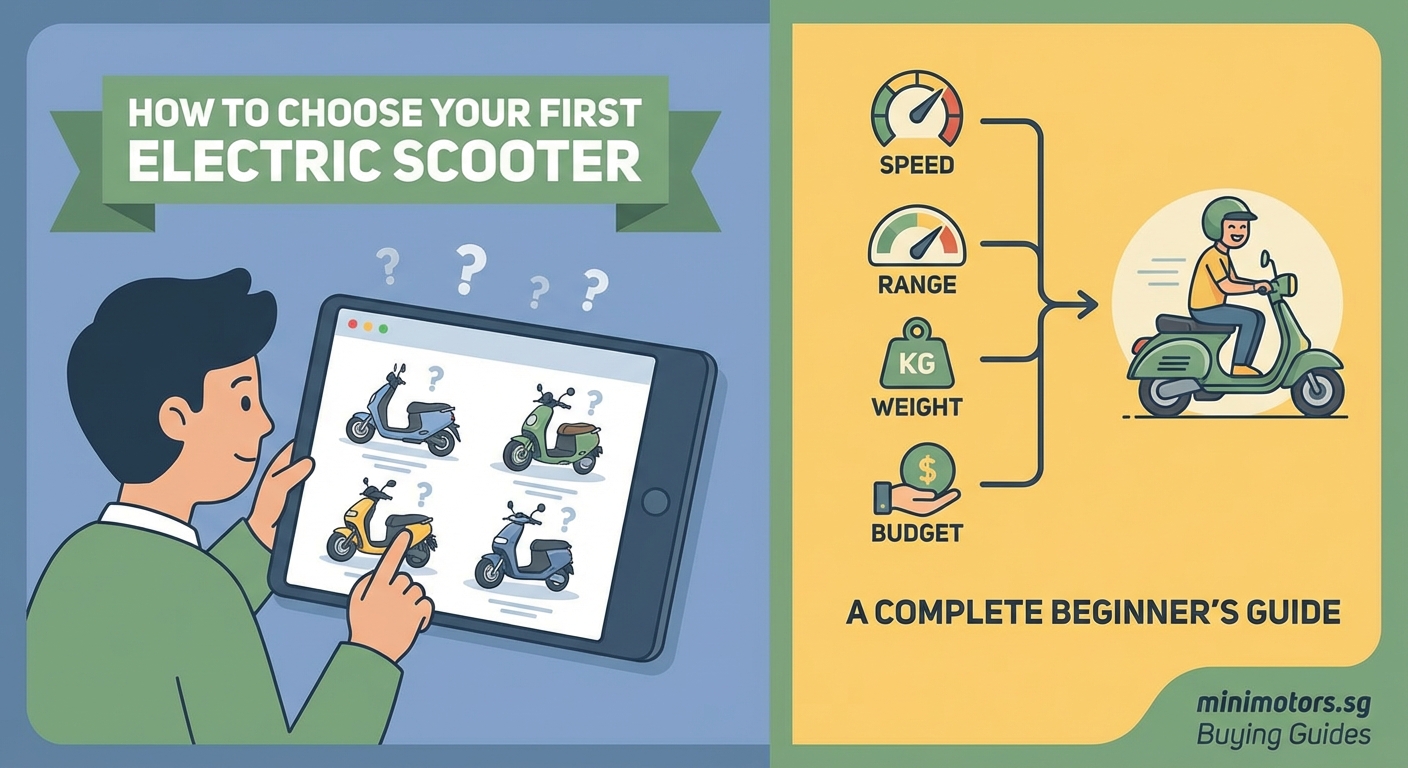
Motor wattage determines whether your scooter conquers hills or struggles on inclines.
Flat urban routes work fine with 250-350W motors. These entry-level options reach 15-18 mph and handle gentle slopes without issue. They’re lighter, cheaper, and sufficient for most city riding.
Hills demand more power. A 500W motor handles moderate inclines up to 10-15 degrees. Anything steeper requires 750W or dual motors. Riders over 200 pounds need extra power regardless of terrain.
Don’t confuse peak wattage with continuous wattage. Marketing materials highlight peak power, but continuous rating shows sustained performance. A scooter with 500W continuous and 800W peak performs better than one with 350W continuous and 700W peak.
Understanding motor power selection prevents buyer’s remorse when you realize your scooter can’t handle your neighborhood’s hills.
Weight Capacity Matters More Than You Think
Exceeding weight limits shortens your scooter’s lifespan and compromises safety.
Check the manufacturer’s maximum load rating. Most budget models support 220 pounds, while premium scooters handle 265-330 pounds. This number includes your body weight plus any cargo like backpacks or grocery bags.
Riding near the weight limit reduces range, slows acceleration, and stresses components. If you weigh 200 pounds, choose a scooter rated for at least 265 pounds. The extra capacity provides a safety margin and better performance.
Heavier riders need scooters built for durability and higher weight capacity. Frame construction, deck size, and motor power all scale with weight ratings.
Choose a scooter with a weight limit at least 50 pounds above your typical loaded weight. This buffer ensures optimal performance and extends component life.
Portability Changes Everything for Urban Riders
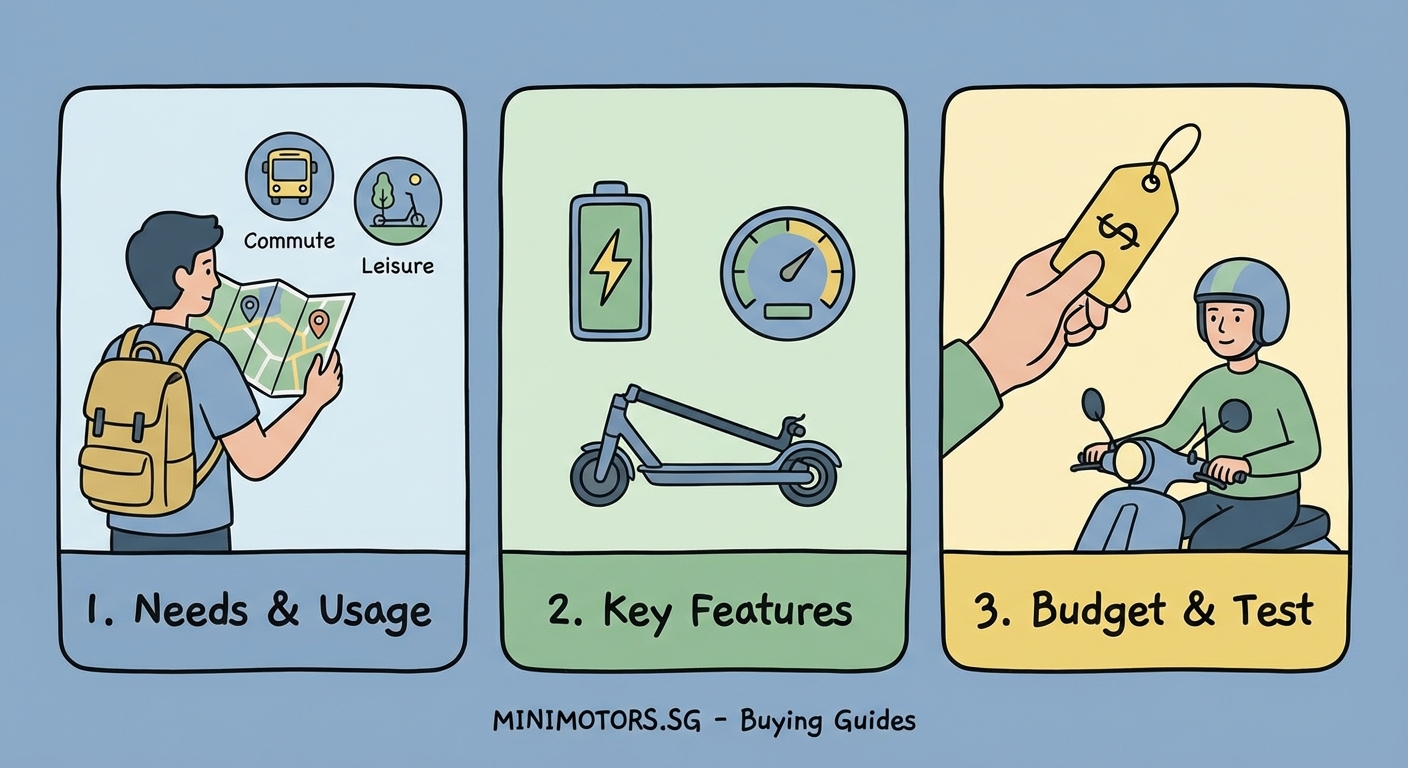
Carrying a 50-pound scooter up three flights of stairs gets old fast.
Weight ranges from 25 pounds for compact models to 65+ pounds for performance scooters. Anything over 40 pounds becomes challenging to carry regularly. If you need to lift your scooter onto public transit, into your trunk, or up stairs, prioritize lighter models.
Folding mechanisms vary in speed and reliability. Good designs fold in 3-5 seconds with one hand. Cheap hinges wobble or require tools. Test the folding action before buying if possible.
Folded dimensions matter for storage. Measure your apartment closet, car trunk, or office space. Some scooters fold compact, others remain bulky even when collapsed.
Stem height affects comfort but limits portability. Taller riders need adjustable or extended stems, which add weight and folded size.
Tire Type Affects Your Ride Quality
Pneumatic and solid tires each solve different problems.
Pneumatic (air-filled) tires provide better shock absorption and traction. They handle cracks, potholes, and rough pavement smoothly. The downside? They puncture. You’ll eventually fix a flat, which takes 15-30 minutes with the right tools.
Solid tires never go flat but transmit every bump directly to your feet and wrists. They work fine on smooth pavement but turn uncomfortable on rough surfaces. Some solid tires use honeycomb or foam filling for slight cushioning.
Tire size impacts comfort too. Larger tires (10 inches) roll over obstacles better than small ones (6-8 inches). They also provide more stable handling at speed.
Most beginners prefer pneumatic tires for the ride quality, accepting occasional maintenance. If your route includes pristine bike paths only, solid tires eliminate hassle.
Braking Systems Keep You Safe
Different brake types offer varying stopping power and maintenance needs.
Electronic brakes use motor resistance to slow down. They’re smooth and require no adjustment, but they’re weak in emergencies and ineffective at low speeds. Never rely on electronic brakes alone.
Drum brakes sit inside the wheel hub, protected from weather and debris. They provide consistent stopping power with minimal maintenance. Performance remains moderate, adequate for most riding but not aggressive.
Disc brakes offer the strongest stopping power. Mechanical disc brakes use cables and need periodic adjustment. Hydraulic disc brakes provide better modulation and require less maintenance but cost more.
The safest scooters combine two brake types. Front and rear brakes let you distribute stopping force, preventing skids. Understanding different braking systems helps you evaluate safety features properly.
Suspension Smooths Out Rough Roads
Suspension adds comfort but increases weight and price.
No suspension works fine on smooth pavement. Your tires provide basic cushioning. Save money and weight if your routes stay pristine.
Front suspension uses springs or rubber dampers in the fork. It absorbs bumps from the front wheel, reducing hand fatigue. This setup costs less and adds minimal weight.
Dual suspension includes front and rear shock absorption. It transforms ride quality on rough roads but adds 5-10 pounds and $200-400 to the price. Worth it if you face cracked sidewalks, cobblestones, or unpaved paths regularly.
Some scooters use spring suspension, others hydraulic. Hydraulic performs better but costs more. Spring suspension works adequately for most beginners.
Water Resistance Protects Your Investment
IP ratings tell you how much water your scooter tolerates.
IPX4 means splash-resistant. Light rain won’t damage it, but avoid puddles and never pressure wash it. Most budget scooters offer IPX4 at best.
IPX5 handles rain better. You can ride through moderate storms without worry, though you should still dry it afterward.
IPX7 means submersion-resistant up to 1 meter for 30 minutes. These scooters handle heavy rain and shallow puddles confidently. Premium models typically reach IPX7.
No e-scooter should be submerged intentionally. Even IPX7 ratings have limits. Water damage voids most warranties, so protecting your scooter in wet conditions extends its lifespan.
Beginners often wonder about rain riding safety, and proper IP ratings provide peace of mind.
Display and Controls Matter for Daily Use
Your dashboard shows speed, battery, and riding mode at a glance.
Basic LED displays show battery bars and speed. They work fine in daylight but wash out in bright sun. Numbers stay small and hard to read while moving.
LCD screens provide clear information in any light. They display speed, trip distance, odometer, and riding modes. Better models add Bluetooth connectivity for smartphone apps.
Throttle type affects comfort. Thumb throttles tire your hand on long rides. Trigger throttles feel more natural but can cause finger fatigue. Index finger throttles provide the best ergonomics for most riders.
Buttons should be reachable without removing your hand from the grip. Mode switching, lights, and horn controls need intuitive placement.
Budget Determines Your Feature Set
Price tiers correspond to specific capability levels.
| Price Range | Typical Features | Best For |
|---|---|---|
| $300-500 | 250-350W motor, 15-mile range, basic brakes, no suspension | Short flat commutes under 5 miles |
| $500-800 | 500W motor, 20-25 mile range, dual brakes, front suspension | Daily commuting 5-10 miles with some hills |
| $800-1,500 | 600-1000W motor, 30-40 mile range, dual suspension, premium brakes | Long commutes, varied terrain, heavy riders |
| $1,500+ | Dual motors, 50+ mile range, full suspension, advanced features | Performance riding, extreme terrain, enthusiasts |
Budget scooters under $500 work for casual riders with modest needs. Spending more buys reliability, comfort, and longevity.
Don’t stretch your budget for features you won’t use. A $1,200 scooter with 45-mile range wastes money if you ride 3 miles daily.
Safety Features You Shouldn’t Skip
Some features prevent accidents, others minimize injury when they happen.
Lights aren’t optional. Front and rear lights keep you visible to cars. Built-in lights beat clip-on accessories because you can’t forget them. Look for bright headlights (at least 500 lumens) and red taillights that activate with braking.
Reflectors add passive visibility. Side reflectors help at intersections where cars approach from angles.
Bell or horn alerts pedestrians. Electronic horns work better than mechanical bells in traffic noise.
Kickstand stability prevents tip-overs. Wide kickstands work better than single-leg designs.
Essential accessories for commuters supplement built-in safety features, but your scooter should include basics from the factory.
Commuter vs Performance Models Serve Different Purposes
Your riding style determines which category fits better.
Commuter scooters prioritize portability, efficiency, and reliability. They weigh 30-40 pounds, fold compactly, and offer 20-30 mile range. Speed tops out at 18-25 mph. These models handle daily transportation without fuss.
Performance scooters chase power and range. They weigh 50-70 pounds, feature dual motors, and hit 30-40+ mph. Suspension, large tires, and premium brakes handle aggressive riding. They’re harder to carry and store but excel at longer distances and challenging terrain.
Choosing between commuter and off-road designs depends on whether you prioritize convenience or capability.
Most first-time buyers need commuter models. Performance scooters make sense only if you regularly ride 15+ miles or face serious hills.
Test Ride Before You Buy
Specifications don’t tell you how a scooter actually feels.
Visit local dealers when possible. Ride the scooter for at least 10 minutes. Test the throttle response, brake feel, and handling. Check if the deck feels stable under your feet.
Pay attention to comfort. Does the handlebar height suit your posture? Do your hands cramp from the grip angle? Can you reach all controls easily?
Test the folding mechanism repeatedly. Some designs jam or require excessive force. Others fold smoothly every time.
Listen for unusual noises. Quality scooters run quietly except for tire noise. Rattles, squeaks, or grinding sounds indicate poor build quality.
If local test rides aren’t available, buy from retailers with good return policies. Some online sellers offer 30-day returns, letting you test at home.
Warranty and Support Protect Your Purchase
Good warranties indicate manufacturer confidence.
Standard warranties cover 6-12 months on most components. Premium brands offer 12-24 months. Battery warranties typically run shorter, 6-12 months or 300-500 charge cycles.
Read warranty terms carefully. Some exclude normal wear items like tires and brake pads. Others void coverage for water damage or modifications. Understand what’s actually protected.
Customer support quality varies dramatically. Research how responsive companies are to warranty claims. Online reviews reveal which brands handle problems professionally and which ghost customers.
Local service availability matters for repairs. Some brands have authorized service centers, others require you to ship the scooter back. Shipping costs and downtime add up.
First-time riders benefit from understanding what support they’ll need as they learn.
Legal Requirements in Your Area
Regulations vary by city and state.
Speed limits for e-scooters range from 15-20 mph in most areas. Some cities restrict where you can ride, banning sidewalks or requiring bike lanes. Others have no regulations yet.
Licensing requirements remain rare but emerging. Most places treat e-scooters like bicycles, requiring no license or registration. Some jurisdictions require helmets for riders under 18.
Age restrictions commonly set minimum riding ages at 16-18 years. Enforcement varies, but retailers may require age verification.
Insurance isn’t usually mandatory but coverage options exist for theft, damage, and liability. Personal umbrella policies sometimes cover e-scooter accidents.
Check local laws before buying. Some cities ban e-scooters entirely or restrict motor power and speed.
Maintenance Needs and Costs
E-scooters require regular upkeep to stay safe and reliable.
Tire pressure checks should happen weekly for pneumatic tires. Proper inflation prevents flats and extends tire life. Keep a portable pump handy.
Brake adjustments become necessary every few months as cables stretch. Disc brakes need occasional pad replacement. Drum brakes require less frequent service.
Battery care extends lifespan significantly. Avoiding common battery mistakes keeps your scooter running longer. Store at 50-80% charge and avoid extreme temperatures.
Bolt tightening prevents rattles and failures. Check all fasteners monthly, especially stem, folding mechanism, and wheel axles. Vibration loosens hardware over time.
Following a maintenance schedule prevents expensive repairs and dangerous failures.
Common Mistakes First-Time Buyers Make
Learning from others’ errors saves money and frustration.
Buying too much scooter wastes money. That 40-mph performance beast looks exciting but sits unused when you only ride 2 miles to work. Match specs to your actual needs, not imagined adventures.
Ignoring weight makes daily use miserable. A scooter you can’t carry up stairs becomes a burden. Prioritize portability if you face any lifting.
Skipping safety features risks injury. Saving $100 by choosing a model with weak brakes or no lights isn’t worth the accident risk.
Overlooking warranty and support leaves you stranded when problems arise. Cheap scooters from unknown brands often lack parts availability and customer service.
Forgetting about accessories adds unexpected costs. You’ll need a helmet, lock, and possibly lights or fenders. Budget an extra $100-200 beyond the scooter price.
Finding the Right Scooter for Your Life
Choosing your first electric scooter becomes simple when you focus on your actual riding patterns rather than impressive specs.
Measure your typical routes, assess your terrain, and be honest about how often you’ll carry it. Those three factors narrow your options dramatically. Add your budget, and you’re looking at a manageable selection instead of hundreds of models.
The best first scooter isn’t the one with the longest range or highest speed. It’s the one that reliably gets you where you need to go without creating new problems. A lighter scooter you actually use beats a powerful one that stays home because it’s too heavy to carry.
Start with a mid-range model that slightly exceeds your current needs. This approach provides room to grow without overspending on features you might never use. After six months of real riding, you’ll know exactly what matters for your next upgrade.
