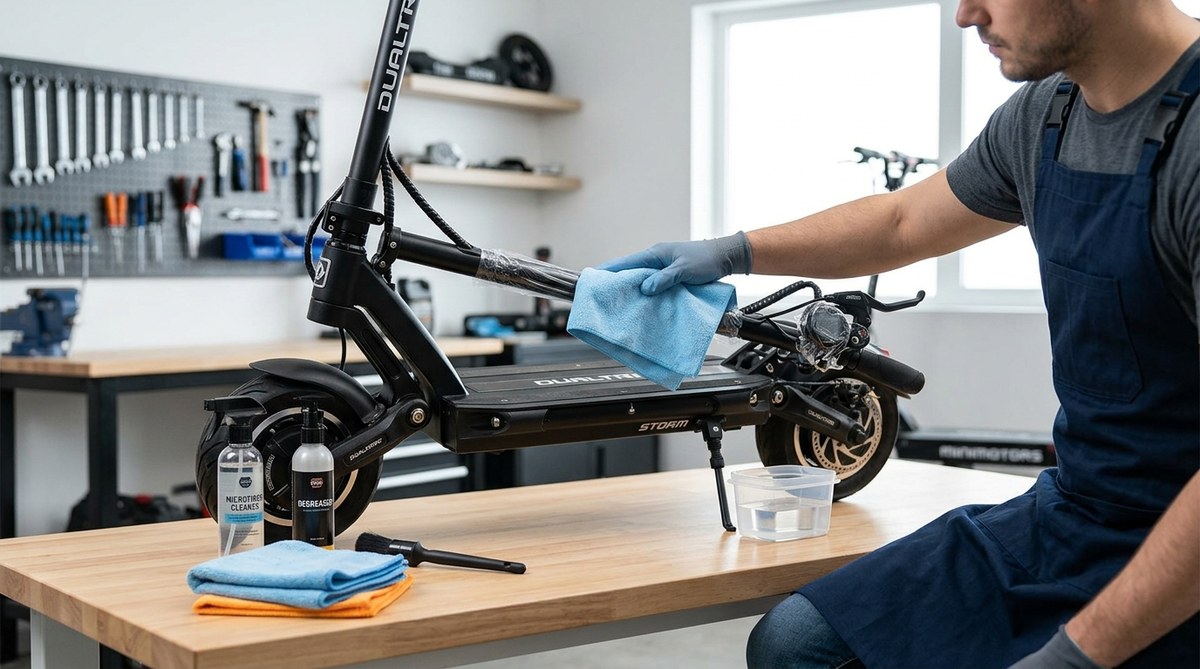
How to Clean Your E-Scooter the Right Way (Without Damaging Electronics)
Your electric scooter takes a beating every single ride. Dust, road grit, rain splash, and brake dust all settle into every crevice. If you ignore it, that grime turns into corrosion, sticky brakes, and a scooter that looks like it survived a mudslide. But here is the catch: cleaning it the wrong way can cause more damage than not cleaning it at all. Water and electronics do not mix, and one careless spray from a hose can end your motor’s life.
Cleaning your electric scooter is about protecting the electronics, not just making it look new. Use a damp cloth, soft brush, and isopropyl alcohol for stubborn spots. Never direct water at the deck, display, or motor. Dry everything fully before charging. A regular routine keeps bearings, brakes, and connectors safe from grime and moisture.
# How to Clean Your Electric Scooter the Right Way (Without Damaging Electronics)
Electric scooters take a beating. Rain splashes, road grime, dust, and mud all find their way onto the frame, deck, and wheels. A clean scooter not only looks better, it rides better and lasts longer. But one wrong move with water can send your scooter to an early grave. The good news? Cleaning an e-scooter safely is simple once you know which parts can get wet and which parts need to stay dry.
This guide walks you through the entire process step by step. You will learn what tools to use, how to protect sensitive electronics, and how to avoid the mistakes that send many scooters to the repair shop. By the end, you will know exactly how to clean electric scooter models like yours without causing damage.
## Why Cleaning Your E-Scooter Matters More Than You Think
Electric scooters work hard. They roll through dust, mud, rain residue, and road grime on every ride. That buildup is not just cosmetic. Dirt can work its way into bearings, folding mechanisms, and brake calipers. Over time, grit accelerates wear and can lead to expensive repairs.
Cleaning is also a safety issue. A dirty deck gets slippery. Mud on the brake rotor reduces stopping power. Sand in the throttle mechanism can cause sticky or unpredictable acceleration. Regular cleaning helps you spot loose bolts, worn tires, and cracked plastic before they become bigger problems.
Beyond function, a clean scooter holds its value better. If you ever plan to sell or trade it in, a well maintained ride looks far more appealing to a buyer. And honestly, a clean scooter just feels better to ride.
—
## Why Cleaning an Electric Scooter Is Different From Cleaning a Car
An electric scooter is not a bicycle and it is not a car. It sits somewhere between them, with one major difference: exposed electronics. The throttle, display, battery compartment, and motor connectors are all vulnerable to water and pressure. A garden hose or pressure washer can force water into sealed areas and cause corrosion or short circuits.
That doesn’t mean you should avoid cleaning. Dirt, grit, and road salt can wear down bearings, brake rotors, and suspension parts. Mud packed around the motor can trap heat and reduce efficiency. A clean scooter is a healthier scooter.
The trick is knowing which parts can get wet and which parts need special care. This guide walks you through the entire process step by step, so you can keep your ride looking sharp without sending it to the repair shop.
—
## Why Cleaning Your Electric Scooter Matters More Than You Think
Electric scooters live a rough life. They roll through dust, puddles, rain residue, and road grime. That grime is not just ugly. It can shorten the lifespan of your bearings, brake rotors, and suspension parts. Dirt also works its way into the deck seam and around the stem, which can trap moisture near the battery and controller.
Regular cleaning protects your investment. It also helps you spot small issues before they turn into expensive repairs. A clean scooter is easier to inspect. You will notice loose bolts, worn tires, or a frayed cable sooner when grime is not hiding them.
If you are still shopping for a model and want to start with something that handles dirt well, check out our guide on [how to choose your first electric scooter](https://minimotors.sg/how-to-choose-your-first-electric-scooter-a-complete-beginners-guide/). Choosing a scooter with better weather sealing from the start makes maintenance easier later.
## What You Need Before You Start
Gather your supplies first. This keeps the process smooth and reduces the chance you will grab the wrong product mid-clean. Here is what works well:
– Two soft microfiber cloths (one damp, one dry)
– A soft bristle brush or an old toothbrush
– A bucket of lukewarm water
– Mild dish soap or a dedicated e-scooter cleaner
– Isopropyl alcohol (70 percent or higher) in a spray bottle
– Cotton swabs
– A small pump or air blower for tight spots
– A dry towel for final wipe down
– Optional: silicone-based protectant for plastics and rubber
Avoid harsh detergents, degreasers, pressure washers, and anything abrasive. Those strip protective coatings and can force water into sealed bearings.
> Expert advice: If you would not use a product on a smartphone screen, do not use it on your scooter’s display or throttle. The same caution applies to the charging port, battery compartment, and motor connectors. Treat every electrical opening like a tiny computer port, because that is essentially what it is.
—
## Why Cleaning Your Electric Scooter Matters More Than You Think
Riding through rain puddles, dusty paths, and city grime takes a toll. Dirt builds up in the bearings, brake calipers, and folding mechanisms. That grit acts like sandpaper over time. It wears down moving parts and can even sneak past seals into the motor and battery compartment.
Cleaning your electric scooter is not just about looks. A clean scooter runs cooler, brakes better, and lasts longer. Dirt and grime trap moisture, which can lead to corrosion on metal parts and electrical connectors. If you ride daily, a simple weekly wipe down can prevent expensive repairs later.
This guide walks you through the safest way to clean your e-scooter without damaging the electronics. You will learn what tools to use, what to avoid, and how to dry and protect your ride after washing. By the end, you will feel confident giving your scooter a thorough clean, even if you are not mechanically inclined.
Cleaning your electric scooter is about protecting electronics, not just looking good. Use a damp microfiber cloth, never a pressure washer. Protect the display, charge port, and battery compartment before washing. Focus on the deck, stem, wheels, and brakes. Dry everything completely before charging. A regular cleaning routine keeps your scooter reliable and extends its life.
“`markdown
Your electric scooter takes a beating every single day. Mud splashes from the road, dust from the sidewalk, and the grime that collects around the wheels and deck. But while a dirty scooter looks rough, a poorly cleaned one can end up with water in the battery bay, corrosion in the throttle, or a fried display. The good news is that learning how to clean electric scooter components safely is not difficult. You just need the right technique, the right tools, and a little patience.
Cleaning your electric scooter the right way means protecting the electronics while removing dirt and grime. Use a damp microfiber cloth, never a pressure washer. Keep water away from the deck seam, display, charging port, and motor hub. Work from top to bottom, dry thoroughly, and lubricate moving parts afterward. A careful 20 minute routine keeps your scooter looking new and running reliably for years.
Opening paragraph.
## What You Need Before You Start
…
## Why Water Is the Biggest Risk
…
### The IP Rating Reality Check
…
## Step by Step Cleaning Process
1. …
2. …
3. …
## What to Avoid at All Costs
– …
## Cleaning Methods Compared
| Method | Safe? | Best For | Watch Out For |
|——-|——–|———–|—————|
| … | … | … | … |
## After-Care and Drying
…
> **Pro Tip:** …
## When to Do a Deep Clean
…
## Keeping It Clean Longer
…
## Final Thoughts
…
“`
—
# How to Clean Your Electric Scooter the Right Way Without Damaging Electronics
Your electric scooter takes a beating every day. Rain splashes, road grime, mud, dust, and brake dust all build up on the frame, deck, and wheels. A dirty scooter does more than look rough. Dirt can hide loose bolts, clog brake mechanisms, and trap moisture near sensitive electronics. Cleaning it the wrong way can cause bigger problems than not cleaning it at all. Water in the wrong place can short a controller, corrode a battery connector, or ruin a display. The good news? With the right technique and a few simple tools, you can keep your scooter spotless without turning it into a paperweight.
Cleaning your electric scooter safely comes down to protecting the electronics first. Cover the display and charge port, use a slightly damp cloth instead of a hose, and avoid pressure washers entirely. Clean the deck, frame, wheels, and brakes with mild soap and soft brushes. Dry everything thoroughly before charging. Routine care every few weeks prevents grime buildup and keeps your ride looking and performing like new.
## Why Cleaning Your E-Scooter Matters More Than You Think
Your electric scooter works hard. It carries you through rain mist, dusty paths, and city grime. Dirt builds up in places you cannot see. That buildup can wear down moving parts, block vents, and even find its way into electrical connections.
Regular cleaning is not about vanity. It is about protecting your investment. A clean scooter runs cooler, shifts smoother, and lasts longer. It also helps you spot small issues before they become expensive repairs.
The tricky part is that an e-scooter is not a bicycle. It has a battery, a controller, and a display. Water and moisture can cause real damage. The goal is to clean it thoroughly without turning it into a puddle of regret.
This guide walks you through the safest way to clean your electric scooter, step by step. You will learn what tools to use, which areas need extra care, and how to avoid the most common mistakes. By the end, you will know exactly how to clean electric scooter models of any brand without causing damage.
Cleaning your electric scooter is about protecting the motor, battery, display, and wiring, not just making it look nice. Use a damp microfiber cloth, a soft brush, and isopropyl alcohol for electronics. Never use a pressure washer or hose. Always power down, remove the battery if possible, and let everything dry completely before charging. A regular cleaning routine prevents corrosion, extends component life, and keeps your ride safe and dependable.
## Why Cleaning Your E-Scooter Matters More Than You Think
Your electric scooter takes a beating every time you ride. Dust, road grime, mud, and moisture collect on the frame, deck, and drivetrain. Left alone, that grime doesn’t just look bad. It can wear down bearings, corrode electrical contacts, and shorten the life of your battery and controller. Learning how to clean electric scooter components the right way keeps your ride running smoothly and helps you spot small issues before they become expensive repairs.
Many riders make one big mistake: they grab a hose, spray everything down, and hope for the best. That approach can push water into the display, battery compartment, and motor hub. Water damage is one of the most common reasons electric scooters fail early. The good news? With the right technique and a few basic tools, you can keep your scooter looking fresh and riding strong without putting its electronics at risk.
Cleaning an electric scooter is about protecting electronics, not just looks. Always power down, remove the battery if possible, and keep water away from the deck, display, and motor. Use a damp cloth, soft brush, and mild cleaner. Dry every part thoroughly before charging. A clean scooter rides better, lasts longer, and stays safe.
## Why Cleaning Your E-Scooter Matters More Than You Think
Your electric scooter takes a beating every time you ride. Dust, road grime, brake dust, and moisture build up fast. Left alone, that grime works its way into bearings, brake calipers, and electrical connectors. It causes squeaks, corrosion, and eventually expensive repairs.
Cleaning is not just about looks. It is maintenance. A clean scooter runs cooler, shifts smoother, and lets you spot loose bolts or worn tires before they become safety problems. When you know how to clean electric scooter components the right way, you protect your investment and extend its lifespan.
This guide walks you through every step, from prep to drying, with a focus on keeping water away from electronics. You will learn what works, what to avoid, and how to keep your ride looking sharp without sending it to an early grave.
## Why Cleaning an Electric Scooter Is Different From Washing a Bike
A regular bike can handle a garden hose. An electric scooter cannot. Your scooter has a battery, a controller, a display, and wiring that all sit close to the frame surface. Water can sneak into seams, charging ports, and around the throttle. Once moisture reaches the circuit board, corrosion starts. That leads to flickering displays, throttle issues, or a scooter that simply stops working.
That doesn’t mean you should avoid cleaning. Dirt and grime can hide loose bolts, wear down bearings, and make moving parts fail sooner. A clean scooter also lets you spot small problems before they become expensive repairs. The goal is to clean thoroughly while keeping water away from the electronics.
## Before You Start, Know Your Scooter
Not every electric scooter handles water the same way. Some models have an IPX4 rating, which means they can handle light splashes. Others have better sealing around the deck and display. Check your owner’s manual first. If you bought a used scooter or lost the manual, look up the model online and note the IP rating.
An IP rating tells you how well the scooter resists dust and water. A rating like IPX4 means it can handle splashes from any direction. It does not mean it is waterproof. Even scooters with a high rating should never be hosed down at full pressure. The seals protect against light rain, not a jet stream.
If you are shopping for a new ride and want a model that is easier to maintain, reading about [how to choose your first electric scooter](https://minimotors.sg/how-to-choose-your-first-electric-scooter-a-complete-beginners-guide/) can help you pick a frame with better sealed components from the start.
## What You Need Before You Start
Gather your supplies before you touch the scooter. This prevents mid-clean trips and keeps the process smooth.
– Two or three soft microfiber cloths (no paper towels, they scratch)
– A soft bristle brush or an old toothbrush
– A bucket of warm water
– Mild dish soap or a dedicated e-scooter cleaner
– Isopropyl alcohol (70% or higher) for electronics
– A small spray bottle for plain water
– Cotton swabs for tight spots
– A dry towel for final wipe down
– A soft brush or paintbrush for vents and crevices
– A screwdriver (only if you plan to remove panels)
Avoid harsh detergents, degreasers, and pressure washers. These can strip seals, corrode contacts, and push water into the motor or battery casing. Your scooter is not a car. Treat it more like a laptop with wheels.
## Why Cleaning Your Electric Scooter Matters More Than You Think
Dirt and grime are not just cosmetic problems. They can shorten the life of your ride. Mud packs into the folding mechanism, grit grinds into the bearings, and sticky residue can find its way into the charging port. When you learn how to clean electric scooter components the right way, you protect the moving parts that keep you safe.
A clean scooter also runs more efficiently. Brake rotors stay smooth, suspension moves freely, and the deck retains better grip. Plus, regular cleaning gives you a chance to inspect for loose bolts, worn tires, or exposed wires before they become bigger issues. Think of it as a short health check that happens while you wipe down the frame.
## What You Need Before You Start
Gather everything first. This keeps the process smooth and reduces the chance of grabbing the wrong tool mid clean.
– Two soft microfiber cloths (one for wet, one for dry)
– A soft bristle brush or old toothbrush
– A bucket of warm water
– Mild dish soap or a dedicated e-scooter cleaner
– Isopropyl alcohol wipes for screens and displays
– A spray bottle with plain water
– Cotton swabs for tight spaces
– A dry towel or microfiber drying cloth
– Compressed air or a soft paintbrush for the deck and crevices
– Dielectric grease for connectors (optional but helpful)
Avoid harsh detergents, degreasers, pressure washers, and abrasive scrubbers. These can strip seals, scratch paint, and force water into components that should stay dry.
## Why Cleaning an Electric Scooter Is Different From Washing a Bike
A regular bicycle can handle a garden hose and some soapy water. An electric scooter cannot. The difference comes down to the electrical system. Your scooter has a battery, a controller, a display, and a throttle. Water can find its way into any of these parts, and once it does, corrosion and short circuits follow.
That does not mean you should avoid cleaning your scooter. Dirt and grime can hide real problems. Mud packed around the folding mechanism can hide a loose hinge. Grit on the brake rotor wears down pads faster. A dirty deck becomes slippery when wet. Regular cleaning helps you spot wear before it becomes a safety issue.
The goal of this guide is simple. You will learn how to clean electric scooter models safely, without soaking sensitive parts or stripping protective coatings. By the end, you will know exactly which tools to use, which areas to protect, and which cleaning mistakes to avoid.
Cleaning an electric scooter safely comes down to three rules: keep water away from electronics, use the right tools, and dry everything thoroughly before charging. A damp cloth, soft brush, and mild soap handle most grime. Never use a pressure washer. Protect the display, battery port, and motor connectors. Finish with a dry wipe and let the scooter air out before storing or charging. Regular gentle cleaning keeps your ride looking sharp and running reliably for years.
## Why Cleaning Your Electric Scooter Matters More Than You Think
Your electric scooter takes a beating every single day. Road grit, brake dust, mud, and moisture all settle onto the frame, deck, and wheels. If you let it build up, that grime does more than make your ride look tired. It can scratch paint, corrode metal parts, and sneak into seals around the battery and display.
A clean scooter is also easier to inspect. You will notice loose bolts, worn tires, or small cracks before they become serious problems. That kind of early warning saves money and keeps you safer on the road.
The challenge is knowing how to clean an electric scooter without ruining the electronics. Water and electricity do not mix, and a careless rinse can turn a reliable commuter into a paperweight. This guide walks you through the safest method, the tools you need, and the mistakes to avoid.
Cleaning your electric scooter safely comes down to three habits: keep water away from electronics, use the right tools, and dry everything before storing. A damp cloth, soft brush, and mild cleaner handle most grime. Never spray the deck, display, or charging port directly. Regular care protects bearings, wiring, and battery contacts, so your scooter stays reliable for years. When in doubt, check your model’s manual first.
## Why Cleaning Your E-Scooter Matters More Than You Think
Your e-scooter works hard. It carries you through city streets, over dusty paths, and through wet weather. Over time, dirt, grime, and road film build up on the frame, deck, wheels, and brakes. That buildup does more than make the scooter look tired. It can hide cracks, trap moisture, and accelerate wear on moving parts.
Cleaning your electric scooter is not just about looks. It is maintenance. A clean scooter runs cooler, shifts smoother, and lets you spot small issues before they become expensive repairs. When you know how to clean electric scooter components safely, you protect the battery, controller, and display from the two biggest enemies: water and abrasion.
This guide walks you through the entire process, from prep to final wipe down. You will learn what tools are safe, which cleaning agents to avoid, and how to dry everything without leaving moisture in the wrong places. By the time you finish, you will have a repeatable routine that keeps your ride looking sharp and running strong.
Cleaning your electric scooter the right way comes down to protecting electronics, not just removing dirt. Use a dry or slightly damp microfiber cloth, never a pressure washer. Seal the charge port, avoid direct water streams, and dry every surface afterward. A clean scooter rides better and lasts longer.
## Why Cleaning Your E Scooter Matters More Than You Think
Your electric scooter works hard. It carries you through rain puddles, dusty paths, and city grit. That grime is not just cosmetic. Dirt can scratch painted surfaces, clog folding mechanisms, and creep into the deck seal. When moisture finds a way into the battery compartment or controller, you risk corrosion, short circuits, and expensive repairs.
Regular cleaning is about protecting your investment. A well maintained scooter also keeps warranty coverage valid. Many manufacturers expect a reasonable level of care. If a technician opens your deck and finds mud packed around the controller, they may deny a claim.
This guide walks you through the safest way to clean an electric scooter without damaging sensitive electronics. You will learn what tools to use, which areas need extra care, and how to dry everything properly before the next ride.
Cleaning your electric scooter the right way comes down to preparation, the right tools, and protecting electronics. Use a damp microfiber cloth, a soft brush, and isopropyl alcohol for stubborn spots. Never spray water directly at the deck, display, or battery port. Dry every surface before charging. A careful routine keeps your scooter looking new and prevents corrosion, short circuits, and costly repairs.
## Why Cleaning Your E-Scooter Matters More Than You Think
Your electric scooter works hard. It carries you through rain mist, dusty bike lanes, muddy puddles, and gritty parking lots. Over time, that grime builds up. It hides cracks. It wears down seals. It can even find its way into the charging port or around the deck gasket.
Regular cleaning is not just about looks. A clean scooter is easier to inspect. You notice loose bolts, worn tires, or small cracks before they become bigger problems. Dirt and grit also accelerate wear on moving parts like the stem latch, folding mechanism, and brake levers. Keeping your ride clean helps it last longer and keeps it safer.
That said, cleaning an electric scooter is not the same as hosing down a bicycle. Water and electronics do not mix. If you use the wrong method, you can ruin the motor, battery, or display. This guide walks you through the safest way to clean your scooter, step by step, without causing expensive damage.
Cleaning your electric scooter is about protecting electronics, not just looking good. Use a damp cloth, not a hose. Protect the display, battery, and motor ports first. Mild soap works, but avoid pressure washers and direct sprays. Dry everything thoroughly and let the scooter rest before charging. A consistent routine every few weeks keeps your ride reliable and extends its lifespan.
## Why Cleaning Your Electric Scooter Matters More Than You Think
Your electric scooter works hard. It carries you through rain puddles, dusty paths, and gritty city streets. Dirt and grime build up fast. That buildup does more than make your ride look tired. It can hide cracks, wear down moving parts, and even trap moisture near sensitive electronics.
Cleaning an electric scooter is not the same as washing a bicycle or a car. The motor, battery, display, and controller are all vulnerable to water. Get this wrong and you could short out a $1,000 machine in seconds. But when done right, a regular cleaning routine keeps your scooter looking sharp and running smoothly for years.
This guide walks you through the entire process, from prep to drying, with a focus on protecting the electronics. You will learn which tools are safe, which cleaners to avoid, and how to handle tricky spots like the deck, wheels, and charging port. By the end, you will know exactly how to clean an electric scooter without turning it into a paperweight.
The golden rule is simple: keep water away from electronics. Use a damp cloth, not a hose, and focus on the deck, stem, and tires. Remove the battery before deep cleaning when possible. Dry everything thoroughly before charging. A clean scooter runs smoother, looks newer, and avoids expensive corrosion damage.
## Why Cleaning Your Electric Scooter Matters More Than You Think
Your e-scooter works hard. It rolls through rain puddles, kicks up dust, and collects grime from every ride. That buildup is not just ugly. It can hide wear on moving parts, trap moisture against electrical connections, and even shorten the life of your battery and controller.
Learning how to clean electric scooter components the right way keeps your ride reliable. It also helps you spot small problems before they become expensive repairs. A clean scooter is easier to inspect. Loose bolts, cracked tires, and worn brake pads stand out when grime is not covering everything.
This guide walks through the safest methods, the tools to use, and the mistakes to avoid. You do not need special skills. You just need the right approach.
Cleaning an electric scooter safely comes down to protecting electronics while removing dirt. Use a damp cloth, soft brush, and gentle cleaner. Never spray water directly at the deck, display, or battery. Dry everything fully before charging. Regular care prevents corrosion and keeps bearings, brakes, and folding mechanisms working. A clean scooter also holds its value longer.
## Why Cleaning Your E-Scooter Matters More Than You Think
Your electric scooter works hard. It carries you through rain puddles, dusty paths, and gritty city streets. Over time, that grime builds up. It hides cracks. It traps moisture. It accelerates wear on moving parts.
Cleaning is not just about looks. A clean scooter is a healthier scooter. Dirt and grit act like sandpaper on your bearings, brake rotors, and suspension. When you learn how to clean electric scooter components properly, you protect your investment and keep every ride smooth.
The challenge is that an e-scooter is not a bicycle. It has a battery, a controller, and a display. Water can find its way into places that cause expensive damage. The good news? With the right method, you can get your ride spotless without turning it into a paperweight.
This guide walks you through the safest cleaning process, the tools that work, and the mistakes that cost people money. No guesswork. No harsh chemicals. Just a repeatable routine that keeps your scooter looking sharp and running reliably.
Cleaning an electric scooter is about protecting the electronics, not just making it look nice. Use a damp microfiber cloth, mild soap, and a soft brush. Never spray water directly at the deck, display, or battery compartment. Dry everything thoroughly, then apply a silicone protectant to plastics and metal. Clean the deck, stem, wheels, and brake rotors separately. A careful routine keeps your scooter running smoothly and avoids costly electrical damage.
## Why Cleaning Your E-Scooter Matters More Than You Think
Your electric scooter takes a beating every day. Road grime, brake dust, rain splash, and tiny pebbles build up fast. That grime is not just ugly. It can hide loose bolts, wear down moving parts, and trap moisture near sensitive electronics. Cleaning it the right way keeps your ride looking sharp and helps it last longer.
The tricky part? Water and electricity do not mix. One wrong move with a hose or a pressure washer can send water straight into the deck, battery compartment, or display. That can lead to corrosion, short circuits, or a dead scooter. The good news is that with the right method, you can get your scooter spotless without putting the electronics at risk.
Cleaning your electric scooter the right way comes down to preparation, the right tools, and knowing which parts can get wet. Never spray the deck, display, or charging port directly. Use a damp cloth, mild soap, and a soft brush instead. Dry everything fully before charging. Regular cleaning keeps bearings, brakes, and electronics safe while making your ride look and perform its best.
## Why Cleaning Your E-Scooter Matters More Than You Think
Your electric scooter works hard. It carries you through rain mist, dusty paths, and city grime. That dirt is not just cosmetic. Grit and moisture can creep into bearings, brake rotors, and electrical connections. Over time, this buildup leads to squeaky brakes, slower acceleration, and even corrosion inside the deck.
Cleaning your e-scooter the right way protects your investment. It also keeps warranty coverage valid. Most manufacturers expect basic maintenance. A filthy scooter with a damaged battery connector is not covered under warranty. So learning how to clean electric scooter models without causing harm is a core skill for any owner.
This guide walks you through the entire process, from prep to drying. You will learn what tools to use, what to avoid, and how to handle tricky spots like the deck, display, and charging port. No pressure washers, no soaking, no guesswork. Just a safe, repeatable routine.
Cleaning an electric scooter is simple when you follow the right order: prep, dry dusting, damp wipe, and final dry. Water is the enemy of electronics, so use a barely damp microfiber cloth, never a hose or pressure washer. Protect the display, battery port, and motor seals. Clean the deck, wheels, and brakes separately. Dry everything thoroughly before charging. A clean scooter rides better, lasts longer, and keeps you safe.
## Why Cleaning Your E-Scooter Matters More Than You Think
Your electric scooter takes a beating every time you ride. Dust, road grime, mud, and moisture settle into every seam. Left alone, that grit works its way into bearings, brake calipers, and folding mechanisms. It accelerates wear, dulls the finish, and can even shorten the lifespan of electrical components.
Regular cleaning is not just about looks. It is maintenance. A clean scooter runs cooler, shifts smoother, and lets you spot small problems before they become expensive repairs. Think of it as the same reason you wipe down a bicycle chain or check the oil in a car. A little care goes a long way.
That said, an e-scooter is not a garden hose toy. Water and electronics do not mix. One careless spray can send moisture into the deck, display, or battery compartment, and the result is often a dead scooter or a costly repair. The good news? You can keep your ride spotless without soaking the parts that matter. This guide shows you exactly how to clean an electric scooter safely, step by step.
Cleaning your electric scooter the right way means protecting the battery, motor, display, and wiring from water damage while still removing dirt, grime, and debris. Use a damp microfiber cloth, mild soap, and a soft brush. Avoid pressure washers, direct hose spray, and harsh chemicals. Focus on the deck, stem, and wheels, then dry everything thoroughly. A clean scooter rides better, lasts longer, and keeps its resale value.
Your electric scooter takes a beating every time you ride. Road grime, dust, mud, and brake dust all build up on the frame, deck, and wheels. If you let it sit, that grime can work its way into bearings, throttle mechanisms, and charging ports. The result is a scooter that looks tired and performs worse over time. But cleaning an e-scooter is not like washing a car. Water and electronics do not mix. One wrong move can leave you with a dead battery, a corroded controller, or a scooter that simply won’t start. The good news? With the right method, you can keep your ride spotless and fully protected.
Cleaning an electric scooter is safe when you protect the electronics first. Use a dry or slightly damp cloth, avoid direct water spray on the deck and display, and never use a pressure washer. Focus on the frame, wheels, and brake area. Dry everything completely before charging. Regular care prevents rust, keeps connectors clean, and extends the life of your battery and motor. Follow the step by step routine below to keep your ride looking and performing its best without voiding the warranty.
Your scooter gets you through rain puddles, dusty paths, and sticky city streets. It deserves better than a soaking from a garden hose. Cleaning an electric scooter is not the same as washing a car or a bike. Water and electronics do not mix, and one wrong spray can send moisture straight into the battery compartment or motor hub. The good news? You can keep your ride spotless, fresh, and mechanically sound with a few simple habits and the right tools. This guide walks you through the safest way to clean your e-scooter, step by step, without turning your daily commuter into a costly repair project.
Cleaning your electric scooter is about protecting components, not just making it look nice. Water and electricity do not mix, so you need a damp cloth, a soft brush, and a mild cleaner instead of a hose. Focus on the deck, stem, and wheels, and keep water away from the display, battery, and motor. Dry everything fully before charging. A regular routine keeps your ride reliable and safe.
## Why Cleaning Your E Scooter Matters More Than You Think
Your electric scooter works hard. It carries you through rain, dust, mud, and daily commutes. Dirt builds up in the bearings, brake calipers, and folding mechanisms. That grime is not just ugly. It can shorten the life of moving parts and hide small problems before they become expensive repairs.
Cleaning an e-scooter is different from washing a car or a regular bicycle. Water and electronics do not mix. The battery, controller, display, and motor all sit inside sealed or semi-sealed housings. Get this wrong and you could be looking at corrosion, short circuits, or a dead scooter.
The good news? With the right method, you can keep your ride looking sharp and running smoothly without causing any electrical damage. This guide walks you through the entire process, from prep to drying, with clear steps and common mistakes to avoid.
## Why Cleaning Your E-Scooter Matters More Than You Think
Your electric scooter takes a beating. Road grime, brake dust, mud, and moisture build up fast. Left alone, that grime does more than make your ride look tired. It can work its way into bearings, scratch paint, and dull the finish. More importantly, dirt and moisture around the deck, stem, and battery compartment can create long term electrical issues.
Regular cleaning is not about vanity. It is about protecting your investment. A clean scooter is easier to inspect. You will notice loose bolts, worn tires, or cracks in the frame before they become safety problems.
Cleaning also keeps moving parts moving. Brake levers, folding mechanisms, and suspension components stay smooth when they are free of grit and grime. That means safer rides and fewer repair bills over time.
## What You Need Before You Start
Gather your supplies first. This keeps the process smooth and prevents you from reaching for the wrong tools mid job.
– Two soft microfiber cloths
– A soft bristle brush (an old toothbrush works well)
– A bucket of warm water
– Mild dish soap or a dedicated e-scooter cleaner
– Isopropyl alcohol (70% or higher) for electronics
– A small spray bottle with clean water
– Cotton swabs for tight spots
– A dry towel or chamois
– Compressed air (optional but helpful)
Avoid harsh chemicals. Avoid pressure washers. Avoid soaking the deck, display, battery compartment, or motor area.
## Why Cleaning Your Electric Scooter Matters
Your electric scooter works hard. It carries you through rain mist, dust, mud, and road grime. That buildup does more than look bad. Dirt can scratch paint, corrode exposed metal, and work its way into bearings and moving parts. Over time, grime can even find its way into the deck seal and around the display, which can lead to bigger electrical problems.
A clean scooter also lets you spot issues early. Loose bolts, worn brake pads, and cracked tires are easier to see on a clean machine. Regular cleaning is not about vanity. It is about protecting your investment and keeping every ride safe.
## Know What You Are Working With
Before you touch a single component, understand your scooter’s layout. Most electric scooters share the same basic anatomy. You have a deck that holds the battery, a stem that runs up to the handlebars, a display unit, a throttle, brake levers, and a motor usually built into the front or rear wheel. The battery and controller are the two parts you must protect from water at all costs.
Check your owner’s manual first. Some models have an IP rating that tells you how water resistant they are. An IPX4 rating means the scooter handles splashes but not pressure washing. An IPX5 or IPX6 rating offers better protection, but even then, you should never aim a hose directly at the deck, display, or motor hub.
If you are not sure what model you own or how to care for it, check out our [guide on choosing your first electric scooter](https://minimotors.sg/how-to-choose-your-first-electric-scooter-a-complete-beginners-guide/) to understand how different builds handle exposure to moisture.
—
## Why Cleaning Your E-Scooter Matters More Than You Think
Your e-scooter works hard. It carries you through rain puddles, dusty paths, and gritty city streets. Dirt and grime do more than make it look tired. They can scratch paint, wear down moving parts, and push moisture toward sensitive electronics. A regular cleaning routine keeps your scooter performing well and helps you spot small issues before they become expensive repairs.
Cleaning an electric scooter is not the same as hosing down a bicycle or a car. Water and electronics do not mix. If you use the wrong method, you can damage the controller, battery, or display. The good news? With the right tools and a careful process, you can keep your ride looking fresh and running smoothly for years.
## What You Need Before You Start
Gather these items first. It makes the whole process smoother and keeps water away from sensitive parts.
– Two or three soft microfiber cloths
– A soft bristle brush (a toothbrush works well for tight spots)
– A bucket of warm water with a few drops of mild dish soap
– Isopropyl alcohol wipes for electronics and display
– A dry towel or microfiber drying cloth
– A small spray bottle with plain water (optional)
– A screwdriver or hex key set if you plan to remove panels
– A toothbrush or small detailing brush for crevices
Avoid harsh chemicals. No bleach, no solvent-based degreasers, no pressure washers. These can strip seals, fade the frame, and force water into places it should never go.
## Why Water and Electronics Do Not Mix
Electric scooters are not waterproof. Many are water resistant, but that is a different thing. Water resistance means the scooter can handle light rain or a few puddles. It does not mean you can spray the deck, stem, and display with a hose and expect everything to survive.
The battery pack, controller, display, and throttle are all sealed to a degree. But seals wear out. Charging ports, handlebar seams, and the deck gasket are common entry points for moisture. Once water gets inside, corrosion and short circuits follow. That is why the method matters more than the amount of water you use.
Your goal is to clean the scooter without forcing moisture into the places that matter. That means working from dry to damp, avoiding high pressure, and protecting sensitive openings before you start. It takes about 30 minutes and a few basic supplies.
## Why Cleaning Your Electric Scooter Matters
Dirt and grime are not just cosmetic problems. They wear down moving parts, scratch paint, and trap moisture against metal components. Over time, that leads to rust, stiff bearings, and a creaky ride. A clean scooter also lets you spot loose bolts, worn tires, or small cracks before they become safety issues.
Regular cleaning also protects your investment. Electric scooters are not cheap, and a little maintenance goes a long way. If you are still deciding which model fits your lifestyle, our guide on [how to choose your first electric scooter](https://minimotors.sg/how-to-choose-your-first-electric-scooter-a-complete-beginners-guide/) covers the features that are easiest to keep clean.
## What You Need Before You Start
Gather your supplies first. This prevents you from reaching for the wrong tool mid-clean. You want soft materials and gentle cleaners, never harsh chemicals or high pressure.
– Two or three soft microfiber cloths
– A soft bristle brush (a toothbrush works well)
– A small bucket with lukewarm water
– Mild dish soap or a dedicated e-scooter cleaner
– Isopropyl alcohol wipes (70 percent or less)
– A dry towel for final pass
– Cotton swabs for tight spots
– A plastic scraper or old toothbrush for stuck grime
Keep a separate cloth for the display and electrical areas. Cross contamination spreads dirt and moisture where you do not want it.
## Why Cleaning an Electric Scooter Is Different From Washing a Car
A car wash uses high pressure water. That is fine for a sealed metal body. An electric scooter is different. It has a battery, a controller, a display, and wiring that runs through the frame. Water can find its way into these components and cause shorts, corrosion, or worse. So you cannot just grab a hose and spray.
The right approach is a damp cloth, careful technique, and a few tools that keep moisture away from the electronics. Think of it like cleaning a laptop, not a car. You would not spray a laptop with a garden hose. Treat your scooter the same way.
This guide walks you through the whole process step by step. You will learn what works, what to avoid, and how to keep your ride looking sharp without turning it into a repair bill.
Cleaning an electric scooter safely comes down to protecting the electronics, not just making it shine. Use a damp cloth, mild soap, and soft brushes. Never spray the deck, display, or charge port with high pressure. Dry everything before charging. Regular care prevents corrosion, keeps bearings smooth, and extends battery life. Master the technique once, and your scooter will stay reliable for years.
## Why Cleaning Your E-Scooter Is About More Than Looks
Your e-scooter works hard. It carries you through rain puddles, dusty paths, and gritty city streets. Over time, that grime does more than make the scooter look tired. Dirt and moisture can find their way into bearings, brake lines, and electrical connections. Left alone, they cause rust, reduce performance, and shorten the life of the motor and battery.
Cleaning is part of routine maintenance. It is not just about keeping the deck shiny. A clean scooter runs cooler, shifts smoother, and stays safer. The challenge is doing it without soaking the electronics. Water and electricity do not mix. With the right technique, you can keep your ride spotless without turning it into a repair bill.
This guide walks you through the safest way to clean your e-scooter from top to bottom. You will learn what tools to use, what to avoid, and how to handle the sensitive parts. By the end, you will know exactly how to clean electric scooter models without causing damage.
Cleaning an electric scooter is simple if you respect the electronics. Keep water away from the deck, display, and charging port. Use a damp cloth, soft brush, and mild soap. Never use a pressure washer. Dry every part before charging. A clean scooter not only looks better but also rides smoother and lasts longer. Make it a light habit, not a heavy chore.
## Why Cleaning Your E-Scooter Matters More Than You Think
Dirt and grime are not just cosmetic problems. They can shorten the life of your ride. Mud can work its way into bearings, brake calipers, and folding mechanisms. Road salt and moisture can creep into connectors and cause corrosion. A clean scooter is a reliable scooter, and the process is simpler than most people expect.
The trick is knowing what to avoid. Many owners accidentally damage their electric scooter by using the wrong tools, too much water, or harsh chemicals. This guide shows you the safe way to clean your electric scooter without harming the electronics, battery, or motor. You will learn exactly what to use, what to skip, and how to dry everything properly.
## Why Cleaning Your E-Scooter Matters More Than You Think
An electric scooter works hard. It carries you through dust, rain residue, mud, pollen, and road grime. That dirt does not just look bad. It can work its way into bearings, brake calipers, and the deck seam where water can pool. Over time, grime accelerates wear on moving parts and can even cause corrosion on exposed metal.
Cleaning is not about vanity. It is maintenance. A clean scooter runs cooler, shifts smoother, and lasts longer. It also helps you spot loose bolts, worn tires, or small cracks before they become dangerous. When you ride a [premium electric scooter](https://minimotors.sg/top-features-to-look-for-when-buying-a-premium-electric-scooter/) that you plan to keep for years, a simple weekly wipe down makes a real difference.
## What You Need Before You Start
Gather your supplies first. You do not want to pause mid-clean and grab the wrong product.
– Two or three soft microfiber cloths. No paper towels, they scratch.
– A soft bristle brush, like a clean paintbrush or a toothbrush.
– A bucket of warm water with a few drops of mild dish soap.
– Isopropyl alcohol (70% or higher) for electronics and sticky spots.
– A small spray bottle for plain water.
– Cotton swabs for tight spaces.
– A dry towel for final drying.
– A can of compressed air (optional, but helpful for vents).
Keep a dedicated cleaning kit for your scooter. Do not use the same sponge you use for dishes. Grime and grease from the kitchen can transfer to the deck and grips.
## Why Cleaning Your Electric Scooter Matters More Than You Think
Your electric scooter works hard. It carries you through rain, dust, mud, and whatever else the road throws at it. Dirt builds up in the bearings, brake calipers, and folding mechanisms. That grit wears parts down over time.
Regular cleaning is not about looks. It is about function. A clean scooter runs cooler, brakes better, and lasts longer. Dirt can hide loose bolts, worn tires, or small cracks. When you clean often, you inspect the scooter at the same time. That means you catch small problems before they become expensive repairs.
Cleaning also protects the electronics. Dust and moisture are the two biggest enemies of electric motors, controllers, and battery connectors. If you know how to clean electric scooter surfaces the right way, you can keep your ride looking sharp and running reliably for years.
## Know the Risks Before You Start
The biggest danger is water. Electric scooters are not fully waterproof. Even models with an IPX4 or IPX5 rating resist splashes, not pressurized streams. A pressure washer can force water past seals and into the motor or battery compartment. That can cause corrosion, short circuits, or a dead scooter.
You also want to avoid harsh chemicals. Solvents, degreasers, and abrasive cleaners can strip protective coatings, damage plastic housings, and ruin rubber seals. Stick to mild soap and water for most jobs.
Before you start, check your owner’s manual. If you do not have one, look up the model online. Some manufacturers list specific cleaning rules. If your scooter has a removable battery, take it out first. That alone reduces the risk of electrical damage more than any other step.
## Gather the Right Supplies First
Cleaning an electric scooter is not a complicated job, but the right tools matter. You do not need a pressure washer or a bucket of harsh chemicals. In fact, those can do serious harm. Here is what works best.
– Two soft microfiber cloths, one for wet cleaning and one for drying
– A soft bristle brush or an old toothbrush for tight spots
– A spray bottle with plain water or a mild soap solution
– Isopropyl alcohol wipes (70 percent or higher) for electronics
– A small detailing brush for the deck and wheel hubs
– Compressed air or a soft paintbrush for the motor and brake areas
– A dry towel for the final pass
– Optional: dielectric grease for connectors
Keep the pressure low. A garden hose on a gentle spray is fine for the frame. Never use a pressure washer, because it can force water past seals and into the motor or battery compartment.
## Why Water and Electronics Don’t Mix
Electric scooters are not designed to be submerged. Most have an IP rating that describes light rain resistance, not bath time. Water can find its way into the deck, the display, the battery compartment, and the motor hub. Once moisture gets inside, corrosion and short circuits follow.
That does not mean you can never wash your scooter. It means you need to use the right method. A damp cloth and a soft brush will handle nearly everything. A gentle rinse with a hose can work if you are careful, but you should never use a pressure washer. The high pressure forces water past seals and gaskets, and that is how expensive repairs start.
## Why Cleaning Your Electric Scooter Matters
Dirt and grime are not just cosmetic problems. They wear down moving parts, hide small cracks, and trap moisture against metal surfaces. Over time, that buildup can lead to rust on the frame, corrosion on electrical contacts, and premature wear on bearings. A clean scooter is also easier to inspect for loose bolts, worn tires, or brake issues.
Riding through rain or puddles leaves residue inside the deck and around the stem. Road salt in winter can eat through finishes. Dust can work its way into folding mechanisms and throttle housings. Regular cleaning protects your investment and keeps the scooter feeling responsive.
If you are still shopping for a model and want to start with something that is easier to maintain, check out our guide on [how to choose your first electric scooter](https://minimotors.sg/how-to-choose-your-first-electric-scooter-a-complete-beginners-guide/) before you buy.
## What You Need Before You Start
Gather your supplies first. This prevents mid-clean scrambling and keeps the process smooth.
### Supplies That Are Safe
– Two or three microfiber cloths, no lint
– A soft bristle brush or old toothbrush
– A bucket of warm water with a few drops of mild dish soap
– A spray bottle with plain water
– Isopropyl alcohol (70% or higher) for electronics and grime
– Cotton swabs for tight spots
– A dry towel for final wipe down
– Compressed air or a soft brush for the deck and motor area
Avoid harsh chemicals. No bleach, no degreaser sprays, no pressure washers. Those strip seals, corrode contacts, and push water past gaskets.
## Why Cleaning Your Electric Scooter Matters
Your electric scooter works hard. It carries you through rain puddles, dusty bike lanes, and gritty parking lots. Dirt builds up fast. It hides cracks, wears down moving parts, and can trap moisture against sensitive electronics. A clean scooter is not just about looks. It is about keeping the battery, controller, and display safe from corrosion and short circuits.
Routine cleaning also helps you spot problems early. Loose bolts, worn tires, or small cracks are easier to see on a clean frame. That means fewer surprise repairs and a longer lifespan for your ride. If you are still shopping for a scooter and want a model that is easier to maintain, check out our guide on [how to choose your first electric scooter](https://minimotors.sg/how-to-choose-your-first-electric-scooter-a-complete-beginners-guide/).
## What You Need Before You Start
Gather your supplies first. This keeps the process smooth and prevents you from grabbing the wrong product mid-clean.
– Two or three soft microfiber cloths. They absorb water and won’t scratch paint.
– A soft bristle brush, like a clean paintbrush or a toothbrush for tight spots.
– A bucket of warm water with a few drops of mild dish soap.
– A spray bottle filled with plain water for rinsing.
– Isopropyl alcohol (70% or higher) for electrical contacts and stubborn grime.
– A small detailing brush or an old toothbrush for crevices.
– Compressed air in a can or a soft paintbrush for the deck and handlebar gaps.
– A dry towel and a second dry microfiber cloth for the final pass.
– A plastic bag or rubber bands to cover the display, throttle, and charging port.
Avoid harsh detergents, degreasers, or a pressure washer. Those can strip seals and push water into the motor and battery compartment.
## Why Cleaning Your Electric Scooter Matters More Than You Think
Your electric scooter works hard. It carries you through rain puddles, dusty bike lanes, and gritty city streets. Dirt builds up in the bearings, brake calipers, and folding mechanisms. That grit acts like sandpaper on moving parts. Over time, it wears down components and makes your ride feel rough.
Cleaning is not just about looks. A clean scooter performs better. It also lasts longer. You can spot loose bolts, worn brake pads, or cracked wiring before they become serious problems. Regular cleaning gives you a chance to inspect your ride and catch small issues early.
The tricky part is that your scooter is full of electronics. The battery, controller, and display all sit inside the frame. Get water in the wrong place and you are looking at expensive repairs or a safety hazard. The good news? With the right method, you can clean your scooter thoroughly without soaking sensitive parts.
This guide walks you through the safest way to clean your electric scooter, step by step. You will learn what tools to use, what to avoid, and how to keep your ride looking sharp without turning it into a paperweight.
Cleaning an electric scooter is about protecting electronics, not just looks. Use a slightly damp cloth, a soft brush, and isopropyl alcohol for stubborn grime. Never spray water directly at the deck, display, or charging port. Work from the top down, dry every surface, and finish by lubricating the stem and folding mechanism. A careful weekly routine keeps your scooter reliable and keeps water out of the battery and controller.
## Why Cleaning Your E-Scooter Matters More Than You Think
Your electric scooter works hard. It carries you through rain puddles, dusty paths, and gritty city streets. Over time, dirt, grime, and road film build up on the frame, deck, wheels, and brakes. That buildup is not just ugly. It can hide wear and tear, trap moisture against electrical connections, and make moving parts work harder.
Cleaning your e-scooter is about more than looks. It protects the components that keep you rolling. A clean scooter runs cooler, shifts smoother, and lasts longer. The trick is knowing how to clean electric scooter models without sending water into places it should never go.
This guide walks you through the safest method, the tools you need, and the mistakes to avoid. You do not need special skills. You just need patience and the right technique.
Cleaning your electric scooter is about protecting electronics, not just looks. Use a slightly damp cloth, never a hose or pressure washer. Keep water away from the deck, display, and charge port. Remove the battery if possible, dry every part thoroughly, and apply silicone lubricant to moving parts. A careful 20 minute routine keeps your scooter running safely and looking fresh without voiding the warranty.
## Why Cleaning Your Electric Scooter Matters More Than You Think
Your electric scooter works hard. It carries you through rain puddles, dusty paths, and gritty city streets. Dirt builds up fast. That grime does more than ruin the paint. It can hide cracks, wear down moving parts, and trap moisture near sensitive electronics.
Cleaning your ride is about protecting your investment, not just making it look nice. A clean scooter runs cooler, shifts smoother, and lasts longer. The tricky part is doing it without sending water into places it should never go.
This guide walks you through the safest method, the tools you need, and the mistakes to avoid. No guesswork, no risky shortcuts. Just a solid routine that keeps your scooter looking sharp and riding reliably.
## Why Cleaning an Electric Scooter Is Different From Washing a Car
Electric scooters are not like bicycles or cars. They have exposed wiring, a battery pack, a display, and a throttle assembly. A garden hose or pressure washer can force water into these components and create corrosion, short circuits, or permanent damage.
Most scooters have an IP rating, but that rating does not mean waterproof. It means resistant to splashes and light rain. Even an IPX5 scooter can suffer if you aim a high pressure nozzle at the deck seam or the handlebar controls. The safest approach treats water as the enemy and uses damp cloths instead of streams.
That is why the process matters more than the products. With the right method, you can keep your ride looking sharp and protect the battery, controller, and display for years.
—
## Know Your Scooter Before You Start
Before you touch a single rag, check your owner’s manual. Every model is different. Some scooters have IPX4 water resistance, which means they tolerate light rain but not a hose. Others are barely sealed at all.
Look for the IP rating printed near the deck or in the manual. IPX4 means splashes are okay. IPX5 can handle water jets from a low pressure source. IPX6 is more protected but still not meant for a pressure washer. If your scooter has no rating, treat it like a device that should never meet running water.
Also check the location of the charging port, display, battery, and motor connectors. These are the areas you must protect. Knowing where they sit before you start makes the whole process safer.
## Gather the Right Cleaning Supplies
You do not need a bucket of water or a pressure washer. In fact, those are the fastest ways to push moisture into the deck, battery case, and motor hub. For a safe clean, gather these items:
– Two or three microfiber cloths (soft, lint free)
– A soft bristle brush, like a toothbrush or paintbrush
– A spray bottle with plain water
– A mild detergent or bike-specific cleaner
– Isopropyl alcohol (70% or higher) for electronics and connectors
– A small towel or chamois for drying
– Cotton swabs for tight spots
– A toothbrush or small detailing brush for grime
Keep a dedicated cleaning kit just for your scooter. Do not use the same rags you use for your car or household cleaning. Dirt and grit trapped in a dirty rag can scratch the frame or display.
## Why Cleaning Your E-Scooter the Right Way Matters
Electric scooters are not built like regular bicycles. They carry a battery, a controller, a throttle, and a display.
