Budget E-Scooters Under $500: Are They Worth It?
You’ve set aside $500 for your first electric scooter. That’s enough for a decent ride, but not enough to buy everything. The question isn’t whether you can find a scooter at this price. You absolutely can. The real question is whether that scooter will actually meet your needs or leave you frustrated three months in.
Electric scooters under $500 offer genuine value for short urban commutes and recreational rides. You’ll get 10 to 20 miles of range, speeds up to 18 mph, and basic build quality. Expect compromises in battery longevity, suspension, and weather resistance. For first-time riders with realistic expectations, these models provide an affordable entry point into micro-mobility without breaking the bank.
What you actually get for $500
At this price point, manufacturers make calculated decisions about every component. You’re not buying junk, but you’re not getting premium parts either.
Most budget models ship with 250 to 350 watt motors. That’s enough power to handle flat city streets and gentle inclines. Steep hills will slow you down noticeably. If your commute includes a 15% grade climb, you might find yourself pushing the scooter part of the way.
Battery capacity typically ranges from 5 to 10 amp hours. Translation: you’ll get 10 to 20 miles per charge under ideal conditions. Real-world range drops when you’re heavier, ride faster, or face headwinds. Plan for the lower end of that estimate.
Frame materials tend toward aluminum alloys that balance weight and durability. A typical budget scooter weighs 25 to 35 pounds. That’s light enough to carry upstairs but heavy enough that you won’t want to do it daily.
The compromises you’ll make
Every budget product involves trade-offs. Here’s what gets sacrificed first.
Suspension systems either don’t exist or consist of basic spring setups. Your wrists and back will feel every crack in the pavement. Solid tires eliminate flat risk but amplify every bump. Pneumatic tires ride smoother but puncture easier.
Braking performance varies wildly. Entry-level models often combine electronic braking with a rear fender brake. That setup works fine in dry conditions at moderate speeds. Rain or emergency stops reveal limitations. You’ll need longer stopping distances than you expect.
Water resistance ratings hover around IP54 at best. Light rain won’t kill your scooter, but riding through puddles or storing it outside invites problems. Budget electronics don’t tolerate moisture well.
Build quality shows up in small ways. Folding mechanisms develop play after months of use. Display screens wash out in direct sunlight. Throttle response feels less refined than premium models.
Features that matter most at this price
Not all specifications deserve equal attention. Focus on these priorities.
Motor power and torque
A 350 watt motor outperforms a 250 watt motor on hills, but only if the controller delivers adequate current. Check user reviews for real-world climbing ability. Numbers on spec sheets don’t tell the full story.
Battery brand and capacity
Generic batteries from unknown manufacturers fail faster and pose safety risks. Look for named brands like LG or Samsung cells. A 7.5 amp hour battery from a reputable maker beats a 10 amp hour battery from a no-name supplier.
Tire size and type
Larger tires (8.5 to 10 inches) smooth out rough pavement better than smaller ones. Pneumatic tires provide comfort. Solid tires eliminate maintenance. Choose based on your route conditions and tolerance for upkeep.
Weight capacity
Most budget scooters rate for 220 pounds maximum. That’s the rider plus any cargo. Exceed that limit and you’ll stress the frame, reduce range, and wear components faster. If you’re close to the limit, size up or look for models rated to 265 pounds.
Realistic use cases where budget scooters excel
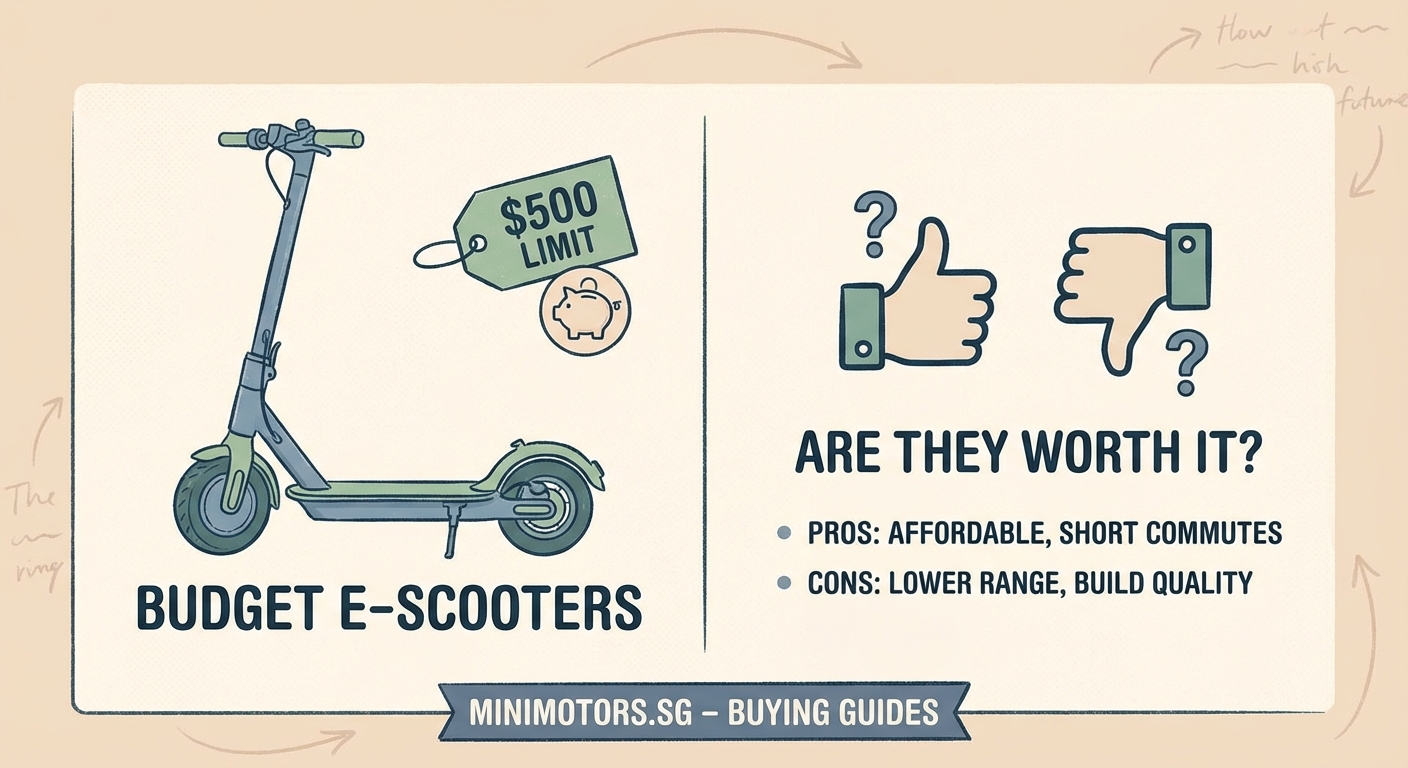
These machines shine in specific scenarios.
Last-mile commuting from transit stations to your workplace works perfectly. A two-mile ride takes 10 minutes and barely dents the battery. You can recharge at the office and ride home.
Campus transportation fits the range and speed profile. Most university campuses span two miles or less. Budget scooters handle that distance easily, and theft risk matters less when your investment stays under $500.
Recreational rides around your neighborhood provide fun without major commitment. Weekend trips to the park or coffee shop don’t require premium components.
Testing the waters before upgrading makes financial sense. If you’re unsure whether e-scooter commuting fits your lifestyle, a budget model lets you experiment cheaply. Sell it later and upgrade if you love the experience.
When to spend more instead
Some situations demand better equipment from day one.
If your daily commute exceeds 12 miles round trip, you need more battery capacity. Budget scooters won’t reliably cover that distance, especially in cold weather when range drops 20% or more.
Riders over 200 pounds should consider sturdier frames and more powerful motors. Budget models technically support that weight, but components wear faster and performance suffers.
Regular rain or snow exposure requires better water resistance. An IP65 rating costs more but prevents expensive repairs or total failure.
Hilly terrain demands more motor power and battery capacity. A 250 watt motor struggles on sustained climbs. You’ll arrive at your destination exhausted from pushing.
Step-by-step evaluation process before buying
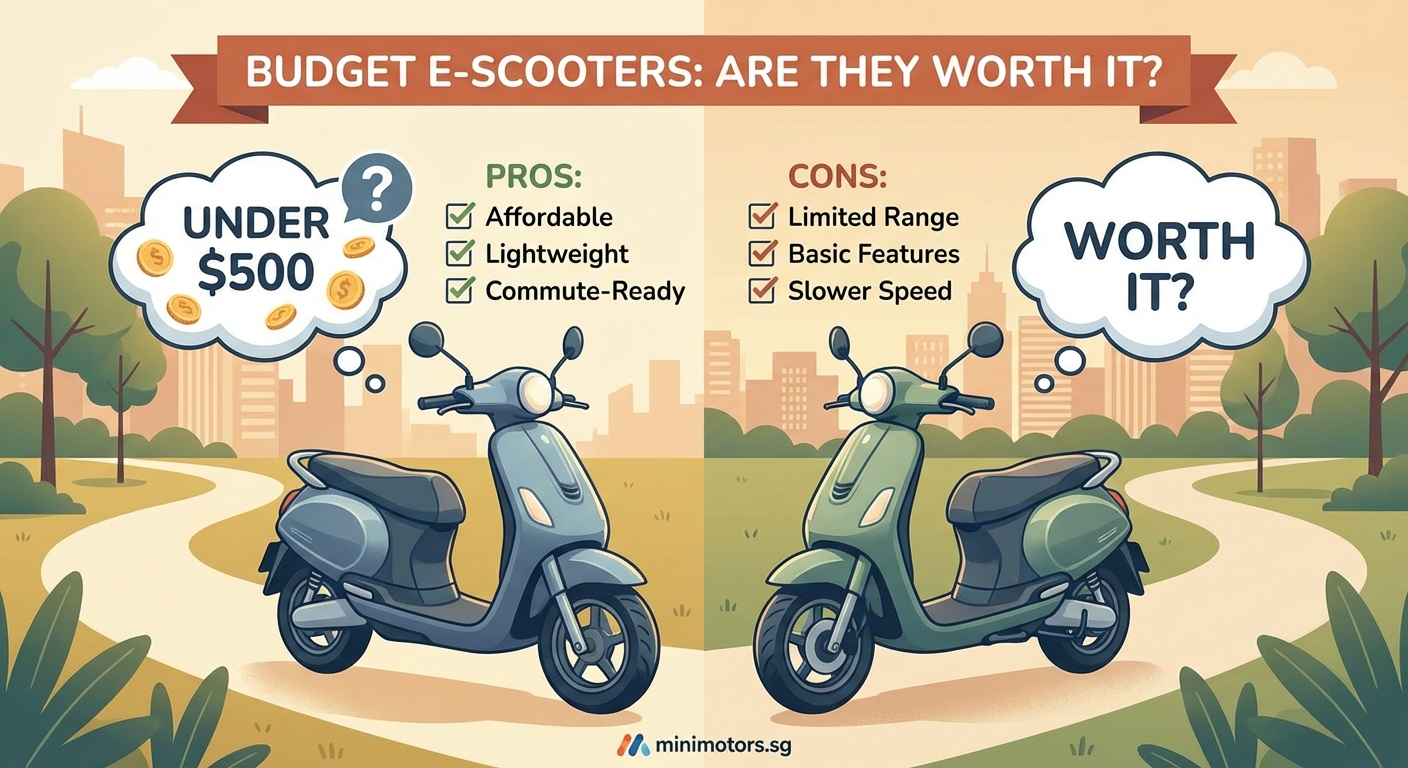
Use this method to assess any model.
-
Check the warranty terms. Anything less than 6 months signals low manufacturer confidence. Look for one-year coverage on major components.
-
Read verified purchase reviews. Filter for reviews from buyers who’ve owned the scooter for 3+ months. Early reviews miss long-term issues.
-
Calculate your actual range needs. Measure your intended route. Add 30% buffer for battery degradation and weather. Make sure the scooter’s rated range covers that distance.
-
Test the weight. If possible, lift and carry the scooter for 30 seconds. You’ll do this eventually, so make sure it’s manageable.
-
Research replacement parts availability. Check whether brake pads, tires, and batteries are in stock. Some budget brands disappear, leaving you with an unrepairable scooter.
Common features to ignore in this price range
Marketing materials highlight specifications that don’t matter much.
App connectivity on budget models usually provides minimal functionality. You might see speed and battery level, but advanced features like GPS tracking or ride customization rarely work reliably.
Maximum speed claims above 20 mph are often theoretical. Real-world conditions, rider weight, and battery charge level keep you well below advertised peaks. Focus on sustained cruising speed instead.
Flashy LED lighting looks cool but drains batteries faster. Basic front and rear lights provide adequate visibility. Underglow strips and decorative lighting waste power you need for range.
What experienced riders wish they knew earlier
People who’ve owned multiple scooters share consistent advice.
“I spent $400 on my first scooter and replaced it six months later. The frame cracked, the battery lost 40% capacity, and the brakes barely worked. I should have saved another $200 and bought something that would last. Budget doesn’t mean disposable, but it requires careful research.” – Community feedback from long-term riders
Buy from sellers with established customer service. When components fail, you’ll need replacement parts and technical support. Unknown brands often vanish, leaving you stranded.
Invest in quality accessories immediately. A good helmet, lock, and lights matter more than scooter upgrades. Your safety depends on protection, not speed.
Perform basic maintenance weekly. Check tire pressure, tighten bolts, and clean the deck. Budget scooters tolerate neglect poorly. Ten minutes of care per week extends lifespan significantly.
Essential safety equipment and accessories
Your $500 budget should include more than just the scooter.
- Certified helmet rated for electric scooter speeds
- U-lock or folding lock rated for motorcycles
- Bright front light (at least 500 lumens)
- Red rear light with flash mode
- Reflective vest or clothing for night rides
- Basic tool kit for roadside adjustments
These items add $100 to $150 to your total cost but prevent injuries and theft. Learning about essential accessories helps you prioritize purchases.
Maintenance costs over the first year
Budget scooters require ongoing investment.
| Component | Replacement Interval | Typical Cost |
|---|---|---|
| Brake pads | 500 to 800 miles | $15 to $30 |
| Tires (pneumatic) | 800 to 1,200 miles | $25 to $50 per tire |
| Battery (if degraded) | 300 to 500 charge cycles | $80 to $150 |
| Tube (if punctured) | As needed | $8 to $15 |
Plan for $100 to $200 in maintenance during year one if you ride regularly. That’s on top of electricity costs, which add about $0.50 per month.
Red flags that signal a bad deal
Some warning signs indicate you should walk away.
No-name brands with zero online presence outside their own website often sell rebranded products with no support. If you can’t find independent reviews, skip it.
Suspiciously low prices below $300 for “full-featured” scooters usually mean counterfeit batteries, unsafe electronics, or false specifications.
Vague specifications that don’t list battery capacity in amp hours or motor power in watts hide inferior components.
No return policy suggests the seller knows the product disappoints. Legitimate retailers offer 30-day returns minimum.
Comparing popular models in this range
Several manufacturers dominate the sub-$500 market. Here’s how they stack up.
Entry-level commuter models typically offer 250 watt motors, 15 mph top speeds, and 12 to 15 mile ranges. They weigh around 27 pounds and fold compactly. Best for flat terrain and short distances.
Mid-range budget models bump power to 350 watts, speeds to 18 mph, and ranges to 18 to 20 miles. Weight increases to 30 to 33 pounds. Better climbing ability and slightly improved build quality justify the extra $100.
Recreational models prioritize fun over practicality. Wider decks, bigger wheels, and flashier designs appeal to casual riders. Performance specs often lag behind commuter-focused options.
How weather affects budget scooter performance
Temperature and precipitation impact every ride.
Cold weather below 40°F reduces battery capacity by 20% or more. Your 15-mile scooter suddenly manages 12 miles. Plan shorter routes or carry a charger.
Rain degrades braking performance dramatically. Electronic brakes lose effectiveness when wet. Stopping distances double. Ride slower and leave extra space.
Heat above 90°F stresses batteries and motors. Don’t charge immediately after a hot ride. Let components cool for 30 minutes first.
Wind resistance matters more than you’d think. A 15 mph headwind cuts range by 25%. Check weather before long rides.
The upgrade path from budget to premium
Most riders eventually want better equipment. Plan your progression.
Start with a budget model to learn basics and confirm you’ll use it regularly. Ride for six months minimum before upgrading.
Your second scooter should address your first one’s biggest limitation. If range frustrated you, prioritize battery capacity. If hills were the issue, focus on motor power.
Sell your budget scooter while it still has value. Well-maintained models fetch 50% to 60% of original price after one year.
Premium models above $800 offer dual motors, suspension, longer ranges, and better build quality. The jump feels significant after riding budget equipment. Understanding what makes premium scooters different helps you decide when to upgrade.
Legal considerations for new riders
Rules vary by location. Research before your first ride.
Some cities ban e-scooters entirely. Others restrict them to bike lanes or limit speeds. Sidewalk riding is illegal in most urban areas.
Age minimums typically range from 16 to 18 years old. Some jurisdictions require helmets for all riders. Others mandate them only for minors.
Registration and insurance requirements exist in certain states. Check local regulations to avoid fines. Understanding local laws prevents legal problems.
Real-world range testing method
Manufacturer claims rarely match actual performance. Test properly.
Charge the battery to 100%. Ride your intended route at your normal speed. Note the battery percentage when you arrive.
Multiply that percentage by your route distance. A 5-mile trip that uses 40% of your battery suggests a 12.5-mile total range.
Repeat the test in different weather conditions. Cold days will show significantly reduced range.
Factor in battery degradation. After 200 charge cycles, expect 10% to 15% capacity loss. Your 15-mile scooter becomes a 13-mile scooter.
Storage and security tips
Protect your investment when not riding.
Store indoors whenever possible. Outdoor storage accelerates rust and electrical problems. If you must leave it outside, use a waterproof cover.
Remove the battery for long-term storage. Keep it at 50% to 60% charge in a cool, dry place. Full or empty batteries degrade faster.
Lock your scooter through the frame, not just the wheel. Thieves can remove wheels in seconds. Use a motorcycle-grade U-lock.
Register your serial number with local police and online databases. Recovery rates for marked scooters exceed 30%. Unmarked scooters rarely return.
Battery care that extends lifespan
Proper charging habits matter enormously.
Avoid draining the battery completely. Stop riding when you hit 10% to 15% remaining. Deep discharges stress lithium cells.
Don’t leave the battery at 100% for days. Charge to full right before rides, not days in advance.
Use the original charger exclusively. Third-party chargers may deliver incorrect voltage or current, damaging cells.
Charge in moderate temperatures. Extreme heat or cold during charging accelerates degradation. Room temperature is ideal. Learning proper charging habits prevents premature battery death.
When repairs cost more than replacement
Budget scooters have limited repair economics.
If the battery fails outside warranty, replacement costs $80 to $150. That’s 20% to 30% of a new scooter’s price. Consider upgrading instead.
Frame cracks can’t be safely repaired. The structural integrity is compromised. Riding a cracked frame risks catastrophic failure.
Motor replacement typically costs $60 to $100 plus labor. Unless you’re handy with electronics, professional repair might exceed the scooter’s remaining value.
Multiple simultaneous failures (battery, motor, and brakes) signal it’s time for a new scooter. Throwing money at a failing machine rarely makes sense.
Getting the most value from your purchase
Maximize your $500 investment with smart habits.
Ride frequently to justify the cost. Daily use means each ride costs pennies. Monthly use makes even budget scooters expensive per trip.
Maintain proactively rather than reactively. Replacing worn brake pads costs $20. Replacing damaged wheels after brake failure costs $80.
Join online communities for your specific model. Experienced owners share maintenance tips, upgrade suggestions, and troubleshooting advice.
Track your rides and costs. Knowing you’ve traveled 800 miles for $50 in electricity and $30 in maintenance proves the value proposition.
Finding your perfect budget scooter match
The best electric scooter under $500 depends entirely on your specific situation.
Measure your commute distance accurately. Add 30% for safety margin. Choose a scooter rated for at least that range.
Weigh yourself honestly. Pick a model rated for 20 to 30 pounds above your actual weight. This cushion ensures decent performance and longevity.
Assess your route terrain. Flat cities open up more options. Hilly areas demand more power, which might push you toward the top of your budget.
Consider storage and transport needs. If you’ll carry it on buses or up stairs daily, prioritize lighter weight over extra features.
Starting your research with beginner-focused guidance helps you avoid common first-time buyer mistakes. Understanding what to expect as a new rider sets realistic expectations.
Making the $500 budget work for you
Electric scooters under $500 deliver real transportation value when matched to appropriate use cases. You won’t get premium performance or luxury features, but you will get functional mobility that beats walking or waiting for buses.
The key is honest assessment. If your needs align with what budget models offer, you’ll find genuine value. If you need more range, power, or durability, save a few more months and buy something better. A $700 scooter that lasts three years beats a $400 scooter that fails after one year.
Start with clear expectations, maintain your equipment properly, and ride within its limitations. Your budget scooter will serve you well and might just transform how you move through your city.
